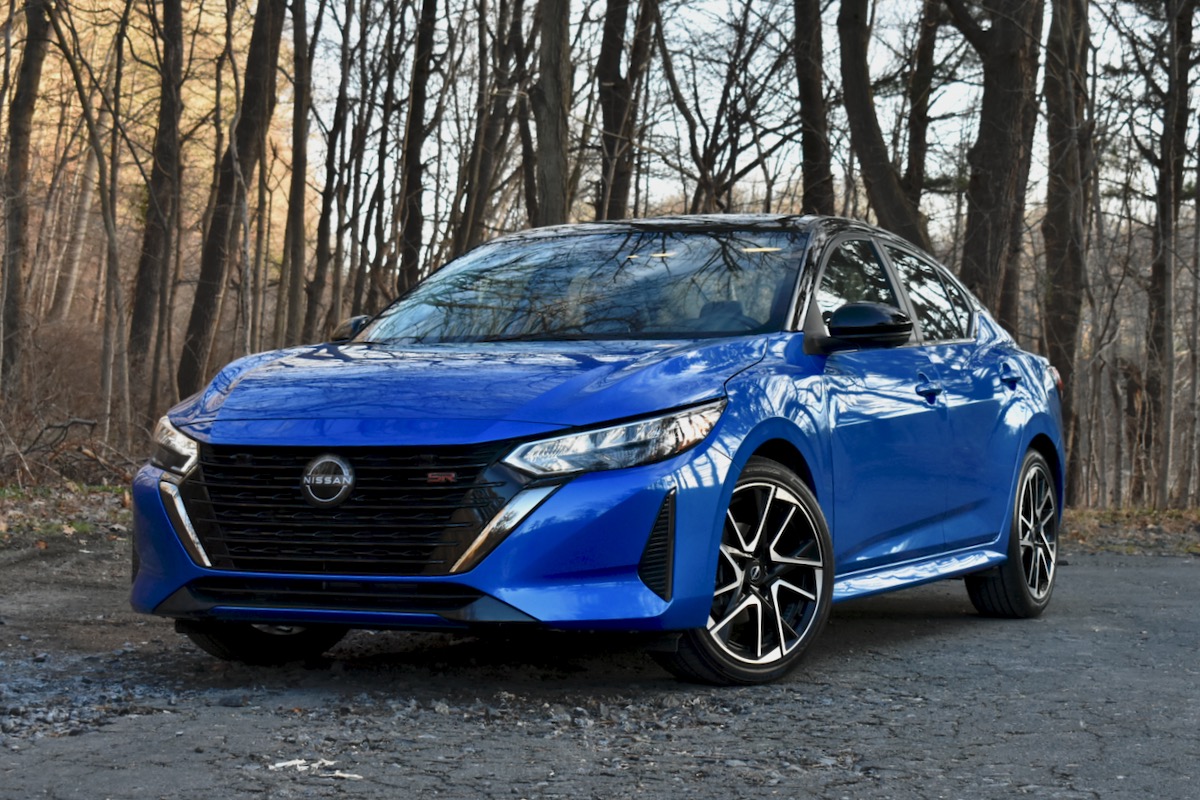
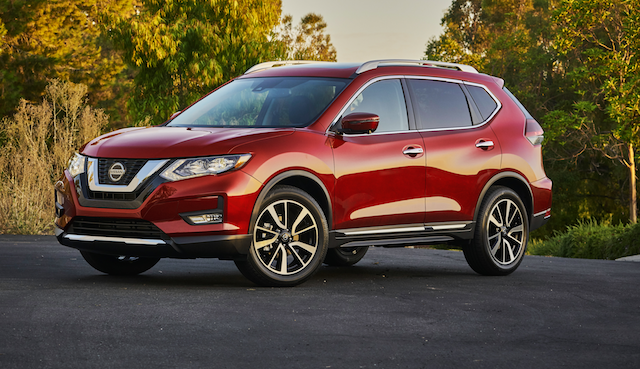
Nissan is one of the largest automakers in the world and one of the most popular automotive brands in the United States. It’s a Japanese company, famous for producing everything from the economical Versa to the GT-R supercar, as well as a huge range of crossovers, SUVs, and trucks.
Although Nissan is headquartered in Yokohama, Japan, it sells vehicles around the globe. So where exactly are Nissans built and what should you know about Nissan's manufacturing business? Read on.
Where Are Nissans Made?
- Where does Nissan build its cars?
- Which Nissan Models Are Made in the United States?
- Nissan U.S. Models Built Outside the United States
- Nissan U.S. Models Built in Japan
- Is My Nissan American-Made?
- Are American-Made Nissans More Reliable?
- The Future of Nissan Manufacturing

Where Does Nissan Build Its Cars?
Nissan Motor Corporation operates 39 manufacturing plants in 18 countries. These have varying purposes including vehicle assembly and the production of engines, transmissions, batteries, motors, metal stampings, and other parts. The bulk of Nissan's global manufacturing is in Asia, followed by North America, Africa, Europe, South America, and Australia.
Asia: 21 Nissan plants
- China (jointly owned with local manufacturers): 8
- Japan: 6
- Thailand: 3
- India: 1
- Malaysia: 1
- Myanmar: 1
- Taiwan: 1
North America: 8 Nissan plants
- Mexico: 5
- United States: 3
Africa: 4 Nissan plants
- Egypt: 1
- Ghana: 1
- Nigeria: 1
- South Africa: 1
Europe: 3 Nissan plants
- Spain: 2
- United Kingdom: 1
South America: 2 Nissan plants
- Argentina: 1
- Brazil: 1
Australia: 1 Nissan plant
- Australia: 1

Which Nissan Models Are Made in the United States?
Nissan North America, Inc., a division of Nissan Motor Co. and headquartered in Franklin, Tennessee, builds six vehicles—along with parts, engines, and electric motors—at three plants in Tennessee and Mississippi.
Since production started in June 1983 in Smyrna, Tennessee, Nissan has built more than 20 million vehicles and more than 19 million engines and electric motors. Currently, Nissan's annual output among the three manufacturing facilities equals roughly 1 million vehicles, 1.4 million engines, 1.4 million forgings, and 456,000 castings.
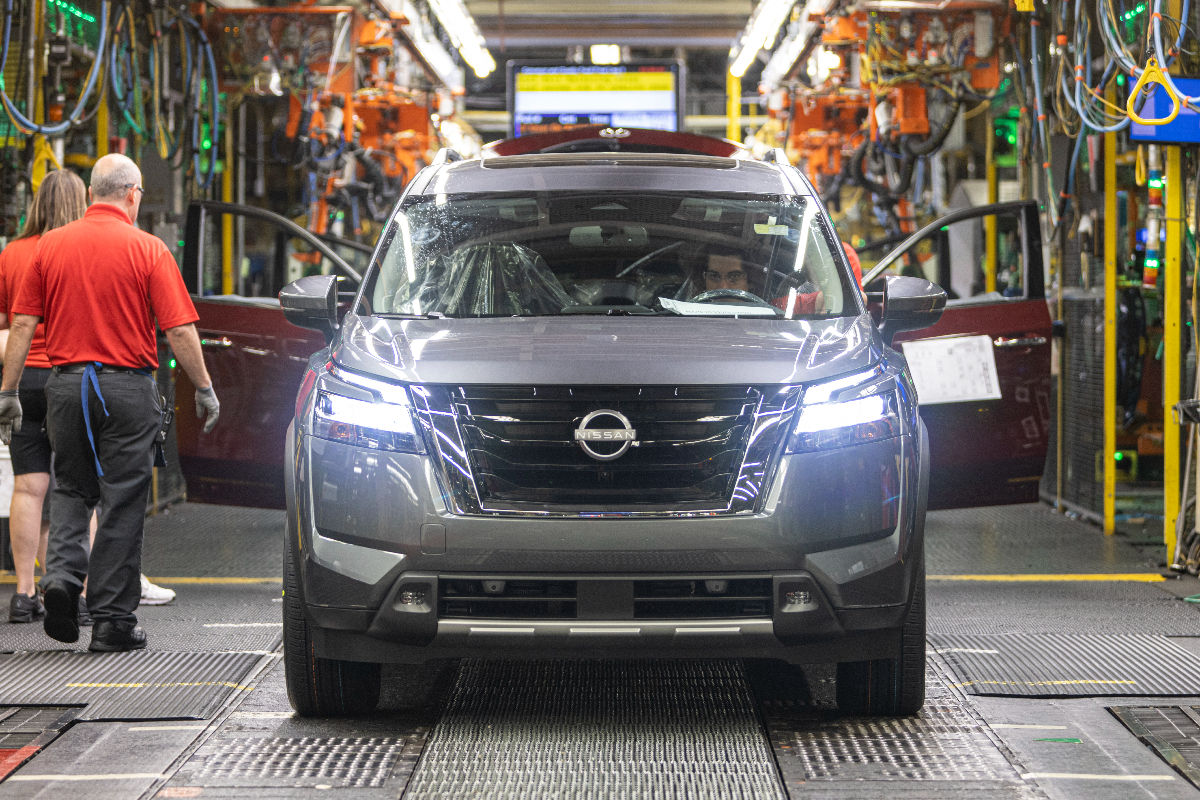 Smyrna, Tennessee
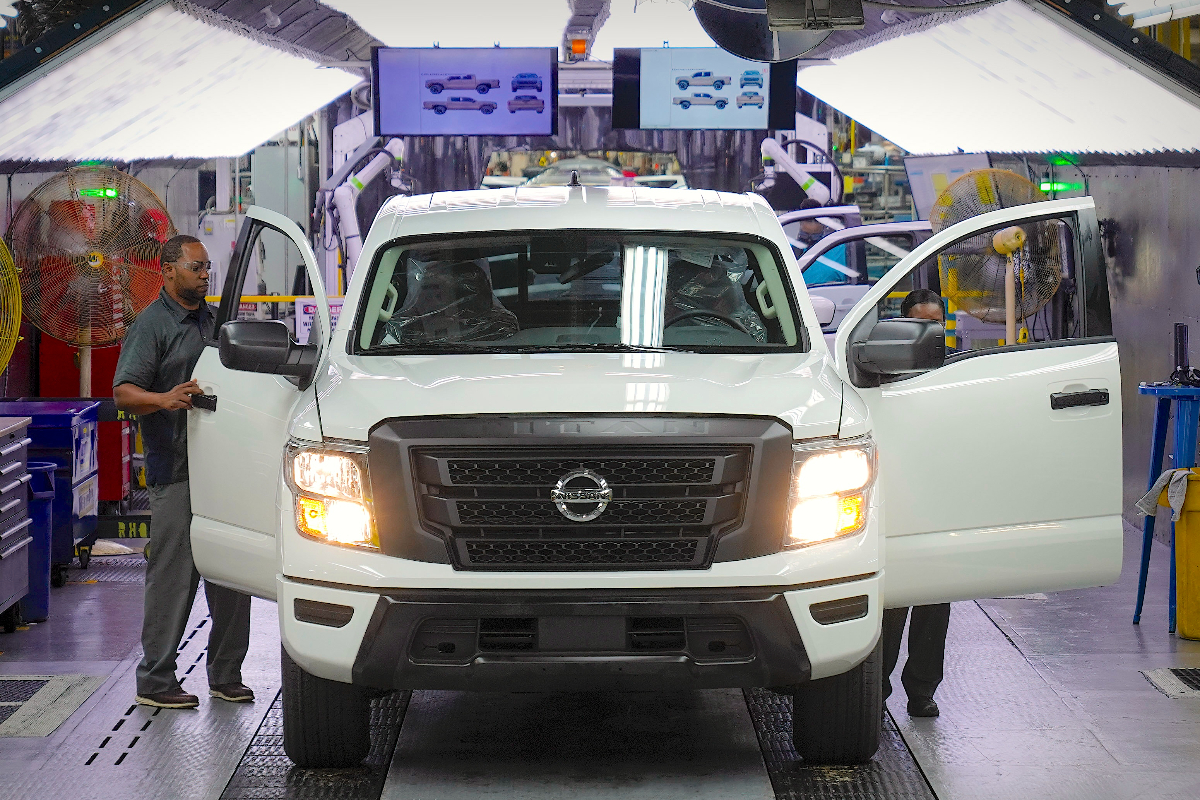
Nissan's first site for U.S. production, the Smyrna plant, is one of the company's most productive, with an annual capacity of 640,000 vehicles. As of November 2024, a total of 7,300 employees and contractors work at the six-million-square-foot facility in Smyrna, a suburb about 25 miles southeast of Nashville.
Its first vehicle, a white Datsun 720 long-bed pickup that retailed for $3,000 in 1983, is still running and part of the company's private collection. Four vehicles are currently made in Smyrna: the Nissan Murano (since 2020), the Nissan Pathfinder (since 2005), the Nissan Rogue (since 2013), and the Infiniti QX60 (since 2025).
However, not every Rogue sold at a U.S. dealership is built in Smyrna. A significant portion of the Rogue SV, SL, and Platinum trims are built in Japan. Formerly, the Smyrna plant produced the Maxima and the Leaf electric car, and Nissan produced batteries at another nearby plant in Smyrna, but Nissan no longer has a stake in that battery plant and the third-generation Leaf is now built entirely in Japan.
 Canton, Mississippi
The Canton plant opened in 2003 to produce 400,000 vehicles annually with 5,300 workers. Today, the 4.7-million-square-foot facility is at a 410,000-vehicle capacity and has 3,700 workers.
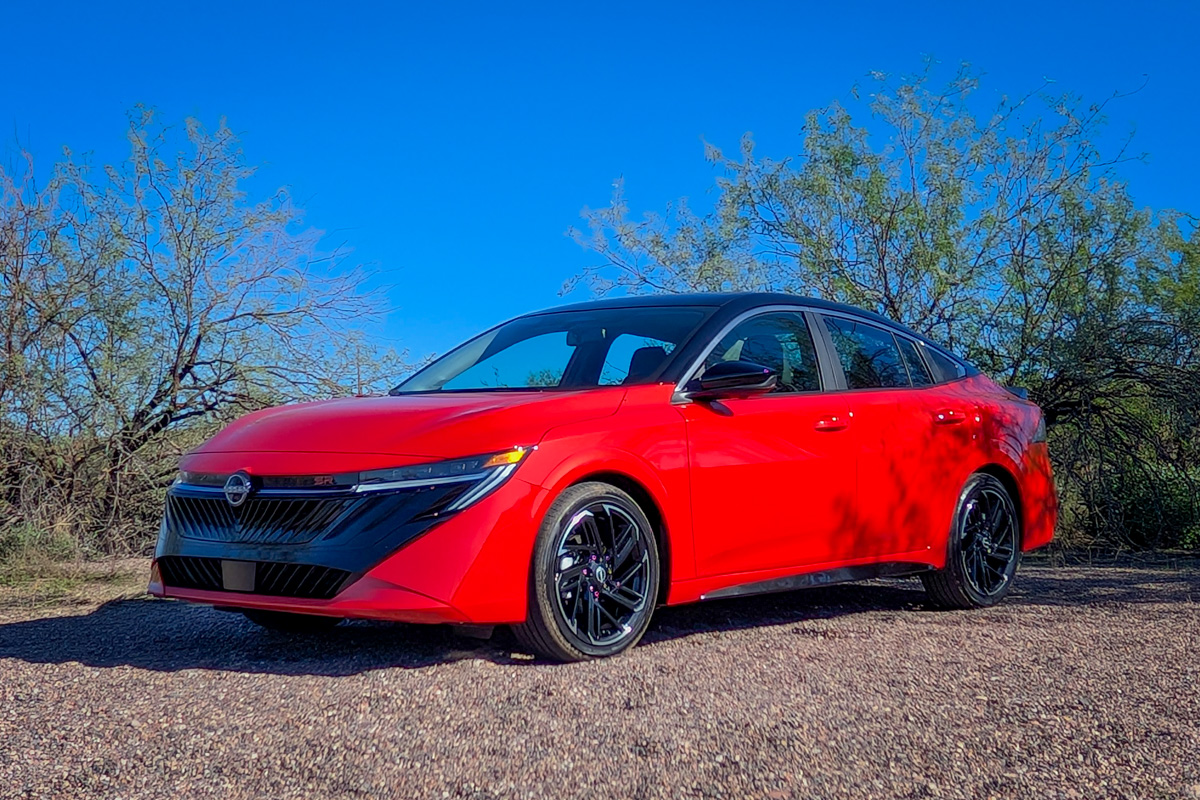
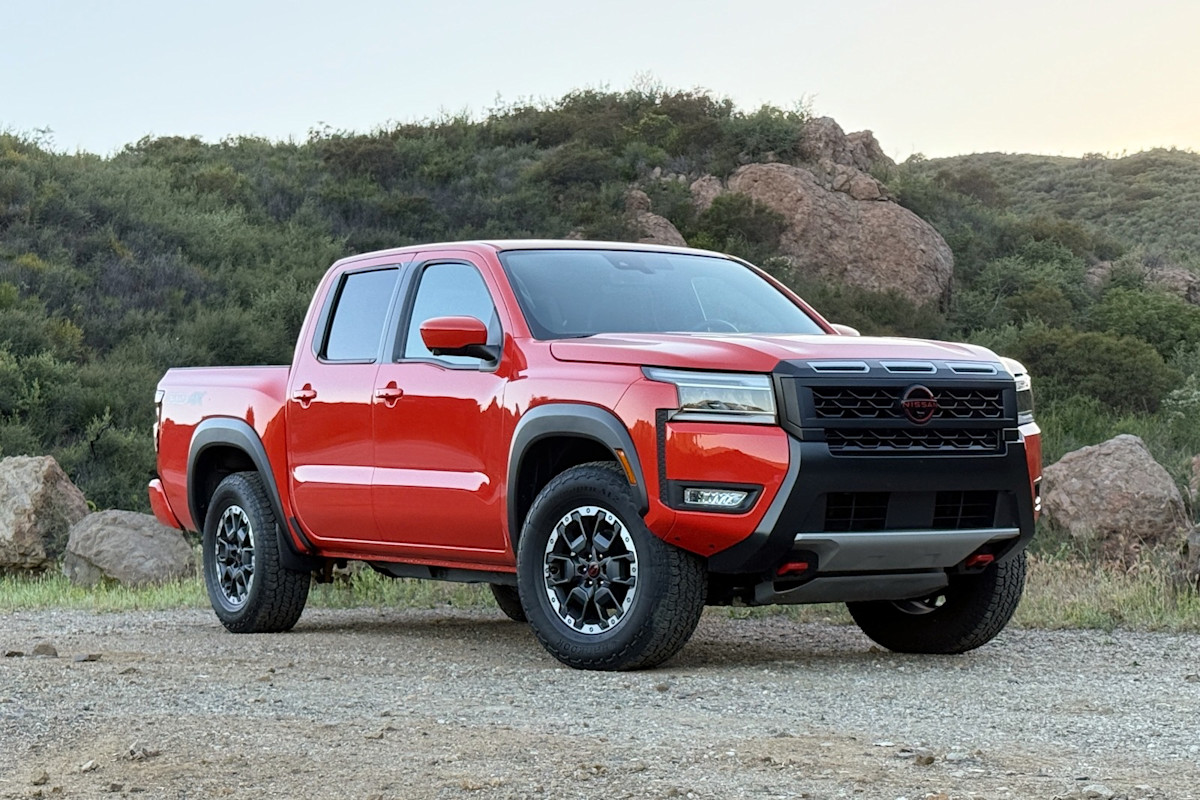
The 1038-acre site was once the production site for five vehicles, including the Titan pickup and the Quest minivan, but today Canton builds only the Nissan Altima sedan and the Frontier pickup.
 Decherd, Tennessee
The Decherd plant builds five unique gasoline engines, most of which power the vehicles it builds at its Smyrna and Canton plants. As of November 2024, about 1800 employees and contractors work at the 1.2-million-square-foot facility, which is on a larger 968-acre property than the Smyrna plant's 884 acres.
It opened in May 1997 to build four-cylinder engines for the Altima and the Frontier. In 2002, Nissan added production for V6 and V8 engines. In 2006, Nissan expanded the plant to forge crankshafts and in 2008 began casting cylinder blocks. Annual capacity is 1.2 million engines, 1.4 million crankshafts, and 456,000 cylinder blocks. Some of the crankshafts are exported to Nissan's assembly plant in Aguascalientes, Mexico. The V8 production ended in late 2024 with the discontinuation of the older Armada and Infiniti QX80 models.
Currently, the Decherd plant builds five engines: The 2.5-liter I4 in the Altima and Rogue; the 2.0-liter VC-Turbo I4 in higher trims of the Altima and the only engine for the 2026 Infiniti QX60; the 3.5-liter V6 for the Murano and Pathfinder; the 3.8-liter V6 for the Frontier; and for overseas markets, a 4.0-liter V6 for the Patrol (sold here as the Armada with an imported 3.5-liter twin-turbo V6).
Nissan U.S. Models Built Outside the United States
A total of eight Nissan and Infiniti models sold in the United States are imported from one plant in Mexico and two plants in Japan.
Aguascalientes, Mexico
Nissan has five plants in Mexico, four of which are in Aguascalientes, which produce vehicles for Mexico, the U.S., and other markets. One vehicle assembly plant in Aguascalientes builds the new Nissan Sentra, while the second produces the Kicks, the Kicks Play, and the Versa. In 2015 the Renault-Nissan Alliance opened another plant in Aguascalientes to build the Infiniti QX50 and QX55 but this is due to shut down in May 2026. Finally, a fourth plant builds engines, including for the aforementioned Nissan models.
Mexico was the first country to build Nissan (then known as Datsun) vehicles outside Japan, starting in 1966. That plant in Cuernavaca, which first built the Datsun Bluebird, began exporting vehicles to Europe in 2007 and would produce the NV200 van—including the short-lived taxi for New York City in the early 2010s.

Nissan U.S. Models Built in Japan
Tochigi Plant
Nissan's Tochigi plant integrates everything—engine and electric motor production, axle machining and assembly, aluminum and iron casting, and vehicle assembly. Open since 1968, it is Nissan's largest plant in Japan. It currently employs 6,000 workers and is the birthplace of halo cars such as the Nissan GT-R and Z, which are currently in production and exported to the U.S.
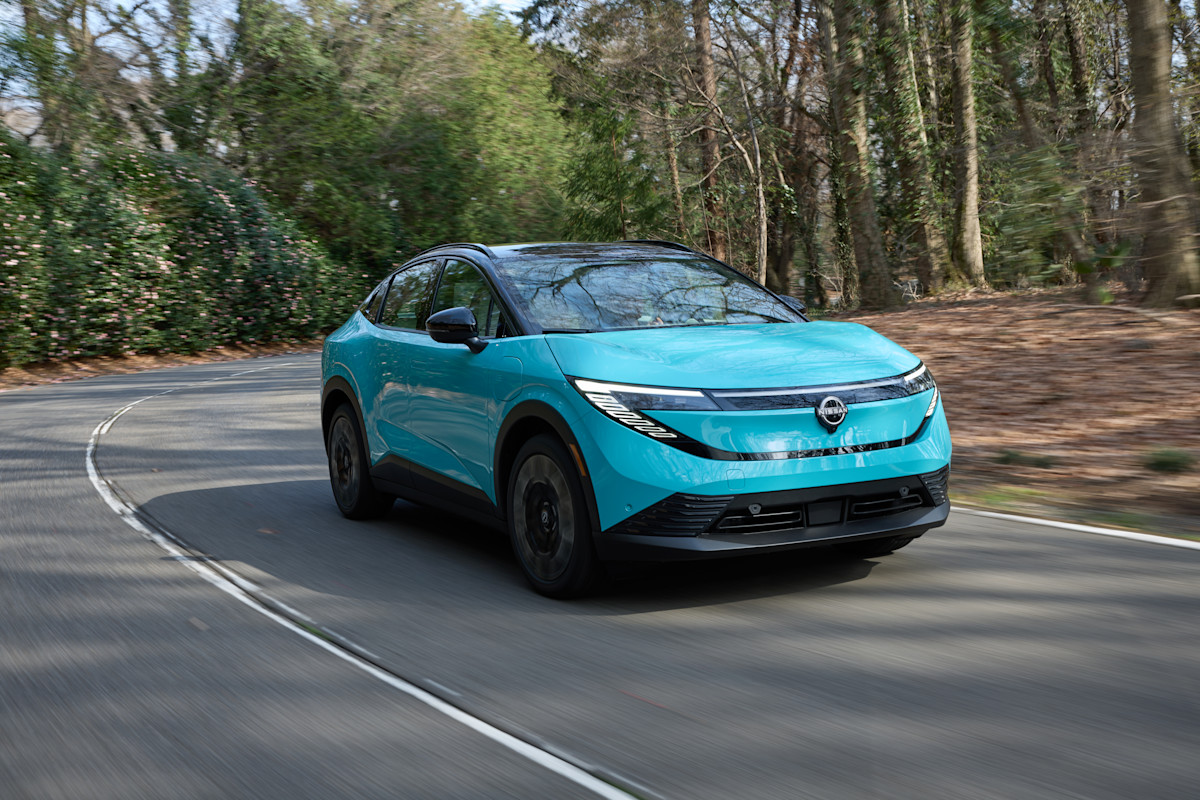
The plant formerly made and exported the electric Ariya to the U.S. and had exported the Infiniti Q50 sedan and Q60 coupe. It now builds and exports the third-gen 2026 Leaf to the U.S. and worldwide. The Q50, sold in Japan as the Skyline, is still in production along with the Ariya, which Nissan pulled from the U.S. market.
Nissan Shatai Co., Ltd. Shonan Plant
Nissan's Shonan plant in Kanagawa originally made railroad cars and car bodies when it opened in 1949, and it later transitioned to buses and more car parts. By 1969, the first Fairlady Z (known as the Datsun 240Z) was built in the Shonan plant and became an immediate hit in the U.S.
Every generation was built there except for the current Z, which launched in the U.S. for 2023. The Infiniti FX was also built there and exported to the U.S. beginning in 2002. Today, the plant builds Nissan ambulance and emergency buses and vans, along with the Nissan Armada and the Infiniti QX80.
Nissan Motor Kyushu Co., Ltd
Nissan's Kyushu plant opened in 1975 and currently builds the Serena minivan for Japan, the X-Trail (the name of the Rogue in Japan and other markets), and the Rogue. A significant portion of the Rogue SV, SL, and Platinum trims in the U.S. come from this plant, while the S and Rock Creek trims are built in Smyrna, Tennessee. A total of 4,500 workers build up to 500,000 cars per year.
Is My Nissan American-Made?
Of Nissan’s 12 new vehicles currently on sale in the U.S., only six are made in the U.S. The majority of parts are not sourced from the U.S., despite the manufacturing of five engines that are made locally for those six U.S.-made models. Many engines are sourced from Mexico and transmissions are from Japan.
Other suppliers are also mainly Japanese or European in origin. If the VIN of a Nissan vehicle begins with the letter "J," it is sourced from Japan. If the VIN begins with the number "3," it is from Mexico. The numbers 1,4, and 5 denote a U.S.-made Nissan.
Here’s which new Nissan vehicles are made in the U.S. and which aren’t:
- Altima: Yes
- Armada: No
- Frontier: Yes
- Kicks: No
- Kicks Play: No
- Leaf: No
- Murano: Yes
- Pathfinder: Yes
- Rogue: Yes/No
- Sentra: No
- Versa: No
- Z: No

Are American-Made Nissans More Reliable?
No, there’s zero evidence to support a claim that a Nissan made in Japan, Mexico, or the United States has any substantial difference in build quality or reliability. A Nissan built in the United States is not necessarily more high-quality or reliable than one built in Nissan’s Japan or Mexico plants. Similarly, Japan-built Nissan cars are not necessarily better than US-made ones.
Sure, the 1986 Ron Howard movie “Gung Ho” starring Michael Keaton featured a fictional Japanese carmaker opening its first American plant and compared American and Japanese labor—and Japan's firmly-held cultural beliefs of perfection, honor, and respect—in a comedic and realistic light. Today—and in reality—with uniform production standards and tight computer control, along with a global manufacturing base, there is no proof that a Japanese-made Nissan demonstrates any better or worse craftsmanship than an equivalent Nissan made elsewhere.
The Future of Nissan Manufacturing
To cut costs and avoid a complete financial meltdown, Nissan will shut down seven vehicle assembly plants worldwide to reduce an oversupply of vehicles and keep plants operating at a full (and lower) capacity. By 2027, the company says it will build a million fewer vehicles per year for an annual total of 2.5 million, excluding all production sites in China (which are half-owned by Nissan and half-owned by Chinese firms that are either owned or connected to the Chinese government).
The business move will undoubtedly impact showrooms, even if the Nissan brand retains its most popular models. Additionally, it will likely impact Nissan’s workforce, as tens of thousands of Nissan workers may become unemployed.
One of the plants scheduled to close is Nissan's signature facility in Oppama, Japan, which led production of the first Nissan Leaf, the world's first mass-produced electric vehicle. Two plants in Mexico will shutter, one of which builds export-market pickup trucks and the other which, until recently, made the Infiniti QX50 and QX55 (which was a joint-venture plant with Mercedes). Plants in Argentina and India will also close. Nissan had not announced the seventh plant as of the time of this writing.
In 2023, Nissan announced it was converting a significant portion of the Decherd, Tennessee, plant to produce electric motors, but it has since abandoned that move and may instead build its upcoming E-Power gas-electric hybrid powertrain at the plant, which will debut on the 2027 Rogue. Nissan has delayed plans to build two electric SUVs in Canton, Mississippi. Instead, a gas-powered Xterra may join the line. Nissan also plans to produce the Infiniti QX65 in 2026 and a Rogue-based Infiniti crossover in the U.S. by 2029.
Nissan will continue its partnership with Renault, along with Honda and Mitsubishi, to co-develop and share vehicle platforms, powertrains, and software. The Renault partnership is most evident overseas and does not dramatically influence the production or sales of any U.S. models. Honda is focusing on electrification and connectivity.
Mitsubishi is looking to be Nissan’s key partner in the U.S. and, after the Japan-made Rogue PHEV launches, Mitsubishi is planning to produce new SUVs with Nissan beyond the current Rogue-Outlander tie-up, likely at one of Nissan's two U.S. assembly plants. In addition, Nissan is keen to increase its profits per car from the first stage of development to customer delivery at the dealership. At the same time, the company has insisted it will keep prices affordable and that value—along with quality and keeping icons such as the Z—will be among its most important considerations in the years to come.