The Volkswagen Beetle is one of the few cars that just about everyone on the planet can picture and probably even draw pretty accurately. It’s that familiar, and the original Volkswagen Beetle—introduced way back in 1945—is nothing short of a legend. It was in production for 58 years and remains one of the top-10 best-selling cars of all time. Thanks to its lovable character, cult following, and appearance in countless TV shows and movies, it has become part of modern-day culture.
While the original Beetle was phased out in the late seventies, a modern incarnation reappeared in the late 1990s. The aim was to give Volkswagen’s brand image a boost, and when it arrived in 1997 the new Beetle duly won people over with its mix of cute design (it has a dash-mounted flower vase!) and modern amenities. While never a big seller, it paved the way for a number of retro-influenced cars, the reborn Mini chief among them, and the second-generation new Beetle that replaced it in 2011 delivered more of the same.
Based, like its predecessor, on the Volkswagen Golf of the time and available as a two-door hard-top or soft-top convertible model, it was produced until 2019. Both modern Beetles have a front-engine, front-wheel drive layout that’s in contrast to the rear-engined, rear-wheel drive original. Rumours of the development of a new pure-electric Beetle have circulated in recent years, especially since the launch of the similarly retro ID.Buzz, but whatever happens next, the Beetle’s legacy as an automotive legend is assured.
Our buying guide focuses on the two most recent VW Beetle models, which were sold new in the US between 1997 and 2019. It covers how they evolved over time, which models are available, what to look out for and how much you can expect to pay.
Volkswagen Beetle Buying Guide: Cost, Reliability, and the Best Years to Buy
Frequently Asked Questions
Which Volkswagen Beetle years are the best?
The final, third-generation Volkswagen Beetle is, subjectively, the best one ever. It’s good to drive, well-equipped and more practical than any of its predecessors.
What are the worst Volkswagen Beetle years?
No modern Beetle has an especially good record, but the earlier years of the 1998-2011 model are the worst for issues, according to sources such as carcomplaints.com, with engine problems affecting a number of 1999-2001 cars.
Is a used Volkswagen Beetle a good deal?
The Volkswagen Beetle is a fine option if you want a compact car that’s stylish and affordable. The 1998-2011 model can make a great low-cost runaround, while the 2011-2019 version looks great and blends modern tech with appealing retro design.
Volkswagen Beetle Pros and Cons
Pros:
- Unique looks, lots of charm
- Good value and sensible running costs
- 2011-2019 models are well-equipped
Cons:
- Not very practical
- Visibility isn’t great
- Some alternatives are (a lot) more fun to drive
Volkswagen Beetle Generations
Third Generation (2011-2019)
For its third generation, the Volkswagen Beetle followed a similar “modern retro” path as its predecessor, mixing styling cues from the original Beetle with current tech and features. As before, it was based on the Volkswagen Golf—in this case the sixth-generation model. Compared with the first “new” Beetle the follow-up had a less cute ‘n’ curvy look—it shared the same basic shape, but was noticeably longer and wider, and a fraction lower, with squared-off edges and a more coupe-like, almost hot-rod profile. The layout continued to be front-engined and front-wheel drive, while the larger dimensions created a roomier interior and significantly more trunk space, even if many rivals were more practical.
The initial engine lineup saw a continuation of the previous model’s 2.5-liter, five-cylinder gas engine, this time with 170 horsepower. A five-speed manual transmission was standard, with a six-speed automatic as an option. The alternative was a version of the turbocharged 2.0-liter four-cylinder TSI unit used in the concurrent VW Golf GTI. It made 200 horsepower and came with a six-speed manual transmission as standard or a six-speed DSG dual-clutch transmission as an option. The 2.0 wore a Beetle Turbo nameplate, and its status as a sportier model was backed up by the addition of independent rear suspension—something that wasn’t initially available with the 2.5. A Beetle TDI Clean Diesel model was added for the 2013 model year, with a 2.0-liter diesel engine and a six-speed manual transmission as standard or an optional six-speed DSG transmission.
An update for the 2014 model year saw independent rear suspension standardized across the range. The Beetle Convertible joined the lineup, too, while the Beetle Turbo was renamed Beetle R-Line, and its 2.0-liter engine gained an extra 10 horsepower. Updates for the 2015 and 2016 model years saw a new 1.8T model with a 1.8-liter turbocharged engine replace the previous 2.5, while the diesel version was dropped. A new Beetle 1.8T Dune model was added to the range during the 2016 model year, featuring a raised ride height and some bespoke styling details (including black wheel arch trim and side sills) for a sporty, off-road look. A comprehensive update for the 2017 model year brought a round of changes, including new bumpers, a revised dashboard and equipment upgrades. A new limited-edition #PinkBeetle model joined the range, sporting unique “Fresh Fuchsia Metallic” paintwork, special “Pink Club” seating fabric and a high spec, including bi-xenon headlights and keyless access. From the 2018 model year, a new engine replaced all the previous units; the new 2.0 TSI made 174 horsepower and returned better fuel consumption than the 1.8, with a combined EPA rating of 29 mpg. It was paired with a six-speed conventional Tiptronic automatic transmission as standard.
During its eight years on sale, the third-generation Beetle was available in a plethora of trim levels, with the line-up changing from year to year. Initially, these were linked to the engine, so there were 2.5L, TDI, and Turbo (later R-Line) models. From the 2017 model year onwards, VW mixed up the pack, with Classic, Dune, #PinkBeetle, S, Coast, SE, Final Edition SE, and Final Edition SEL models available at one time or another. Coast models featured bespoke color and trim options, while the Final Edition models were high-spec run-out models with some cosmetic upgrades and special colors.
The 2011-2019 Volkswagen Beetle feels like a well-made car, and has a premium ambience inside. It doesn’t have a standout reliability record, though, and engines and timing chains can be problematic. As a brand, VW rarely features in the top rankings of independent reliability and customer satisfaction surveys.
Prices for the third-generation VW Beetle are lower than you might think. High-mileage examples start at about $5,000 at dealerships, while another $2,500 or so will get you a car with less than 80,000 miles on the odometer. You can get a late, low-mileage car for $20,000 or less, although Final Edition models in good condition can cost upwards of $30,000.
Second Generation (1998-2011)
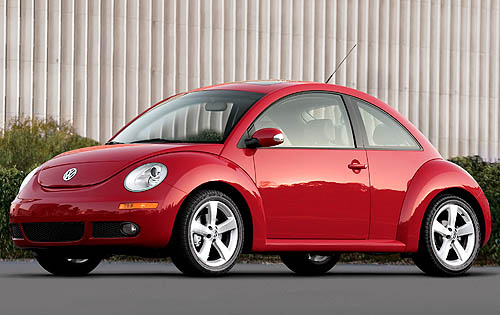
The “new” Volkswagen Beetle harked back to the original in many ways, but whereas the first Beetle was conceived and designed in Germany, the 90s reinterpretation had its roots in America. The prototype was the Volkswagen One concept car, unveiled at the Detroit Auto Show in 1994. Its design was overseen by American J Mays, chief designer at VW’s California design studio, who had been tasked with creating something that would resonate with modern US buyers.
The production model that went on sale in 1998 remained very faithful to that concept car. Underneath its curvy exterior, it shared a basic platform and many other parts with the fourth-generation Volkswagen Golf, which was no bad thing. It meant, of course, that instead of the original Beetle’s rear-engined, rear-wheel drive layout, there was an engine at the front, driving the front wheels. It also meant there was a trunk at the back, rather than a “frunk” at the front, and a hatchback tailgate. It was a more practical arrangement than the original’s, but the load space was rather small and rear-seat space wasn’t particularly generous.
Power came from standard Volkswagen Group engines. The entry-level gas unit was a 2.0-liter four-cylinder with 115 horsepower, and the sportier option was a turbocharged 1.8-liter engine with 150 horsepower. There was a diesel alternative in the form of the 1.9 TDI (Turbo Direct Injection) model, which had a turbocharged 1.9-liter engine with 90 horsepower (100 horsepower in later models). All were available with either a five-speed manual or four-speed automatic transmission, and fuel economy ranged from late-20s mpg for the petrol models to mid-40s mpg for the TDI.
Trim levels from launch were GL, GLS, and GLX and, for its time, the Beetle was well-equipped. From the start, entry-level GL trim included air conditioning, central locking, heated and electrically adjustable door mirrors, ABS, and front and side airbags. GLS trim added extras such as cruise control and power windows, while GLX trim included heated front seats, leather trim, a power sunroof, alloy wheels, and rain-sensing wipers. An update for the 2003 model year boosted equipment levels, with power windows and curtain airbags becoming standard across the range, and a new body style was added, with the introduction of the Beetle Convertible. It featured a power-operated fabric roof, leatherette seating, and a choice of either gas engine. A sporty Turbo S model was sold between 2002 and 2004, featuring a 180-horsepower version of the 1.8-liter engine, a six-speed manual transmission, bespoke front and rear bumpers, 17-inch alloy wheels, stability control, and a three-spoke sports steering wheel.
A range update for the 2006 model year created a slightly sharper look, with a more sculpted design for the bumpers, redesigned headlight and taillight lenses, and alloy wheels as standard. A new 2.5-liter, five-cylinder gas engine became the sole choice, offering the same 150-horsepower output as the previous 1.8, giving similar mpg, and with the option of a five-speed manual or a six-speed automatic transmission.
The 1998-2011 VW Beetle has a generally good reputation for reliability, but the earliest versions are now more than 25 years old, so the dependability of an individual car will be largely down to how it’s been cared for over the years. On top of the usual wear and tear you’d expect of an older car, common issues can include faulty MAF sensors, malfunctioning power window regulators, and failing transmissions.
Prices for the second-generation Beetle start at about $3,000, which will buy you a coupe or convertible with fairly high mileage. It could be a great low-cost runaround, but another $2,000 or so will get you a car that’s covered less than 100,000 miles. Late, low-mileage convertibles command the most money, with prices of $14,000 or more.
First Generation (1947-1979)
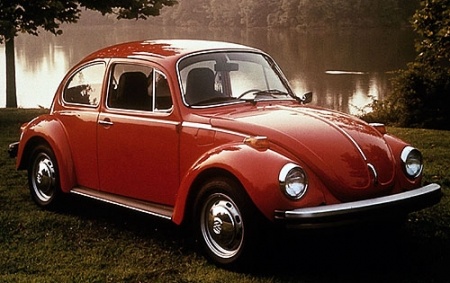
The original Volkswagen Beetle was nothing short of a phenomenon. It needs little introduction but the basics are this: a two-door model with a rear-mounted, air-cooled engine, rear-wheel drive, bulging fenders, simple mechanical components, a spartan interior, and lots of charm. That was as true of the first example to hit the road in the US in 1949 as the last to leave a showroom in 1979. In between, the Beetle didn’t change all that much. The design was refined every few years (most noticeably with a switch to a one-piece rear window), while the chassis and engines were upgraded over time. The fundamentals remained the same, though, as did that distinctive bug-like profile.
We won’t delve into the beginnings of the Beetle here, other than to say that its genesis in the 1930s was wrapped up in the situation in Europe at the time, and production of civilian cars (initially in Wolfsburg, Germany) didn't start until the Second World War ended. At the very start, the Beetle was known simply as the “people’s car”, or “Volkswagen” in German. As the brand evolved it became known as the Type 1, with the Beetle name not officially used until 1968. US sales of the Beetle were strong from the mid 50s and through the 1960s, but gradually waned in the 1970s. The sedan was discontinued in the US in 1976, while the cabriolet was sold until 1979. Production for other markets continued in Mexico until 2003.
Related Topics