Why choose an electric truck over a gas-powered truck? Electric trucks ranging from the Rivian R1T and Tesla Cybertruck to the Chevrolet Silverado EV and the Ford F-150 Lightning offer powerful drivetrains, innovative styling, cutting-edge technology, and clever approaches to crew cabs, beds, and front trunks (frunks). They can be cleaner due to the lack of tailpipe emissions.
Electric trucks are more fun, too, especially if you appreciate power outputs exceeding 1,000 horsepower and sub-3-second acceleration times. The base F-150 Lightning Pro is as powerful as the twin-turbo V-6 F-150 Raptor.
The downsides are they lose range when towing much quicker than trucks with internal combustion engines (ICE), they typically cost more, and they’re heavier. Depending on your charging source and how you use the truck, an electric truck might not be more efficient than gas or diesel trucks.
If you can regularly charge at home, an electric truck can deliver significant savings in energy costs over a conventional gas-powered truck. If you log mostly highway miles and tow frequently, an electric truck might be more inconvenient than it’s worth.
Want the benefits of both electric and ICE trucks? Be patient. The pickup truck powertrain that might appeal to the broadest market is the extended range electric vehicle (EREV), which we’ll explain below in the Future Truck section.
Here’s a look at the best electric trucks currently on the market.
These Are the Best Electric Trucks Available Today
FAQs
What Makes CarGurus Best Cars Guides Different
Shopping Tools
Related Topics
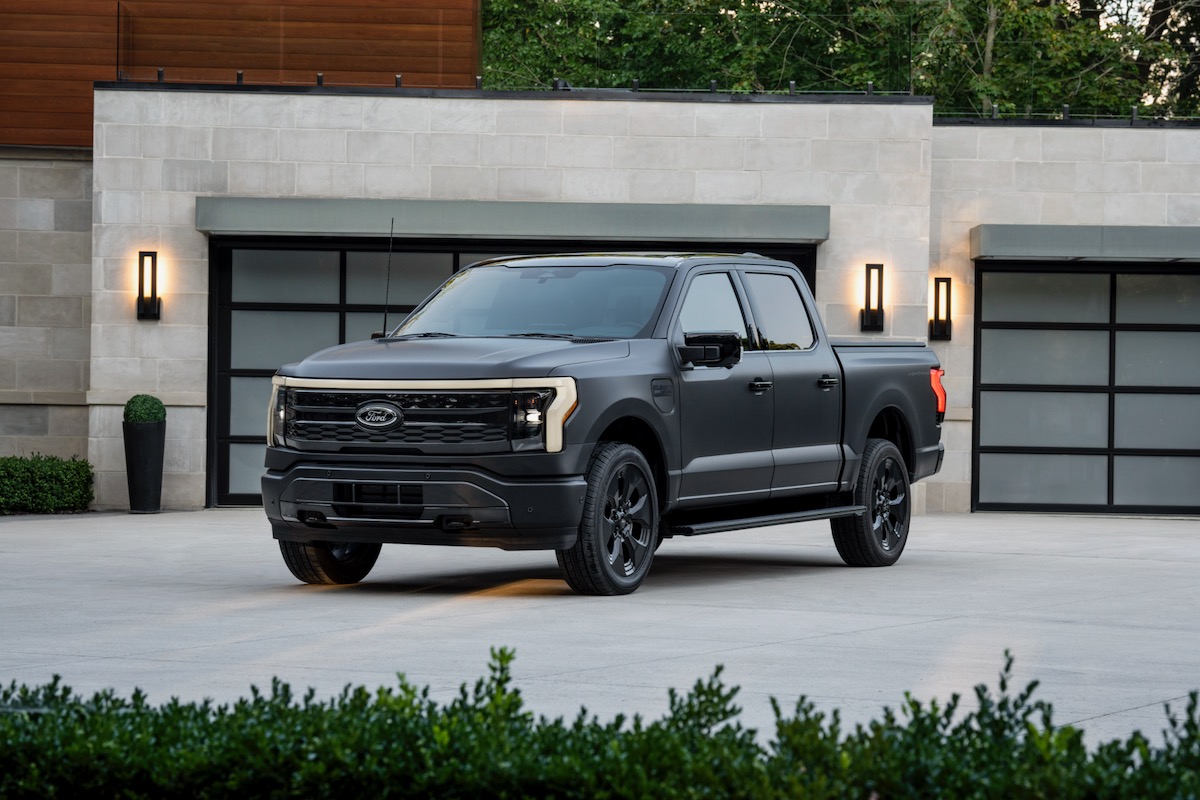
Ford F-150 Lightning
CarGurus expert rating: 8.3 out of 10
CarGurus user rating: 4.5 out of 5
Percentage of Good and Great Deals available on CarGurus: 29.0%
Overall CarGurus rating: 4.4 out of 5
The first electric pickup truck from the American Big Three, the Ford Lightning, takes a more subtle but tentative approach. Inside and out, the F-150 Lightning’s design is similar to the gas-powered F-150, making it an easy transition for drivers adapting to their first electric vehicle. The relationship continues for 2026 with a new STX trim with similar off-road garnishes as the gas-powered STX.
This version has the larger, extended-range battery (131 kWh) and dual-motor system that makes 536 horsepower, 775-pound-feet of torque, and gets 290 miles of EPA-estimated range.
It’s the new entry point to the Lightning since the base Pro model (with 320 miles of range) is only available to commercial fleet customers. The electric STX costs about $66,000, which is about $7,000 more than the gas STX.
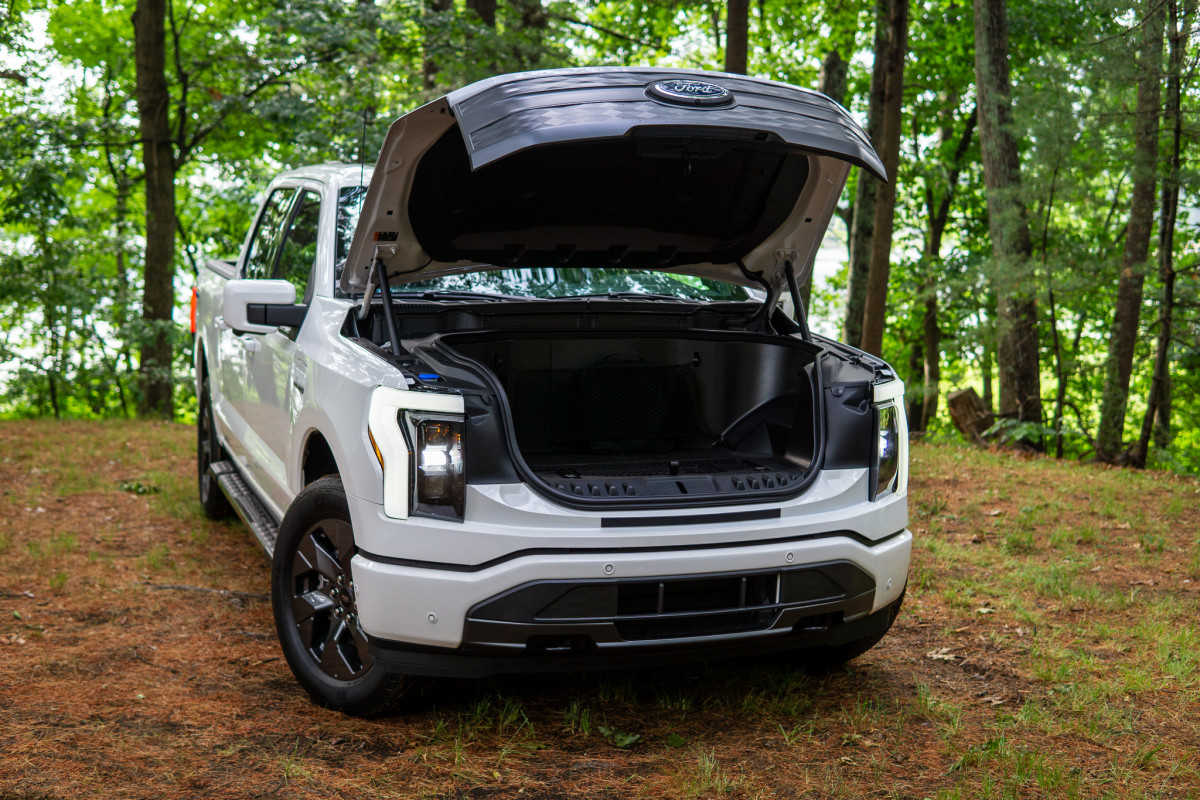
In addition to the spacious frunk, the Ford Lightning has another advantage over the ICE F-150: it has an independent suspension for a comfier ride.
With more torque than the raucous supercharged V-8 Raptor R, the Lightning accelerates to 60 miles-per-hour in under 4 seconds. It’s sold in Flash, Lariat, and Platinum trims, as well, topping out at about $85,000.
Read our most recent Ford F-150 Lightning review
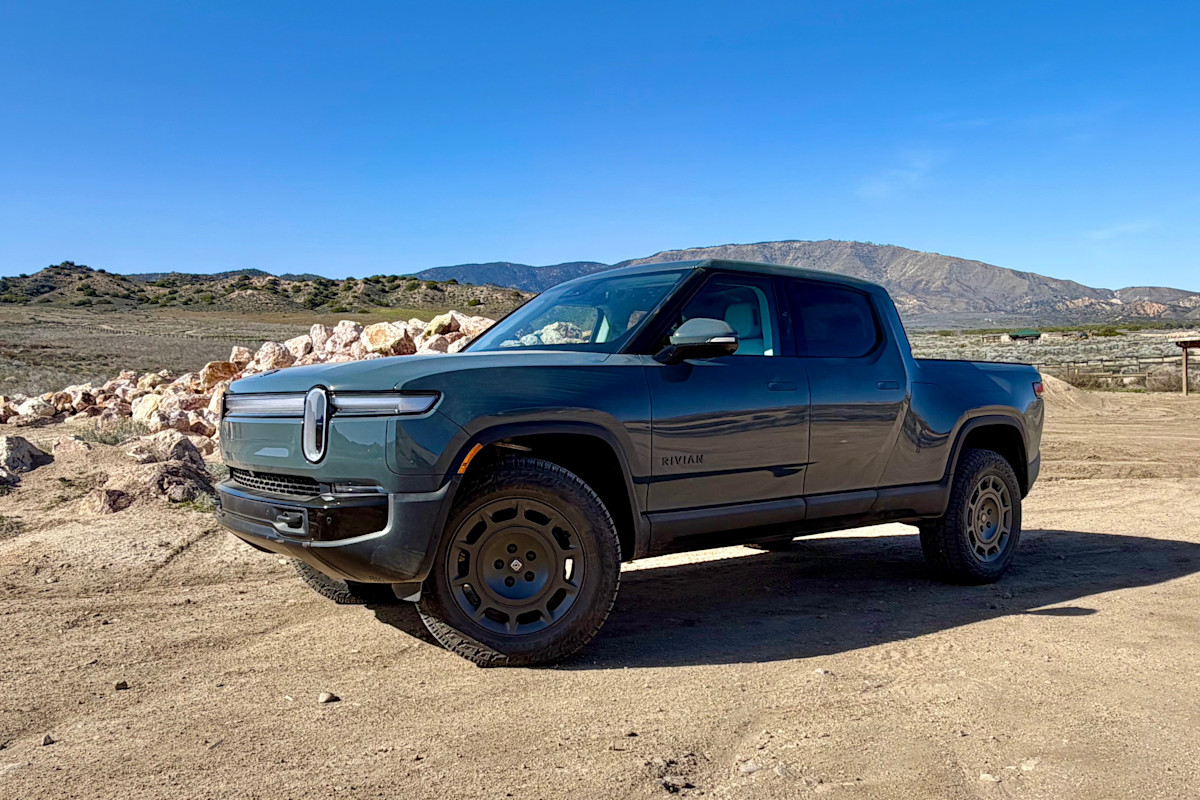
Rivian R1T
CarGurus expert rating: 7.7 out of 10
CarGurus user rating: 4.7 out of 5
Percentage of Good and Great Deals available on CarGurus: 28.7%
Overall CarGurus rating: 4.3 out of 5
The first mass-production electric pickup truck on the market, the Rivian R1T continues to improve. Refreshed for the 2025 model year with a native NACS port, the second generation R1T offers more range, more efficiency, and more power, and the 2026 model has an even more powerful Quad-Motor trim.
With a motor powering each wheel, the R1T Quad rates at 1,025-horsepower and 1,198 pound-feet of torque. Launch mode shoots it to 60 mph in 2.5 seconds, making it the quickest production truck.
It also has superlative traction and grip. The air spring suspension standard across the lineup as well as off-road equipment make it an off-road beast. Innovative design and packaging such as the secure gear tunnel between bed and cab complement its luxury-leaning interior.
Pricing starts at about $73,000 for the Dual-Motor Standard Pack with 270 miles of range, but opting for the Dual-Motor Max Pack boosts the range to 420 miles and the price to just under $87,000. The Quad-Motor starts just under $118,000.
Read our most recent Rivian R1T review
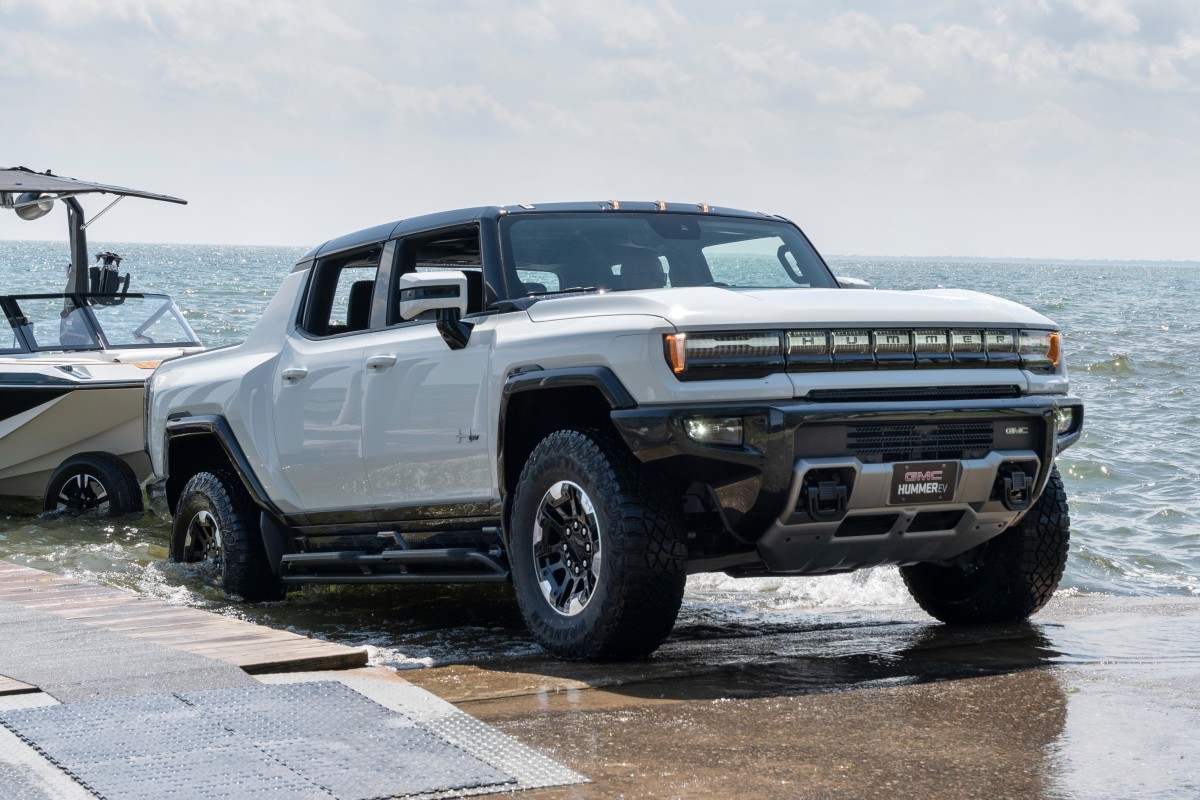
GMC Hummer EV Pickup
CarGurus expert rating: 6.7 out of 10
CarGurus user rating: 5 out of 5
Percentage of Good and Great Deals available on CarGurus: 28.7%
Overall CarGurus rating: 4.2 out of 5
The Hummer EV Pickup launched GM’s battery electric vehicle platform and it reinvented its gas-guzzling, militaristic namesake into a technological showcase and off-road beast that’s not much more efficient than its progenitor.
In the top 3X trim, which means three motors instead of two in the 2X trim, the specs dazzle with 1,160-horsepower and a “Watts to Freedom” mode (or WTF) that lowers the air suspension and rockets the 9,640-pound truck to 60 miles per hour in 2.8 seconds. That’s for the Carbon Fiber Edition new for 2026. Even without that trim, the 3X is absolutely bonkers-quick for a vehicle this size. Meanwhile, its 205-kWh battery supplies up to 363 miles of range.
An innovative rear-steer system improves low-speed maneuverability, and the CrabWalk function to show off or help tip-toe out of sticky situations for the bonafide off-roader. impress your buddies. Prices start just under $100,000 and climb to $107,000 for the 3X trim.
Read our most recent GMC Hummer EV Pickup review
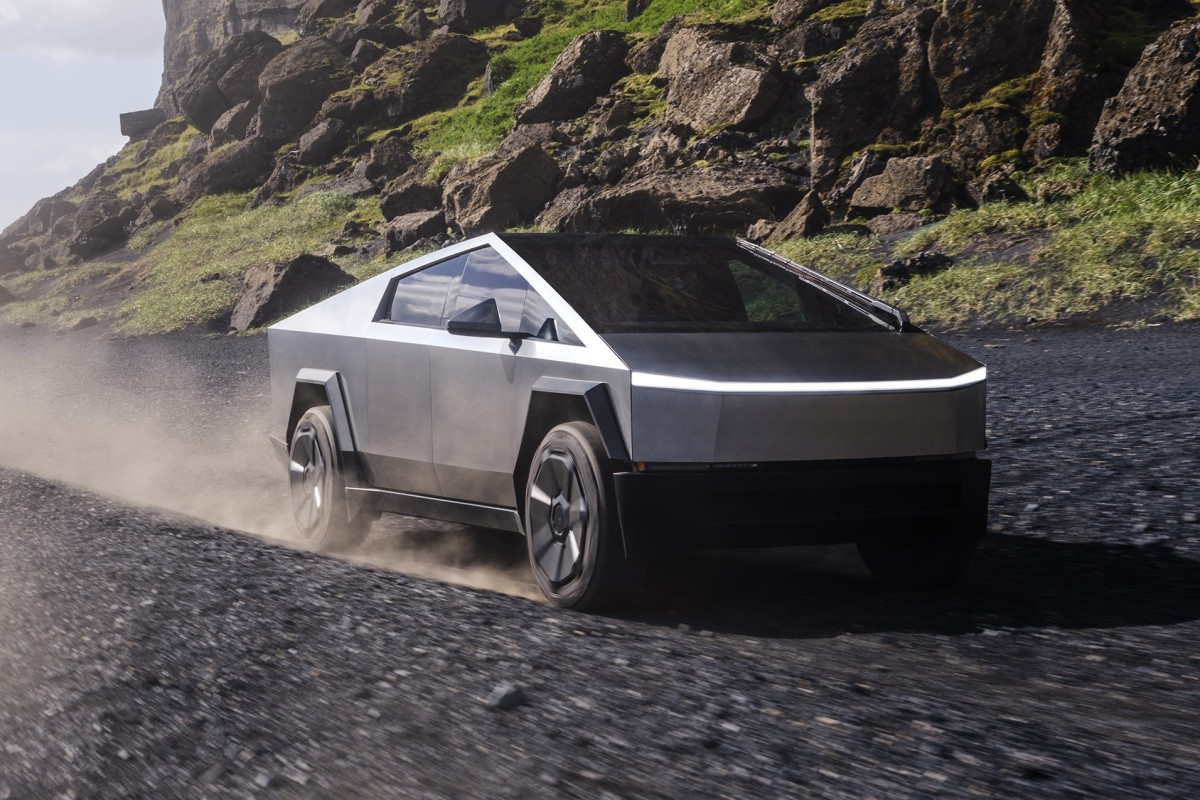
Tesla Cybertruck
CarGurus user rating: 5 out of 5
Percentage of Good and Great Deals available on CarGurus: 23.8%
Overall CarGurus rating: 4.2 out of 5
There’s no getting around the polarizing Cybertruck without talking about its polygonal design. The stainless-steel bodied truck could look like it came from the future or from the kitchen, depending on your perspective. The sharp edges and pointy tips, and its massive single windshield wiper, look like nothing else on the road, but its minimalist interior is classic Tesla, headlined by a big infotainment screen.
Steering is controlled through a yoke, like an airplane, and is “steer-by-wire,” meaning there’s no physical connection between the steering yoke and the front and rear wheels; it’s all handled by computers, resulting in a surprisingly nimble and maneuverable driving experience.
In Cyberbeast trim, equipped with three electric motors producing a combined 845 horsepower, the Cyberbeast sprints to 60 mph in 2.6 seconds, according to Tesla.
Equipped with a 123-kWh battery, the Cybertruck has an estimated 325-mile range with AWD and can tow up to 11,000 pounds. A more affordable single-motor rear-wheel-drive model was discontinued in 2025. Prices start at $82,500 for the base All-Wheel-Drive trim, with the Cyberbeast starting at $117,500.
Chevrolet Silverado EV
CarGurus expert rating: 7.8 out of 10
CarGurus user rating: 2.5 out of 5
Percentage of Good and Great Deals available on CarGurus: 24.2%
Overall CarGurus rating: 4 out of 5
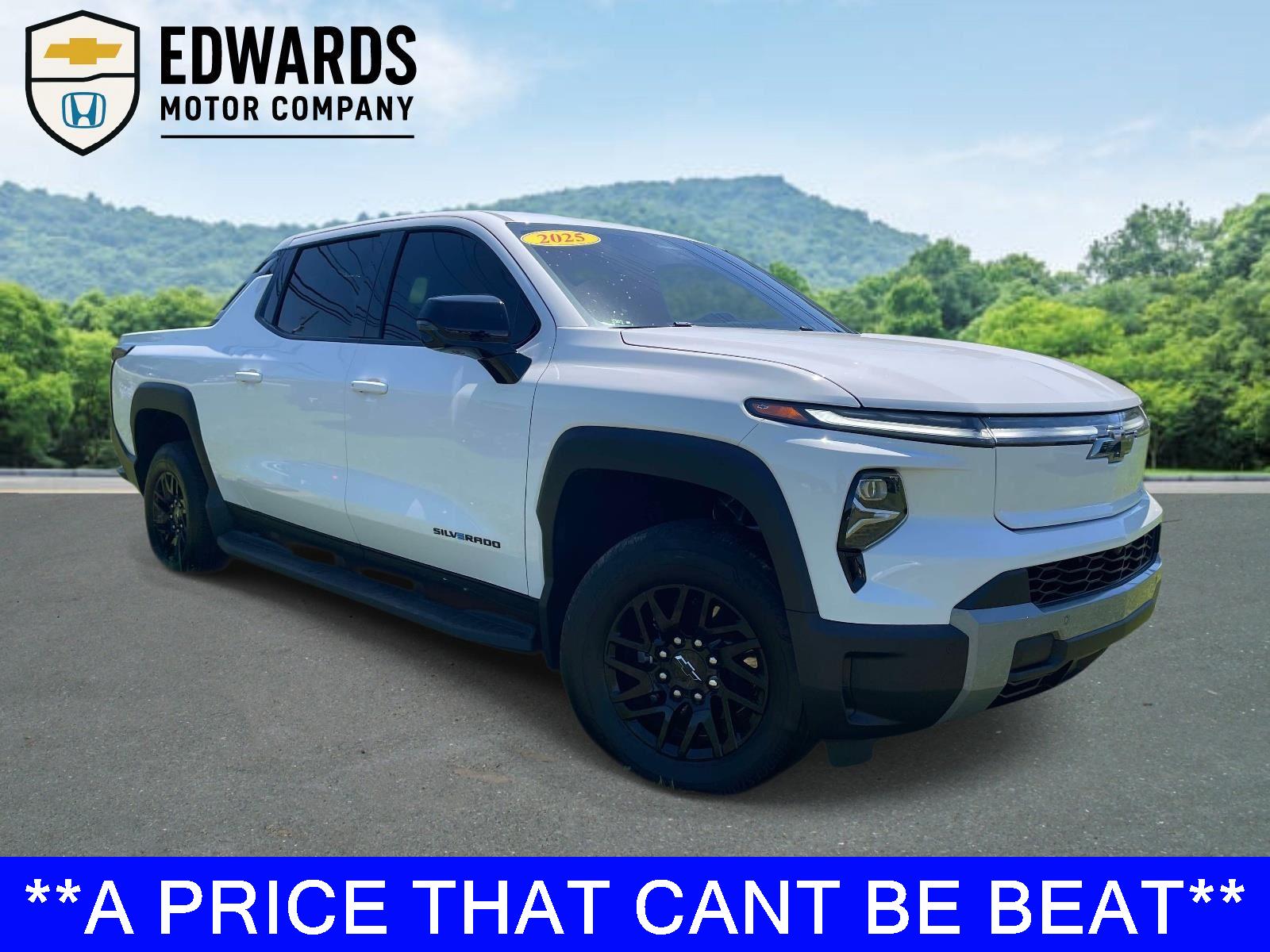
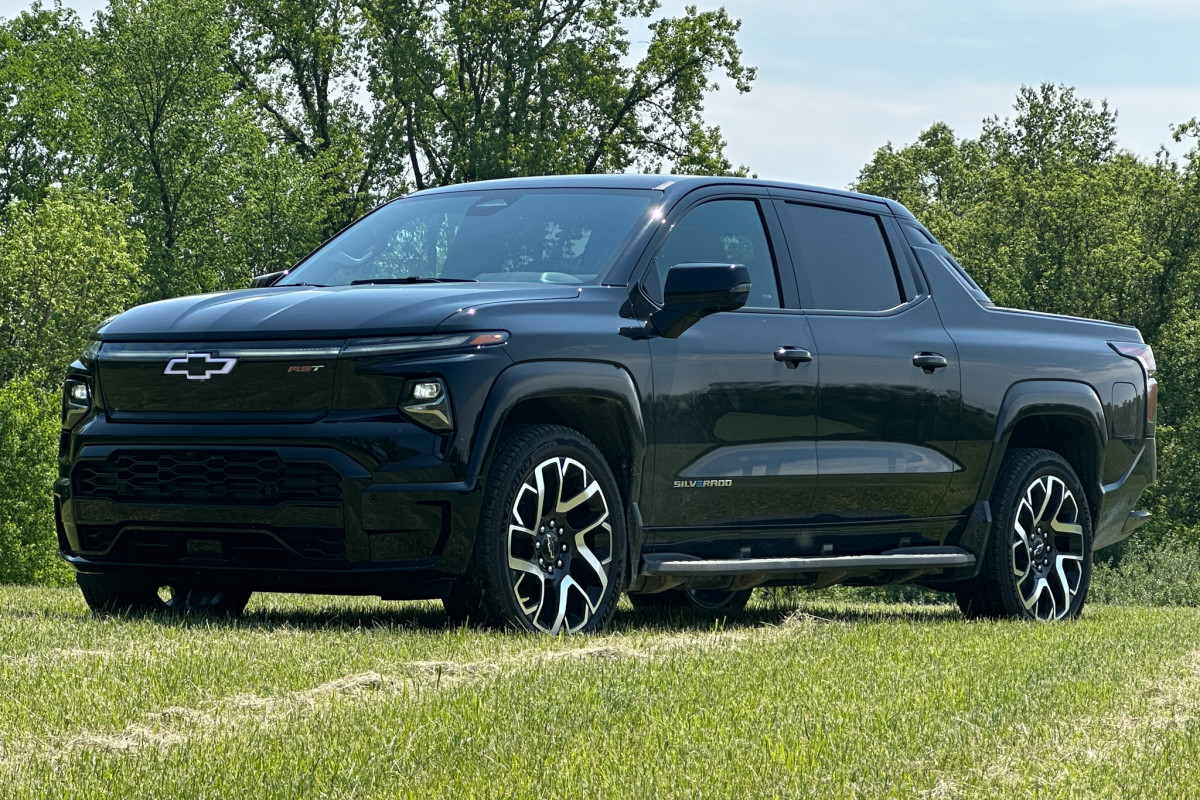
The Chevrolet Silverado EV costs between $55,000 and nearly $100,000, but in the ongoing truck wars, it claims title to one key EV metric: range. Thanks to GM’s massive 205-kWh battery pack, the base Silverado EV optioned with the Max pack has a range of 493 miles for 2026. The AWD truck has other eye-popping specs: 760 hp, 785 pound-feet of torque, a 0-60 mph time of about 4.2 seconds, and a towing capacity of 12,500 pounds.
That’s all very impressive, but top trims of the Silverado EV may impress even more. It comes only as a crew cab that’s slightly roomier than the gas version, but with its available fixed glass roof and its clever pass-through (dubbed Multipro Midgate) section that opens the cab with a few latches to extend the bed length from about six feet to more than nine feet, it’s an avalanche of cool features. It’s also well-equipped with driver-assist and convenience features.
One oddity worth mentioning on all GM electric vehicles except the Cadillac Lyriq and GMC Hummer EV (and in fact all GM vehicles of any kind): There’s no Apple CarPlay and Android Auto offered, even as an option.
Read our most recent Chevrolet Silverado EV review
GMC Sierra EV
CarGurus expert rating: 7.5 out of 10
CarGurus user rating: out of 5
Percentage of Good and Great Deals available on CarGurus: 20.3%
Overall CarGurus rating: 3.7 out of 5
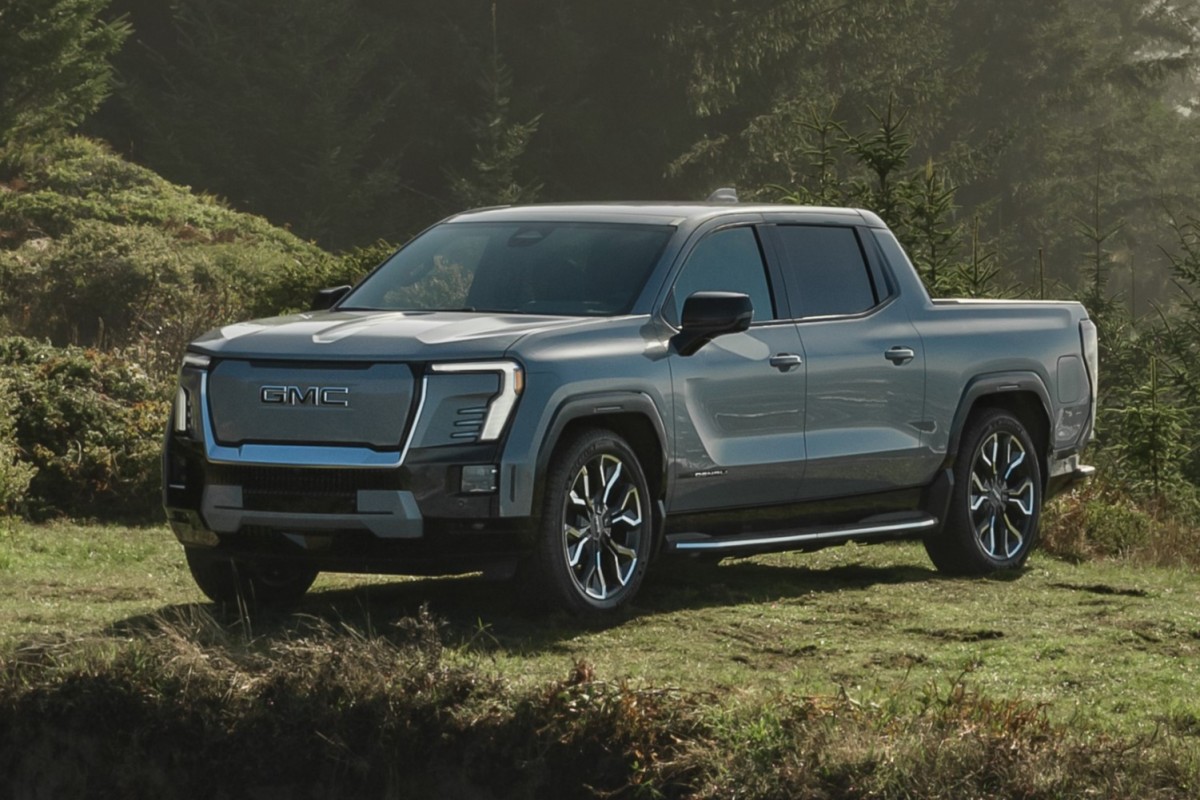
GMC’s take on the full-size electric truck followed the Silverado, with the luxury-leaning Sierra EV starting at about $63,000 and climbing to over $100,000. The famed Denali trim has now been joined by a base Elevation grade as well as an off-road AT4 model with 35-inch all-terrain tires, a lifted suspension, and the “CrabWalk” rear-axle steering feature that debuted on the Hummer EV and enables diagonal movement to extract the truck from tight spots.
It shares the drive units and battery pack of the Silverado EV, with a 205-kWh battery pack enabling up to 478 miles of range, and a dual-motor system generating 760 hp and 785 pound-feet. It can tow up to 12,500 pounds and the payload maxes out at 2,250 pounds.
It too has the Multipro Midgate feature with a six-way tailgate that can expand the total bed length to 10-feet-10. Every trim gets at least heated power front seats and a heated steering wheel, and all but the base Elevation comes with GM’s bar-setting Super Cruise hands-free driving system.
Read our most recent GMC Sierra EV review
FAQs
What are some electric trucks we can expect to see in the future?
Ford midsize truck: Ford has announced a new Universal EV platform that will support several EV models, launching for 2027 with a midsize pickup a little bigger than its Maverick hybrid compact model and a little smaller than the midsize Ranger. Ford claims a starting price of $30,000, similar to the Slate Truck from EV startup Slate.
Scout Terra: Owned by Volkswagen Group but operating somewhat independently, Scout Motors launched as an American brand in 2022 but its first products — the Terra pickup truck and Traveler SUV — aren’t expected until the 2028 model year. It looks a bit more retromod than the Rivian R1T, and Scout projects a 350-mile range and quick DC-fast charging due to its 800-volt architecture. Scout is currently taking refundable deposits on both models here.
Slate Truck: Expected for the 2027 model year, the Slate Truck is a bare-bones compact truck with modular, convertible parts that can also turn into a two-door SUV. Its single motor rates at 201 hp and 195 pound-feet, and it will only power the rear wheels. Two available battery packs should offer competitive range, and while the base 52.7-kwh pack likely won’t exceed 200 miles, it should help Slate hit its $27,000 MSRP target.
What are extended-range electric trucks?
One of the newer powertrain developments coming to the pickup truck is called an Extended Range Electric Vehicle. Essentially, it combines both a motor or motors and a smaller battery pack that’s charged on the go by a gas-powered engine that acts as a generator.
It’s different than a plug-in hybrid in that the engine does not contribute to propulsion — it merely acts as a generator to power the batteries that then power the electric motor(s). So you could drive long distances by refilling at traditional gas stations, tow heavy loads without the range drain, yet around town drive in electric mode with no tailpipe emissions and charging at home.
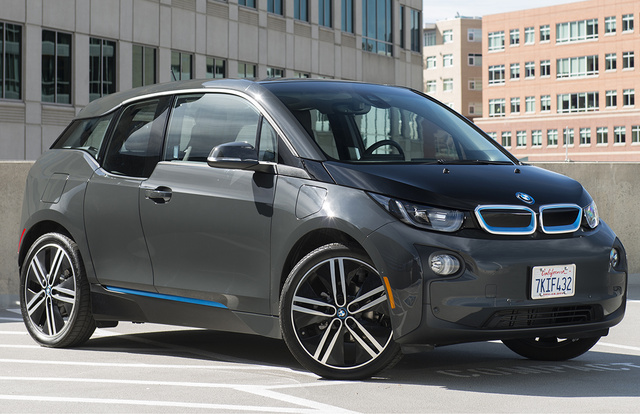
It’s not a new technology, as both the Chevy Volt sedan and BMW i3 hatchback used it in the 2010s.
Ram 1500 REV
Ram canceled its electric truck plans in the fall of 2025, and shifted to development of the Ram 1500 REV (formerly called the Ramcharger, which should have stuck). The Ram REV is an EREV with a big enough battery and big enough engine for either to stand on its own.
The electric range is less than a full electric vehicle but together with the gas generator, Ram promises 690 miles of range, 647 hp, 610 pound-feet, a towing capacity of 14,000 pounds, and a 0-60 mph time of 4.5 seconds, just not at the same time. A 92-kWh battery pack feeds two propulsion motors, and a 3.6-liter V6 powers the battery pack. It’s expected in 2026.
Scout Harvester
Specs aren’t as solid for the Harvester EREV editions of the forthcoming Scout Traveler SUV and Scout Terra pickup truck. Based on initial reservations, the EREV versions are more popular. The battery capacity is expected to be about half of the full battery electric versions, and the total range should be about 500 miles for the Harvesters.
Hyundai, Genesis, and Ford are developing EREV powertrains, and it would stand to reason that BMW and GM would redevelop theirs. The EREV could be a bridge for now to the inevitable electric future.
Why are electric trucks the future?
EV trucks are more efficient than conventional gas-powered trucks and, on average, provide significant savings in operating costs.
EV powertrains can recapture energy spent on forward momentum through regenerative braking systems. You’ll never need to charge if you drive downhill both ways.
From a design perspective, most modern electric trucks prioritize aerodynamic, low-drag designs to maximize range. For example, an F-150 Lightning does have some subtle exterior changes to improve aerodynamics compared to its gasoline counterpart.
Electric trucks are quicker than their ICE counterparts, moving with a lightness that belies their prodigious heft.
Weight is a downside. For electric trucks to have the capabilities of their gas counterparts, they need to have massive battery packs, up to 205 kWh in GM’s lineup. Those packs weigh tons, literally. Certain trims of the Silverado EV, GMC Sierra EV, and Hummer EV Pickup can weigh more than 9,000 pounds. Weight counters efficiency.
So the efficiency depends on how you use it.
If you are looking to reduce your carbon footprint, electric trucks emit zero tailpipe emissions, which is important in dense urban environments. How and where you charge your electric truck can affect emissions on a broader scale. If you plug into sources powered by renewable energy like solar or wind energy, whether at home or on the road, it can reduce emissions.
Manufacturers continue to innovate in the nascent electric truck segment. Tesla developed a few novel features that were firsts for regular production vehicles, notably steer-by-wire and 48-volt architecture. That architecture allowed Tesla to reduce the amount of wiring used in the truck while simultaneously improving the efficiency and power handling of the onboard circuits.
Rivian, with its latest Gen 2 offering, has also made notable improvements in simplifying and reducing the wiring in their R1T.
Another often overlooked advantage of electric trucks over traditional trucks is the packaging. Without a massive V8 occupying the engine bay, or a drive shaft tunnel burrowing down the length of the truck, automotive designers have more flexibility to innovate. Ford’s 14.1 cubic foot frunk is a great tool locker, so you don’t need a locking tonneau for the bed. Rivian’s secure gear tunnel sits between the cab and the bed, and has power-folding doors you can sit or stand on to remove gear. GM evolved its mid-gate feature first introduced on the Avalanche to extend the bed to monumental lengths of nearly 11 feet.
Finally, as the drive units and battery technology mature, there are incremental improvements in range and efficiency. Electric vehicle technology is still in its infancy, especially compared to combustion engines.
What are some top features to look for in electric trucks?
The main features to consider when shopping for an electric truck are driving range and charging infrastructure. Most full-size electric trucks are rated around 300 miles, but the Rivian R1T and Chevy Silverado EV can reach over 400 miles on a single charge when properly equipped.
-
Towing: If you are planning to do a lot of towing, it may not be quite time for an electric truck. Heavy duty trucks remain the towing champs. While modern electric trucks are quite powerful and can tow similar loads as light-duty trucks, they drain the battery quicker than a heavy load drains a tank. Some estimates say towing near capacity eats into about 50% of EPA-estimated range in the real world. So, you’ll either be charging on the road more often or towing shorter distances.
-
Charging while towing: Newer charging stations are addressing the problem of existing stations not being able to accommodate a truck and a trailer. Unhooking the trailer to charge could be a deal breaker for frequent towing.
-
Charging: Most automakers are migrating to Tesla’s North American Charging Standard (NACS) that give users access to Tesla’s Supercharger infrastructure, which is one of the most robust public charging networks in the country. Ionna, which is a DC-fast charging (DCFC) network made by conglomerate of automakers, is also building out to make public charging both more accessible and more enjoyable.
Level 2 AC charging at home or on the go adds around 30 miles of range in an hour, while the DCFC stations deliver a lot of energy in a short amount of time - up to 100 miles of range in as little as 10 minutes. An electric truck will take longer to charge than an electric car, simply based on the bigger batteries required to power these larger vehicles.
Charging at home is the recommended method for daily use. Install a 240-volt Level 2 charger at home (professional installation required) and it’ll be like plugging in your phone at the end of the day; after seven to 10 hours, your truck will be charged.
Choosing the Right Electric Truck for Your Needs
Which electric truck is right for you? The average price of electric trucks hovers around $70,000, but that’s only about $5,000 more than ICE trucks, according Cox Automotive’s most recent average transaction price report. The profitable pickup truck segment has been trending toward luxury prices for years, and electric trucks are no exception.
But when you consider the lower cost of ownership for an electric truck—no oil changes, transmission flushes, or spark plugs to replace, and possibly less wear and tear on brakes—electric trucks are closer in price parity to ICE trucks than ever before. Further cost savings can be had by charging off-peak at night at home.
DC fast charging, while convenient on road trips, gets expensive if it is your primary method of charging your truck.
There are additional costs for an EV, such as installation of a Level 2 charger at home, a higher home electricity bill, and more frequent swapping of tires.
For drivers looking for an electric truck for commercial use: Ford and Chevrolet offer entry-level Work Truck specifications for fleet use. These trucks are basic, equipped with vinyl or cloth seats, rubber floors, limited color options, and significantly lower MSRPs. Private buyers will have difficulty buying new examples as these trims are reserved for fleet customers.
Fleet operators can find significant reductions in fuel and maintenance costs with very few negatives, provided the truck has enough range and can be reliably recharged overnight. Amazon is proving the concept, deploying the Rivian Commercial Van (RCV) in many cities across the United States. It’s now available to all customers. There are also the Mercedes-Benz eSprinter and Ford E-Transit commercial vans.
One advantage of electric trucks that may be harder to quantify is simple: They’re more fun. They’re quicker, quieter, and comfier, and as capable as their gas counterparts.
What Makes CarGurus Best Cars Guides Different?
Most car-shopping websites publish lists of the best cars across a variety of categories, with recommendations generally driven by editorial expertise. Here's what makes ours different: In addition to the insights and verdicts of our team of car-testing experts, our best cars guides take into account other factors that we know matter to buyers-real owner experiences and current market value.
Our expert reviewers are among this country's most trusted automotive journalists, also writing for publications including US News and World Report, Edmunds, Digital Trends, J.D. Power, and Car & Driver. They put each car through real-world testing and create detailed reviews of performance in a range of categories, from practicality and driving manners to cost-effectiveness and safety.
We also analyze hundreds of thousands of used car listings on CarGurus.com to track which models consistently offer the highest percentage of best deals relative to how many are listed for sale. Then we factor in reviews from owners-people who actually live with these cars every day. Our proprietary Best Cars algorithm then creates a final Overall CarGurus rating combining expert scores, user reviews, and the percentage of listings that have earned the Good or Great Deal rating. This multi-pronged approach reveals not just which cars excel on paper, but which ones deliver satisfaction and value when you're ready to buy.
The CarGurus market data used in this guide was last updated in March of 2026. Values were accurate at time of publication and should be used as a guide only.
Shopping Tools
Related Topics