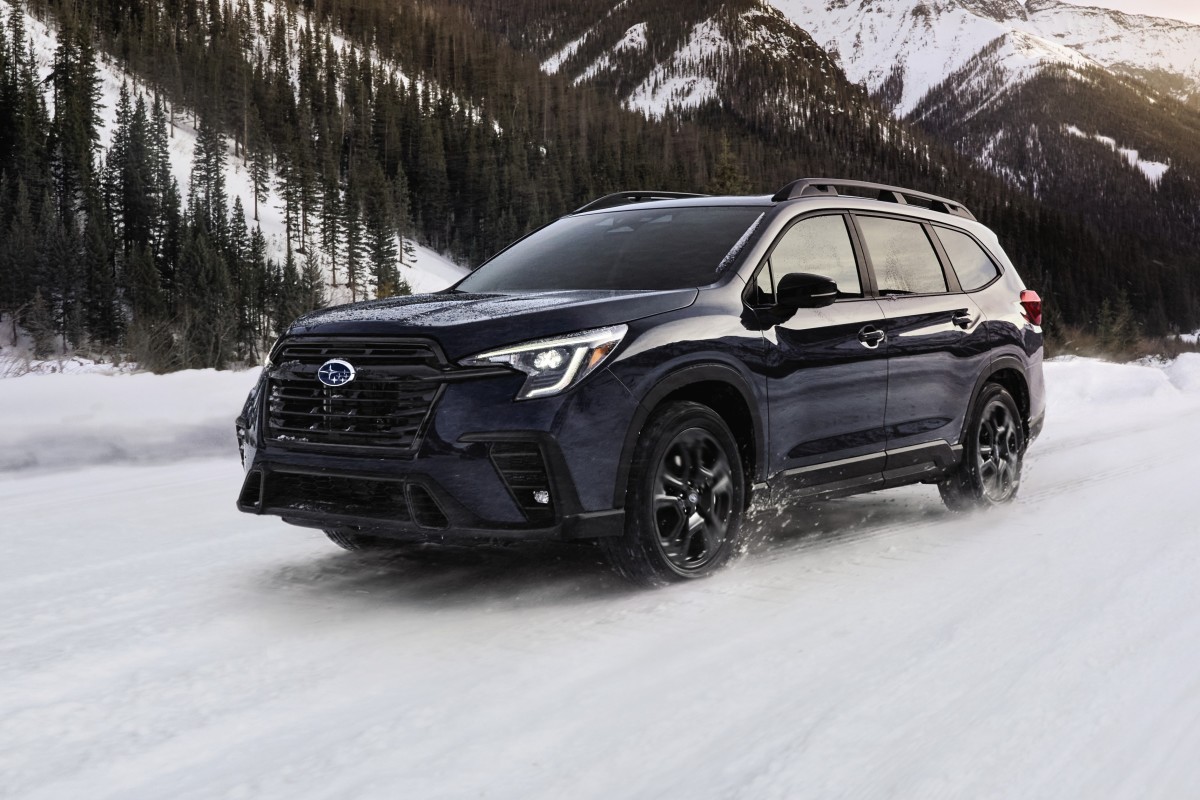
The Subaru Crosstrek is a subcompact crossover based on the Subaru Impreza hatchback. It’s one of the brand’s best-selling models of recent years but how did Subaru hit on this successful formula? Well, back in 1995 it introduced the first Outback as a rugged-looking version of the Legacy station wagon. Americans loved it, and with the Outback—and the original 1996 Toyota RAV4—the modern crossover was born.
Naturally, Subaru thought the same trick might work on the smaller Impreza hatchback. So for the 1997 model year, Subaru gave it the Outback treatment and called it the Outback Sport. It wasn’t as popular as its larger Legacy-based sibling, but Subaru kept the Impreza-based version through the 2011 model year.
That was followed, in 2013, by a new model called the XV Crosstrek. It used that same Outback Sport recipe, but this time it hit the mark and an Impreza-based crossover proved appealing to buyers. In 2016, the Crosstrek dropped the “XV” part of its name, and by the mid-2020s, the Crosstrek was the best-selling Subaru in America.
At its heart, the Subaru Crosstrek is a simple vehicle. It has a four-cylinder boxer engine, a manual or continuously variable automatic transmission, and the company’s Symmetrical all-wheel drive (AWD) system. Based on a car built for basic transportation, the Crosstrek lacks technological complexity, but makes up for it with plenty of personality. With generous ground clearance, protective bodywork, and pedestal-style roof rails perfect for tying down extra cargo, it’s a compact, practical daily driver that costs little more than the Impreza hatchback and quite a bit less than the larger Subaru Forester.
Should you buy a used Subaru Crosstrek? If the car has been properly maintained and you don’t find any red flags on a vehicle history report or a test drive, then a used Crosstrek should serve you well. With a decent set of tires, it effortlessly blasts through snow, and gets good gas mileage. It’s also known for its safety, although in recent years, Subaru’s littlest crossover has had some trouble excelling in updated crash tests performed by the Insurance Institute for Highway Safety (IIHS).
Our Subaru Crosstrek buyer’s guide looks at each of the three generations of Subaru Crosstrek in detail, with advice on the best and worst versions, what to watch out for and how much you can expect to pay.
Subaru Crosstrek Buying Guide: Cost, Reliability, and the Best Years to Buy
Unless you can afford a third-generation Crosstrek, we recommend choosing an example from the last three production years of each generation—the 2015-2017 models (which average roughly $11,841 to $14,405 on CarGurus) and the 2020-2022 models (about $19,783 to $22,871). Based on CarComplaints reports, Crosstreks produced more owner dissatisfaction during the first two years following a redesign. Also, in these years, the Crosstrek earned “Top Safety Pick” ratings from the IIHS.
What are the worst Subaru Crosstrek years?
Historically, the first model year after a redesign has produced the most complaints from Crosstrek owners, so you might want to avoid the 2013 XV Crosstrek and the 2018 Crosstrek. The redesigned 2024 Crosstrek hasn’t suffered the same fate, but time will tell.
How much does a late-model Subaru Crosstrek cost?
Recent used examples still command close to new-car money. On CarGurus, a one-year-old 2025 Crosstrek averages about $29,047, a three-year-old 2023 model runs around $24,328, and a five-year-old 2021 example averages roughly $21,487. Dropping back a few model years is the clearest way to save.
According to CarEdge, these little Subarus hold their value well, and command a premium over other small crossover SUVs. However, given their impressive overall reliability rating from Repair Pal, their many talents, and their historical track record for safety, a used Crosstrek might still be a good deal, even if it has a higher price than similarly sized alternatives.
However, remember that Crosstreks are popular where it snows, and many have spent time off-road. In addition to obtaining a vehicle history report on any used Crosstrek, put this Subaru on a lift for an undercarriage inspection to ensure it hasn’t seen abuse and/or indifferent care and maintenance.
Subaru Crosstrek Pros and Cons
Pros
Standard AWD and lots of ground clearance
Plenty of utility in a small package
Favorable reliability, safety, and EPA fuel economy ratings
Cons
Anemic acceleration with base engines
Lots of noise and transmission droning with CVT
Hybrids are in short supply
Subaru Crosstrek Generations
Third generation (2024 to Present)
The Subaru Crosstrek was redesigned for the 2024 model year, and again based on the latest version of the Impreza five-door hatchback. Sticking with a tried-and-true formula, there are only incremental changes instead of significant revisions for the post-2024 Subaru Crosstrek.
However, the automaker expanded the lineup to include a new Crosstrek Wilderness model, with improved off-roading capability and styling to match. The Crosstrek Wilderness adds extra dark gray body cladding and underbody protection, further raised suspension with an impressive 9.3 inches of ground clearance, all-terrain tires wrapped around exclusive alloy wheels, and a dual-function version of Subaru’s X-Mode traction system. Those upgrades, plus hill descent control, allow the Subaru Crosstrek Wilderness to go places other Crosstrek models could not.
Speaking of other Crosstreks, the latest lineup includes Base, Premium, Sport, and Limited trim levels. Engine options, as usual for the Crosstrek, are limited. The Base and Premium have a 152-horsepower 2.0-liter four-cylinder engine, while the Crosstrek Sport, Limited, and Wilderness come with a larger 182hp 2.5-liter four-cylinder unit. They all have a continuously variable transmission (CVT) with paddle shifter on Premium trim and upwards, plus standard AWD. Unlike with previous generations, a manual transmission is unavailable.
With all but the Base trim (which has the likes of dual-zone climate control, push-button start, a USB-A socket, and cloth upholstery) the redesign brought a next-generation 11.6-inch Subaru Starlink touchscreen infotainment multimedia system with wireless Apple CarPlay and Android Auto. (The Crosstrek Base has a dual seven-inch display screen setup with wired Apple CarPlay and Android Auto). Subaru also added 4G LTE Wi-Fi capability and improved the Crosstrek’s navigation system and Starlink connected services, while adding a standard wireless smartphone charger and heated front seats for the upper trim levels, and a power driver’s seat specifically for the Limited trim.
On the safety front, a next-generation Subaru EyeSight driver assist technology package debuted. New cameras offer a wider field of view for improved system performance, and on trim levels equipped with blind-spot monitoring and rear cross-traffic alert, a new Automatic Emergency Steering system works at speeds below 50 mph to help prevent collisions.
For the 2025 model year, the larger 2.5-liter engine became standard with the Subaru Crosstrek Premium trim, leaving the Base model with the underpowered 2.0-liter four. For 2026, Subaru dropped the 2.0-liter engine entirely, making the 180-horsepower 2.5-liter four-cylinder standard across the lineup, and top trims gained a standard heated steering wheel.
Then, the 2026 model year Crosstrek lineup expanded with a new hybrid powertrain. Based on a 2.5-liter four-cylinder engine, it supplies a combined 194 horsepower and improved fuel efficiency, while retaining nearly all the available cargo space. Unlike previous-generation Crosstrek Hybrid models, the new car comes in multiple trim levels to help meet variable customer budgets and equipment requirements.
Because third-generation Crosstreks are relatively new, prices remain high. Used examples with fewer than 20,000 miles go for $23,500 to $36,000, with low-mileage Limited and Wilderness variants commanding top-dollar at dealerships. As of this writing, that’s not much of a discount from the MSRP of a brand-new Crosstrek, so you might want to pursue one nobody else has already owned.
Since it’s so new there’s limited reliability data about the latest Crosstrek. Subaru’s new-car warranty cover is distinctly average, with a three-year/36,000-mile bumper-to-bumper warranty, and a five-year/60,000-mile powertrain warranty.
Second generation (2018 to 2023)
Wisely, Subaru did not mess with success when it introduced the second-generation Crosstrek. Still, the small crossover SUV was much different under its familiar skin than you might guess.
Built on an all-new platform with significantly improved structural rigidity, equipped with a new direct-injected 2.0-liter four-cylinder engine, and featuring a new active torque vectoring AWD system, the 2018 Crosstrek was substantially different from the vehicle it replaced. The engine made 152 horsepower, but the slight increase in output wasn’t noticeable. Subaru continued to offer both a manual gearbox and a CVT.
Safety improved with the second-gen Crosstrek thanks to the automaker’s latest ring-shaped reinforcement frame safety architecture and new EyeSight technologies. The infotainment systems offered a 6.5-inch or an eight-inch touchscreen display, and Apple CarPlay and Android Auto connectivity became available for the first time. The Starlink connected services platform continued to offer features such as automatic collision notification and SOS emergency assistance.
The second-generation Crosstrek was also larger than the SUV it replaced. The interior offered more room, particularly rear-seat legroom. Cargo space expanded from 20.8 cu-ft to 55.5 cu-ft with the rear seats folded down.
In 2018, the Crosstrek trim levels were Base, Premium, and Limited. Those continued in 2019 when Subaru added more standard safety features to the crossover. However, the big news that year was the reintroduction of the Crosstrek Hybrid, this time as a plug-in hybrid offering 17 miles of electric-only driving and 35 mpg in combined driving when using the gasoline engine.
Although the Crosstrek Hybrid’s total system output measured only 148hp, Subaru claimed that when using the gas engine and electric propulsion motor simultaneously, it accelerated faster than a standard Crosstrek to 60 mph. When cruising, it could travel at speeds up to 65mph on electricity, and if you left home with a full battery and gas tank, the Crosstrek Hybrid could cover an estimated 480 miles.
The 2019 Crosstrek Hybrid was the most expensive model in the lineup, loaded with everything except an option package containing a power sunroof, a heated steering wheel, a navigation system, and a Harman Kardon premium sound system. It also had less cargo space than the gas-only Crosstreks, with only 15.9 cu-ft behind the back seat and a maximum of 43.1 cu-ft.
In 2020, automatic climate control and a new rear-seat reminder system became standard. Versions with a CVT gained Subaru SI-Drive driving modes and standard EyeSight safety features.
Subaru refreshed the Crosstrek lineup for the 2021 model year. In addition to minor styling enhancements, the 2021 Crosstrek lineup added a new Sport trim level equipped with a more powerful 182hp 2.5-liter four-cylinder engine (also standard with Crosstrek Limited trim). The 2021 Subaru Crosstrek Sport also came with StarTex artificial leather upholstery and a dual-function X-Mode traction system for improved performance in dirt, mud, snow, and deep snow.
Additional changes for the 2021 Crosstreks included a new lane-centering assist system for the EyeSight package. When used with the standard adaptive cruise control, it provided hands-on semi-autonomous highway driving. Subaru also re-tuned the Crosstrek Hybrid’s suspension in 2021. Subaru made no further changes to the second-generation model except to offer a 2023 Crosstrek Special Edition in an exclusive Desert Khaki paint color.
CarComplaints indicates that the most common gripes about the second-gen Crosstrek pertain to its technology, mainly the Starlink infotainment systems. Subaru appeared to have resolved those issues by the 2020 model year, and the 2020 to 2023 versions of the SUV are remarkably trouble-free. Nevertheless, it remains a good idea to get a vehicle history report to root out any hidden issues.
Second-generation Crosstreks with fewer than 40,000 miles are easy to find, but the plug-in hybrids are scarce. Expect to pay anywhere from around $19,000 to about $32,000, depending on the trim level, the mileage, and the condition.
First generation (2013 to 2017)
Before 2013, Subaru offered its customers the Outback Sport, a more rugged version of the Impreza five-door hatchback equipped with different styling details and some extra ground clearance. It wasn’t broadly popular, but the new 2013 Subaru XV Crosstrek quickly became a hit.
Featuring a significant three-inch increase in ground clearance over the Impreza, purposeful lower body cladding and wheel designs, and a sturdy pedestal-style roof rack, the XV Crosstrek shed its Outback Jr. status to appeal to new buyers seeking all-road, all-weather capability in a compact, utilitarian package.
Acceleration was not the XV Crosstrek’s strong suit, due to an underwhelming 2.0-liter four-cylinder engine making 148 horsepower. Fans of manual transmissions found some joy in the car’s standard five-speed gearbox, while the available CVT created a lot more noise than forward momentum. Undeniably, though, the XV Crosstrek was fun to toss around on dirt roads and for tackling moderately challenging trails.
With seating for four (five if absolutely necessary) and between 22.3 and 51.9 cu-ft of cargo space, the 2013 XV Crosstrek was small inside but exceptionally practical. It came in two trim levels: Premium and Limited.
In 2014, Subaru introduced the XV Crosstrek Hybrid, which featured an electric motor integrated into the CVT. The hybrid produced 160 horsepower, offered 30 mpg in combined driving, included AWD, and preserved the Crosstrek’s 8.7 inches of ground clearance. However, the battery reduced the available cargo space, lessening the SUV’s utility. Subaru offered it in Premium and Touring trim levels.
The 2015 XV Crosstrek lineup added a new Base trim, quicker steering, a standard reverse camera, and new Starlink infotainment systems. Subaru’s EyeSight driving assistance technology was available for the Premium and Limited. In addition, the Crosstrek Hybrid gained a new PIN Code vehicle entry system.
Subaru dropped the “XV” part of the name for 2016. Updated styling, a new Starlink Safety & Security connected services plan, and a blind-spot detection system with rear cross-traffic alert also debuted that year. Hybrid models shared those updates.
For the first-generation’s final model year, the 2017 Crosstrek was available as a special edition in black or red paint colors, and a lane-change assist function arrived for models with blind-spot detection. Subaru discontinued the Crosstrek Hybrid by 2017.
According to CarComplaints, the 2013 XV Crosstrek suffers from mechanical problems related to the drivetrain, the steering, and the wheels. Some of these issues also pertain to the 2014 model, though not at the same frequency. Hybrids are less problematic. Nevertheless, regardless of which first-generation Crosstrek you’re considering, get a vehicle history report and an inspection by a mechanic who knows their Subarus.
Finding a used first-generation Crosstrek with less than 70,000 on the odometer is easy. They range from $14,000 to $22,000, depending on the year, the trim level, the transmission, and the mileage. Crosstrek Hybrids of this generation are a rare breed.
Christian Wardlaw has 25 years of experience reviewing cars and has served in editorial leadership roles with Edmunds, J.D. Power, the New York Daily News, Autobytel, and Vehix. Chris prefers to focus on the cars people actually buy rather than the cars about which people dream, and emphasizes the importance of fuel economy and safety as much as how much fun a car is to drive. Chris is married to an automotive journalist, is the father of four daughters, and lives in Southern California.
The content above is for informational purposes only and should be independently verified. Please see our Terms of Use for more details.