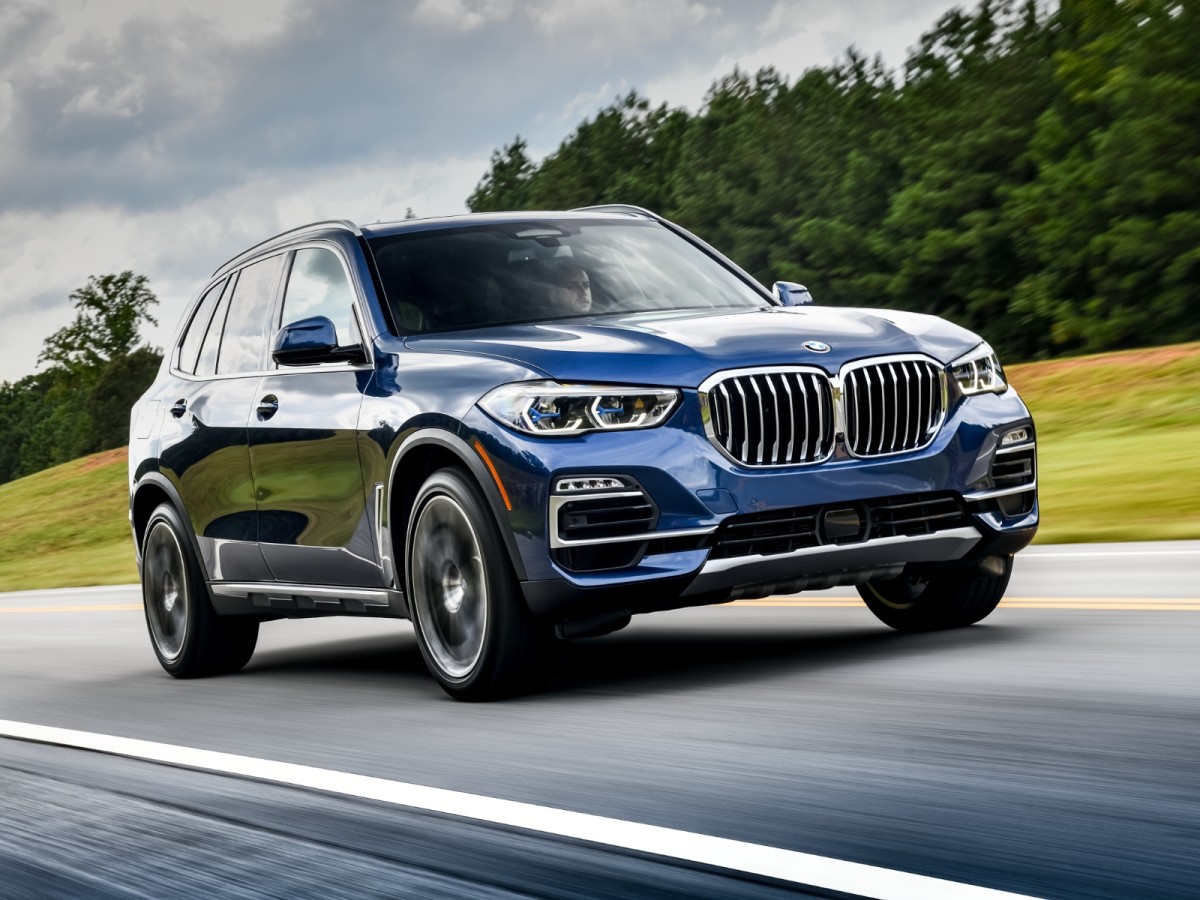
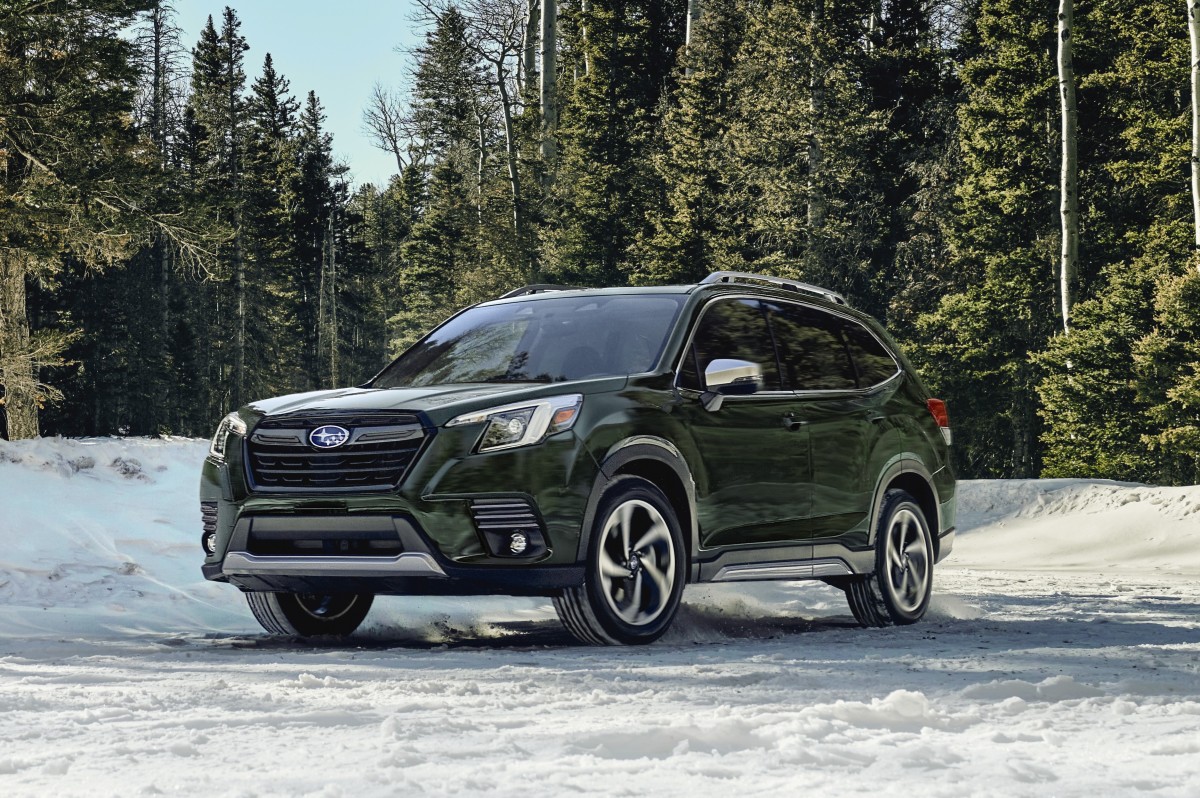
The Porsche Macan is a compact SUV that combines sportiness and luxury. It's Porsche's second SUV model, following the huge success of the larger Cayenne. The Macan is a rival for cars such as the BMW X3, the Lexus NX, and the Mercedes-Benz GLC. It also competes with the Audi Q5, which (in 2008-2017 form) uses the same basic platform as the Macan—Porsche says that only about 20% of parts are shared between the two. U.S. sales of the Macan started in spring 2014 for the 2015 model year, and since then it has been one of Porsche's best-selling models, with more than 200,000 sold to date.
Like most rivals, the Macan is a five-seater, although its sleek, coupe-like shape means it's not especially spacious inside. All versions have all-wheel drive (AWD) and a seven-speed Porsche Doppelkupplung (PDK) dual-clutch automatic transmission that gives the option of manual gear changes. The (all-gas) powertrain lineup hasn't changed significantly over the years. Initially available only with V6 units, an entry-level four-cylinder joined the range a year or so later. Model names and specific outputs have changed a bit since then, but the basics are the same; you can choose a four-cylinder model with decent power, or go for a six-cylinder model with extra performance but heavier fuel consumption. Standard equipment has always been good, but the spec of an individual car can vary greatly depending on which of the wealth of option packs and individual options were specified when new.
As you'd expect of a car that's been on sale for more than a decade, the Macan has had a couple of range updates. The most significant, in 2018, brought tech, design and engine changes. Another in 2021 brought the Macan to pretty much where it is now. There are no hybrid versions, but the new Porsche Macan Electric—the brand's first pure-electric SUV—went on sale in 2024. It's an entirely different model from the gas-powered Macan and sits on a new, electric-only platform. For now, electric models and gas models continue to be sold alongside each other, but Porsche has confirmed that it will stop producing the gas-powered Macan model from 2026 and has no plans to replace it.
Our Porsche Macan buying guide charts the model's development, giving you the lowdown on which models are available, which are the best and worst versions to buy and how much you can expect to pay for one.
Porsche Macan Buying Guide: Cost, Reliability, and the Best Years to Buy
Frequently Asked Questions
Which Porsche Macan years are the best?
Pretty much every year is a good year when it comes to the Porsche Macan. There are no major reliability concerns to be aware of, with only a few minor issues affecting earlier cars.
What are the worst Porsche Macan years?
There are no bad years when it comes to Porsche Macan reliability, with an excellent record for both the model and Porsche as a brand. The highest number of problems noted on carcomplaints.com is for 2015 cars, but these amount to just five complaints, as of January 2025.
Is a used Porsche Macan a good deal?
A used Porsche Macan could be a great deal if you're looking for a fast and fun compact SUV with a premium look and feel. It's not the most practical car in its class, but it is one of the best to drive and feels worth its higher-than-average ticket price.
Porsche Macan Pros and Cons
Pros:
- Fast and fun to drive
- High-quality interior
- Good reliability record
Cons:
- Rear-seat space is below-average
- Starting to feel dated compared with some rivals
- Higher-powered versions give low mpg
Porsche Macan Generations
First Generation (2014-present)
Porsche was on safe ground when it introduced the Macan in 2014. Its first SUV, the Cayenne, was so successful that—so the tale goes—it single-handedly saved the brand from bankruptcy. That's over-egging the pudding (and ignoring the major role played by the Boxster and the 911) but the Cayenne did its bit to transform Porsche into one of the most profitable car companies in the world. In the same way that the Cayenne shares its basic platform and some parts with other Volkswagen Group models, such as the Audi Q7 and the Volkswagen Touareg, the Macan and the first-generation Audi Q5 are related. Not closely, Porsche would argue, with most of the Macan's components unique to the model.
From the off, the Macan has had a sportier brief than most compact SUVs. Smaller and more nimble than the Cayenne, it has a head start in translating the thrilling drive you get with Porsche's sports cars into a crossover SUV format. All models have all-wheel drive and a seven-speed PDK automatic transmission. The two models available from launch—the Macan S and the Macan Turbo—give performance on a par with any Porsche Cayman or Boxster model, with each having a twin-turbo V6. The Macan S has a 3.0-liter unit with 340 horsepower, while the Macan Turbo has a 3.6-liter with 400 horsepower, and both are good for a 0-60 time of around five seconds. Two new variants arrived for the 2016 model year. The Macan became the new base model, its inline four-cylinder 2.0-liter turbo engine giving 252 horsepower, while the Macan GTS slotted in between the Macan S and the Macan Turbo, with a 360-horsepower version of the 3.0 V6.
Porsche treated the Macan to a major update for the 2019 model year. Externally, it looks much the same, but a new design for the bumper and headlight lenses gives it a sharper look at the front, while a new tailgate incorporates a full-width light bar. Inside, there's a redesigned dashboard and a next-generation infotainment system with a larger touchscreen. An upgraded range of engines provides more power, with increases of between eight and 34 horsepower for all but the base model. Another update for the 2022 model year brought more exterior cosmetic tweaks, with new bumper designs front and rear, another interior and infotainment refresh and a revised model lineup. The entry-level Macan gained a new, 261-horsepower 2.0-liter engine, while the Macan Turbo name was dropped and its 434-horsepower 2.9-liter engine moved into the now-range-topping Macan GTS. The Macan S, in turn, inherited the 375-horsepower 2.9-liter engine from the GTS. A new Macan T derivative was added for the 2023 model year, using the same four-cylinder engine as the Macan but with a sportier look and feel, with Porsche Active Suspension Management (PASM)—an adaptive suspension system—as standard, as well as a greater rear-wheel-drive bias in its power distribution and a range of cosmetic upgrades.
The gas-powered Macan received no updates for the 2024, 2025 and 2026 model years, though Porsche did introduce an all-electric model that shares the Macan name but is on a distinctly different platform and covered separately.
Standard equipment has increased over time, but even the earliest models have electric front seat adjustment, electric folding door mirrors and a power tailgate. From the 2016 model year onwards, even the Macan base model has three-zone climate control, front and rear parking sensors, and a lane-departure warning system. Since the 2022 model year update, all versions have had LED headlights and Apple CarPlay compatibility as standard. A huge range of options and option packs have been available during the Macan's time on sale, offering lots of ways to personalize the way it looks, feels and drives when specified as a new car. Highlights include air suspension, ceramic brakes, a panoramic roof, a Burmester premium audio system, and a mass of color and trim variations. There's also the Sport Chrono Package, a range of chassis and tech features—including a launch control system—geared for track use.
The Porsche Macan has a very good record for reliability. Despite 10 years of sales, just a handful of issues have been raised on carcomplaints.com, with nothing major to look out for. Porsche has been one of the top-ranked brands in the annual J.D. Power U.S. Vehicle Dependability Study in most years since the Macan has been on sale. The Macan itself finished top of the compact premium SUV category in 2020 and 2021, and was second in 2019 and third in 2024.
The MSRP for a 2026 Porsche Macan ranges from just under $68,000 to more than $96,000. Used examples start at about $17,000 for models from the first or second model year. Examples from around 2020 and onward ring up in the mid $30,000s or higher. Models that are just a few model years old average in the $50,000s, according to CarGurus data.
Related Topics