The Pontiac G8 is kind of like a one-hit wonder—although that was through no fault of its own. When the G8 entered the scene in 2008, it had no way of knowing that the Pontiac brand’s days were numbered.
Built in Australia, the G8 was essentially a rebadged Holden Commodore, with front styling changes and different interior details. It was created to replace the Bonneville and the Grand Prix in the Pontiac lineup, and as a competitor to the four-door Dodge Charger.
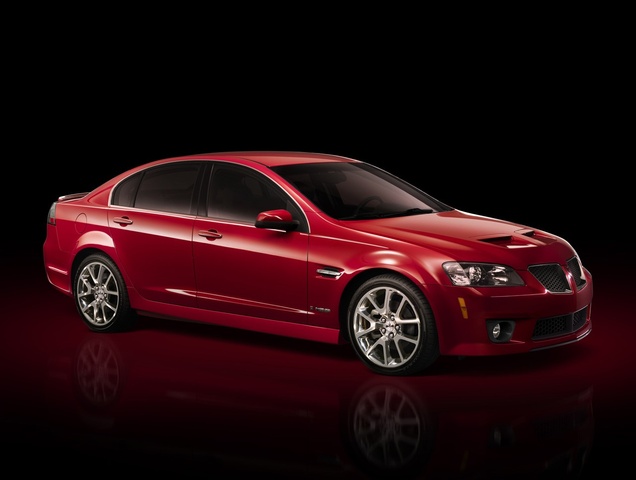
Firmly planted in the sports sedan segment, the Pontiac G8 flew under the radar with its conservative styling, but the roofline slope and hood scoops on V8 models hinted at its performance. It may have looked sedate with its four-door styling, but it had pure American muscle car blood in its veins.
Unfortunately, sales didn’t take off in the way General Motors hoped, and with the economic downturn in 2009, market prices dropped between $3,000 and $5,000 below its MSRP. All told, the G8 only sold about 31,000 units.
In mid-2009, both Pontiac and the G8 went the way of the Dodo, leaving behind the promise of a truly practical performance car.
Pontiac G8: Cost, Reliability, and the Best Years to Buy
Frequently Asked Questions
Which Pontiac G8 years are the best?
Since there were only two model years for the Pontiac G8, it’s hard to say that one year is better than another—especially since CarComplaints.com logs six complaints for both years, and there were four recalls on each model. But if you look at overall complaints, including those from the National Highway Traffic Safety Administration (NHTSA), the 2008 model comes out ahead.
What are the worst Pontiac G8 years?
CarComplaints.com says that 2009 is the worst year of the two. In addition to 191 complaints logged on the NHTSA website, there are several suspension issues, as well as reports of camshaft and lifter failure.
Is a used Pontiac G8 a good deal?
As a new car, the original MSRP of the Pontiac G8 ranged between $27,000 and $38,000 and the average price of a used model now is between $14,000 and $16,000. This vehicle is holding about 50 percent of its original value nearly 20 years later, and if you look on auction websites, you’ll see some G8s listed from $29,000 to $41,000, so we’re going to say this isn’t necessarily a good deal.
Pontiac G8 Pros and Cons
Pros:
- Excellent interior
- Well-balanced handling
- Spacious rear seats
Cons:
- V8’s exhaust note is muffled
- No native navigation available
- Don’t expect much in the way of fuel economy/mpg
Pontiac G8 Generations
Pontiac G8 First Generation (2008–2009)
Based on the Australian Holden Commodore, the Pontiac G8 burst on the scene in America in 2008 and had a brief two-year lifespan. It was the first rear-wheel drive four-door sedan sold under the Pontiac name since the 1986 Bonneville and Parisienne. Yes, the Pontiac GTO, Firebird and Solstice were all RWD, but they were coupes.
The G8 sedan came to the States with a base 256-horsepower, 3.6-liter V6 engine, which was mated to either a five-speed automatic or six-speed manual transmission. The entry-level trims had specs including 18-inch alloy wheels, a sports body kit, fog lights, power windows and locks, air conditioning, cruise control, black cloth seats, dual tailpipes, and a seven-speaker audio system. In terms of safety features, the G8 came equipped with six airbags, ABS brakes, traction control, and stability control.
The Pontiac G8 GT had a 361-hp, 6.0-liter V8 with Active Fuel Management, and the only transmission was a six-speed automatic. GT models also added features such as quad tailpipes, functional hood scoops clear taillight lenses, dual automatic climate controls, a larger center-console display screen, and an 11-speaker Blaupunkt premium audio system. A Sports package was available with this trim level, which added metallic pedals, 19-inch alloy wheels, summer performance tires, and a smaller leather Sport steering wheel.
For 2009, the G8 received amenities such as standard XM Satellite Radio and Bluetooth phone connectivity, but the big news for this model year was the addition of the high-performance GXP trim. This version got a detuned 402-hp 6.2-liter V8 engine from the Chevrolet Corvette, mated to either a six-speed automatic or a six-speed manual transmission. The 2009 Pontiac G8 GXP also added a Nürburgring-tuned FE3 upgraded suspension package, larger ventilated Brembo disc brakes, a unique front bumper cover, and a non-functional rear diffuser. The GXP could go from 0 to 60 mph in 4.5 seconds and had a quarter-mile time of 13 seconds.
General Motors announced the retirement of the Pontiac brand in 2009, so production for the G8 stopped midway through that year.
Average used car pricing for the Pontiac G8 ranges from $10,000 to $15,000 for the 2008 model and from $12,000 to $23,000 for 2009. In addition to being newer, the 2009 model year has the GXP, which saw less than 2,000 units produced and makes it a rarity. Looking at Classic.com, we see the average auction price for the G8 is about $24,000, and the top sale was $52,000—and that was for a GXP with the manual transmission.
Related Topics