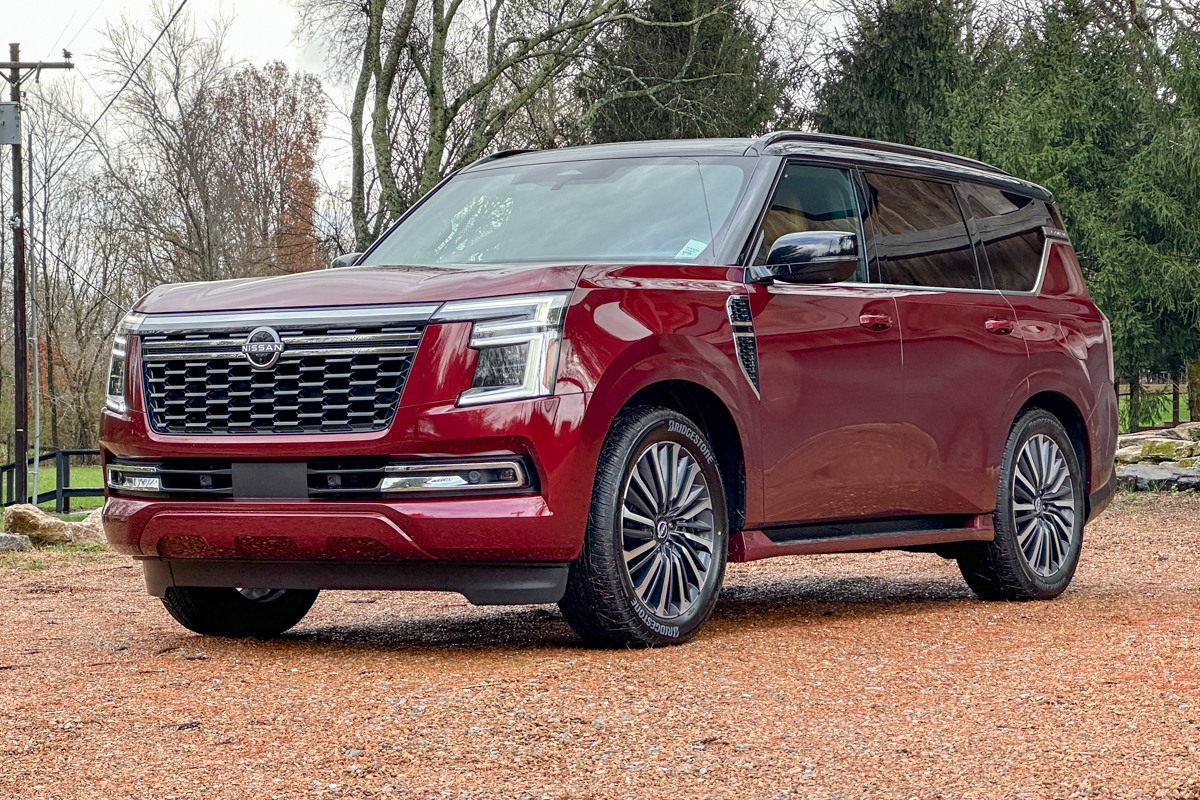
The Nissan Skyline name, and more recently the GT-R moniker, have deservedly earned a reputation for performance. Here in the United States, the Nissan GT-R sports car journey started in 2008 with the all-new R35 GT-R that was sold for the 2009 model year. But Skyline models have been around for a lot longer than that.
The first Skyline showed up in other parts of the world as the Prince Skyline 1500 Deluxe four-door all the way back in the 1960s. A version called the Skyline GT entered Japanese Grand Touring racing in 1964, with 100 units produced for homologation purposes to make them legal for motorsport competition. Nissan, which merged with the Prince Motor Company (formerly known as Fuji Precision Industries in Japan) later marketed the Prince Skyline 2000GT with what would become a Skyline and GT-R calling card for years to come: an inline six engine.
The first Skyline that looked like a real sports car was the Skyline 2000GT-R from 1973. The first Skyline with a turbocharged engine was the R31 model and its RB20DET inline-six from 1986. In 1990, the RB26DETT engine debuted and a legend was born in the form of the R32 Skyline GT-R.
But the 2009 Nissan GT-R that finally made its way to America truly stands out as a world-beater. Its twin-turbo 3.8-liter VR38DETT V6 engine sent 473 horsepower to all four wheels, courtesy of Nissan’s ATTESA ET-S all-wheel-drive system, and was capable of sprinting from 0-60 mph in little more than three seconds. The Japanese coupe was aimed squarely at the quintessential German sports car, and the supercar that was nicknamed Godzilla hit a bullseye, as it rivalled the much more expensive Porsche 911.
Nissan Skyline Buying Guide: Cost, Reliability, and the Best Years to Buy
- Frequently Asked Questions
- Nissan Skyline Pros and Cons
- Nissan Skyline Generations
- R35 Nissan GT-R (2007-2024)
- R34 Nissan Skyline GT-R (1999-2006)
- R33 Nissan Skyline GT-R (1995-1998)
- R32 Nissan Skyline GT-R (1990-1995)
Frequently Asked Questions
Which Nissan Skyline years are the best?
Considering the amount of power that the R35 GT-R sends through its automatic transmission and the stress that can put on its all-wheel-drive system, any Nissan GT-R that shows signs of abuse or neglect should be avoided. Beyond that seemingly obvious advice, the best Nissan GT-R you can get is whichever version you can afford. If you’re looking for the ultimate in high performance from Nissan, look for an R35 GT-R wearing the Nismo badge. And be prepared to spend big money on it.
What are the worst Nissan Skyline years?
The worst Skyline GT-R is one that has been abused. When the R35 GT-R hit American roads, drivers looking to extract every bit of straight-line speed would use the car’s launch control feature to catapult the supercar-spec machine with alarming ferocity, and repeated hard launches caused numerous drivetrain failures. Early GT-Rs, especially, should be inspected by professional mechanics to ensure they aren’t hiding any neglect or deferred maintenance that might surprise an unsuspecting buyer with huge repair bills.
Carcomplaints.com lists more complaints for the 2010 model than any other GT-R model year sold in America, though the total number of issues lodged is small, which isn’t surprising considering that the GT-R nameplate was never intended to sell in high numbers. Fewer cars sold equals a lower number of complaints.
Is a used Nissan Skyline a good deal?
A used Nissan Skyline isn’t what anyone is likely to consider a bargain. A well-cared-for GT-R, even from one of its first years in the United States, has hardly depreciated at all. While that speaks to the 2009 R35 GT-R’s extremely attractive base price—which increased very rapidly as the years went by—it also means buyers looking for high performance at a low cost have other options to consider, the most obvious of which is a Chevrolet Corvette. Some Chevy Camaro models, Shelby-badged Ford Mustangs, and Dodge Hellcats also start to look like bargains when compared to a late-model Nissan GT-R. The Audi R8 is another car to cross-shop with the GT-R.
Value, however, is in the eye of the beholder in this case. Any JDM-market Nissan Skyline R32, R33, or R34 in good condition that’s been imported into the United States has a very real chance of collectability. That’s especially true as a new generation of would-be buyers who grew up in the internet age with Gran Turismo video games, hundreds of virtual laps of Germany’s Nürburgring race track, and famous car tuners in their memories start looking for ways to spend their money.
Nissan Skyline Pros and Cons
Pros
- Powerful engine
- Extreme performance
- Collectability
Cons
- Manual transmission not available in R35 GT-R
- Outdated technology in older models
- High cost of the most desirable GT-R models
Nissan Skyline Generations
R35 Nissan GT-R (2007-2024)
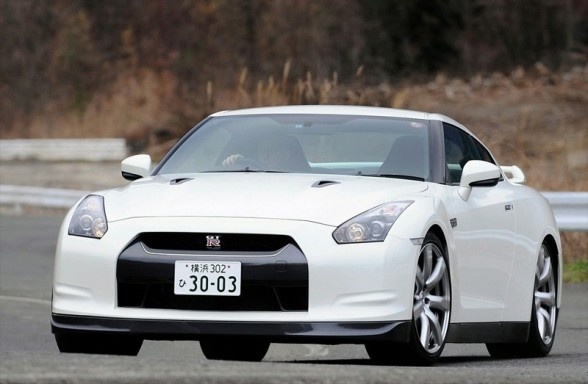
The R35 Nissan GT-R was an absolute revelation when it was unveiled in 2007 (badged as a 2009 model in the United States). It was technically no longer a Nissan Skyline, as that branch of history was by then sold with an Infiniti badge in the United States. In place of the long-serving RB26DETT inline-six engine was a new 3.8-liter V6 known internally as the VR38DETT. When it was launched, the figures were 473 horsepower and 434 pound-feet of torque. Those ponies were sent to all four wheels through Nissan’s high-tech ATTESA ET-S all-wheel-drive system and a six-speed dual-clutch automatic transmission, and a launch control function could propel the heavyweight machine to 60 mph in just over three seconds. At the time, that made it quicker than any production Ferrari or Lamborghini.
The R35 GT-R’s asking price of just over $70,000 in America also represented a revolutionary bargain. A Porsche 911 Turbo started at more than $120,000 at the time, and the Nissan GT-R was every bit its high-performance foe. Who knew Godzilla could be had for such a reasonable sum?
The GT-R’s launch control system was updated with new programming for the 2010 model year after a slew of broken transmissions were reported in the American press. Power was officially rated at 485 hp, though its acceleration figures suggested the real output was higher. The suspension was softened a bit for the 2011 model year (though nobody was going to confuse it for a luxury car), and for 2012 Nissan rerated the 3.8-liter turbocharged engine at 530 horsepower and 448 pound-feet of torque, while mildly refreshing the exterior. Power was again increased in 2013 to 545 hp and 463 lb-ft while the suspension again received an update.
The 2015 Nissan GT-R received several tweaks to make it a better car than ever before, but the big news for 2015 was the addition of the GT-R Nismo edition. Power for the Nismo came in at an even 600 horses, and a retuned suspension and exterior features, such as a fancy rear spoiler, helped to set new records at the Nürburgring race track. The standard GT-R found five more horsepower in 2016, and a few more again in 2017, pushing the official rating to 565 hp and 467 lb-ft. The Nismo stayed put at 600 hp.
Not much changed for the R35 GT-R after 2017. It received a 50th Anniversary edition in 2020 and took an entire year off in 2022 before returning to the official lineup for the 2023 model year. The 2024 GT-R was still listed for sale on Nissan’s website in North America at the time of writing.

R34 Nissan Skyline GT-R (1999-2006)
The Nissan Skyline R34 launched in 1999 to great fanfare. While it was never sold as a new vehicle in the United States, Americans were well acquainted with the R34 GT-R (internally known as the BNR34) courtesy of the Sony PlayStation and its Gran Turismo gaming franchise. It was about eight seconds quicker around the Nürburgring than the R33 GT-R it replaced.
The R34 GT-R got an M-Spec edition for 2011 and V-Spec II Nür and M-Spec Nür models for 2002. Perhaps the ultimate expression of the R34 GT-R came in 2004 in the form of the Skyline GT-R Nismo Z-tune. It was built to celebrate the 20th anniversary of Nissan Motorsport International, known to the world by its shortened Nismo moniker, and featured an enlarged and upgraded version of the RB26DETT inline-six engine that produced an even 500 horsepower. Power went to all four wheels through a six-speed manual transmission. Only 19 Nismo Z-tune GT-Rs were built and today are extremely collectible.
It’s not impossible to find R34 Skyline GT-R models in the United States. Just like any other Japanese car, they are eligible for importation into the U.S. once they are at least 25 years old.

R33 Nissan Skyline GT-R (1995-1998)
Nissan released the R33 GT-R in 1995, and it continued to use the RB26DETT inline-six engine but now in both two-door coupe and, courtesy of Autech, four-door sedan bodystyles. The four-door was designed to recall older versions of the Skyline GT-R, affectionately referred to in Japan by the nickname Hakosuka, which roughly translates in English to “boxy Skyline.”
The R33 GT-R (internally called the BCNR33) was the first production car to lap the Nürburgring in less than eight minutes, shaving around 20 seconds off the much-loved Nissan Skyline R32’s lap time at the iconic German race track. A heavily modified rear-wheel-drive version of the R33 Skyline, called the GT-R LM race car, tackled at the 24 Hours of Le Mans in 1995 and 1996 under Nissan’s Nismo motorsports team, and in 1996, Nissan released a limited-edition R33 LM with carbon fiber spoilers and other aerodynamic aids.
Also in 1996, Nissan released the GT-R Nismo 400R, named for 400-horsepower engine and racing pedigree. Other R33 variants included the V-spec, the V-spec II, the V-spec III, the and N1.

R32 Nissan Skyline GT-R (1990-1995)
The Nissan Skyline R32 is the machine that made the GT-R badge a legend. This is the car that the Australian motoring press nicknamed Godzilla, and it dominated the competition in touring car motorsports events. Several R32 variants were built over the car’s production run, including the V-Spec, the V-Spec II, the Nismo, and the N1.
Nissan rated the R32 (also internally known as the BNR32) GT-R’s RB26DETT inline-six engine at 276 horsepower due to a handshake agreement among Japanese automakers to limit official power limits to that figure. With a Nürburgring lap time of eight minutes, 22 seconds, the R32 Skyline GT-R was the fastest production car at the German race track at the time.
The R32 GT-R generation is one of the most sought-after among collectors of Japanese Domestic Market (JDM for short) cars.
Though the Nissan Skyline R32 stands out as the GT-R variant that really kicked off the nameplate’s status as a Japanese icon, there were cars wearing the GT-R badge that preceded it. The KPGC110 was introduced in 1973 with a two-liter inline-six engine, rear-wheel drive and beautiful bodywork. It was known as the “Skyline for Ken and Mary,” or the Kenmeri Skyline in Japan, due to a local advertising effort. Less than 200 versions were badged as Skyline 2000GT-R editions with extra high-performance enhancements. Non-GT-R Skylines were available alongside the R32 model, too, some sedate and others—such as the GTS-T, with its 2.0-litre six-cylinder, single turbo engine and 212 hp—potent enough to pack a punch in their own right.
The first Skyline GT-R was known internally as the PGC10 and was introduced in 1969, first as a four-door sedan and later as a coupe, while later Skylines were also available as hatchbacks. This was the car known in Japan as the Hakosuka. It was powered by a 2.0-liter inline six engine with technology borrowed from the mid-engine R380 race car from Prince Motor Company and rode on a rear-wheel-drive chassis.