The Nissan Sentra entered its ninth generation when the latest version hit the market for the 2026 model year. When it was first launched in 1982, the front-wheel-drive compact car replaced the Datsun 210 and its aging rear-wheel-drive platform and was only the second vehicle in America to wear the Nissan badge. The first-generation Sentra was offered in several body styles, including a three-door hatchback, a five-door wagon, a two-door coupe, and a four-door sedan. These were progressively whittled down, and today the Sentra is sold solely in compact sedan form.
Nissan Sentra Buying Guide: Cost, Reliability, and the Best Years to Buy
Search for Nissan Sentra
See all

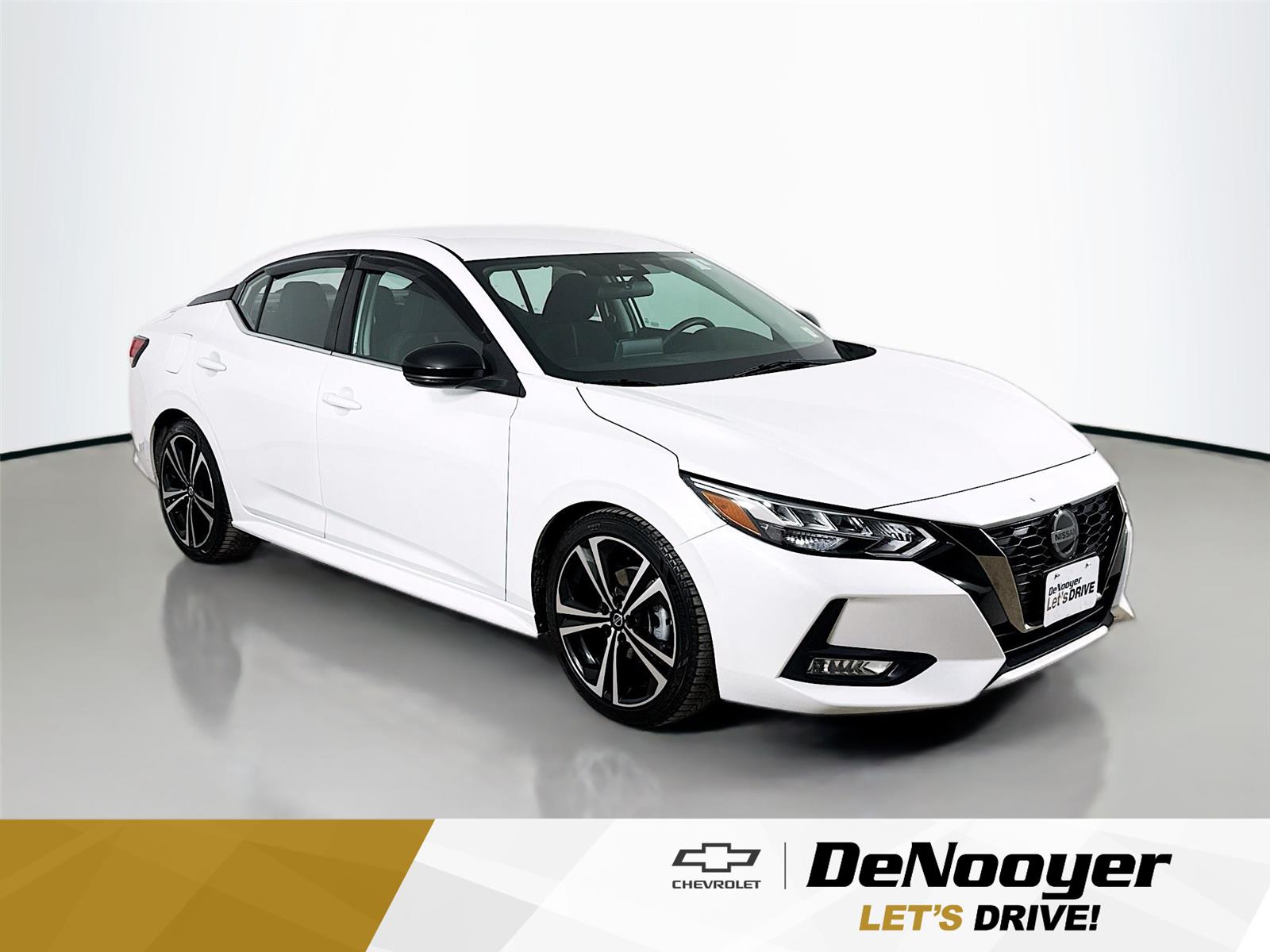


As the years went by, the Nissan Sentra would grow larger and sit in between the subcompact Versa and the larger Altima sedan in the automaker’s lineup. The Sentra competes against hot-selling entry-level cars such as the Honda Civic and the Toyota Corolla, and for 2026, an all-new model shows that Nissan isn’t ready to walk away from the compact sedan segment in the United States, even as crossover SUVs such as the Nissan Rogue continue to outsell their siblings with trunks.
At the time of writing, the 2026 Nissan Sentra carried an MSRP of $23,845 (pricing includes a mandatory $1,245 destination charge).
Nissan Sentra Buying Guide: Cost, Reliability, and the Best Years to Buy
- Frequently Asked Questions
- Nissan Sentra Pros and Cons
- Nissan Sentra Generations
- Nissan Sentra Ninth Generation (2026-Present)
- Nissan Sentra Eighth Generation (2020-2025)
- Nissan Sentra Seventh Generation (2013-2019)
- Nissan Sentra Sixth Generation (2007-2012)
- Nissan Sentra Fifth Generation (2000-2006)
- Nissan Sentra Fourth Generation (1995-1999)
- Nissan Sentra Third Generation (1991-1994)
- Nissan Sentra Second Generation (1987-1990)
- Nissan Sentra First Generation (1982-1986)
Frequently Asked Questions
Which Nissan Sentra years are the best?
Discounting the latest ninth-generation Nissan Sentra that debuted for the 2026 model year, the eighth-generation models from 2020-2025 have been much more reliable than the previous seventh-generation versions from 2013-2019. Early Sentra models, particularly those from the second, third, and fourth generations, have proven durable.
If your search for a Nissan Sentra is focused on performance, then a potent Sentra SE-R from the third generation may be what you’re looking for.
What are the worst Nissan Sentra years?
The 2013 Nissan Sentra, in particular, has more complaints lodged by owners than any other model year, according to CarComplaints.com, followed by the 2014 and 2015 models. The big problems with these seventh-generation Sentra models mostly relate to their CVT transmissions, which can carry hefty repair bills. Beyond those pesky transmission problems, the 2005 Nissan Sentra has garnered many of complaints relating to blown head gaskets.
Is a used Nissan Sentra a good deal?
A used Sentra from the 2020 through 2025 model years would be a good deal for someone aiming to buy a reliable car to get them around town or to work and back. Pricing for these Sentra models, even with low mileage, should fall in the $15,000-$20,000 range. That puts the Sentra below the cost of a used Toyota Corolla and well beneath the cost of a used Honda Civic, though it’s also fair to point out that those two Japanese compact sedans have earned their strong resale values with excellent reputations for reliability.
Nissan Sentra Pros and Cons
Pros:
- Stylish design of late models
- Comfortable
- Excellent value for money
Cons:
- Pedestrian performance
- No hybrid option
- Outdated technology on all but latest Sentra
Nissan Sentra Generations

Nissan Sentra Ninth Generation (2026-Present)
The ninth and current Nissan Sentra generation debuted for the 2026 model year in the face of continually shrinking sedan sales in America. The redesigned Sentra looks sporty and modern with Nissan’s V-motion grille design and a sharp bodywork that flows smoothly from its angular front fascia to its sweeping rear glass and pointy trunk lid. Power for the latest Sentra comes from a 2.0-liter four-cylinder engine that spins out 149 horsepower and 146 pound-feet of torque (it’s a carryover powertrain from the previous Sentra model). Power is routed through a continuously variable transmission (which Nissan calls an Xtronic CVT) to the front wheels. The 2026 Nissan Sentra delivers good fuel economy of 30 miles per gallon in the city, 38 mpg on the highway, and 33 mpg combined. Fuel efficiency drops to 29 mpg city, 36 mpg highway, and 32 mpg combined for the sporty Sentra SR and the more luxuriously equipped Sentra SL trim levels.
The 2026 Nissan Sentra S serves as the base model, and standard features include 16-inch steel wheels, LED headlights, cloth seating surfaces, a four-speaker audio system and remote keyless entry with push button ignition. A seven-inch digital display sits in front of the driver on the S model, while all other trim levels get a 12.3-inch unit. Another 12.3-inch touchscreen display running the NissanConnect infotainment system is standard across all Sentra models. Wireless Apple CarPlay and wireless Android Auto are both supported, as are Bluetooth and Google Assistant voice recognition technology.
The Nissan Sentra SV gains aluminum-alloy wheels, Nissan’s Intelligent Key (which allows the driver to keep the fob in their pocket while opening the doors or trunk), single-zone automatic climate control, remote engine start, and an optional wireless smartphone charger. The Nissan Sentra SR gets a six-speaker audio system (a Bose premium audio system with eight speakers is optional with the SR and standard with the top SL trim level), a standard wireless charger, upgraded sport cloth seats with accent stitching, rear cupholders and HVAC vents and NissanConnect Services including a Wi-Fi Hotspot. Outside, the Sentra SR features a dark chrome grille treatment, 18-inch aluminum-alloy wheels, LED signature headlights and an LED full-width signature taillight. A body kit with lower sill extensions, a rear spoiler, chrome exhaust tip finisher, and red badging complete the sporty look.
The SL trim level sits at the top of the Sentra lineup and gets lots of extra standard features, including 17-inch aluminum-alloy wheels, soft-touch quilted leatherette seating surfaces, six-way power adjustable front seats with power lumbar support, the Bose premium audio system, dual-zone automatic climate control and rear sonar parking sensors. Heated front seats are standard with the SL trim level and optional as part of packages on other Sentra models.
A comprehensive set of safety features comes standard with the 2026 Sentra, including automatic emergency braking with pedestrian and cyclist detection, intelligent forward collision warning, blind spot monitor, blind spot intervention, lane departure warning with a haptic steering wheel, lane departure prevention and traffic sign recognition. Nissan’s ProPilot Assist semi-autonomous driving technology (which pairs intelligent cruise control and steering assist technologies but requires the driver to keep their hands on the steering wheel), rear automatic braking, lane-keep assist with cyclist detection and an HD around-view monitor with moving object detection are optional with the SR trim level with the available Premium Package and standard with the top SL trim level.
Nissan Sentra Eighth Generation (2020-2025)
The eighth-generation Nissan Sentra launched in 2020 with a fresh exterior design, a new engine, and a solid package of driver safety aids known as Safety Shield 360. Standard equipment included forward collision warning with pedestrian detection, automatic emergency braking for the front and rear, lane-departure warning and blind-spot monitor. The 2020 Nissan Sentra was offered in base S trim, upgraded Sentra SV trim and a sporty Sentra SR trim level at the top of the lineup. The 2020 Sentra’s 2.0-liter four-cylinder engine made 149 horsepower and 146 lb-ft of torque. That power was sent to the front wheels through a CVT transmission.
Apple CarPlay and Android Auto became standard equipment in the Nissan Sentra for the 2021 model year, and Nissan added an All-Weather package and a Midnight Edition in 2022. The 2024 Nissan Sentra was refreshed with updated styling and a new CVT transmission that included start/stop functionality that bumped fuel economy from 29 mpg city, 39 mpg highway, and 33 mpg combined in 2023 to 30 mpg city, 40 mpg highway, and 34 mpg combined in 2024.
There were no major changes to the 2025 Nissan Sentra, which would be the final year for the eighth-generation model in the United States.
Nissan Sentra Seventh Generation (2013-2019)
The 2013 Nissan Sentra was an all-new design. Now in its seventh generation, the Sentra was more practical than before, with a more spacious interior and a more fuel-efficient powertrain. Although its exterior dimensions rose, the 2013 Sentra was 150 pounds lighter than the outgoing model. A 1.8-liter four-cylinder engine replaced the previous 2.0-liter four-cylinder engine, and power dropped from 140 horsepower to 130 hp. The base Sentra offered a six-speed manual transmission, but most Sentra models came with a revised CVT.
The 2013 Sentra was offered in S, SV, SR, and SL trim levels. An FE+ model was offered in either S or SV trim with modifications that included a rear spoiler and low-rolling-resistance tires to improve fuel economy by one mpg on the highway (from 38 mpg to 39 mpg). Nissan added more sound deadening material and tweaked the suspension for 2014, while Bluetooth was added to all models in 2015. A refresh for the 2016 model year gave the Sentra Nissan’s V-motion grille.
Nissan launched the Sentra SR Turbo in 2017 with a 188-horsepower turbocharged 1.6-liter engine and sporty tuning for the suspension, steering, and brakes. For even greater performance, the 2017 Nissan Sentra Nismo also got the turbocharged four-cylinder engine and paired it with a stiffened chassis, a sports interior with grippy seating surfaces, and the choice between a six-speed manual or a CVT. For 2019, Sentra SR, SL, and Nismo models got a new NissanConnect infotainment system.

Nissan Sentra Sixth Generation (2007-2012)
An all-new sixth-generation Nissan Sentra showed up for the 2007 model year with new styling, a fresh powertrain and a roomier interior—a boon for rear-seat passengers. Six inches longer than before, 2007 Nissan Sentra trims included a base model, S, SL, SE-R, and SE-R Spec V trim levels. A 2.0-liter inline four-cylinder engine with 140 hp and 147 lb-ft of torque was standard, the SE-R got a 2.5-liter four-cylinder with 177 hp and 172 lb-ft, and the top-shelf Spec V’s high-output engine delivered 200 hp and 180 lb-ft. A six-speed manual was standard in base and S trim levels along with the Spec V (which also got a helical limited-slip differential), and a CVT was featured in the rest of the lineup.
Sentra models with CVTs wore FE+ badges and got slightly improved fuel economy. A new Nissan Sentra SR trim level looked sporty like the SE-R but had the regular 2.0-liter four-cylinder engine. Navigation became a Sentra option in 2010, while anti-lock brakes and stability control became standard on all Sentra models in 2011.

Nissan Sentra Fifth Generation (2000-2006)
Nissan rolled out an all-new fifth-generation Sentra for the 2000 model year. Already a comparatively roomy compact car, the new Sentra gained additional interior space and a larger trunk. Nissan offered XE, GXE, and SE trim levels with a 1.8-liter four-cylinder engine with 126 horsepower and 129 lb-ft of torque. The Sentra SE returned with its 2.0-liter engine and 145 hp. A five-speed manual transmission was standard and an automatic was optional.
The sporty Nissan Sentra SE-R made its return for the 2002 model year, complete with a 2.5-liter engine producing 165 hp. A higher-end SE-R Spec V edition pushed that figure to 170 ponies and featured a standard six-speed manual transmission, 17-inch aluminum alloy wheels, and a stiffened suspension setup. A Nissan Sentra Limited Edition trim level for 2003 paired the 165-hp engine with an automatic transmission and anti-lock brakes. Sentra SE-R Spec V models gained Brembo brakes in 2004.

Nissan Sentra Fourth Generation (1995-1999)
The fourth-generation Nissan Sentra was sold in sedan form only, as the Nissan 200SX took over as the automaker’s base-level coupe. Horsepower was bumped by five for a total of 115 and it sent power through either a five-speed manual transmission or four-speed automatic. This was the first Sentra model with dual airbags as standard.
Initially, the selling points for the fourth-generation Nissan Sentra included reliability and spaciousness compared with other new cars in the compact class. The 1998 model year, however, brought a new Nissan Sentra SE trim level that returned the 140-hp 2.0-liter engine to the lineup that had previously been kept to the two-door 200SX SE-R.
Nissan Sentra Third Generation (1991-1994)
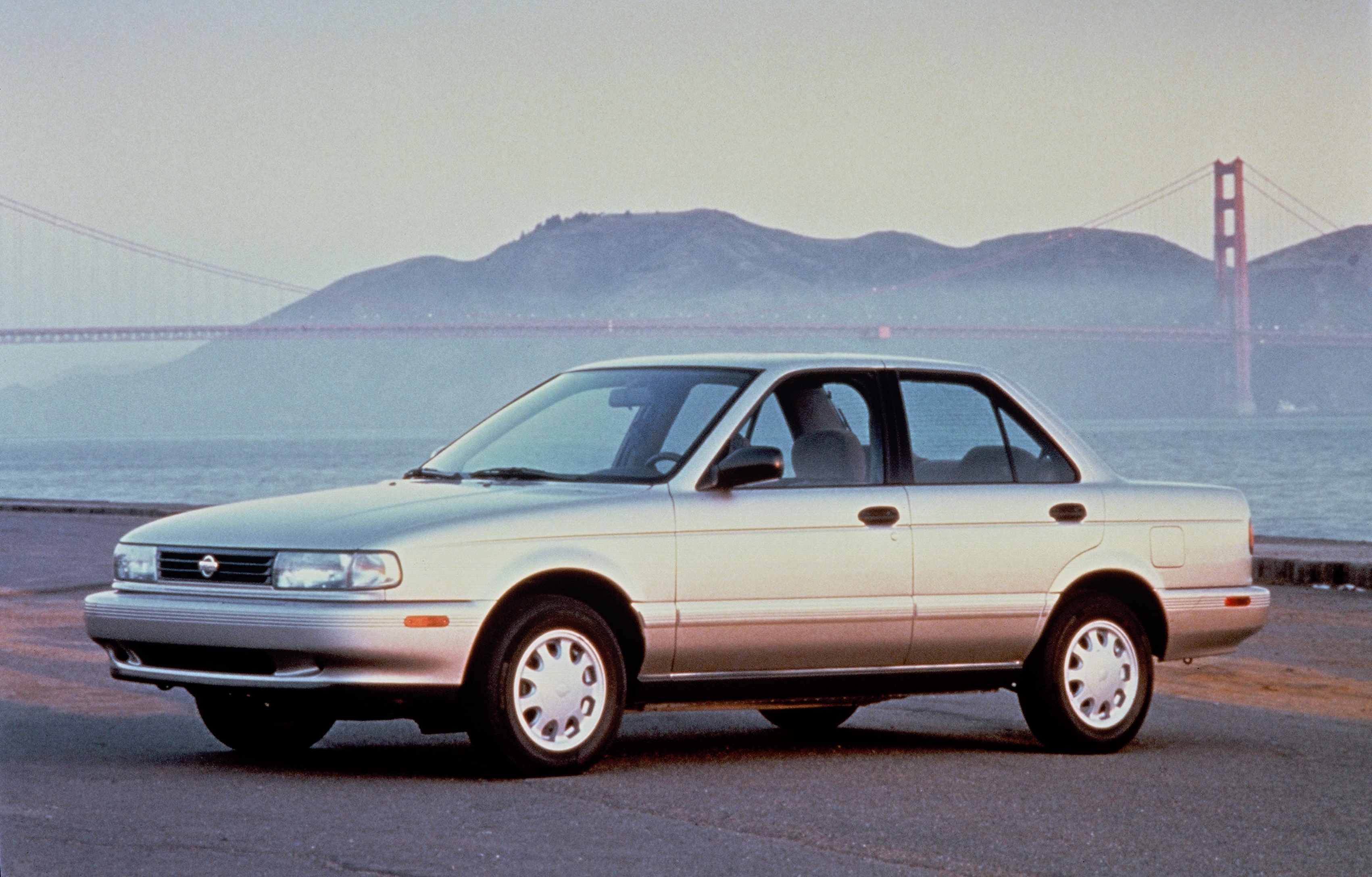
The third-generation Nissan Sentra represented a major improvement to the compact car’s design. Horsepower for the base 1.6-liter four-cylinder engine was bumped to 110, and various manual and automatic transmission options were available. Hatchback and wagon body styles were dropped, leaving the coupe and sedan left in the lineup.
The high-performance Nissan Sentra SE-R brought enthusiast appeal to the little car. Its 140-hp 2.0-liter four-cylinder engine improved performance dramatically, and items like a limited-slip differential, four-wheel disc brakes (with optional ABS), and a stiffer suspension make the Sentra SE-R a fun little runabout while keeping its commuter status intact.

Nissan Sentra Second Generation (1987-1990)
The 1987 Nissan Sentra carried forward with its 69-horsepower 1.6-liter four-cylinder engine, but the rest of the car was new. A five-speed manual or three-speed automatic transmission sent power to the front wheels. Several body styles were offered, including a coupe, a sedan, a hatchback, and a wagon. An all-wheel-drive variant was offered for a short period but did not prove popular with American buyers.
A new fuel-injected engine came in 1988, and output was bumped to 90 hp. At this point in the Sentra’s early years, even air conditioning was an extra-cost option.

Nissan Sentra First Generation (1982-1986)
The very first Nissan Sentra showed up in 1982 as a replacement for the aging Datsun 210. In place of the old car’s rear-wheel-drive platform was a modern front-wheel-drive design powered by a 1.5 liter four-cylinder engine producing 67 horsepower and returning up to 58 mpg on the highway. The first Sentra was offered in a base Standard trim, an upmarket Deluxe trim level, or a top XE trim.
A slightly larger 1.6-liter four-cylinder engine hit the lineup in 1983, bumping output to 69 hp, and a short-lived 1.7-liter diesel engine was optional. A minor refresh and an SE trim level appeared for the 1985 model year.
Related Topics



by Jeremy Korzeniewski
Jeremy Korzeniewski grew up as the son of an automotive engineer in a family obsessed with cars and trucks and turned that passion into a career in 2006 when he accepted a position with Autoblog. Over the next 18 years, Jeremy published more than 8,000 articles while serving as a Senior Editor and has contributed to respected brands that include Yahoo, Edmunds, Robb Report and AutoGuide. Jeremy is also an avid motorcyclist and spends the majority of his evenings at home with his wife hoping to cook up a delicious meal for dinner.
The content above is for informational purposes only and should be independently verified. Please see our Terms of Use for more details.


