You may have heard the maxim ‘rust never sleeps’ and, at best, rust on your car’s bodywork is ugly. At worst, it may have major structural implications. Tackling rust is not an easy task, especially if you live in a damp climate where water, iron (the main component in steel), and oxygen are constantly mingling.
Here’s what you need to know about inspecting and potentially fixing a rusty car.
How to Inspect and Fix a Rusty Car
- What Is Rust and Why Is It a Problem?
- A Step-by-Step Guide to Inspecting a Rusty Car
- Fixing Rust on a Car

What Is Rust and Why Is It a Problem?
Rust is another way of saying iron oxide, the chemical compound that forms when steel, oxygen, and water combine. When this reaction (also known as oxidation) happens, steel begins to break down and turns a reddish brown. Salt, which is commonly used to melt snow and ice in winter and which is in the air near an ocean, speeds up the process. This is why cars that reside in places with long winters and humid summers are often plagued with rust spots or other rust damage in their sheet metal.
It tends to form low on body panels, such as on the bottoms of the doors and fenders, as well as around the wheel wells. It also commonly occurs underneath the car, where bare metal fasteners and only lightly coated suspension components lack the protective barrier of a paint job.
There is no such thing as “good rust”, but surface rust is better than structural rust, which could render a car unsafe. If a car dealership or auto body shop says that your car—or one you’re thinking of buying—has structural rust, it will likely be very expensive to repair. Structural rust suggests the car’s body, frame, or major suspension components have been compromised and may literally fall apart over time.
Surface rust, on the other hand, is manageable. That’s the term commonly used to describe an ultra-thin layer of corrosion in its earliest stages. Often, surface rust can be brushed away, then treated with a rust converter, which essentially neutralizes the iron oxide to prevent further rust spread.
A Step-by-Step Guide to Inspecting a Rusty Car
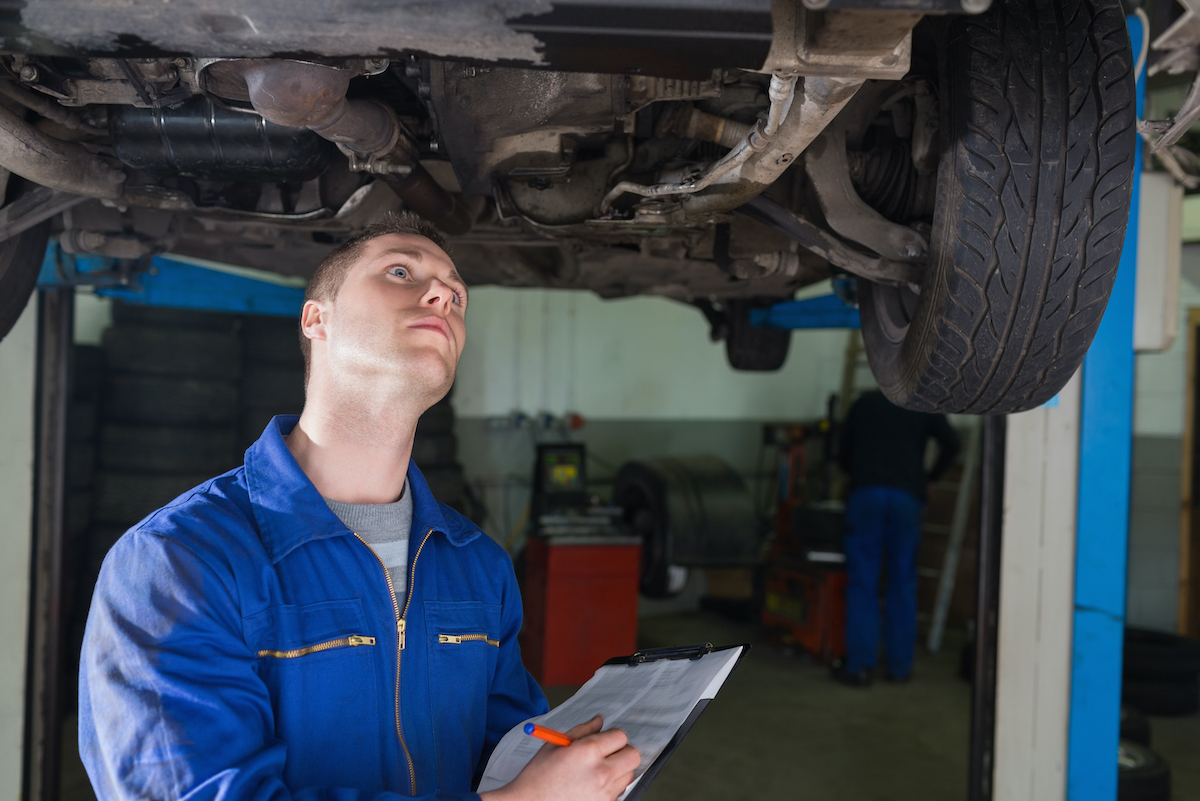
If you’re looking to buy a used car, it’s always best to have a mechanic look it over via a pre-purchase inspection. A car dealership or repair shop will be able to put the car on a lift and inspect underneath it thoroughly, which is a lot harder to do when the car is on the ground.
That said, if you’re planning to view the car before a pre-purchase inspection, you can do some preliminary rust inspection of your own. Here’s what to check:
Rocks and other road debris regularly kick up onto the body, chipping the paint and exposing the bare metal underneath to moisture and salt. That’s why you should walk around the car and look for chips and rust.
Get low, shine a light on the underside of the car, and look for rust. The torch on your smartphone may be bright enough, but it wouldn’t hurt to bring an LED flashlight. Also, a selfie stick might come in handy, as you can take pictures of the undercarriage with minimal squatting, then inspect them from a more comfortable position. Some reddish-brown oxidation on screws and bolts isn’t unusual, but rust on the underside of the floorboards is likely cause for concern.
Check the body for paint bubbles. This is a sign that moisture has made its way under the paint and possibly reacted with the bare metal to form rust.
Look for telltale signs of previous rust repairs, such as mismatched paint or use of a resin body filler, such as Bondo. It may help to have a magnet on hand, as steel is magnetic but filler putty is not, and if the magnet doesn’t stick where it should, that’s a red flag. It’s important to note that many cars have aluminum, fiberglass, or composite panels, too, which are not magnetic, but neither are those materials susceptible to rust.
It doesn’t hurt to read up on the particular make and model you’re considering, as certain cars have known problem areas.
Lastly, rust can form from the inside out. While it’s difficult to inspect a car’s floor without putting it up on a lift or removing its carpeting, the condition of the carpet (not the protective floor mats) may give you a clue about what’s going on underneath. If the carpet is wet or crusted with salt, it’s likely the area has been unprotected from dripping boots, and water has seeped below the surface.

Fixing Rust on a Car
It is not easy to repair rust on a car. If you’re dealing with structural rust or rust holes, take the vehicle to a professional, as the repairs will almost certainly be more involved than the typical DIYer is up for. The shop will be able to determine how deep the rust goes, which parts need to be replaced, and perform the work.
However, you can employ DIY measures to remediate surface rust and keep oxidation at bay.
As soon as you spot a chip, apply touch-up paint followed by a clear coat to protect the newly applied finish. This will eliminate a point of entry for water and oxygen to react with the bare-metal body. You can get color-matched automotive paint online or from a dealership using the vehicle’s paint code. A dealership can tell you your car’s paint code if you are unsure what it is.
Commercially available rust-encapsulator products can be useful to fix rust underneath a vehicle. These products usually require little preparation, but it wouldn’t hurt to treat the rusted area with a 220-grit sandpaper or a sanding block, removing as much of the reddish-brown layer as possible. After that, use masking tape to block off any areas you don’t want to coat, such as painted areas, wheels, or tires. Rust converter can be applied with a brush in thin coats, or you can get it in aerosol spray can. Wear a mask and eye protection regardless.
The process for fixing rusted bodywork is similar: perform surface rust removal using sandpaper or even a sander to get through the base coat and down to bare metal, block off the overspray areas with car-safe masking tape, apply an etch primer, then repaint by evenly applying automotive spray paint over the primer. These products can be found at most auto parts stores, but it takes practice to make this look good. If this all sounds too complicated for you—and it probably does, since automotive bodywork is a true art form—visit an auto body shop.
The process for fixing rusted bodywork is similar: perform surface rust removal using sandpaper or even a sander to get through the base coat and down to bare metal, block off the overspray areas with car-safe masking tape, apply an etch primer, then repaint by evenly applying automotive spray paint over the primer. These products can be found at most auto parts stores, but it takes practice to make this look good. If this all sounds too complicated for you—and it probably does, since automotive bodywork is a true art form—visit an auto body shop.