Though the heyday of the manual transmission car is behind us, with only a handful of automakers still offering them, learning to drive a stick may come in handy. It teaches you hand-foot coordination while also making driving more fun and you a better driver. Here we give you a step-by-step guide on how it’s done and what you can do to avoid damaging the car while learning.
How to Drive a Manual Car
How to Start a Manual Car
Once seated and belted, put your foot on the brake and make sure that the car is in neutral (i.e., the gear shift should be in the center position between all the gears). You can verify this by trying to jiggle the shifter from side to side. If it moves, the car is in neutral. If it doesn’t, the car is in gear. To take it out of gear when the engine is off, simply pull or push the shifter to that center position.
Now keep your right foot on the brake and place your left foot on the leftmost pedal in the footwell. This is what activates the clutch, the component that disconnects and connects the engine and the gearbox. Depress the clutch pedal to the floor and start the engine. Voilà. You can now let out the clutch pedal.
Most (but not all) modern cars have a lockout feature that prevents the starter motor from working if the car is in gear or if the clutch pedal isn’t depressed all the way. But even if your particular vehicle will allow for an in-gear start, it’s best to make a habit of both selecting neutral and pressing the clutch pedal in, as that’s a safe way to start any manual car. Were you to absent-mindedly let out the clutch after startup with the car in gear and the parking brake (or handbrake) released, the car would move. It might be a slow creep or a lurch followed by the engine stalling, depending on the vehicle’s torque at idle and how quickly you let out the clutch; but either way, it’s bound to catch you off-guard.
How to Drive a Manual Car
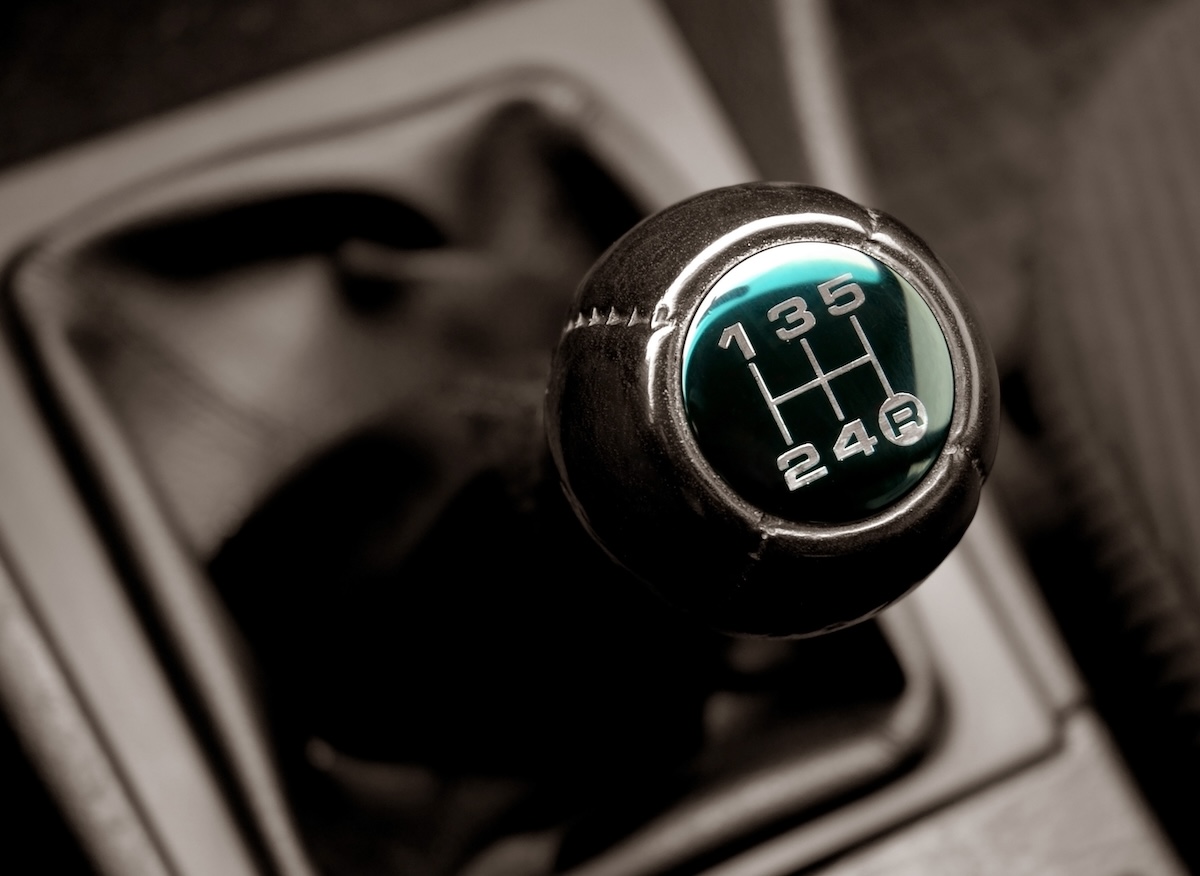
Once the engine is running and your foot is on the brake pedal, release the parking brake and depress the clutch pedal. Look at the shift pattern diagram (either on the shifter knob or around the base of the shifter) and move the lever to the position denoted by a 1 (usually all the way to the left and forward). This is first gear. It multiplies the engine’s torque more than the other gears do, which is useful for getting a vehicle moving.
Now transfer your right foot from the brake pedal to the accelerator pedal. Then simultaneously apply light pressure to this gas pedal with your right foot while slowly releasing the clutch pedal with your left. You should be able to feel the clutch’s engagement through that leftmost pedal. It’s a slight vibration that happens somewhere in the pedal’s travel, often about halfway. This is the bite point, when the engine connects with the transmission to drive the wheels. You’ll need to hold the clutch pedal at the bite point for a beat while applying throttle to make sure these internal components come together smoothly. Once you feel the engagement, finish releasing the clutch pedal. And you’re off and running.
Clutch control takes practice, so don’t be discouraged if your first time at this isn’t seamless. After coming up to speed in first gear, it’s a good idea to bring the car to a stop—by pushing in the clutch pedal and braking, shifting to the neutral position, and then lifting your left foot to disengage the clutch again—and repeat this process over and over until you’ve got the clutch engagement down pat. Then it’s time to move on to second.
Upshifting
With an automatic transmission, the car will climb through the gears as you increase speed, and you don’t have to do anything to make it happen. That’s not the case with a manual car.
You’ll know when to change gears by watching the tachometer, which is the gauge found in the instrument cluster of most manual-transmission vehicles that shows the engine speed in revolutions per minute, or rpm. Most tachometers have an indicated redline somewhere high up in the rev range. This is the maximum engine speed you should reach in any given gear. Beginners would do best to upshift—meaning grab a higher gear—well before the needle hits that line, but as you become more confident in your manual driving skills, it’s fine to push it to hear the engine growl. Speaking of: If your car doesn’t have a tachometer or if watching the gauge while trying to remember the other steps flusters you, just pay attention to the sound of the engine and shift when it gets loud.
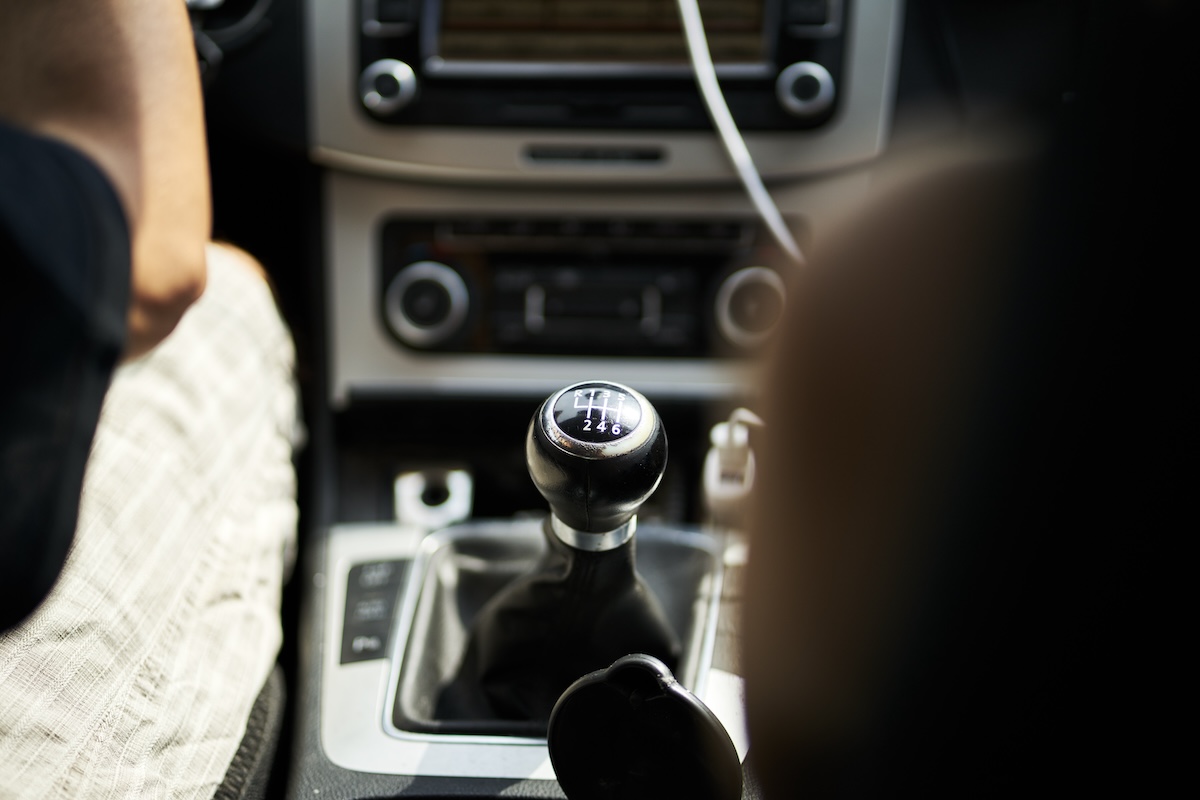
The trip to redline (and the engine’s crescendo) is going to happen pretty quickly in first gear as you accelerate. To select second, lift your foot off the accelerator, fully depress the clutch pedal, move the shifter into second gear (indicated by a 2 in the shift pattern), and repeat the process of feathering in some throttle (by hitting the accelerator) as the clutch reaches its friction point. Gradually finish letting out the clutch pedal. At this point, you’ll be cruising at neighborhood speeds (say, 20 to 25 mph). Should you need to go faster, watch the tachometer needle or listen to the engine as you accelerate, then upshift into third gear. Repeat as necessary until you reach the highest gear possible for your current speed. That’s where you’ll get the best fuel economy.
You’ll need to be wary of lugging, though. This is when you’ve chosen a gear that’s too high for the engine given the car’s current speed. Essentially, the transmission wants to turn more slowly than the engine, which can cause the engine to stall. If the tachometer needle drops below the car’s idling speed — that is, the speed at which the engine operates without load — you’re in too high a gear. Should you feel the car start to shudder, that’s lugging. The fix? Push in the clutch and downshift.
Downshifting
Just as an automatic car upshifts automatically, it also downshifts without any driver involvement. Here’s how it’s different when you’re in control of the gear stick.
Downshifting is the process of engaging a lower gear as the vehicle decelerates. It’s a little trickier to do than upshifting as a few things need to happen in rapid succession (or occasionally simultaneously), but a smooth downshift is the mark of a good manual driver. Here’s what you have to do:
Use your right foot to press in the brake pedal and slow the car. The engine revs (indicated by the tachometer needle) will drop. Once they approach idling speed, push in the clutch pedal. Move the shifter into the next lowest gear, then quickly move your right foot over from the brake to tap the accelerator (aka blipping the throttle). Under heavy braking or when entering a turn, you might need to perform a heel-and-toe downshift, which is where you operate the accelerator and brake pedals at the same time, placing the toe of your shoe on the brake and the side or heel of your foot on the throttle. You continue to press the brake while blipping the throttle.
In either case, you’ll want to push the accelerator just hard enough to raise the engine speed up so that it matches the transmission speed. This is called rev-matching. Fail to do so and the clutch won’t engage smoothly, causing the car to jerk.
Some modern manual-transmission vehicles have automatic rev-matching, which means they’ll blip the throttle for you so you can focus on selecting a gear and braking, but it’s best to practice on a car that doesn’t have this feature (or that allows you to turn it off) so you can learn the skill and apply it when driving any stick-shift car.
Alternatively, if you know you’ll need to come to a complete stop, you can brake in a given gear until the engine revs drop close to the stall speed, then push in the clutch pedal and shift to neutral. You’ll then let out the clutch and continue to brake until you reach a stop. That said, this practice isn’t as safe as downshifting, as you’re taking the car out of gear; should an emergency arise, you won’t be able to accelerate immediately. And it’s worth noting that while braking to a stop in neutral is acceptable, coasting downhill to one in neutral is not in most states.

How to Drive a Manual Car on a Hill
Driving a manual car either up or down a hill should be pretty similar to driving on a flat surface. If you're climbing a particularly steep incline, you may need to downshift into a lower gear than you usually would for that road speed so that the engine has enough torque to motivate the car to the summit. You'll know this is the case if the engine starts to lug.
If you're traveling downhill for a time, selecting a low gear may also be beneficial, as it'll induce more engine braking. This will naturally slow the car, so you won't have to ride the car's friction brakes. Just keep an eye on the tachometer needle and downshift before the revs fall too low.
Performing a hill start with a manual-transmission vehicle can be daunting, as the vehicle will want to roll as soon as you lift your foot off the brake. Some modern vehicles have a hill-hold function that prevents this, but in case yours doesn’t, you’ll need to be quick about coordinating the clutch engagement with sufficient (read: more than usual) throttle pressure to counteract the car rolling. Alternatively, you can engage the parking brake to hold the car in place while you rev the engine slightly (to, say, 1,200 rpm) and let out the clutch to the friction point. Slowly release the parking brake and the clutch pedal while adding more throttle. You can do the same thing using the footbrake, but that requires some heel-toe work.

How to Avoid Damaging the Clutch
Given the clutch is the meeting place for two fast-rotating components, it deals with a lot of friction and will eventually wear out, regardless of how great your driving skills are. You can, however, extend its life by pushing in the clutch pedal only when necessary and shifting smoothly, gently, and quickly. Releasing the clutch pedal rapidly (aka dumping, dropping, or popping the clutch) should be avoided.
Don’t leave your foot on the clutch pedal while driving, as you’re liable to press it if only part way. This is known as riding the clutch, and it can cause premature wear.
When you come to a stop, take the car out of gear while waiting for your turn to go rather than holding the clutch pedal in.
You’ll know the clutch is ready to expire when it starts to slip (i.e., the engine revs but the car doesn’t move as much as it should). It’s cooked when letting off the clutch pedal doesn’t result in any movement.
To check the health of your vehicle’s clutch, push the clutch pedal to the floor when the engine is off and see how it responds. If it pops up quickly, the clutch is likely in good shape. If the pedal feels spongy or springs back slowly, it’s time to visit the shop.

Tips for Smooth Manual Car Driving
It’s best to take your stick-shift driving lessons on a flat surface, as many manual-transmission vehicles (i.e., those without hill hold) will roll on a slope when you release the brake. Have your driving instructor take you to an abandoned, dry parking lot and practice letting out the clutch while feathering in throttle over and over again until you get the feel for it. Try not to get discouraged if the engine stalls. Letting the clutch out slowly and smoothly takes time to learn, as does rev-matching on a downshift.
When in doubt, push in the clutch pedal and move the shifter to the neutral position.
Never try to change gears without first depressing the clutch pedal. That’s what causes gears to grind.
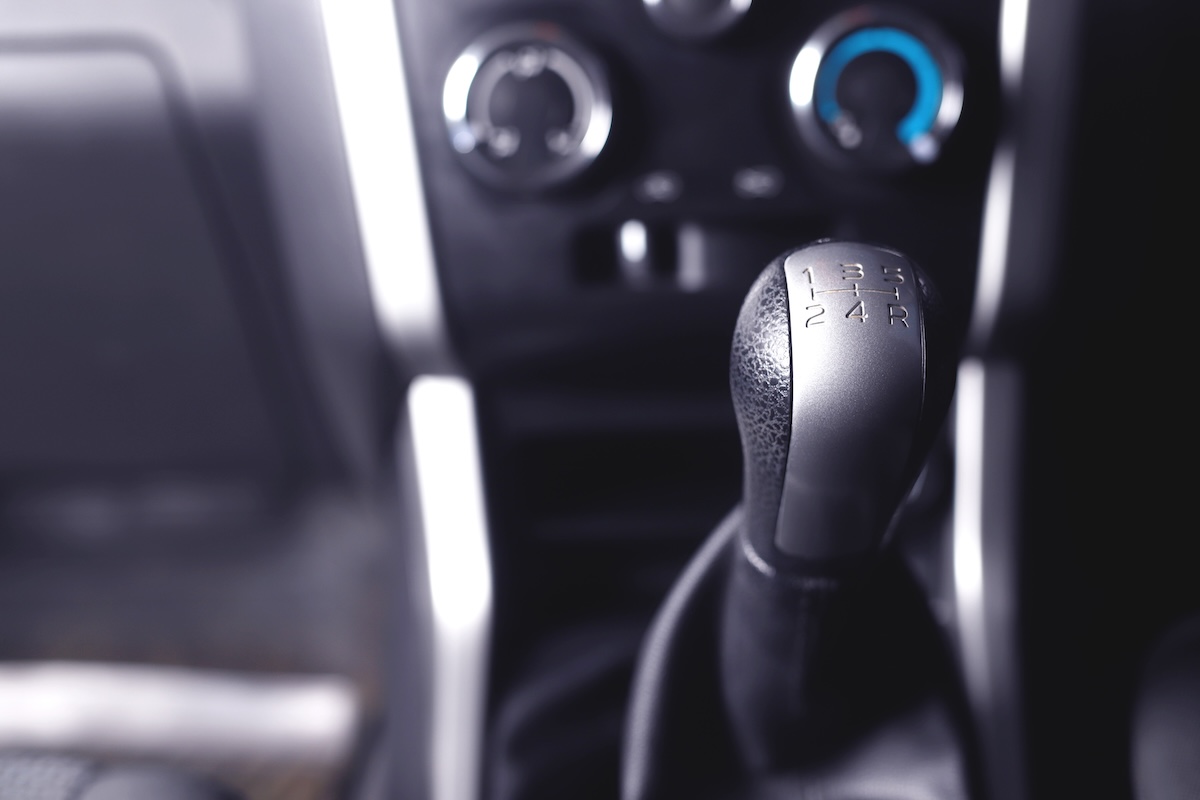
When practicing downshifting, look at the shift pattern and choose two gears that are in the same line. Then find a long stretch of empty road with a speed limit that accommodates both of them. For instance, if third is directly above fourth in the pattern, look for a 35-mph road. If fourth is directly above fifth, look for a road with a 45-mph speed limit. That way, you can keep switching between the two using a simple, straight throw of the shifter. This should limit the likelihood of the driver mistakenly skipping a gear when up- or downshifting (as occasionally happens when you have to jog the shifter over to change gears).
And while it’s possible to safely skip gears, new drivers should practice moving up and down through the numbers sequentially until they know what they’re doing.
Related Topics

The content above is for informational purposes only and should be independently verified. Please see our Terms of Use for more details.


