Experts generally agree that an EV battery should last between 10 and 20 years. However, there are several factors that can affect battery longevity, and most are within the owners' control.
How Long Do Electric Car Batteries Last?
- Understanding Electric Car Battery Life
- How Long EVs Last vs Gas Vehicles
- The Lifespan of Electric Car Batteries
- Recycling and Disposal of Electric Car Batteries

Understanding Electric Car Battery Life
How to prolong EV battery lifespan:
Drive conservatively: One of the easiest ways to make your EV battery last longer is to drive more conservatively. Aggressive acceleration puts added strain on the battery and creates heat as it attempts to deliver a rush of power in an instant (a big squeeze of that sponge). This also affects your range, requiring more charge cycles than normal, so you could conceivably kill two birds with one stone by driving smoothly.
Charge Less Often: Reducing the frequency of charge cycles could also be easier for those with short commutes. In these cases, it may make more sense to charge when the battery is low every couple of days rather than topping it off every night. We say low here instead of empty since completely discharging your battery can also shorten its life.
Don’t Max Out: Charging to the maximum battery capacity can also shorten its life. Thankfully, carmakers take this into account and leave a buffer zone shown in the difference between the battery's physical capacity and usable capacity. Drivers can choose to charge fully for long road trips in many EVs, but doing so will have negative effects over time.
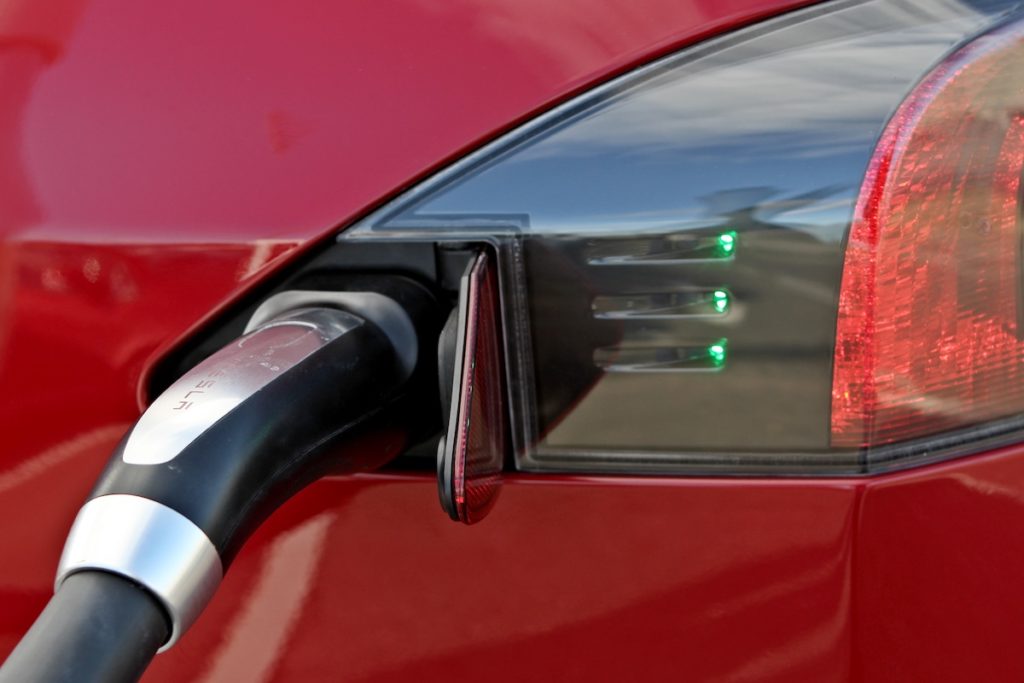
Charge Slower: How you charge is also important. A 240-volt level 2 charger, which is common in residential installations, is generally accepted as the best way to charge for battery longevity. Level 3 chargers, often referred to as DC fast chargers or Tesla's superchargers, replenish the range at a considerably higher rate.
These fast charging stations are popular for road trips where you prefer to minimize your time stopped and can get you a significant charge in as little as 20 minutes. This puts strain on the battery and will reduce your range with repeated use.
The best practices for one EV may be different from another. For example, some lithium iron phosphate batteries aren't as sensitive to numerous charge cycles as others. In the case of some Tesla Model 3s, you can regularly charge to 100 percent without the typical losses in battery performance. That's why it's important to get as much information and instruction as possible with any new vehicle.
Check the Temps: The climate can also affect longevity. Most EV batteries have an ideal ambient temperature between 68 and 86 degrees Fahrenheit. Extreme cold or heat can reduce range, whether the vehicle is operating or just parked. Having a covered parking spot or garage can certainly help mitigate these effects.
Keep Them Maintained: Having your EV properly maintained is another way to maximize your battery life. While electric vehicles have fewer moving parts than internal combustion cars and require less maintenance, it's important to follow the manufacturer's recommendations.
Battery cooling is critical for numerous reasons, so don't skip scheduled services that may require a thermal management system inspection and a fluid check or flush. Even something as mundane as checking your tire pressures will have cumulative benefits, reducing strain on the battery as well as your charge frequency.
Similar to gas-powered vehicles, using unapproved parts, modifications, or services can void your warranty. Failing to properly maintain your vehicle, including software updates, can also cause some headaches. There are also use limitations, such as mechanical abuse and overloading weight or load restrictions. Some EVs are also not rated for towing, and yes, the mechanics will be able to tell if you've exceeded the parameters.
How Long EVs Last vs Gas Vehicles:
Comparing EV versus engine life is complicated by numerous variables.
Federal law mandates that battery warranty coverage must last at least eight years or 100,000 miles. That exceeds most warranties offered for internal combustion vehicles, as well as the basic bumper-to-bumper warranty. California goes even further, requiring ten years and 150,000 miles of coverage for 2026 model-year EVs.
That bodes well for EVs, which have lifespans that are estimated to be between 10 and 20 years. Considering how new EVs are to the automotive scene, there isn't a definite answer regarding longevity yet. A decade ago, there were only a handful of EVs for sale to the general public, and some of those used older battery technology that lacked the power and longevity of today's lithium-ion batteries.
So, how does that compare to gas vehicles? Well, vehicles from a brand with a reputation for reliability — such as Honda or Toyota — can easily reach 200,000 miles. That ranges from eight years to 12 years in terms of average lifespan.
As with EVs, how you drive your gas-powered car will have a lot to do with durability.
Also, when it comes to EV battery warranties, it’s worth noting that there's typically a minimum charge capacity that the battery must maintain over the warranty duration. That threshold is commonly between 70 and 80 percent of the vehicle's range when new. That means if you have an EV with 300 miles of range, and after several years, you're only getting between 210 and 240 miles, you might be eligible for a battery replacement under warranty.
The Lifespan of Electric Car Batteries
How do EV batteries degrade over time?
If you think of the anode as a sponge, it soaks up the electrons when charging and releases them when squeezed. With each charge cycle, the ability of that sponge to absorb electrons degrades slightly. Unfortunately, heat also accelerates the aging process. With heat and charge cycles being responsible for battery degradation, the obvious solution is to minimize both. In an electric vehicle, that's easier said than done.
What’s At Stake:
Being a well-informed EV owner will go a long way to maintaining your battery health. Combined with conservative driving, proper maintenance, and following the manufacturer's guidelines, you should easily avoid having to pay for a replacement.
Prices for a new battery vary widely, but to put it into context, a Chevrolet Bolt battery replacement can cost between $15,000 and $20,000, while a Volkswagen ID.4 will set you back $27,000. That should be enough to motivate any owner to follow these best practices.
Recycling and Disposal of Electric Car Batteries
What happens to old electric car batteries?
As packed with precious and harmful materials as electric vehicle batteries are, it doesn't make sense to dispose of them in landfills. Nowadays, EV battery packs are dismantled and separated, with metal and plastic components following a similar path as the cans and bottles you toss into the recycling bin. The battery cells themselves are a trickier proposition, and the science is still evolving.
Even though Toyota is slow to transition to fully electric vehicles, the carmaker has over two decades of experience with electrification with the Prius. We can use this as a pattern of what we might exist going forward. Toyota has its own recycling program in cooperation with other partners. Battery cells are typically crushed, and then the valuable lithium, nickel, and other metals are separated and reused.
Considering these are the most expensive components of the battery pack, manufacturers have a lot to gain by recycling them instead of going through the entire mining and refining process. In Toyota's case, they aim to recover up to 95 percent of these materials. The process isn't cheap, but developing technologies will almost certainly reduce the cost.
We're still in the nascent stages of EV development and adoption, and considering the last decade of progress, the future looks promising. In the last 15 years, we've gone from EVs that might estimate 100 miles off driving range to something like the Lucid Air that can travel more than 500 miles. With solid-state batteries seemingly on the horizon, we could expect significant gains in energy density and longevity. For now, you can rest easy knowing that an EV should last as long or longer than a typical gas-powered car, provided you follow the aforementioned guidelines.
How a lithium-ion battery works:
Lithium-ion batteries have been used commercially since the 1990s and are currently the most popular type for electric vehicles. This is due to the battery's chemistry, which is able to store a lot of energy in a compact space and endure many charge cycles (use and recharginThere'sre's a race to develop the next breakthrough in battery technology, promising improvements across the board, benefiting EVs along with smartphones, laptops, and pretty much anything that needs electricity.
In a lithium-ion battery, lithium ions flow between two sides of the battery (the cathode and anode) through a medium (electrolyte) and a separator membrane. That electrolyte and separator do not allow electrons to pass through, forcing them to travel through the cathode and anoIt'sIt's this transit that creates electricity, with the cathode being the positive lead and the anode being the negative pole. Another byproduct of electricity production is heat.
EV charging essentially reverses the process. When you plug in the vehicle, it draws those electrons back to the other side of the battery, which, in turn, draws the lithium ions back through the electrolyte and separator, landing on a grid of graphite or other material and recombining with the electrons. This process also produces heat. In this state, the battery is once again ready to produce electricity.