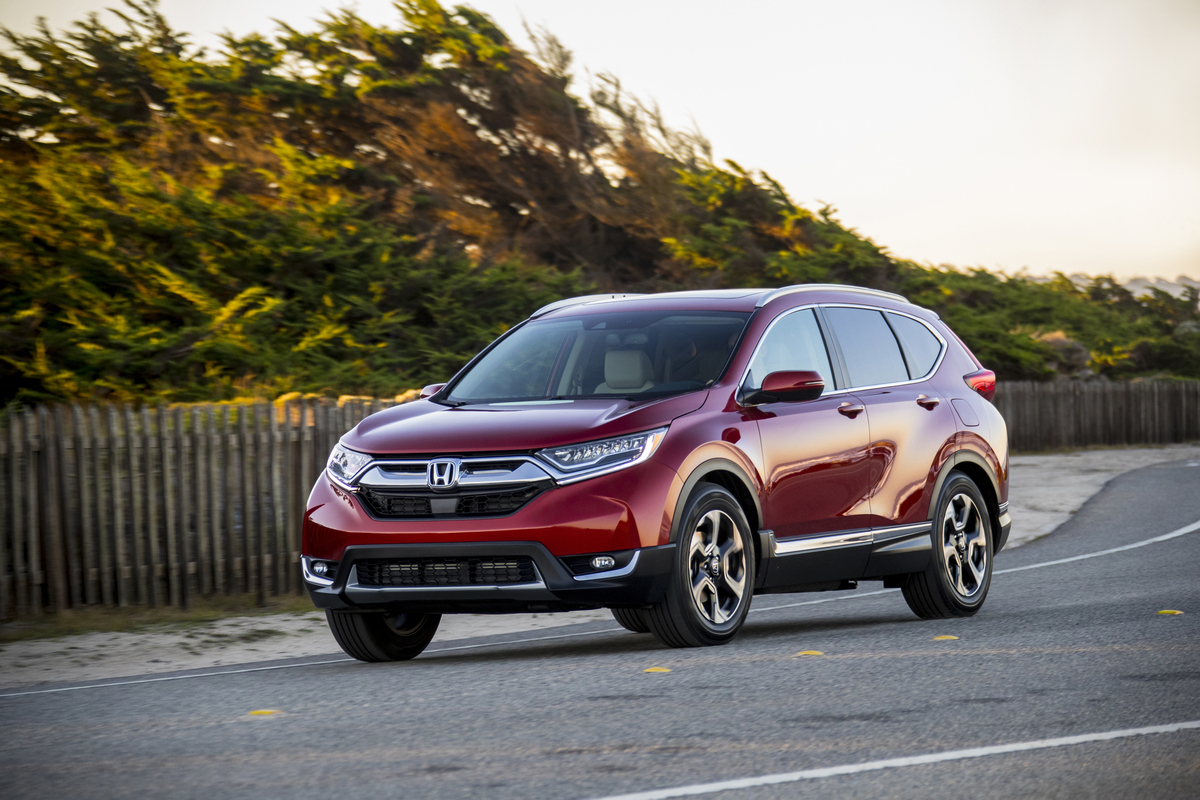
One of the earliest small crossover SUVs, the Honda CR-V was the Japanese automaker's response to the Toyota RAV4, and the two are still close rivals today. Toyota had been working on the RAV4 for almost half a decade before it debuted in Japan in 1994, but Honda had also been developing similar ideas for years. The CR-V ("Compact Runabout Vehicle") is a scaled-up version of the concepts first seen in Honda's tall, unconventional, and popular 1980s Civic station wagon, a mix of proto-crossover and tiny minivan.
After debuting in Japan in late 1995, about 18 months after the RAV4, the CR-V came to the United States just months later as a 1997 model. The term "crossover" hadn't even made its way into vehicular vernacular back then, and the CR-V was usually referred to as a small SUV. But Honda and Toyota had ditched the traditional body-on-frame layout of most SUVs in favor of unibody construction and car-based mechanical pieces. The original CR-V rode beefed-up versions of the same mechanical pieces as the Civic.
This decision offered more efficient use of interior space and, perhaps most importantly, more car-like ride and handling characteristics. Ever since, the CR-V has been recognized for its often class-leading blend of comfort, versatility, reliability, and value. Compact crossovers like it have proven to be ideal for small families, daily commuters, and weekend adventurers who need a relatively efficient and affordable vehicle with much more space and utility than a sedan. As a result, crossovers have since conquered the new vehicle market.
Within Honda's lineup, the five-passenger compact CR-V slots above the smaller HR-V but below the larger midsize two-row Passport and three-row Pilot. Output has varied over the years, but all CR-Vs have featured four-cylinder engines and a choice of front-wheel-drive (FWD) or all-wheel-drive (AWD) capability. In 2020, Honda added a Hybrid CR-V for the first time, and then redesigned the vehicle in 2023 to emphasize hybrid power on the top trims.
This newest CR-V also gets upgrades to its technology, styling, and comfort features but comes with the same safety tech we've known and loved in previous model years. Those standard features include lane-keeping assist, road-departure mitigation, blind-spot monitoring, rear cross-traffic alerts, and adaptive cruise control. Like its predecessors, it's regularly won "Top Safety Pick" awards from the Insurance Institute for Highway Safety (IIHS).
There are many flavors of compact crossover nowadays, and CR-V and RAV4 shoppers should also consider alternatives like the Mazda CX-5, Nissan Rogue, Kia Sportage, Hyundai Tucson, Subaru Forester, or Chevrolet Equinox. The CR-V is known for reliability, safety, and economy. It offers plenty of features, particularly on the top trims, but isn't the most spirited driver or the most distinctive in terms of style.
Not all of these alternatives existed 10 or 20 years ago, so we've assembled this guide to tell you more about each CR-V generation, with some recommendations about what to watch out for and what to pay.
Honda CR-V: Cost, Reliability, and the Best Years to Buy
Frequently Asked Questions
Which Honda CR-V years are the best?
Almost all CR-Vs have good reliability records, but models built from 2013 to 2016, and those built from 2020 to the present have the best records for which good data exists. They consistently get above-average or "Great" ratings from outlets like J.D. Power and Consumer Reports, though 2015 models generate a fair number of gripes on CarComplaints.com. It's hard to go too far wrong on a CR-V, though, and even very old first-generation models are generally reliable.
What are the worst Honda CR-V years?
CR-Vs built from 2017 to 2019 seem to have taken a hit on quality and reliability, as these years have generated more negative feedback than most others across the board. The issues seem to center on electrical and engine problems, and issues with the HVAC systems. 2017 CR-Vs seem to be the worst of all, with the highest number of issues on crowd-sourced sites like CarComplaints. Among older models, 2007 to 2009 models are also less reliable than average. It's important to inspect carefully, though, because the CR-V's famous reliability can sometimes lead to neglected maintenance.
How much does a late-model Honda CR-V cost?
Based on current used market data, a one-year-old 2025 CR-V averages about $31,900, a three-year-old 2023 model averages about $29,800, and a five-year-old 2021 model averages about $24,600. Prices vary by trim, mileage, and condition, but the CR-V holds its value well relative to the broader used car market.
Research Honda CR-V Price Trends on CarGurus
Is a used Honda CR-V a good deal?
Yes. CR-Vs cost a little more than other compact crossover SUVs, but they have one of the best reliability records in the class and are generally long-lived, low-maintenance rides. Over time, the quality and fuel economy do mean some cost savings, which helps offset their higher resale values. Used CR-V prices have risen 5.84% year-over-year, outpacing the broader used car market's 2.97% gain — a sign of strong demand and solid value retention.
Honda CR-V Pros and Cons
Pros:
- A solid value in all generations
- Stellar reliability record
- Roomy cabin and cargo area
Cons:
- Not all that engaging to drive
- Base models are very basic
- More expensive used than some rivals
Honda CR-V Generations
Sixth Generation (2023-Present)
For 2023, Honda comprehensively redesigned the CR-V into a more handsome shape and put an emphasis on hybrid power. While the gas-powered, turbocharged, 190-horsepower 1.5-liter four-cylinder engine remains from the fifth-generation model, Honda made all of the CR-V's top trims hybrid-only. Their updated drivetrain, capable of returning up to 40 mpg combined, makes 204 system horsepower and 247 pound-feet of torque, and they come with more features than the previous hybrid. Honda also made AWD a $1,500 option, except for the top Sport Touring trim, which gets it standard.
In addition to a more handsome wrapper that makes it more distinctive, the sixth-gen CR-V's interior is also bigger. It has 41 inches of rear legroom, which is only marginally more than the previous model, but much more than rivals like the RAV4 or Mazda CX-5. There's also marginally more cargo room, 39.3 cubic-feet behind the rear seats and 76.5 with them folded, which is right at the top of its class.
Honda also still piles on the safety features, with standard adaptive cruise control and some newly-standard gear like traffic jam assist, traffic sign recognition, and low-speed braking control. As a result, the new CR-V earned a "Top Safety Pick+" designation from IIHS in 2023, and "Top Safety Pick" in 2024. The infotainment system is on the basic side, but top trims get Wireless Apple CarPlay and Android Audio, and the CR-V remains an easy vehicle to learn to operate.
For 2026, Honda gave the CR-V its first mid-cycle refresh. A 9-inch touchscreen and wireless Apple CarPlay and Android Auto are now standard across the lineup. Wireless phone charging is also now standard on every trim. The EX-L gets a 10.2-inch digital instrument cluster as well. Honda also revised the AWD system's low-speed traction management for better grip on slippery surfaces. The 2026 model starts at $32,270 for the base front-wheel drive model, and the range-topping EX-L starts at $36,850.
These CR-Vs are still very new, and while their new vehicle prices are friendly for the overall package, they're only just hitting used lots. The average used price for the CR-V ranges from $30,000 to $35,000. Those prices are very close to what brand new ones cost, so it might be worth considering going that route instead.
Fifth Generation (2017-2022)
Honda's fifth iteration of the popular CR-V compact crossover debuted for the 2017 model year. Highlights included bold (if polarizing) styling that made its predecessor look drab by comparison, increased dimensions resulting in extra rear legroom and cargo space, and chassis revisions designed to improve ride, handling, and braking performance. Buyers could select FWD or AWD capability and one of four trims: LX, EX, EX-L, or Touring.
The base LX continued to feature the naturally aspirated 2.4-liter four-cylinder engine (now rated at 182 horsepower), but few people chose this model. In comparison, all other CR-V trims played host to a new turbocharged 1.5-liter four-cylinder providing 190 horsepower and up to an estimated 34 mpg on the highway. Other enhancements arriving with the 2017 Honda CR-V were the broader availability of the Honda Sensing suite of safety technologies and a simple physical volume knob to improve the usability of the touchscreen audio system.
There were no notable changes for 2018 or 2019, but 2020 brought a major refresh and the CR-V's first hybrid model. Though the styling didn't change much, the old 2.4-liter engine, rarely ordered anyway, was phased out entirely. Honda Sensing became standard on all models, and there were new colors to choose from. The new hybrid used a 2.0-liter four-cylinder engine and two electric motors and could return up to 38 mpg combined, a nearly 25% increase over the turbocharged 1.5.
2017 to 2019 CR-Vs tend to have more problems than other years, but they still make decent used vehicles. Every gas-powered CR-V of this era should sell for less than $30,000 now, but earlier models will go for less, roughly $18,000 to $21,000 for a good one. 2020 and newer models sell for more, but even a top 2022 Touring AWD model can be had for $25,000.
2020-2022 CR-V hybrids cost more than gas versions but are considerably less expensive than the 2023 and 2024 models as used vehicles. You can pick up decent ones with less than 70,000 miles on the odometer for as little as $20,000, but most examples sell for roughly $26,000 to $32,000.
Fourth Generation (2012-2016)
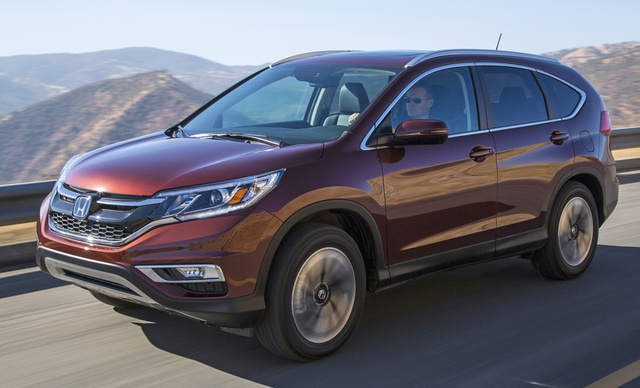
Honda's CR-V greeted the 2012 model year with yet another redesign. Though a hair smaller than its predecessor on the outside, the 2012 CR-V provided more interior space for cargo and up to five passengers. Power came from the same 2.4-liter four-cylinder engine as in the previous generation, mated to a five-speed automatic transmission, but horsepower was up to 185, and EPA-rated highway fuel economy hit the 30 mpg mark.
Buyers could select from LX, EX, and EX-L trim levels, with a navigation system or rear entertainment system (RES) available for the latter. Also among the 2012 Honda CR-V's many changes was a reconfigured flat-folding rear seat that replaced the fold-and-tumble design in earlier CR-Vs.
In typical Honda fashion, the CR-V was left mostly unchanged for a couple of years and then revised mid-way through its life in 2015. The engine remained the same size but was re-engineered for cleaner emissions, and the conventional automatic transmission gave way to a continuously variable transmission (CVT) for better fuel economy, resulting in a 3-4 mpg gain in most measurements.
Along with styling enhancements were a new top-of-the-line Touring trim level, LED daytime running lights, and available new amenities, including a power tailgate and touch-screen infotainment system. For the first time, Honda added a suite of advanced driver assistance (ADAS) systems, including adaptive cruise control with lane keeping, forward automatic emergency braking, and forward collision warnings. In this generation, these features were reserved for the top Touring trim. These upgrades were followed by the reintroduction of the CR-V SE model in 2016.
These fourth-generation models are fairly basic apart from the 2015-2016 Touring, and that model is worth paying extra for because of its advanced safety features. All have a top-notch reliability record even if they aren't very exciting to drive, but prices vary considerably depending on mileage and condition. It's harder to find these models with under 70,000 miles than the newer fifth-gen versions, and you can expect to pay $11,000 to $16,000 for really nice ones.
They're long lived, though, and examples with 60,000 to 130,000 miles on the clock are more common and available for anywhere from $8,000 to $15,000. Any of these years makes a solid, reliable long-term choice.
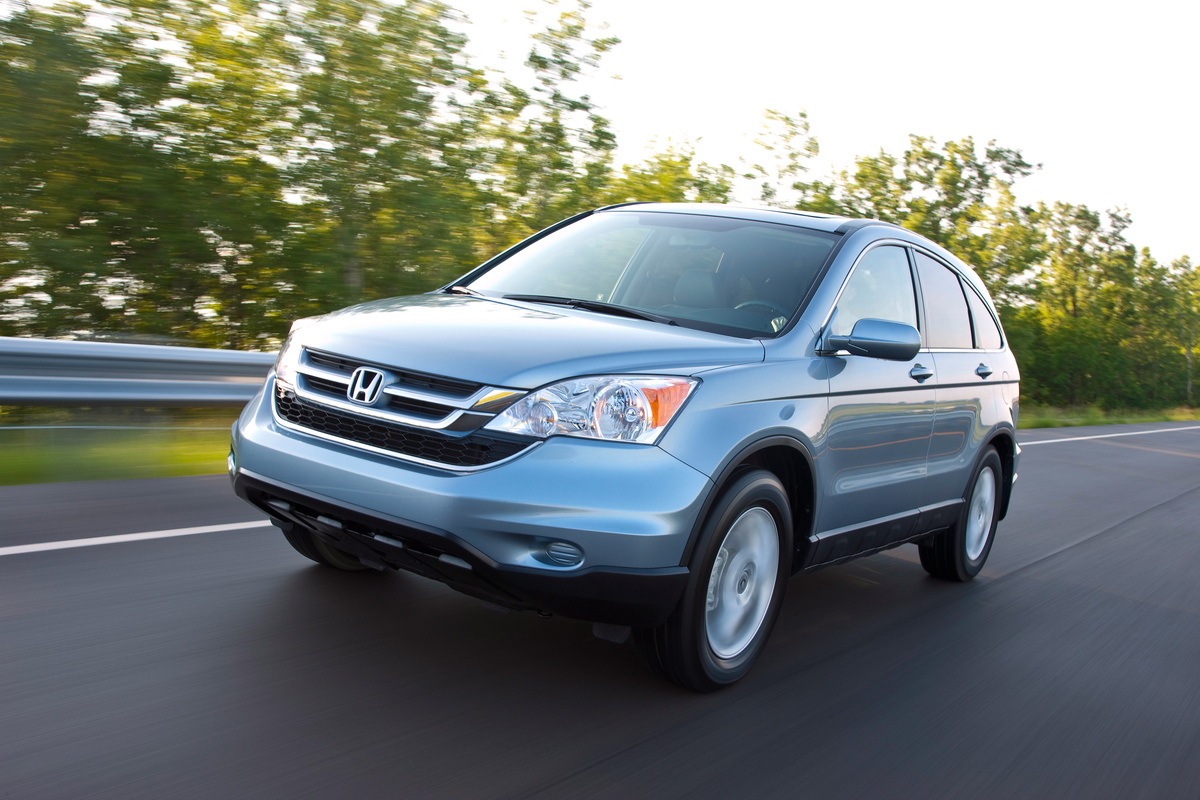
Third Generation (2007-2011)
For 2007, the Honda CR-V was redesigned again, this time rolling away with a more curvaceous exterior. While it may have appeared to be smaller, this version of the five-passenger CR-V provided a bit more cargo space, and under the skin, it reused some of the structural and mechanical pieces of its second-gen predecessor.
What had been a tradition for all CR-Vs—a side-opening tailgate with an exterior-mounted spare tire—was replaced with a more traditional top-hinged lift gate and a spare mounted under the cargo floor. The removable picnic table didn't make the cut this time around, nor did the five-speed manual gearbox.
Instead, Honda installed a five-speed automatic as the exclusive transmission for this generation of CR-V. Under the hood was a 166-horsepower version of the previous 2.4-liter four-cylinder engine, with fuel economy now reaching an EPA-estimated 27 mpg on the highway. Trim choices for 2007 included the Honda CR-V LX, EX, and top-of-the-line EX-L, in varying degrees of plushness. These trim designations mean a little less now than they did then, as this was before the era when the top trims got sophisticated driver-assist gear, and some of the luxury features seem basic today, like Bluetooth connectivity or a USB port (new on the EX-L in 2010).
For the most part, Honda left the CR-V unchanged until 2010, when designers once again performed a bit of nipping and tucking. In addition to visual updates, the 2010 Honda CR-V featured a retuned 2.4-liter engine that generated 180 horsepower. Honda closed out this third-generation model by introducing the 2011 CR-V SE. Like past special editions, this SE offered minor upgrades to distinguish it from other trims, but nothing worth paying too much extra for today.
2007 and 2008 CR-Vs have a less stellar reliability record than earlier and later models, but all CR-Vs of this era are reasonably reliable. The complaints tend to center on interior quality and features, not mechanical maladies. Clean, low-mileage examples of this CR-V are rare now, but you can still find some examples with fewer than 100,000 miles for $7,000 to $11,000. If your budget won't fit that, models with up to 140,000 miles can be had for even less. They're reliable and cheap to run, and they still look fairly modern thanks to the CR-V's evolutionary styling.
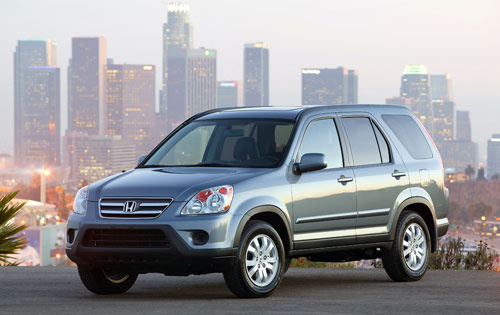
Second Generation (2002-2006)
Five years after the CR-V's initial introduction, an entirely new second-generation Honda CR-V arrived for the 2002 model year. Larger and sporting what was arguably more conventional styling, the five-passenger 2002 CR-V included bonus safety features like four-wheel antilock disc brakes and front-row side-impact airbags, though some of these features were still reserved for higher trims. It also carried on the CR-V tradition with its vertical taillights and rear integrated picnic table.
Honda scrapped the first generation's less-powerful engine to make room for a 160-horsepower 2.4-liter four-cylinder with Honda's i-VTEC (intelligent Variable Valve Timing and Lift Electronic Control) technology, which the EPA rated at 26 mpg on the highway. Shoppers considering the 2002 CR-V had their choice of FWD or AWD (which Honda referred to as Real Time 4WD) capability, a five-speed manual or four-speed automatic transmission, and LX or EX trim levels. Manual CR-Vs are nicer to drive, but much rarer than automatics.
This version of the CR-V underwent few significant changes over the next couple of years, but 2005 ushered in a mild refresh and the launch of a new SE trim. More importantly, the list of standard safety features grew, including the anti-lock brakes (which many competitors had already added). A five-speed automatic transmission replaced the original four-speed. There were no notable changes for 2006, the last year of production for the second-generation CR-V.
Second-generation CR-Vs have considerably more passenger space than the original, particularly in the back seat, which grew by more than three inches in terms of available legroom. They also look and feel a little more luxurious, though they're basic by today's standards. Like the original, they have a rock-solid repair record and make for very good low-cost transportation.
Clean, low-mileage examples start at around $6,000 and go up to about $9,000, but it's probably not worth paying quite that much for one this old as the fourth-gen models aren't much pricier.
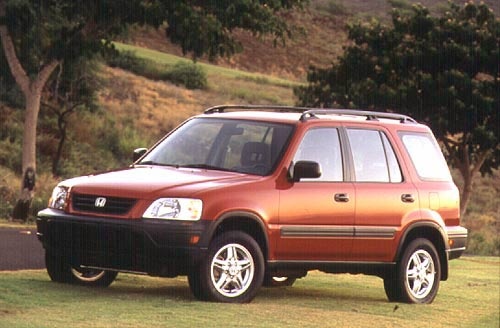
First Generation (1997-2001)
Honda's first home-grown SUV, it revealed the first-generation CR-V in Japan in late 1995. The vehicle made its North American debut just a few months later at the 1996 Chicago Auto Show and hit the market as a 1997 model. Closely based on the Civic, the CR-V essentially expanded on the formula of the 1980s-era Civic "tall wagon," which was Honda's first vehicle to offer all-wheel drive and which largely predicted the shape and scope of the CR-V.
At first, Honda only sold an LX trim for the compact SUV, but the automaker soon added the EX variant and more options. The EX model added 15-inch wheels and anti-lock brakes, a feature that would not trickle down to the rest of the lineup for many more years.
The CR-V came only with a 2.0-liter four-cylinder engine, making 126 horsepower and 133 pound-feet of torque. At first, a four-speed automatic was the only transmission, but Honda added a five-speed manual option in 1998. Automatics were more popular, but a fair number of buyers chose the manual for slightly better fuel economy (about 21 mpg combined, which isn't great by today's standards). Similarly, 1997 CR-Vs were AWD only, but 1998 and newer models could be had with front-drive or AWD.
The global CR-V got an update in 1999, but the vehicle continued on in its previous form in the United States. Honda released a CR-V Special Edition for North America in 2000, which brought navigation, leather upholstery, and other upscale features.
First-generation CR-Vs are now (surprisingly) starting to attract attention from collectors, and given the popularity of Japanese imports from the 1990s, a few right-hand-drive Japanese versions can be found if you're interested in such a specialized machine. Good original CR-Vs now sell for $6,000 to $9,000, but you can pick up high-mileage examples or as little as $2,500. It's still possible to find really good, cheap transportation with these, even though they're now pushing three decades old. They're long-lived, hard-wearing, and cheap to buy and run.
Related Topics