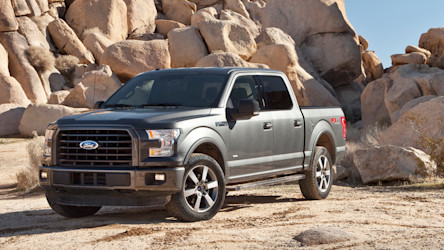
If you're shopping for a used Ford F-150, its mileage alone won't tell you much. A 150,000-mile F-150 with the right engine and a clean service history can have significantly more life left than a 90,000-mile truck that's been neglected—or that came from the factory with a powertrain known for expensive failures.
This guide breaks down the engine longevity of the modern F-150's primary powertrains: the 5.0L Coyote V8, the 2.7L EcoBoost, the 3.5L EcoBoost, and the PowerBoost Hybrid. We examine the real-world durability of each option, the common mechanical issues that define their lifespan, and how maintenance impacts the total mileage you can expect.
- The Ford F-150 Average Engine Lifespan
- Engine Reliability Rankings: Which F-150 Engine Lasts the Longest?
- Mechanical Failure Points: Which Engine-Related Components Break Down By 100,000 Miles?
- F-150 Transmission Health and Engine Stress
- Ford F-150 Engine Longevity vs. the Competition
- Should You Buy a Ford F-150 With Over 100,000 Miles?
- The Bottom Line on F-150 Engine Longevity
Ford F-150 Engine Longevity: At a Glance
| Expected Mileage Range | 200,000–300,000 miles (with proper maintenance) |
| Most Reliable Engines | 2018–2020 5.0L V8; 2018+ 2.7L EcoBoost V6 |
| Highest Failure Risk | 3.5L EcoBoost (2011–2016); PowerBoost Hybrid (2021–2023) |
| First Major Failure Window | Cam phasers: 100,000–150,000 miles (EcoBoost & 5.0L V8) |
| Transmission Concern | 10-Speed Automatic (10R80) harsh shifting: 60,000–120,000 miles (Pre-August 2022 builds) |
| Best Production Year | 2018–2020 (5.0L V8) or 2018+ (2.7L EcoBoost) |

The Ford F-150 Average Engine Lifespan
The F-150 has one of the strongest longevity reputations in the full-size truck segment, and properly maintained examples regularly reach the 250,000 to 300,000-mile mark before requiring a major engine overhaul.
But an engine's "end of life" is usually a math problem, not a mechanical explosion. Most owners walk away when a major repair suddenly costs more than the truck is worth. While staying on top of maintenance helps you blow right past that wall, a truck used for "severe duty"—heavy towing, hauling, or constant idling on job sites—will typically hit that repair threshold earlier than a standard highway commuter.
Engine Reliability Rankings: Which F-150 Engine Lasts the Longest?
Our research shows that 2.7L EcoBoost (2018+) and 5.0L Coyote V8 last the longest. Both of these engines could reach 300,000 miles with proper care.
While mileage is a common benchmark, an engine's true lifespan depends on how it was built and how much stress its internal components can handle over time. While some F-150 engines are designed for simple longevity, others prioritize high-output towing at the expense of more frequent repairs.
Here, we've summarized the four main F-150 engines based on their proven high-mileage potential, and when you can expect their first major service milestones:
2.7L EcoBoost V6 (2018 Onward)
The 2018-and-newer 2.7L is widely considered the F-150's "sweet spot" for reliability. Ford redesigned this version to include a dual-injection system, which prevents the carbon buildup issues that plague many other modern turbocharged engines.
- Engineering Advantage: This engine uses a Compacted Graphite Iron (CGI) block, a high-strength material used in heavy-duty diesel engines. This allows the engine to handle the high pressure of its turbos without the metal warping or cracking over hundreds of thousands of miles.
- The Trade-off: While the engine internals are incredibly tough, the external plastic cooling connectors can become brittle and leak as the truck reaches 100,000 miles.
- Buyer's Tip: If you're looking at a 2021–2022 model, verify via the VIN that the "intake valve recall" was completed to avoid a sudden engine stall.
You can verify any active recalls on new and used trucks at NHTSA.gov
5.0L Coyote V8
This is the best choice for buyers who want a traditional, high-mileage-capable truck. Because it doesn't use turbochargers to generate power, it's mechanically simpler and generates less internal heat than the EcoBoost engines.
- Engineering Advantage: Its naturally aspirated design means the engine operates under lower "thermal stress." This preserves the life of the oil and the rubber gaskets, which is why these engines rarely suffer from the "cooked" oil issues that can kill turbocharged V6s.
- The Trade-off: Some 2018–2020 models are known for high oil consumption. You'll need to check the dipstick regularly to ensure the engine doesn't run dry between changes.
- Buyer's Tip: Listen for a "metallic ticking" on a cold start. If the rattle is loud, the cam phasers (timing components) are likely worn and will eventually require replacement, which can cost between $800–$2,500.
3.5L EcoBoost V6 — The Performance Choice with Some Quirks
This is the F-150's towing powerhouse. While it is capable of high mileage, it is the most maintenance-sensitive engine in the lineup. It rewards owners who change their oil every 5,000 miles and punishes those who wait.
- Engineering Advantage: The Twin-Turbocharger System provides massive low-end torque for towing, allowing a V6 to do the work of a much larger engine without the constant weight of a heavy V8 block.
- Trade-off: Those turbos generate extreme heat that breaks down oil faster, leading to timing chain stretch—the primary cause of engine death for this model. It is also the most likely to develop the infamous "Cold Start Rattle."
- Buyer's Tip: Never buy a high-mileage 3.5L without a perfect maintenance record. If the previous owner followed the 10,000-mile factory oil interval, the timing chain is likely already compromised.
3.5L PowerBoost Hybrid
The PowerBoost is essentially the 3.5L EcoBoost engine with an electric motor added in. It offers good fuel economy and power, but it is the most unproven option for those planning to keep a truck for 15+ years.
- Engineering Advantage: The electric motor takes over during city driving, allowing the gas engine to "rest." This theoretically reduces the total mechanical wear on the engine's internal parts over the life of the truck.
- Trade-off: Your longevity is limited by the Hybrid Powertrain Components. Lithium-ion batteries and inverters have a roughly 10–12 year shelf life; once they fail out of warranty, the repair cost often exceeds the value of an older truck.
- Buyer's Tip: Stick to 2024 or newer models if possible. The 2021–2023 versions were prone to "first-year" electrical glitches that can leave the truck in "limp mode."
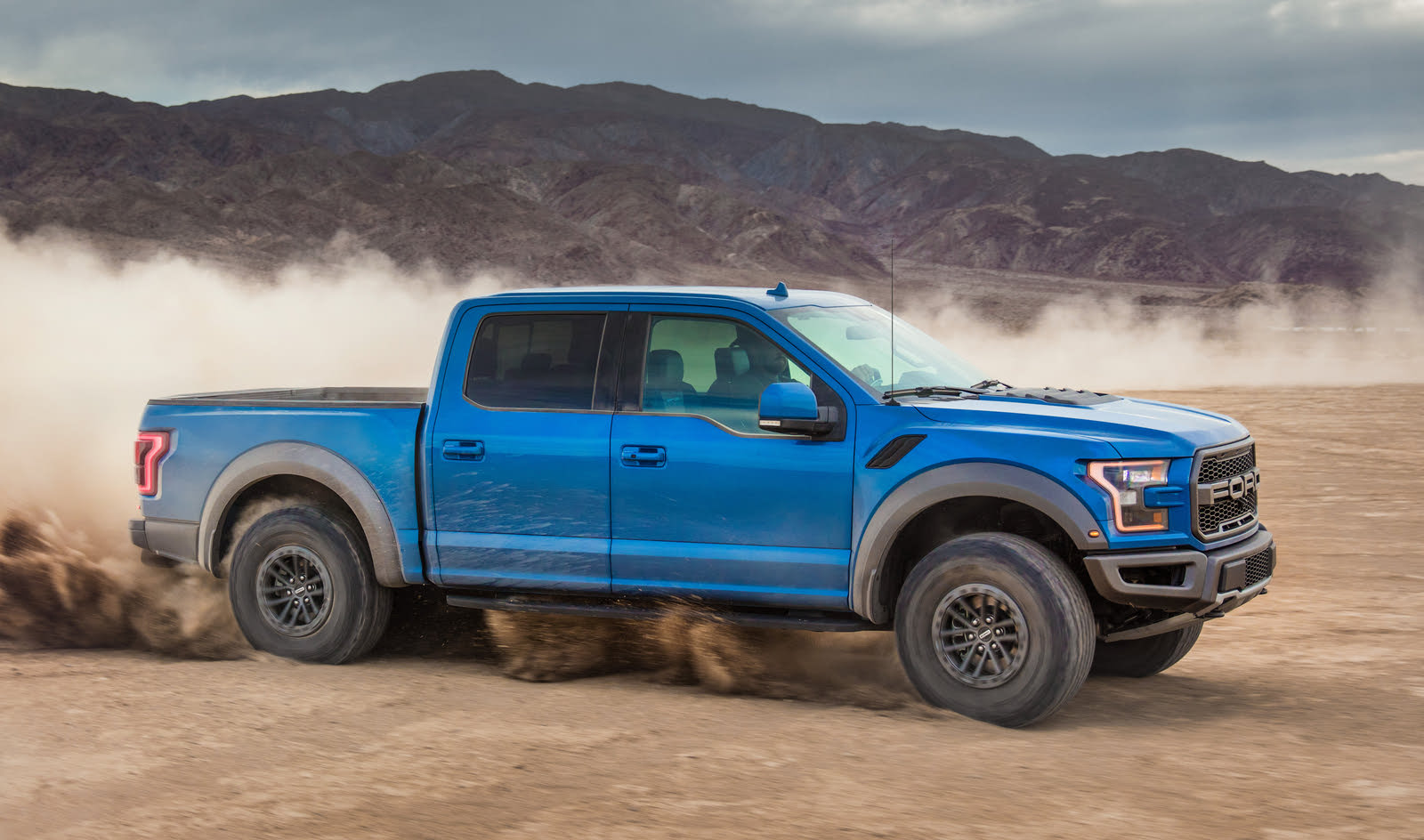
Mechanical Failure Points: Which Engine-Related Components Can Break By 100,000 Miles?
Like all cars and trucks, even the most reliable F-150s eventually need more than fluid changes and tune-ups. Once a truck hits the 100,000-mile mark, the mechanical "metal" is usually fine, but the smaller components—the plastic, the rubber, and the electronic sensors—could be reaching the end of their design life.
Below, we'll highlight the specific engine-related components that typically require attention at this critical milestone:
| Engine-Related Component | Affected Engine(s) | Failure Point | Why It Matters for Engine Longevity |
|---|---|---|---|
| Cam Phasers | 3.5L EcoBoost & 5.0L V8 | Internal locking pin wears out | Worn phasers cause "slop" in the timing. If ignored, the timing chain can jump or snap, which can cause catastrophic internal engine damage |
| Cooling Connectors | All engines | Brittle plastic T-fittings | These are the #1 cause of sudden overheating. Aluminum engines cannot handle extreme heat; one "hot soak" can warp the heads and ruin the block |
| Turbo Coolant Lines | 2.7L & 3.5L EcoBoost | Drying rubber seals | Leaks here starve the turbos of cooling. A seized turbo can send metal shards into the engine's intake, causing massive internal damage |
| Water Pump | All engines | Internal bearing/seal failure | If the pump stops circulating coolant, the engine will overheat within minutes. Replacing this "wear item" prevents a total engine meltdown |
| 10R80 Transmission | All engines (2017–early 2022 models) | CDF Clutch Drum slip | Rough shifting puts unnecessary vibration and "shock" through the engine's internal bearings |
F-150 Transmission Health and Engine Stress
We often think of the engine and the transmission as separate entities, but they're designed to come together to function as your powertrain—the total system that actually moves the truck. In the Ford F-150, this relationship is particularly critical because the high-torque output of the EcoBoost and V8 engines relies on the transmission to stay within a precise "safe zone." If the F-150's gearbox begins to struggle, it can create a "domino effect" that directly impacts the long-term health of the engine.
When evaluating a high-mileage F-150 (or one that's approaching higher mileage), keep an eye out for these specific transmission-related factors that can accelerate internal engine wear at the 100,000-mile mark:
- F-150 "Shift Shock": When the F-150 develops the jerky or delayed shifts common in 2017–2022 models, the engine is forced to run at the wrong RPMs. This creates "shift shock," which places unintended mechanical stress on the F-150's engine mounts and internal crankshaft bearings.
- The F-150 "Lifetime" Fluid Myth: Despite the "lifetime" label in Ford's owner's manuals, the fluid in the transmission of these heavy-duty trucks naturally degrades around 100,000 miles. Old, burnt fluid increases internal friction, which makes the F-150's engine work harder to maintain speed, accelerating engine wear.
Thinking about buying a used Ford F-150? Check out our Ford F-150 Reliability Guide for the full breakdown of which configurations hold up best over time.
Ford F-150 Engine Longevity vs. the Competition
While the F-150 is the best-selling truck in North America, it likely isn't the only option you're considering. To understand whether the F-150 is the right investment for you, it's helpful to see how its engine life and mechanical pitfalls stack up against its two biggest rivals—the Toyota Tundra and the Chevrolet Silverado.
When comparing these trucks, "longevity" is a balance between the total mileage an engine can achieve and the specific engineering trade-offs that define its high-mileage years:
| The Truck | Estimated Engine Lifespan | Most Durable Engine | The Longevity Trade-Off |
|---|---|---|---|
| Ford F-150 | 200,000–300,000 mi | 5.0L V8 / 2.7L EcoBoost | Relies on advanced timing and turbo systems that require strictly consistent maintenance |
| Toyota Tundra | 250,000–350,000 mi | 5.7L V8 (Pre-2022) | A proven "bulletproof" architecture that trades away modern fuel efficiency for simple durability |
| Chevrolet Silverado | 200,000–300,000 mi | 5.3L V8 EcoTec3 | A robust base design that remains vulnerable to unpredictable valvetrain and lifter issues |
The Toyota Tundra—particularly the pre-2022 generation with the 5.7L V8—has a well-documented advantage in outright engine longevity, regularly surpassing 300,000 miles with few major internal issues. This is largely due to an intentionally "under-stressed" engine design that prioritizes simple mechanical reliability over the latest high-tech performance gains.
The Silverado's 5.3L V8 is a legend in the truck world, but modern versions (2014–present) face a specific high-mileage variable: the AFM/DFM cylinder deactivation system. These systems use complex lifters to shut down cylinders for fuel economy, but those lifters are prone to sticking or seizing over time. Unlike a wearable part you can plan for, a lifter failure is often sudden and can lead to a full engine teardown.
Ultimately, the F-150 offers a middle ground. While more technologically complex than the V8-powered Tundra, its common high-mileage patterns—like cam phaser wear—are well-understood by the massive Ford service network. This arguably makes the F-150 a more predictable long-term choice than the Silverado, as long as you choose the right powertrain for your needs.

Should You Buy a Ford F-150 With Over 100,000 Miles?
In short, yes—but its mileage, the specific powertrain and the documented service history matter significantly more than the number on the odometer.
If you are looking at a high-mileage F-150, here is how to weigh the risk across the most common configurations:
- 5.0L Coyote V8 (2018–2020) — Our Pick: With documented oil changes, a truck with 100,000–150,000 miles likely has another 100,000–150,000 miles of useful life ahead of it, assuming normal maintenance continues.
- 2.7L EcoBoost (2018+) — A Solid Choice: Another solid choice, provided the recall history is clean, and the spark plugs have been serviced on a reasonable interval.
- 3.5L EcoBoost (2017+) — Viable, with Homework: Viable, but do your homework on oil change history and ask about any cam phaser work already done. Without documentation, this engine at 100k+ is a higher-risk buy.
- 3.5L EcoBoost (Pre-2017) — Approach with Caution: Approach with caution. The older timing chain design means you may be looking at that repair in the near future. (Sale price should reflect this.)
- PowerBoost Hybrid (2021–2023) — Inspect Thoroughly: Hard to recommend without a thorough inspection. Out-of-warranty hybrid system failures are expensive, and there isn't enough long-term data on these trucks yet to evaluate them confidently.
Why the Right Year Beats a Low Mileage
A high-mileage F-150 from a reliable powertrain year is almost always a better investment than a low-mileage truck from a problematic year. Longevity in an F-150 isn't just about how many miles it has already traveled—it's about how much "useful life" remains based on the specific engine's engineering and its history of oil-system health.
Ready to start shopping? Browse Ford F-150 listings on CarGurus and use the Deal Rating and Instant Market Value tools to find a well-maintained truck at a fair price—so you can buy with confidence, not guesswork.