The Ford F-150 full-size pickup truck has spanned 14 generations since its introduction in 1948. As of the 2026 model year, the F-150 comes with a variety of powertrains, and it was even available in a fully electric F-150 Lightning configuration for a few model years.
Ford F-150 Buying Guide: Cost, Reliability, and the Best Years to Buy
Search for Ford F-150
See all


The F-150 has long been one of the bestselling vehicles not only in the United States, but around the world. Though there's some serious competition among full-size trucks in the U.S., including from Detroit-based rivals Chevy, GMC, and Ram, the F-150 consistently impresses with its performance, build quality, and capability, as well as its payload and towing capacities, both in and outside America.
If you're shopping for a new or used pickup truck, the Ford F-150 should be on your list. In this guide, we'll take a closer look at each evolution of Ford's bestselling truck.
Ford F-150 Buying Guide: Cost, Reliability, and the Best Years to Buy
- Frequently Asked Questions
- Ford F-150 Pros and Cons
- Ford F-150 Generations
- 14th Generation (2021-)
- 13th Generation (2015-2020)
- 12th Generation (2009-2014)
- 11th Generation (2004-2008)
- 10th Generation (1997-2004)
- Ninth Generation (1992-1997)
- Eighth Generation (1987-1991)
- Seventh Generation (1980-1986)
- Sixth Generation (1973-1979)
- Fifth Generation (1967-1972)
- Fourth Generation (1961-1966)
- Third Generation (1957-1960)
- Second Generation (1953-1956)
- First Generation (1948-1952)
Frequently Asked Questions
Which Ford F-150 years are the best?
Stick with the newest Ford F-150 you can afford. While they're generally solid, later models have more efficient powertrains and more comfort features, such as the EcoBoost powertrain lineup of turbocharged low-displacement engines.
What are the worst Ford F-150 years?
Skip the 2004-2006 model years, because they're known for engine problems, especially the V8s. In 2004 and 2005, spark plugs and coil packs were known to fail and, in 2006, problems with the fuel and brake systems were also widely reported.
How much does a late-model Ford F-150 cost?
Based on current used market data, a one-year-old F-150 (2025) averages about $55,200, a three-year-old (2023) averages about $44,300, and a five-year-old (2021) averages about $34,200. Prices vary widely depending on trim, cab configuration, and mileage.
Research Ford F-150 Price Trends on CarGurus
Is a used Ford F-150 a good deal?
It can be. Used F-150 prices have risen 6.14% year-over-year, outpacing the broader used car market's 3% gain, which reflects strong demand for this truck. If you're looking for specific attributes and features, such as a particular powertrain, or a specific cab style or bed configuration, that may limit your options. However, there are so many used F-150 models on the market that it's wise to walk away from a bad deal and look for a better buy.
Ford F-150 Pros and Cons
Pros:
- Plenty of inventory on the used market for recent generations
- Tons of available configurations
- Great performance specs relative to competitors
Cons:
- Number of options can be overwhelming
- Some engines are underpowered
- Older models are hard to come by and should be carefully inspected
Find Out More About Ford F-150 Reliability
Ready to take a more detailed look at the Ford F-150's reliability record? Check out these resources:
Ford F-150 Generations
14th Generation (2021-Present)
The 14th and current generation of Ford F-150 was introduced for the 2021 model year. It features both hybrid and fully electric versions, the latter being the long-awaited 2022 Ford F-150 Lightning. With the Ford Maverick and the Ranger joining the brand's truck lineups, the F-150 is no longer the brand's entry-level pickup.
The F-150 features the same regular, extended, and crew cab versions as the previous generation. Powertrains largely carried over from the 13th generation, aside from the dual-motor EV F-150 Lightning (available only in one bed and cab combination) and the new hybrid (also in one configuration). The gas engine lineup features a Flex Fuel Cyclone V6 and Coyote V8, two versions of the EcoBoost twin-turbocharged V6, and the Carnivore V8 (exclusive to the Raptor), as well as a Power Stroke diesel turbo V6. All models have a 10-speed automatic transmission.
The trim lineup offers XL, STX, XLT, Lariat, King Ranch, Platinum, Tremor, Raptor, and Raptor R models. Interior upgrades across include bigger touchscreen infotainment systems with Ford's Sync 4 interface, while features such as the new Pro Access Tailgate with varied functionality (introduced in 2024) and Pro Trailer Backup Assist help the F-150 stand out among rivals. Models such as the F-150 XLT are well-suited to budget buyers who need a basic work truck, while the likes of the F-150 King Ranch feature leather seating, a leather-trimmed cabin, and a premium sound system. The F-150 Tremor and Raptor models offer excellent off-road capability, along with the benefits of appearance package upgrades. The F-150 Lightning offers a max of 580 horsepower, with other benefits such as the Pro Power Onboard generator and up to 320 miles of all-electric range.
Standard and optional safety features include adaptive cruise control, Ford's BlueCruise system for limited hands-free driving, a 360-degree camera, blind spot monitoring, lane change assist, and LED headlamps.
For 2026, Ford added the Lobo Package to the STX trim, a street-focused performance package with a lowered ride height, 22-inch gloss-black wheels, a black grille, and dual exhaust tips. Additionally, BlueCruise is now available on more trims, and the Ford Connectivity Package includes a 5G Wi-Fi hotspot. There's also a new Agate Black Metallic paint option and a Platinum Satin Appearance Package.
Unfortunately, Ford announced in late 2025 the end of production for the F-150 Lightning. However, the company announced a plan to launch a next-generation extended-range electric vehicle (EREV) Lightning sometime in the coming years.
There have been several documented problems with this generation of F-150. The transmission can slip, fail, or lose power, the engines are prone to stalling, and the four-wheel drive system may have trouble engaging. Additionally, the a/c system sometimes shuts down, the infotainment system may not connect to smartphones properly, and 2021-2023 models with certain equipment were recalled because rear axle bolts could break — and some 2024 models have been recalled for loose windshields.
Average prices are consistently down, both recently and year-on-year, for 2021 and newer Ford F-150s, according to CarGurus pricing data, although prices are still high for these newer used trucks. Expect to pay about $34,200 on average for a 2021 model, about $39,300 for a 2022, and about $44,300 for a 2023. Budget at least $49,100 to $55,200 for a 2024 or 2025 example. However, these trucks are easily available on the used market, both privately and at dealership lots, so it pays to shop around.
13th Generation (2015-2020)
The 13th generation of Ford F-150 is notable for the extensive use of aluminum in its construction, as it marked the first time an American automaker used this design and construction strategy on a high-volume vehicle. In 2018, the F-150 got a standard rear-view camera to comply with federal standards, and more advanced driver assistance features followed.
It featured a more diverse powertrain lineup than in recent years, with two versions of the Cyclone V6, two versions of the EcoBoost twin-turbocharged V6, and the Coyote V6, as well as a Power Stroke turbodiesel V6. Six- and 10-speed automatic transmissions were available.
The trim lineup was consolidated for this generation to XL, XLT, Lariat, King Ranch, Platinum, and Limited versions, while the Raptor reappeared in 2017, though it no longer bore the SVT designation. Options were plentiful across the lineup, such as power-adjustable front seats, power running boards, a moonroof, a heated steering wheel, a Wi-Fi hotspot, Apple CarPlay, and Android Auto, available with every Ford F-150 trim.
The 2016 model suffers from numerous electrical issues, which can lead to problems with the infotainment system, failing safety sensors and rearview cameras, and instances of the electrically assisted power steering suddenly losing power. In 2017, problems were concentrated on F-150s with the 3.5-liter EcoBoost engine, which was prone to leaking coolant and overheating, and the transmission, which was known to slip. However, 2018 and 2019 models are more reliable and have body panels with better rust-protection.
This F-150 is both plentiful on the used market and relatively expensive. Pricing data shows an average of about $18,000 for the 2015 model, creeping towards $29,600 for a 2020 model. However, average pricing has consistently decreased over time.

12th Generation (2009-2014)
The 12th generation of the F-150 underwent an extensive overhaul, comprising a new chassis, new bodies, and new powertrains. The Ford Ranger was discontinued in 2011, making the F-150 Ford's smallest truck, for a time, and this generation also marked a move upmarket, with more sophisticated designs and finishes in all but the base and work trims.
It was available with a choice of four V8 engines ranging from 4.6 to 6.2 liters, as well as a choice of V6 engines, including an EcoBoost V6. The manual transmission option disappeared, leaving just four- and six-speed automatics, while the Ford Sync infotainment interface was introduced, with Bluetooth wireless technology and USB inputs.
The trim lineup consisted of XL, STX, XLT, FX2, FX4, Lariat, King Ranch, Platinum, Harley-Davidson, Tremor and SVT Raptor versions, while Lincoln showrooms offered a more upscale version of the F-150, known as the Mark LT.
The 2013 F-150 is known for problems with its six-speed automatic transmission, which can slip, unexpectedly downshift, or shift roughly, leading to a loss of power under load. Conversely, 2011 and 2012 F-150s with the EcoBoost V6 engine are recognized for good reliability, and the 2014 model is known for good reliability across the board.
CarGurus data shows that average prices have fallen for this generation of F-150. Used examples are plentiful, and there's a lot of variation in pricing, so it's possible to buy an F-150 for less than $10,000, or spend several thousand dollars more on a smarter or better-equipped example.

11th Generation (2004-2008)
The 11th generation of the Ford F-150 featured mainly cosmetic changes, because the 10th-generation was redesigned from the ground up. This generation wears a three-slat grille and has revised side windows.
The F-150 was offered with a V6 and a choice of Triton V8 engines (carried over from the previous generation), with four-speed automatic or five-speed manual transmissions.
Versions of the F-150 for these years included the XL, STX, XLT, FX4, Lariat, and King Ranch trims. There were also several special editions, including Harley-Davidson, Foose, and Saleen. This generation is also available as the Lincoln Mark LT, a luxury version of the F-150.
Be careful when shopping for a 2005 or 2006 example, as these model years are known for engine issues, particularly those with the Triton V8 engine. Problems include blown or stuck spark plugs, engine misfires, and failures in the exhaust system.
You should be able to find a used F-150 from these model years for less than $10,000, though versions like the King Ranch or Harley-Davidson will likely cost a little more.
10th Generation (1997-2004)
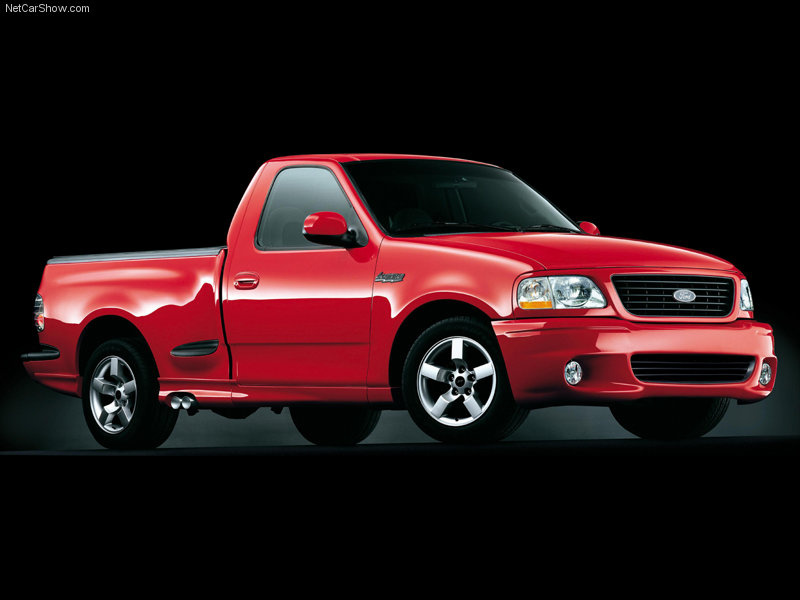
The 10th generation of the F-150 marked the F-Series' first full redesign in 18 years, with a new chassis, new powertrains, and new body components, and it was also the first time a new generation debuted only as the F-150, though a light-duty F-250 later joined the lineup. The F-250 and F-350 were spun off into the Super Duty line.
The F-150 was available with a V6 engine and three versions of the Triton V8 engine, including a 5.4-liter supercharged unit, the latter only available with SVT Lightning or Harley-Davidson trims. Transmission options were a four-speed automatic and a five-speed manual.
Trims included Standard/Work Series, XL, XLT, Lariat, King Ranch, SVT Lightning, and Harley-Davidson. Lincoln sold a luxury version of the F-150 as the Blackwood at a much higher MSRP.
The 2004 F-150 is known for engine issues, particularly models equipped with the Triton V8 engine. Problems include blown or stuck spark plugs, engine misfires, and exhaust failures.
There's a wide variety of price points for used F-150s from this generation. Base trim trucks, such as a 2001 XL Extended Cab with high miles, can be had for as little as $3,000. However, rarer models, such as a 2002 Harley-Davidson edition with low miles, can go for as much as $19,000.

Ninth Generation (1992-1997)
The ninth-generation Ford F-150 featured exterior styling revisions to improve aerodynamics and efficiency, with a bigger but rounded grille and larger headlights. The interior was updated, too, with bigger rear windows for some cab styles, new seats, and a new dashboard design. In 1994, the F-150 got a standard driver's side airbag and new options including a power-adjustable driver's seat, remote keyless entry, and a CD player.
This F-150 is available with a choice of rear- or four-wheel drive, three- and four-speed automatic or four- or five-speed manual transmissions, and inline-six, V6, V8, diesel, or turbodiesel engines.
The trim lineup consisted of Custom, Special, XL, XLT, Nite, SVT Lightning, and Eddie Bauer. The Nite is classic '90s styling with neon stripes on black paint and blacked-out trim, the SVT Lightning featured sporty five-spoke alloy wheels and exclusive trim, and the Eddie Bauer collaboration model got two-tone paint, forged deep-dish wheels, and special branding.
It's rare to see a ninth-generation Ford F-150 pop up on CarGurus. Recently, there was just one listing, a 1996 F-150 XL with more than 232,000 miles for $3,995.

Eighth Generation (1987-1991)
The eighth-generation F-150 featured much of the same structure carried over from the seventh generation, although the styling was significantly updated. It was the first pickup truck from an American brand to get composite front lighting, which went with a heavily revised front fascia to make the front end more aerodynamic and efficient. This F-150 also boasted the first rear anti-lock brakes in the segment, and the cab was fully redesigned.
Trims included Custom, XL, XLT Lariat, and Nite—the latter paired a black exterior with the V8 engine and featured pink or bluish purple stripe decals. Engines comprised inline-sixes or diesel V8s, while standard features included vinyl or cloth upholstery and steel wheels with hubcaps.
As is typical for vehicles this age, it's more about finding an affordable example in the best condition that fits your budget. With only a little pricing data, we can't make generalizations about average costs, though shoppers should expect to budget at least $10,000 for an F-150 of this vintage.

Seventh Generation (1980-1986)
The 1980 Ford F-150 represented the first full redesign since 1965. Both the chassis and the body were totally reengineered with better aerodynamics, resulting in better fuel economy.
In 1982, Ford rolled out the Blue Oval hood emblem on the F-Series, which is still in use today and, in 1983, Ford discontinued the F-100, making the F-150 the new entry point for the F-Series lineup.
This generation of the F-Series was available with a wide variety of V6 and V8 engines and was also the last F-Series with a three-speed manual transmission and a column-mounted shifter.
Prices can be all over the board for this generation—upwards of $21,000 for a good 1980 model, and as low as $3,900 for a rougher 1982 example. With few examples, these are likely outliers in terms of condition. Data shows prices have increased on average for 1985 and 1986 models, though flat or downward for the rest of the generation.

Sixth Generation (1973-1979)
The sixth-generation Ford F-Series was when the Ford F-150 was actually introduced for the 1975 model year. The F-150 slotted between the F-100 and the F-200, intended to help Ford skirt around certain emissions regulations of the time.
This generation marked several big steps forward in terms of modernization. It carried over the same platform and chassis, but used more galvanized steel for strength, introduced a double-wall bed for better durability, and front disc brakes for better stopping power. Bigger cab options made this generation more comfortable and practical than its predecessors.
In 1978, Ford introduced square headlights on certain trim levels of the F-Series, including the Lariat and Ranger, and the Bronco became another F-Series trim. These familiar names are still used today.
This generation isn't exactly plentiful on the used market, and it's priced accordingly. Low-mileage examples are generally upwards of $20,000, and some much more, depending on condition and specs. Based on limited pricing data available, the 1977 model has trended upwards in price, though other years in this generation have remained stable or dropped.

Fifth Generation (1967-1972)
The fifth generation carried over the same platform, with bigger dimensions and more powertrain options and, in 1968, side marker lights were added to comply with new federal standards.
For this generation of F-Series, you're looking at the collector car market, with low inventory and no pricing data.

Fourth Generation (1961-1966)
The fourth generation of F-Series offered a new unibody style alongside the traditional chassis design, but it was discontinued after just a few years. It was also bigger than its predecessor, with new powertrains and a new twin I-beam suspension design that was used on the F-150 until the mid-1990s. You're into collector market territory with this generation.

Third Generation (1957-1960)
The third generation of the F-Series introduced integrated front fenders, while the first four-wheel-drive versions were produced in 1959.
For this generation of F-Series and older, you're again looking at the collector car market, with low inventory and no real basis for comparison.

Second Generation (1953-1956)
The second-generation Ford F-150 ran for just four years. They were bigger overall, with better engines and stronger chassis engineering. This generation marked the switch to the three-digit naming convention still in use today (that is, F-100 instead of F-1, though there was still no model yet named F-150).
There is little data about these trucks' reliability when new. For this generation of F-Series and older, you're looking at the collector car market, with low inventory and no real basis for comparison.

First Generation (1948-1952)
Introduced in 1948, the first-generation F-150 was then known as the Ford F-Series or the Ford Bonus-Built, and marketed as the Mercury M-Series in Canada. Though there were previous Ford trucks, the beginning of the F-Series is notable for its dedicated truck chassis, which was also used for vehicles such as panel vans and buses.
This generation of Ford trucks was assembled in 16 facilities across the United States, and powered exclusively by inline-six and V8 engines, and available with three-, four- or five-speed manual transmissions.
The earliest Ford F-Series trucks are few and far between, and, at this point, it's a collector vehicle, rather than a used truck.
Related Topics:

by Cherise Threewitt
Cherise is a Chicago-based automotive writer and editor with nearly 15 years of experience covering the automotive industry. As the Features Editor, Auto at US News & World Report, Cherise loves writing about car culture and sharing common-sense car-buying advice. She owns a 2019 Subaru WRX Series.Gray, 2020 Subaru Outback Onyx XT, 2007 Genuine Buddy Italia 150, 2015 Honda Grom, and 1979 Boston Whaler Montauk.
The content above is for informational purposes only and should be independently verified. Please see our Terms of Use for more details.


