
For over a century, driving meant one thing: a combustion engine, a fuel tank, and a gas station. That model is not disappearing overnight, but for the first time it has a genuine rival. Electric vehicles have moved from niche product to mainstream option, and the question for many buyers is no longer whether to consider an EV — it's how to weigh one against a conventional car in a way that actually reflects their life.
This guide covers the key differences: emissions and environmental impact, running and maintenance costs, charging versus fueling, the real barriers that still exist, and what the next wave of technology is likely to change.
- Electric vs. Gas Cars: Side by Side
- Environmental Impact and Emissions: Cleaner, But How Much Cleaner?
- Maintenance and Running Costs: Fewer Parts, Fewer Problems
- Fueling vs. Charging: Different Routines, Different Trade-Offs
- The Real Barriers to Going Electric — and How They're Being Addressed
- What's Coming Next: Solid-State Batteries and Bidirectional Charging
- Which Is Right for You?
- Learn More About EVs
Electric vs. Gas Cars: Quick Hits
- EVs produce zero tailpipe emissions, but their overall environmental footprint depends on how the electricity they run on is generated.
- Electric drivetrains have around 20 moving parts; a gasoline engine has thousands — which is why EV maintenance costs are significantly lower.
- Most EV owners charge at home overnight, waking up to a full battery every day without visiting a fuel station.
- Range anxiety is real but shrinking: most new EVs cover 200+ miles per charge, and the charging network is expanding fast.
- Solid-state batteries and bidirectional charging are the technologies most likely to reshape the EV landscape in the near term.
- The total cost of ownership of an EV is often lower than a comparable gas car after a few years of driving.
- The right choice depends on your situation: driving habits, home charging access, and budget all matter.

Electric vs. Gas Cars: Side by Side
| Electric | Gasoline | |
|---|---|---|
| Tailpipe emissions | Zero | CO₂, nitrogen oxides |
| Drivetrain complexity | ~20 moving parts | Thousands of moving parts |
| Oil changes | None | Every 5,000–7,500 miles |
| Fuel cost | Electricity (lower, more stable) | Gasoline (volatile pricing) |
| Refuel/recharge time | 20–40 min (fast charger); overnight at home | ~5 minutes |
| Infrastructure | Growing rapidly | Established everywhere |
| Upfront cost | Typically higher | Typically lower |
| Long-term ownership cost | Often lower after a few years | Higher due to maintenance |
| Range per charge/tank | 200+ miles (most new EVs) | 300–400 miles (typical) |
Environmental Impact and Emissions: Cleaner, But How Much Cleaner?
The most straightforward difference between an electric and a gasoline car is what comes out of the back. A gas car produces carbon dioxide and nitrogen oxides every time the engine runs, contributing to both global warming and urban air quality problems. An EV has no exhaust system at all — there is nothing to come out of the back, because nothing is being burned.
The more nuanced question is what happens further up the chain. The environmental footprint of an EV depends partly on how the electricity used to charge it is generated. Power from a coal plant produces more carbon than power from wind or solar. Even accounting for this, most research shows that EVs produce significantly less carbon over their full lifecycle than equivalent gas cars — partly because electric motors are far more efficient at converting energy into motion, losing much less of it as heat than a combustion engine does. And as the grid gets greener over time, the advantage grows automatically for every EV already on the road.
Further reading: EPA: Electric Vehicle Myths and Facts | Union of Concerned Scientists: EV Lifecycle Analysis | NASA: Climate Change and Transportation
Maintenance and Running Costs: Fewer Parts, Fewer Problems
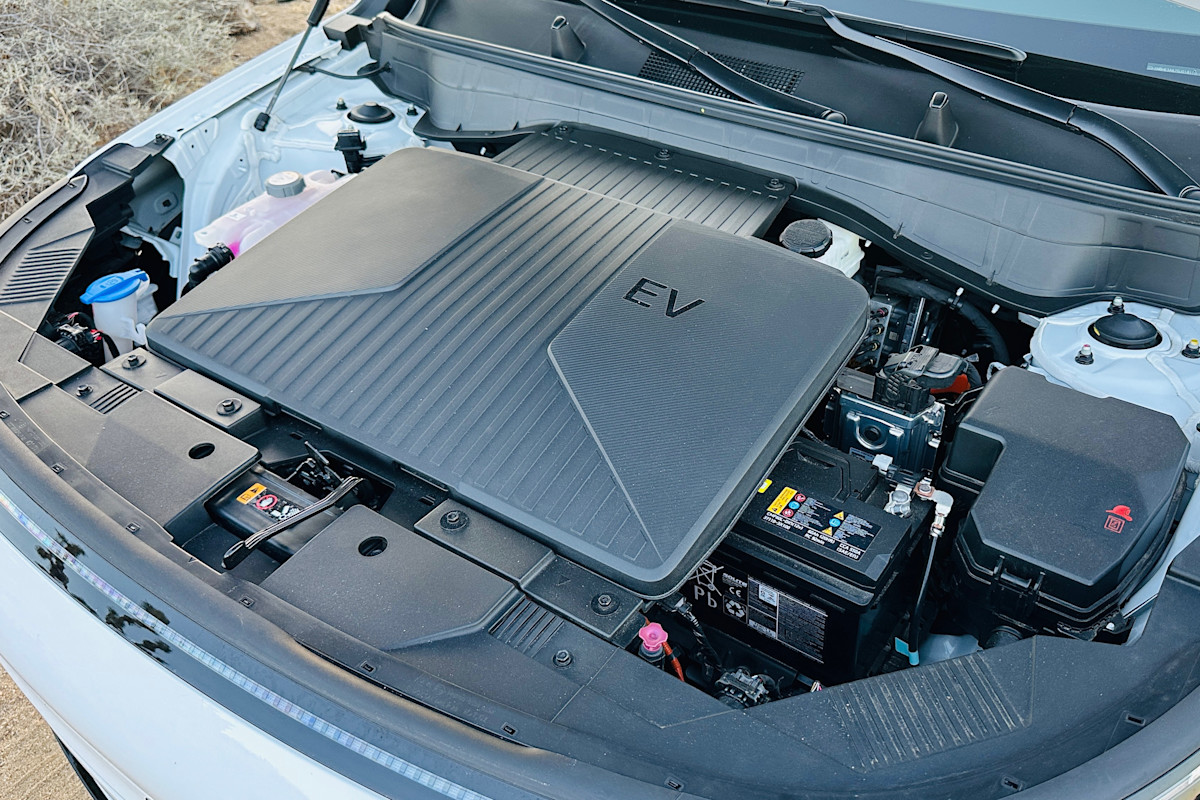
Gas cars are mechanically complex. A typical internal combustion engine has thousands of moving parts — all of which can wear, fail, or need servicing. Oil changes, spark plugs, exhaust repairs, transmission work: the list of regular and irregular maintenance items is long, and the costs compound as the vehicle ages. An EV drivetrain, by contrast, has around twenty moving parts. There is no oil to change, no exhaust system to maintain, and no multi-speed transmission to service.
The battery is the most expensive component in an EV, but modern packs are engineered to last for many years and high mileage. When you factor in the lower and more stable cost of electricity versus gasoline, many drivers find that the total cost of ownership of an EV works out lower than a comparable traditional car within a few years, even if the sticker price was higher at purchase.
Further reading: Consumer Reports: Maintenance Costs for EVs vs. Gas Cars
Fueling vs. Charging: Different Routines, Different Trade-Offs
Gas cars have a clear advantage in refueling convenience. There is a station on almost every corner, filling up takes five minutes, and the infrastructure has been built out over a century to make the experience as frictionless as possible. For drivers in rural areas or those without a fixed parking spot, that remains a meaningful advantage.
Charging an EV works differently — and for most owners, better in practice than it sounds in theory. The majority of EV owners charge at home overnight, which means they start every day with a full battery and rarely need to visit a public charging point for their normal routine. The inconvenience only really surfaces on longer road trips, where planning around fast-charger locations becomes necessary. A meaningful fast charge typically takes 20 to 40 minutes — longer than pumping gas, but usually at a fraction of the cost, and with electricity prices that are more stable than oil markets.
Further reading: U.S. Department of Energy: Alternative Fuels Data Center | U.S. Government Electric Vehicle Charging Station List
The Real Barriers to Going Electric — and How They're Being Addressed
The case for EVs is strong on paper. The barriers to wider adoption are real, but most of them are narrowing.
Range anxiety — the fear of running out of charge with nowhere to recharge — remains the most common concern, even though most new EVs now cover more than 200 miles on a single charge. Cold weather reduces that figure noticeably, which is a genuine consideration in northern climates.
Charging equity is a less-discussed but equally important issue. Home charging is straightforward if you have a garage or a dedicated parking spot. For renters, apartment dwellers, or anyone who parks on the street, it is significantly more complicated. Cities are beginning to address this with curbside chargers and public parking installations, but the gap between owning an EV with home charging and owning one without it remains substantial.
Battery recycling is the third major challenge. The lithium and cobalt in EV batteries need to come from somewhere, and mining for new materials has its own environmental costs. The long-term goal is a circular economy in which old battery cells are recycled into new ones — a model that is developing but not yet at scale. As these issues get resolved, the EV proposition becomes more compelling across a broader range of buyers and circumstances.
Further reading: International Energy Agency: Global EV Outlook | Our World in Data: Tracking Global Data on Electric Vehicles
What's Coming Next: Solid-State Batteries and Bidirectional Charging
Two developments are most likely to reshape the EV landscape in the near term.
Solid-state batteries replace the liquid electrolyte in current lithium-ion packs with a solid material. Early real-world tests are underway, and the potential is significant: faster charging — possibly under ten minutes — and roughly double the energy density of current batteries. If solid-state technology reaches production at scale, range anxiety becomes largely irrelevant and the charging time gap with gasoline closes dramatically.
Bidirectional charging allows an EV to send power back to the grid or directly to a home. In practical terms, this means your car can act as a large backup battery — powering your house during an outage or supplying electricity during peak-demand hours when grid prices are high. It turns the EV from a vehicle into a household energy asset, which changes the financial case for ownership in ways that go beyond fuel savings.
On the gasoline side, hybrid systems are becoming increasingly sophisticated, extracting more efficiency from every gallon. The trade-off is growing mechanical complexity — and with it, higher repair bills. The simplicity of a pure electric drivetrain looks comparatively more attractive the more elaborate the hybrid alternatives become.
Further reading: National Laboratory of Rockies: Fundamentals of Electric Vehicles | Transportation Energy Institute: Electric Vehicle Research
Which Is Right for You?
The honest answer is that it depends. Gas cars still hold the advantage in upfront cost, long-distance convenience, and sheer variety — from sports cars and family wagons to pickup trucks. For drivers in rural areas or without reliable home charging access, those advantages are real.
Electric vehicles win on long-term running costs, day-to-day convenience for typical commuting distances, and environmental footprint. As charging infrastructure expands and battery technology improves, the argument for going electric gets stronger year by year — and the list of situations where a gas car is the clear choice gets shorter.
The shift is not just about what is under the hood. It is about how we use energy, how cities are planned, and what we expect from our vehicles beyond getting from one place to another. Both options are better than they have ever been. The right one is the one that fits your life.
Ready to compare electric and gas models side by side? Browse listings on CarGurus — search by fuel type and use Instant Market Value to find a fair deal on whichever direction you're heading.
Learn More About EVs
- EPA: Electric Vehicle Myths and Facts
- U.S. Department of Energy: Alternative Fuels Data Center
- Consumer Reports: Maintenance Costs for EVs vs. Gas Cars
- NASA: Climate Change and Transportation
- International Energy Agency: Global EV Outlook
- National Laboratory of Rockies: Fundamentals of Electric Vehicles
- Union of Concerned Scientists: EV Lifecycle Analysis
- NHTSA: Electric Vehicle Safety
- Our World in Data: Tracking Global Data on Electric Vehicles
- Transportation Energy Institute: Electric Vehicle Research