The Dodge Challenger is an American muscle car that spans three generations, although there were significant gaps between each one. The first generation, from the early to mid 1970s, came too late to fully capitalize on the pony car trend, while the second generation, from the late 1970s to the early 1980s, was a rebadged Mitsubishi. Then there was a gap of two-and-a-half decades until the third and final generation, which recently came to a close with the 2023 model year and a number of commemorative special editions. The third-generation Challenger was closely related to the Dodge Charger sedan.
Dodge Challenger Buying Guide: Cost, Reliability, and the Best Years to Buy
Search for Dodge Challenger
See all


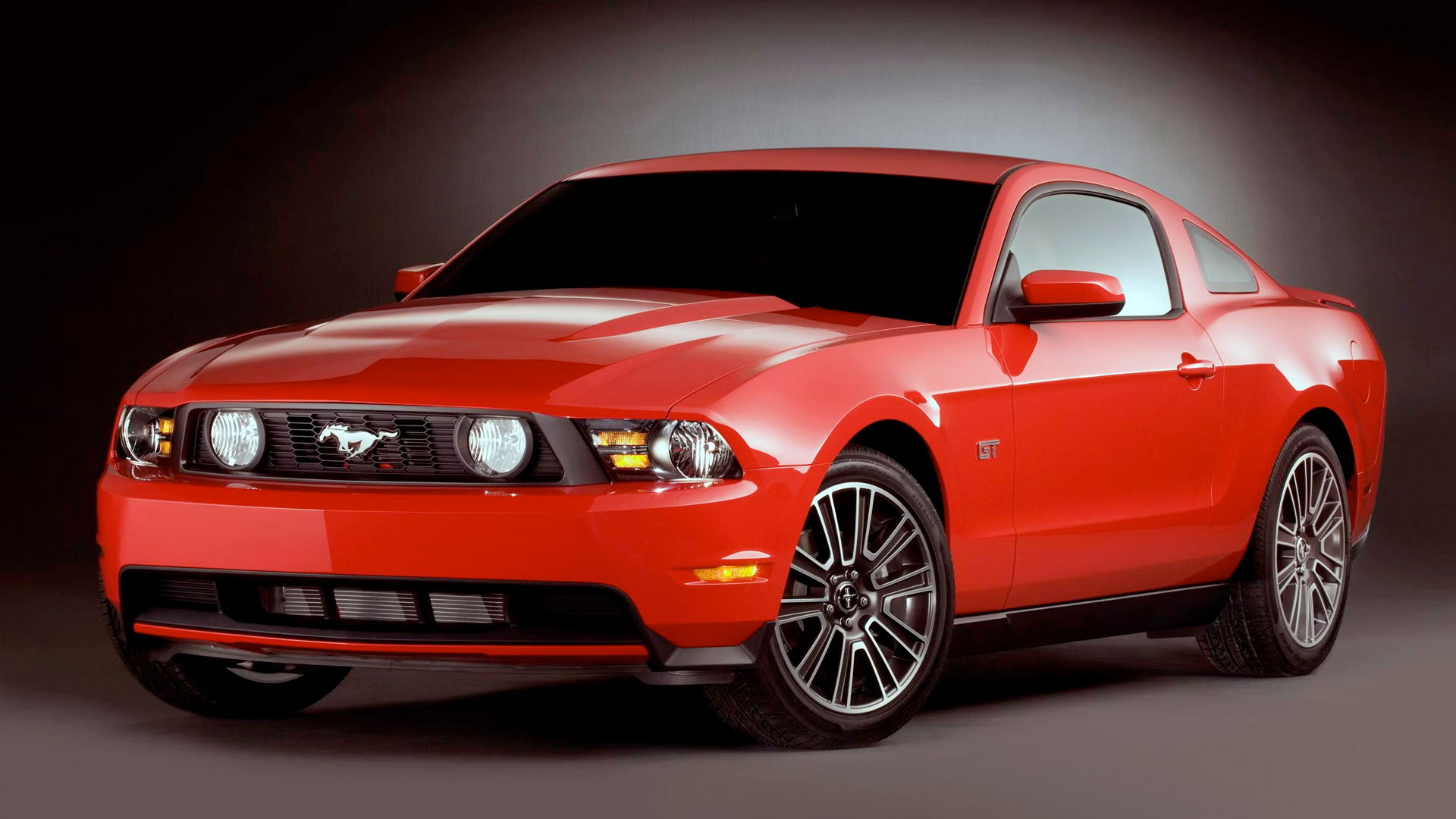
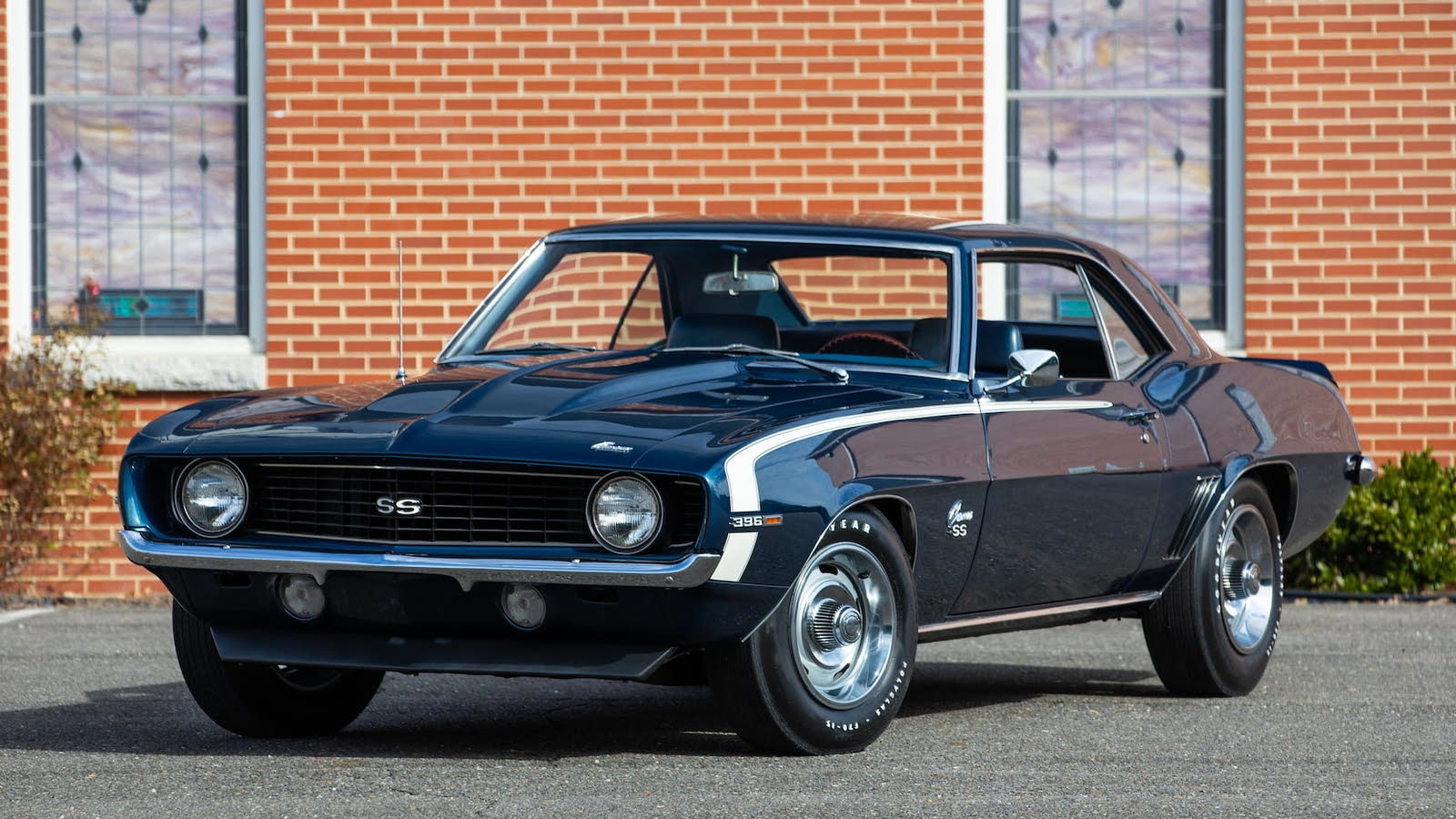
The original Challenger held pace with its mechanically related cousin, the Plymouth Barracuda, as well as crosstown rivals the Ford Mustang, the Mercury Cougar, and the Pontiac Firebird. In its third generation, chief competitors were the Ford Mustang and the Chevrolet Camaro, all three of which carried on Detroit’s muscle car heritage in their own ways.
The Challenger, particularly the first and third generations, is a blast to drive and never fails to turn heads. Late used versions are available with a full suite of active safety features that met federal safety standards of the time.
Dodge Challenger Buying Guide: Cost, Reliability, and the Best Years to Buy
- Frequently Asked Questions
- Dodge Challenger Pros and Cons
- Dodge Challenger Generations
- Third Generation (2008-2023)
- Second Generation (1978-1983)
- First Generation (1970-1974)
Frequently Asked Questions
Which Dodge Challenger years are the best?
Unless you specifically want a vintage Challenger, stick with the third generation, which dates up to 2023. It was on sale for 15 years, and later examples, particularly from 2015 onward, are known to be better. Variations such as the Dodge Challenger SRT and the Challenger R/T add visual interest as well as performance at a variety of price points.
What are the worst Dodge Challenger years?
The second-generation Challenger, from 1978 to 1983, is considered by enthusiasts to be the worst of the bunch. That’s because this Challenger was a rebadged version of the Mitsubishi Galant, which meant it didn’t look, feel, or perform like an American muscle car. It was also particularly prone to body rust.
Is a used Dodge Challenger a good deal?
Yes, a used Dodge Challenger can be a good deal if you can find one with low mileage and a well-documented history. The best deals are likely found in the third, most recent generation, unless you’re well versed in the details of the collector-friendly original.
Dodge Challenger Pros and Cons
Pros:
- Tons of powertrain options, including supercharged versions and manual and automatic transmissions
- Wide variety of prices
- Standout colors and fun special editions
Cons:
- Many were neglected or abused
- Expensive first generation
- Generally undesirable second generation
Dodge Challenger Generations
Third Generation (2008-2023)
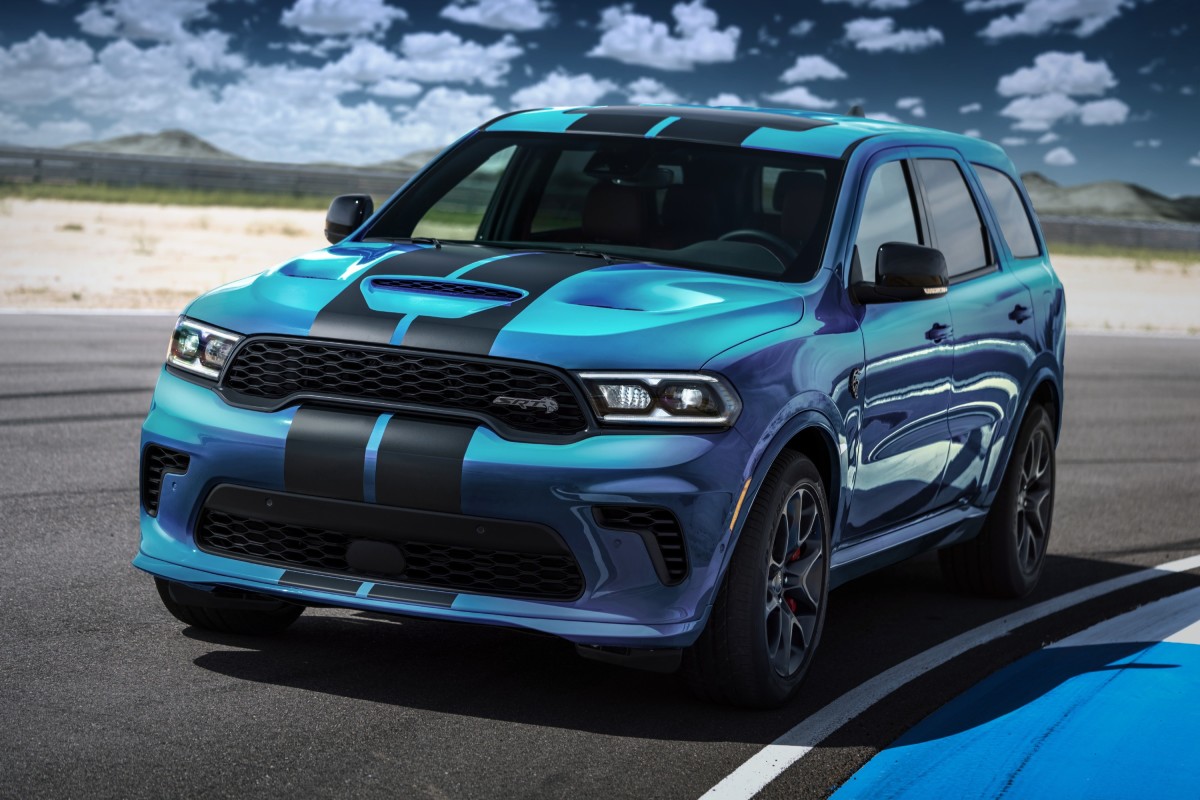
The Dodge Challenger's third generation spans 2008 to 2023 and arrived after a long hiatus, following teasers in 2005. Along with the related Charger sedan, the Challenger coupe was designed to compete with the Ford Mustang and the Chevrolet Camaro. The Challenger was, for the most part, structurally unchanged during these years, but Dodge kept things fresh with a variety of powertrains, head-turning colors, and numerous special editions, as well as a 2015 facelift. The Challenger bowed out in 2023, commemorated by several Last Call collector’s editions, with hints of an electrified successor to come.
The third-generation Dodge Challenger is a five-passenger coupe that had a base MSRP of $40,095 in 2008. A convertible version was initially planned, then canceled, though it became a dealer option in 2022 through a third-party conversion shop, and it was designed on a platform suitable for both rear-wheel drive (RWD) and all-wheel drive (AWD). The Challenger was known to have a user-friendly Uconnect infotainment system with a touchscreen, Android Auto, and Apple CarPlay, making a fairly practical muscle car for the V6 engine base model and even in high-performance variants, such as the Hellcat Redeye Widebody, though there were plenty of Dodge Challenger models that made affordable entry-level trims, such as the Challenger SXT.
The Challenger was available with a series of Pentastar V6 and Hemi V8 engines over the years, with a variety of specs and tuning for various special editions. SRT-10 V10 versions were teased but never produced. Transmissions included a Tremec six-speed manual, a five-speed automatic, and a ZF eight-speed automatic. Many of these powertrains were shared with other Chrysler vehicles, most notably Jeep and Ram models. Other performance features included adaptive suspension, launch control, Brembo performance brakes and calipers, and other Mopar tuning options.
Trim levels and special editions included the SE, the SXT, the Challenger SRT Super Stock, the Challenger GT, the R/T, the R/T Scat Pack and Scat Pack Shaker, the T/A and T/A 392. The came the seriously high-performance SRT8 and SRT Hellcat, the SRT Hellcat Redeye, the SRT Demon, the Hellcat Redeye Jailbreak, the Hellcat Widebody Jailbreak, and the SRT Demon 170. Got all that?
Widebody variations were offered for some of these trims in 2019 and 2020, which added broader fenders. Other common styling features of special editions included spoilers, hood scoops, unique fascia and grille designs, front seats with special edition upholstery, and special steering wheel designs and badging.
It’s worth avoiding the model years from 2012 to 2014, because they’re known for engine problems, but models built after those dates are known to be fairly reliable.
With a 15-year run, prices for third-generation Challengers are all over the place, and with so many powertrain options, special editions, and other variables, there’s no solid advice for shopping in this generation, other than the usual rule that later models are usually better, so it’s wise to budget at least $20,000, and possibly up to about $38,000 for a late example.
Second Generation (1978-1983)
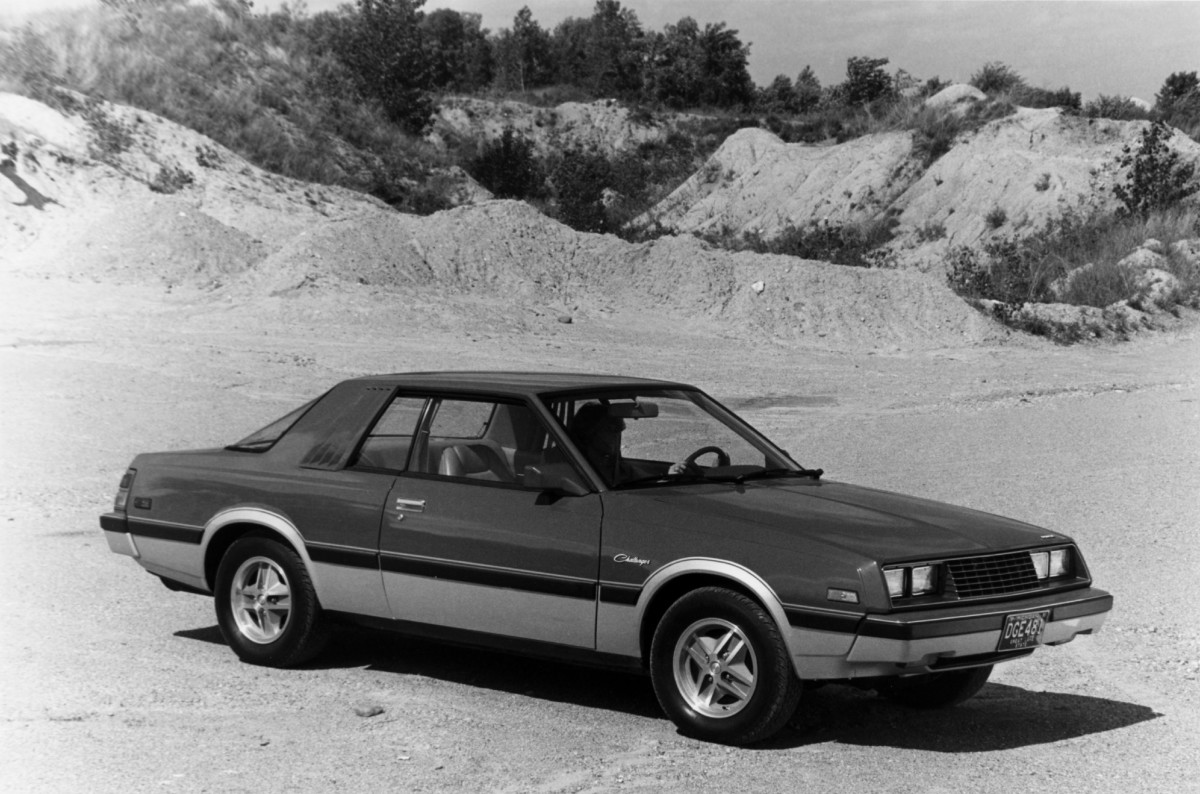
The second-generation Challenger, produced from 1978 to 1983, is considered among enthusiasts to be the worst of the model’s history. That’s because this version was a rebadged version of the Mitsubishi Galant, which meant it didn’t look, feel, or perform like an American muscle car.
The Dodge Colt Challenger, as it was originally known, had a cousin in form of the Plymouth Sapporo. Both were redesigned for the 1981 model year with more interior space and better insulation. This redesign was soon replaced by the Conquest, another Mitsubishi with Dodge and Plymouth badging.
This Challenger featured inline-four engines with between 77 horsepower and 105 horsepower.
There isn’t much known about problems with this generation of Challenger, other than that it was particularly prone to rust.
Some estimates show that Dodge sold about 25,000 of this version of the Challenger per year, at most. In other words, given its limited years and corrosion problems, there probably aren’t many left. To that end, there were no current or recent listings for this generation of Challenger for sale on CarGurus at the time of writing, and there isn’t even enough sales data to illustrate pricing trends.
First Generation (1970-1974)
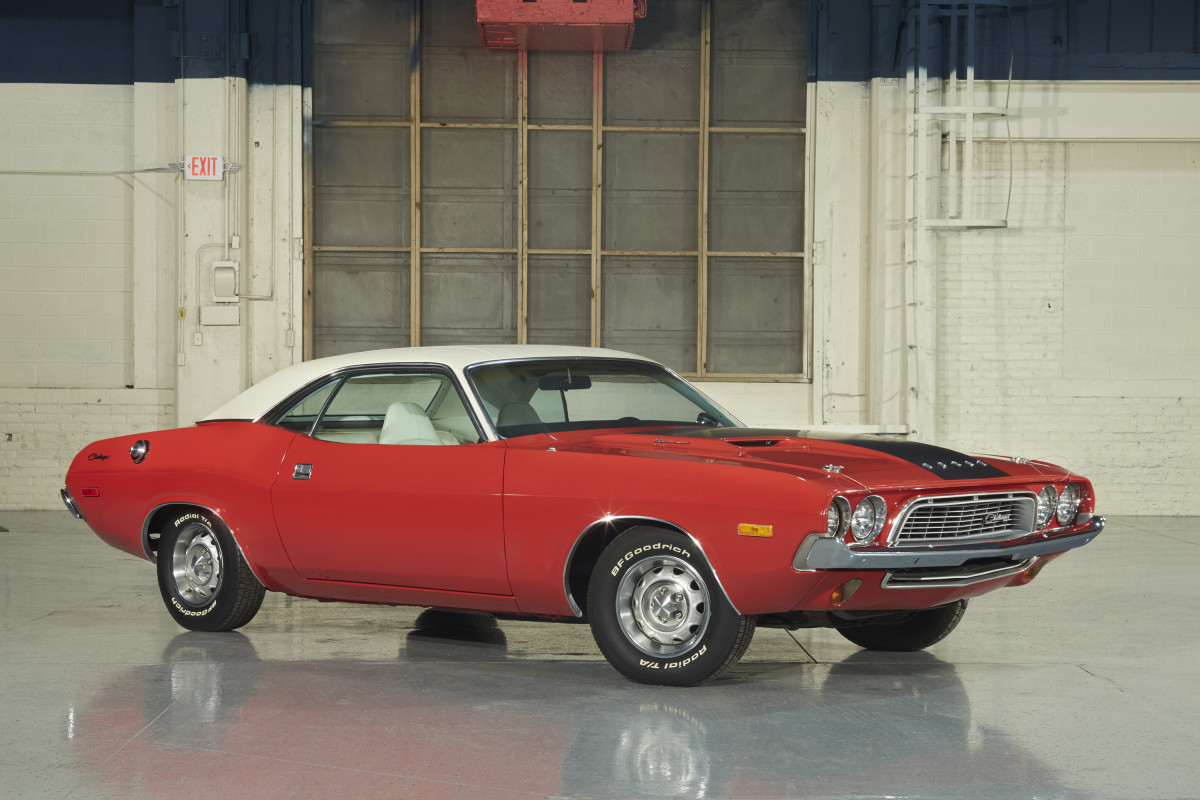
The original Dodge Challenger was mechanically similar to the smaller Plymouth Barracuda. Introduced in 1970, it was intended to compete with Ford’s Mercury Cougar and GM’s Pontiac Firebird, though by the time it arrived, the segment’s flames were already starting to die down. Chrysler distinguished the Barracuda and the Challenger with differences such as different sheet metal and headlight arrangements.
The Challenger sold well in 1970, though numbers immediately dropped off, leading to a pause and then cease of production in 1974, thus 1970 first-gen Challengers are the most common used examples.
Trim levels for the 1970 through 1974 Challengers included base Challenger, the R/T, the Deputy, the T/A (notably, featuring staggered tires), the Coupe, and the Rallye, while variations included the two-door hardtop, the convertible, and numerous special editions. From 1970 through 1972, the Challenger was available in both slant-six and V8 versions (the slant-six was cut in 1973), with either TorqueFlite automatic or Hurst manual transmissions. Notable options included air conditioning, leather upholstery, power-adjustable seats, power windows, and power steering.
Problems for this generation aren't well documented, but early models were known to have leaky windows, which will probably have been fixed on a well-cared-for example. Also, for any car of this age and type, rust is always a concern.
At the time of writing, there was a wide variety of average prices for the first generation Dodge Challenger. The 1970 model is both the most common on the used market—and the most expensive. Historically, the 1970 model is an outlier, both because it has an average price of more than six figures (about $111,000) and because its average prices have consistently increased. Conversely, the 1973 model has the lowest average price of this generation, at $40,188, with prices consistently trending downward. The other models have average prices ranging from about $47,000 to about $85,000, with a mix of upswings and declines.
Related Topics:

by Cherise Threewitt
Cherise is a Chicago-based automotive writer and editor with nearly 15 years of experience covering the automotive industry. As the Features Editor, Auto at US News & World Report, Cherise loves writing about car culture and sharing common-sense car-buying advice. She owns a 2019 Subaru WRX Series.Gray, 2020 Subaru Outback Onyx XT, 2007 Genuine Buddy Italia 150, 2015 Honda Grom, and 1979 Boston Whaler Montauk.
The content above is for informational purposes only and should be independently verified. Please see our Terms of Use for more details.


