The automotive graveyard is littered with vehicles that met an untimely end. Some were under-appreciated in their time; others were victims of changing market trends. From quirky oddities that were ahead of their time to beloved nameplates that still have devoted followings, here are 11 discontinued models the CarGurus Editorial Team would love to see make a comeback.
Discontinued Cars We'd Bring Back from the Dead
- AMC Eagle Sundancer
- Mitsubishi Delica
- Pontiac Aztek
- Subaru Baja
- Acura ZDX
- Ford Focus
- Acura Legend
- DeLorean DMC-12
- Honda Element
- Toyota Land Cruiser FJ40
- BMW Z8
- Subaru WRX STI
AMC Eagle Sundancer
Model Years: 1981-1982
Let's kick off this list with something so obscure, we couldn't even find a licensed photo: the AMC Eagle Sundancer. This car represents everything cool about automotive experimentation. It wasn't actually a factory production vehicle, but rather was made as a low-volume (only 200) AMC-endorsed aftermarket conversion by the Griffith Company. The Sundancer combined all-wheel-drive (AWD) capability with a targa-top convertible configuration, creating a high-riding convertible that was decades ahead of the crossover craze.
The concept feels decidedly modern. Against the backdrop of today's market, it's easy to see the appeal of an AWD vehicle that sits higher than a typical sedan and features a removable roof panel and rear windshield. With Porsche now offering Safari versions of the 911 and manufacturers embracing adventure-oriented vehicles, we could easily imagine the Sundancer's formula of utility-meets-open-air-driving finding a receptive audience today.
Mitsubishi Delica
 The Mitsubishi Delica—a cab-forward, AWD minivan—was never officially sold in the US, but it has developed a cult following among enthusiasts who've imported 25-year-old examples. These boxy, capable people-movers have become particularly popular in California, where you can find shops that specialize in restoring them.
The model name itself is actually a contraction of "delivery car," and the Delica embodies practical versatility. With Volkswagen's latest attempt to recapture nostalgia falling flat due to the ID.Buzz's high pricing and limited range, we think there's an opening for a quirky-yet-capable minivan. A revived Delica—whether electrified or with a more traditional powertrain—might be just the signature vehicle Mitsubishi needs to distinguish it from the competition.
Pontiac Aztek
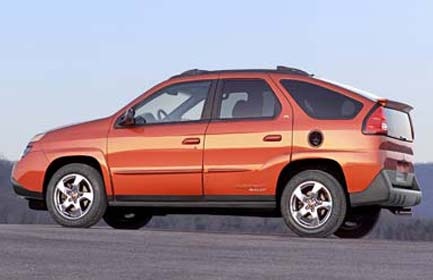 Model Years: 2001-2005
Few vehicles were as maligned upon arrival as the Pontiac Aztek, yet time has been surprisingly kind to its reputation. What once seemed appallingly ugly now feels almost spookily prescient. The Aztek pioneered design elements that have become mainstream: the liftback shape popularized by the Prius, plastic cladding normalized by Subaru, and angular styling that echoes in vehicles like the Tesla Cybertruck.
The Aztek was a marketing darling, featuring prominently as a prize on the TV show Survivor and gaining unexpected cultural cachet through Breaking Bad. Unfortunately, finding good-condition examples of the Aztek today is increasingly difficult, as the people who bought them tended to drive them hard. Those remaining in excellent shape are now becoming collector's items, a truly unexpected twist in the saga of a once-reviled vehicle. The crossover market has exploded since the Aztek's demise, and the time just might be ripe for a modern interpretation to succeed where the original struggled.
Subaru Baja
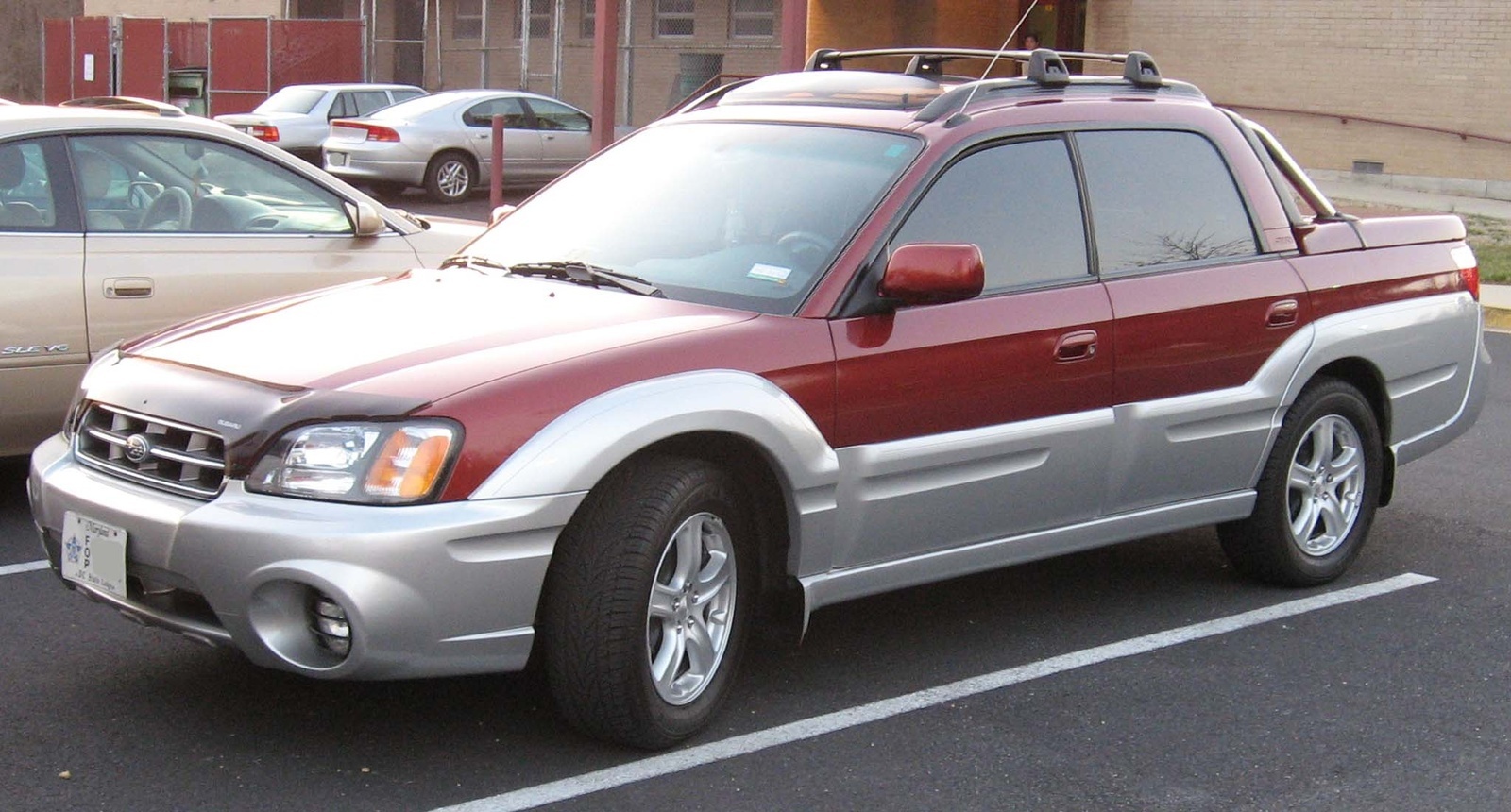 Model Years: 2003-2006
The Ford Maverick, Honda Ridgeline, and Hyundai Santa Cruz have proved there's demand for compact unibody trucks, so we'd like to see Subaru bring back the Baja. Built on the Legacy wagon platform with an open bed, the Baja offered AWD capability and car-like handling in a versatile package.
The Baja coexisted with the Aztek, targeting a similar outdoorsy, utility-focused customer who wanted something unconventional. Given Subaru's partnership with Toyota and the success of vehicles like the Maverick, a modern Baja could slot perfectly into today's market. Rumors of a Subaru pickup have circulated for years, and we think reviving the Baja nameplate would honor the brand's heritage while meeting current demand for compact trucks.
The Baja's predecessor was the BRAT (1978-1994), which famously circumvented the so-called "chicken tax" on imported trucks with rear-facing seats that made it technically a passenger vehicle. While that particular trick isn't necessary today, it demonstrates Subaru's creative approach to filling market niches.
Acura ZDX
 Model Years: 2024-2025
Here's one discontinued so recently that the body is still warm. The all-electric Acura ZDX represents a premature end to a well-executed electric crossover. Built on GM's Ultium platform, the ZDX offered Acura styling with General Motors engineering underneath—a combination that worked surprisingly well despite the sometimes-jarring mix of Acura exterior design and GM interior switchgear.
We find the demise of the ZDX and the mechanically similar Honda Prologue particularly frustrating because these vehicles were under-appreciated rather than fundamentally flawed. Lease deals were extremely competitive, making both models accessible to consumers who might otherwise shy away from EVs. The ZDX deserved more time to find its audience but unfortunately fell victim to a challenging moment in the market. Its cancellation leaves a gap in Acura's electrification strategy.
Ford Focus
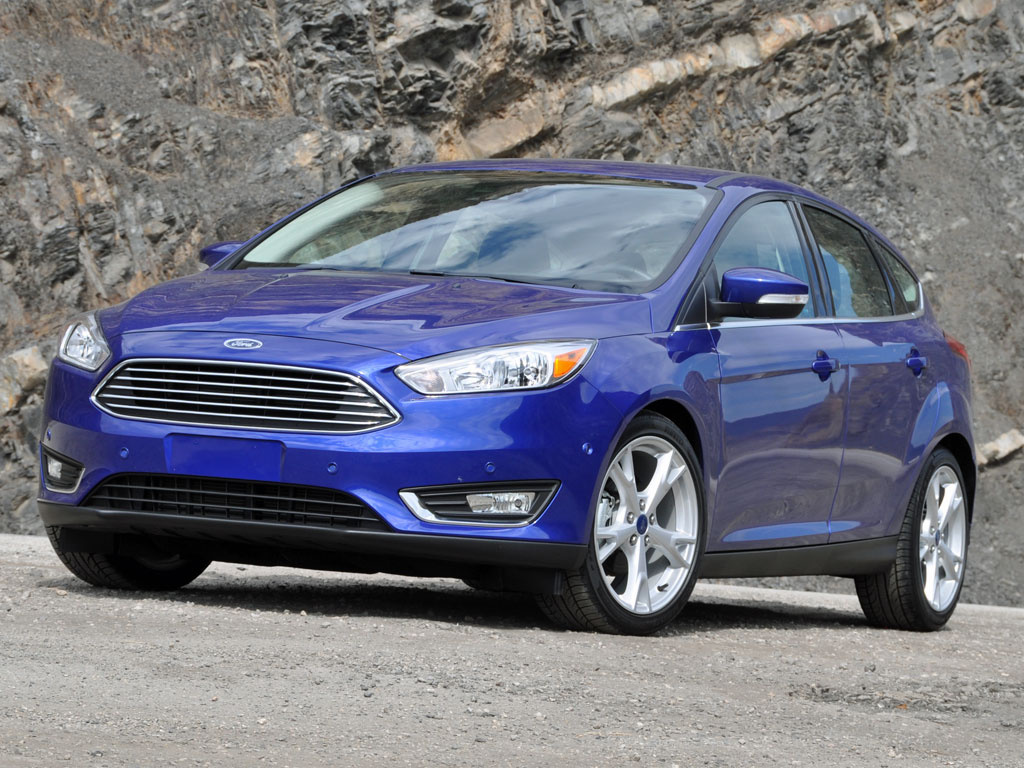 Model Years (US): 2000-2018
Ford's decision to abandon the car market entirely—save for the Mustang—remains controversial. The Focus represented America's best attempt at a competitive compact car, at one point ranking among the best-selling vehicles globally. The hot hatch Focus ST and Focus RS variants earned enthusiastic followings at home and abroad, while base models provided affordable, practical transportation.
A modern Focus hybrid, leveraging the Maverick's powertrain, could address current market demands for fuel efficiency without the range anxiety of full electrification. The garden-variety Focus was never the most exciting car, but it was genuinely affordable and reliable, qualities that have become increasingly rare-and it wasn't bad-looking, either. Bringing back a stripped-down, hybrid-powered Focus would give budget-conscious buyers a compelling American alternative to the Honda Civic and the Toyota Corolla.
Acura Legend
 Model Years: 1986-1995
The Acura Legend represented Honda's first serious attempt at luxury, and it succeeded brilliantly. This isn't simply a rebadged Honda Accord—the Legend offered V6 power and distinctively upscale styling that was bold without being derivative.
The Legend exemplifies the type of vehicle people would buy new and keep for decades. Current Accord offerings, while excellent, don't quite reach the Legend's combination of luxury and performance. A V6 sedan with a manual transmission option seems like wishful thinking in today's market, but the Legend nameplate has enough prestige to justify a premium positioning above the Accord while remaining more accessible than Acura's current range-topper, the TLX.
We would be remiss if we didn't also call out the two-door variant of the Legend. Marketed as the Acura Vigor, the coupe featured particularly striking proportions and remains a high-water mark for Acura-Honda design.
DeLorean DMC-12
 Model Years: 1981-1983
Few cars carry as much cultural baggage as the DeLorean. Made iconic by Back to the Future, the stainless steel sports car with gullwing doors failed commercially due to underpowered engines and quality issues. Only about 9,000 were produced during its brief production run.
The DeLorean represents a perfect candidate for electric revival. Its original Achilles' heel—a heavy chassis paired with a weak Chrysler-sourced four-cylinder engine—would be neutralized with electric motors providing instant torque. The distinctive styling has aged remarkably well, and an EV powertrain could finally give the DeLorean the performance its looks promised.
While a new DeLorean Motor Company exists and has teased revivals, nothing has materialized as of this writing. We humbly suggest that an electric DeLorean with the looks of the original would attract enthusiasts and nostalgic buyers willing to pay premium prices for an exclusive, conversation-starting vehicle.
Honda Element
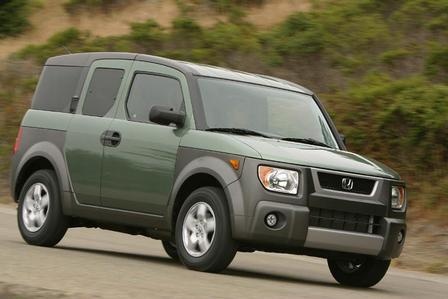 Model Years: 2003-2011
The Honda Element has become a cult favorite in the used car market, with prices remaining strong for well-maintained examples. Its boxy, utilitarian design maximized interior space, while its clamshell doors and washable interior made it incredibly practical.
The Element needs very little to help it appeal to today's shoppers. Its shape is already optimized for packaging EV batteries, and its functional aesthetic really doesn't need updating. Honda has all the tooling, and the vehicle's reputation for durability would translate well to electric powertrains. Don't change the design at all—just add batteries and electric motors, and you'd have a winner.
Toyota Land Cruiser FJ40
 Model Years: 1960-1983
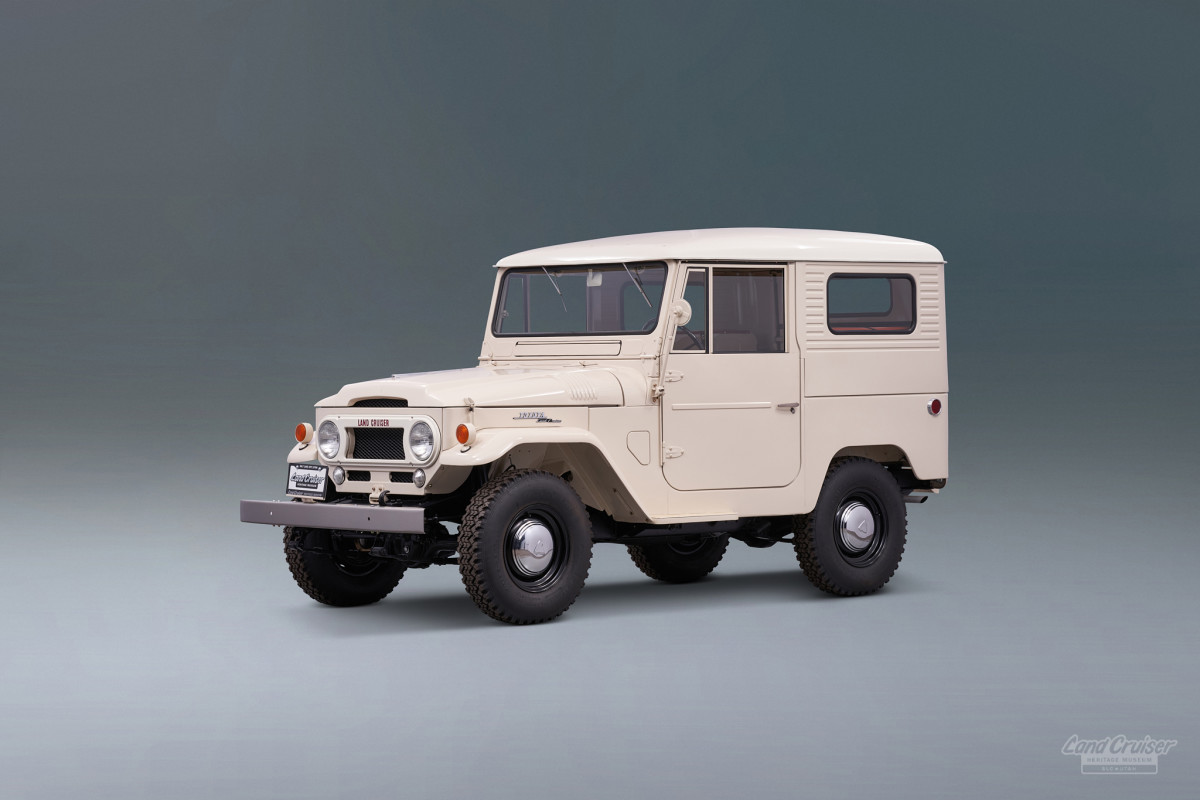
While the Toyota Land Cruiser nameplate continues today, the stripped-down, affordable FJ40 represents a different philosophy entirely. The current Land Cruiser has grown more expensive and more comfortable, but we think there's also demand for a basic, capable, Jeep Wrangler alternative.
A modern FJ40 would offer Toyota reliability and off-road capability at around $35,000, undercutting the Wrangler. Make it a simple hybrid with a four-cylinder engine, AWD, and a removable soft top. Skip the hardtop entirely. This would be a globally viable vehicle, helping justify the business case beyond the US market.
Think of it as a farm vehicle for the 21st century—basic, capable, and built to last 500,000 miles.
BMW Z8
 Model Years: 2000-2003
The BMW Z8 was a spiritual successor to the legendary 507, designed by Henrik Fisker and featuring a naturally aspirated V8 producing over 400 horsepower. This roadster appeared in James Bond films and represented BMW's interpretation of the ultimate open-air driving machine.
With a price approaching $130,000 when new, the Z8 was a bit of a tough sell, but if we knew then what we know now, we'd have made out like bandits. Low production numbers and distinctive styling have made it increasingly collectible, with clean examples now commanding higher six-figure prices. The design has aged beautifully, though some feel it looks awkward with the optional hardtop and was clearly meant to be driven top-down.
While the current BMW Z4 offers modern performance, it lacks the Z8's character and presence. We need more small, focused roadsters, and the Z8 represents a high point in that category.
Subaru WRX STI
 Years Produced: 2015-2021
With the Toyota GR Corolla and Honda Civic Type R proving demand for high-performance compact cars, we believe the time is ripe for Subaru to resurrect the WRX STI. The STI ended production in 2021, leaving a gap in the hot hatch market that Subaru enthusiasts continue to lament.
There's speculation that Toyota pressured Subaru to discontinue the STI to avoid competition with the GR Corolla, given the close business relationship between the two companies. Whether that's conspiracy theory or reality, we'd like to think the market can support multiple entries in this segment, and the STI's loyal following deserves a modern iteration.
The regular WRX remains available, but enthusiasts want the extra performance, upgraded suspension, and heritage that the STI badge represents.