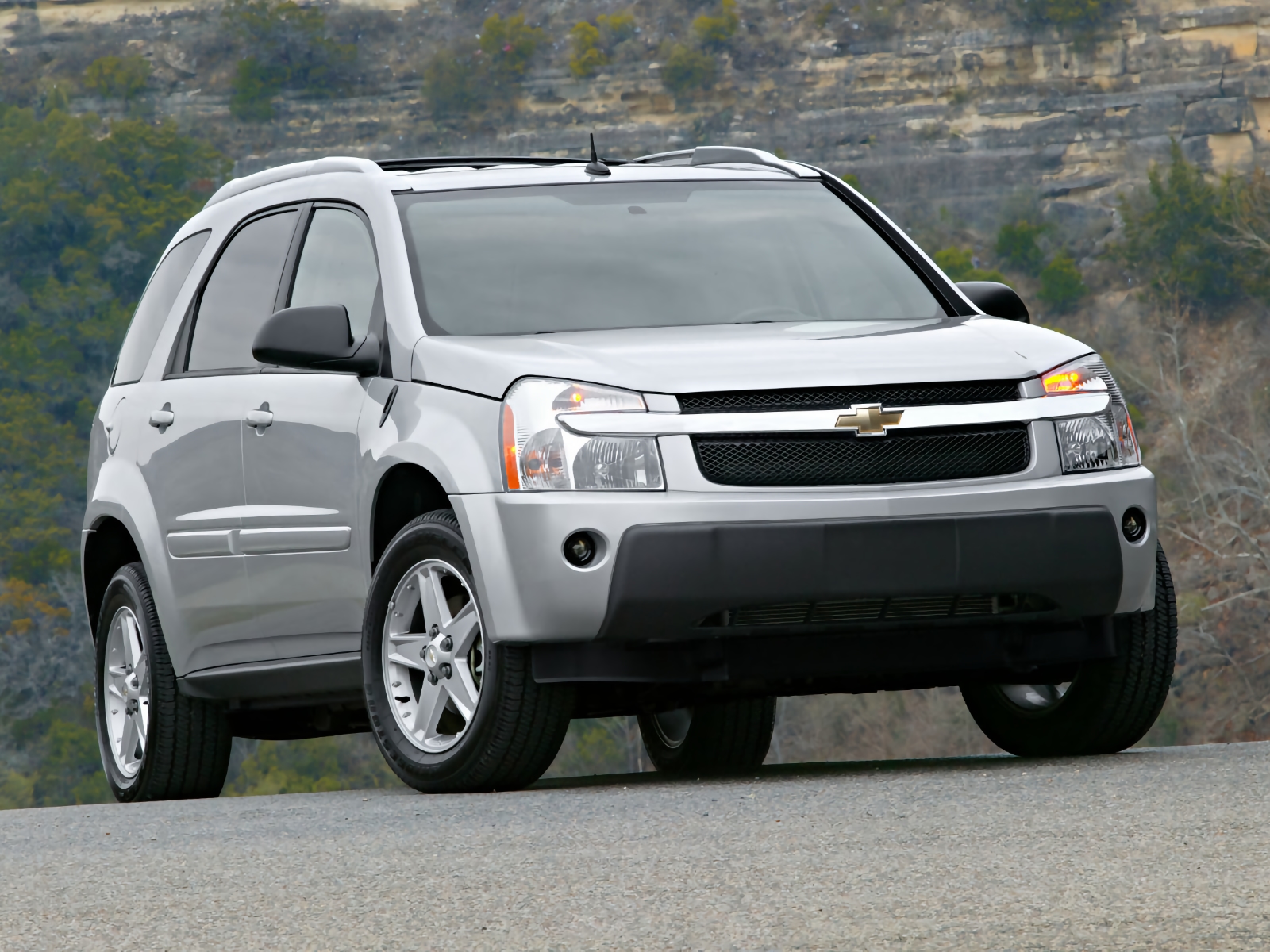
Chevrolet got serious about selling a competitive compact crossover SUV when it introduced the first Equinox model in 2004 for the 2005 model year. Offering more style, space, and power than established rivals such as the Honda CR-V, the Nissan Rogue, the Mazda CX-5, and the Toyota RAV4, the Equinox demonstrated that Chevy could compete in a segment rapidly growing in popularity.
The second-generation follow-up in 2009 brought a more sophisticated design and, over time, technology. Unfortunately, its new four-cylinder and V6 engines proved troublesome due to oil consumption, stalling, and failures, so it's hard to recommend buying one, no matter how well it has been cared for or maintained.
A redesigned third-generation Equinox arrived in 2017, equipped with new turbocharged gas and diesel four-cylinder engines that appear to be more dependable. Technology continued to advance in this model, which retained the spacious interior for which the Equinox had become known. That model lasted until 2024, when a fourth-generation model arrived with a more rugged design and a thoroughly modern interior. In 2024 Chevrolet also introduced the Equinox EV, but that's an entirely different electric-only model that we're not covering here.
According to Repair Pal, the Equinox offers slightly better than average reliability across all model years, but it's also more likely to suffer a "severe or major issue" compared to other vehicles. As a result, it ranks near the bottom of the compact SUV class for reliability. Data from CarComplaints.com suggests the first few years of production within each generation are typically the most problematic, and that you should avoid buying a second-generation Equinox equipped with a four-cylinder engine.
Our Chevrolet Equinox buyers guide looks at each of the four generations in detail, highlighting the best and worst versions and how much you can expect for one.
Our expert test drive gave the 2026 Chevrolet Equinox an overall score of 7.5 out of 10.
The CarGurus Verdict:"The Equinox does everything a compact crossover should, but doesn’t set a new bar for the segment." - Stephen Edelstein
If your budget dictates choosing an older Chevy Equinox, look for a clean and well-maintained 2008-2009 first-generation model. Otherwise, skip ahead to 2019, the second year of production after the 2017 redesign. Any Equinox produced since 2019 appears to be relatively trouble-free, according sources such as CarComplaints and Consumer Reports. On the used market, 2019 to 2024 models list for an average of around $13,900 to $22,600.
What are the worst Chevrolet Equinox years?
CarComplaints suggests avoiding the 2005 and 2006 models, which have generated more owner complaints than nearly every other year of production. However, the second-generation (2009-2017) Equinox has suffered the most widespread and severe problems, with common issues including excessive oil consumption, stalling, and engine failure in models with the 2.4-liter four-cylinder and 3.0-liter V6. These are best avoided.
How much does a late-model Chevrolet Equinox cost?
On the used market, a one-year-old 2025 Equinox lists for an average of about $26,100, a three-year-old 2023 model averages about $21,100, and a five-year-old 2021 model averages about $16,200.
The Chevy Equinox does not hold its value well. Used Equinox prices rose about 3.0% year over year, compared with a 1.6% increase for the broader used car market, making it a relatively affordable option. Prices are therefore appealingly low, but you must be careful about which model year you're considering. We'd suggest avoiding 2009-2017 models with a 2.4-liter four-cylinder or 3.0-liter V6 engine since these represent the low point for Equinox reliability.
Chevrolet Equinox Pros and Cons
Pros
Roomy interior
First three generations offered more power than most rivals
Good safety ratings
Stylish design
Easy-to-use technology
Cons
Serious engine problems with 2009-2017 Equinox models
Cheap interior materials
Not as much cargo space as rivals
Irritating transmission
Chevrolet Equinox Generations
Fourth Generation (2024-Present)
Chevrolet introduced a brand-new Equinox in 2024 for the 2025 model year. Trim levels comprise Chevrolet Equinox LT, Chevrolet Equinox RS, and the new Chevrolet Equinox Activ, the latter styled to look more rugged and ready for off-roading, but aside from standard all-terrain tires, the Activ isn't any more capable in the rough stuff. It's worth noting that the pure-electric Equinox EV model that debuted in 2024 is unrelated to the gas-powered Equinox models beyond the name.
The fourth-generation Chevy Equinox model comes with a turbocharged 1.5-liter four-cylinder engine carried over from the previous model. With front-wheel drive (FWD), it paired with a new continuously variable transmission and generated 175 horsepower and 184 pound-feet of torque. The optional all-wheel drive (AWD) system brought an eight-speed automatic transmission, allowing a bump in torque to 203 lb-ft. Fuel efficiency is middling, with an EPA rating of 27mpg for FWD models and 26mpg for AWD versions.
About the same size as the prior model, the fourth-gen Equinox has seating for five and 29.8 cubic feet of cargo space behind the back seat. Fold it down and there's 63.5 cubic feet of space, less than many of its contemporaries. The interior is more inviting than in many previous Equinox models, with improved materials, digital instrumentation (Chevrolet calls the display behind the steering wheel a "diagonal Driver Information Center) and a color touchscreen infotainment system with standard wireless Apple CarPlay and Android Auto. It all gives the latest Equinox a more high-tech look and feel. Intellibeam headlamps automatically turn the high beams on or off when they detect the presence or absence of other traffic.
The Chevy Equinox RS adds features such as a Convenience Package, which includes an eight-way power adjustable driver's seat, rain sensing wipers, dual-zone automatic climate control, wireless device charging, and roof rails. It also includes Chevy's Autosense power liftgate, which automatically opens when it senses the key fob at the back of the car, and 19-inch "carbon flash metallic" machined-face aluminum wheels.
Activ models cost the same as RS versions but have a more rugged look, with 17-inch alloy wheels with all-terrain Blackwall tires, added roof-mounted side rails and an available Summit White roof for cars ordered in two-tone paint schemes.
Chevy added plenty of standard advanced safety features for the new Equinox model, themselves bundled into the Chevy Safety Assist package. These include enhanced automatic emergency braking, intersection automatic emergency braking (which monitors for cross-traffic when you're pulling out of an intersection and hits the brakes if needs be), rear-park assist, and a following distance indicator (which displays the following time in seconds between your vehicle and the one in front).
As of this writing, the 2026 Equinox model year has an affordable starting MSRP of $30,795 (including destination fee) for the Chevy Equinox LT in FWD form, while the top-end RS AWD and Activ AWD models retail for $37,595. For 2026, changes are minimal: a new Polar White exterior color is available, and a drive-mode selector dial is now standard across all trim levels.
If history is anything to go by, the latest Equinox may have a few bugs that need working out. However, with a powertrain carried over from the previous generation and off-the-shelf technology already in use in other General Motors vehicles, perhaps the fourth-gen Equinox will be less prone to early-year teething problems. Used Chevy Equinox cars of this generation are very young, so they will almost certainly be found on franchised dealership forecourts and you'll save only a small amount on the MSRP. Expect to pay an average of around $26,100 for a 2025 model and around $27,900 for a 2026.
CarGurus Expert Test Drive: Our test driver found the fourth-gen Equinox stylish, well built inside, and easy to live with thanks to straightforward tech, though middling performance and a hesitant eight-speed automatic keep it from leading the class. See the full review of the fourth-generation Equinox
Third Generation (2017-2024)
Smaller and lighter than the second-generation, the third-generation Chevy Equinox went on sale in early 2017 for the 2018 model year. It features similar interior dimensions, more advanced technology, and a trio of fuel-efficient turbocharged four-cylinder engines. It was sold as the Chevrolet Equinox L, the Chevrolet Equinox LS, the Chevrolet Equinox LT, and the Chevrolet Equinox Premier.
A modest 1.5-liter engine was standard, supplying 170 hp and 203 lb-ft of torque to the compact crossover SUV's front wheels. Thrifty 1.6-liter diesel and energetic 2.0-liter gas engines were also available, as well as all-wheel drive. Cargo space measured 29.9 cubic feet behind the back seat with a maximum of 63.5 cubic feet with the rear seat folded down. Every third-gen Equinox came with Apple CarPlay and Android Auto. In 2019, a new infotainment system arrived, and Chevrolet offered adaptive cruise control for the first time. More standard safety equipment enhanced the 2020 Equinox, and Chevy discontinued the turbodiesel engine option.
In 2021, the Premier models gained additional features, and you could choose new appearance packages called Midnight Edition, Redline Edition, and Sport Edition. A refreshed Equinox arrived for the 2022 model year, improving the SUV's styling. Unfortunately the powerful 2.0-liter turbo four disappeared and, along with it, speedy acceleration. A sporty-looking RS trim debuted that year, while the Premier added more upscale touches. Parking assistance features, wireless Apple CarPlay and Android Auto, and new colors were also available from 2022.
The 2023 Equinox received an electronic power-assisted braking system and a bump in power from 170 hp to 175. The affordable LS trim was newly available with Midnight Edition and Sport Edition appearance packages. For its final year of production before a redesign, the 2024 Equinox added more standard safety equipment.
Speaking of safety, the third-generation Equinox earned a Top Safety Pick rating from the Insurance Institute for Highway Safety (IIHS) in 2020 and 2021. It was ineligible the other years. The National Highway Traffic Safety Administration (NHTSA) gave the SUV high marks across all model years, except for 2018 models built early in the production run.
CarComplaints reports the 2018 and 2019 Equinoxes receive the most owner complaints, mainly related to mechanical problems. From 2020 onward, this generation of Equinox has reasonable reliability ratings. No matter which version you choose, however, make sure you get a vehicle history report and inspect the vehicle for signs of abuse or indifferent maintenance.
Finding a third-generation Equinox with less than 50,000 miles on it is easy. Expect to pay an average of about $22,600 for a 2024 model and as little as $12,300 for a 2018 with front-wheel drive. Our favorite used SUV of this era is the 2020 Equinox Premier with the turbocharged 2.0-liter four-cylinder engine, which offers quick acceleration and an upscale look and feel.
Second Generation (2009-2017)
Following the successful first-gen Equinox, the stylishly redesigned second-generation model cemented the SUV's popularity. Unfortunately, it has also proven to be the most troublesome version of the Equinox based on owner complaints, and it's hard to recommend buying one.
Introduced in 2009 for the 2010 model year, the range of new engines for the second-gen Equinox are largely to blame. In pursuit of improved mpg, Chevrolet introduced a 182hp 2.4-liter four-cylinder as the standard power plant, with an optional direct-injection 3.0-liter V6 providing 264 hp and quicker acceleration. A new six-speed automatic transmission transmitted power to the front wheels and there was an optional all-wheel drive system.
A similar size to the model it replaced, the second-generation Equinox offered a more sophisticated cabin with plenty of space. Cargo volume dropped, though, to 31.4 cubic feet behind the back seat and a maximum of 63.7 cubic feet. Notably, some versions of the SUV had a power liftgate.
Initially sold as the Chevrolet Equinox LS, the 1LT, the 2LT, and the LTZ trim levels, it offered remote engine starting, OnStar connected services, Bluetooth connectivity, automatic climate control, leather seats, and a touchscreen infotainment system with navigation and a 40-gigabyte hard drive for music storage.
In 2011, the 1LT trim and higher included a USB port and Bluetooth as standard. Chevy followed up on those technological advances with newly available forward collision alert and lane departure warning systems in 2012. That same year, all but the Equinox LS had a standard reversing camera.
By 2013, Chevy had shelved the troublesome 3.0-liter V6, replacing it with a 3.6-liter V6 delivering a robust 301 hp. The 2013 Equinox also got further tech advances, including a power front passenger's seat belt. There were no notable changes for the 2014 Equinox but, in 2015, Chevrolet added a more affordable L trim level and access to a 4G LTE Wi-Fi internet hotspot.
Minor styling changes in 2016 brought improved headlights and smarter interior materials, while tech updates included a standard seven-inch touchscreen infotainment system and available blind-spot monitoring with rear cross-traffic alert. In its final year of production, the second-generation Equinox offered Midnight Edition and Sport Edition appearance packages, and the LTZ trim was swapped for the Chevrolet Equinox Premier.
In 2010, the Equinox earned five-star crash-test ratings from the NHTSA. However, when the government agency rolled out new standards for 2011, the SUV earned four-star ratings until the SUV's next redesign. The IIHS called the SUV a Top Safety Pick every year until 2017 when the Equinox lost that designation due to its unimpressive collision avoidance technology.
Second-generation Equinox owners consistently report serious engine issues with the 2.4-liter four cylinder and the 3.0-liter V6. Excessive oil consumption, faulty piston rings, stalling, and engine failures are common in high-mileage models, and repairs are expensive. Based on our research, you should run away from any second-generation Equinox with a four-cylinder engine as fast as your feet can take you, and the same applies to the short-lived 3.0-liter V6 engine.
If you want to tempt fate, roll the dice and get a 2016 or 2017 Equinox equipped with a 3.6-liter V6 engine. Even then, ensure you perform a vehicle history check and get a thorough inspection by a knowledgeable mechanic. You can easily find low-mileage used models of this vintage with the V6 for less than $20,000.
First Generation (2004-2009)
Chevy's first small SUV was the Tracker. Based on a Suzuki, the Tracker was slow, unrefined, and a whole bunch of other negative adjectives. So when the 2005 Chevrolet Equinox went on sale, combining attractive design and the driving experience of a car with a standard V6 engine and available all-wheel drive, it was kind of a big deal. For Chevy, anyway.
Equipped with a back seat that could slide almost eight inches forward and back to create extra cargo space or rear-passenger legroom, the original five-passenger Equinox offered an appealing blend of style, comfort, utility, and performance. It came in LS and LT trim levels, and its 3.4-liter V6 engine sent 185 horsepower to the front or all four wheels through a five-speed automatic transmission.
Cargo space measured 35 cubic feet behind the back seat, and if you folded them down it could carry 69 cubic feet of cargo. Amenities such as leather, heated front seats, OnStar connected services, satellite radio, and side curtain airbags were available for the 2005 Equinox. In 2006, anti-lock brakes became standard, followed in 2007 by more capable four-wheel disc brakes and available stability control. Remote engine starting was a new option in 2007.
Chevy added luxury and performance to the 2008 Equinox lineup. The new LTZ trim level was a more upscale version of the compact crossover, while the Sport boasted a new 264-hp 3.6-liter V6 engine, stiffer suspension, and hydraulic rather than electric assistance for the steering. For its final year before it was redesigned, the 2009 Equinox offered Bluetooth connectivity for the first time, while side-impact airbags were standard instead of optional.
For the era, the first-generation Equinox was a safe vehicle, according to the NHTSA, earning five-star ratings, but the IIHS was less impressed with its ability to protect occupants in a collision.
CarComplaints says the 2005 and 2006 model years have some of the lowest reliability scores in the history of the Equinox, so they're best avoided. Complaints from owners dropped significantly for 2007 and 2008, and the 2009 Equinox ranks as one of the most trouble-free model years.
You can find a clean, first-generation Equinox SUV with less than 100,000 miles for less than $9,000. However, since few owners complained about the 2009 models, which also had standard side-impact airbags, we think that's the one to go for. Get a vehicle history report before you sign on the dotted line and have the SUV inspected by a mechanic to help uncover any potential problems.
Christian Wardlaw has 25 years of experience reviewing cars and has served in editorial leadership roles with Edmunds, J.D. Power, the New York Daily News, Autobytel, and Vehix. Chris prefers to focus on the cars people actually buy rather than the cars about which people dream, and emphasizes the importance of fuel economy and safety as much as how much fun a car is to drive. Chris is married to an automotive journalist, is the father of four daughters, and lives in Southern California.
The content above is for informational purposes only and should be independently verified. Please see our Terms of Use for more details.