Sixth generation (2016 to 2024)
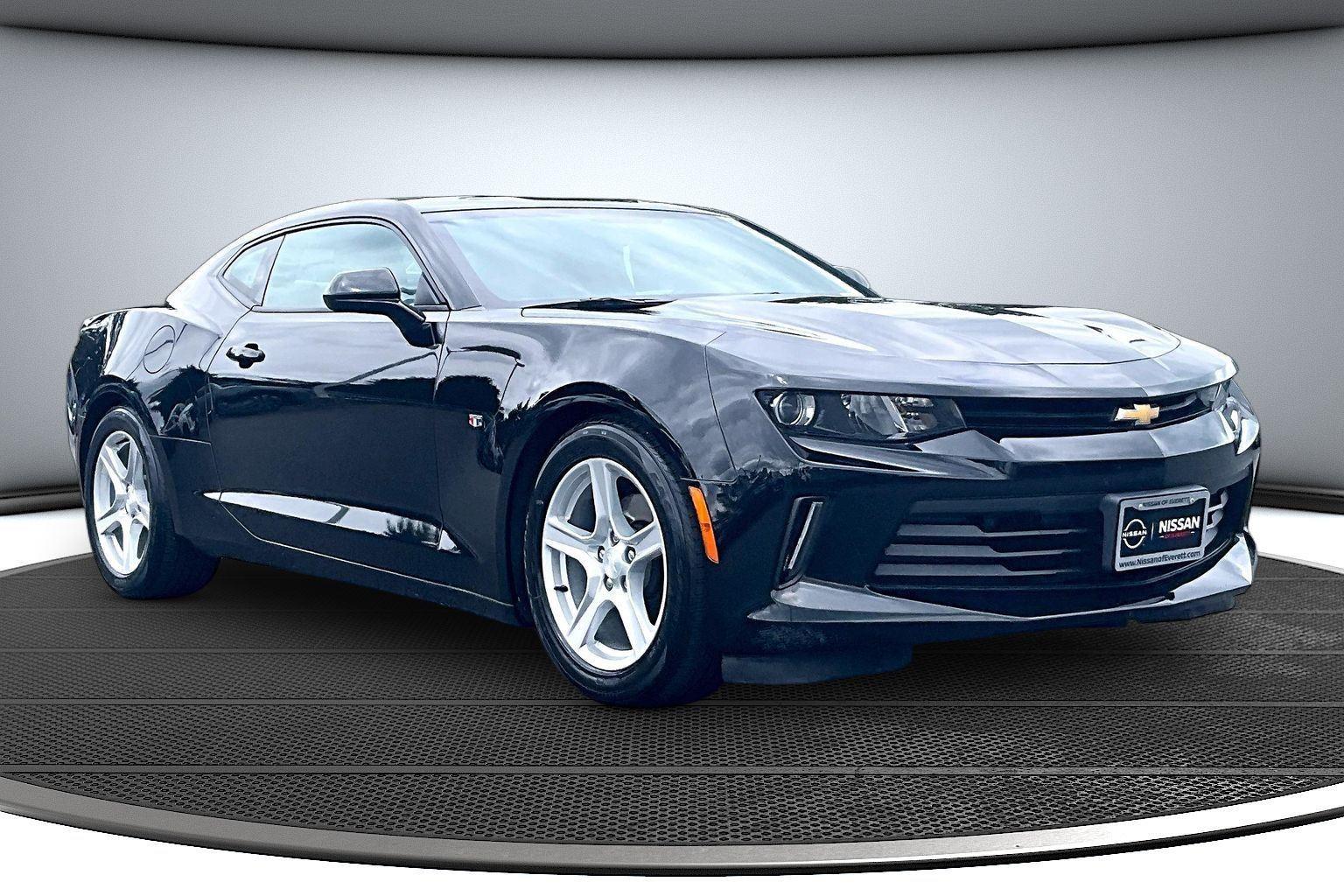
Lighter, smaller, tauter, and more efficient than the previous versions of the Camaro, the sixth-generation model boasted world-class power and driving dynamics, unlike those of rival muscle cars. Chevrolet built it on a new platform shared with the Cadillac ATS, which GM engineered to match or beat the best sport sedans from Germany.
Available as a coupe or a convertible, the 2016 Camaro offered a choice between a 275hp turbocharged four-cylinder, a 335hp 3.6-liter V6, and a Corvette-sourced 455hp 6.2-liter V8. These engines were paired with a standard six-speed manual transmission, featuring downshift rev-matching with the 6.2-liter V8. An eight-speed automatic is available.
In 2016, 1LT, 2LT, 1SS, and Camaro 2SS trim levels were available, but original owners could add an RS package to the 1LT and 2LT. Versions with a “2” have leather seats, more standard equipment, and exclusive options. The 2SS was the best equipped of the bunch, featuring the likes of interior spectrum lighting, a heated steering wheel, a Bose sound system, wireless charging, and safety features such as blind-spot monitoring. The 2016 Camaro offered Apple CarPlay and Android Auto smartphone connectivity, while later models added a built-in wi-fi hotspot.
The 2017 Camaro added a new Teen Driver feature, allowing parents to monitor the use of the car by newly minted drivers. A 1LE option package for the V6 and V8 engines tuned the Camaro for track duty and is identifiable by its flat-black hood paint. A 50th Anniversary Edition of the Camaro was also available.
The mighty Chevrolet Camaro ZL1 returned to the lineup in 2017, equipping it with a supercharged 6.2-liter V8 engine good for 650 horsepower and either a six-speed manual or a 10-speed automatic transmission. It took just 3.4 seconds for the ZL1 to accelerate to 60 mph, which is bordering on supercar pace, and included features such as Recaro suede and leather race seats and Brembo brakes.
With the 2018 Camaro, Chevrolet limited changes to both ends of the lineup. A more affordable 1LS trim level for the coupe went on sale, and a ZL1 1LE Extreme Track Performance package was added.
Chevrolet decided the sixth-gen Camaro needed a facelift after three years, and the minor restyle—which included a new bumper and grille—soured critics and customers alike. At the same time, Chevy made the 1LE Package available with the 2019 Camaro’s turbocharged four-cylinder engine and added a new infotainment system.
In 2020, Chevy revised the Camaro SS model’s front styling again to appease those unhappy with the car’s new look. A new Camaro LT1 model went on sale with 1LT equipment and 1SS hardware, giving buyers a more affordable pathway to V8 performance. Camaros with the V6 engine got a new 10-speed automatic transmission.
In hindsight, it should have been clear in 2021 that Chevrolet planned to discontinue the Camaro. The only change to the 2021 model was wireless Apple CarPlay and Android Auto. In 2022, Chevy reserved the 1LE Package for V8 models. The 2023 Camaro received no changes, and in 2014, Chevy canceled the 1LS trim and the turbocharged four-cylinder engine. A run of Camaro Collector’s Editions marked the final year for the sixth-generation Camaro.
Overall, the Camaro earns an above-average reliability rating from Repair Pal, while CarComplaints.com says the most problematic versions are the 2016-2018 models. In particular, it appears that the trunks leak, which can cause electrical problems. Few owners logged complaints about the sixth-gen Camaro from 2019 onwards.
When they were still on sale new, the MSRP for 2024 Camaros started at $32,495 for the LT coupe and $38,495 for the LT convertible. When buying a used 2016-2024 Camaro with less than 100,000 miles and a clean vehicle history report, you can expect to pay between $15,000 and $80,000, though some ultra-low-mileage ZL1s can reach $150,000. Why the huge disparity in values? On the low end, we’re talking 1LS and 1LT coupes with over 90,000 miles and a turbo four or a V6 engine. On the high end, we’re talking ZL1s. It may have been discontinued, but remember that Camaros built within the past three years will still be covered under factory warranty.
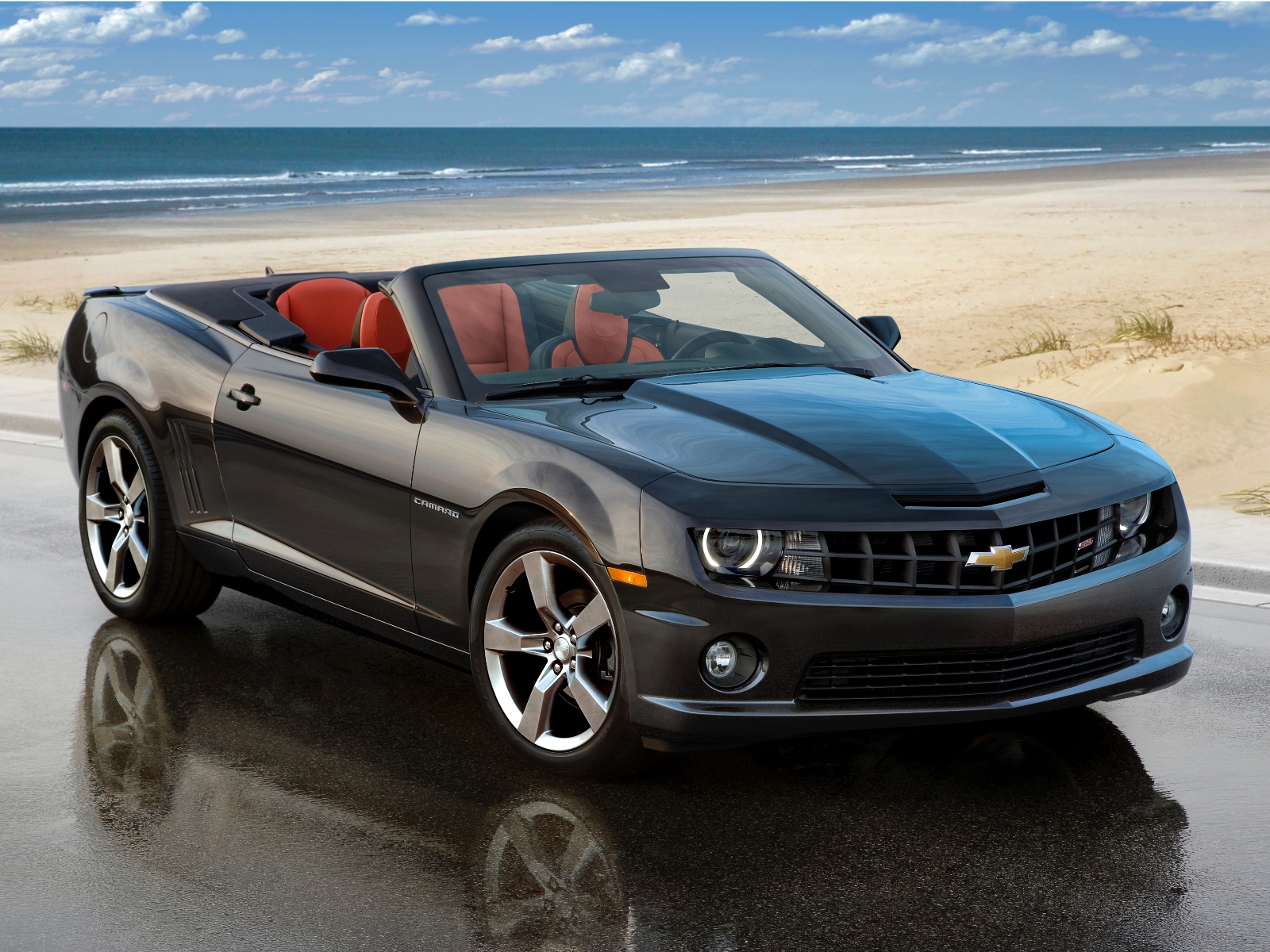
Fifth generation (2010 to 2015)
Following a seven-year hiatus, the Camaro returned in 2010 to face the retro-styled Dodge Challenger and Ford Mustang. Line all three up, and you’d think someone had twisted the time-travel dial to 1970.
Chevy modeled the new fifth-generation Camaro after the beloved 1969 model, inside and out. Built on a rear-wheel drive platform engineered by Holden, a GM brand sold in Australia, the Camaro would have shared its guts with the Pontiac G8 sedan and GTO coupe had that brand survived the Great Recession.
Available in LS, LT, and SS trim levels (with an optional RS Package), the 2010 Camaro offered a 304hp 3.6-liter V6 engine or a 6.2-liter V8. Chevy reserved the V8 for the Camaro SS trim, and it was good for 426hp with the six-speed manual transmission (400 horses with the optional six-speed automatic transmission).
The convertible returned to the lineup in 2011, when the Camaro offered standard OnStar functionality and an available head-up display. The V6 engine also got a power bump to 312 hp that year.
A 45th Anniversary edition joined the lineup in 2012, but the big news was the Camaro ZL1, equipped with a 580hp supercharged 6.2-liter V8 engine, an adaptive magnetic ride control suspension, and other go-faster goodies. It could accelerate to 60mph in about four seconds. Chevy also gave the V6 engine another power increase to 323hp, the Camaro SS received retuned suspension, and a much-needed reversing camera was optional from 2012. Interior quality was also said to have improved.
In 2013, Chevrolet offered a new track-tuned 1LE Package for the Camaro SS with a six-speed manual transmission. Cars with the stick shift also got hill-start assist, while a new MyLink touchscreen infotainment system made its debut.
Revised styling arrived in 2014 for all models except the ZL1, which retained its look for its superior cooling and aerodynamic downforce. The Camaro Z/28 also returned this model year, serving as the top model equipped with a 7.0-liter, 505hp, normally aspirated V8 engine, a six-speed manual transmission, and exclusive tuning for dominance on the race track.
The 2015 Camaro was the final fifth-gen model, and Chevy offered the car as a limited-production Commemorative Edition.
Based on data from CarComplaints.com, the fifth-generation Camaro was particularly troublesome. Owners lodged a significant number of complaints across all years, particularly with regard to the 2010 model, in which premature timing chain failure was a problem. After the MyLink touchscreen infotainment system debuted in 2013, it became the trickiest thing about the Camaro.
Before you buy a fifth-generation Camaro, get a vehicle history report and get the car inspected. Clean, low-mileage examples of the ZL1 are available for about $40,000, while high-mileage Camaro LS and LT models can go for as little as $9,000.
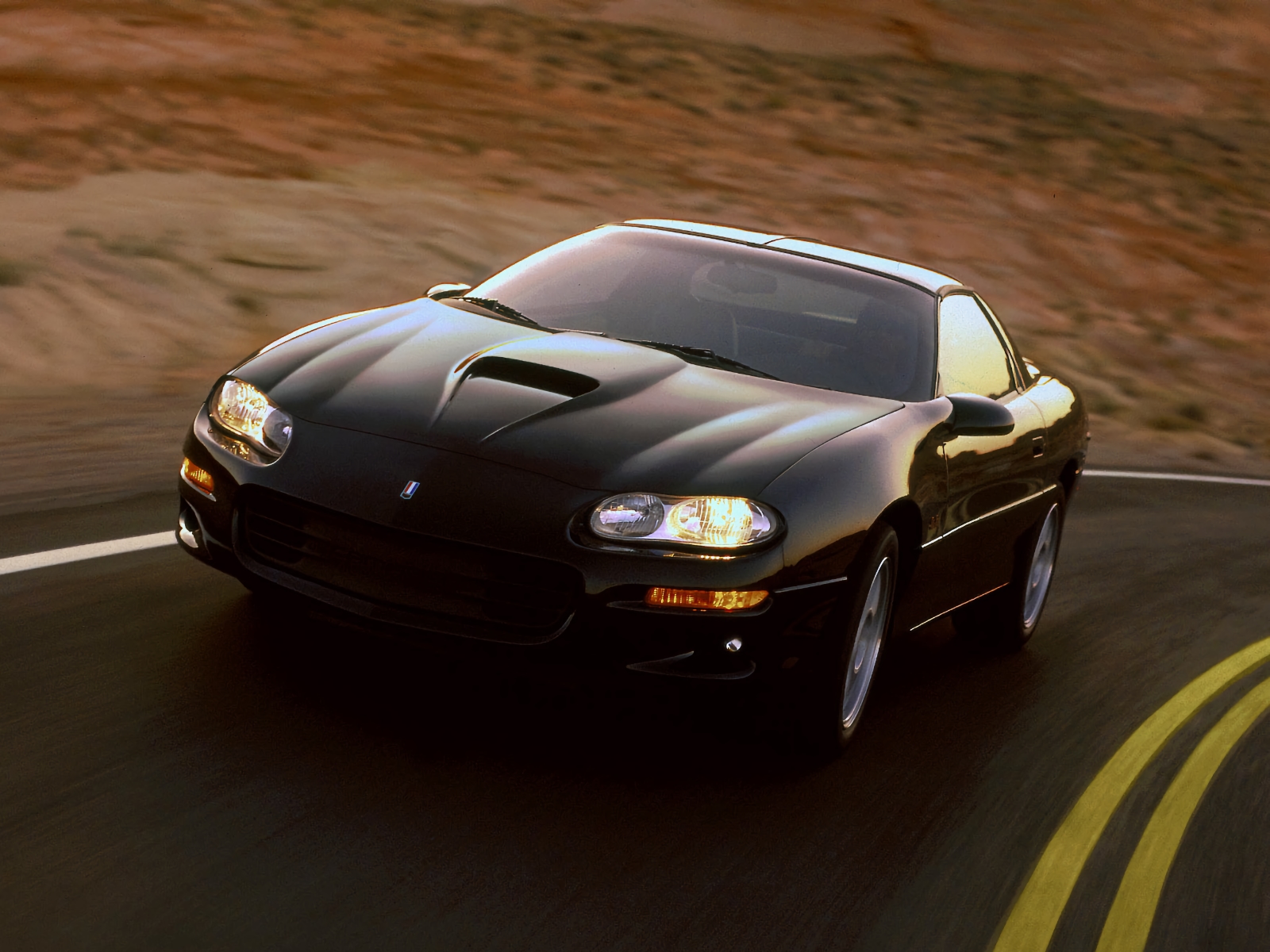
Fourth generation (1993 to 2002)
Featuring luridly long front and rear overhangs, the wedge-shaped fourth-generation Camaro was a futuristic vision saddled with an unappealing interior. From the huge airbag on the steering wheel to the puffy controls, giant panel gaps, and cheesy plastic, it represents 1990s-era design at its worst.
The Camaro’s available performance was satisfying, though. While the 160hp 3.4-liter V6 engine was nothing to brag about, the Camaro Z28’s new 5.7-liter V8 offered 275 hp and a six-speed manual transmission. It was a quick car, with impressive grip and handling.
The fourth-gen Camaro started life as a coupe only, but a convertible joined the lineup in 1994 – the same year Chevy improved the Z28’s brakes. Unfortunately, this was the first year in which the Camaro’s manual transmission had a first-to-fourth shift pattern to improve mpg. You could only grab second and third if you were revving the engine hard enough.
A 200hp 3.8-liter V6 arrived in 1995 and the old 160hp 3.4-liter V6 was discontinued the following year. Also in 1996, the RS Package returned with a silly body kit that looked like a bed ruffle, the Camaro Z28’s output was increased to 285 hp, and a new Camaro SS went on sale with 305 hp, a functional hood scoop, and five-spoke wheels.
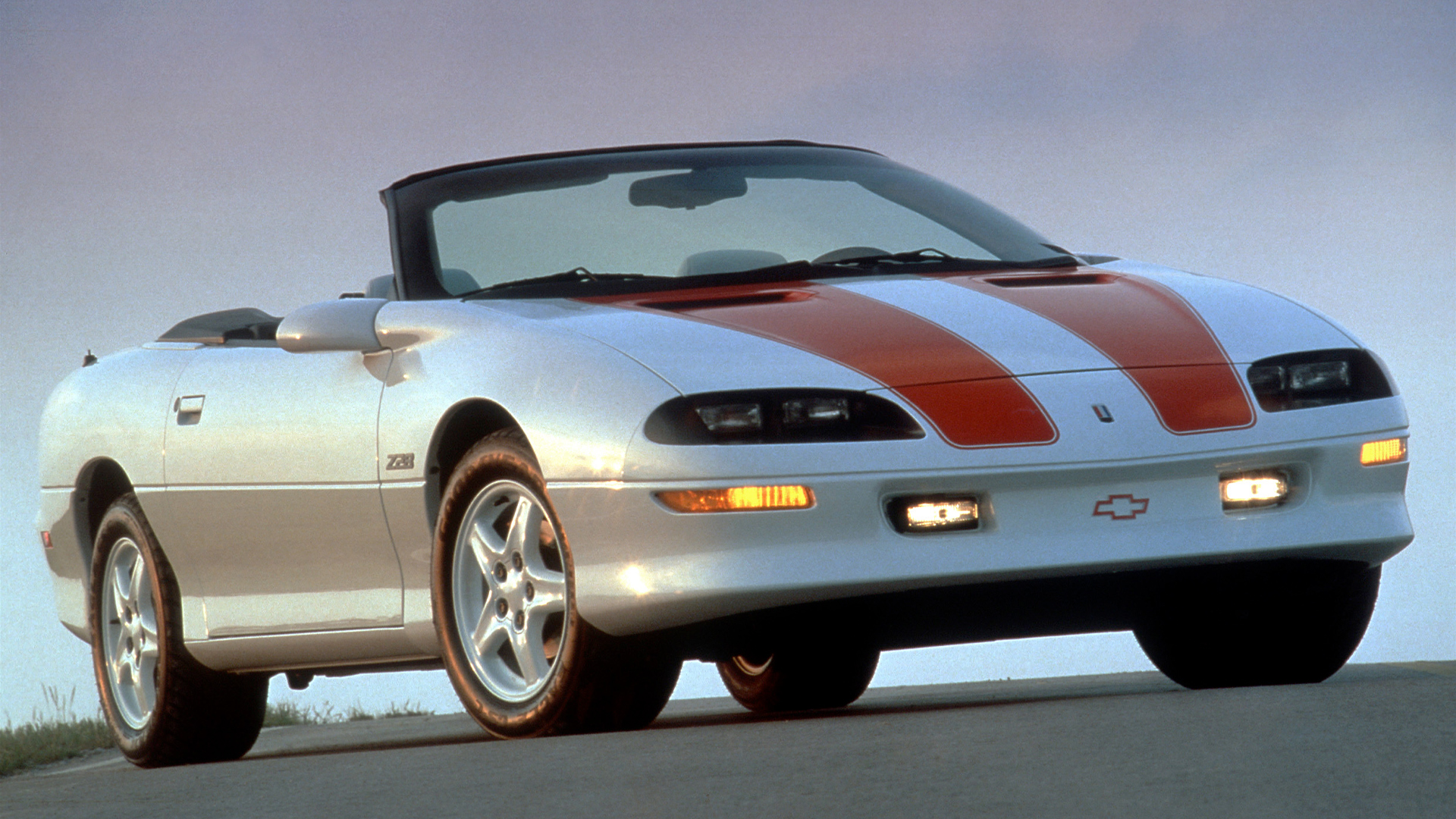
A 30th Anniversary edition in white with orange stripes arrived in 1997, along with a new wheel design, improved side-impact crash protection, and revised lighting elements.
The 1998 Camaro received a minor restyle, featuring a smoother front end without recessed headlights, while ’98 Z28 got a new 5.7-liter V8 good for 305 hp, and power output of the Camaro SS was bumped to 320 horses. Upgraded suspension and braking systems were also on the menu that year.
After that, the fourth-generation Camaro received only minor updates. Models with a V6 engine added traction control in 1999, and a new four-spoke steering wheel replaced the horrible two-spoke wheel in 2000. The 2001, Camaro Z28 and SS models got small power increases, to 310hp and 325hp respectively. The SS could reach 60 mph in a reported 5.2 seconds, which was remarkably fast for the era.
The fourth-generation Camaro’s final year was 2002, and Chevy rolled out an appealing 35th Anniversary edition right before the ax fell. It would be almost a decade before another new Camaro went on sale.
Generally speaking, the fourth-generation Camaro is reliable, and most reported mechanical problems appear to be relatively minor and easy to fix. Electrical issues can be trouble spot, especially the power windows. However, many of these cars have seen better days, so you may have to hunt to find one worthy of purchase. When you do, get a vehicle history report and an inspection by a qualified mechanic.
Prices for fourth-gen Camaros are low. Examples sell for around $5,000 with the V6 engine and high miles to about $40,000 for a like-new SS or 35th Anniversary edition with fewer than 10,000 miles.
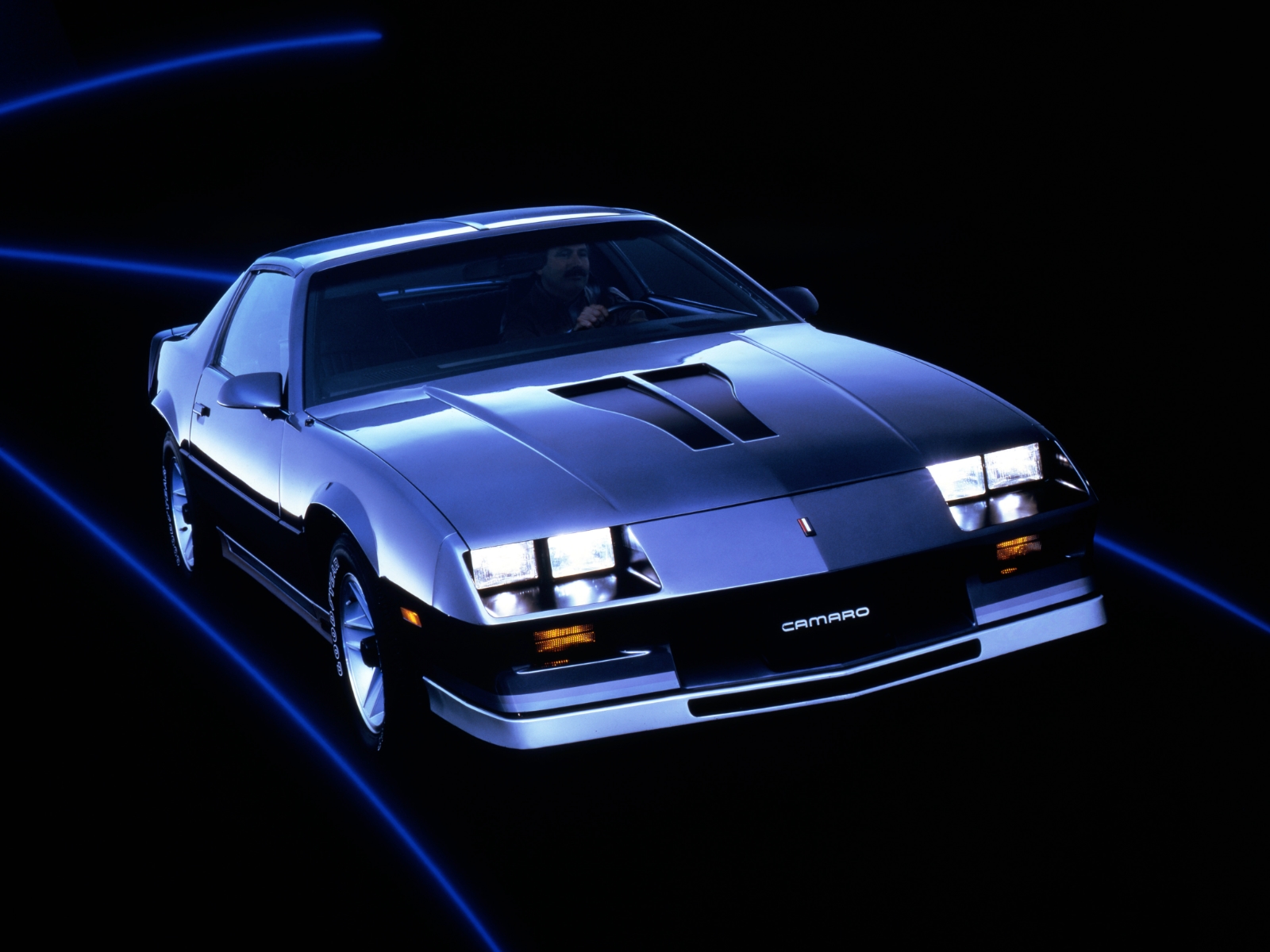
Third generation (1982 to 1992)
After a 12-year run, Chevrolet replaced the second-generation version of its pony car with the completely redesigned and, for its time, thoroughly modern 1982 Camaro. A dramatic departure from the past, the third-gen Camaro had a simple, clean, understated design, and, especially in Z28 trim, it was instantly appealing. It also sported an even faster roofline with a hatchback design.
Three unremarkable engines were available in 1982: a 90hp four-cylinder, a 112hp V6, and a 145-165 hp V8. Base Sport Coupes came with the four-cylinder or the V6, while the European-flavored Berlinetta offered the V6 or the V8. Four-speed manual and three-speed automatic transmissions were available.
It didn’t take long for Chevrolet to start improving this version of the Camaro. In 1983, the Z28 came with a 190hp V8 paired with a new five-speed manual or a four-speed automatic transmission. That automatic trickled down to other Camaros for 1984.
The 1985 Camaro received minor styling changes, and in alignment with Chevrolet’s sponsorship of the International Race of Champions (IROC), a new IROC-Z model arrived with new wheels, retuned suspension, and a 5.0-liter V8 making 215 hp when bolted to the five-speed manual.
In 1986, Chevy killed the awful four-cylinder engine, making the 2.8-liter V6 standard, and bumped the V8 to 220 hp. This was the last year for the upscale and unpopular Berlinetta model.
A Camaro convertible returned to the lineup in 1987, but Chevrolet outsourced the roof removal to an aftermarket supplier. An RS trim level went on sale in ‘87, but only in California. A de-tuned 5.7-liter V8 from the Corvette also became available, making 225hp and using a four-speed automatic.
In 1988, the Camaro Z28 departed in favor of the IROC-Z name. A 1LE Package was available for the IROC-Z, installing a 230hp 5.0-liter V8 with a manual transmission or a 245hp 5.7-liter with the automatic.
The Camaro RS went nationwide in 1989, and in 1990, the standard V6 grew to 3.1 liters, while all Camaros received a driver’s side airbag. Chevy didn’t continue its IROC sponsorship, so the Camaro Z28 returned to the lineup as the top performance model in 1991.
A Heritage Package closed out third-generation production in 1992, and the last Camaro built in the Van Nuys, California, assembly plant rolled off the line in August of that year.
As you can expect with any car several decades old, a third-generation Camaro will experience occasional problems and parts can be hard to find. If you buy one, make sure you get a vehicle history report and thorough inspection by a mechanic fluent in Old Camaro.
Search for used third-gen Camaros online, and you might be surprised by how many low-mileage examples are available. As we write this, there is a red 1989 IROC-Z with 121 miles on it for $99,900! That’s an extreme outlier, though, as most super-low-mileage Camaros of this vintage cost half that.
Expect to pay no more than about $40,000 for more desirable examples and typically less than $30,000 for low-mileage variants you’d be willing to drive daily. At the other end of the spectrum, higher mileage drivers are available for as little as $10,000.
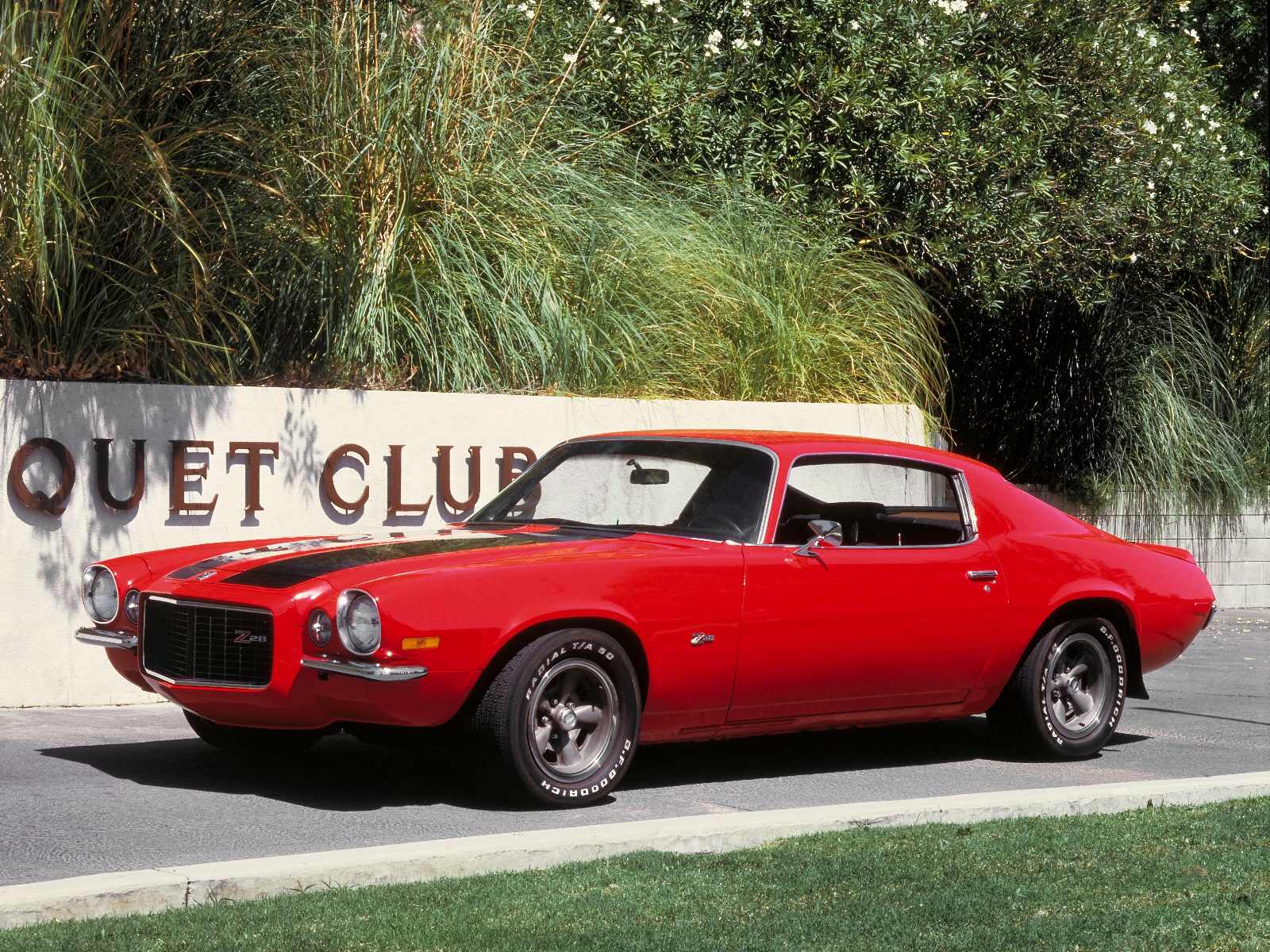
Second generation (1970 to 1981)
Since Chevrolet had quickly cribbed together the first-generation Camaro, the second-generation reflected a more considered approach to the design. Longer, wider, lower, sleeker, and heavier, the 1970 Camaro was the car Chevy thought could beat the Ford Mustang and, ultimately, it did, outselling the Mustang for the first time in 1977.
Unfortunately, soon after the second-generation Camaro debuted, federal regulations relating to safety and smog threatened its existence. That makes any 1970 Camaro equipped with the 375hp big-block 402 cubic-inch (6.6-liter) V8 one of the most desirable examples of this version of the Camaro.
There was less power on the menu from 1971. That year, the most potent Camaro was the Z28, equipped with the 330hp 350 cubic-inch (5.7-liter) V8 with a four-barrel carburetor and a dual-exhaust system.
In 1972, the Society of Automotive Engineers (SAE) changed horsepower measurement standards, resulting in big drops across the entire Camaro lineup, with the Z28’s 350 newly rated at 255 hp. Chevrolet quit using a Hurst shifter in cars with the four-speed manual gearbox, and the Camaro added three-point seatbelts for safety.
Chevy dropped the big-block Camaro SS in 1973, and the car’s elegant front bumpers added some ugliness to meet federal regulations. Power ratings fell again, with the Z28 now generating 245hp. Also, a new Type LT (Luxury Touring), debuted.
Even bigger bumpers arrived in 1974, requiring a front and rear restyle, and the round taillights disappeared. The engine lineup included a 250 cubic-inch (3.9-liter) inline-six and 350 cubic-inch (5.7-liter) V8. The Camaro Z28 offered little more than a huge hood graphic to distinguish itself.
Chevy dropped the Z28 from the lineup in 1975, but the Rally Sport returned, adding body-colored bumpers, wheels, and satin-black paint on the hood and roof, while a new wraparound rear window improved visibility. Catalytic converters further strangled engine output, with the six-cylinder making only 105 hp. The 350 V8 mustered only 145hp (two-barrel carb) or 155hp (four-barrel carb for California and high-altitude regions).
Chevrolet added a new 305 cubic-inch V8 (5.0-liter) to the Camaro lineup in 1976, and in 1977, the Z28 returned with significant suspension upgrades and 185hp. This was the year the Camaro finally outsold the Mustang, but in fairness to Ford, Chevy’s rival was the awful little Mustang II, which wasn’t exactly a high bar to hurdle.
The 1978 Camaro was significantly refreshed, with new front and rear ends featuring body-color urethane bumpers. Chevy also made T-tops (removable roof panels) available, and other changes pertained to suspension tuning and fuel economy.
In 1979, a luxury-themed Berlinetta model replaced the Type LT, and in 1980, the Camaro’s standard inline six-cylinder engine left the building in favor of a new 3.8-liter V6. The Z28 added an air induction hood that year and made 190hp in all states except California. The Rally Sport disappeared for the second-generation’s final year in 1981.
Before buying a second-gen Camaro, perform a vehicle history search and get the car inspected by a reputable expert. Many of these cars were left to rot or served as failed projects. Others were modified without the requisite expertise or attention to detail.
Rare, desirable, and low-mileage examples can run into six-figure territory, as can professionally built restomods. Unsurprisingly, 1970 Camaros command the highest premiums. But in the sub-100,000-mile club, even clean Type LTs offering little engine power can cost upwards of $20,000.
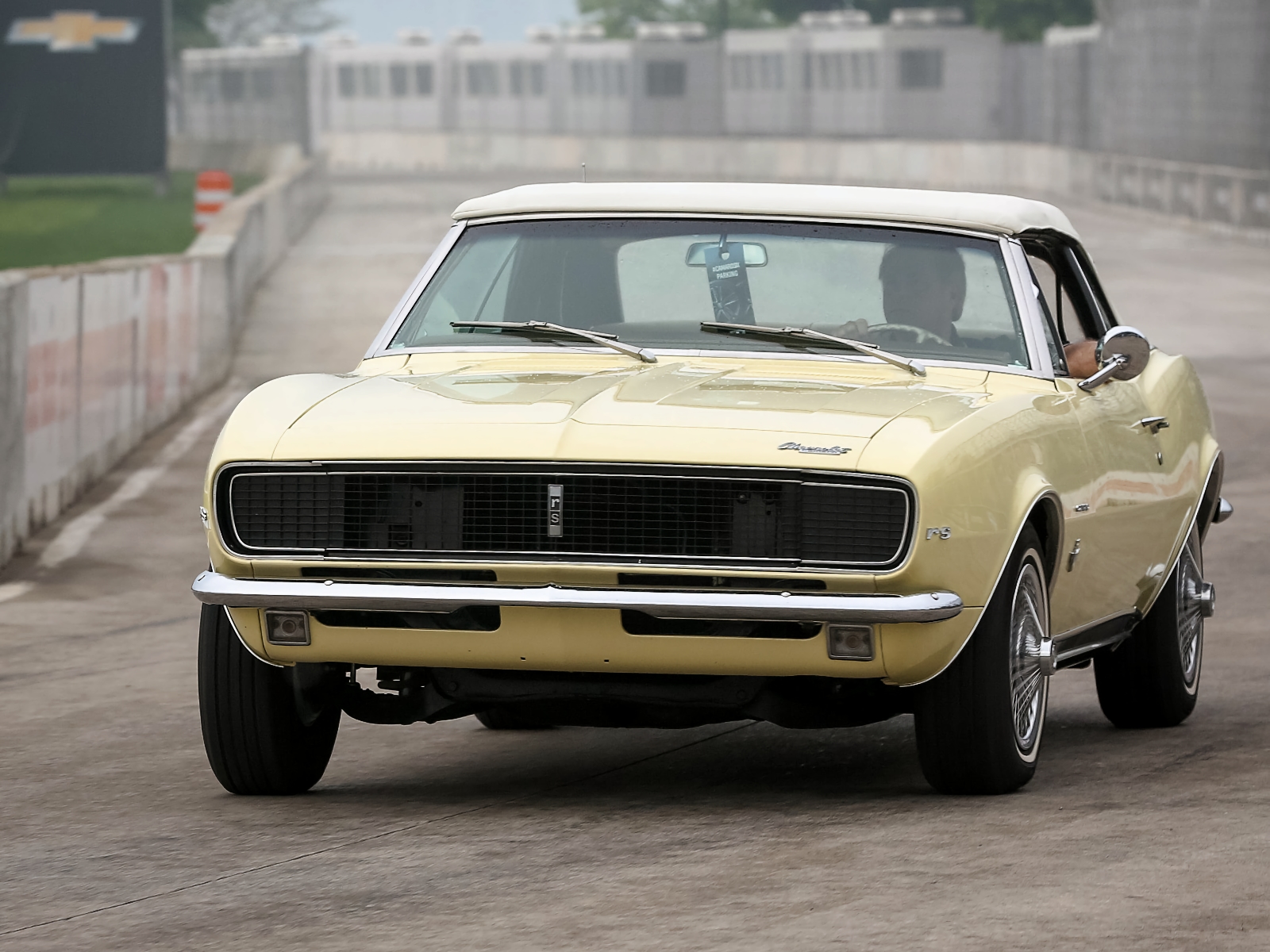
First generation (1967 to 1969)
The Ford Mustang’s success surprised Chevrolet and made the company’s Chevy II look like something your Grandma might drive. So, the automaker initiated a fast-track development schedule to create a proper rival, selected a name based on the French word “camarade”, and rushed the all-new Camaro into showrooms by 1967.
The first-generation Camaro came in base Sport Coupe or Convertible, Rally Sport (RS), Super Sport (SS), and Z/28 trim levels, offering inline six-cylinder and V8 engines ranging from 140 to 325hp, while its 2+2 design allowed for some small back seats. In 1967, the car paced the annual Indianapolis 500 race, and Chevrolet built 100 pace car replicas for use during the event. Most wound up on the used-car market and are desirable examples of the ’67 model.
In 1968, a new Astro Ventilation system eliminated the Camaro’s front quarter vent windows. Further minor appearance changes updated the look, and performance models got revised rear suspension. The big-block 396 cubic-inch V8 made 350 hp.
Extensive design changes gave the 1969 Camaro and wider and lower look, and only the hood and the trunk were the same as in 1968. Once again, the Camaro paced the Indy 500, and Chevrolet commissioned a production run of official replicas.
However, the most desirable first-gen Camaros are the rare Central Office Production Order (COPO) 9560 and 9561 variants built in 1969. Both were supplied 425hp, but only 69 examples of the 9560 were made, equipped with an aluminum-block ZL-1 V8 under the hood. Chevrolet built 1,000 units of the 9561 iron-block 7.0-liter models. In addition, Yenko Chevrolet, a dealership in Pennsylvania, created a run of Camaros with huge engines stuffed into them.
Pro-built restomods and original, unrestored, low-mileage cars easily sell for more than $100,000 – sometimes twice that. Below that threshold, you’ll find less desirable first-gen Camaros that aren’t as immaculate as the best ones available, but even project cars can start at about $25,000. As always, a vehicle history and thorough inspection by a Camaro expert are recommended before purchase.
Related Topics