Charging Your Tesla At Home: Everything You Need to Know
Where to Start
Choosing a charger
Installation Process and Requirements
Getting the most from your charger
Conclusion
Where to Start
Tesla makes some of the best-selling electric vehicles today. With numerous perks over gas-powered cars, it's easy to see why. To take full advantage, it's important to set yourself up with a home charging station, and these preparations can be put into motion before you take delivery of your electric car.
There's a lot to take into account first, so we'll start with how Tesla differs from other EVs.
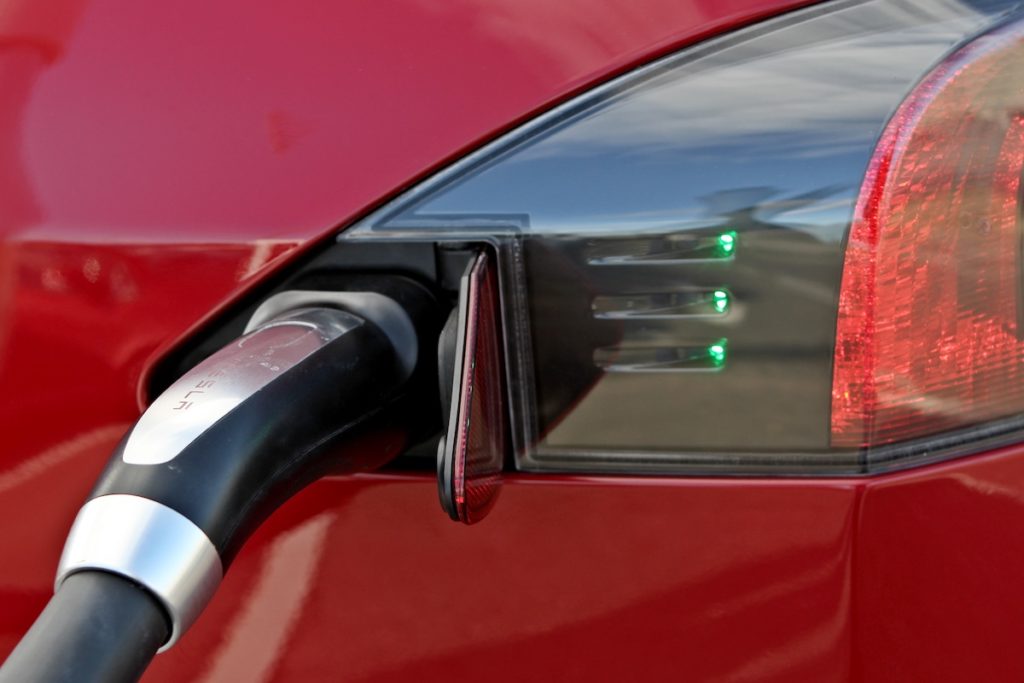
All Tesla vehicles except for the original Roadster have a charge port that has historically been exclusive to Teslas. It's called a NACS (North American Charging Standard) port, and it's smaller than the J1772 port commonly used on other EVs today. That's all going to change in the next few years as many carmakers have decided to switch over to Tesla's NACS port.
As of today, you can use your Tesla EVs on a J1772 charger if you have an adapter. Some other EVs can also use an NACS charger with an adapter, and as the transition to this standard continues, manufacturers will likely include adapters with vehicles. In some ways, this makes Tesla a bit more future-proof than its rivals at the moment.
Eventually, most public chargers will transition to the NACS port, flipping the script and requiring current non-Tesla EV owners to use an adapter. Carmakers, who currently use the J1772 socket, will begin switching to NACS starting with the 2025 model year, and we expect the majority to follow suit by 2027.
Choosing a charger
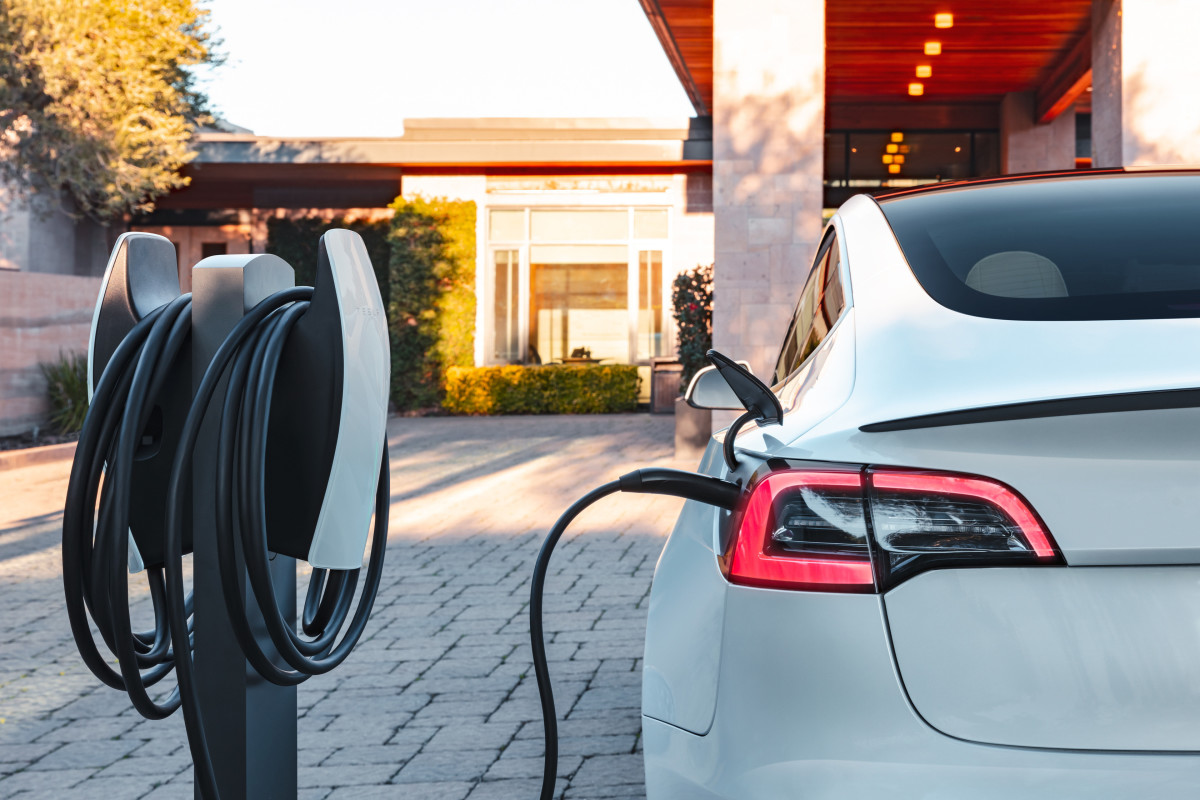
Until recently, only Tesla built NACS chargers. With the broader adoption of the NACS port, there are now several alternatives. In terms of price, they're all competitive between $350 and $600. Despite costing slightly more, we suggest using a Tesla charger with your Tesla vehicle.
This ensures compatibility over the long run, as Tesla often rolls out software updates that could potentially cause some conflicts with non-Tesla chargers. Having everything on the Tesla platform also simplifies monitoring and charge control via the Tesla smartphone app, which we'll get into later.
Tesla makes three different chargers for home use:
- The Mobile Connector looks more like a charging cable than an installed charging station. It costs $250 and can be plugged into a standard household outlet, so long as your home wiring can handle it. In electrician-speak, you'll need a properly grounded circuit that is rated for at least 15 amps. This has the longest charging time for your Tesla, as it's capped at a rate of 1.3 kW (kilowatts), which translates to only about 3 miles of battery replenishment per hour.
The Mobile Connector is also compatible with 240-volt outlets (the bigger outlets that are sometimes used for larger household appliances). This increases the charge speed to 7.6 kW and about 30 miles of replenishment per hour.
These charge rates are dreadfully slow, but keep in mind that most drivers won't run their battery down to empty. In most cases, owners just need a "top-off" at night. The main advantage of the Mobile Connector is its price, and you don't need to have someone install it for you.
Installation Process and Requirements
If you've decided on either the Wall Connector or the Universal Wall Connector, the next step would be to consult an installer. Tesla helps to streamline the process with its fleet of certified installers who know all of the ins and outs of installation, permitting, and inspections. In general, you can expect to pay between $750 and $1,500 for basic installation.
If your home requires additional work in the form of an upgraded or additional electrical panel, trenching for underground wiring, or other charger installation complications, this is the time you'll find out. These can significantly increase the price, so ask plenty of questions to avoid potential surprises later.
If everything checks out and you agree on the terms of installation, now is when you should order your charger. You should also investigate what sorts of incentives might be available in your area. In some cases, local, state, and federal incentives can significantly reduce the cost of purchase and installation. These also apply to landlords, so if you rent, it doesn't necessarily exclude you.
A few years ago, the incentives were less restrictive, offering deep discounts for a variety of customers. More recently, savings have been aimed at lower-income shoppers in order to encourage EV adoption. The good news is, the prices for chargers and installation have dropped over time. Nevertheless, it's a good idea to get all of this out of the way before your car arrives so you can start charging right away.
Getting the most from your charger
Once everything is installed, there are several steps you can take to maximize the return on your Tesla vehicle and charger.
Charge Off-Peak: Many utility companies offer special low rates for off-peak EV charging. You may have to consult with your installer to take advantage of these, but it's a common procedure. Once set up, you can schedule when your vehicle charges, either via the Tesla's touchscreen or through the app.
Off-peak charging hours typically run between 11 pm and 8 am the next morning, when demands are lowest on the grid. In some cases, it may require a separate electrical meter and additional equipment, so be sure to consider those prices in your budget. The savings could be significant over time, but fluctuations in price from your provider are also possible.
Go Solar: For the ultimate in efficiency, owners can opt for Tesla's solar options. Combining solar panels with a Tesla Powerwall could reduce or almost eliminate day-to-day operating costs, but the upfront expense might be out of reach for many owners. Again, there may be incentives that lessen the blow.
Solar panels can charge your Tesla almost directly, but if you’re not home during the day, you can’t take advantage of the “free” power. The Tesla Powerwall is made up of recycled and refurbished Tesla vehicle batteries, adding a greener element to the process and storing unused energy for later use.
Charge When Needed: To maximize your vehicle's battery life, Tesla owners might consider charging when needed rather than daily. Battery longevity can be reduced with an excess of charge cycles over time. It's possible that less frequent charging can extend the life of your battery. Charging to the recommended level can also contribute to longevity. If you regularly charge to the full capacity (typically reserved for longer trips), the battery may degrade more rapidly.
This depends on which battery you have, though. If you have one of the newer 4680 nickel-cobalt-manganese cells (in some Tesla Model Y and Model 3 variants), Tesla claims they are not prone to the same losses from charge cycles. These are fairly recent additions, and there isn't enough data to back up this claim yet.
Conclusion
EVs have the potential to save money at the pump while helping to reduce tailpipe emissions. Having access to chargers is obviously critical, and having your own charger will save you even more money. It may seem daunting at first, but the process of home installation has gotten much easier, with a lot of the red tape eliminated or at least streamlined.
Armed with the knowledge of what it takes and how to maximize returns, you should have the right questions to ask in order to minimize surprises.
Related Topics