When it comes to camping, the right vehicle can make the difference between a stressful trip and a relaxing getaway. While many shoppers default to SUVs, the humble minivan offers a combination of space, practicality, and comfort that is hard to beat for life at the campsite. With their low load floors, cavernous cargo holds, and family-friendly features, minivans are uniquely equipped to haul everything from tents and coolers to bikes and tired children, all while providing a comfortable ride on the long highway stretches to the trailhead.
Today's minivans are more versatile than ever, offering features that directly benefit the modern camper. Some models provide the security of all-wheel drive (AWD) for navigating slick gravel roads or grassy campsites, while others feature hybrid and plug-in hybrid (PHEV) powertrains to save on fuel during long-distance journeys. Clever seating solutions, like seats that fold flat into the floor, create massive, uninterrupted space for gear or even an impromptu sleeping area. Combined with thoughtful tech like abundant USB ports and rear-seat entertainment, a minivan can serve as the ultimate basecamp on wheels.
The Best Minivans for Camping
FAQs
What Makes CarGurus Best Cars Guides Different
Shopping Tools
Related Topics
1. Chrysler Pacifica
CarGurus expert rating: 8.2 out of 10
CarGurus user rating: 4.4 out of 5
Percentage of Good and Great Deals available on CarGurus: 36.2%
Overall CarGurus rating: 4.6 out of 5
| Pros |
Cons |
| Stylish design |
Fairly pedestrian performance |
| Comfortable |
Interior materials feel cheap |
| Easy-to-use technology |
Interior design looks nice but has functional issues |
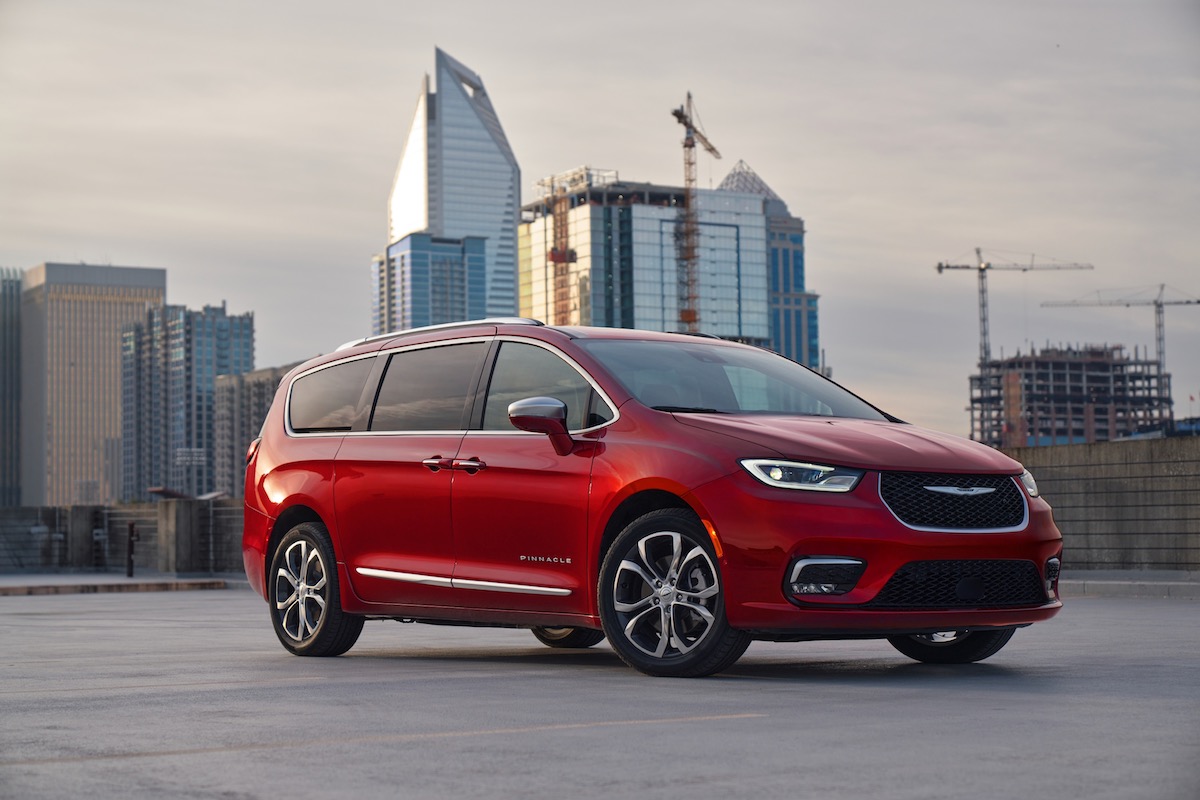
The Pacifica is a natural fit for camping because it's built around flexible space. With standard Stow 'n Go seating on most non-hybrid models, the second-row seats can fold into the floor, giving you a flat load area for bulky gear while leaving big in-floor bins for stuff you want to keep out of sight at the campsite. For non-hybrid Pacifica models, cargo volume measures 32.3 cubic feet behind the third row, 87.5 cubic feet behind the second row, and 140.5 cubic feet with the second and third rows folded—useful numbers if you're trying to decide whether you can keep a third row available for people while still packing coolers, camp chairs, and a canopy. One key caveat for shoppers is that some seating and drivetrain choices don't mix: an available eight-seat setup can't be combined with Stow 'n Go or AWD.
For getting to the trailhead (or simply hauling more), the standard 3.6-liter V6 makes 287 hp and 262 lb-ft of torque, and it supports a maximum towing capacity of 3,600 pounds—handy for small campers, utility trailers, or a pair of dirt bikes. Available AWD on Touring L, Limited, and Pinnacle trims can add confidence on wet grass, sandy parking areas, or snowy access roads, while the cabin stays quiet and comfortable on long interstate runs. Camping families will also appreciate the day-to-day tech that becomes road-trip tech: a standard 10.1-inch Uconnect 5 touchscreen with wireless Apple CarPlay and Android Auto, available rear-seat entertainment, and up to 12 USB-C ports spread across all three rows. Standard driver assists like adaptive cruise control and automatic emergency braking help on the highway, and for 2024 Chrysler adds an Emergency Vehicle Alert System through the infotainment screen; if you're sticking with the gas-only Pacifica, EPA ratings are 22 miles per gallon (MPG) combined with front-wheel drive (FWD) or 20 MPG combined with AWD.
The CarGurus Verdict: "Verdict: The Pacifica checks all of the boxes, with only small issues to detract from its overall goodness." - Stephen Edelstein
Read our most recent Chrysler Pacifica review
Search for Chrysler Pacifica
See all

2. Honda Odyssey
CarGurus expert rating: 6.3 out of 10
CarGurus user rating: 4.6 out of 5
Percentage of Good and Great Deals available on CarGurus: 32.9%
Overall CarGurus rating: 4.5 out of 5
| Pros |
Cons |
| Enjoyable to drive |
Hybrid powertrain unavailable |
| Comfortable seats |
Outdated technology |
| Plenty of cargo space |
Poor value for money |
The Honda Odyssey remains a dependable workhorse that still nails the basics that matter on real trips: space, comfort, and easy day-to-day drivability. It seats up to eight and offers as much as 140.7 cubic feet of cargo space, which is useful when you're stacking totes, coolers, camp chairs, and a stroller without resorting to a rooftop box. Honda's Magic Slide second-row setup is also handy for family travel—pull the center seat to create a pass-through to the third row, or slide seats to prioritize child-seat access and snack handoffs. The catch for gear-heavy weekends is that you have to remove the second-row seats to maximize cargo room, and they're heavy and awkward to store.
On the road to the campsite, the Odyssey's 3.5-liter V6 (280 hp, 262 lb-ft of torque) and 10-speed automatic make highway merges and mountain grades feel stress-free, even when loaded with people and supplies. The EPA-rated 22 MPG combined is fine for a non-hybrid minivan, but the lack of an available hybrid and the lack of AWD are drawbacks for buyers who regularly drive long distances or run into snow, sand, or muddy access roads. Tech updates for 2025 (including wireless Apple CarPlay/Android Auto, USB-C ports, and a wireless charging pad) help with navigation and device power on multi-day trips, though the infotainment still feels dated and the rear-seat Fire TV system can be frustrating to set up. Safety tech is comprehensive with Honda Sensing, but the Odyssey also drew attention for a "Poor" score in a newer IIHS crash-test evaluation.
The CarGurus Verdict: "The Odyssey doesn't offer a hybrid powertrain or an all-wheel-drive (AWD) option. The updated tech merely meets minimum standards and expectations. And in a new crash-test evaluation, Honda's minivan earns a rare low rating. Certainly, the Odyssey remains comfortable, exceptionally practical, and enjoyable to drive. But it needs a redesign, and soon." - Christian Wardlaw
Read our most recent Honda Odyssey review
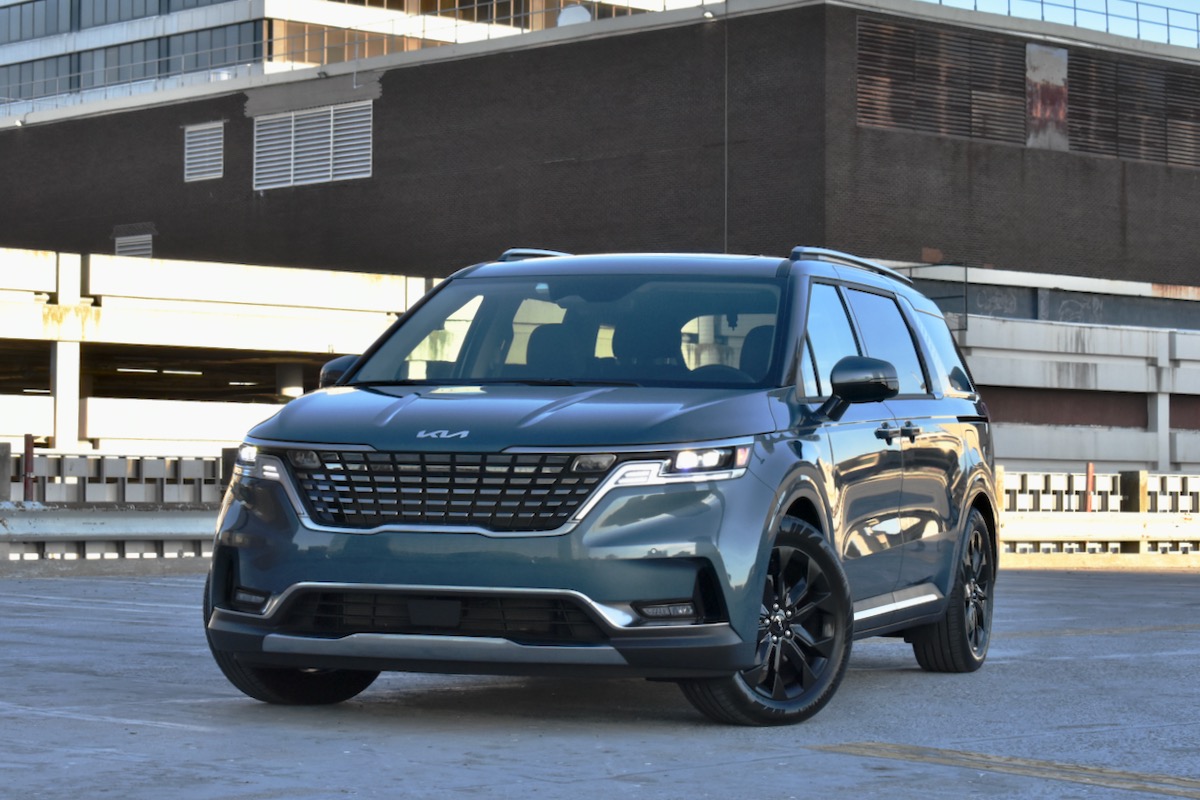
3. Kia Carnival
CarGurus expert rating: 8.2 out of 10
CarGurus user rating: 4.8 out of 5
Percentage of Good and Great Deals available on CarGurus: 34.6%
Overall CarGurus rating: 4.5 out of 5
| Pros |
Cons |
| Stylish design |
Mixed safety ratings |
| Powerful engine |
No hybrid or all-wheel drive options |
| Excellent value for money |
Kia doesn't make folding the seats easy |
For camping trips where you're packing bulky gear, the Kia Carnival's boxy, SUV-like shape pays off in day-to-day usefulness. With all three rows in place, it has 40.2 cubic feet of cargo space—enough for coolers, folding chairs, and bins—while Kia claims up to 145.1 cubic feet with the second and third rows folded for a near-van-like load floor. Sliding doors and a low step-in height make it easier to load kids and supplies in tight campsites or crowded trailhead parking lots, and the available VIP Lounge-style second-row seats can turn long drives into something closer to a living-room experience.
On the road to the campground, the Carnival's 3.5-liter V6 (287 hp, 262 lb-ft of torque) and smooth eight-speed automatic feel refined and relaxed, and it can tow up to 3,500 pounds for small campers or a pair of personal watercraft. Tech is camping-friendly, too, with a standard Wi-Fi hotspot and USB ports across all three rows, plus family features like a cabin camera and an intercom to cut down on distractions during long hauls. The trade-offs are worth noting for outdoorsy buyers: there's no AWD for muddy access roads, fuel economy is a modest 22 MPG combined, and its Insurance Institute for Highway Safety (IIHS) results are mixed (including "Poor" scores in some updated tests, depending on configuration).
The CarGurus Verdict: "The Carnival offers a great driving experience and excellent warranty, but these upsides are tainted by a lack of all-wheel drive and mixed safety ratings." - Stephen Edelstein
Read our most recent Kia Carnival review
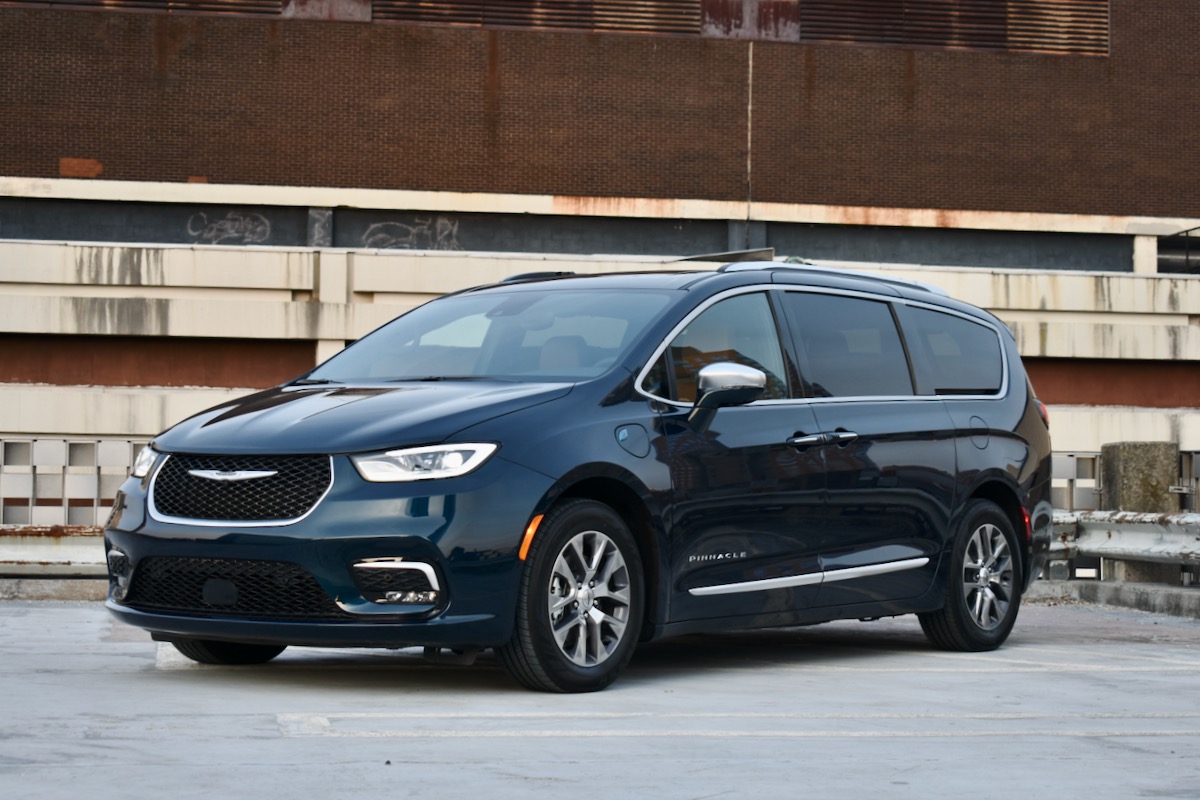
4. Chrysler Pacifica Hybrid
CarGurus expert rating: 7.8 out of 10
CarGurus user rating: 4.6 out of 5
Percentage of Good and Great Deals available on CarGurus: 34.8%
Overall CarGurus rating: 4.4 out of 5
| Pros |
Cons |
| Stylish design |
All-wheel drive not available |
| Comfortable |
Poor value for money |
| Impressive electric range |
|
For the Pacifica Hybrid, the plug-in setup is the big story: It offers 32 miles of EPA-rated electric range, letting you handle quiet early-morning campground runs or nearby trailhead drives with minimal fuel use if you plug in regularly. The powertrain combines an Atkinson-cycle 3.6-liter V6 with a two-motor hybrid system and a 16-kWh battery, producing 260 hp, and it's tuned for easy family travel with a comfortable ride and a notably hushed cabin—helpful when you're piling in tired kids after a long day outdoors.
Just as important for camp gear, the Pacifica Hybrid keeps true minivan advantages, with sliding doors, a low step-in height, and usable cargo space even without Stow 'n Go second-row seats (the battery takes that space). You get 32.2 cubic feet behind the third row for day bags and food bins, 87.5 cubic feet behind the second row for bulky camping totes, and 140.5 cubic feet behind the first row for big-haul weekends; a power liftgate is standard, too. Tech is road-trip friendly with a 10.1-inch Uconnect 5 touchscreen, available rear-seat entertainment, and up to 12 USB-C ports, but camping buyers should note the tradeoffs: FWD only, and Chrysler doesn't recommend towing with the plug-in hybrid model.
The CarGurus Verdict: "A plug-in hybrid powertrain enhances a well-executed minivan." - Stephen Edelstein
Read our most recent Chrysler Pacifica Hybrid review
Search for Chrysler Pacifica Hybrid
See all

5. Toyota Sienna
CarGurus expert rating: 6.3 out of 10
CarGurus user rating: 4.5 out of 5
Percentage of Good and Great Deals available on CarGurus: 29.5%
Overall CarGurus rating: 4.4 out of 5
| Pros |
Cons |
| Great ride quality |
Irritating transmission |
| Quiet cabin |
Poor real-world fuel economy |
| Easy-to-use technology |
Less outright load space than rivals |
The Sienna's big advantage when it comes to camping duty is its standard hybrid setup (245 hp) paired with a smooth, quiet highway demeanor and an absorbent ride—helpful when you're piling on miles to reach trailheads or state parks. Available AWD adds confidence on rain-slick roads, muddy campground lanes, or graded forest roads, and the Woodland Edition's extra half-inch of ground clearance can reduce the stress of ruts and steep driveway-like entrances. Just keep expectations realistic on fuel savings: while the Sienna is rated around 35–36 MPG combined depending on configuration, our real-world loop returned 26.3 MPG, so it's worth planning fuel stops like you would in a conventional minivan.
The cabin layout is also minivan-perfect for family camping logistics, with easy entry via sliding doors and a third-row seat that can work for adults when you're bringing extra friends along. Cargo space measures 33.5 cubic feet behind the third row and 75.2 cubic feet behind the second row, and the third row folds into the floor well with one-hand ease—handy when you're loading coolers, tents, and sleeping bags at the last minute. The tradeoff is ultimate "van-life" volume: max cargo space is 101 cubic feet, and unlike some rivals, the second-row seats don't remove, they just slide and tip, which can limit bulky-haul flexibility. For road-trip comfort and camp-site sanity, the available four-zone climate control, digital rearview mirror (useful when the cargo area is stacked high), and available rear entertainment screen can be genuine quality-of-life upgrades.
The CarGurus Verdict: "Saving money on gas, making life simpler, and the option of AWD ruggedness are all good things in a minivan, and they make the Toyota Sienna worth considering if you're also looking at cars such as the Chrysler Pacifica, Honda Odyssey, and Kia Carnival." - Christian Wardlaw
Read our most recent Toyota Sienna review
The Best Minivans for Camping FAQs
Which minivan has the most cargo space for camping gear?
The Kia Carnival offers the most maximum cargo volume at 145.1 cubic feet, making it a great choice for hauling bulky items. The Honda Odyssey and Chrysler Pacifica are close behind with 140.7 and 140.5 cubic feet, respectively. The Toyota Sienna offers the least of this group, with a maximum of 101 cubic feet.
Are there any all-wheel drive (AWD) minivans for camping?
Yes. For campers who might face muddy access roads, sandy parking areas, or snowy conditions, the Chrysler Pacifica (non-hybrid models) and Toyota Sienna both offer available AWD for added traction and confidence.
Can I get a hybrid minivan for better fuel economy on long camping trips?
Absolutely. The Toyota Sienna comes standard with a hybrid powertrain, and the Chrysler Pacifica Hybrid is a plug-in hybrid (PHEV) that offers up to 32 miles of all-electric range before the gasoline engine kicks in, which is perfect for short trips around the campground.
Can I tow a small camper or trailer with a minivan?
Yes, some minivans are rated for towing. The gas-powered Chrysler Pacifica can tow up to 3,600 pounds, and the Kia Carnival can handle up to 3,500 pounds, which is enough for a small pop-up camper, a utility trailer with gear, or a pair of dirt bikes. Note that Chrysler does not recommend towing with the Pacifica Hybrid model.
What Makes CarGurus Best Cars Guides Different?
Most car-shopping websites publish lists of the best cars across a variety of categories, with recommendations generally driven by editorial expertise. Here's what makes ours different: In addition to the insights and verdicts of our team of car-testing experts, our best cars guides take into account other factors that we know matter to buyers-real owner experiences and current market value.
Our expert reviewers are among this country's most trusted automotive journalists, also writing for publications including US News and World Report, Edmunds, Digital Trends, J.D. Power, and Car & Driver. They put each car through real-world testing and create detailed reviews of performance in a range of categories, from practicality and driving manners to cost-effectiveness and safety.
We also analyze hundreds of thousands of used car listings on CarGurus.com to track which models consistently offer the highest percentage of best deals relative to how many are listed for sale. Then we factor in reviews from owners-people who actually live with these cars every day. Our proprietary Best Cars algorithm then creates a final Overall CarGurus rating combining expert scores, user reviews, and the percentage of listings that have earned the Good or Great Deal rating. This multi-pronged approach reveals not just which cars excel on paper, but which ones deliver satisfaction and value when you're ready to buy.
The CarGurus market data used in this guide was last updated in June 2026. Values were accurate at time of publication and should be used as a guide only.
Shopping Tools
Related Topics