When the Acura Integra nameplate was reintroduced to the United States for the 2023 model year, sport compact fans had real reason to rejoice. Depending on how you choose to count, the Acura Integra (badged as a Honda in many other markets, including Japan) had gone through four or five generations—more on that in a bit—and amassed a loyal following from fans who grew up idolizing the car, which was available in both coupe and five-door liftback body styles in North America, due to its performance, practicality and, importantly, attainability.
Acura Integra Buying Guide: Cost, Reliability, and the Best Years to Buy
Search for Acura Integra
See all


The current Acura Integra, introduced in 2023, reintroduced the nameplate that had been dormant in the U.S. since 2001, when it was replaced by the Acura RSX coupe that ran from 2002 through 2006. The Integra was the second Acura model to find a place in Acura dealerships in the States, following the introduction of the Acura Legend. Both would go on to be successful in America and were responsible for cementing the reputation of Honda’s luxury arm as a legitimate competitor to well-established brands such as Audi, BMW, and Mercedes-Benz, not to mention other Japanese upstarts such as Infiniti and Lexus.
The 2026 Acura Integra is positioned as a premium sport compact and sold in a five-door hatchback body style. It’s offered in three trim levels, with the Acura Integra Type S standing out from the rest of the pack by virtue of its 320-horsepower turbocharged four-cylinder engine, close-ratio six-speed manual transmission, Brembo brakes and sporty interior and exterior design. It’s also offered in base and A-Spec trim levels with a manual transmission and helical limited-slip differential or with an automatic CVT transmission.
Acura Integra Buying Guide: Cost, Reliability, and the Best Years to Buy
- Frequently Asked Questions
- Acura Integra Pros and Cons
- Acura Integra Generations
- Acura Integra Fourth Generation (2023-Present)
- Acura RSX First Generation (2002-2006)
- Acura Integra Third Generation (1994-2001)
- Acura Integra Second Generation (1990-1993)
- Acura Integra First Generation (1986-1989)
Frequently Asked Questions
Which Acura Integra years are the best?
The Acura Integra has proven durable and reliable throughout its production run. Technically, CarComplaints.com shows that more complaints have been made about the 1993 Acura Integra than any other model year, but the actual number of complaints is minimal in context. So, if you’re looking for a used Acura Integra, you can rest assured knowing that it’s likely to be a reliable car.
With questions of reliability out of the way, the most desirable Acura Integra models for drivers who want something seriously fun carry Integra GS-R (second generation), Integra Type R (third generation), and Integra Type S (current generation) nameplates. These Integra models were designed with performance in mind but aren’t so highly strung that they can’t be enjoyed as everyday drivers.
Although it’s not technically called an Integra in the United States (though it was known as the Honda Integra elsewhere), the Acura RSX was also a fun-to-drive sport compact car. It was sold solely in two-door coupe form, and in its later years offered as much as 210 horsepower from its naturally aspirated, K-series four-cylinder engine. It’s a desirable little car for enthusiasts who don’t need four doors.
What are the worst Acura Integra years?
There aren’t any bad Acura Integra models. Naturally, just like any other car, an Integra is liable to experience more problems as it ages. Rubber components fail, gaskets leak, electronics go haywire, etc. If you’re considering an older Acura Integra or one with high mileage, it’s best to have it checked over by a qualified mechanic before you sign on the dotted line.
It’s also worth noting that, despite its solid reputation among driving enthusiasts, not all Acura Integra models have engines that rev to the moon or chassis and suspension setups designed for track-ready performance. The first-generation Integra redlined at 7,000 rpm but spun out a meager (by today’s standards) 113 horsepower and 99 pound-feet of torque. Acura offered multiple powertrain options through the Integra’s production run, and while base versions were always competent, they weren’t always fast.
Is a used Acura Integra a good deal?
Yes. A used late-model Acura Integra is a good deal for would-be buyers looking to save a few thousand dollars off the MSRP of a new model.
An older used Acura Integra could also be a great car for buyers who want to avoid modern technologies in favor of a more analog ownership experience, but the number of older Integra models will continue to dwindle as the years go by. What’s more, the most desirable high-performance GS-R, Type R, and Type S models are always going to carry a significant premium over lesser Integra models, though in some cases their limited production numbers make them potential candidates for future collectability. That’s particularly true of 1997-1998 and 2000-2001 Acura Integra Type R liftback models.
Acura Integra Pros and Cons
Pros
- Multiple powertrain options
- Fun to drive
- Easy-to-use technology in newer models
Cons
- All-wheel drive is not available
- Outdated technology on older models
- Low-volume performance editions are expensive
Acura Integra Generations
Acura Integra Fourth Generation (2023-Present)
The current generation of the Acura Integra (either the fourth generation or the fifth generation if you include the RSX coupe) debuted for the 2023 model year as a replacement for the mostly unloved Acura ILX sedan. The Integra design features a five-door liftback body style in place of the ILX’s traditional four-door configuration and trunk. The Integra fit in below the larger TLX sedan and wore aerodynamic sheet metal that bore a familial resemblance to the RDX and MDX crossovers.
The 2023 Acura Integra was offered in three trim levels: base (simply called Integra), A-Spec, and A-Spec with Technology. Standard equipment for the base model Acura Integra trim included 17-inch alloy wheels, LED exterior lighting, a sunroof, keyless entry, faux leather seating surfaces (heated in the front), a leather-wrapped steering wheel, power driver’s seat, a seven-inch touchscreen infotainment system with Apple CarPlay and Android Auto, and an eight-speaker audio system. The A-Spec upgraded the wheels to 18 inches, added blacked-out exterior trim, a rear spoiler, stainless steel pedals and contrasting interior stitching. The optional and desirable Technology Package included adaptive suspension, dual-zone climate control, grippy suede seating surfaces, a memory driver’s seat, a power front passenger seat, a nine-inch touchscreen with wireless CarPlay and Android Auto, an upgraded 16-speaker audio system and more.
The new Acura Integra came standard with a comprehensive suite of advanced driver assistance aids, including automatic emergency braking with pedestrian detection, blind-spot monitoring with rear cross-traffic alert, adaptive cruise control with low-speed follow, lane-keeping assist, traffic jam assist, traffic sign recognition, a rear-seat reminder, hill-start assist, and automatic brake hold. To that generous equipment, the Technology Package added low-speed braking control, front and rear parking sensors, and rain-sensing windshield wipers.
All new Acura Integra variants were front-wheel drive, and the only powertrain available for 2023 was a 1.5-liter turbocharged four-cylinder engine that produced 200 horsepower and 192 pound-feet of torque. That’s more than enough power to make the Integra a spritely performer, but the standard CVT automatic transmission blunted some of its performance chops when compared to the six-speed manual transmission with automatic rev-matching technology that was optional with the A-Spec Integra model.
The Acura Integra Type S was launched for the 2024 model year and brought a heaped helping of high performance with it. The 2024 Acura Integra Type S featured a highly strung turbocharged engine from the Honda Civic Type R, and power came in at 320 hp versus the Civic’s 315 hp figure. A six-speed manual was mandatory with the Acura Integra Type S, and it came with downshift rev matching and a helical limited-slip differential. Though it’s based on the Honda Civic Type R, the Acura Integra Type S is a more mature sport compact car with a softer (but still extremely entertaining) attitude, designed to appeal to Acura’s entry-level luxury clientele.
A small set of tweaks appeared on the 2026 Acura Integra. The larger nine-inch touchscreen became standard across the board, the color palette was updated, and the A-Spec model received an updated exterior body kit. At the time of writing, the 2026 Acura Integra carried an MSRP of $34,195. The Integra A-Spec’s MSRP was $36,195 or $39,195 with the Technology Package (with either a CVT automatic or six-speed manual transmission), while the high-performance 2026 Acura Integra Type S had an MSRP of $54,095.
The 2026 Integra remains the entry point for Acura’s lineup, coming in a few thousand dollars less than the subcompact Acura ADX crossover SUV.
Acura RSX First Generation (2002-2006)
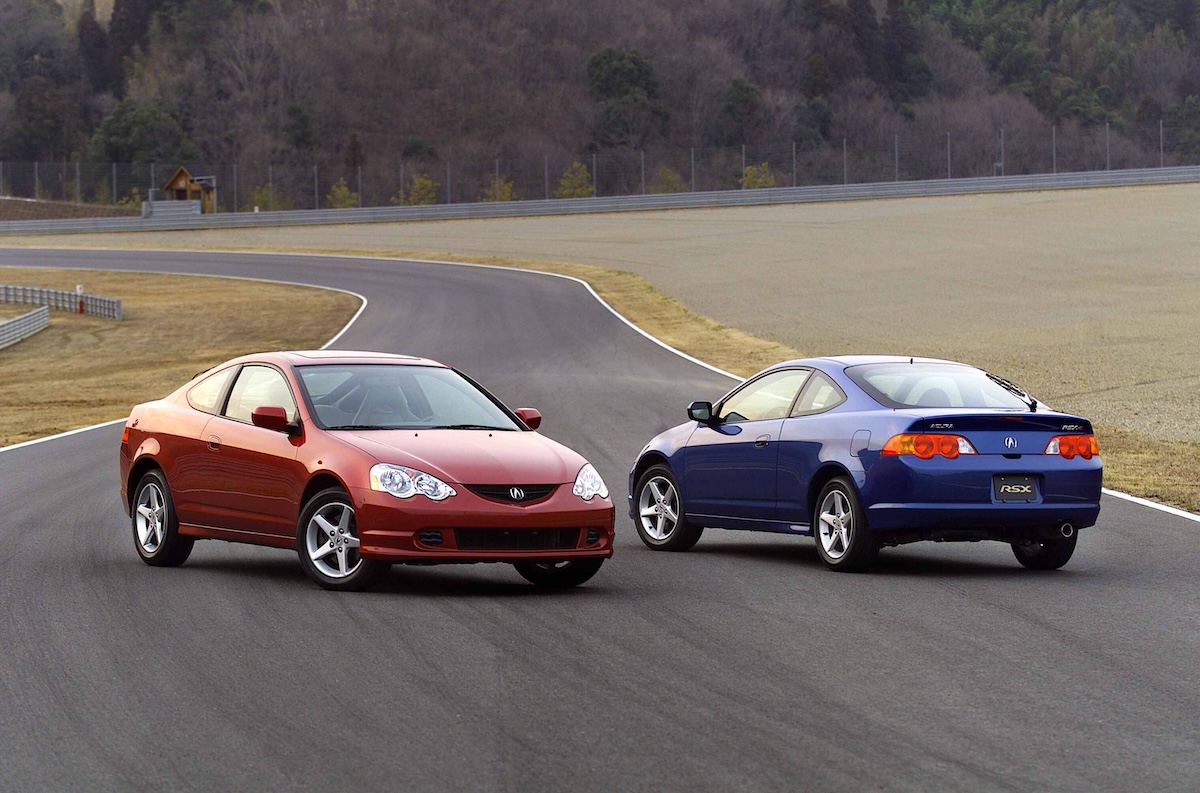
No, the Acura RSX is not an Acura Integra. It is, however, a Honda Integra, at least in markets outside of the United States. The front-wheel-drive RSX replaced the Integra in the States for the 2002 model year. The name change brought the sport compact into line with other Acura models of the time that used either two- or three-character names such as CL, MDX, NSX, RL, and TL.
The base engine for the 2002 Acura RSX was a 2.0-liter four-cylinder i-VTEC engine that produced 160 hp. A 200-hp RSX Type S was also available. A dealer-installed Acura Factory Performance Package appeared in 2003 with high-performance bits that modified the suspension, brakes, wheels, and tires. A body kit was also part of the package, which was renamed A-Spec for the 2004 model year.
Acura bumped the RSX Type S to 210 hp for the 2005 model year. The six-speed manual transmission was also upgraded, and a revised suspension package improved handling. Acura claimed the RSX’s body was more rigid than before, and a new rear spoiler was added. There weren’t any significant changes for 2006, the RSX’s final model year, though an industry-wide rerating standard put the standard RSX at 155 hp and the high-performance RSX Type S at 201 hp.
The Acura RSX coupe ended production following the 2006 model year as Acura focused on its expanding crossover lineup. The coupe-like ZDX crossover debuted in 2010, the Acura ILX sedan showed up in 2013, filling the Integra’s role as the Japanese brand’s entry-level nameplate, and the ILX ran through the 2022 model year before being replaced by the all-new Acura Integra in 2023.

Acura Integra Third Generation (1994-2001)
The third-generation Acura Integra that debuted for the 1994 model year is known for its unique front fascia with four round headlights, and it’s the car that many people most closely associate with the Integra nameplate. The third-generation Integra was offered in both two- and four-door body styles, and initially in LS and VTEC-equipped GS-R trim levels. The GS-R’s VTEC engine (that stands for Variable Valve Timing and Lift Electronic Control System in Honda speak) produced 170 hp and 128 lb-ft and could rev to a stratospheric 8,100-rpm redline. Unlike older GS-R models, the third-generation version was sold in both three-door liftback and sedan body styles.
The Acura Integra Type R first launched for the 1997 model year. It built upon the high-performance GS-R trim level and included an even more potent hand-built VTEC engine with 195 hp and 130 lb-ft of torque. Further performance modifications included a seam-welded body and chassis set up for increased rigidity, upgraded suspension and braking components, and a limited-slip differential. Plus, it also got an absolutely massive rear wing to set it apart from its lesser siblings. The Acura Integra Type R was offered in 1997 and 1998 before taking a year off. It was reintroduced for the 2000 and 2001 model years.
Acura Integra Second Generation (1990-1993)
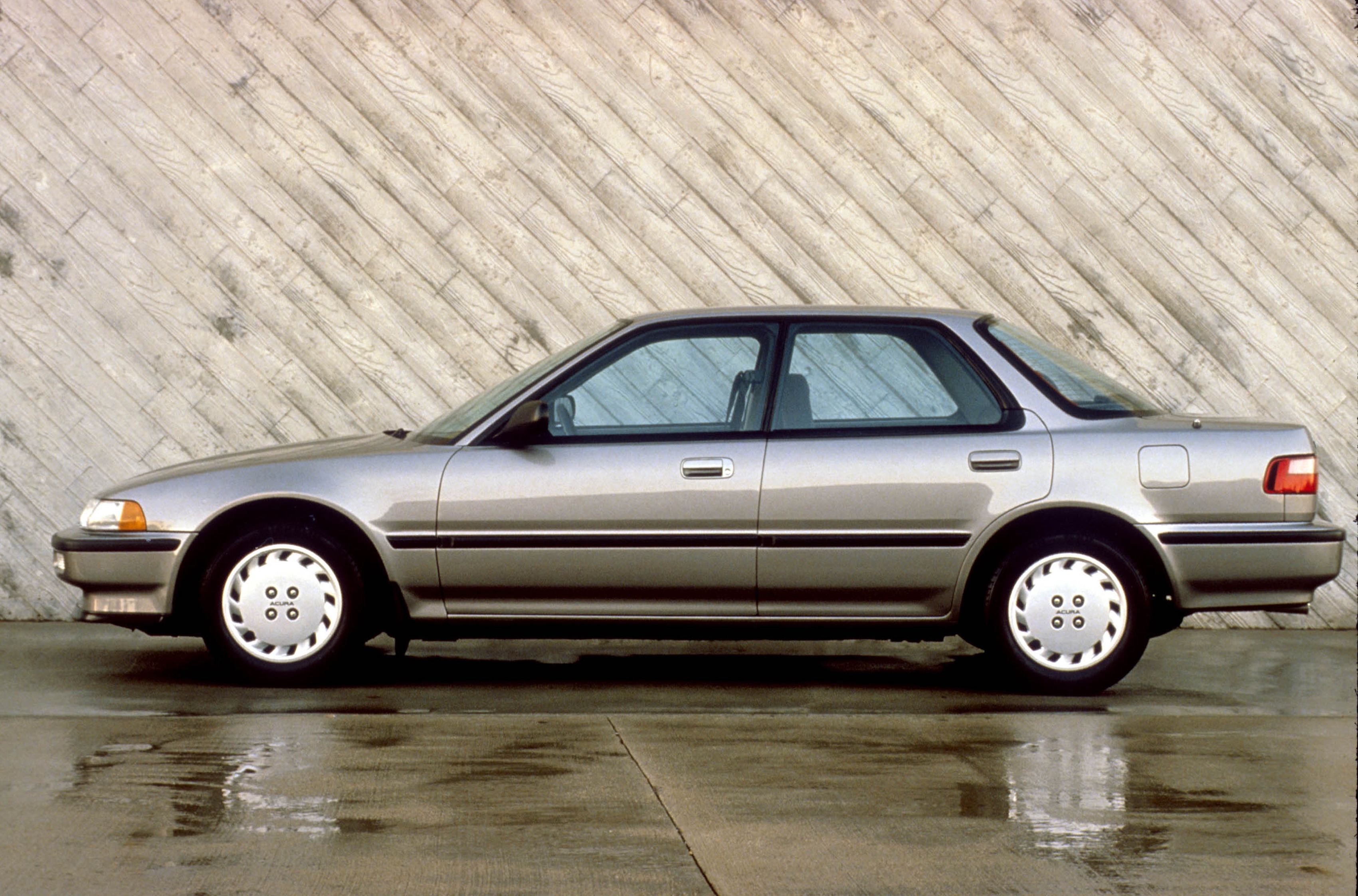
Acura’s second-generation Integra launched in 1990 in either two-door liftback or four-door sedan body styles. Its 1.8-liter four-cylinder engine was rated at 130 hp and 121 lb-ft of torque in 1990 and 1991, or 140 hp and 126 lb-ft of torque in 1992 and 1993. A five-speed manual transmission was standard, and a four-speed automatic was optional. The second-generation Acura Integra featured double-wishbone independent suspension for all four wheels, resulting in excellent handling.
The Acura Integra GS-R trim level first appeared for the 1992 model year. This was the second Acura vehicle (after the NSX) to feature Honda’s high-revving VTEC engine technology, in this case fitted to a 1.7-liter engine that produced 160 hp and 117 lb-ft of torque. This engine’s 8,000-rpm redline, and the model’s high-performance driving experience, pointed to great things for future Acura Integra models.
Acura Integra First Generation (1986-1989)
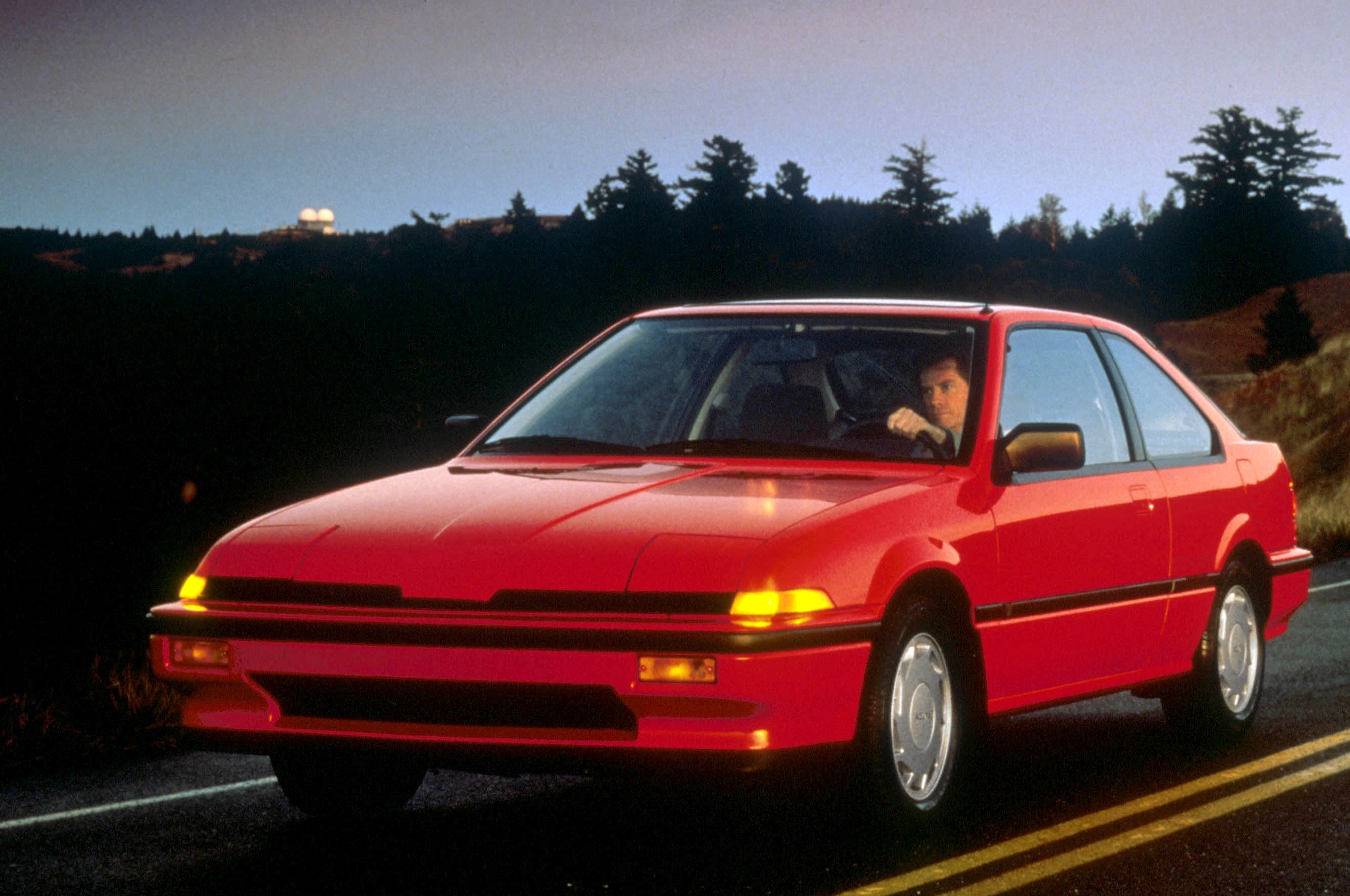
The first-generation Acura Integra represented the second model (after the Acura Legend) to appear in American dealerships. It was based on the Honda Civic’s FWD platform and was offered in three- and five-door liftback styles and in base LS or upgraded RS trim levels. The first-generation Integra was powered by a 1.6-liter dual-overhead-cam (DOHC) engine. The Integra received an upgrade for 1988 that increased horsepower from 113 to 118, and an LS Special Edition with unique exterior trim was offered.
Related Topics


by Jeremy Korzeniewski
Jeremy Korzeniewski grew up as the son of an automotive engineer in a family obsessed with cars and trucks and turned that passion into a career in 2006 when he accepted a position with Autoblog. Over the next 18 years, Jeremy published more than 8,000 articles while serving as a Senior Editor and has contributed to respected brands that include Yahoo, Edmunds, Robb Report and AutoGuide. Jeremy is also an avid motorcyclist and spends the majority of his evenings at home with his wife hoping to cook up a delicious meal for dinner.
The content above is for informational purposes only and should be independently verified. Please see our Terms of Use for more details.


