Cars are complex machines, driven on imperfect roads by imperfect beings. As such, they’re likely to encounter the occasional issue. Here, we highlight some of the most common car problems car owners face, and explain how to deal with them.
10 Common Car Problems and How to Fix Them
- Flat Tires
- Dead Battery
- Check Engine Light
- Overheating/Coolant Loss
- Brake System Issues
- Transmission Problems
- Undercar Leaks
- Worn Suspension
- Exterior Paint Fading and Damage
- Air Conditioning Failures
- Tips for Preventing Common Car Problems
- Common Issues for Specific Makes and Models

1. Flat Tires
Several things can cause a flat tire: something could puncture the rubber, an air leak could develop at the valve stem or bead, the ambient temperature could plummet, or the tread could simply wear through. Maintaining proper air pressure and performing regular inspections of the tread should help to prolong your tires.
Signs:
- The tire appears deflated.
- The tire-pressure warning light illuminates on the dashboard.
- You feel and hear a thump or vibration while driving.
Solutions:
If one of your tires loses air pressure while you’re out and about, you’ll need to deal with it immediately (unless your vehicle has run-flat tires, in which case, you’ll have a little time). If it’s a slow leak, you might be able to stop at a gas station with an air compressor and fill the tire with enough air to limp home. If it’s a blowout, you’ll need to fit a spare or call a tow truck.
Depending on the cause of the deflation, it may be possible to fix the damage without replacing the tire. There are tire-patch kits and plugs that can fill in and seal a puncture wound in the tread, but they don’t work with sidewall damage. Most likely, you’ll need to replace the tire (and possibly its mate on the other side of the car, so you don’t have uneven tire wear).
2. Dead Battery
Lead-acid car batteries typically last three-to-five years, and everything from corrosion to age to ambient temperature can affect their lifespan. Not all dead batteries are actually dead, though—some are merely drained, perhaps because you left the lights on. If that’s the case, you should be able to revive the battery with a jumpstart (i.e. hooking up jumper cables or a portable starter to the terminals and supplying a jolt of electricity). It’s also possible that the vehicle’s alternator isn’t working properly, which would also lead to a dead battery.
Signs:
- The car won’t start.
Solutions:
If the battery consistently loses its charge, it’s time to replace it. Should you replace it and still experience issues, a bad alternator or an issue with the electrical system likely to blame. Have a shop diagnose and fix the cause of the dead battery.

3. Check Engine Light
The check-engine light can indicate anything from a loose gas cap, to bad spark plugs, to a problem with the catalytic converter.
Signs:
- An engine icon or “check engine” warning illuminates on the dashboard.
Solutions:
When the light comes on with no indication of a serious problem (such as unusual noises, smells, or smoke), check the gas cap the next time you stop the car. If that’s not the culprit, either take the vehicle to an auto parts store or try to diagnose the issue yourself, plugging an OBD-II scanner into the appropriate port to find the error code. If the scan indicates there’s a problem with an oxygen sensor, the exhaust system, or the electrical or fuel system, take the vehicle to a professional mechanic or dealership for further inspection. Should the light come on as smoke rises from the hood or the engine makes a knocking noise, pull over and call for a tow to the shop.
4. Overheating/Coolant Loss
Cracked hoses, faulty thermostats, and loose fittings can cause coolant (anti-freeze) to leak. Other items, such as a cracked engine head or block, a malfunctioning water pump, or clogged coolant lines can also cause engine overheating. If the temperature warning light is illuminated, pull over to minimize potential damage.
Signs:
- The needle in the engine temperature gauge approaches H (or high).
- Steam rises from the hood.
- The vehicle gives off a sweet smell upon startup and when idling.
- The coolant level is low.
Solutions:
Stop the vehicle and look under the car for any pooling liquid or drips, as the radiator may be leaking anti-freeze. If that’s not the case and the engine wasn’t making any unusual noises, wait 15 minutes or so and restart the car. If the temperature gauge still reads hot, turn off the car and wait. If weird noises (e.g. a clicking, clanking, or knocking) or smoke accompanied the temperature rise, have the car towed to an auto repair center.
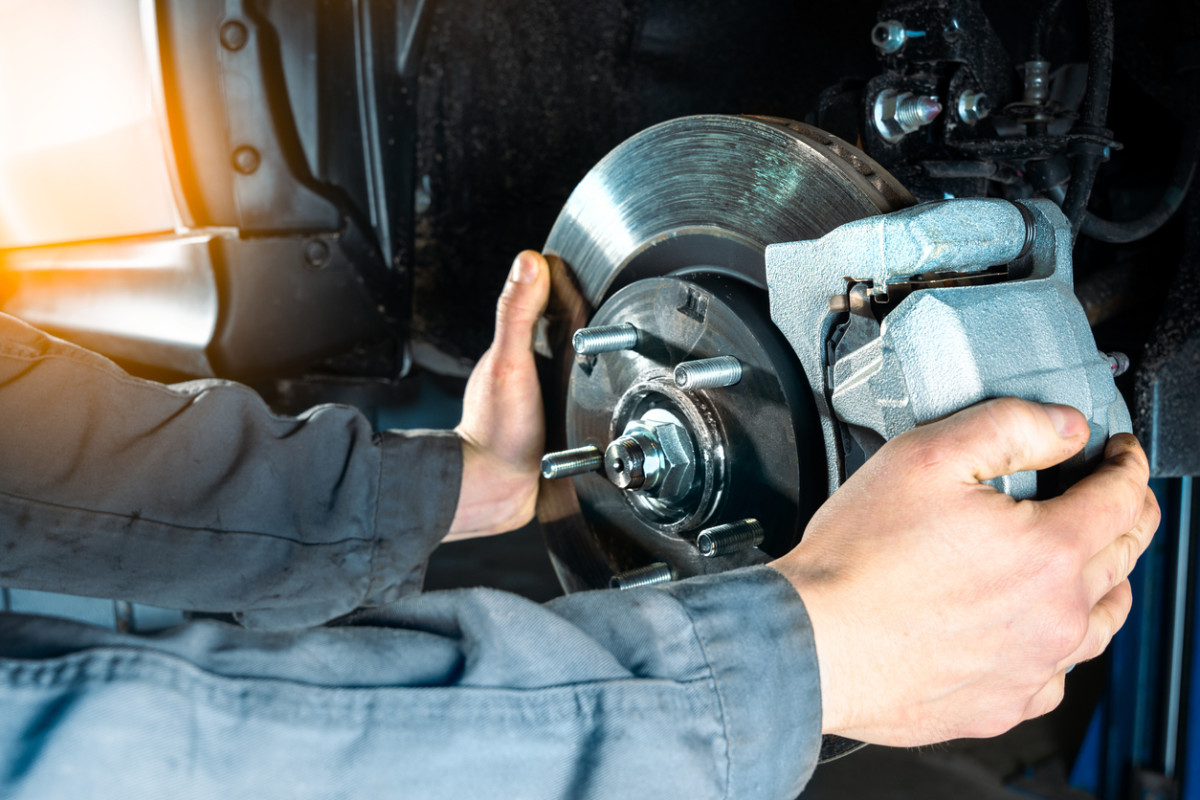
5. Brake System Issues
Brake problems such as worn pads, warped rotors, and boiled brake fluid can make your vehicle unsafe to drive. If you hear squealing, check the brake pads. It’s likely the friction material has worn down enough to expose the wear sensors, which are producing that noise.
If you feel a vibration throughout the vehicle when braking, warped rotors are possibly to blame.
Should your brake fluid boil—something that can occasionally happen with extended hard use of the brakes—air bubbles will form in the line and compromise braking performance. Similarly, moisture or air can enter the system through a crack in the brake lines, causing a soft brake pedal or, in extreme cases, a nonfunctioning one.
If the pedal goes to the floor but returns to its normal position after you pump it with your foot, this most likely indicates an issue with the master cylinder.
Signs:
- You hear a squealing or grinding sound every time you press the brake pedal, which likely indicates worn brake pads or shoes.
- You feel a pulsation in the steering wheel or brake pedal when braking, possibly due to a warped rotor.
- The brake pedal feels spongy or requires more travel than usual to slow the vehicle.
- A brake service light illuminates in the instrument cluster.
Solutions:
For squeaking, check and replace worn brake pads. If there’s still a lot of friction material left, remove the wheel from the car and apply brake anti-squeal paste between the piston and the contact surface. For vibrations, look for unevenness on the rotors. A shop may be able to repair them, but replacing them is easiest. Address leaks immediately and replace any worn or loose fitting brake lines or gaskets to maintain braking safety. If you’re dealing with compromised brake fluid, have a shop bleed the brakes (i.e. replace the old fluid with new). Most vehicles require a brake bleeding every two years as part of regular maintenance.
6. Transmission Problems
Transmission issues often occur slowly, over months or possibly years, and are therefore difficult to identify. Don’t ignore vibrations, noises, or small changes in how a vehicle shifts, as they could indicate a problem.
Signs:
- You struggle to move the shifter.
- The vehicle makes grinding or clicking noises at high speed.
- A burning smell under acceleration or load, such as when towing.
- The transmission shifts roughly.
Solutions:
It’s best to take your vehicle to a mechanic. It could be that the car needs new transmission fluid, which keeps the components lubricated and running smoothly. Automatic transmissions have filters that need periodic replacement, too. If you’re dealing with worn transmission bands or a bad torque converter, it’s likely the shop will have to rebuild or replace the transmission, which is pricey.

7. Undercar Leaks
Vehicles contain a lot of different liquids, including coolant, engine oil, and brake and transmission fluid. Even a small leak can indicate a large issue. Call your mechanic and explain the color of the leaking fluid and where it’s pooling underneath your car before driving anywhere.
Signs:
- You find a leak underneath your vehicle. If it’s a shade of amber or black, it’s likely oil. Pink or red is transmission fluid, while green is coolant. If it’s clear, it could be water from the air compressor, which is normal and nothing to worry about. That said, it could also be power-steering fluid, which is cause for concern.
- The car may give off a sweet or burning smell when running.
Solutions:
It’s likely the car has a loose hose or a worn gasket, and you might be able to address the leak yourself if you’re handy. Otherwise, ask your mechanic if it’s safe to drive your vehicle to the shop. If not, call a tow truck or hire a mobile mechanic to inspect and fix the leak.
8. Worn Suspension
A vehicle's suspension takes a lot of abuse and needs regular checks to ensure everything is still in alignment and working properly. Ball joints, dampers, struts, and springs can all wear out, causing the vehicle to drive poorly.
Signs:
- The vehicle doesn’t appear level from nose to tail.
- Uneven tire wear.
- Unusual noises when braking or going over bumps.
- The vehicle pulls to the side when you’re driving straight.
- The vehicle bounces, even when driving on smooth roads.
Solutions:
Have the suspension inspected by a professional mechanic. It’s possible that the vehicle needs new dampers, struts, ball joints, or tie rods. It could also need an alignment.

9. Exterior Paint Fading and Damage
Paint protects a vehicle from rust, so it’s important to keep it in good condition. Sun exposure can dull the shine and eat away at the clearcoat, while small rocks can kick up onto the body and chip this protective layer, leaving bare metal exposed.
Signs:
- The clearcoat is peeling.
- The surface looks cracked or wrinkly.
- The paint color looks duller than before.
- There are chips in the paint.
Solutions:
If you spot chips, purchase and apply color-matched paint to the area. Address scratches with touch-up kits or professional detailing. Consider covering the vehicle with paint protection film and park it out of the sun (preferably in a garage) to prevent further damage.
10. Air Conditioning Failures
A failed air conditioning system often results from low refrigerant levels or leaks from cracked hoses or loose connections. The compressor may also fail due to an electrical problem, a clog, contaminants in the refrigerant, or simply wear and tear.
Signs:
- The vents blow only warm air or have poor airflow.
- You hear unusual noises or smell unpleasant odors from vents.
- The engine idles higher when the air conditioning is turned on.
Solutions:
Check the vehicle’s refrigerant level. If it’s low, have a mechanic inspect the system for leaks and replace any worn components or seals. If the compressor or condenser is faulty, replacement is the only course.
Tips for Preventing Common Car Problems
- Stick to a regular maintenance schedule, including oil changes and fluid checks.
- Ensure manufacturer-recommended services are performed in a timely manner.
- Inspect the cooling system, brake system, and electrical systems for warning signs.
- Address minor issues promptly to avoid costly repairs.
Common Issues for Specific Makes and Models
Some vehicles are prone to specific problems. Certain Subaru models are known for head-gasket failures. BMWs commonly have water pump issues, thermostat failures, and general cooling problems. Nissan has had a lot of trouble with continuously variable automatic transmissions (CVTs), and Jeep Wranglers frequently suffer from electrical glitches. Understanding these tendencies can help car owners be vigilant about issues and correct them quickly.