2025 Ford Explorer vs 2024 Hyundai Santa Fe
Overview | |
MSRP$33,950 | MSRP$40,050 |
Listings1158 | Listings3242 |
Ratings & Reviews | |
User Reviews | User Reviews |
Expert reviews8.2 out of 10 | Expert reviews8.0 out of 10 |
Pros
Cons
| Pros
Cons
|
2024 Hyundai Santa Fe Reviews SummaryThe Hyundai Santa Fe is fully redesigned for 2024. It marks a significant departure for the brand in terms of styling, with a bold and blocky profile and stance reminiscent of, dare we say it, a certain British brand known for its off-road prowess. The Santa Fe’s redesign has as much substance as style, with a longer wheelbase, standard third-row seats, and new premium amenities, including a “terrace” approach to designing passenger and cargo space. Verdict: According to Hyundai, compact SUVs make up 15% of the brand’s sales, and the company expects the Santa Fe to grow that number. Overall, based on our exploration and time behind the wheel, the 2024 Santa Fe’s redesign is successful, as long as it doesn’t overshadow the rest of Hyundai’s lineup. | |
2025 Ford Explorer Reviews SummaryThanks to numerous changes for 2025, the Ford Explorer is a more appealing alternative to the seemingly countless choices in the midsize three-row SUV segment. Highlights include sophisticated new infotainment and safety technologies, improved interior quality, bolder styling, and a simplified lineup offering Active, ST-Line, Platinum, and ST trim levels. Also, as the prices of rivals have risen, the 2025 Ford Explorer seems properly priced in comparison. Verdict: Ford’s updates to the Explorer for the 2025 model year have a positive effect on the SUV’s desirability. It looks tougher, it feels nicer inside, and the family-friendly SUV leaps forward technologically. Turbocharged power and a rear-drive platform add driving enjoyment. All that’s missing is a more comfortable third-row seat, an electrified powertrain option, and an off-road trim level. | |
Popular Features & Specs | |
Engine2.5L 277 hp I4 | Engine2.3L 300 hp I4 |
DrivetrainFWD | DrivetrainRWD |
Seating Capacity7 | Seating Capacity7 |
Horsepower277 hp @ 5800 rpm | Horsepower300 hp @ 5500 rpm |
MPG City20 | MPG City20 |
MPG Highway29 | MPG Highway29 |
Engine | |
Engine Name2.5L 277 hp I4 | Engine Name2.3L 300 hp I4 |
Torque311 lb-ft @ 4000 rpm | Torque310 lb-ft @ 3500 rpm |
Horsepower277 hp @ 5800 rpm | Horsepower300 hp @ 5500 rpm |
DrivetrainFWD | DrivetrainRWD |
Fuel Economy | |
MPG City20 | MPG City20 |
MPG Highway29 | MPG Highway29 |
Interior | |
Seating Capacity7 | Seating Capacity7 |
Key Features | |
Navigation SystemStandard | Navigation SystemStandard |
Safety | |
Front Crash Overall4 | Front Crash Overall5 |
Side Crash Overall5 | Side Crash Overall5 |
Dimensions & Capacity | |
Cargo Space14.6 cu ft | Cargo Space16.3 cu ft |
Curb Weight4343 lbs | Curb Weight4303 lbs |
Height67.7 in | Height69.6 in |
Length190.2 in | Length198.7 in |
Width74.8 in | Width89.3 in |
Wheelbase110.8 in | Wheelbase119.1 in |
Maximum Payload1191 lbs | Maximum Payload1467 lbs |
Number of doors4 | Number of doors4 |
Maximum Towing Capacity3500 lbs | Maximum Towing Capacity5000 lbs |
Standard Towing Capacity | Standard Towing Capacity5000 lbs |
Overview | ||
MSRP | $33,950 | $40,050 |
Listings | ||
Ratings & Reviews | ||
User reviews | ||
Expert reviews | 8.2 out of 10Read full review | 8.0 out of 10Read full review |
Pros & cons | Pros
Cons
| Pros
Cons
|
Summary | The Hyundai Santa Fe is fully redesigned for 2024. It marks a significant departure for the brand in terms of styling, with a bold and blocky profile and stance reminiscent of, dare we say it, a certain British brand known for its off-road prowess. The Santa Fe’s redesign has as much substance as style, with a longer wheelbase, standard third-row seats, and new premium amenities, including a “terrace” approach to designing passenger and cargo space. Verdict: According to Hyundai, compact SUVs make up 15% of the brand’s sales, and the company expects the Santa Fe to grow that number. Overall, based on our exploration and time behind the wheel, the 2024 Santa Fe’s redesign is successful, as long as it doesn’t overshadow the rest of Hyundai’s lineup. | Thanks to numerous changes for 2025, the Ford Explorer is a more appealing alternative to the seemingly countless choices in the midsize three-row SUV segment. Highlights include sophisticated new infotainment and safety technologies, improved interior quality, bolder styling, and a simplified lineup offering Active, ST-Line, Platinum, and ST trim levels. Also, as the prices of rivals have risen, the 2025 Ford Explorer seems properly priced in comparison. Verdict: Ford’s updates to the Explorer for the 2025 model year have a positive effect on the SUV’s desirability. It looks tougher, it feels nicer inside, and the family-friendly SUV leaps forward technologically. Turbocharged power and a rear-drive platform add driving enjoyment. All that’s missing is a more comfortable third-row seat, an electrified powertrain option, and an off-road trim level. |
Video | ||
Popular Features & Specs | ||
Engine | 2.5L 277 hp I4 | 2.3L 300 hp I4 |
Drivetrain | FWD | RWD |
Seating Capacity | 7 | 7 |
Horsepower | 277 hp @ 5800 rpm | 300 hp @ 5500 rpm |
MPG City | 20 | 20 |
MPG Highway | 29 | 29 |
Engine | ||
Engine Name | 2.5L 277 hp I4 | 2.3L 300 hp I4 |
Torque | 311 lb-ft @ 4000 rpm | 310 lb-ft @ 3500 rpm |
Horsepower | 277 hp @ 5800 rpm | 300 hp @ 5500 rpm |
Drivetrain | FWD | RWD |
Fuel Economy | ||
MPG City | 20 | 20 |
MPG Highway | 29 | 29 |
Interior | ||
Seating Capacity | 7 | 7 |
Key Features | ||
Navigation System | Standard | Standard |
Safety | ||
Front Crash Overall | 4 | 5 |
Side Crash Overall | 5 | 5 |
Dimensions & Capacity | ||
Cargo Space | 14.6 cu ft | 16.3 cu ft |
Curb Weight | 4343 lbs | 4303 lbs |
Height | 67.7 in | 69.6 in |
Length | 190.2 in | 198.7 in |
Width | 74.8 in | 89.3 in |
Wheelbase | 110.8 in | 119.1 in |
Maximum Payload | 1191 lbs | 1467 lbs |
Number of doors | 4 | 4 |
Maximum Towing Capacity | 3500 lbs | 5000 lbs |
Standard Towing Capacity | 5000 lbs | |
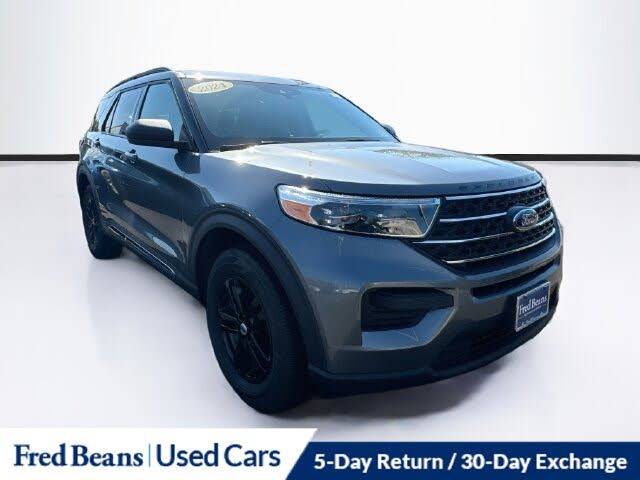
The 2024 Hyundai Santa Fe presented a bold departure from its predecessors, embracing a boxy design that contrasted with the sleek, futuristic aesthetics of the Ioniq models. This new look, while different, was not unattractive. It communicated Hyundai's focus on storage capacity and premium appearance, as explained by design chief SangYup Lee. The Santa Fe's aerodynamic efficiency and upscale appearance turned heads, even in rural settings. Its sophisticated color palette and anodized-finish badging added to its elegance, with various trims offering different wheel sizes to enhance its premium feel.
Inside, the Santa Fe offered a luxurious experience, especially in the XRT and Calligraphy trims. While some surfaces used hard materials, they were well-integrated with softer, padded areas, creating a comfortable environment. The interior featured decadent touches, such as a fabric-covered headliner, adding to the overall premium feel. The Santa Fe's design focused on creating a relaxing and organized space, making it a standout in terms of interior styling.
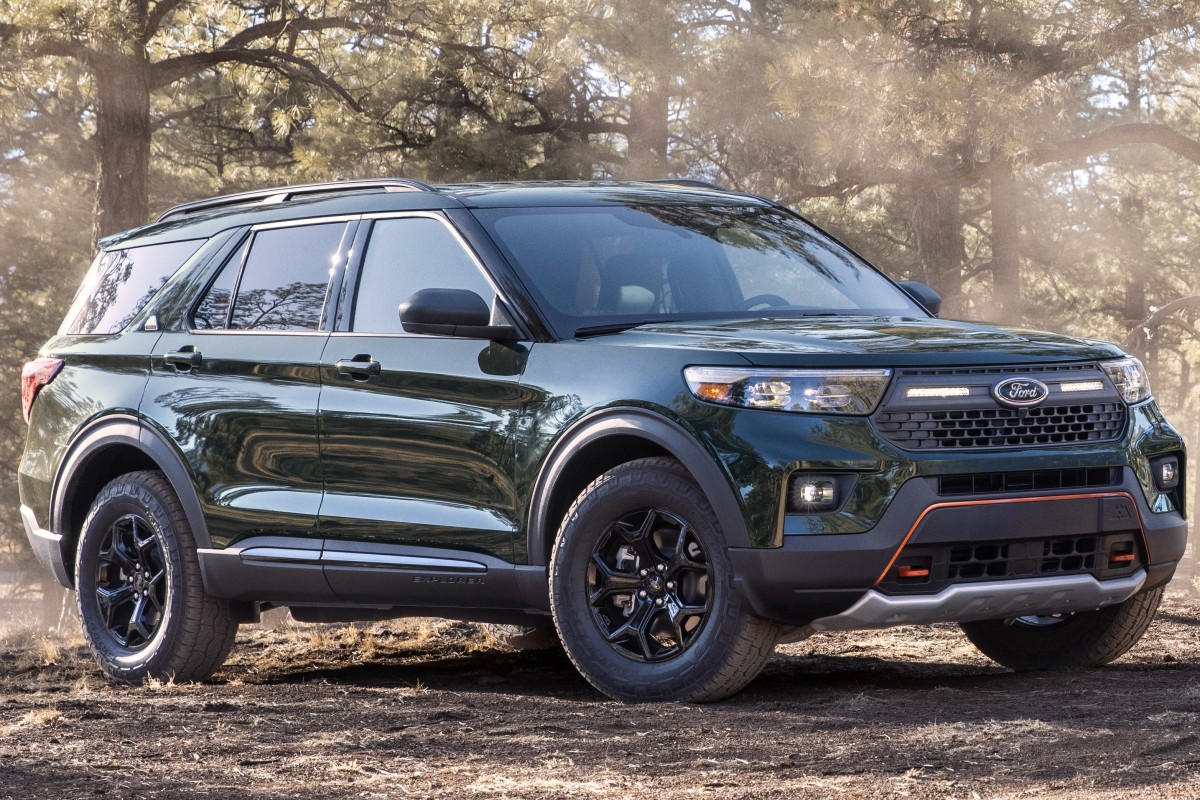
The 2025 Ford Explorer continued its evolution with a refreshed design that enhanced its rugged appeal. The front end was restyled to give it a wider, more handsome look, while new LED taillights and wheel designs added to its modern appearance. The Explorer's interior saw significant improvements, with upgraded materials and design making it competitive in its segment. Ford reduced the number of trim levels, focusing on four key options, each offering distinct features and price points.
During a driving event in Michigan, the Explorer's various trims were put to the test. The ST-Line, with its sporty appearance and features, provided a comfortable and enjoyable driving experience. The Explorer's design balanced aesthetics with functionality, offering a spacious interior and competitive cargo space. While the third row was less comfortable for adults, the overall interior layout was well-suited for families, with thoughtful features like manual rear side window shades and a useful dashboard tray.

The 2024 Hyundai Santa Fe featured a 2.5-liter turbocharged four-cylinder engine, delivering 277 horsepower and 311 pound-feet of torque. It came with an eight-speed dual-clutch automatic transmission, with front-wheel drive standard and all-wheel drive optional. The XRT trim, focused on off-road capabilities, offered AWD as standard. The Santa Fe provided various driving modes, including Normal, Sport, and Snow, with the XRT adding off-road settings. A hybrid option with a 1.6-liter engine was also available, offering 231 hp and 271 lb-ft of torque.
Fuel economy for the Santa Fe varied, with FWD models achieving 20 mpg city and 29 mpg highway, while AWD versions saw slightly lower ratings. The XRT's off-road enhancements affected its fuel efficiency but increased its towing capacity to 4,500 pounds. On the road, the Santa Fe delivered smooth performance, with stable acceleration and handling. The XRT trim excelled in off-road conditions, comparable to other rugged SUVs, thanks to its ground clearance and robust tires.
The 2025 Ford Explorer offered two EcoBoost engine options. Most trims featured a 2.3-liter turbocharged four-cylinder engine with 300 horsepower and 310 pound-feet of torque. The ST and Platinum trims had a twin-turbocharged 3.0-liter V6, producing 400 hp and 415 lb-ft of torque. All Explorers came with a 10-speed automatic transmission and rear-wheel drive, with four-wheel drive optional. Various driving modes catered to different conditions, enhancing the Explorer's versatility.
During testing, the Explorer's turbo four-cylinder engine provided quick acceleration and responsive handling. The ST-Line trim, with its performance-oriented features, offered a delightful driving experience on winding roads. The Explorer's ride was firm yet comfortable, with commendable grip from its all-season tires. The ST trim showcased its performance capabilities on an autocross course, while the Platinum trim demonstrated the V6 engine's impressive acceleration and sound. The Explorer's off-road capabilities were adequate for light trails, but it was not designed for serious off-roading.
The 2024 Hyundai Santa Fe's design focused on maximizing cargo space, with a longer wheelbase and body compared to its predecessor. This extra space was dedicated to the cargo area, inspired by the concept of "chabak," making it ideal for car camping and tailgating. Despite the emphasis on cargo, the Santa Fe offered spacious first and second rows, with options for bench or captain's chairs. The interior featured various upholstery choices, from stain-resistant cloth to plush Nappa leather, depending on the trim.
The Santa Fe's cargo area provided 14.6 cubic feet of space, expanding to 79.6 cubic feet with the seats folded. It included thoughtful features like roof rails and a grab handle for easy loading. Limited and Calligraphy trims introduced a UV sanitization compartment in the glovebox, a unique feature conceived during the pandemic, adding to the Santa Fe's appeal.
The 2025 Ford Explorer accommodated six passengers in its standard configuration, with an optional second-row bench seat increasing capacity to seven. The ST-Line trim offered comfortable front seats with heating and power adjustments, while the Premium Package added features like ambient lighting and massage functions. The second-row captain's chairs were equally comfortable, with manual rear side window shades for added convenience.
The Explorer's third row was less comfortable for adults, but suitable for children. Cargo space was competitive, with 16.3 cubic feet behind the third row, expanding to 85.8 cubic feet with seats folded. The interior featured practical storage solutions, including a dashboard tray with a wireless charger. Overall, the Explorer balanced passenger comfort with functional storage, making it a versatile choice for families.
The 2024 Hyundai Santa Fe boasted a curved panoramic display, enhancing the cabin's luxurious feel. This display, standard on higher trims, offered intuitive controls and crisp graphics. Wireless Apple CarPlay and Android Auto were standard, along with a 12-speaker Bose stereo and Wi-Fi hotspot. The SE and SEL trims featured a simpler 12.3-inch touchscreen, still offering ample features. Hyundai's BlueLink system provided vehicle access and information, with higher trims offering Hyundai Pay for secure transactions.
The Santa Fe also introduced a biometric fingerprint scanner for valet mode control. These technological features, combined with the elegant design, made the Santa Fe's cabin a standout in its segment.
The 2025 Ford Explorer featured the new Ford Digital Experience, replacing the previous Sync systems. It included a 12.3-inch digital instrumentation panel and a 13.2-inch touchscreen infotainment system. The Explorer offered Google Built-in, Amazon Alexa, wireless Apple CarPlay, and Android Auto. A 5G LTE Wi-Fi hotspot and web browser apps provided internet access, while B&O sound systems delivered quality audio.
The Explorer's infotainment system was user-friendly, with Google Maps integration and app downloads through Google Play. The ST-Line's 10-speaker setup was adequate, but audiophiles might prefer the 14-speaker system in higher trims. Overall, the Explorer's technology package was comprehensive and easy to use.
The 2024 Hyundai Santa Fe had not yet been crash-tested by major safety organizations, but Hyundai's vehicles typically performed well. The Santa Fe came with a comprehensive suite of safety features, including adaptive cruise control, forward collision-avoidance assist, and blind-spot monitors. Higher trims added advanced features like a 360-degree camera system and remote automatic parking. The Santa Fe also introduced driver monitoring, enhancing safety by tracking alertness and issuing warnings if necessary.
The 2025 Ford Explorer included Ford CoPilot 360+, offering a range of advanced driving assistance systems. Higher trims featured BlueCruise, Ford's hands-free highway driving system, with a 90-day subscription included. BlueCruise performed well in testing, though it occasionally struggled with tight curves and heavy traffic. The Explorer had not yet received full safety ratings, but it earned high marks for side-impact and rollover resistance.
CarGurus highlights

According to CarGurus experts, the overall rating for the 2024 Hyundai Santa Fe is 8.2 out of 10, while the 2025 Ford Explorer scores 8.0 out of 10. Based on these ratings, the Hyundai Santa Fe is the recommended choice, offering a blend of innovative design, luxurious features, and comprehensive safety technology.
Choose the 2025 Ford Explorer if:
- You need a versatile SUV with multiple engine options and driving modes.
- You appreciate user-friendly technology with Google integration.
- You want a family-friendly vehicle with competitive cargo space and comfort.




Choose the 2024 Hyundai Santa Fe if:
- You prioritize a spacious cargo area and innovative design for car camping.
- You value a luxurious interior with advanced technology features.
- You seek a vehicle with comprehensive safety features and driver monitoring.


CarGurus highlights
According to CarGurus experts, the overall rating for the 2024 Hyundai Santa Fe is 8.2 out of 10, while the 2025 Ford Explorer scores 8.0 out of 10. Based on these ratings, the Hyundai Santa Fe is the recommended choice, offering a blend of innovative design, luxurious features, and comprehensive safety technology.
Choose the 2025 Ford Explorer if:
Shop Now- You need a versatile SUV with multiple engine options and driving modes.
- You appreciate user-friendly technology with Google integration.
- You want a family-friendly vehicle with competitive cargo space and comfort.
Choose the 2024 Hyundai Santa Fe if:
Shop Now- You prioritize a spacious cargo area and innovative design for car camping.
- You value a luxurious interior with advanced technology features.
- You seek a vehicle with comprehensive safety features and driver monitoring.

By: CarGurus + AI
At CarGurus, our team of experienced automotive writers remain at the heart of our content operation, conducting hands-on car tests and writing insightful guides that are backed by years of industry experience. To complement this, we are harnessing AI to make our content offering more diverse and more helpful to shoppers than ever. To achieve this, our AI systems are based exclusively on CarGurus content, ratings and data, so that what we produce is both unique to CarGurus, and uniquely helpful to car shoppers.

