2021 Hyundai Tucson vs 2021 Subaru Forester
Overview | |
MSRP$23,700 | MSRP$24,795 |
Listings538 | Listings1060 |
Ratings & Reviews | |
User Reviews | User Reviews |
Expert reviews7.7 out of 10 | Expert reviews7.5 out of 10 |
Pros
Cons
| Pros
Cons
|
2021 Hyundai Tucson Reviews SummaryIt’s no secret that small SUVs are among the most popular new-car segments. You see them everywhere on the road today. Automakers put a lot of pressure on themselves to continually offer the latest and greatest. But that also means even the not-so-new are still terrific vehicles and provide a great value. Case in point: the 2021 Hyundai Tucson. The current generation of this compact SUV was introduced for the 2016 model year, and this 2021 edition represents the final model year before a new generation is ushered in. So why go with the older model? Because Hyundai has loaded it up with plenty of tech and safety features and it is offered at a competitive price. | |
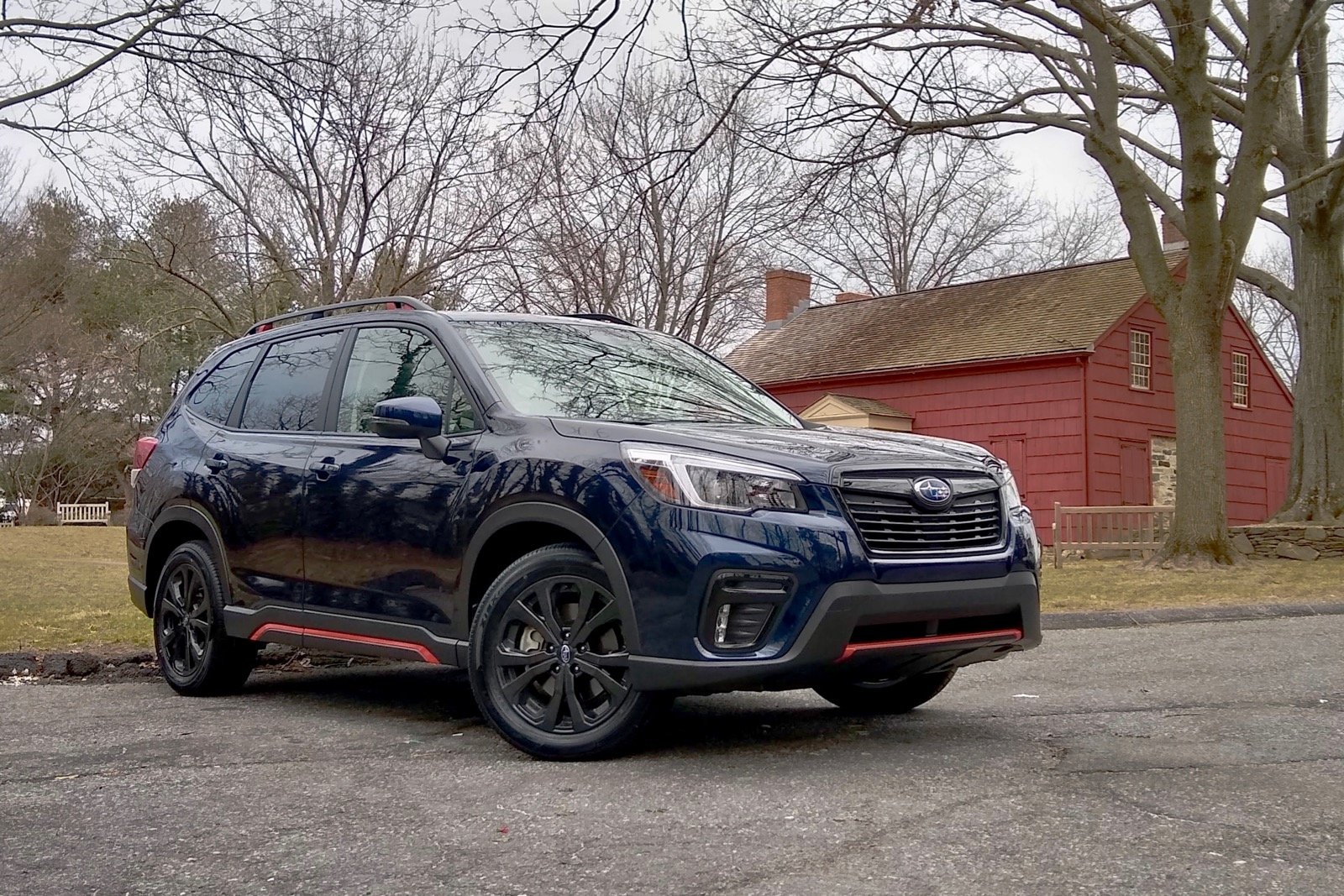
2021 Subaru Forester Reviews SummaryThe Subaru Forester was one of the original compact crossover SUVs. Along with the Ford Escape, Honda CR-V, and Toyota RAV4, it helped introduce a vehicular genre that is now displacing traditional sedans from American driveways. That means the Forester has more competition than ever. What was once a small market segment has swelled with the addition of compact SUVs like the Hyundai Tucson, Kia Sportage, Mazda CX-5, Nissan Rogue, Volkswagen Tiguan, and the modern version of the Jeep Cherokee. To keep pace with the competition, the Forester has packed on technology—and pounds. While the first-generation Forester (affectionately nicknamed “toaster” by fans because of its boxy shape) was genuinely compact, the current version has the footprint of a midsize SUV from two decades ago. This version was introduced for the 2019 model year, so it doesn’t change much for 2021. The only news is the addition of three standard safety features—steering-responsive LED headlights, automatic high beams, and a rear seatbelt reminder—standard fog lights and keyless access with push-button start for the Premium trim level, and additional equipment reshuffling on other trim levels. The 2021 Subaru Forester is available in five trim levels—Base, Premium, Sport, Limited, and Touring—all with standard all-wheel drive (AWD). Our test car was the mid-range Sport model. | |
No video found | |
Popular Features & Specs | |
Engine2.0L 161 hp I4 | Engine2.5L 182 hp H4 |
DrivetrainFWD | DrivetrainAWD |
Seating Capacity5 | Seating Capacity5 |
Horsepower161 hp @ 6200 rpm | Horsepower182 hp @ 5800 rpm |
MPG City23 | MPG City26 |
MPG Highway28 | MPG Highway33 |
Engine | |
Engine Name2.0L 161 hp I4 | Engine Name2.5L 182 hp H4 |
Torque150 lb-ft @ 4700 rpm | Torque178 lb-ft @ 4400 rpm |
Horsepower161 hp @ 6200 rpm | Horsepower182 hp @ 5800 rpm |
DrivetrainFWD | DrivetrainAWD |
Fuel Economy | |
MPG City23 | MPG City26 |
MPG Highway28 | MPG Highway33 |
Interior | |
Seating Capacity5 | Seating Capacity5 |
Safety | |
Front Crash Overall5 | Front Crash Overall5 |
Side Crash Overall5 | Side Crash Overall5 |
Dimensions & Capacity | |
Cargo Space31.0 cu ft | Cargo Space31.1 cu ft |
Curb Weight3309 lbs | Curb Weight3453 lbs |
Height64.8 in | Height67.5 in |
Length176.4 in | Length182.1 in |
Width72.8 in | Width80.9 in |
Wheelbase105.1 in | Wheelbase105.1 in |
Maximum Payload1146 lbs | Maximum Payload1438 lbs |
Number of doors4 | Number of doors4 |
Maximum Towing Capacity1500 lbs | Maximum Towing Capacity1500 lbs |
Overview | ||
MSRP | $23,700 | $24,795 |
Listings | ||
Ratings & Reviews | ||
User reviews | ||
Expert reviews | 7.7 out of 10Read full review | 7.5 out of 10Read full review |
Pros & cons | Pros
Cons
| Pros
Cons
|
Summary | It’s no secret that small SUVs are among the most popular new-car segments. You see them everywhere on the road today. Automakers put a lot of pressure on themselves to continually offer the latest and greatest. But that also means even the not-so-new are still terrific vehicles and provide a great value. Case in point: the 2021 Hyundai Tucson. The current generation of this compact SUV was introduced for the 2016 model year, and this 2021 edition represents the final model year before a new generation is ushered in. So why go with the older model? Because Hyundai has loaded it up with plenty of tech and safety features and it is offered at a competitive price. | The Subaru Forester was one of the original compact crossover SUVs. Along with the Ford Escape, Honda CR-V, and Toyota RAV4, it helped introduce a vehicular genre that is now displacing traditional sedans from American driveways. That means the Forester has more competition than ever. What was once a small market segment has swelled with the addition of compact SUVs like the Hyundai Tucson, Kia Sportage, Mazda CX-5, Nissan Rogue, Volkswagen Tiguan, and the modern version of the Jeep Cherokee. To keep pace with the competition, the Forester has packed on technology—and pounds. While the first-generation Forester (affectionately nicknamed “toaster” by fans because of its boxy shape) was genuinely compact, the current version has the footprint of a midsize SUV from two decades ago. This version was introduced for the 2019 model year, so it doesn’t change much for 2021. The only news is the addition of three standard safety features—steering-responsive LED headlights, automatic high beams, and a rear seatbelt reminder—standard fog lights and keyless access with push-button start for the Premium trim level, and additional equipment reshuffling on other trim levels. The 2021 Subaru Forester is available in five trim levels—Base, Premium, Sport, Limited, and Touring—all with standard all-wheel drive (AWD). Our test car was the mid-range Sport model. |
Video | No video found | |
Popular Features & Specs | ||
Engine | 2.0L 161 hp I4 | 2.5L 182 hp H4 |
Drivetrain | FWD | AWD |
Seating Capacity | 5 | 5 |
Horsepower | 161 hp @ 6200 rpm | 182 hp @ 5800 rpm |
MPG City | 23 | 26 |
MPG Highway | 28 | 33 |
Engine | ||
Engine Name | 2.0L 161 hp I4 | 2.5L 182 hp H4 |
Torque | 150 lb-ft @ 4700 rpm | 178 lb-ft @ 4400 rpm |
Horsepower | 161 hp @ 6200 rpm | 182 hp @ 5800 rpm |
Drivetrain | FWD | AWD |
Fuel Economy | ||
MPG City | 23 | 26 |
MPG Highway | 28 | 33 |
Interior | ||
Seating Capacity | 5 | 5 |
Safety | ||
Front Crash Overall | 5 | 5 |
Side Crash Overall | 5 | 5 |
Dimensions & Capacity | ||
Cargo Space | 31.0 cu ft | 31.1 cu ft |
Curb Weight | 3309 lbs | 3453 lbs |
Height | 64.8 in | 67.5 in |
Length | 176.4 in | 182.1 in |
Width | 72.8 in | 80.9 in |
Wheelbase | 105.1 in | 105.1 in |
Maximum Payload | 1146 lbs | 1438 lbs |
Number of doors | 4 | 4 |
Maximum Towing Capacity | 1500 lbs | 1500 lbs |
The 2021 Hyundai Tucson exhibited a conventional styling that appealed to those who preferred a classic compact crossover appearance. Its upright layout afforded drivers a commanding view of the road, while the interior featured a modern and attractive dash design. Tech features blended seamlessly into the overall aesthetic, with intuitive buttons and dials making everything easy to find.
The Tucson was available in six trim levels: SE, Value, SEL, Sport, Limited, and Ultimate. The base SE trim came standard with practical elements like 17-inch alloy wheels, manually adjustable front seats, a digital driver information display, and a 7-inch touchscreen infotainment system with Apple CarPlay and Android Auto.
The Value trim added upscale elements like LED headlight accents, heated side mirrors, roof rails, an eight-way power-adjustable driver's seat, heated front seats, HD radio, satellite radio, and one-touch function for the driver’s power window.
The SEL trim upped the ante with 18-inch alloy wheels, upgraded lower exterior accents, a rear-seat USB power outlet, and dual-zone automatic climate control. The Sport trim introduced more advanced features such as 19-inch alloy wheels, LED head-and-taillights, fog lights, and a hands-free power liftgate. Inside, it added wireless device charging, a leather-wrapped steering wheel and shift-knob, and an Infinity premium audio system.
The Limited trim provided even more luxurious touches like a 360-degree camera system, integrated side-mirror turn signals, and chrome exterior accents. Interior highlights included leather upholstery, an eight-way power-adjustable front-passenger seat, and a heated steering wheel.
The range-topping Ultimate trim went even further, featuring a color trip computer, rain-sensing wipers, an 8-inch touchscreen, heated and ventilated front seats, heated rear seats, and a panoramic sunroof.
Contrarily, the 2021 Subaru Forester featured a design that carried over from its previous generation despite undergoing a redesign in 2019. The most noticeable exterior change was the distinctive cross-shaped taillights. Subaru likely didn’t want to fix a design that wasn’t broken, opting for a boxy, upright shape that many SUV shoppers liked.
The Base trim of the Forester looked plain with its 17-inch steel wheels (17-inch alloy wheels were also an option), but it maintained a clean and unpretentious look compared to other compact crossovers. Forester Sport models added orange striping around the lower edges of the body and roof rails, a rear spoiler, and black 18-inch alloy wheels, which created a striking visual difference, especially with a complementary paint color like Dark Blue Pearl.
Underneath, the Forester rode on the Subaru Global Platform, sharing underpinnings with models like the Impreza, Crosstrek, Legacy, and Outback. This consistency didn’t change the Forester’s formula, as it was designed to be a rugged SUV.
Inside the Forester, the mix of materials was utilitarian, built for longevity. Sport trims added orange accents in both trim and cross-stitching, providing a small but notable visual flair. The Base, Premium, and Sport models came with cloth upholstery, while the more premium Limited and Touring trims featured leather upholstery. The All-Weather Package, standard on Premium and higher trims, added functional comforts like heated front seats, heated exterior mirrors, and a windshield de-icer.




The 2021 Hyundai Tucson offered two engine choices. The base engine was a 2.0-liter four-cylinder, delivering 161 horsepower and 150 pound-feet of torque. This engine was standard on the SE and Value trims. A more robust 2.4-liter four-cylinder engine was available on the SEL, Sport, Limited, and Ultimate trims, providing 181 horsepower and 175 pound-feet of torque. Both engines were paired with a six-speed automatic transmission, with a choice between standard front-wheel drive (FWD) and optional all-wheel drive (AWD).
The base 2.0-liter engine felt underwhelming, particularly in city driving and on highways. The 2.4-liter engine, while still needing some effort at higher speeds, offered a better driving experience, especially for city commutes. The Tucson provided a comfortable and refined ride, striking a balance between softness and athleticism to ensure smooth daily drives. The Tucson could tow up to 1,500 pounds with the base engine and up to 2,000 pounds with the 2.4-liter engine.
The 2021 Subaru Forester, on the other hand, featured a single powertrain option: a 2.5-liter four-cylinder engine, producing 182 horsepower and 176 pound-feet of torque. This engine was mated to a continuously variable automatic transmission (CVT) with a manual mode and paddle shifters available on certain trims. Featuring Subaru’s hallmark boxer configuration, the engine boasted a lower center of gravity than traditional inline-four engines. The Forester’s maximum towing capacity was 1,500 pounds, and it included Trailer Stability Assist as standard.
While power was adequate for most situations, the Forester’s engine fell short when it came to highway merging and overtaking. Wind noise at highway speeds was noticeable. The soft suspension tuning improved bump absorption but compromised body control. Significant body roll was observed in corners, and even on straight roads, the vehicle exhibited excessive bounce.
AWD was standard on the Forester, aligning with Subaru’s adventure-ready image. It featured an X-Mode system to adjust vehicle parameters for different surfaces, while Sport trims introduced Dual X-Mode with specific settings for Snow/Dirt and Snow/Mud conditions. Premium trims and higher got hill-descent control, and all models came with 8.7 inches of ground clearance—superior to most compact crossovers, though not as capable off-road as a Jeep Cherokee Trailhawk or Ford Bronco Sport.
The 2021 Hyundai Tucson offered 31 cubic feet of cargo space behind the rear seats, expanding to 61.9 cubic feet with the seats folded down. These figures fell on the lower side within the compact SUV segment but still provided adequate space for weekend luggage or larger items. The higher trims, such as the Sport and above, included a hands-free power liftgate for added convenience.
Despite its compact design, the Tucson delivered ample front-seat headroom and legroom, with comfortable and supportive seats even for extended journeys. The rear seats, less spacious but still suitable for adult passengers on trips, completed the cabin's practical appeal. Additionally, the Tucson offered numerous storage compartments, with convenient trays for items like phones and keys at the driver’s disposal.
The 2021 Subaru Forester distinguished itself with above-average headroom and legroom in both rows, attributable to its tall, boxy roofline. This design also allowed for extensive glass space, enhancing the cabin's airy feel and providing excellent outward visibility. However, the increased sunlight also raised the cabin's temperature quickly on bright days.
With 35.4 cubic feet of cargo space behind the rear seats and 76.1 cubic feet with the seats folded down, the Forester outperformed both the Honda CR-V and the redesigned 2022 Hyundai Tucson in cargo capacity. However, it lagged behind with the rear seats up and lacked the sliding second-row bench found in competitors like the Ford Escape and Nissan Rogue. A power liftgate was optional on the Sport trim and standard on the Limited and Touring.
Though not as extensive as the three-row Ascent sibling with its 19 cupholders, the Forester’s cupholders were well-sized and unobtrusive. The center console was reasonably spacious, but the phone-storage cubby was too small for a standard phone, and Subaru did not offer wireless charging. The power-adjustable driver’s seat came standard only from the Premium trim onwards.
The 2021 Hyundai Tucson featured a standard 7-inch touchscreen infotainment system with Apple CarPlay and Android Auto. The Ultimate trim offered an upgraded 8-inch touchscreen, which was optional on other trims. Both screen sizes were user-friendly, featuring logical menu layouts and additional hard buttons for easy navigation. Other available options included navigation, satellite radio, and wireless device charging.
The 2021 Subaru Forester came with the Subaru Starlink infotainment system, including a 6.5-inch touchscreen, Apple CarPlay, Android Auto smartphone compatibility, Bluetooth, SiriusXM satellite radio, front-row USB ports, and a CD player. The Sport trim upgraded to an 8-inch touchscreen and included a Harman Kardon audio system. The Limited and Touring trims added navigation and dual USB ports in the rear center console.
Subaru's infotainment was straightforward to use due to well-designed graphics and physical backup controls, such as shortcut buttons for the home screen, phone, and radio. However, the system exhibited a slow startup time when the car was turned on. Alongside the main display, Subaru included a secondary screen in the dashboard and another in the instrument cluster, showing information like fuel economy, tire pressure, and an inclinometer. While useful, this somewhat redundant display setup could overwhelm drivers.
The 2021 Hyundai Tucson offered a solid lineup of standard driver-assistance features, including automatic emergency braking, forward collision warning, lane departure warning, lane-keeping assist, and driver drowsiness monitoring. Higher trims added adaptive cruise control, pedestrian detection, automatic high beams, a 360-degree parking monitor, and blind-spot monitoring.
Standard in the Forester was Subaru’s EyeSight system, a suite of driver-assist features enabled by cameras near the rearview mirror. EyeSight included adaptive cruise control, automatic emergency braking, and lane departure warning. Moreover, Subaru's DriverFocus system monitored driver distraction. EyeSight’s highway performance was decent, though lane-centering felt jerky. Additional safety features available were blind-spot monitoring, rear cross-traffic alert, lane-keep assist, and reverse automatic braking.
CarGurus highlights

According to CarGurus experts, the overall rating for the 2021 Hyundai Tucson was 7.7 out of 10, while the 2021 Subaru Forester scored 7.5 out of 10. Given these scores, the Hyundai Tucson edges out the Forester in overall appeal. With a higher rating, well-rounded features, and excellent safety ratings, the Tucson is a strong choice for those looking for a balanced combination of technology, design, and performance in a compact SUV.
Choose the 2021 Hyundai Tucson if:
- You prefer a modern, attractive dash design with tech features seamlessly integrated.
- You value a choice of engine options, particularly the more robust 2.4-liter engine.
- You appreciate a comfortable ride with an option for a panoramic sunroof and higher-quality interior materials at upper trims like the Ultimate.


Choose the 2021 Subaru Forester if:
- You need superior cargo space and overall headroom and legroom for greater interior comfort.
- You want standard all-wheel drive and advanced off-road capabilities with X-Mode settings.
- You prioritize top-tier safety features, including the EyeSight driver-assistance system and the unique DriverFocus distraction monitoring.


CarGurus highlights
According to CarGurus experts, the overall rating for the 2021 Hyundai Tucson was 7.7 out of 10, while the 2021 Subaru Forester scored 7.5 out of 10. Given these scores, the Hyundai Tucson edges out the Forester in overall appeal. With a higher rating, well-rounded features, and excellent safety ratings, the Tucson is a strong choice for those looking for a balanced combination of technology, design, and performance in a compact SUV.
Choose the 2021 Hyundai Tucson if:
Shop Now- You prefer a modern, attractive dash design with tech features seamlessly integrated.
- You value a choice of engine options, particularly the more robust 2.4-liter engine.
- You appreciate a comfortable ride with an option for a panoramic sunroof and higher-quality interior materials at upper trims like the Ultimate.
Choose the 2021 Subaru Forester if:
Shop Now- You need superior cargo space and overall headroom and legroom for greater interior comfort.
- You want standard all-wheel drive and advanced off-road capabilities with X-Mode settings.
- You prioritize top-tier safety features, including the EyeSight driver-assistance system and the unique DriverFocus distraction monitoring.

By: CarGurus + AI
At CarGurus, our team of experienced automotive writers remain at the heart of our content operation, conducting hands-on car tests and writing insightful guides that are backed by years of industry experience. To complement this, we are harnessing AI to make our content offering more diverse and more helpful to shoppers than ever. To achieve this, our AI systems are based exclusively on CarGurus content, ratings and data, so that what we produce is both unique to CarGurus, and uniquely helpful to car shoppers.

