2020 Honda Passport vs 2020 Subaru Outback

Overview | |
MSRP$26,645 | MSRP$31,990 |
Listings160 | Listings69 |
Ratings & Reviews | |
User Reviews | User Reviews |
Expert reviews7.7 out of 10 | Expert reviews8.8 out of 10 |
Pros
Cons
| Pros
Cons
|
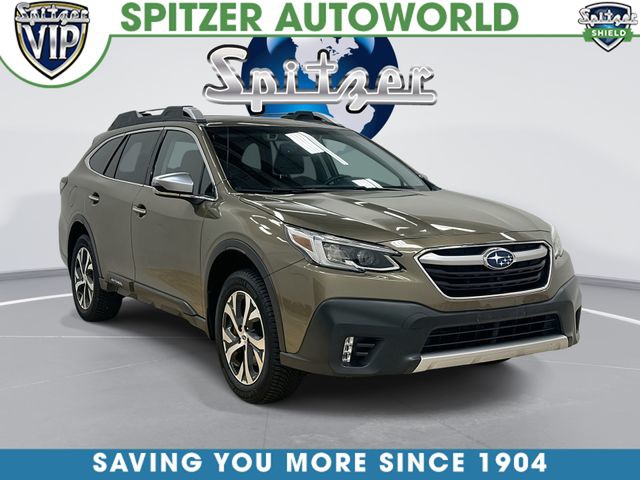
2020 Subaru Outback Reviews SummarySubaru kept the wagon vibes rolling while the rest of the world fell in love with SUVs and crossovers. And, although the 2020 Outback is technically a midsize crossover, one look will have you remembering summer drives in an overstuffed station wagon down a busy highway, whether you actually took those trips or not. And that’s not a bad thing. The Outback has always provided utility, performance, and looks, and those things have made it Subaru’s top-selling model. With the updates for this sixth generation, I wouldn’t be surprised to see America falling in love with the station wagon again. | |
2020 Honda Passport Reviews SummaryHonda has brought back the Passport name for its latest SUV offering. The two-row crossover is an upmarket take on transport that proves just as comfortable on the road as it is on the trail. Though the model doesn’t break the Honda mold, it has a lot to like, including off-road capability and thoughtful interior functionality. | |
No video found | |
Popular Features & Specs | |
Engine2.5L 182 hp H4 | Engine3.5L 280 hp V6 |
Drive TrainAWD | Drive TrainFWD |
Seating Capacity5 | Seating Capacity5 |
Horsepower182 hp @ 5800 rpm | Horsepower280 hp @ 6000 rpm |
MPG City26 | MPG City20 |
MPG Highway33 | MPG Highway25 |
Engine | |
Engine Name2.5L 182 hp H4 | Engine Name3.5L 280 hp V6 |
Torque178 lb-ft @ 4400 rpm | Torque262 lb-ft @ 4700 rpm |
Horsepower182 hp @ 5800 rpm | Horsepower280 hp @ 6000 rpm |
DrivetrainAWD | DrivetrainFWD |
Fuel Economy | |
MPG City26 | MPG City20 |
MPG Highway33 | MPG Highway25 |
Interior | |
Seating Capacity5 | Seating Capacity5 |
Safety | |
Front Crash Overall5 | Front Crash Overall4 |
Side Crash Overall5 | Side Crash Overall5 |
Dimensions & Capacity | |
Cargo Space32.5 cu ft | Cargo Space41.2 cu ft |
Curb Weight3634 lbs | Curb Weight3959 lbs |
Height66.1 in | Height71.6 in |
Length191.3 in | Length190.5 in |
Width82.0 in | Width78.6 in |
Wheelbase108.1 in | Wheelbase111.0 in |
Maximum Payload1071 lbs | Maximum Payload1332 lbs |
Number of doors4 | Number of doors4 |
Maximum Towing Capacity2700 lbs | Maximum Towing Capacity3500 lbs |
Overview | ||
MSRP | $26,645 | $31,990 |
Listings | ||
Ratings & Reviews | ||
User reviews | ||
Expert reviews | 7.7 out of 10Read full review | 8.8 out of 10Read full review |
Pros & cons | Pros
Cons
| Pros
Cons
|
Summary | Subaru kept the wagon vibes rolling while the rest of the world fell in love with SUVs and crossovers. And, although the 2020 Outback is technically a midsize crossover, one look will have you remembering summer drives in an overstuffed station wagon down a busy highway, whether you actually took those trips or not. And that’s not a bad thing. The Outback has always provided utility, performance, and looks, and those things have made it Subaru’s top-selling model. With the updates for this sixth generation, I wouldn’t be surprised to see America falling in love with the station wagon again. | Honda has brought back the Passport name for its latest SUV offering. The two-row crossover is an upmarket take on transport that proves just as comfortable on the road as it is on the trail. Though the model doesn’t break the Honda mold, it has a lot to like, including off-road capability and thoughtful interior functionality. |
Video | No video found | |
Popular Features & Specs | ||
Engine | 2.5L 182 hp H4 | 3.5L 280 hp V6 |
Drive Train | AWD | FWD |
Seating Capacity | 5 | 5 |
Horsepower | 182 hp @ 5800 rpm | 280 hp @ 6000 rpm |
MPG City | 26 | 20 |
MPG Highway | 33 | 25 |
Engine | ||
Engine Name | 2.5L 182 hp H4 | 3.5L 280 hp V6 |
Torque | 178 lb-ft @ 4400 rpm | 262 lb-ft @ 4700 rpm |
Horsepower | 182 hp @ 5800 rpm | 280 hp @ 6000 rpm |
Drivetrain | AWD | FWD |
Fuel Economy | ||
MPG City | 26 | 20 |
MPG Highway | 33 | 25 |
Interior | ||
Seating Capacity | 5 | 5 |
Safety | ||
Front Crash Overall | 5 | 4 |
Side Crash Overall | 5 | 5 |
Dimensions & Capacity | ||
Cargo Space | 32.5 cu ft | 41.2 cu ft |
Curb Weight | 3634 lbs | 3959 lbs |
Height | 66.1 in | 71.6 in |
Length | 191.3 in | 190.5 in |
Width | 82.0 in | 78.6 in |
Wheelbase | 108.1 in | 111.0 in |
Maximum Payload | 1071 lbs | 1332 lbs |
Number of doors | 4 | 4 |
Maximum Towing Capacity | 2700 lbs | 3500 lbs |
When it came to the 2020 Subaru Outback, Subaru stuck to its successful formula but aimed for incremental improvements in areas like safety, utility, and performance. The sixth-gen Outback was built on Subaru’s Global Platform, enhancing its structural rigidity by 70%. Although the base 2.5-liter engine seemed unchanged at first, it actually featured 90% new parts. For those desiring more power, Subaru introduced a 2.4-liter turbocharged engine from the Ascent for higher trims.
Visual differences between the 2020 model and its predecessors were subtle but noticeable in the head- and taillights. However, the interior changes garnered most buyer attention, particularly the new 11.6-inch touchscreen available in all trims except the base. The innovative DriverFocus technology, typically seen in luxury cars, was a standout, using facial recognition to notify distracted or sleepy drivers and adjust settings for different drivers.
The Outback came in seven trims: 2.5i, Premium, Limited, Touring, Onyx Edition XT, Limited XT, and Touring XT, with XT trims featuring the turbo engine. Starting at $26,645, the base 2.5i offered standard features like LED headlights, keyless entry, and automatic climate control. The Premium trim, starting at $28,895, included the large touchscreen, dual-zone climate control, and heated front seats, while options like a power liftgate and blind-spot monitoring became available.
At $33,445, the Limited trim added features like a memory system for the driver, a Harman Kardon stereo, and leather upholstery, with options for DriverFocus and a heated steering wheel. The $37,345 Touring trim offered ventilated front seats and a sunroof. The new Onyx Edition XT, priced at $34,895, added the more powerful turbo engine, heated rear seats, and off-road enhancements like hill-descent control. The Limited XT and Touring XT mirrored their non-XT counterparts but included the turbo engine, at $37,745 and $39,695, respectively.
Conversely, the 2020 Honda Passport adhered to Honda’s traditional strengths, blending practicality and reliability. The Passport’s exterior hinted at both ruggedness and sophistication, positioned between the smaller CR-V and larger Pilot. All four trims—Sport, EX-L, Touring, and Elite—offered features like scratch-resistant grilles, 20-inch alloy wheels, and LED headlights.
Sporting higher ground clearance than the Pilot, the Passport aimed for mild off-roading capabilities. The interior, shared with the Pilot, emphasized functionality and space. The Elite trim, for instance, included perforated, heated, and ventilated front seats, a leather-trimmed heated steering wheel, and heated rear seats. The design, while simple, offered comfort and practicality without unnecessary reinvention.
The lower trims also offered flexibility with various packages like Urban and Adventure packs, enhancing features like crossbars and running boards. Honda Sensing safety technology was available on the Touring trim for an extra fee.


The 2020 Subaru Outback presented two engine options: a revamped 2.5-liter engine producing 182 horsepower and a 2.4-liter turbocharged engine generating 260 horsepower. The base engine achieved fuel economy figures of 26 mpg in the city and 33 mpg on the highway. Substantial improvements in component design and direct injection contributed to these slight gains.
For those desiring more power, the turbocharged engine accelerated the XT trims to 60 mph in about 7 seconds, boasting 277 pound-feet of torque. Both engines were paired with a CVT, which Subaru tuned to mimic a traditional automatic transmission closely, minimizing the usual CVT downsides like droning and rubberbanding.
The hallmark of the Outback’s performance was its symmetrical AWD system, offering consistent power delivery and minimized wear on components due to its boxer engine's low center of gravity. Additionally, the Outback featured 8.7 inches of ground clearance, approach, departure, and breakover angles that, while not Jeep-level, provided respectable off-road prowess, especially with the upgraded X-Mode in the Onyx XT.
On the other hand, the 2020 Honda Passport came with Honda’s reliable 3.5-liter V6 engine, producing 280 horsepower and 262 pound-feet of torque. This engine was mated to a nine-speed automatic transmission, offering smooth shifts. However, its fuel economy lagged behind, with FWD models achieving 20 mpg city and 25 mpg highway, while AWD models reached 19 mpg city and 24 mpg highway.
During real-world testing, the Passport handled elevation gains seamlessly and proved capable in various driving situations. AWD models came with torque-vectoring capability, enhancing stability on winding roads and off-road trails. Modes for Snow, Sand, and Mud further increased their versatility, allowing the Passport to handle moderate off-roading challenges effortlessly.
With the available towing package, the Passport could tow up to 5,000 pounds, significantly more than competitors like the Nissan Murano and Chevrolet Blazer.
Functionality is where the Subaru Outback truly shone. The station wagon design provided practical benefits like a low load height and lower center of gravity, which translated into better handling and safety. Cargo space was also commendable, offering 32.5 cubic feet with the rear seats up and 75.7 cubic feet with them folded down. Notably, the rear seats could be easily folded via handles in the trunk, and the overall interior space metrics had seen a slight increase from previous models.
Passenger space was equally impressive. Even a 6'4" driver could sit comfortably without compromising the rear seat legroom. This spacious interior also ensured excellent headroom. Subaru's commitment to visibility was evident, although the rear quarters had a notable blind spot. However, an optional blind-spot monitoring system could mitigate this issue.
The Honda Passport focused on practicality and space as well. While the exterior dimensions were slightly larger than the CR-V, they allowed for ample passenger comfort and cargo capacity. With 41.2 cubic feet of cargo space behind the rear seats and exceptional under-floor storage, the Passport excelled in storing luggage and other items. Like the Subaru, the Passport's load floor was a bit higher, but the power liftgate made trunk access easy.
Interior-wise, the Passport offered comfortable seats akin to those in the larger Pilot and Odyssey, with a spacious and practical layout. The tri-zone climate control and sunshades added to passenger comfort. Importantly, the Passport excelled in small-item storage, featuring a large center console and additional shelf spaces in the front doors. The materials were easy to clean, although the piano black trim tended to gather dust.
When it came to technology, the Subaru Outback aimed high but faltered in execution. The 11.6-inch tablet-style touchscreen was visually appealing and conceptually brilliant but marred by lag issues. Navigation, station changes, and even volume adjustments suffered from noticeable delays. Moreover, the camera resolution did not match the high standards set by the screen’s size and design.
By contrast, the Honda Passport’s technology suite prioritized practicality over flashiness. Lower trims came with a basic 5.0-inch display, while higher trims featured an 8.0-inch Display Audio infotainment system with Apple CarPlay and Android Auto capability. The larger screen was user-friendly, supporting pinch, swipe, and tap functionalities efficiently. Higher trims also benefitted from additional features like a 10-speaker audio system, wireless phone charger, and Wi-Fi hotspot.
While the Passport’s dashboard design looked somewhat outdated, its functionality was never in doubt. The switchgear was effective, and the layout was intuitive, ensuring a smooth user experience.
Safety was another area where the Subaru Outback aimed high but had mixed results. Traditional Subaru strengths like structural integrity and standard AWD impressed, but the DriverFocus system fell short. Designed to alert distracted drivers, it often misfired, resulting in false alerts. Subaru’s EyeSight system also had limitations, frequently deactivating due to obstructed views from elements like snow or direct sunlight.
In contrast, the Honda Passport earned high marks for safety, achieving an IIHS Top Safety Pick designation. It came standard with the Honda Sensing suite, which included advanced features like Collision Mitigation Braking, lane departure warning, and adaptive cruise control. Higher trim levels added more features, such as dynamic gridlines for the rearview camera, blind-spot monitoring, and rear cross-traffic detection. While it lacked some advanced tech seen in competitors like the Subaru Forester, the Passport’s safety package effectively covered most needs.
CarGurus highlights

According to CarGurus experts, the overall rating for the 2020 Subaru Outback was 7.7 out of 10, while the 2020 Honda Passport scored 8.8 out of 10. Given these ratings, the Honda Passport edged out as the better option, thanks to its superior safety ratings, practical technology, and comfortable interior accommodations combined with impressive off-road and towing capabilities.
Choose the 2020 Honda Passport if:
- You require higher towing capacity for activities like boating or camping.
- Advanced driver-assist features with higher reliability are a priority.
- Practicality and passenger comfort take precedence, especially for longer journeys.


Choose the 2020 Subaru Outback if:
- You prioritize an all-wheel-drive system and better fuel efficiency.
- You need significant cargo and passenger space for road trips and family outings.
- Safety features like DriverFocus and EyeSight are important, despite their minor flaws.




CarGurus highlights
According to CarGurus experts, the overall rating for the 2020 Subaru Outback was 7.7 out of 10, while the 2020 Honda Passport scored 8.8 out of 10. Given these ratings, the Honda Passport edged out as the better option, thanks to its superior safety ratings, practical technology, and comfortable interior accommodations combined with impressive off-road and towing capabilities.
Choose the 2020 Honda Passport if:
Shop Now- You require higher towing capacity for activities like boating or camping.
- Advanced driver-assist features with higher reliability are a priority.
- Practicality and passenger comfort take precedence, especially for longer journeys.
Choose the 2020 Subaru Outback if:
Shop Now- You prioritize an all-wheel-drive system and better fuel efficiency.
- You need significant cargo and passenger space for road trips and family outings.
- Safety features like DriverFocus and EyeSight are important, despite their minor flaws.

By: CarGurus + AI
At CarGurus, our team of experienced automotive writers remain at the heart of our content operation, conducting hands-on car tests and writing insightful guides that are backed by years of industry experience. To complement this, we are harnessing AI to make our content offering more diverse and more helpful to shoppers than ever. To achieve this, our AI systems are based exclusively on CarGurus content, ratings and data, so that what we produce is both unique to CarGurus, and uniquely helpful to car shoppers.

