2021 Volvo XC40 vs 2020 Land Rover Range Rover Velar

Overview | |
MSRP$56,300 | MSRP$33,700 |
Listings111 | Listings60 |
Ratings & Reviews | |
User Reviews | User Reviews |
Expert reviews7.3 out of 10 | Expert reviews8.0 out of 10 |
Pros
Cons
| Pros
Cons
|
2020 Land Rover Range Rover Velar Reviews SummaryThe original Land Rover Range Rover revolutionized the SUV game by combining off-road capability with a modicum of civility. Land Rover is now trying to milk that success by creating a “family” of Range Rover models, including some with more car-like styling and character. That’s where the Land Rover Range Rover Velar comes in. Launched for the 2018 model year, it sits above the Range Rover Evoque, but below the Range Rover Sport, in size and price (the traditional Range Rover remains the brand’s flagship). Land Rover chose the Velar name as a nod to the original 1969 Range Rover prototypes, which were badged Velar to hide their origin. The main change for the 2020 model year is the addition of an SVAutobiography Dynamic Edition to the lineup. It’s a one-year-only special that packs a V8 engine instead of the usual V6 or turbo-four. This is the version we tested as, aside from what’s under the hood, it is representative of other Velar models. | |
2021 Volvo XC40 Reviews SummaryIntroduced for the 2019 model year, the Volvo XC40 enters 2021 with one major change—the addition of an all-electric powertrain option. The 2021 Volvo XC40 Recharge is the Swedish automaker’s first mass-market electric vehicle, in fact. The Recharge will be sold alongside gasoline versions of the XC40, which carry over largely unchanged, and compete against small luxury crossovers like the Audi Q3, BMW X1, Mercedes-Benz GLA-Class, and Lexus UX. With its electric powertrain, the Recharge is a de facto Tesla Model Y competitor. It’s also priced similar to high-end versions of the Ford Mustang Mach-E, although the two electric crossovers have somewhat different philosophies. In addition to that zero-emission powertrain, the Recharge gets an Android-based operating system, over-the-air (OTA) software update capability for all vehicle systems, and some updates to driver-assist tech. These changes don’t apply to gasoline 2021 XC40 models, but Volvo does plan to add the Android operating system to more vehicles in the future. Since the Recharge is the main new thing for the 2021 XC40, that’s what we focused on for this review. While the gasoline XC40 is available in three trim levels—Momentum, R-Design, and Inscription—with front-wheel drive (FWD) or all-wheel drive (AWD), the Recharge is only offered in a single trim level, with standard AWD. | |
No video found | No video found |
Popular Features & Specs | |
Engine2.0L 247 hp I4 | Engine2.0L 187 hp I4 |
Drive TrainAWD | Drive TrainFWD |
Seating Capacity5 | Seating Capacity5 |
Horsepower247 hp @ 5500 rpm | Horsepower187 hp @ 4700 rpm |
MPG City21 | MPG City23 |
MPG Highway27 | MPG Highway32 |
Engine | |
Engine Name2.0L 247 hp I4 | Engine Name2.0L 187 hp I4 |
Torque269 lb-ft @ 1200 rpm | Torque221 lb-ft @ 1400 rpm |
Horsepower247 hp @ 5500 rpm | Horsepower187 hp @ 4700 rpm |
DrivetrainAWD | DrivetrainFWD |
Fuel Economy | |
MPG City21 | MPG City23 |
MPG Highway27 | MPG Highway32 |
Interior | |
Leather SeatsStandard | Leather SeatsStandard |
Seating Capacity5 | Seating Capacity5 |
Key Features | |
Navigation SystemStandard | Navigation System |
Sunroof/MoonroofStandard | Sunroof/Moonroof |
Safety | |
Front Crash Overall | Front Crash Overall5 |
Side Crash Overall | Side Crash Overall5 |
Dimensions & Capacity | |
Cargo Space29.4 cu ft | Cargo Space20.7 cu ft |
Curb Weight4217 lbs | Curb Weight3627 lbs |
Height66.3 in | Height65.3 in |
Length188.9 in | Length174.2 in |
Width84.4 in | Width80.1 in |
Wheelbase113.1 in | Wheelbase106.4 in |
Maximum Payload1293 lbs | Maximum Payload1133 lbs |
Number of doors4 | Number of doors4 |
Maximum Towing Capacity5291 lbs | Maximum Towing Capacity3500 lbs |
Overview | ||
MSRP | $56,300 | $33,700 |
Listings | ||
Ratings & Reviews | ||
User reviews | ||
Expert reviews | 7.3 out of 10Read full review | 8.0 out of 10Read full review |
Pros & cons | Pros
Cons
| Pros
Cons
|
Summary | The original Land Rover Range Rover revolutionized the SUV game by combining off-road capability with a modicum of civility. Land Rover is now trying to milk that success by creating a “family” of Range Rover models, including some with more car-like styling and character. That’s where the Land Rover Range Rover Velar comes in. Launched for the 2018 model year, it sits above the Range Rover Evoque, but below the Range Rover Sport, in size and price (the traditional Range Rover remains the brand’s flagship). Land Rover chose the Velar name as a nod to the original 1969 Range Rover prototypes, which were badged Velar to hide their origin. The main change for the 2020 model year is the addition of an SVAutobiography Dynamic Edition to the lineup. It’s a one-year-only special that packs a V8 engine instead of the usual V6 or turbo-four. This is the version we tested as, aside from what’s under the hood, it is representative of other Velar models. | Introduced for the 2019 model year, the Volvo XC40 enters 2021 with one major change—the addition of an all-electric powertrain option. The 2021 Volvo XC40 Recharge is the Swedish automaker’s first mass-market electric vehicle, in fact. The Recharge will be sold alongside gasoline versions of the XC40, which carry over largely unchanged, and compete against small luxury crossovers like the Audi Q3, BMW X1, Mercedes-Benz GLA-Class, and Lexus UX. With its electric powertrain, the Recharge is a de facto Tesla Model Y competitor. It’s also priced similar to high-end versions of the Ford Mustang Mach-E, although the two electric crossovers have somewhat different philosophies. In addition to that zero-emission powertrain, the Recharge gets an Android-based operating system, over-the-air (OTA) software update capability for all vehicle systems, and some updates to driver-assist tech. These changes don’t apply to gasoline 2021 XC40 models, but Volvo does plan to add the Android operating system to more vehicles in the future. Since the Recharge is the main new thing for the 2021 XC40, that’s what we focused on for this review. While the gasoline XC40 is available in three trim levels—Momentum, R-Design, and Inscription—with front-wheel drive (FWD) or all-wheel drive (AWD), the Recharge is only offered in a single trim level, with standard AWD. |
Video | No video found | No video found |
Popular Features & Specs | ||
Engine | 2.0L 247 hp I4 | 2.0L 187 hp I4 |
Drive Train | AWD | FWD |
Seating Capacity | 5 | 5 |
Horsepower | 247 hp @ 5500 rpm | 187 hp @ 4700 rpm |
MPG City | 21 | 23 |
MPG Highway | 27 | 32 |
Engine | ||
Engine Name | 2.0L 247 hp I4 | 2.0L 187 hp I4 |
Torque | 269 lb-ft @ 1200 rpm | 221 lb-ft @ 1400 rpm |
Horsepower | 247 hp @ 5500 rpm | 187 hp @ 4700 rpm |
Drivetrain | AWD | FWD |
Fuel Economy | ||
MPG City | 21 | 23 |
MPG Highway | 27 | 32 |
Interior | ||
Leather Seats | Standard | Standard |
Seating Capacity | 5 | 5 |
Key Features | ||
Navigation System | Standard | |
Sunroof/Moonroof | Standard | |
Safety | ||
Front Crash Overall | 5 | |
Side Crash Overall | 5 | |
Dimensions & Capacity | ||
Cargo Space | 29.4 cu ft | 20.7 cu ft |
Curb Weight | 4217 lbs | 3627 lbs |
Height | 66.3 in | 65.3 in |
Length | 188.9 in | 174.2 in |
Width | 84.4 in | 80.1 in |
Wheelbase | 113.1 in | 106.4 in |
Maximum Payload | 1293 lbs | 1133 lbs |
Number of doors | 4 | 4 |
Maximum Towing Capacity | 5291 lbs | 3500 lbs |
The 2020 Land Rover Range Rover Velar presented a balanced design, positioned between the sleek Evoque and the boxy Range Rover. Its low roof and steeply-raked windshield gave it a unique profile, distinct from the traditional upright Range Rover. The Velar maintained an intimidating presence with its broad front end, while its short overhangs improved off-road capabilities. The SVAutobiography Dynamic Edition added sportier elements, such as larger air intakes and quad exhaust tips, enhancing its aggressive look. Inside, the Velar offered a luxurious experience with high-quality leather and metal trim, creating a cockpit-like feel that was more suited to urban environments than rugged terrains.
In contrast, the 2021 Volvo XC40 embraced a more traditional SUV design with a tall, flat roof and upright rear hatch, aligning with Volvo's signature styling elements like the “Thor’s Hammer” LED headlights. The XC40 Recharge variant featured subtle differences, such as a blanked-off grille and model-specific wheels, catering to those who preferred understated electric vehicles. The interior was minimalist yet premium, with real metal trim and a combination of Nappa leather and Nubuck textile. The design was coherent, with elements like the portrait-oriented touchscreen seamlessly integrated, offering a sophisticated and user-friendly environment.


The 2020 Land Rover Range Rover Velar introduced a significant performance upgrade with the SVAutobiography Dynamic Edition, featuring a 5.0-liter supercharged V8 engine producing 550 horsepower and 502 pound-feet of torque. This powertrain enabled the Velar to accelerate from zero to 60 mph in 4.3 seconds, reaching a top speed of 177 mph. Despite its impressive power, the Velar's performance was not class-leading, as competitors like the BMW X3 M Competition and Mercedes-AMG GLC 63 S were quicker. The Velar's aluminum platform provided a solid and refined driving experience, but its large size made it less agile on tight roads. The rest of the Velar lineup included a 2.0-liter turbocharged inline-four engine and a 3.0-liter supercharged V6, both paired with an eight-speed automatic transmission and standard four-wheel drive. Off-road capabilities were supported by Land Rover’s Terrain Response system, although the Velar lacked a low range for more challenging terrains.
The 2021 Volvo XC40 offered a diverse powertrain lineup, with the electric Recharge model at the top. The Recharge featured dual electric motors providing 402 horsepower and 486 pound-feet of torque, achieving zero to 60 mph in 4.7 seconds. The gasoline variants included a 2.0-liter turbocharged four-cylinder engine, with the T4 producing 187 horsepower and the T5 delivering 248 horsepower. All versions were electronically limited to 112 mph, reflecting Volvo's commitment to safety. The Recharge emphasized comfort and quietness over performance, with excellent ride quality even on rough roads. It also offered one-pedal driving through regenerative braking, enhancing efficiency. The Recharge's towing capacity of 2,000 pounds was notable for an electric vehicle, adding to its practicality.
The 2020 Land Rover Range Rover Velar occupied a unique position in terms of size, being larger than compact luxury SUVs but smaller than midsize ones. Despite its size, the Velar did not offer more interior space, with competitors like the Mercedes-Benz GLC and BMW X3 providing better legroom and headroom. Cargo space was competitive, with 15.7 cubic feet available with the rear seats up and 48.9 cubic feet with them folded. The Velar's stylish design, including a chopped roof, limited headroom and visibility, creating a somewhat claustrophobic interior. The towing capacity was respectable, with the SVAutobiography Dynamic Edition and V6 models capable of towing 5,511 pounds.
The 2021 Volvo XC40, both in its gasoline and Recharge variants, offered limited interior space compared to rivals like the Tesla Model Y and Ford Mustang Mach-E. It had less legroom and headroom, and a smaller cargo area. However, Volvo compensated with clever storage solutions, such as a removable trash bin in the center console and large door bins made possible by relocating the audio system's speakers. The storage cubby was designed to securely hold a phone, with a wireless charging pad available as an option. Despite the limited space, the XC40's interior was thoughtfully designed to maximize utility.
The 2020 Land Rover Range Rover Velar featured the InControl Touch Pro Duo infotainment system, with dual 10.0-inch touchscreens handling various functions. The system included a WiFi hotspot, Bluetooth, SiriusXM satellite radio, and Apple CarPlay/Android Auto compatibility. While the graphics and menu layout were praised, the system's slow response times were a drawback. Additional tech features included a 12.3-inch digital instrument cluster, a head-up display, and capacitive steering-wheel controls, which added to the minimalist cabin design.
The 2021 Volvo XC40 Recharge introduced the Android Automotive OS, integrating Google apps like Google Assistant and Google Maps. This system allowed for seamless synchronization with Android phones, while still supporting Apple CarPlay and Android Auto. The hardware setup included a 9-inch touchscreen and a 12.3-inch digital instrument cluster, offering high-quality graphics and intuitive menus. The Recharge also featured OTA update capability, allowing for software improvements without dealership visits. The absence of a start button simplified the driving experience, with the car ready to go as soon as the driver shifted out of park.
The 2020 Land Rover Range Rover Velar lacked safety ratings from the IIHS and NHTSA, as low-volume luxury vehicles were not prioritized for crash testing. Standard safety features included automatic emergency braking, lane-keep assist, and parking aids, with adaptive cruise control and blind-spot monitoring available as options. However, Land Rover's offerings were less sophisticated compared to competitors, with only basic lane-keep assist available.
The 2021 Volvo XC40 received top safety ratings, with the gasoline model earning the IIHS "Top Safety Pick+" and a five-star overall rating from the NHTSA. Although the electric Recharge model had not been tested, Volvo expected it to perform well due to its robust safety features. The XC40 came with a comprehensive list of standard safety features, including lane-keep assist, blind-spot monitoring, and automatic emergency braking. Optional features included advanced driver-assistance systems like Volvo's Pilot Assist, which combined adaptive cruise control with automated lane centering.
CarGurus highlights
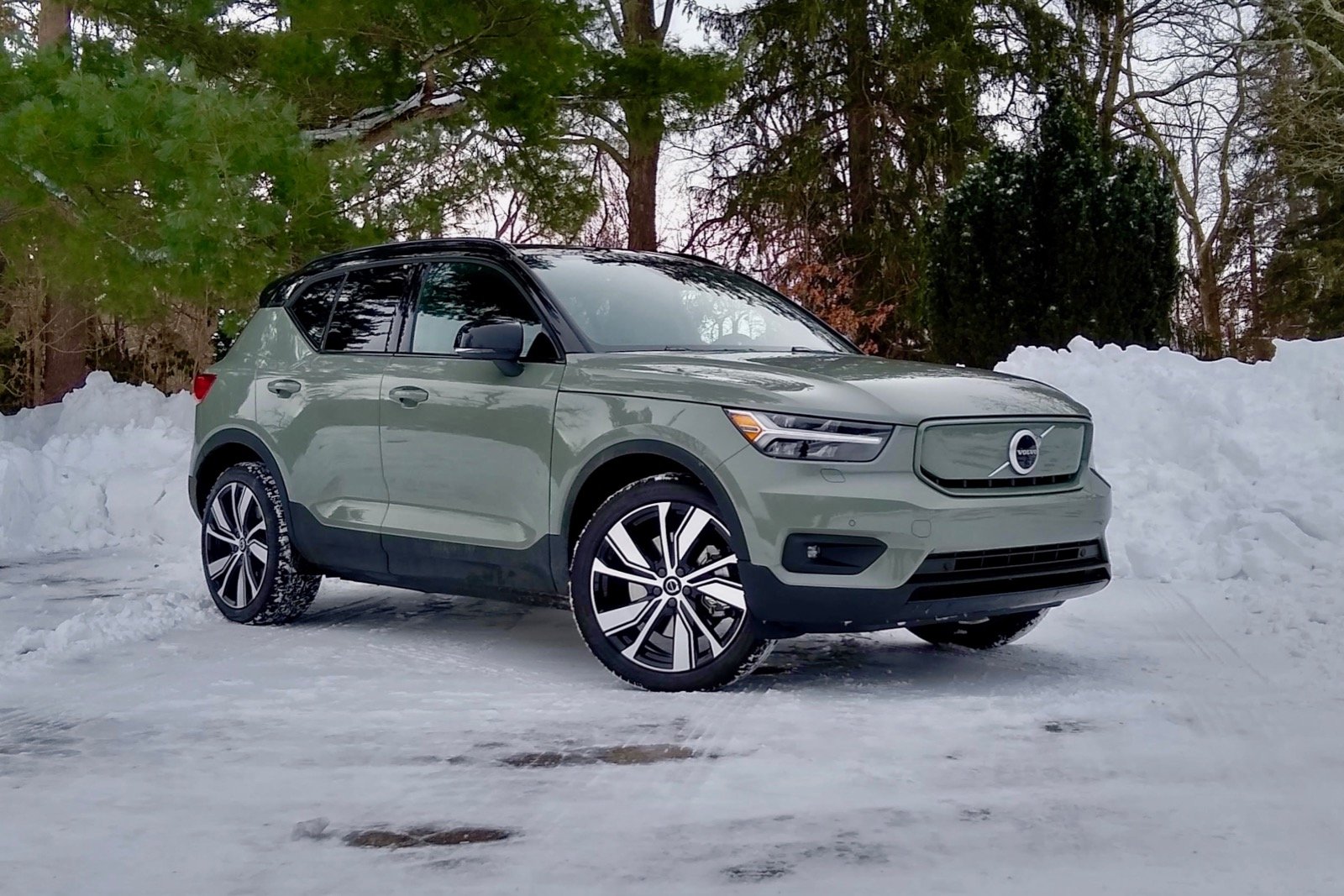
According to CarGurus experts, the overall rating for the 2020 Land Rover Range Rover Velar is 7.3 out of 10, while the 2021 Volvo XC40 scores 8.0 out of 10. Based on these ratings, the 2021 Volvo XC40 is the recommended choice, offering a better balance of safety, technology, and practicality.
Choose the 2021 Volvo XC40 if:
- Safety is a top priority, with high ratings and a comprehensive suite of standard and optional safety features.
- You prefer a modern infotainment system with Google integration and OTA update capability.
- Clever interior storage solutions and a minimalist design appeal to you.


Choose the 2020 Land Rover Range Rover Velar if:
- You prioritize a luxurious interior with high-quality materials and a unique cockpit-like design.
- Off-road capabilities are important, with features like Terrain Response and a respectable towing capacity.
- You desire a powerful V8 engine option for a more dynamic driving experience.


CarGurus highlights
According to CarGurus experts, the overall rating for the 2020 Land Rover Range Rover Velar is 7.3 out of 10, while the 2021 Volvo XC40 scores 8.0 out of 10. Based on these ratings, the 2021 Volvo XC40 is the recommended choice, offering a better balance of safety, technology, and practicality.
Choose the 2021 Volvo XC40 if:
Shop Now- Safety is a top priority, with high ratings and a comprehensive suite of standard and optional safety features.
- You prefer a modern infotainment system with Google integration and OTA update capability.
- Clever interior storage solutions and a minimalist design appeal to you.
Choose the 2020 Land Rover Range Rover Velar if:
Shop Now- You prioritize a luxurious interior with high-quality materials and a unique cockpit-like design.
- Off-road capabilities are important, with features like Terrain Response and a respectable towing capacity.
- You desire a powerful V8 engine option for a more dynamic driving experience.

By: CarGurus + AI
At CarGurus, our team of experienced automotive writers remain at the heart of our content operation, conducting hands-on car tests and writing insightful guides that are backed by years of industry experience. To complement this, we are harnessing AI to make our content offering more diverse and more helpful to shoppers than ever. To achieve this, our AI systems are based exclusively on CarGurus content, ratings and data, so that what we produce is both unique to CarGurus, and uniquely helpful to car shoppers.

