2021 Chevrolet Bolt EV vs 2020 Kia Soul
Overview | |
MSRP$17,490 | MSRP$36,500 |
Listings934 | Listings80 |
Ratings & Reviews | |
User Reviews | User Reviews |
Expert reviews8.5 out of 10 | Expert reviews7.2 out of 10 |
Pros
Cons
| Pros
Cons
|
2020 Kia Soul Reviews SummaryBuying a car blends pragmatic and emotional factors. You know you need a car to do certain things, but you also have preferences about how your car looks and perhaps how its brand's image is generally perceived. You used to have to make sacrifices if you wanted something affordable and economical. Look at small, affordable cars of the past; it's a depressing set of subpar cars. Automakers have ensured that, with a few exceptions, there are no more truly bad cars, and that extends to the economy-car segment. But even in this competent segment of vehicles, one car stands out from the rest with refined driving dynamics, a lower starting price than most of its competitors, and form and function delivered in equal quantities. Meet the 2020 Kia Soul. You've probably seen the hamster ads, and you’ve definitely seen this boxy little hatchback on the road. Its particular combination of boxy design and compact size makes it something of a rarity. On the one hand, it competes with small hatchbacks like the Honda Fit and Volkswagen Golf. And on the other hand, you could legitimately cross-shop it against subcompact SUVs like the Subaru Crosstrek and Jeep Renegade. To top it all off, its latest redesign makes the Soul look more futuristic than anything you’ll find from Tesla; it's truly one of a kind. Take a closer look at the 2020 Kia Soul, because few cars do form and function any better. | |
2021 Chevrolet Bolt EV Reviews SummarySpend any time reading the news, and you’ll likely read about electric vehicles. They are influencing the stock prices of major automakers, and in turn, those automakers are investing heavily into a burgeoning market of EV startups. And yet, electric cars make up an incredibly small portion of the new car market. For all the news and hype, there are only a handful of actual models on the road today. They fall into two categories: larger, luxury-minded EVs like those offered by Tesla, and smaller, minimalist offerings such as the Nissan Leaf and the 2021 Chevrolet Bolt EV. Like the Leaf, the Bolt does things differently from Tesla. It uses a smaller battery pack and maximizes the efficiency of its nimble platform. The Bolt EV does not have the range or acceleration of the Teslas, but for many Americans, an EV like the Bolt EV is something closer to what they can afford. But is the Bolt EV right for you? Read on to learn more about this economic electric vehicle. | |
No video found | |
Popular Features & Specs | |
Engine2.0L 147 hp I4 | Engine200 hp Electric |
Drive TrainFWD | Drive TrainFWD |
Seating Capacity5 | Seating Capacity5 |
Horsepower147 hp @ 6200 rpm | Horsepower |
EV Battery Capacity | EV Battery Capacity66 kWh |
MPG City27 | MPG City127 |
MPG Highway33 | MPG Highway108 |
Battery Charge Time (120V) | Battery Charge Time (120V)64 hours |
Battery Charge Time (240V) | Battery Charge Time (240V)10 hours |
Engine | |
Engine Name2.0L 147 hp I4 | Engine Name200 hp Electric |
Torque132 lb-ft @ 4500 rpm | Torque |
Horsepower147 hp @ 6200 rpm | Horsepower |
Battery Charge Time (120V) | Battery Charge Time (120V)64 hours |
Battery Charge Time (240V) | Battery Charge Time (240V)10 hours |
DrivetrainFWD | DrivetrainFWD |
Fuel Economy | |
EV Battery Capacity | EV Battery Capacity66 kWh |
MPG City27 | MPG City127 |
MPG Highway33 | MPG Highway108 |
Interior | |
Seating Capacity5 | Seating Capacity5 |
Safety | |
Front Crash Overall4 | Front Crash Overall4 |
Side Crash Overall5 | Side Crash Overall5 |
Dimensions & Capacity | |
Cargo Space24.2 cu ft | Cargo Space16.9 cu ft |
Curb Weight2844 lbs | Curb Weight3563 lbs |
Height63.0 in | Height62.8 in |
Length165.2 in | Length164.0 in |
Width70.9 in | Width80.3 in |
Wheelbase102.4 in | Wheelbase102.4 in |
Maximum Payload1179 lbs | Maximum Payload |
Number of doors4 | Number of doors4 |
Overview | ||
MSRP | $17,490 | $36,500 |
Listings | ||
Ratings & Reviews | ||
User reviews | ||
Expert reviews | 8.5 out of 10Read full review | 7.2 out of 10Read full review |
Pros & cons | Pros
Cons
| Pros
Cons
|
Summary | Buying a car blends pragmatic and emotional factors. You know you need a car to do certain things, but you also have preferences about how your car looks and perhaps how its brand's image is generally perceived. You used to have to make sacrifices if you wanted something affordable and economical. Look at small, affordable cars of the past; it's a depressing set of subpar cars. Automakers have ensured that, with a few exceptions, there are no more truly bad cars, and that extends to the economy-car segment. But even in this competent segment of vehicles, one car stands out from the rest with refined driving dynamics, a lower starting price than most of its competitors, and form and function delivered in equal quantities. Meet the 2020 Kia Soul. You've probably seen the hamster ads, and you’ve definitely seen this boxy little hatchback on the road. Its particular combination of boxy design and compact size makes it something of a rarity. On the one hand, it competes with small hatchbacks like the Honda Fit and Volkswagen Golf. And on the other hand, you could legitimately cross-shop it against subcompact SUVs like the Subaru Crosstrek and Jeep Renegade. To top it all off, its latest redesign makes the Soul look more futuristic than anything you’ll find from Tesla; it's truly one of a kind. Take a closer look at the 2020 Kia Soul, because few cars do form and function any better. | Spend any time reading the news, and you’ll likely read about electric vehicles. They are influencing the stock prices of major automakers, and in turn, those automakers are investing heavily into a burgeoning market of EV startups. And yet, electric cars make up an incredibly small portion of the new car market. For all the news and hype, there are only a handful of actual models on the road today. They fall into two categories: larger, luxury-minded EVs like those offered by Tesla, and smaller, minimalist offerings such as the Nissan Leaf and the 2021 Chevrolet Bolt EV. Like the Leaf, the Bolt does things differently from Tesla. It uses a smaller battery pack and maximizes the efficiency of its nimble platform. The Bolt EV does not have the range or acceleration of the Teslas, but for many Americans, an EV like the Bolt EV is something closer to what they can afford. But is the Bolt EV right for you? Read on to learn more about this economic electric vehicle. |
Video | No video found | |
Popular Features & Specs | ||
Engine | 2.0L 147 hp I4 | 200 hp Electric |
Drive Train | FWD | FWD |
Seating Capacity | 5 | 5 |
Horsepower | 147 hp @ 6200 rpm | |
EV Battery Capacity | 66 kWh | |
MPG City | 27 | 127 |
MPG Highway | 33 | 108 |
Battery Charge Time (120V) | 64 hours | |
Battery Charge Time (240V) | 10 hours | |
Engine | ||
Engine Name | 2.0L 147 hp I4 | 200 hp Electric |
Torque | 132 lb-ft @ 4500 rpm | |
Horsepower | 147 hp @ 6200 rpm | |
Battery Charge Time (120V) | 64 hours | |
Battery Charge Time (240V) | 10 hours | |
Drivetrain | FWD | FWD |
Fuel Economy | ||
EV Battery Capacity | 66 kWh | |
MPG City | 27 | 127 |
MPG Highway | 33 | 108 |
Interior | ||
Seating Capacity | 5 | 5 |
Safety | ||
Front Crash Overall | 4 | 4 |
Side Crash Overall | 5 | 5 |
Dimensions & Capacity | ||
Cargo Space | 24.2 cu ft | 16.9 cu ft |
Curb Weight | 2844 lbs | 3563 lbs |
Height | 63.0 in | 62.8 in |
Length | 165.2 in | 164.0 in |
Width | 70.9 in | 80.3 in |
Wheelbase | 102.4 in | 102.4 in |
Maximum Payload | 1179 lbs | |
Number of doors | 4 | 4 |
The 2020 Kia Soul had a boxy and bold styling that evolved from its previous generations. It featured a more futuristic rendition of its familiar design cues, with minimalistic headlight designs and a blacked-out A-pillar. The rear side windows had added angles, creating a character line that ran to the back of the vehicle. This design element was executed well, making the Soul stand out. Inside, the Soul maintained its useful and well-designed interior, with bold elements like tweeter speakers built into the dash vents. The trims ranged from the basic LX to the high-end GT-Line Turbo, each offering various features and driver-assistance technologies.
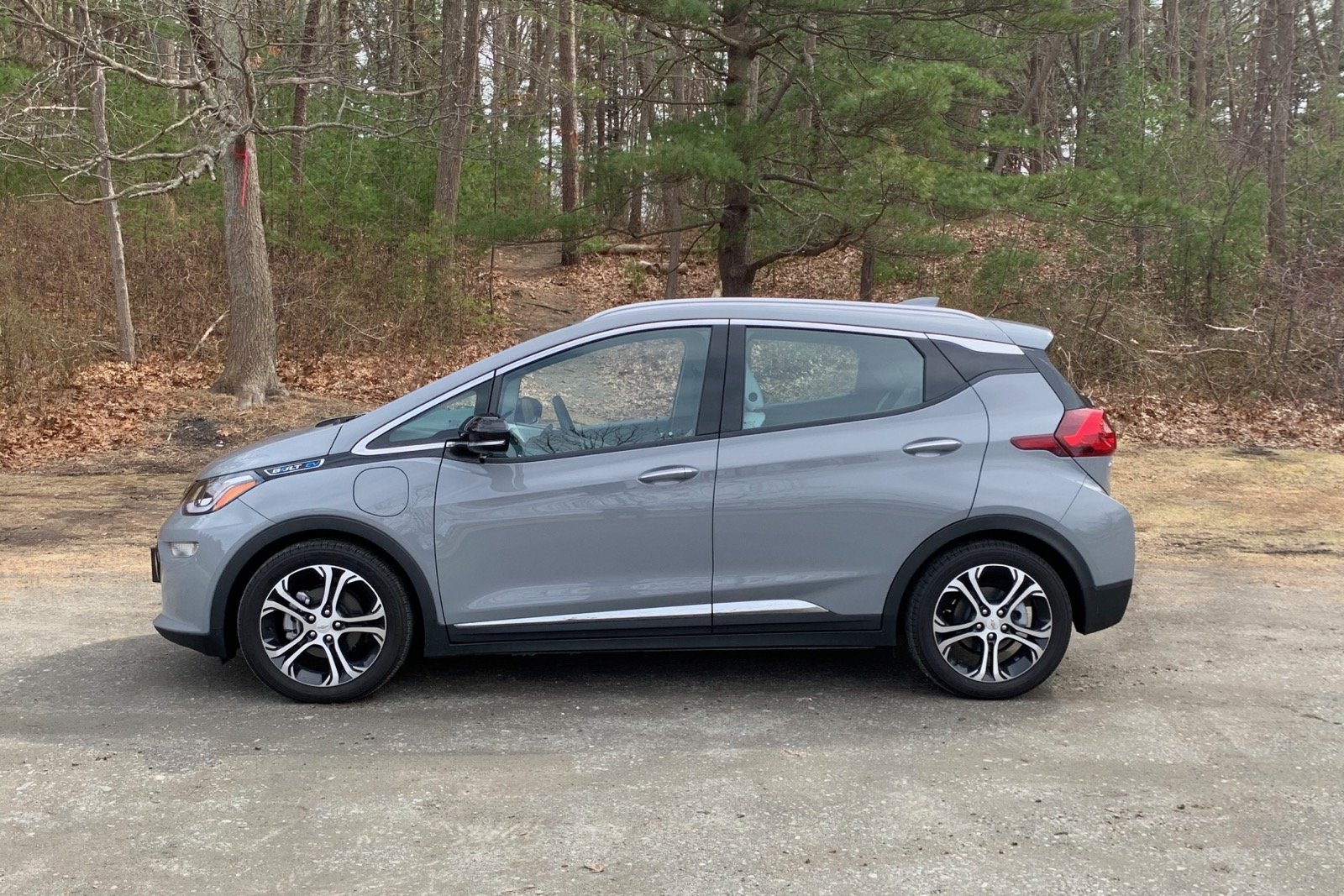
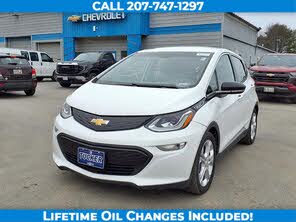
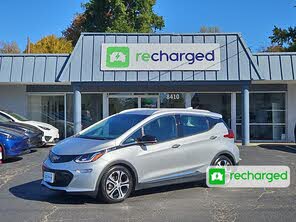
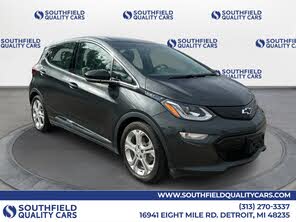
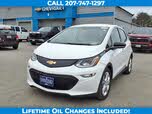
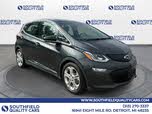
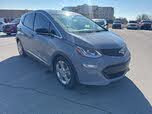
The 2021 Chevrolet Bolt EV had a shape optimized for aerodynamic efficiency, similar to other efficiency-first cars like the Nissan Leaf and Toyota Prius. Its more upright layout provided a commanding view of the road and excellent sightlines. The Bolt EV incorporated Chevrolet's signature design cues, such as the polygon lower grille and a "floating" roofline along the D-pillar. The cabin was futuristic, with flowing plastic panels and bright colors, resembling consumer electronics more than traditional cars. The Bolt EV had two trims: LT and Premier, each offering various features, including a 10.2-inch touchscreen, WiFi hotspot, and driver-assistance packages.


The 2020 Kia Soul was powered by a 2-liter, 4-cylinder engine producing 147 horsepower and 132 pound-feet of torque, paired with a continuously variable transmission (CVT). Despite the modest output, the CVT managed the power well, providing decent acceleration. The Soul also offered a Sport button and a manual mode for simulated gear changes. The base LX trim came with a 6-speed manual transmission, with the CVT as an option. The GT-Line Turbo featured a 1.6-liter turbocharged engine with 201 hp and 195 lb-ft of torque, paired with a 7-speed dual-clutch transmission. The Soul's ride quality was impressive, balancing softness over bumps and firmness through turns. Fuel economy for the 2-liter engine and CVT was 27 mpg city, 33 highway, and 30 combined, while the Turbo returned 27, 32, and 29 mpg, respectively.
The 2021 Chevrolet Bolt EV featured a 66-kilowatt-hour lithium-ion battery pack powering an electric motor at the front wheels, producing 200 horsepower and 266 pound-feet of torque. With 100% of the torque available at zero rpm, the Bolt EV had excellent low-end pickup, achieving a 0-60 mph time of 6.5 seconds. The battery placement ensured a low center of gravity, making the Bolt EV fun to drive around town. However, the ride could be harsh over bumps, and the steering was twitchy at highway speeds. The Bolt EV provided 259 miles of range per the EPA, making it suitable for city driving and occasional longer trips.
The 2020 Kia Soul's boxy design offered 24.2 cubic feet of cargo space with the rear seats upright and 62.1 cubic feet with the seats folded. This was more than the Volkswagen Golf and some compact SUVs. The five-passenger cabin had great front and rear legroom and headroom, with plenty of storage compartments and innovative solutions throughout the interior.
The 2021 Chevrolet Bolt EV had 56.6 cubic feet of cargo space with the rear seats folded and 16.9 cubic feet with the seats up. The Premier trim featured a removable load floor for better organization. The Bolt EV's tall shape provided decent cabin space, with plenty of headroom for both front and rear passengers. However, legroom in the second row could be limited if the front seats were pushed back. The driver had excellent visibility, and the Bolt EV offered deep in-door pockets and a large cargo tray below the center console.
The 2020 Kia Soul came with Kia’s UVO infotainment system, with screen sizes varying by trim. The LX, S, X-Line, and GT-Line had a 7-inch screen, while the EX and GT Turbo had a 10.25-inch screen. The system featured easy menu navigation, bright fonts, and hard buttons and dials. Apple CarPlay and Android Auto were standard, enhancing the system's usefulness.
The 2021 Chevrolet Bolt EV had a different touchscreen from other GM vehicles, with a clunky layout and laggy performance. It focused on energy displays, with various ways to monitor charging and power usage. The system included Apple CarPlay and Android Auto. The fully digital instrument panel was customizable, providing energy usage information and range estimates. The Bolt EV also had a smartphone app for monitoring charging status and weather impacts on range.
The 2020 Kia Soul included standard safety features like front- and side-impact airbags, a reversing camera, traction control, hill-start assist, and a tire pressure monitoring system. The S trim added driver-assistance features like forward-collision warning and avoidance, lane-keep assist, lane-change assist, blind-spot warning, and rear cross-path detection. The GT-Line Turbo added adaptive cruise control, a head-up display, and pedestrian detection.
The 2021 Chevrolet Bolt EV had standard safety features like airbags, traction control, and a backup camera. It also included Chevy’s Teen Driver feature. Advanced driver assistance features were available in option packages. The Driver Confidence I package added rear parking sensors, lane-change alert, blind-spot monitoring, and rear cross-traffic alert. The Driver Confidence II package added automatic high beams, forward-collision warning, automatic emergency braking, pedestrian detection, a following distance indicator, lane-departure warning, and lane-keep assist. The Bolt EV received a five-star crash test rating from the NHTSA and was an IIHS 2019 Top Safety Pick.
CarGurus highlights

According to CarGurus experts, the overall rating for the 2020 Kia Soul is 8.5 out of 10, while the 2021 Chevrolet Bolt EV scores 7.2 out of 10. Based on these ratings, the 2020 Kia Soul is the recommended choice, offering a better balance of performance, functionality, and technology.
Choose the 2021 Chevrolet Bolt EV if:
- You are looking for an electric vehicle with excellent low-end torque and quick acceleration.
- You need a car with a long electric range suitable for city driving and occasional longer trips.
- You value a customizable digital instrument panel and energy monitoring features.



Choose the 2020 Kia Soul if:
- You need a vehicle with ample cargo space and innovative storage solutions.
- You prefer a variety of trim options with different features and price points.
- You want a car with a well-balanced ride quality and decent fuel economy.


CarGurus highlights
According to CarGurus experts, the overall rating for the 2020 Kia Soul is 8.5 out of 10, while the 2021 Chevrolet Bolt EV scores 7.2 out of 10. Based on these ratings, the 2020 Kia Soul is the recommended choice, offering a better balance of performance, functionality, and technology.
Choose the 2021 Chevrolet Bolt EV if:
Shop Now- You are looking for an electric vehicle with excellent low-end torque and quick acceleration.
- You need a car with a long electric range suitable for city driving and occasional longer trips.
- You value a customizable digital instrument panel and energy monitoring features.





Choose the 2020 Kia Soul if:
Shop Now- You need a vehicle with ample cargo space and innovative storage solutions.
- You prefer a variety of trim options with different features and price points.
- You want a car with a well-balanced ride quality and decent fuel economy.









By: CarGurus + AI
At CarGurus, our team of experienced automotive writers remain at the heart of our content operation, conducting hands-on car tests and writing insightful guides that are backed by years of industry experience. To complement this, we are harnessing AI to make our content offering more diverse and more helpful to shoppers than ever. To achieve this, our AI systems are based exclusively on CarGurus content, ratings and data, so that what we produce is both unique to CarGurus, and uniquely helpful to car shoppers.