2020 Hyundai Kona vs 2021 Audi Q5

Overview | |
MSRP$20,300 | MSRP$43,300 |
Listings391 | Listings460 |
Ratings & Reviews | |
User Reviews | User Reviews |
Expert reviews6.8 out of 10 | Expert reviews8.0 out of 10 |
Pros
Cons
| Pros
Cons
|
2020 Hyundai Kona Reviews SummaryThe Hyundai Kona subcompact SUV is one of the smallest cars you can buy with all-wheel drive. It competes in a class of four-door hatchbacks with the lifted suspensions and higher driving positions that crossover buyers want—and with the same generous list of convenience and safety features that come on larger crossovers. We last tested the Kona when it came out for 2018, but a new trim level and more standard driver assists are the major changes for 2020. For what Hyundai charges, the Kona is cramped and the interior disappoints, yet exterior style and on-road performance are spectacular. | |
2021 Audi Q5 Reviews SummaryAudi has made a commitment to electrification across its lineup. That takes the form of all-electric (BEV), hybrid (HEV), and plug-in hybrid vehicles (PHEV). The Q5, which entered its second generation in the 2018 model year, has offered a PHEV powertrain since 2020 in the Audi Q5 55 TFSI e quattro. | |
No video found | |
Popular Features & Specs | |
Engine2.0L 147 hp I4 | Engine |
Drive TrainFWD | Drive Train |
Seating Capacity5 | Seating Capacity5 |
Horsepower147 hp @ 6200 rpm | Horsepower |
MPG City27 | MPG City |
MPG Highway33 | MPG Highway |
Engine | |
Engine Name2.0L 147 hp I4 | Engine Name2.0L 261 hp I4 |
Torque132 lb-ft @ 4500 rpm | Torque273 lb-ft @ 1600 rpm |
Horsepower147 hp @ 6200 rpm | Horsepower261 hp @ 5250 rpm |
DrivetrainFWD | DrivetrainAWD |
Fuel Economy | |
MPG City27 | MPG City |
MPG Highway33 | MPG Highway |
Interior | |
Leather Seats | Leather SeatsStandard |
Seating Capacity5 | Seating Capacity5 |
Safety | |
Front Crash Overall5 | Front Crash Overall5 |
Side Crash Overall5 | Side Crash Overall5 |
Dimensions & Capacity | |
Cargo Space19.2 cu ft | Cargo Space25.9 cu ft |
Curb Weight2890 lbs | Curb Weight4079 lbs |
Height61.0 in | Height65.5 in |
Length164.0 in | Length184.3 in |
Width70.9 in | Width84.2 in |
Wheelbase102.4 in | Wheelbase111.0 in |
Maximum Payload1089 lbs | Maximum Payload1036 lbs |
Number of doors4 | Number of doors4 |
Maximum Towing Capacity | Maximum Towing Capacity4400 lbs |
Overview | ||
MSRP | $20,300 | $43,300 |
Listings | ||
Ratings & Reviews | ||
User reviews | ||
Expert reviews | 6.8 out of 10Read full review | 8.0 out of 10Read full review |
Pros & cons | Pros
Cons
| Pros
Cons
|
Summary | The Hyundai Kona subcompact SUV is one of the smallest cars you can buy with all-wheel drive. It competes in a class of four-door hatchbacks with the lifted suspensions and higher driving positions that crossover buyers want—and with the same generous list of convenience and safety features that come on larger crossovers. We last tested the Kona when it came out for 2018, but a new trim level and more standard driver assists are the major changes for 2020. For what Hyundai charges, the Kona is cramped and the interior disappoints, yet exterior style and on-road performance are spectacular. | Audi has made a commitment to electrification across its lineup. That takes the form of all-electric (BEV), hybrid (HEV), and plug-in hybrid vehicles (PHEV). The Q5, which entered its second generation in the 2018 model year, has offered a PHEV powertrain since 2020 in the Audi Q5 55 TFSI e quattro. |
Video | No video found | |
Popular Features & Specs | ||
Engine | 2.0L 147 hp I4 | |
Drive Train | FWD | |
Seating Capacity | 5 | 5 |
Horsepower | 147 hp @ 6200 rpm | |
MPG City | 27 | |
MPG Highway | 33 | |
Engine | ||
Engine Name | 2.0L 147 hp I4 | 2.0L 261 hp I4 |
Torque | 132 lb-ft @ 4500 rpm | 273 lb-ft @ 1600 rpm |
Horsepower | 147 hp @ 6200 rpm | 261 hp @ 5250 rpm |
Drivetrain | FWD | AWD |
Fuel Economy | ||
MPG City | 27 | |
MPG Highway | 33 | |
Interior | ||
Leather Seats | Standard | |
Seating Capacity | 5 | 5 |
Safety | ||
Front Crash Overall | 5 | 5 |
Side Crash Overall | 5 | 5 |
Dimensions & Capacity | ||
Cargo Space | 19.2 cu ft | 25.9 cu ft |
Curb Weight | 2890 lbs | 4079 lbs |
Height | 61.0 in | 65.5 in |
Length | 164.0 in | 184.3 in |
Width | 70.9 in | 84.2 in |
Wheelbase | 102.4 in | 111.0 in |
Maximum Payload | 1089 lbs | 1036 lbs |
Number of doors | 4 | 4 |
Maximum Towing Capacity | 4400 lbs | |
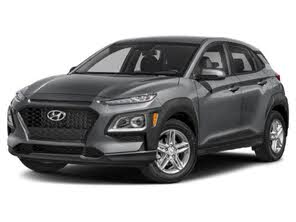
The 2020 Hyundai Kona was a standout in its segment, boasting a sleek, sporty, and dramatic exterior that belied its mass-market economy car status. Despite being shorter than its competitors, Hyundai's design prowess made the Kona appear taller and wider, thanks to tiered lighting, a tall grille, and chunky matte plastic trim. The car's exterior was visually stimulating, with slim LED running lamps, fender creases, and two-tone wheels contributing to its premium vibe. However, the interior did not match the exterior's excitement, featuring hard plastics and lackluster finishes, which fell short compared to rivals like the Mazda CX-30 and Honda HR-V.
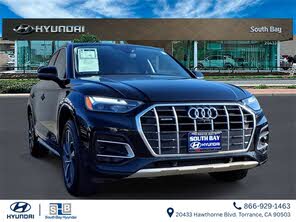
In contrast, the 2021 Audi Q5 exuded a classy, modern appearance with exceptional fit and finish. The Q5's design language was sharp and expressive, featuring LED headlights, a prominent Singleframe grille, and bold taillights. The plug-in hybrid variant added S-Line trim pieces and enhancements, including standard 19-inch wheels or optional 20-inch wheels. Inside, the Q5 maintained a high level of sophistication with smartly grouped buttons, real wood and metal materials, and a 10.1-inch touchscreen. The second row was also well-appointed, offering standard leather seating surfaces.


The 2020 Hyundai Kona surprised many with its impressive powertrain and chassis. The 1.6-liter turbocharged inline-four engine delivered 175 horsepower and 195 pound-feet of torque, outperforming most competitors. This engine, paired with a 7-speed dual-clutch transmission, provided strong acceleration and confidence-inspiring performance. However, only the Limited and Ultimate trims featured this turbo engine. The standard 2.0-liter inline-four engine, with 147 hp and 132 lb-ft, was less impressive but still competitive. The Kona's handling was tight and stable, with AWD models offering an independent rear suspension for better road feel. Fuel economy was average, with the 1.6T AWD achieving 26 mpg city and 29 mpg highway.
The 2021 Audi Q5 PHEV took performance to another level with its combined output of 362 hp and 373 lb-ft of torque. The plug-in hybrid system, featuring a 2.0-liter turbocharged inline-four engine and a 14.1-kWh battery, provided impressive acceleration, reaching 0-60 mph in 5.0 seconds. The Q5 PHEV offered multiple driving modes, including a battery-only mode for up to 20 miles. The seven-speed S Tronic automatic transmission and full-time Quattro all-wheel drive ensured smooth and responsive driving. The Q5 PHEV also boasted a fuel economy of 65 MPGe combined, with 27 mpg in gasoline-only mode.
The 2020 Hyundai Kona struggled with interior space, offering only 19 cubic feet of cargo space and 46 cubic feet with the rear seats folded. Rear legroom and headroom were average, but the Kona's cramped interior made it less practical for carrying passengers and cargo compared to competitors like the Honda HR-V and Buick Encore GX. Despite its easy-to-use controls and good sightlines, the Kona's limited utility was a drawback.
The 2021 Audi Q5 excelled in interior space and functionality. With 25.1 cubic feet of cargo space behind the second row and 53.1 cubic feet with the seats folded, the Q5 offered ample room for luggage. The second row provided 37.8 inches of legroom, 37.7 inches of headroom, and 56.5 inches of shoulder room, accommodating two adults comfortably. The front seats were highly adjustable, heated, and ventilated in the Prestige trim. The Q5's interior was thoughtfully designed, with numerous storage options and a clutter-free layout.
The 2020 Hyundai Kona offered a range of standard features, including a 7-inch touchscreen with Apple CarPlay and Android Auto. Higher trims added proximity entry, heated front seats, blind-spot monitoring, and an eight-speaker Infinity stereo. The Ultimate trim featured an 8-inch touchscreen with navigation, auto high beams, and adaptive cruise control. However, the Kona's technology offerings were less advanced compared to the Audi Q5.
The 2021 Audi Q5 PHEV featured Audi's latest MMI 10.1-inch touchscreen infotainment system and the Audi Virtual Cockpit Plus 12.3-inch HD instrument cluster. The Prestige Package included navigation, which optimized fuel consumption and battery usage in hybrid mode. The Integrated Toll Module (ITM) was a convenient addition, and the Bang & Olufsen 3D audio system provided excellent sound quality. Wireless Apple CarPlay was also included, enhancing the Q5's tech-savvy appeal.
The 2020 Hyundai Kona received high safety ratings, scoring five out of five stars overall from the NHTSA and earning a 2020 Top Safety Pick from the IIHS. Standard safety features included forward emergency braking, lane-keep assist, and a driver attention monitor. However, the Kona lacked front knee airbags and rear side airbags.
The 2021 Audi Q5 PHEV had not been rated by the IIHS at the time, but the gasoline-only model received top ratings in most categories. The NHTSA awarded the 2021 Q5 five stars. Safety features included six airbags, Audi Pre Sense basic, low-speed collision assist, and electronic stability control. Available driver-assistance features included adaptive cruise control, park steering assist, and a top-view camera system.
CarGurus highlights

According to CarGurus experts, the overall rating for the 2020 Hyundai Kona is 6.8 out of 10, while the 2021 Audi Q5 scores 8.0 out of 10. Based on these ratings, the 2021 Audi Q5 is the clear winner, offering superior performance, technology, and interior space. If you're looking for a compact crossover that excels in luxury and functionality, the Audi Q5 is the better choice.
Choose the 2020 Hyundai Kona if:
- You want a sporty, visually stimulating exterior design.
- You prefer a turbocharged engine with strong acceleration.
- You seek a budget-friendly option with a good list of standard features.






Choose the 2021 Audi Q5 if:
- You desire a luxurious, high-tech interior with advanced infotainment.
- You need ample cargo space and comfortable seating for passengers.
- You prioritize a powerful plug-in hybrid system with excellent fuel economy.








CarGurus highlights
According to CarGurus experts, the overall rating for the 2020 Hyundai Kona is 6.8 out of 10, while the 2021 Audi Q5 scores 8.0 out of 10. Based on these ratings, the 2021 Audi Q5 is the clear winner, offering superior performance, technology, and interior space. If you're looking for a compact crossover that excels in luxury and functionality, the Audi Q5 is the better choice.
Choose the 2020 Hyundai Kona if:
Shop Now- You want a sporty, visually stimulating exterior design.
- You prefer a turbocharged engine with strong acceleration.
- You seek a budget-friendly option with a good list of standard features.










Choose the 2021 Audi Q5 if:
Shop Now- You desire a luxurious, high-tech interior with advanced infotainment.
- You need ample cargo space and comfortable seating for passengers.
- You prioritize a powerful plug-in hybrid system with excellent fuel economy.











By: CarGurus + AI
At CarGurus, our team of experienced automotive writers remain at the heart of our content operation, conducting hands-on car tests and writing insightful guides that are backed by years of industry experience. To complement this, we are harnessing AI to make our content offering more diverse and more helpful to shoppers than ever. To achieve this, our AI systems are based exclusively on CarGurus content, ratings and data, so that what we produce is both unique to CarGurus, and uniquely helpful to car shoppers.