2020 Honda Pilot vs 2021 Honda Pilot
Overview | |
MSRP$31,650 | MSRP$32,550 |
Listings179 | Listings189 |
Ratings & Reviews | |
User Reviews | User Reviews |
Expert reviews8.0 out of 10 | Expert reviews7.2 out of 10 |
Pros
Cons
| Pros
Cons
|
2020 Honda Pilot Reviews SummaryThe Honda Pilot was once the leader of the midsize 3-row SUV pack. But several rivals from Hyundai, Kia, and Mazda have caught up to (and in some cases, surpassed) the Pilot. Still, the Pilot offers tons of cargo space, an adult-friendly third row, and an impressive list of standard safety features. But Honda’s choices on driver controls and in-car tech are its biggest shortcomings. Read on to learn how the Pilot stacks up against the competition, and to learn the CarGurus recommended trim. | |
2021 Honda Pilot Reviews SummaryIt’s been seven years since Honda last redesigned the Pilot, the automaker’s popular midsize three-row crossover SUV. In most ways, age has been kind to it, but to love a 2021 Honda Pilot you must first live with one. Unlike some competitors, the styling is not a strong suit. Rather, it is the Pilot’s interior, powertrain, driving dynamics, and simple but useful technology that makes you appreciate it each and every day. Well, that, and the cheap lease payment. | |
No video found | No video found |
Popular Features & Specs | |
Engine3.5L 280 hp V6 | Engine3.5L 280 hp V6 |
Drive TrainFWD | Drive TrainFWD |
Seating Capacity8 | Seating Capacity8 |
Horsepower280 hp @ 6000 rpm | Horsepower280 hp @ 6000 rpm |
MPG City19 | MPG City20 |
MPG Highway27 | MPG Highway27 |
Engine | |
Engine Name3.5L 280 hp V6 | Engine Name3.5L 280 hp V6 |
Torque262 lb-ft @ 4700 rpm | Torque262 lb-ft @ 4700 rpm |
Horsepower280 hp @ 6000 rpm | Horsepower280 hp @ 6000 rpm |
DrivetrainFWD | DrivetrainFWD |
Fuel Economy | |
MPG City19 | MPG City20 |
MPG Highway27 | MPG Highway27 |
Interior | |
Seating Capacity8 | Seating Capacity8 |
Safety | |
Front Crash Overall4 | Front Crash Overall4 |
Side Crash Overall5 | Side Crash Overall5 |
Dimensions & Capacity | |
Cargo Space16.5 cu ft | Cargo Space16.5 cu ft |
Curb Weight4036 lbs | Curb Weight3982 lbs |
Height70.6 in | Height70.6 in |
Length196.5 in | Length196.5 in |
Width78.6 in | Width78.6 in |
Wheelbase111.0 in | Wheelbase111.0 in |
Maximum Payload1509 lbs | Maximum Payload1563 lbs |
Number of doors4 | Number of doors4 |
Maximum Towing Capacity3500 lbs | Maximum Towing Capacity3500 lbs |
Overview | ||
MSRP | $31,650 | $32,550 |
Listings | ||
Ratings & Reviews | ||
User reviews | ||
Expert reviews | 8.0 out of 10Read full review | 7.2 out of 10Read full review |
Pros & cons | Pros
Cons
| Pros
Cons
|
Summary | The Honda Pilot was once the leader of the midsize 3-row SUV pack. But several rivals from Hyundai, Kia, and Mazda have caught up to (and in some cases, surpassed) the Pilot. Still, the Pilot offers tons of cargo space, an adult-friendly third row, and an impressive list of standard safety features. But Honda’s choices on driver controls and in-car tech are its biggest shortcomings. Read on to learn how the Pilot stacks up against the competition, and to learn the CarGurus recommended trim. | It’s been seven years since Honda last redesigned the Pilot, the automaker’s popular midsize three-row crossover SUV. In most ways, age has been kind to it, but to love a 2021 Honda Pilot you must first live with one. Unlike some competitors, the styling is not a strong suit. Rather, it is the Pilot’s interior, powertrain, driving dynamics, and simple but useful technology that makes you appreciate it each and every day. Well, that, and the cheap lease payment. |
Video | No video found | No video found |
Popular Features & Specs | ||
Engine | 3.5L 280 hp V6 | 3.5L 280 hp V6 |
Drive Train | FWD | FWD |
Seating Capacity | 8 | 8 |
Horsepower | 280 hp @ 6000 rpm | 280 hp @ 6000 rpm |
MPG City | 19 | 20 |
MPG Highway | 27 | 27 |
Engine | ||
Engine Name | 3.5L 280 hp V6 | 3.5L 280 hp V6 |
Torque | 262 lb-ft @ 4700 rpm | 262 lb-ft @ 4700 rpm |
Horsepower | 280 hp @ 6000 rpm | 280 hp @ 6000 rpm |
Drivetrain | FWD | FWD |
Fuel Economy | ||
MPG City | 19 | 20 |
MPG Highway | 27 | 27 |
Interior | ||
Seating Capacity | 8 | 8 |
Safety | ||
Front Crash Overall | 4 | 4 |
Side Crash Overall | 5 | 5 |
Dimensions & Capacity | ||
Cargo Space | 16.5 cu ft | 16.5 cu ft |
Curb Weight | 4036 lbs | 3982 lbs |
Height | 70.6 in | 70.6 in |
Length | 196.5 in | 196.5 in |
Width | 78.6 in | 78.6 in |
Wheelbase | 111.0 in | 111.0 in |
Maximum Payload | 1509 lbs | 1563 lbs |
Number of doors | 4 | 4 |
Maximum Towing Capacity | 3500 lbs | 3500 lbs |
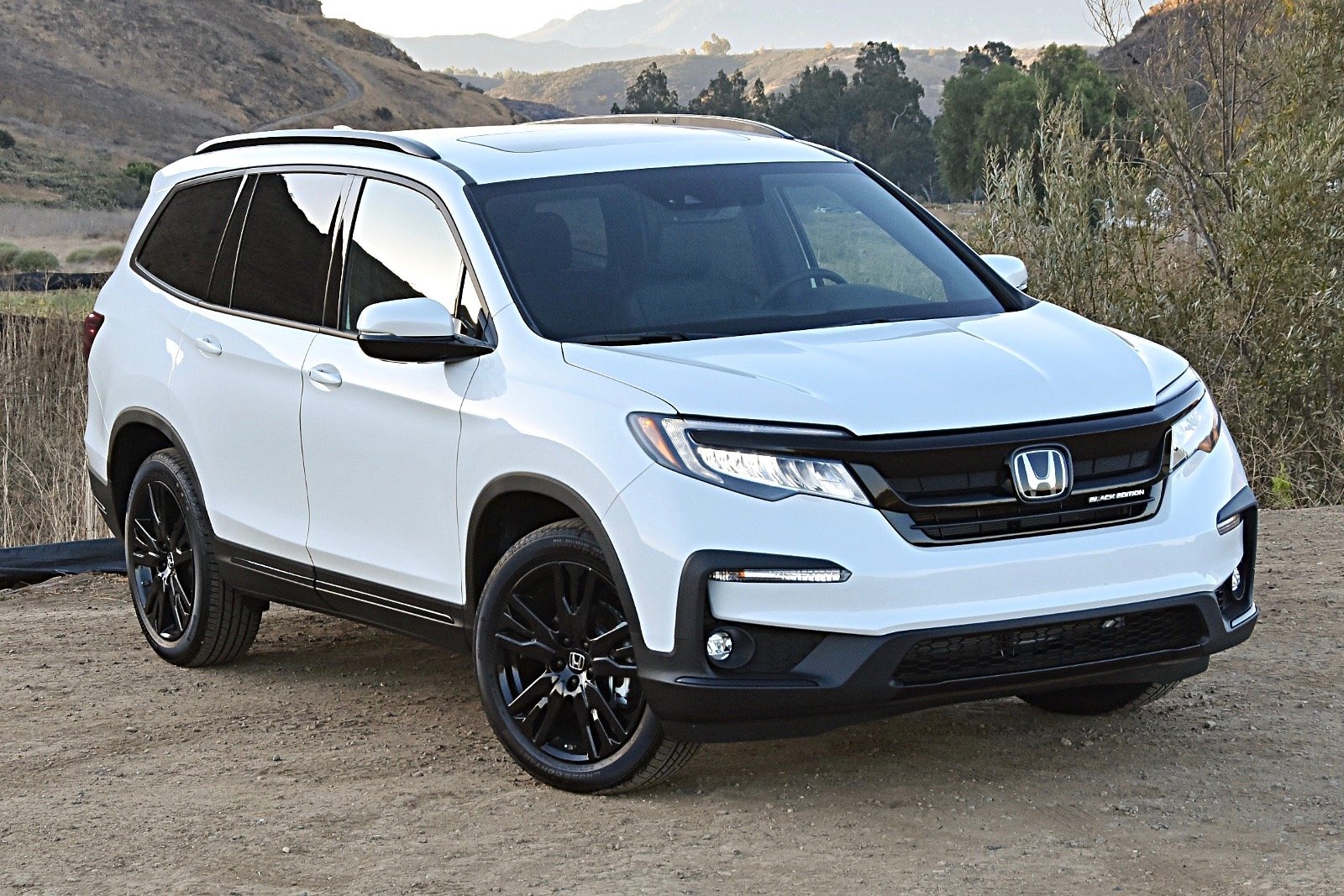
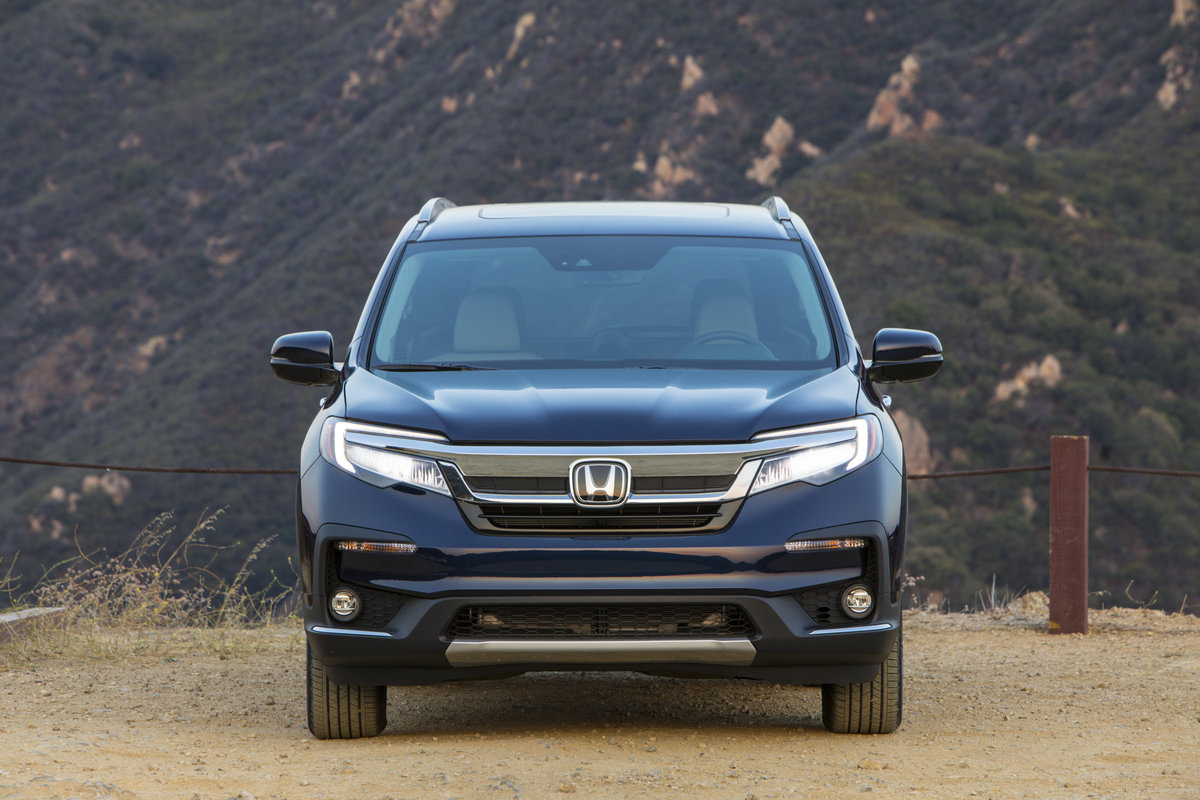
The 2020 Honda Pilot exhibited a dynamic styling consistent with Honda's lineup, featuring thin LED headlights and a multi-tiered grille. Its design cleverly masked its size, giving it a more streamlined appearance. Inside, the cabin was modern with a semi-digital instrument panel, combining analog gauges for fuel and engine temperature with a digital screen for other information. While the interior was comfortable and spacious, it did not match the upscale feel of competitors like the Kia Telluride or Hyundai Palisade due to the use of hard plastics. The 2020 Pilot offered various trims, from the base LX to the luxurious Black Edition, each adding more features like leather upholstery, power liftgate, and advanced stereo systems as you moved up the range.
The 2021 Honda Pilot continued to focus on styling, aiming for a rugged appearance with its 2019 refresh and the introduction of the Black Edition. However, its design remained polarizing. The 2021 model expanded its lineup to seven trims, including a new Special Edition with blacked-out features and wireless smartphone charging. The Black Edition, now available in a new white paint option, featured exclusive black leather upholstery with red accents. The interior quality was evident, though the design felt more like a minivan, which, along with its exterior, did not enhance its appeal.


The 2020 Honda Pilot was powered by a 3.5-liter V6 engine producing 280 horsepower and 262 pound-feet of torque, available with either FWD or AWD. The LX, EX, and EX-L trims used a 6-speed automatic transmission, while the Touring, Elite, and Black Edition featured a 9-speed automatic for smoother acceleration and better fuel economy. Despite the unconventional shifter button setup, the V6 provided strong acceleration for everyday driving. The Pilot's ride was tuned for comfort, making it ideal for commutes and road trips, though it lacked athleticism. The Intelligent Traction Management System offered drive modes for different conditions, enhancing its capability slightly in challenging terrains.
In 2021, the Pilot retained the same 3.5-liter V6 engine, delivering the same power and torque. The nine-speed automatic transmission was standard, with an available torque-vectoring AWD system that improved traction and handling. Fuel-saving features like variable-cylinder management and automatic engine stop/start contributed to an EPA rating of 22 mpg combined for AWD models. The suspension provided a comfortable ride with unexpectedly agile handling, aided by the torque-vectoring system and 20-inch wheels. However, the Pilot's off-road capability was limited by its ground clearance and all-season tires, making it suitable for minor off-road situations.
The 2020 Honda Pilot offered a spacious cabin with seating for up to eight, or seven with second-row captain’s chairs in higher trims. Its third row was adult-friendly, unlike some competitors. The Pilot provided 83.9 cubic feet of cargo space with the rear seats folded, competitive with rivals like the Kia Telluride and Hyundai Palisade. The interior was designed for family use, with ample storage for toys and gear, and features like a conversation mirror to keep an eye on children.
The 2021 Pilot also accommodated up to eight passengers with a second-row bench seat. The test vehicle featured comfortable leather-wrapped, heated, and ventilated front seats, though the front passenger seat had limited adjustment. Second-row captain’s chairs were optional or standard on higher trims, offering comfort and easy access to the third row. The Pilot provided 16.5 cubic feet of cargo space behind the third row, expanding to 83.9 cubic feet with seats folded. Storage solutions were abundant, with compartments throughout the cabin and a large center console.
The 2020 Honda Pilot's base LX trim included a 5-inch LCD screen and a basic stereo system, while higher trims featured an 8-inch touchscreen with Apple CarPlay and Android Auto. The infotainment system was criticized for its confusing layout and lack of a tuning knob. Higher trims offered additional features like navigation, a rear-seat entertainment system, and a premium audio system. The Elite and Black Edition included a wireless charging pad.
In 2021, most Pilots came with an 8-inch touchscreen infotainment system, offering similar connectivity features. The Special Edition added wireless charging, while the Touring trim included navigation, a premium audio system, and a rear-seat entertainment system. The infotainment system was adequate but had limitations, such as a small screen and complex voice-recognition technology. The Cabin Talk feature allowed communication with rear-seat passengers through the stereo.
The 2020 Honda Pilot came standard with the HondaSensing suite, including forward-collision avoidance, automatic emergency braking, and adaptive cruise control. It earned a five-star overall crash test rating from the NHTSA and a "Good" rating from the IIHS, with a "Superior" score for crash prevention technology.
In 2021, the Pilot continued to offer Honda Sensing as standard, with additional features like blind-spot monitoring starting from the EX trim. The system was functional but lacked refinement. The Pilot received favorable crash-test ratings, with a five-star overall rating from the NHTSA and mostly "Good" ratings from the IIHS, though it had some areas for improvement.
CarGurus highlights
According to CarGurus experts, the overall rating for the 2020 Honda Pilot is 8.0 out of 10, while the 2021 Honda Pilot scores 7.2 out of 10. Based on these ratings, the 2020 Honda Pilot is the recommended choice, offering a better balance of features, comfort, and safety.
Choose the 2020 Honda Pilot if:
- You prefer a more straightforward infotainment system with physical controls.
- You value a slightly higher safety rating and crash prevention technology.
- You want a more refined ride with a focus on comfort.


Choose the 2021 Honda Pilot if:
- You desire the latest features like wireless charging and a rear-seat entertainment system.
- You prefer the new Special Edition trim with its unique styling elements.
- You want improved handling with the torque-vectoring AWD system.





CarGurus highlights
According to CarGurus experts, the overall rating for the 2020 Honda Pilot is 8.0 out of 10, while the 2021 Honda Pilot scores 7.2 out of 10. Based on these ratings, the 2020 Honda Pilot is the recommended choice, offering a better balance of features, comfort, and safety.
Choose the 2020 Honda Pilot if:
Shop Now- You prefer a more straightforward infotainment system with physical controls.
- You value a slightly higher safety rating and crash prevention technology.
- You want a more refined ride with a focus on comfort.
Choose the 2021 Honda Pilot if:
Shop Now- You desire the latest features like wireless charging and a rear-seat entertainment system.
- You prefer the new Special Edition trim with its unique styling elements.
- You want improved handling with the torque-vectoring AWD system.

By: CarGurus + AI
At CarGurus, our team of experienced automotive writers remain at the heart of our content operation, conducting hands-on car tests and writing insightful guides that are backed by years of industry experience. To complement this, we are harnessing AI to make our content offering more diverse and more helpful to shoppers than ever. To achieve this, our AI systems are based exclusively on CarGurus content, ratings and data, so that what we produce is both unique to CarGurus, and uniquely helpful to car shoppers.

