2020 Honda Passport vs 2020 Honda Pilot
Overview | |
MSRP$31,650 | MSRP$31,990 |
Listings627 | Listings203 |
Ratings & Reviews | |
User Reviews | User Reviews |
Expert reviews8.0 out of 10 | Expert reviews8.8 out of 10 |
Pros
Cons
| Pros
Cons
|
2020 Honda Pilot Reviews SummaryThe Honda Pilot was once the leader of the midsize 3-row SUV pack. But several rivals from Hyundai, Kia, and Mazda have caught up to (and in some cases, surpassed) the Pilot. Still, the Pilot offers tons of cargo space, an adult-friendly third row, and an impressive list of standard safety features. But Honda’s choices on driver controls and in-car tech are its biggest shortcomings. Read on to learn how the Pilot stacks up against the competition, and to learn the CarGurus recommended trim. | |
2020 Honda Passport Reviews SummaryHonda has brought back the Passport name for its latest SUV offering. The two-row crossover is an upmarket take on transport that proves just as comfortable on the road as it is on the trail. Though the model doesn’t break the Honda mold, it has a lot to like, including off-road capability and thoughtful interior functionality. | |
No video found | No video found |
Popular Features & Specs | |
Engine3.5L 280 hp V6 | Engine3.5L 280 hp V6 |
Drive TrainFWD | Drive TrainFWD |
Seating Capacity8 | Seating Capacity5 |
Horsepower280 hp @ 6000 rpm | Horsepower280 hp @ 6000 rpm |
MPG City19 | MPG City20 |
MPG Highway27 | MPG Highway25 |
Engine | |
Engine Name3.5L 280 hp V6 | Engine Name3.5L 280 hp V6 |
Torque262 lb-ft @ 4700 rpm | Torque262 lb-ft @ 4700 rpm |
Horsepower280 hp @ 6000 rpm | Horsepower280 hp @ 6000 rpm |
DrivetrainFWD | DrivetrainFWD |
Fuel Economy | |
MPG City19 | MPG City20 |
MPG Highway27 | MPG Highway25 |
Interior | |
Seating Capacity8 | Seating Capacity5 |
Safety | |
Front Crash Overall4 | Front Crash Overall4 |
Side Crash Overall5 | Side Crash Overall5 |
Dimensions & Capacity | |
Cargo Space16.5 cu ft | Cargo Space41.2 cu ft |
Curb Weight4036 lbs | Curb Weight3959 lbs |
Height70.6 in | Height71.6 in |
Length196.5 in | Length190.5 in |
Width78.6 in | Width78.6 in |
Wheelbase111.0 in | Wheelbase111.0 in |
Maximum Payload1509 lbs | Maximum Payload1332 lbs |
Number of doors4 | Number of doors4 |
Maximum Towing Capacity3500 lbs | Maximum Towing Capacity3500 lbs |
Overview | ||
MSRP | $31,650 | $31,990 |
Listings | ||
Ratings & Reviews | ||
User reviews | ||
Expert reviews | 8.0 out of 10Read full review | 8.8 out of 10Read full review |
Pros & cons | Pros
Cons
| Pros
Cons
|
Summary | The Honda Pilot was once the leader of the midsize 3-row SUV pack. But several rivals from Hyundai, Kia, and Mazda have caught up to (and in some cases, surpassed) the Pilot. Still, the Pilot offers tons of cargo space, an adult-friendly third row, and an impressive list of standard safety features. But Honda’s choices on driver controls and in-car tech are its biggest shortcomings. Read on to learn how the Pilot stacks up against the competition, and to learn the CarGurus recommended trim. | Honda has brought back the Passport name for its latest SUV offering. The two-row crossover is an upmarket take on transport that proves just as comfortable on the road as it is on the trail. Though the model doesn’t break the Honda mold, it has a lot to like, including off-road capability and thoughtful interior functionality. |
Video | No video found | No video found |
Popular Features & Specs | ||
Engine | 3.5L 280 hp V6 | 3.5L 280 hp V6 |
Drive Train | FWD | FWD |
Seating Capacity | 8 | 5 |
Horsepower | 280 hp @ 6000 rpm | 280 hp @ 6000 rpm |
MPG City | 19 | 20 |
MPG Highway | 27 | 25 |
Engine | ||
Engine Name | 3.5L 280 hp V6 | 3.5L 280 hp V6 |
Torque | 262 lb-ft @ 4700 rpm | 262 lb-ft @ 4700 rpm |
Horsepower | 280 hp @ 6000 rpm | 280 hp @ 6000 rpm |
Drivetrain | FWD | FWD |
Fuel Economy | ||
MPG City | 19 | 20 |
MPG Highway | 27 | 25 |
Interior | ||
Seating Capacity | 8 | 5 |
Safety | ||
Front Crash Overall | 4 | 4 |
Side Crash Overall | 5 | 5 |
Dimensions & Capacity | ||
Cargo Space | 16.5 cu ft | 41.2 cu ft |
Curb Weight | 4036 lbs | 3959 lbs |
Height | 70.6 in | 71.6 in |
Length | 196.5 in | 190.5 in |
Width | 78.6 in | 78.6 in |
Wheelbase | 111.0 in | 111.0 in |
Maximum Payload | 1509 lbs | 1332 lbs |
Number of doors | 4 | 4 |
Maximum Towing Capacity | 3500 lbs | 3500 lbs |
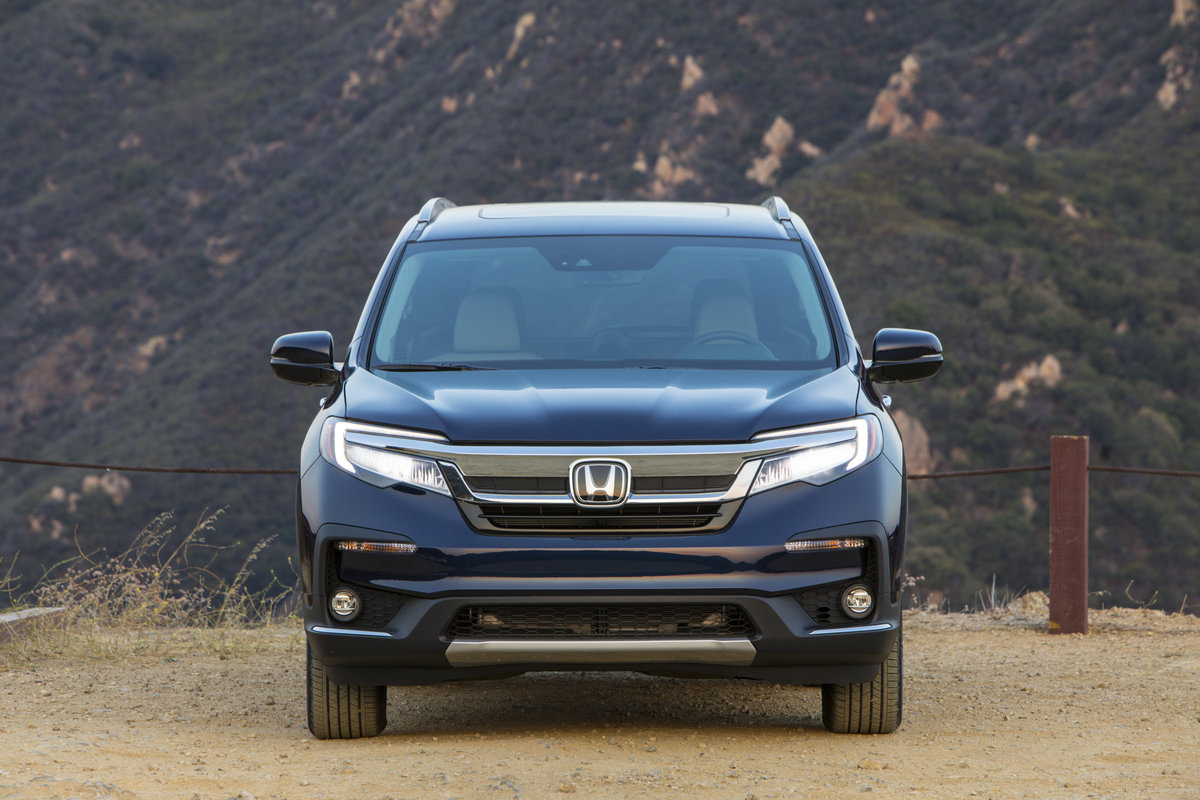
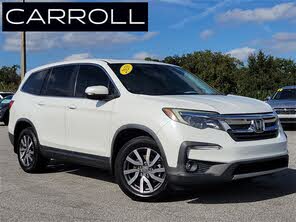
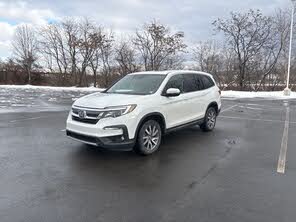
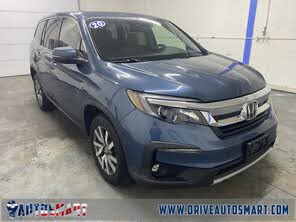
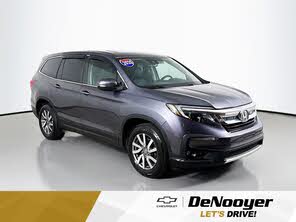
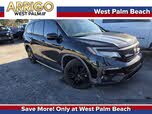
The 2020 Honda Pilot shared the same dynamic styling as the rest of the Honda lineup from that period. It featured thin LED headlights and a multi-tiered grille. A subtle uptick in the belt-line around the rear side windows created an illusion, masking the true size of the Pilot and making it appear more svelte than it really was.
Inside, the Pilot presented a modern cabin, complete with a semi-digital instrument panel encompassing analog fuel and engine-temperature gauges, complemented by a digital screen directly in front of the driver. The cabin felt comfortable and spacious with a solid level of refinement. However, hard plastics were used in many areas, which left it lagging behind rivals like the Kia Telluride, Hyundai Palisade, and Mazda CX-9 that offered more upscale interiors.
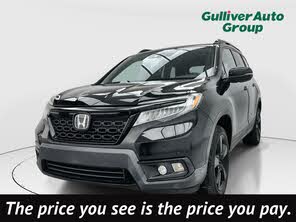
The 2020 Honda Pilot was available in several trim levels: LX, EX, EX-L, Touring, Elite, and the range-topping Black Edition. The base LX trim came with 18-inch alloy wheels, remote keyless entry, push-button start, power locks, and power windows with a one-touch driver’s window. The EX trim was well-recommended due to its added features like remote start, Apple CarPlay, Android Auto, LED fog lights, Smart Entry, tri-zone climate control, a 10-way power-adjustable driver’s seat, and heated front seats. The EX-L trim added leather upholstery, a power liftgate, a power moonroof, second-row in-door sunshades, and a 4-way power-adjustable front passenger’s seat. The Touring trim stepped up with 20-inch alloy wheels, integrated roof-rails, blue ambient interior lighting, an upgraded stereo, and courtesy approach lights. The Elite trim distinguished itself with power-folding side mirrors with integrated turn signals, a panoramic sunroof, a heated steering wheel, and heated and ventilated front seats. Finally, the Black Edition provided unique styling elements such as 20-inch black-painted wheels, black exterior paint, and black grille and accents, mirroring most of the Elite trim's amenities.
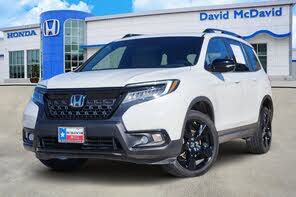
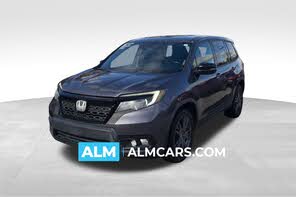
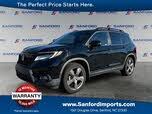
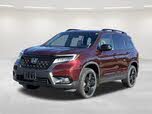
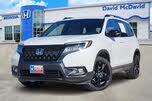
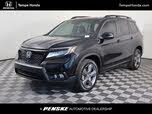
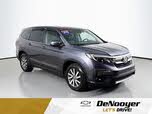
In contrast, the 2020 Honda Passport carried a more rugged and athletic persona compared to the Pilot. It was perceived as a pared-down version of the Pilot, yet it also seemed like a more pumped-up CR-V. The Passport’s exterior showcased a scratch-resistant matte black grille and bumper, 20-inch black alloy wheels, black-rimmed LED headlights, chrome exhaust finishers, and gloss-black trim. It had increased ground clearance compared to the Pilot, making it more suitable for off-road ventures.
The Passport’s interior emphasized sophistication and practicality. The cabin featured a mix of hard-wearing and soft-to-the-touch materials, with many components resembling those in the Pilot, creating a sense of familiarity. Notably, the Passport Elite trim came with perforated, heated, and ventilated front seats and a leather-trimmed heated steering wheel. It also offered heated rear outboard seats, an illuminated beverage holder, a 10-way power-adjustable driver’s seat with two-position memory, and a moonroof. The design choices in the Passport were not unique but effective, maintaining a level of comfort that Honda buyers had come to expect. Lower trims of the Passport were available with Urban and Adventure packs, adding features like crossbars, underbody spoilers, and running boards.


The 2020 Honda Pilot was powered by a 3.5-liter V6 engine across all trim levels. This engine produced 280 horsepower and 262 pound-feet of torque, which was directed to the front wheels or to an available all-wheel-drive system. On the LX, EX, and EX-L trims, the engine was paired with a 6-speed automatic transmission, while the Touring, Elite, and Black Edition trims featured a 9-speed automatic transmission, which provided more refined acceleration and potentially better fuel economy.
Honda replaced the conventional shifter with a proprietary shifter button setup, a change that was often viewed as less intuitive as it required users to look at the instrument panel or take their foot off the brake pedal to determine if the vehicle was in Park, Neutral, or Drive. Despite this, the V6 engine delivered strong acceleration, making the Pilot capable of handling everyday driving scenarios with ease. The refined and comfortable ride was suited to commutes and road trips, though it lacked real athleticism. The Intelligent Traction Management System offered drive modes like Normal, Snow, Mud, and Sand, each modifying the drivetrain and traction control to better handle various conditions, yet it wasn’t designed for serious off-roading.
The 2020 Honda Passport shared the same 3.5-liter V6 engine used in the Pilot, paired with a 9-speed automatic transmission across all trims. It delivered the same 280 horsepower and 262 pound-feet of torque. The Passport, however, had a slightly lesser fuel economy. With front-wheel drive, it achieved an EPA-estimated 20 mpg in the city, 25 mpg on the highway, and 22 mpg combined. The all-wheel-drive version managed 19 mpg city, 24 mpg highway, and 21 mpg combined.
When tested in diverse conditions, from the flats of Fresno, California to the heights of Yosemite National Park, the engine performed admirably without noticeable degradation in power even at higher elevations. The Passport’s all-wheel-drive system, particularly in the Elite trim, offered a planted feel with torque-vectoring capabilities that ensured stability on winding roads and reassured performance in inclement weather and off-road conditions. Equipped with Snow, Sand, and Mud drive modes, the Passport demonstrated impressive versatility during off-road trail driving.
Additionally, the Passport could tow up to 5,000 pounds with the available towing package, surpassing rivals like the Nissan Murano and Chevrolet Blazer, which could tow up to 1,500 pounds and 4,500 pounds, respectively.
The 2020 Honda Pilot provided a spacious 8-passenger cabin with second-row bench seating, reducing to seven passengers by opting for second-row captain’s chairs in higher trims like the Touring, Elite, and Black Edition. Unlike many rivals with cramped third rows, the Pilot offered an adult-friendly third row. Higher trims featured one-touch fold-down rear seats, enhancing third-row accessibility.
In terms of cargo capacity, the Pilot offered 83.9 cubic feet of space with the second and third rows folded. This was competitive compared to the Toyota Highlander at 84.3 cubic feet, the Kia Telluride with 87 cubic feet, the Hyundai Palisade with 86.4 cubic feet, the Subaru Ascent with 86.5 cubic feet, and less than the Volkswagen Atlas’s 96.8 cubic feet. It surpassed the Mazda CX-9, which only provided 71.2 cubic feet. EX-L trims and higher included a power liftgate, while Touring trims and above featured a hands-free power tailgate.
The Pilot’s interior was designed with family hauling in mind, featuring ample space for toys, juice boxes, and other gear. The second-row captain’s chairs allowed for a narrow passage for easier third-row access and provided separation between passengers.
In comparison, the 2020 Honda Passport was described as practical, fitting comfortably between the CR-V and the Pilot in terms of size. It could comfortably seat four adults for extended periods, though it did not offer a third row. The seating configuration included height-adjustable seatbelts for front-row occupants and three full LATCH connections in the second row.
The Passport provided 41.2 cubic feet of cargo space behind the rear seats, which was more than almost all two-row SUVs in its class. It also featured the most under-floor storage space. Although the load floor was a bit high, it was manageable given the Passport’s elevated stance. The cabin included practical storage solutions such as a roomy center console and secondary shelf spaces in the front doors, making it easy to store and access small items. Hard plastic surfaces near the floorboards were easy to clean, although the piano black trim pieces tended to collect dust and pollen.
For the 2020 Honda Pilot, the LX trim came with a 5-inch color LCD screen controlling a 215-watt, 7-speaker stereo system with a subwoofer, Bluetooth connectivity, and a USB port. Other trims featured the Display Audio 8-inch touchscreen infotainment system with Apple CarPlay and Android Auto integration. This system, however, was often criticized for lacking a tuning knob and having a confusing layout.
Most trims, except the LX, included HD Radio, SiriusXM satellite radio, and Cabin Control Remote Capability, which allowed backseat passengers to control the stereo using a smartphone app. Optional features on the EX-L included navigation, a rear-seat entertainment system, and a wall-style power outlet, which were standard on the Touring, Elite, and Black Edition. Higher trims also boasted an upgraded 590-watt, 10-speaker premium audio system and mobile hotspot capability, with the Elite and Black Edition models featuring a wireless charging pad.
The 2020 Honda Passport featured a 5.0-inch display monitor on the base Sport model, whereas the EX-L, Touring, and Elite trims included an 8.0-inch Display Audio infotainment system. This larger screen supported Apple CarPlay and Android Auto and had a manual power button and volume knob. The system had pinch, swipe, and tap functionality, making it reasonably responsive and easy to navigate. Other standard features across the Passport lineup included Bluetooth, a USB port, a seven-speaker audio system, push-button start, and keyless entry. Higher trims offered additional features like a 10-speaker audio system, satellite radio, extra USB ports, a wireless phone charger, and a Wi-Fi hotspot.
Although the Passport’s dashboard design, borrowed from the Pilot, appeared somewhat outdated, its switchgear reliability was unquestionable.
The 2020 Honda Pilot came with the HondaSensing suite of driver assistance systems, which included forward-collision avoidance, automatic emergency braking, lane-departure warning, adaptive cruise control, and automatic high beams. Standard safety equipment also featured front and side-impact airbags, child-seat anchors, Vehicle Stability Assist, and traction control. Optional safety features included front and rear parking sensors and blind-spot monitoring with rear cross-traffic alert. The Pilot earned a five-star overall crash test rating from the NHTSA and the top crash test score of Good from the IIHS. Thanks to its HondaSensing technology, the Pilot also achieved the best score of Superior in the IIHS crash prevention technology evaluation.
Similarly, the 2020 Honda Passport excelled in safety. It received good scores from both IIHS and NHTSA, earning it an IIHS Top Safety Pick designation. The Passport came standard with the Honda Sensing suite of safety and driver-assist technology, which included Collision Mitigation Braking System with forward-collision warning, lane departure warning, lane-keeping assist, automatic emergency braking, and adaptive cruise control. A standard rearview camera with birds-eye view added to its safety efforts. Higher trims offered dynamic gridlines for the rearview camera, blind-spot monitoring, parking sensors, and rear cross-traffic detection.
CarGurus highlights

According to CarGurus experts, the overall rating for the 2020 Honda Pilot was 8.0 out of 10, while the 2020 Honda Passport scored 8.8 out of 10. Based on these ratings, the 2020 Honda Passport is the clear choice for those seeking a more rugged and capable SUV with higher overall satisfaction. Its balance of practicality, capability, and superior safety ratings makes it a standout in the midsize SUV segment, outshining the broader yet less refined 2020 Honda Pilot.
Choose the 2020 Honda Passport if:
- You seek a rugged and versatile SUV with better off-road capabilities and higher ground clearance compared to the Pilot.
- You don’t need a third row and prefer a spacious five-passenger cabin with plenty of cargo space and under-floor storage.
- You appreciate practical technology and useful safety features, along with higher towing capacity in a midsize SUV.




Choose the 2020 Honda Pilot if:
- You need a spacious family hauler with seating for up to eight people and easy access to the third-row seats.
- You desire a variety of trims and options that cater to different needs, from the well-equipped EX to the luxurious Black Edition.
- You value a vehicle with high safety ratings and comprehensive safety features such as the Honda Sensing suite.




CarGurus highlights
According to CarGurus experts, the overall rating for the 2020 Honda Pilot was 8.0 out of 10, while the 2020 Honda Passport scored 8.8 out of 10. Based on these ratings, the 2020 Honda Passport is the clear choice for those seeking a more rugged and capable SUV with higher overall satisfaction. Its balance of practicality, capability, and superior safety ratings makes it a standout in the midsize SUV segment, outshining the broader yet less refined 2020 Honda Pilot.
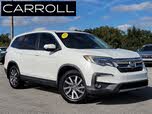
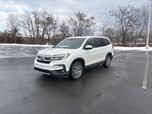
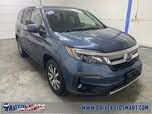
Choose the 2020 Honda Passport if:
Shop Now- You seek a rugged and versatile SUV with better off-road capabilities and higher ground clearance compared to the Pilot.
- You don’t need a third row and prefer a spacious five-passenger cabin with plenty of cargo space and under-floor storage.
- You appreciate practical technology and useful safety features, along with higher towing capacity in a midsize SUV.



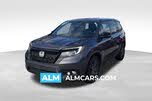

Choose the 2020 Honda Pilot if:
Shop Now- You need a spacious family hauler with seating for up to eight people and easy access to the third-row seats.
- You desire a variety of trims and options that cater to different needs, from the well-equipped EX to the luxurious Black Edition.
- You value a vehicle with high safety ratings and comprehensive safety features such as the Honda Sensing suite.




By: CarGurus + AI
At CarGurus, our team of experienced automotive writers remain at the heart of our content operation, conducting hands-on car tests and writing insightful guides that are backed by years of industry experience. To complement this, we are harnessing AI to make our content offering more diverse and more helpful to shoppers than ever. To achieve this, our AI systems are based exclusively on CarGurus content, ratings and data, so that what we produce is both unique to CarGurus, and uniquely helpful to car shoppers.