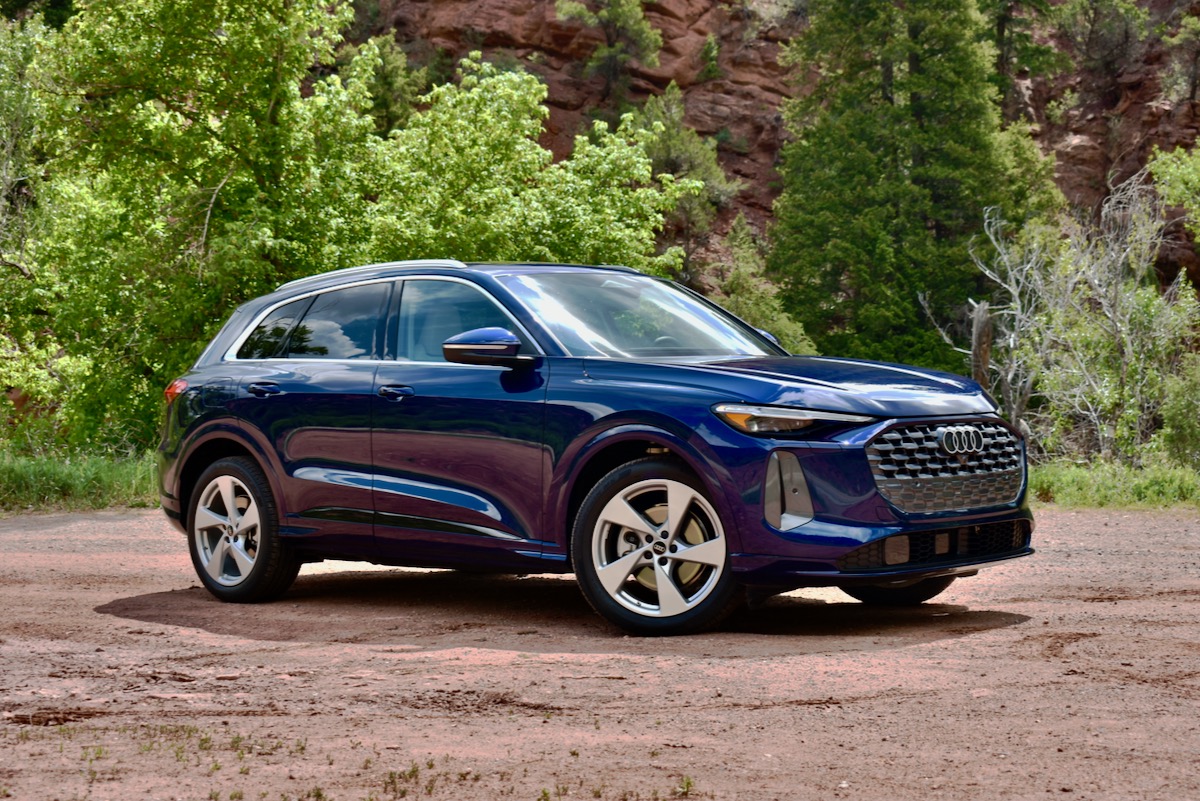
Finding a luxury SUV that genuinely seats three rows of passengers—without sacrificing the refinement, technology, and driving experience that justify the premium price—is a narrower search than it might first appear. Many vehicles in this segment technically offer a third row, but the real-world usability of that space varies considerably from model to model. Some, like the Cadillac Escalade and Mercedes-Benz GLS-Class, are purpose-built for family hauling with adult-friendly rear seating and generous cargo room. Others, like the Genesis GV80 and Audi Q7, include a third row as more of an occasional-use option. Both have their merits.
Beyond seating capacity, buyers in this segment are weighing a wide range of priorities: towing capability, fuel economy or electric range, off-road hardware, driver-assistance technology, and how well the infotainment system holds up in daily use. The Lexus GX, for instance, brings impressive towing numbers and a body-on-frame build, while the Lucid Gravity takes a completely different approach with an all-electric powertrain and up to an estimated 437 miles of range. The Range Rover and BMW X7 appeal to those who want a more driver-focused experience, while the Volvo XC90 and Mercedes-Benz GLS lean into comfort and safety credentials. This guide covers 10 of the best luxury SUVs with third-row seating currently available to help you find the right fit for your family and budget.
What Makes CarGurus Best Cars Guides Different
The Best Luxury SUVs with 3 Rows
FAQs
Shopping Tools
Related Topics
1. Audi Q7
CarGurus expert rating: 7.3 out of 10
CarGurus user rating: 4.7 out of 5
Percentage of Good and Great Deals available on CarGurus: 37.3%
Overall CarGurus rating: 4.6 out of 5
| Pros |
Cons |
| Stylish design |
Poor fuel economy |
| Wireless Apple CarPlay and Android Auto |
Cramped third row |
| Standard all-wheel drive (AWD) |
Outdated advanced driver-assistance features |
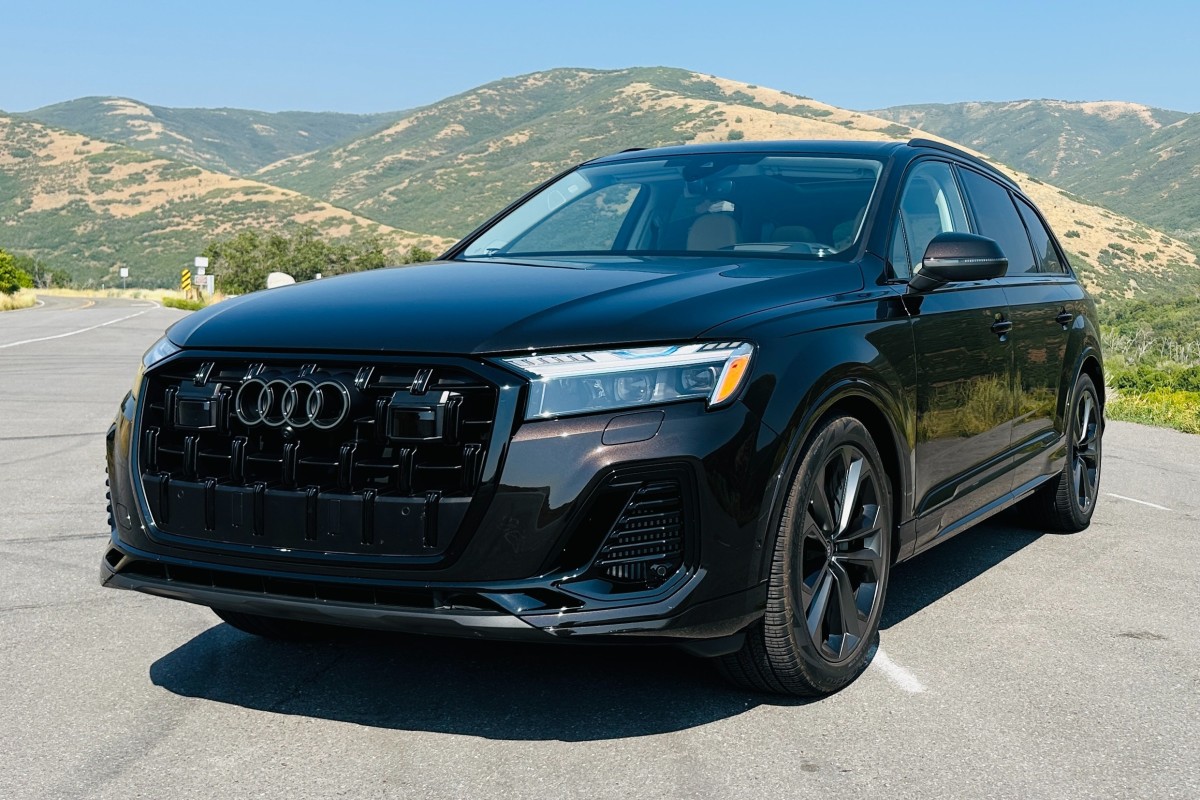
For shoppers who want a luxury three-row SUV that prioritizes a premium feel and confident road manners, the refreshed 2025 Audi Q7 leans into what Audi does best: sharp design, a clean cabin layout, and standard AWD across the lineup. Power depends on trim, with a 2.0-liter turbo four-cylinder making 261 hp and 273 lb-ft of torque, or a 3.0-liter turbo V6 with 335 hp and 365 lb-ft of torque. The Q7 is polished and composed in daily driving, and it can feel surprisingly agile for a big family hauler—especially when equipped with available all-wheel steering.
Where the Q7's three-row mission gets more complicated is in the way it uses its space. Audi says it seats seven, but the third row is best reserved for kids, and access back there can be awkward. Cargo room is also on the modest side for the class, with 14.2 cubic feet behind the third row, 35.7 cubic feet with it folded, and 69.6 cubic feet with both rear rows down. Tech is a strong point—wireless Apple CarPlay and Android Auto, Google-based navigation, and an available 360-degree camera help day-to-day usability—but some driver-assistance features feel behind newer rivals, particularly lane-centering behavior. Pricing starts at $61,795 including destination and can climb quickly with options, so value-minded buyers will want to be careful about how they spec it.
The CarGurus Verdict: "While the 2025 Audi Q7 has a lot going for it in terms of driving dynamics and engine prowess, it falls behind the competition when it comes to safety tech. Further, the third row is cramped for anyone but the smallest of humans, and the price can skyrocket as you move up the trim line." - Emme Hall
Read our most recent Audi Q7 review
2. BMW X7
CarGurus expert rating: 7.3 out of 10
CarGurus user rating: 4.8 out of 5
Percentage of Good and Great Deals available on CarGurus: 37.3%
Overall CarGurus rating: 4.6 out of 5
| Pros |
Cons |
| Great handling |
Potentially polarizing design |
| Easy-to-use technology |
Unimpressive interior materials |
| Reasonable value for money |
|
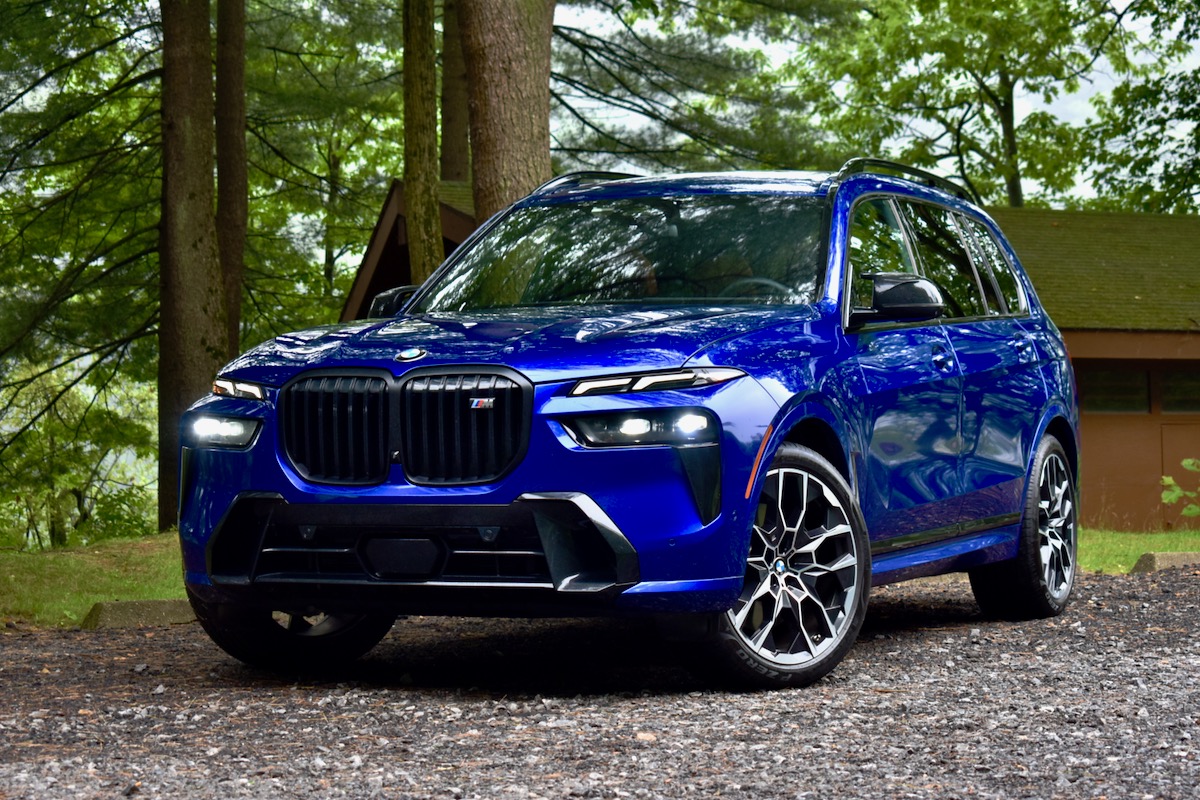
For families shopping for a three-row luxury SUV, the BMW X7 leans into a mix of space, comfort, and the brand's familiar road manners. It's available with either a six-seat setup (second-row captain's chairs) or seven seats (a second-row bench), and it delivers competitive room across all three rows. Cargo versatility is a plus for road trips and daily hauling, with 48.6 cubic feet behind the rear seats and 90.4 cubic feet with the second and third rows folded, and the split tailgate adds real-world convenience for loading, keeping bags from sliding out, or even serving as a quick bench.
On the road, standard xDrive AWD and a 48-volt mild-hybrid system support a lineup that ranges from the 375-hp turbocharged 3.0-liter inline-six (398 lb-ft of torque) in the xDrive40i to the 523-hp twin-turbo 4.4-liter V8 (553 lb-ft of torque) in the M60i, with an even hotter Alpina XB7 rated at 631 hp and 590 lb-ft of torque. Available chassis tech like rear-wheel steering and adaptive air suspension with active roll stabilization helps the X7 feel surprisingly manageable for its size, while the curved-display cabin brings modern infotainment with wireless Apple CarPlay and Android Auto. A key shopping note is that some advanced driver-assistance features—like adaptive cruise control with Traffic Jam Assist and BMW's Highway Assistant—require the Driving Assistance Professional Package, and towing tops out at 7,500 pounds.
The CarGurus Verdict: "BMW loyalists will find more of what they love about the brand, while the X7's superb driving dynamics and reasonable pricing (for this high-end segment, that is) should give customers of rival brands something to think about." - Stephen Edelstein
Read our most recent BMW X7 review
3. Cadillac Escalade
CarGurus expert rating: 7.7 out of 10
CarGurus user rating: 4.5 out of 5
Percentage of Good and Great Deals available on CarGurus: 35.9%
Overall CarGurus rating: 4.6 out of 5
| Pros |
Cons |
| Stylish design |
Poor fuel economy |
| Stunning technology |
Brakes don't inspire confidence |
| Impressive ride quality |
|
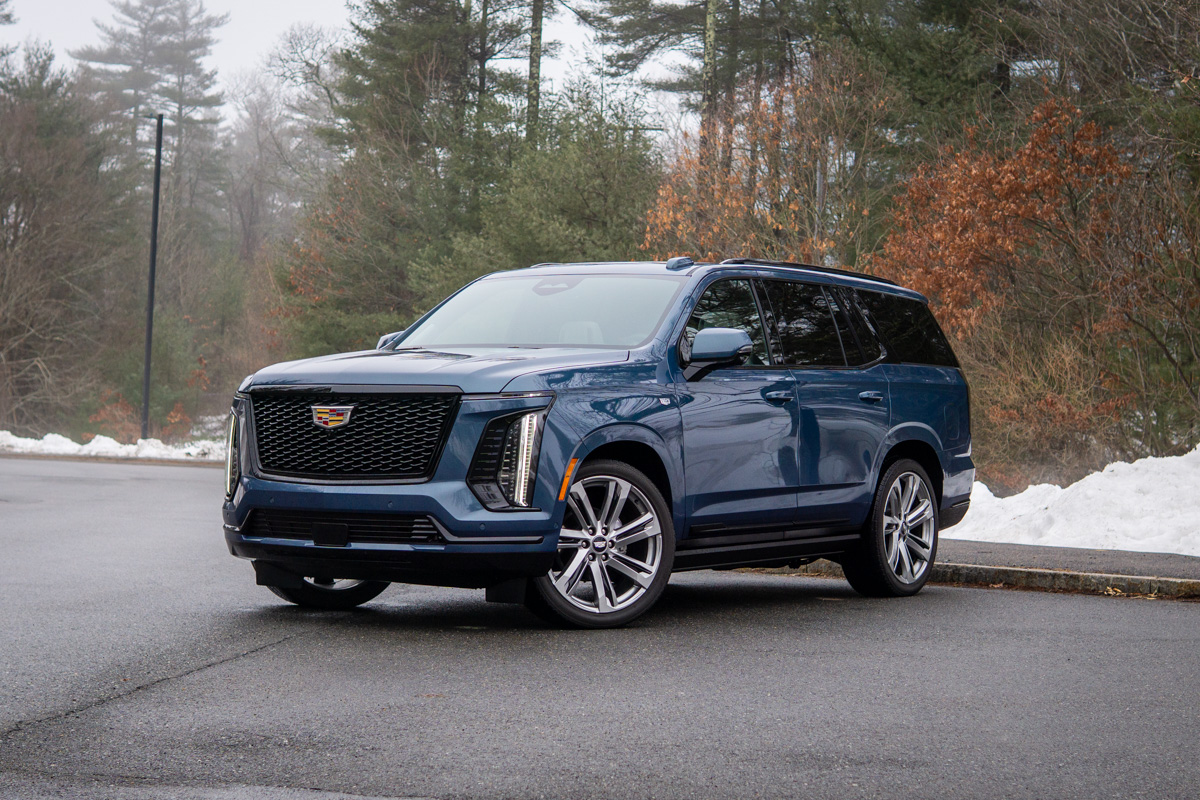
If you want a luxury SUV with three rows that feels genuinely big inside, the Cadillac Escalade delivers. The standard-wheelbase model seats up to eight and backs it up with usable cargo room: 25.5 cubic feet behind the third row, 72.9 cubic feet with the third row folded, and 121 cubic feet with both rear rows down, plus power-folding second and third rows to make quick work of kid-hauling or airport duty. Second-row legroom is generous (41.7 inches), while the third row is better for kids or shorter adults (34.9 inches of legroom), so shoppers planning frequent adult third-row use may want to step up to the longer Escalade ESV for more space behind row three.
Under the hood, every standard Escalade gets a naturally aspirated 6.2-liter V8 with 420 hp and 460 lb-ft of torque paired with a 10-speed automatic, and the available adaptive air suspension helps it stay composed on rough roads despite its truck-based roots. Technology is a major part of the experience, led by a 55-inch curved display setup and standard wireless Apple CarPlay and Android Auto, plus Super Cruise hands-free highway driving to reduce fatigue on long trips; families can also prioritize rear entertainment and upgraded second-row seating packages. Safety tech is plentiful (including automatic emergency braking and a 360-degree camera), and the National Highway Traffic Safety Administration (NHTSA) gives it a five-star overall rating, but ownership realities include thirsty fuel economy (EPA-estimated 16 mpg combined for 4WD) and brakes that are worth upgrading if you expect to drive it hard or tow—rated at 7,900 pounds with 4WD.
The CarGurus Verdict: "The 2026 Cadillac Escalade remains the default choice in full-size American luxury SUVs with good reason. Its platform limitations are real, but a well-optioned example is genuinely difficult to fault on comfort, technology, or presence. Buyers should budget accordingly for fuel." - Matt Smith
Read our most recent Cadillac Escalade review
Search for Cadillac Escalade
See all

4. Land Rover Range Rover
CarGurus expert rating: 7.7 out of 10
CarGurus user rating: 4.6 out of 5
Percentage of Good and Great Deals available on CarGurus: 35.0%
Overall CarGurus rating: 4.6 out of 5
| Pros |
Cons |
| Multiple powertrain options |
Unintuitive technology |
| Stylish design |
Poor value for money |
| Standard all-wheel drive |
|
For luxury-SUV shoppers who actually need three rows, the Range Rover's long-wheelbase configuration can be optioned with a third row, and for 2025 those three-row models are seven-seaters with second-row captain's chairs and a third-row bench. Headroom is generous across all three rows, and Land Rover makes third-row access less of a hassle with power-folding seats and conveniently placed controls. The tradeoff is cargo space: with the third row up, you're working with 11 cubic feet behind it, though the split tailgate and air suspension "kneel" feature help when you're loading bulky gear, and towing capability is a strong 8,200 pounds.
On the road, the Range Rover leans hard into refinement and ride comfort, even riding smoothly on big optional wheels, while still backing up its luxury image with real off-road hardware like a two-speed transfer case, Terrain Response modes, and height-adjustable air suspension. Powertrain choices range from a 395-hp turbo 3.0-liter inline-six with 405 lb-ft of torque to a BMW-sourced twin-turbo 4.4-liter V8 (523 hp and 553 lb-ft in most trims, up to 606 hp in SV form), plus a plug-in hybrid option with an EPA-rated 53 miles of electric range. Tech is modern on paper—standard 13.7-inch digital gauges and a 13.1-inch touchscreen with wireless Apple CarPlay and Android Auto—but the minimalist, touch-heavy control layout can be frustrating in daily use, and while key driver assists are standard, Land Rover doesn't offer a hands-free highway system like some rivals.
The CarGurus Verdict: "The Range Rover excels in refinement, while offering competitive interior space and towing capacity. But its user interface remains a weak point." - Stephen Edelstein
Read our most recent Land Rover Range Rover review
Search for Land Rover Range Rover
See all
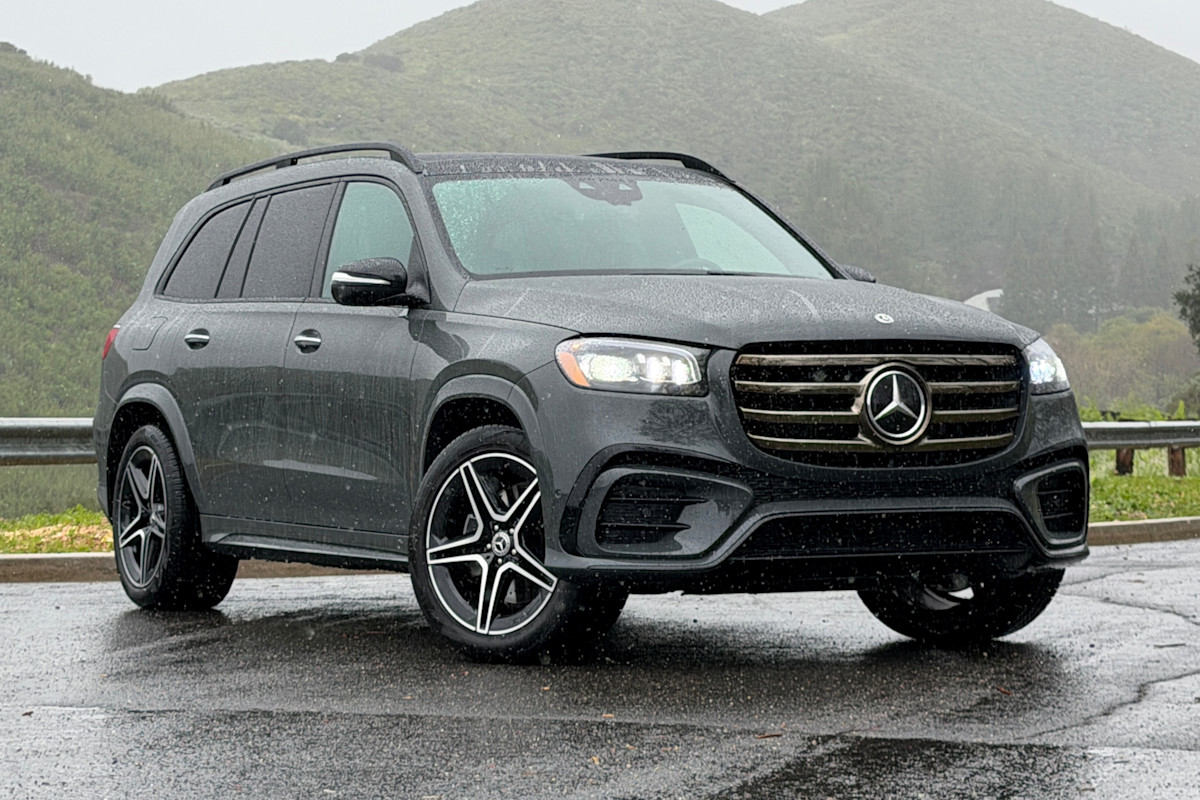
5. Mercedes-Benz GLS-Class
CarGurus expert rating: 7.8 out of 10
CarGurus user rating: 4.7 out of 5
Percentage of Good and Great Deals available on CarGurus: 36.5%
Overall CarGurus rating: 4.6 out of 5
| Pros |
Cons |
| Premium interior materials |
Unimpressive fuel economy |
| Comfortable |
Third-row seat entry and exit |
| Impressive technology |
Less cargo space than some rivals |
If your priority list for a three-row luxury SUV starts with comfort, cabin craftsmanship, and a premium tech experience, the Mercedes-Benz GLS is designed to deliver. It comes standard with three-row seating for seven (or a no-cost swap to second-row captain's chairs for six), and it has the kind of quiet, cushioned ride you want for long family road trips—helped along by standard Airmatic adaptive suspension. The third row is usefully adult-friendly for this class, though entry/exit can be a bit of a climb, and families that pack heavy should note the GLS trails the biggest truck-based rivals for maximum cargo room (it offers 17.4 cubic feet behind the third row, expanding to 84.7 cubic feet with the second row folded).
In GLS 450 form, a turbocharged 3.0-liter inline-six with mild-hybrid assist makes 375 hp and 369 lb-ft of torque, paired with a nine-speed automatic and standard 4Matic AWD; it's quick enough for merging and loaded driving, and it can tow up to 7,700 pounds. Tech is a strong suit, with dual 12.3-inch screens, an easy-to-learn MBUX interface, wireless Apple CarPlay and Android Auto, and a Burmester surround-sound system with Dolby Atmos. There's a long list of driver-assistance features, but shoppers expecting a hands-free highway system will need to look elsewhere, and fuel economy is merely acceptable for the segment (an EPA-estimated 21 mpg combined for the GLS 450).
The CarGurus Verdict: "Large, luxury SUVs are a lot more expensive than they used to be, and while the 2026 Mercedes GLS can't match them for sheer size and capability, its manageable dimensions, undeniable comfort, refinement, and rewarding driving dynamics make a strong case." - Christian Wardlaw
Read our most recent Mercedes-Benz GLS-Class review
Search for Mercedes-Benz GLS-Class
See all
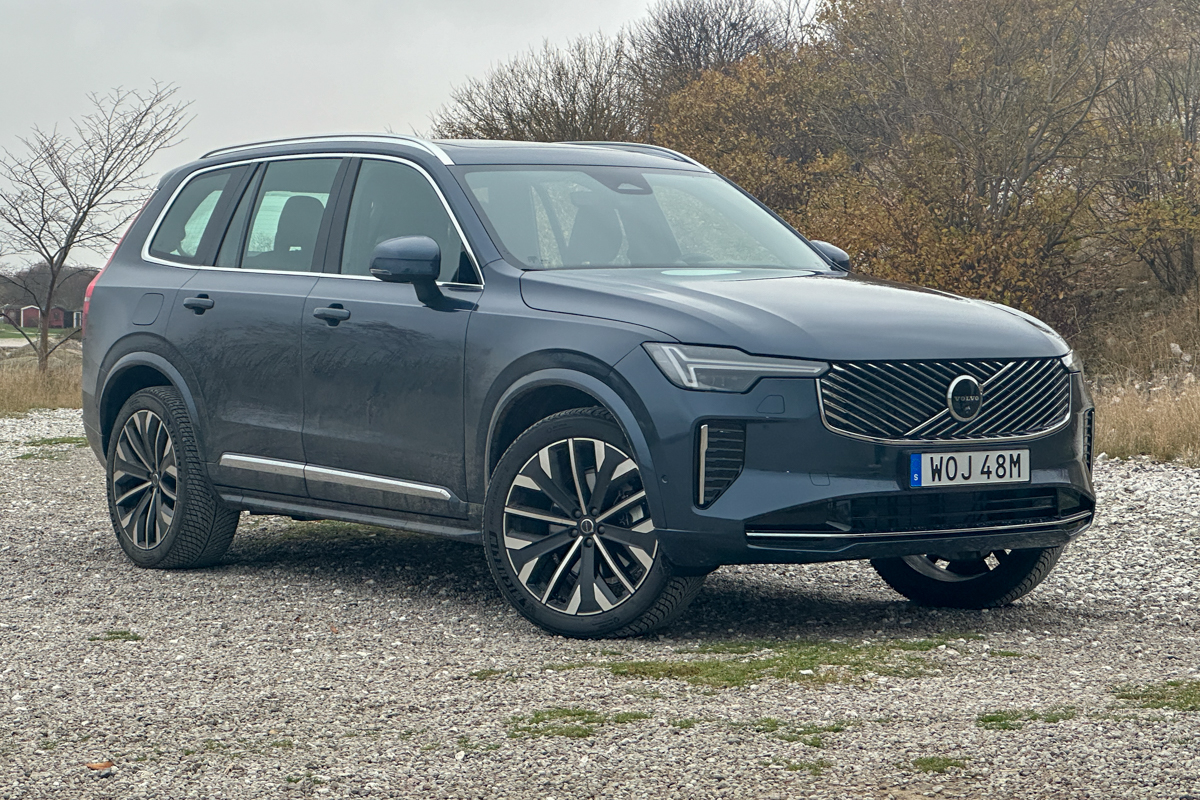
6. Volvo XC90
CarGurus expert rating: 8.3 out of 10
CarGurus user rating: 4.7 out of 5
Percentage of Good and Great Deals available on CarGurus: 35.8%
Overall CarGurus rating: 4.6 out of 5
| Pros |
Cons |
| Stylish design |
Semi-autonomous driving not available |
| Great safety ratings |
Top-tier sound system costs extra even on top trim |
| User-friendly technology |
|
The Volvo XC90 remains a luxury three-row SUV for shoppers who want an elegant design that doesn't feel flashy, now with a freshened look and upgraded cabin details for 2025. Inside, a revised center console makes everyday life easier, including a newly positioned wireless charging pad that's less likely to cook a phone in the sun, plus standard USB-C ports for the first two rows. The third row is still the tightest place to spend time—36.3 inches of headroom and 31.9 inches of legroom—but those numbers are competitive in this class, and the panoramic roof helps the rear seats feel less claustrophobic for kids and occasional adult use.
Powertrain choices range from the mild-hybrid B5 (247 hp, 266 lb-ft of torque) and more powerful B6 (295 hp, 310 lb-ft) to the plug-in hybrid T8, which brings 455 hp and 523 lb-ft of torque along with up to 33 miles of electric range when fully charged. Tech is centered on a larger Android-based touchscreen with Google Built-In, while Apple CarPlay is also standard; higher trims can add a head-up display and an optional 19-speaker Bowers & Wilkins audio system. Volvo's safety fundamentals remain a major draw, with smooth standard driver assists, though shoppers cross-shopping newer rivals should note the XC90 doesn't offer a hands-free highway driving system.
The CarGurus Verdict: "The Volvo XC90 was already quite a good vehicle. It's earned its position as Volvo's flagship SUV with oft-praised style and substance. For 2025, it has been made even better." - Natalie Harrington
Read our most recent Volvo XC90 review

7. Genesis GV80
CarGurus expert rating: 8 out of 10
CarGurus user rating: 5 out of 5
Percentage of Good and Great Deals available on CarGurus: 39.0%
Overall CarGurus rating: 4.5 out of 5
| Pros |
Cons |
| Stylish design |
Poor fuel economy |
| Standard all-wheel drive |
Uncomfortable seats |
| Wireless Apple CarPlay/Android Auto |
|
Three-row luxury SUV shoppers should approach the GV80 as a two-row premium SUV first, with a third row available if you choose the right trim. Most versions seat five, but the Advance trim can add a third row; just know that rear-most space is tight at about 30 inches of legroom, making it a better fit for kids than adults. Up front and in the second row, Genesis leans hard into upscale design and materials, and the available power-adjustable second row can recline for comfort, though seat firmness is a recurring complaint. Cargo space figures for 2025 haven't been published yet, but Genesis says capacity should be similar to the prior model's roughly 35 cubic feet behind the second row.
Power comes from either a 300-hp turbo 2.5-liter four-cylinder (311 lb-ft of torque) or a 375-hp twin-turbo 3.5-liter V6 (391 lb-ft of torque), and all trims include AWD—a plus for families dealing with winter weather and for confident, no-drama traction year-round. Tech is a major draw for 2025, led by a wide 27-inch OLED display and the addition of wireless Apple CarPlay and Android Auto (though availability may be delayed), plus features like a head-up display and an available Bang & Olufsen audio system. Safety tech is also extensive, with standard Highway Drive Assist and available extras like a 360-degree camera, but some common functions (like toggling lane keeping assist) take too many screen taps. If towing is part of your family-weekend plan, Genesis says the GV80 can pull up to 6,000 pounds when the trailer has its own brakes, though fuel economy is a weak point—especially with the V6 (EPA-rated 16/22/19 mpg city/highway/combined).
The CarGurus Verdict: "Genesis improved the technology of the GV80 for 2025 by adding wireless Apple CarPlay and Android Auto, but the SUV returns poor fuel economy and the seats are far from comfortable. Still, the GV80 undercuts its European counterparts on price and definitely deserves a test drive." - Emme Hall
Read our most recent Genesis GV80 review
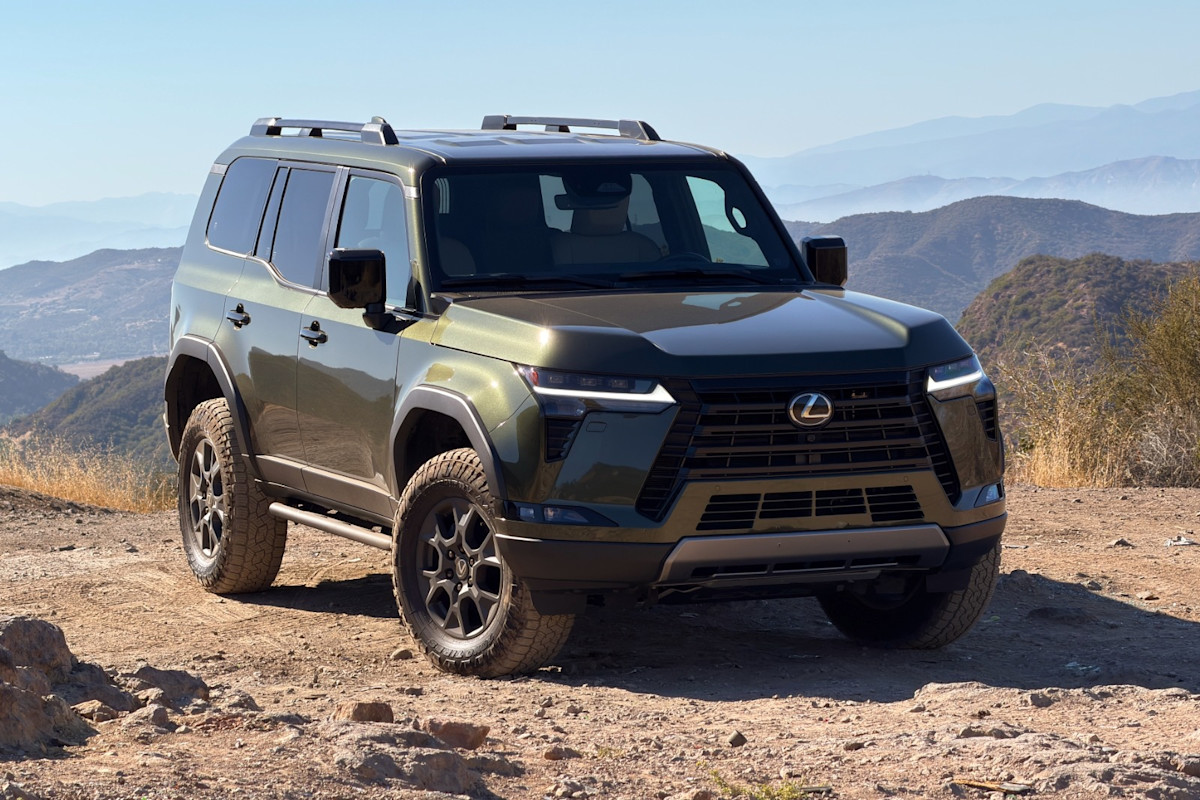
8. Lexus GX
CarGurus expert rating: 7 out of 10
CarGurus user rating: 4.6 out of 5
Percentage of Good and Great Deals available on CarGurus: 35.6%
Overall CarGurus rating: 4.5 out of 5
| Pros |
Cons |
| Fun to drive |
Poor fuel economy |
| Plenty of cargo space |
Challenging to enter and exit |
| Easy-to-use technology |
Cramped third row |
If you want a luxury three-row SUV that leans heavily toward adventure travel, the Lexus GX plays directly to that brief. It pairs a rugged, off-road-ready vibe with the kind of cabin polish and straightforward infotainment that makes it easy to live with day to day, and its boxier shape helps deliver useful cargo space when you’re hauling gear for a weekend away.
As a family hauler, the GX works best when you treat the third row as occasional-use seating for kids or shorter trips, since it can feel tight back there. It’s also a tall SUV, so stepping up into the cabin can be a chore for smaller passengers, and fuel economy is a clear trade-off for its capability-focused character—factors worth weighing if your “three-row” needs are more carpool-and-commute than trailhead-and-tow.
The CarGurus Verdict: "The 2026 Lexus GX is the definition of luxury off-roading." - Christian Wardlaw
Read our most recent Lexus GX review
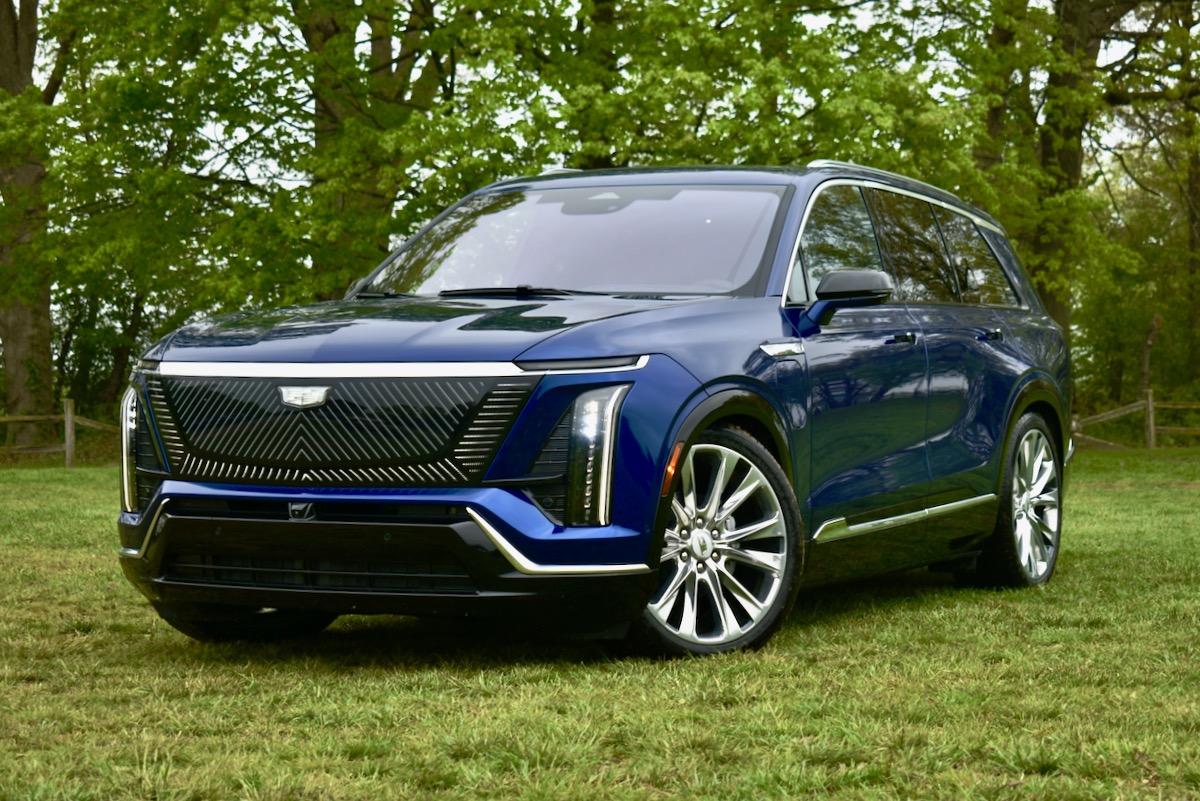
9. Cadillac Vistiq
CarGurus expert rating: 7.7 out of 10
CarGurus user rating: out of 5
Percentage of Good and Great Deals available on CarGurus: 34.6%
Overall CarGurus rating: 3.7 out of 5
| Pros |
Cons |
| Stylish design |
Still no Apple CarPlay |
| Great handling |
Big step up in price from the base model to higher trim levels |
| Standard all-wheel drive |
|
Cadillac positions the Vistiq as a more sensible, "baby Escalade" three-row EV: it keeps the bold, upright Cadillac look, but in a package that's easier to live with day to day than the oversized Escalade IQ. It also leans into the brand's modern, screen-forward cabin design with a 33-inch curved display and standard features luxury families will appreciate in tight parking lots, like a 360-degree camera system and a rearview camera mirror (handy when the third row is occupied).
For three-row duty, the Vistiq offers six- or seven-passenger seating and a third row that's genuinely usable for smaller adults, plus family-friendly details like USB ports and cupholders in each row. Cargo space measures 15.2 cubic feet behind the third row, 43 cubic feet behind the second row, and 80.2 cubic feet with the rear seats folded, and maximum towing capacity is 5,000 pounds. Under the skin, every Vistiq gets dual-motor AWD with 615 hp and 650 lb-ft of torque (in Velocity Max mode), and available air suspension and rear-axle steering help this big SUV feel easier to place on rough roads and in tight spaces—though shoppers should note the lack of Apple CarPlay and that Cadillac expects at least 300 miles of range.
The CarGurus Verdict: "The Vistiq is a practical three-row SUV that looks and drives like a true Cadillac, without the excess of its big sibling." - Stephen Edelstein
Read our most recent Cadillac Vistiq review
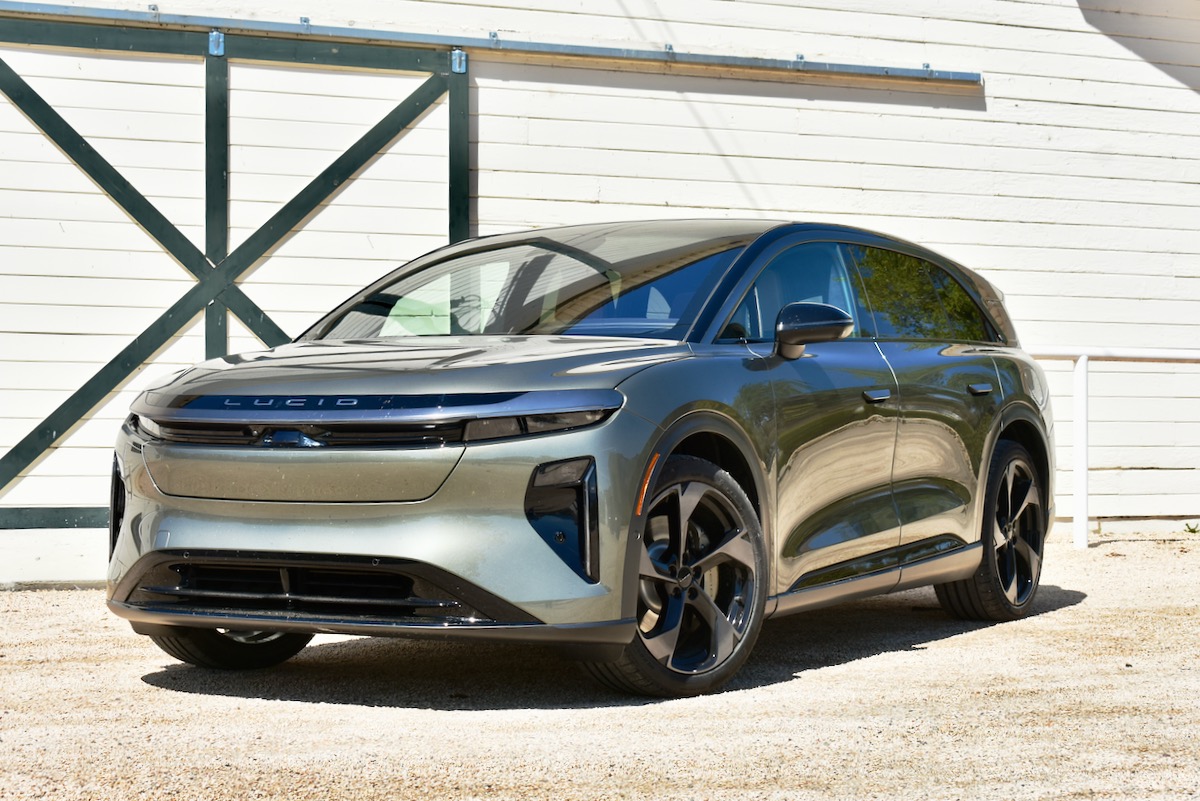
10. Lucid Gravity
CarGurus expert rating: 8 out of 10
CarGurus user rating: out of 5
Percentage of Good and Great Deals available on CarGurus: 35.3%
Overall CarGurus rating: 3.7 out of 5
| Pros |
Cons |
| Great handling |
Potentially polarizing design |
| Impressive electric range |
Awkward touchscreen controls |
| Plenty of cargo space |
|
Lucid's first SUV takes the brand's Air-sedan engineering and stretches it into a more family-friendly shape, including an available three-row, seven-seat configuration aimed squarely at luxury 3-row shoppers. The Gravity's aerodynamic priority (Lucid says it has a 0.24 drag coefficient) leads to a look that may read more minivan than traditional SUV, but it also supports big range expectations—Lucid estimates up to 437 miles for three-row models on the smallest wheel setup. Power is anything but practical-car humble: the launch Grand Touring model uses a dual-motor AWD setup with 828 hp and 909 lb-ft of torque, with a claimed 0–60 mph time of 3.4 seconds, plus available rear-wheel steering and adaptive air suspension to make this big SUV feel far smaller on a curvy road.
For day-to-day three-row duty, the Gravity backs up its performance with genuinely useful packaging, including strong third-row headroom and legroom and easy access thanks to wide openings and a clamshell-style power tailgate. Three-row models offer 21.3 cubic feet of cargo space behind the third row, expanding to 56.2 cubic feet behind the second row and 106.2 cubic feet with all rear seats folded, plus an 8.1-cubic-foot frunk up front. Tech leans heavily on screens—a curved 34-inch display with an 11-inch touchscreen below—and while the cabin looks clean and upscale, some basic functions (like climate adjustments via sliders) can be fiddly. Safety tech includes standard DreamDrive 2 driver assists, with available upgrades that add a surround-view camera system and hands-free highway driving, though official NHTSA and Insurance Institute for Highway Safety (IIHS) crash-test ratings weren't available at publication time.
The CarGurus Verdict: "The Gravity takes a very different approach to the electric SUV mission brief—and it's all the better for it." - Stephen Edelstein
Read our most recent Lucid Gravity review
The Best Luxury SUVs with 3 Rows FAQs
Which luxury three-row SUV has the most cargo space?
Among the vehicles in this guide, the Cadillac Escalade leads the pack with 121 cubic feet of total cargo space when both rear rows are folded, and 25.5 cubic feet behind the third row with all seats up. The BMW X7 is also competitive, offering 90.4 cubic feet with the second and third rows folded. At the other end of the spectrum, the Range Rover offers just 11 cubic feet behind its third row, and the Audi Q7 provides 14.2 cubic feet in the same configuration—so cargo capacity varies significantly across this segment and is worth checking carefully before you buy.
Which luxury three-row SUVs offer the best towing capacity?
If towing is a priority, the Lexus GX leads this group with a maximum towing capacity of up to 9,063 pounds. The Range Rover is close behind at 8,200 pounds, followed by the Cadillac Escalade at 7,900 pounds (with 4WD) and the BMW X7 at 7,500 pounds. The Mercedes-Benz GLS-Class is rated at 7,700 pounds, while the Genesis GV80 tops out at 6,000 pounds and the Cadillac Vistiq at 5,000 pounds. The Lucid Gravity's towing rating was not specified at publication time.
Which luxury three-row SUVs have the most usable third rows for adults?
Third-row usability varies considerably in this segment. The Cadillac Escalade, Mercedes-Benz GLS-Class, and Lucid Gravity are generally considered the most adult-friendly in terms of headroom and legroom in the third row. The Range Rover's long-wheelbase three-row configuration also offers generous headroom across all rows. By contrast, the Audi Q7, Volvo XC90, and Genesis GV80 have tighter third rows that are better suited to children or occasional short-trip use for adults.
Are there any electric or plug-in hybrid options among luxury three-row SUVs?
Yes. The Lucid Gravity is the only fully electric option in this guide, with an estimated range of up to 437 miles for three-row models. For plug-in hybrid options, the Range Rover offers a PHEV with an EPA-rated 53 miles of electric range, and the Volvo XC90 T8 provides up to 33 miles of electric range. The Cadillac Vistiq is also fully electric, with Cadillac estimating at least 300 miles of range. The remaining models—Audi Q7, Lexus GX, Mercedes-Benz GLS-Class, BMW X7, Cadillac Escalade, and Genesis GV80—are conventional gasoline-powered vehicles, though several use mild-hybrid systems to improve efficiency.
Which luxury three-row SUVs offer hands-free highway driving?
Hands-free highway driving is available on a select few models in this segment. The Cadillac Escalade includes Super Cruise as standard equipment, making it one of the more accessible options for this feature. The Lucid Gravity offers hands-free highway driving as an available upgrade through its DreamDrive system. The Genesis GV80 includes standard Highway Drive Assist, though it is not a fully hands-free system. The BMW X7 requires the Driving Assistance Professional Package for its Highway Assistant feature. The Audi Q7, Mercedes-Benz GLS-Class, Volvo XC90, and Range Rover do not currently offer a hands-free highway driving system.
What Makes CarGurus Best Cars Guides Different?
Most car-shopping websites publish lists of the best cars across a variety of categories, with recommendations generally driven by editorial expertise. Here's what makes ours different: In addition to the insights and verdicts of our team of car-testing experts, our best cars guides take into account other factors that we know matter to buyers-real owner experiences and current market value.
Our expert reviewers are among this country's most trusted automotive journalists, also writing for publications including US News and World Report, Edmunds, Digital Trends, J.D. Power, and Car & Driver. They put each car through real-world testing and create detailed reviews of performance in a range of categories, from practicality and driving manners to cost-effectiveness and safety.
We also analyze hundreds of thousands of used car listings on CarGurus.com to track which models consistently offer the highest percentage of best deals relative to how many are listed for sale. Then we factor in reviews from owners-people who actually live with these cars every day. Our proprietary Best Cars algorithm then creates a final Overall CarGurus rating combining expert scores, user reviews, and the percentage of listings that have earned the Good or Great Deal rating. This multi-pronged approach reveals not just which cars excel on paper, but which ones deliver satisfaction and value when you're ready to buy.
The CarGurus market data used in this guide was last updated in September 2026. Values were accurate at time of publication and should be used as a guide only.
Shopping Tools
Related Topics