2013 Volkswagen Golf Reviews, Pricing & Specs
Write a review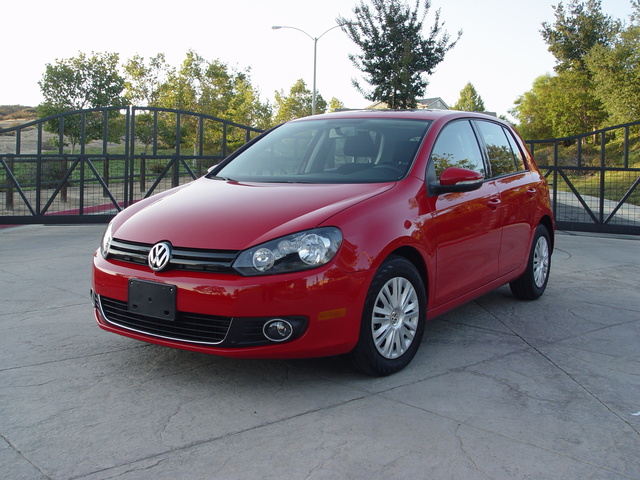
Hot off a possibly American manufacturing line, the next-generation Golf sets its sights on a landing strip in the 2013 model year. Volkswagen may decide to keep manufacturing of the all-new 2013 Golf in Germany for now, given all the issues with the American-built 2012 Passat, but if those issues can be cleared away soon enough, the new Tennessee plant could get production of more than the one mainstay built on Volkswagen's innovative new platform. Whether the same changes to the 2012 Passat carry over to the 2013 Golf depend largely on where it will be manufactured, since it would be silly to make so many changes for what is likely to be short-lived production in Germany, and Tennessee is already equipped to build the American custom model.
Where there's a will, there's a way, and V-dub is on a mission to get more 'Wagens in American hands than ever before by taking over the otherwise Honda- and Toyota-dominated markets. That means bringing down the cost to you by making certain models States-side with a few changes that may be hard to swallow—or very happy news, depending on your perspective. As for this reviewer, I would be very sad to see the front suspended on struts, depriving the Golf of all that refinement in its driving dynamics—but we Americans apparently like the ride cushy with a gradual steering response, so that's what we can look forward to at some point in the so-called Mark 7 Golf, even if not immediately for this 7th generation's debut. If the entry fee drops by a few grand, it's pretty much a sure sign the deed is done.
On the upside, wherever the Mark 7 Golf is built and however it is priced, it will be roomier, more upscale, greener and offered in more variety. Roomier because the new platform is more space-efficient than previous models, while also adding 2 inches to the wheelbase and width. Upscale because Volkswagen is including a dizzying list of premium-class features thanks to its new platform coming with a 20% cost cut. Greener because a plug-in electric is expected to join the lineup from its debut (though unlikely), while Volkswagen's innovative MQB platform also allows coupe and convertible body styles to join the lineup in addition to the traditional 2-door and 4-door hatch offering. These things you can rest assured are a "when" and very far from any doubt, but precisely when is still a bit up in the air.
Likely engines include the familiarly peppy pair, a 170-hp 2.5-liter 5-cylinder regular-grade gas burner and a 140-hp, 236 lb-ft of torque 2-liter 4-cylinder turbodiesel, dubbed the TDI. These will very likely be paired with the usual 6-speed manual or 6-speed automated-manual transmissions sending power to the front wheels, though reportedly the torque-converting tranny was ditched for better fuel economy, so even though this Golf is 250 pounds lighter, it may still be slower with the auto-manual than previous iterations.
The plug-in EV may not hit our streets until about 2015, which is also right about the time the soft-top and coupe are due, simply because there's no concept in testing yet. However, based on the Up minicar with the Blue-E Motion prototype, the Golf EV should do 115 hp for about 93 miles before needing a charge. It would be the slowest to reach 60 mph, at a paltry 11.8 seconds, but spending no money on gas just might make the EV sit right in that happy middle ground—versus 24 mpg city/31 highway at best with the 2.5 on a stick, or 30/42 at best with the expensive TDI and automated-manual instead.

User reviews for 2013 Volkswagen Golf
Write a review2013 Volkswagen Golf Pricing
Trims & specs
Air Conditioning
Single front air conditioning zones
Airbags
Dual front airbags · Passenger airbag deactivation: occupant sensing deactivation · Front side airbags · Front side curtain airbags
Audio System
Antenna Type: diversity · Auxiliary audio input: jack · Single disc in-Dash CD · MP3 player: CD MP3 Playback · AM/FM radio · Total Number of Speakers: 8
Brakes
ABS: 4-wheel · Braking assist: hill start assist · Front brake diameter: 11.3 · Front brake width: 1.0 · Front brakes: ventilated disc · Rear brake diameter: 10.7 · Rear brake width: 0.4 · Rear brakes: disc
Comfort Features
Armrests: rear center folding with pass-thru · Door trim: cloth · Floor Mat Material: carpet · Floor Material: cargo area carpet · Floor Mats: front
Convenience Features
Assist handle: rear · Center console: front console with armrest and storage · Cupholders: front · Easy entry: manual driver and passenger seat · Multi-function remote: keyless entry · One-touch windows: 2 · Power outlet(s): 12V front · Power steering: speed-proportional · Power windows: lockout button · Reading lights: front · Rear power outlet: 12V · Steering wheel: tilt and telescopic · Storage: door pockets · Vanity mirrors: dual illuminating
Driver Seat
Adjustable lumbar support: manual · Manual adjustments: 8
Drivetrain
Axle ratio: 3.87
Exterior Features
Body side moldings: body-color · Door handle color: body-color · Exhaust: dual exhaust tips · Exhaust tip color: polished aluminum · Front bumper color: body-color · Grille color: black · Mirror color: body-color · Rear bumper color: body-color · Rear trunk/liftgate: liftgate · Window trim: black
Headrests
Front headrests: adjustable · Number of front headrests: 2 · Number of rear headrests: 3
Instrumentation
Fuel economy display: MPG · Warnings and reminders: low fuel level
Lights
Headlights: Halogen
Mirrors
Exterior mirrors: power
Passenger Seat
Adjustable lumbar support: manual · Manual Adjustments: 8
Rear Seats
Type: 60-40 split bench
Safety
Active head restraints: driver · Child seat anchors: LATCH system · Crumple zones: front · Impact sensor: post-collision safety system
Seatbelts
Emergency locking retractors: driver · Front seatbelts: 3-point · Seatbelt force limiters: front · Seatbelt pretensioners: front · Seatbelt warning sensor: driver and passenger · Second row seatbelts: 3-point
Seats
Driver seat manual adjustments: height · Front seat type: sport bucket · Passenger seat manual adjustments: height · Rear headrests: adjustable · Rear seat folding: split · Upholstery: cloth
Spare Tire
Mount Location: inside · Size: temporary
Spare Wheel
Rim Type: steel
Steering
Steering ratio: 16.4 · Turns lock-to-lock: 3.0
Suspension
Front Arm Type: lower control arms · Front Shock Type: gas shock absorbers · Front Spring Type: coil springs · Front Suspension Classification: independent · Front Suspension Type: MacPherson struts · Rear Shock Type: gas shock absorbers · Rear Spring Type: coil springs · Rear Suspension Classification: independent · Rear Suspension Type: multi-link · Stabilizer bar(s): rear
Tires
Type: all season
Tires and Rims
Wheels: steel
Wheels
Wheel covers: full
Windows
Front wipers: variable intermittent · Liftgate window: fixed · Power windows: with safety reverse · Rear wiper: with washer
Air Conditioning
Single front air conditioning zones
Airbags
Dual front airbags · Passenger airbag deactivation: occupant sensing deactivation · Front side airbags · Rear side curtain airbags
Audio System
Antenna Type: diversity · Bluetooth auxiliary audio input · Single disc in-Dash CD · MP3 player: CD MP3 Playback · AM/FM radio · Total Number of Speakers: 8
Brakes
ABS: 4-wheel · Braking assist: hill start assist · Front brake diameter: 11.3 · Front brake width: 1.0 · Front brakes: ventilated disc · Rear brake diameter: 10.7 · Rear brake width: 0.4 · Rear brakes: disc
Comfort Features
Armrests: rear center folding with pass-thru · Door trim: cloth · Floor Mat Material: carpet · Floor Material: cargo area carpet · Floor Mats: front · Parking brake trim: leather · Shift knob trim: leather · Steering wheel trim: leather
Convenience Features
Assist handle: rear · Center console: front console with armrest and storage · Cupholders: rear · Easy entry: manual driver seat · Multi-function remote: trunk release · One-touch windows: 2 · Power outlet(s): 12V front · Power steering: electric · Power windows: lockout button · Reading lights: front · Rear power outlet: 12V · Steering wheel: tilt and telescopic · Storage: door pockets · Vanity mirrors: dual illuminating
Driver Seat
Adjustable lumbar support: manual · Manual adjustments: 8
Drivetrain
Axle ratio: 3.39
Exterior Features
Body side moldings: body-color · Door handle color: body-color · Exhaust: dual exhaust tips · Exhaust tip color: polished aluminum · Front bumper color: body-color · Grille color: black · Mirror color: body-color · Rear bumper color: body-color · Rear trunk/liftgate: liftgate · Window trim: black
Headrests
Front headrests: adjustable · Number of front headrests: 2 · Number of rear headrests: 3
Instrumentation
Fuel economy display: MPG · Warnings and reminders: maintenance reminder
Lights
Headlights: Halogen
Mirrors
Exterior mirrors: heated
Passenger Seat
Adjustable lumbar support: manual · Manual Adjustments: 8
Rear Seats
Type: 60-40 split bench
Safety
Active head restraints: driver · Child seat anchors: LATCH system · Crumple zones: rear · Impact sensor: door unlock
Seatbelts
Emergency locking retractors: driver · Front seatbelts: 3-point · Seatbelt force limiters: front · Seatbelt pretensioners: front · Seatbelt warning sensor: driver and passenger · Second row seatbelts: 3-point
Seats
Driver seat manual adjustments: reclining · Front seat type: sport bucket · Passenger seat manual adjustments: reclining · Rear headrests: adjustable · Rear seat folding: split · Upholstery: cloth
Spare Tire
Mount Location: inside · Size: temporary
Spare Wheel
Rim Type: steel
Steering
Steering ratio: 16.4 · Turns lock-to-lock: 3.0
Suspension
Front Arm Type: lower control arms · Front Shock Type: gas shock absorbers · Front Spring Type: coil springs · Front Suspension Classification: independent · Front Suspension Type: MacPherson struts · Rear Shock Type: gas shock absorbers · Rear Spring Type: coil springs · Rear Suspension Classification: independent · Rear Suspension Type: multi-link · Stabilizer bar(s): front
Telematics
Phone wireless data link: Bluetooth
Tires
Type: all season
Tires and Rims
Wheels: steel
Wheels
Wheel covers: full
Windows
Front wipers: variable intermittent · Liftgate window: fixed · Power windows: with safety reverse · Rear wiper: with washer
Air Conditioning
Single front air conditioning zones
Airbags
Dual front airbags · Passenger airbag deactivation: occupant sensing deactivation · Front side airbags · Rear side curtain airbags
Audio System
Antenna Type: diversity · Auxiliary audio input: jack · Single disc in-Dash CD · MP3 player: CD MP3 Playback · AM/FM radio · Total Number of Speakers: 8
Brakes
ABS: 4-wheel · Braking assist: hill start assist · Front brake diameter: 11.3 · Front brake width: 1.0 · Front brakes: ventilated disc · Rear brake diameter: 10.7 · Rear brake width: 0.4 · Rear brakes: disc
Comfort Features
Armrests: rear center folding with pass-thru · Door trim: cloth · Floor Mat Material: carpet · Floor Material: cargo area carpet · Floor Mats: front
Convenience Features
Assist handle: rear · Center console: front console with armrest and storage · Cupholders: front · Multi-function remote: keyless entry with panic alarm · One-touch windows: 4 · Power outlet(s): 12V front · Power steering: speed-proportional · Power windows: lockout button · Reading lights: front · Rear power outlet: 12V · Steering wheel: tilt and telescopic · Storage: front seatback · Vanity mirrors: dual illuminating
Driver Seat
Adjustable lumbar support: manual · Manual adjustments: 8
Drivetrain
Axle ratio: 3.87
Exterior Features
Body side moldings: body-color · Door handle color: body-color · Exhaust: dual exhaust tips · Exhaust tip color: polished aluminum · Front bumper color: body-color · Grille color: black · Mirror color: body-color · Rear bumper color: body-color · Rear trunk/liftgate: liftgate · Window trim: black
Headrests
Front headrests: adjustable · Number of front headrests: 2 · Number of rear headrests: 3
Instrumentation
Fuel economy display: range · Warnings and reminders: low fuel level
Lights
Headlights: Halogen
Mirrors
Exterior mirrors: manual folding
Passenger Seat
Adjustable lumbar support: manual · Manual Adjustments: 8
Rear Seats
Type: 60-40 split bench
Safety
Active head restraints: driver · Child seat anchors: LATCH system · Crumple zones: front · Impact sensor: door unlock
Seatbelts
Emergency locking retractors: driver · Front seatbelts: 3-point · Seatbelt force limiters: front · Seatbelt pretensioners: front · Seatbelt warning sensor: driver and passenger · Second row seatbelts: 3-point
Seats
Driver seat manual adjustments: height · Driver seat power adjustments: reclining · Front seat type: sport bucket · Passenger seat manual adjustments: height · Passenger seat power adjustments: reclining · Rear headrests: adjustable · Rear seat folding: split · Upholstery: cloth
Spare Tire
Mount Location: inside · Size: temporary
Spare Wheel
Rim Type: steel
Steering
Steering ratio: 16.4 · Turns lock-to-lock: 3.0
Suspension
Front Arm Type: lower control arms · Front Shock Type: gas shock absorbers · Front Spring Type: coil springs · Front Suspension Classification: independent · Front Suspension Type: MacPherson struts · Rear Shock Type: gas shock absorbers · Rear Spring Type: coil springs · Rear Suspension Classification: independent · Rear Suspension Type: multi-link · Stabilizer bar(s): front
Tires
Type: all season
Tires and Rims
Wheels: steel
Wheels
Wheel covers: full
Windows
Front wipers: variable intermittent · Liftgate window: fixed · Power windows: with safety reverse · Rear wiper: with washer
Air Conditioning
Single front air conditioning zones
Airbags
Dual front airbags · Passenger airbag deactivation: occupant sensing deactivation · Front side airbags · Rear side curtain airbags
Audio System
Antenna Type: diversity · Auxiliary audio input: jack · Single disc in-Dash CD · MP3 player: CD MP3 Playback · AM/FM radio · Total Number of Speakers: 8
Brakes
ABS: 4-wheel · Braking assist: hill start assist · Front brake diameter: 11.3 · Front brake width: 1.0 · Front brakes: ventilated disc · Rear brake diameter: 10.7 · Rear brake width: 0.4 · Rear brakes: disc
Comfort Features
Armrests: rear center folding with pass-thru · Door trim: cloth · Floor Mat Material: carpet · Floor Material: cargo area carpet · Floor Mats: front · Parking brake trim: leather · Shift knob trim: leather · Steering wheel trim: leather
Convenience Features
Assist handle: front · Center console: front console with armrest and storage · Cupholders: rear · Multi-function remote: keyless entry with panic alarm · One-touch windows: 4 · Power outlet(s): 12V front · Power steering: speed-proportional · Power windows: lockout button · Reading lights: front · Rear power outlet: 12V · Steering wheel: tilt and telescopic · Steering wheel mounted controls: cruise controls · Storage: front seatback · Vanity mirrors: dual illuminating
Driver Seat
Adjustable lumbar support: manual · Manual adjustments: 8
Drivetrain
Axle ratio: 3.87
Exterior Features
Body side moldings: body-color · Door handle color: body-color · Exhaust: dual exhaust tips · Exhaust tip color: polished aluminum · Front bumper color: body-color · Grille color: black · Mirror color: body-color · Rear bumper color: body-color · Rear trunk/liftgate: liftgate · Window trim: black
Headrests
Front headrests: adjustable · Number of front headrests: 2 · Number of rear headrests: 3
Instrumentation
Fuel economy display: range · Warnings and reminders: maintenance reminder
Lights
Headlights: Halogen
Mirrors
Exterior mirrors: integrated turn signals
Passenger Seat
Adjustable lumbar support: manual · Manual Adjustments: 8
Rear Seats
Type: 60-40 split bench
Safety
Active head restraints: driver · Child seat anchors: LATCH system · Crumple zones: front · Impact sensor: door unlock
Seatbelts
Emergency locking retractors: driver · Front seatbelts: 3-point · Seatbelt force limiters: front · Seatbelt pretensioners: front · Seatbelt warning sensor: driver and passenger · Second row seatbelts: 3-point
Seats
Driver seat manual adjustments: height · Driver seat power adjustments: reclining · Front seat type: sport bucket · Passenger seat manual adjustments: height · Passenger seat power adjustments: reclining · Rear headrests: adjustable · Rear seat folding: split · Upholstery: cloth
Spare Tire
Mount Location: inside · Size: temporary
Spare Wheel
Rim Type: steel
Steering
Steering ratio: 16.4 · Turns lock-to-lock: 3.0
Suspension
Front Arm Type: lower control arms · Front Shock Type: gas shock absorbers · Front Spring Type: coil springs · Front Suspension Classification: independent · Front Suspension Type: MacPherson struts · Rear Shock Type: gas shock absorbers · Rear Spring Type: coil springs · Rear Suspension Classification: independent · Rear Suspension Type: multi-link · Stabilizer bar(s): front
Telematics
Phone wireless data link: Bluetooth
Tires
Type: all season
Tires and Rims
Wheels: steel
Wheels
Wheel covers: full
Windows
Front wipers: variable intermittent · Liftgate window: fixed · Power windows: with safety reverse · Rear wiper: with washer
Air Conditioning
Single front air conditioning zones
Airbags
Dual front airbags · Passenger airbag deactivation: occupant sensing deactivation · Front side airbags · Front side curtain airbags
Audio System
Antenna Type: diversity · Auxiliary audio input: jack · 6 disc in-dash CD · MP3 player: CD MP3 Playback · HD radio · Satellite Radio: SiriusXM · Total Number of Speakers: 8
Brakes
ABS: 4-wheel · Braking assist: hill start assist · Front brake diameter: 11.3 · Front brake width: 1.0 · Front brakes: ventilated disc · Rear brake diameter: 10.7 · Rear brake width: 0.4 · Rear brakes: disc
Comfort Features
Armrests: rear center folding with pass-thru · Door trim: cloth · Floor Mat Material: carpet · Floor Material: cargo area carpet · Floor Mats: front · Parking brake trim: leather · Shift knob trim: leather · Steering wheel trim: leather
Convenience Features
Assist handle: rear · Center console: front console with armrest and storage · Cupholders: rear · Easy entry: manual driver and passenger seat · Multi-function remote: keyless entry with panic alarm · One-touch windows: 2 · Power outlet(s): 12V front · Power steering: electric · Power windows: lockout button · Reading lights: front · Rear power outlet: 12V · Steering wheel: tilt and telescopic · Steering wheel mounted controls: cruise controls · Storage: door pockets · Vanity mirrors: dual illuminating
Driver Seat
Adjustable lumbar support: manual · Manual adjustments: 8
Drivetrain
Axle ratio: 3.39
Exterior Features
Body side moldings: body-color · Door handle color: body-color · Exhaust: dual exhaust tips · Exhaust tip color: polished aluminum · Front bumper color: body-color · Grille color: black · Mirror color: body-color · Rear bumper color: body-color · Rear trunk/liftgate: liftgate · Window trim: black
Headrests
Front headrests: adjustable · Number of front headrests: 2 · Number of rear headrests: 3
In Car Entertainment
Infotainment screen size: 5 in.
Instrumentation
Fuel economy display: MPG · Warnings and reminders: maintenance reminder
Lights
Headlights: Halogen
Mirrors
Exterior mirrors: integrated turn signals
Passenger Seat
Adjustable lumbar support: manual · Manual Adjustments: 8
Rear Seats
Type: 60-40 split bench
Roof
Moonroof: power glass
Safety
Active head restraints: driver · Child seat anchors: LATCH system · Crumple zones: front · Impact sensor: door unlock
Seatbelts
Emergency locking retractors: driver · Front seatbelts: 3-point · Seatbelt force limiters: front · Seatbelt pretensioners: front · Seatbelt warning sensor: driver and passenger · Second row seatbelts: 3-point
Seats
Driver seat manual adjustments: reclining · Front seat type: sport bucket · Passenger seat manual adjustments: reclining · Rear headrests: adjustable · Rear seat folding: split · Upholstery: cloth
Spare Tire
Mount Location: inside · Size: temporary
Spare Wheel
Rim Type: steel
Steering
Steering ratio: 16.4 · Turns lock-to-lock: 3.0
Suspension
Front Arm Type: lower control arms · Front Shock Type: gas shock absorbers · Front Spring Type: coil springs · Front Suspension Classification: independent · Front Suspension Type: MacPherson struts · Rear Shock Type: gas shock absorbers · Rear Spring Type: coil springs · Rear Suspension Classification: independent · Rear Suspension Type: multi-link · Stabilizer bar(s): rear
Telematics
Phone wireless data link: Bluetooth
Tires
Type: all season
Tires and Rims
Wheels: steel
Wheels
Wheel covers: full
Windows
Front wipers: variable intermittent · Liftgate window: fixed · Power windows: with safety reverse · Rear wiper: with washer
Air Conditioning
Single front air conditioning zones
Airbags
Dual front airbags · Passenger airbag deactivation: occupant sensing deactivation · Front side airbags · Rear side curtain airbags
Audio System
Antenna Type: diversity · Auxiliary audio input: jack · 6 disc in-dash CD · MP3 player: CD MP3 Playback · AM/FM radio · Satellite Radio: SiriusXM · Total Number of Speakers: 8
Brakes
ABS: 4-wheel · Braking assist: hill start assist · Front brake diameter: 11.3 · Front brake width: 1.0 · Front brakes: ventilated disc · Rear brake diameter: 10.7 · Rear brake width: 0.4 · Rear brakes: disc
Comfort Features
Armrests: rear center folding with pass-thru · Door trim: cloth · Floor Mat Material: carpet · Floor Material: cargo area carpet · Floor Mats: front · Parking brake trim: leather · Shift knob trim: leather · Steering wheel trim: leather
Convenience Features
Assist handle: rear · Center console: front console with armrest and storage · Cupholders: front · Multi-function remote: keyless entry with panic alarm · One-touch windows: 4 · Power outlet(s): 12V front · Power steering: electric · Power windows: lockout button · Reading lights: front · Rear power outlet: 12V · Steering wheel: tilt and telescopic · Steering wheel mounted controls: cruise controls · Storage: door pockets · Vanity mirrors: dual illuminating
Driver Seat
Adjustable lumbar support: manual · Manual adjustments: 8
Drivetrain
Axle ratio: 3.87
Exterior Features
Body side moldings: body-color · Door handle color: body-color · Exhaust: dual exhaust tips · Exhaust tip color: polished aluminum · Front bumper color: body-color · Grille color: black · Mirror color: body-color · Rear bumper color: body-color · Rear trunk/liftgate: liftgate · Window trim: black
Headrests
Front headrests: adjustable · Number of front headrests: 2 · Number of rear headrests: 3
In Car Entertainment
Infotainment screen size: 5 in.
Instrumentation
Fuel economy display: range · Warnings and reminders: low fuel level
Lights
Headlights: Halogen
Mirrors
Exterior mirrors: manual folding
Passenger Seat
Adjustable lumbar support: manual · Manual Adjustments: 8
Rear Seats
Type: 60-40 split bench
Roof
Moonroof: tilt/slide
Safety
Active head restraints: driver · Child seat anchors: LATCH system · Crumple zones: rear · Impact sensor: fuel cut-off
Seatbelts
Emergency locking retractors: driver · Front seatbelts: 3-point · Seatbelt force limiters: front · Seatbelt pretensioners: front · Seatbelt warning sensor: driver and passenger · Second row seatbelts: 3-point
Seats
Driver seat manual adjustments: height · Driver seat power adjustments: reclining · Front seat type: sport bucket · Passenger seat manual adjustments: height · Passenger seat power adjustments: reclining · Rear headrests: adjustable · Rear seat folding: split · Upholstery: cloth
Spare Tire
Mount Location: inside · Size: temporary
Spare Wheel
Rim Type: steel
Steering
Steering ratio: 16.4 · Turns lock-to-lock: 3.0
Suspension
Front Arm Type: lower control arms · Front Shock Type: gas shock absorbers · Front Spring Type: coil springs · Front Suspension Classification: independent · Front Suspension Type: MacPherson struts · Rear Shock Type: gas shock absorbers · Rear Spring Type: coil springs · Rear Suspension Classification: independent · Rear Suspension Type: multi-link · Stabilizer bar(s): rear
Telematics
Phone wireless data link: Bluetooth
Tires
Type: all season
Tires and Rims
Wheels: steel
Wheels
Wheel covers: full
Windows
Front wipers: variable intermittent · Liftgate window: fixed · Power windows: with safety reverse · Rear wiper: with washer
Air Conditioning
Single front air conditioning zones
Airbags
Dual front airbags · Passenger airbag deactivation: occupant sensing deactivation · Front side airbags · Rear side curtain airbags
Audio System
Antenna Type: mast · Auxiliary audio input: jack · 6 disc in-dash CD · MP3 player: CD MP3 Playback · HD radio · Satellite Radio: SiriusXM · Total Number of Speakers: 8
Brakes
ABS: 4-wheel · Braking assist: hill start assist · Front brake diameter: 11.3 · Front brake width: 1.0 · Front brakes: ventilated disc · Rear brake diameter: 10.7 · Rear brake width: 0.4 · Rear brakes: disc
Comfort Features
Armrests: rear center folding with pass-thru · Door trim: cloth · Floor Mat Material: carpet · Floor Material: cargo area carpet · Floor Mats: front · Parking brake trim: leather · Shift knob trim: leather · Steering wheel trim: leather
Convenience Features
Assist handle: front · Center console: front console with armrest and storage · Cupholders: rear · Easy entry: manual driver seat · Multi-function remote: keyless entry · One-touch windows: 2 · Power outlet(s): 12V front · Power steering: speed-proportional · Power windows: lockout button · Reading lights: front · Rear power outlet: 12V · Steering wheel: tilt and telescopic · Steering wheel mounted controls: paddle shifter · Storage: front seatback · Vanity mirrors: dual illuminating
Driver Seat
Adjustable lumbar support: manual · Manual adjustments: 8
Drivetrain
Axle ratio: 2.76
Exterior Features
Body side moldings: body-color · Door handle color: body-color · Exhaust: dual exhaust tips · Exhaust tip color: polished aluminum · Front bumper color: body-color · Grille color: black · Mirror color: body-color · Rear bumper color: body-color · Rear trunk/liftgate: liftgate · Window trim: black
Headrests
Front headrests: adjustable · Number of front headrests: 2 · Number of rear headrests: 3
In Car Entertainment
Infotainment screen size: 5 in.
Instrumentation
Fuel economy display: MPG · Warnings and reminders: low fuel level
Lights
Headlights: Halogen
Mirrors
Exterior mirrors: integrated turn signals
Passenger Seat
Adjustable lumbar support: manual · Manual Adjustments: 8
Rear Seats
Type: 60-40 split bench
Safety
Active head restraints: driver · Child seat anchors: LATCH system · Crumple zones: front · Impact sensor: door unlock
Seatbelts
Emergency locking retractors: driver · Front seatbelts: 3-point · Seatbelt force limiters: front · Seatbelt pretensioners: front · Seatbelt warning sensor: driver and passenger · Second row seatbelts: 3-point
Seats
Driver seat manual adjustments: reclining · Front seat type: sport bucket · Passenger seat manual adjustments: reclining · Rear headrests: adjustable · Rear seat folding: split · Upholstery: cloth
Spare Tire
Mount Location: inside · Size: temporary
Spare Wheel
Rim Type: steel
Steering
Steering ratio: 16.4 · Turns lock-to-lock: 3.0
Suspension
Front Arm Type: lower control arms · Front Shock Type: gas shock absorbers · Front Spring Type: coil springs · Front Suspension Classification: independent · Front Suspension Type: MacPherson struts · Rear Shock Type: gas shock absorbers · Rear Spring Type: coil springs · Rear Suspension Classification: independent · Rear Suspension Type: multi-link · Stabilizer bar(s): front
Telematics
Phone wireless data link: Bluetooth
Tires
Type: all season
Tires and Rims
Wheels: steel
Wheels
Wheel covers: full · Wheel locks: front and rear
Windows
Front wipers: variable intermittent · Liftgate window: fixed · Power windows: with safety reverse · Rear wiper: with washer
Air Conditioning
Single front air conditioning zones
Airbags
Dual front airbags · Passenger airbag deactivation: occupant sensing deactivation · Front side airbags · Front side curtain airbags
Audio System
Antenna Type: mast · Bluetooth auxiliary audio input · 6 disc in-dash CD · MP3 player: CD MP3 Playback · HD radio · Satellite Radio: SiriusXM · Total Number of Speakers: 8
Brakes
ABS: 4-wheel · Braking assist: hill start assist · Front brake diameter: 11.3 · Front brake width: 1.0 · Front brakes: ventilated disc · Rear brake diameter: 10.7 · Rear brake width: 0.4 · Rear brakes: disc
Comfort Features
Armrests: rear center folding with pass-thru · Door trim: cloth · Floor Mat Material: carpet · Floor Material: cargo area carpet · Floor Mats: front · Parking brake trim: leather · Shift knob trim: leather · Steering wheel trim: leather
Convenience Features
Assist handle: front · Center console: front console with armrest and storage · Cupholders: rear · Multi-function remote: keyless entry with panic alarm · One-touch windows: 4 · Power outlet(s): 12V front · Power steering: speed-proportional · Power windows: lockout button · Reading lights: front · Rear power outlet: 12V · Steering wheel: tilt and telescopic · Steering wheel mounted controls: cruise controls · Storage: front seatback · Vanity mirrors: dual illuminating
Driver Seat
Adjustable lumbar support: manual · Manual adjustments: 8
Drivetrain
Axle ratio: 2.76
Exterior Features
Body side moldings: body-color · Door handle color: body-color · Exhaust: dual exhaust tips · Exhaust tip color: polished aluminum · Front bumper color: body-color · Grille color: black · Mirror color: body-color · Rear bumper color: body-color · Rear trunk/liftgate: liftgate · Window trim: black
Headrests
Front headrests: adjustable · Number of front headrests: 2 · Number of rear headrests: 3
In Car Entertainment
Infotainment screen size: 5 in.
Instrumentation
Fuel economy display: MPG · Warnings and reminders: low fuel level
Lights
Headlights: Halogen
Mirrors
Exterior mirrors: power
Passenger Seat
Adjustable lumbar support: manual · Manual Adjustments: 8
Rear Seats
Type: 60-40 split bench
Safety
Active head restraints: driver · Child seat anchors: LATCH system · Crumple zones: front · Impact sensor: fuel cut-off
Seatbelts
Emergency locking retractors: driver · Front seatbelts: 3-point · Seatbelt force limiters: front · Seatbelt pretensioners: front · Seatbelt warning sensor: driver and passenger · Second row seatbelts: 3-point
Seats
Driver seat manual adjustments: height · Driver seat power adjustments: reclining · Front seat type: sport bucket · Passenger seat manual adjustments: height · Passenger seat power adjustments: reclining · Rear headrests: adjustable · Rear seat folding: split · Upholstery: cloth
Spare Tire
Mount Location: inside · Size: temporary
Spare Wheel
Rim Type: steel
Steering
Steering ratio: 16.4 · Turns lock-to-lock: 3.0
Suspension
Front Arm Type: lower control arms · Front Shock Type: gas shock absorbers · Front Spring Type: coil springs · Front Suspension Classification: independent · Front Suspension Type: MacPherson struts · Rear Shock Type: gas shock absorbers · Rear Spring Type: coil springs · Rear Suspension Classification: independent · Rear Suspension Type: multi-link · Stabilizer bar(s): rear
Telematics
Phone wireless data link: Bluetooth
Tires
Type: all season
Tires and Rims
Wheels: steel
Wheels
Wheel covers: full · Wheel locks: front and rear
Windows
Front wipers: variable intermittent · Liftgate window: fixed · Power windows: with safety reverse · Rear wiper: with washer
Air Conditioning
Single front air conditioning zones
Airbags
Dual front airbags · Passenger airbag deactivation: occupant sensing deactivation · Front side airbags · Rear side curtain airbags
Audio System
Antenna Type: mast · Memory card slot auxiliary audio input · 6 disc in-dash CD · MP3 player: CD MP3 Playback · Touch screen display radio · Satellite Radio: SiriusXM · Total Number of Speakers: 8
Brakes
ABS: 4-wheel · Braking assist: hill start assist · Front brake diameter: 11.3 · Front brake width: 1.0 · Front brakes: ventilated disc · Rear brake diameter: 10.7 · Rear brake width: 0.4 · Rear brakes: disc
Comfort Features
Armrests: rear center folding with pass-thru · Door trim: cloth · Floor Mat Material: carpet · Floor Material: cargo area carpet · Floor Mats: front · Parking brake trim: leather · Shift knob trim: leather · Steering wheel trim: leather
Convenience Features
Assist handle: front · Center console: front console with armrest and storage · Cupholders: rear · Easy entry: manual driver seat · Multi-function remote: keyless entry with panic alarm · One-touch windows: 2 · Power outlet(s): 12V front · Power steering: electric · Power windows: lockout button · Reading lights: front · Rear power outlet: 12V · Steering wheel: tilt and telescopic · Steering wheel mounted controls: audio · Storage: door pockets · Vanity mirrors: dual illuminating
Driver Seat
Adjustable lumbar support: manual · Manual adjustments: 8
Drivetrain
Axle ratio: 3.04
Exterior Features
Body side moldings: body-color · Door handle color: body-color · Exhaust: dual exhaust tips · Exhaust tip color: polished aluminum · Front bumper color: body-color · Grille color: black · Mirror color: body-color · Rear bumper color: body-color · Rear trunk/liftgate: liftgate · Window trim: black
Headrests
Front headrests: adjustable · Number of front headrests: 2 · Number of rear headrests: 3
In Car Entertainment
Infotainment screen size: 5 in.
Instrumentation
Fuel economy display: MPG · Warnings and reminders: maintenance reminder
Lights
Headlights: Halogen
Mirrors
Exterior mirrors: heated
Passenger Seat
Adjustable lumbar support: manual · Manual Adjustments: 8
Rear Seats
Type: 60-40 split bench
Roof
Moonroof: tilt/slide
Safety
Active head restraints: driver · Child seat anchors: LATCH system · Crumple zones: rear · Impact sensor: door unlock
Seatbelts
Emergency locking retractors: driver · Front seatbelts: 3-point · Seatbelt force limiters: front · Seatbelt pretensioners: front · Seatbelt warning sensor: driver and passenger · Second row seatbelts: 3-point
Seats
Driver seat manual adjustments: reclining · Front seat type: sport bucket · Passenger seat manual adjustments: reclining · Rear headrests: adjustable · Rear seat folding: split · Upholstery: cloth
Spare Tire
Mount Location: inside · Size: temporary
Spare Wheel
Rim Type: steel
Steering
Steering ratio: 16.4 · Turns lock-to-lock: 3.0
Suspension
Front Arm Type: lower control arms · Front Shock Type: gas shock absorbers · Front Spring Type: coil springs · Front Suspension Classification: independent · Front Suspension Type: MacPherson struts · Rear Shock Type: gas shock absorbers · Rear Spring Type: coil springs · Rear Suspension Classification: independent · Rear Suspension Type: multi-link · Stabilizer bar(s): front
Telematics
Navigation system: touch screen display · Phone wireless data link: Bluetooth
Tires
Type: all season
Tires and Rims
Wheels: steel
Wheels
Wheel covers: full · Wheel locks: front and rear
Windows
Front wipers: variable intermittent · Liftgate window: fixed · Power windows: with safety reverse · Rear wiper: with washer
Air Conditioning
Single front air conditioning zones
Airbags
Dual front airbags · Passenger airbag deactivation: occupant sensing deactivation · Front side airbags · Front side curtain airbags
Audio System
Antenna Type: diversity · Auxiliary audio input: jack · 6 disc in-dash CD · MP3 player: CD MP3 Playback · HD radio · Satellite Radio: SiriusXM · Total Number of Speakers: 8
Brakes
ABS: 4-wheel · Braking assist: hill start assist · Front brake diameter: 11.3 · Front brake width: 1.0 · Front brakes: ventilated disc · Rear brake diameter: 10.7 · Rear brake width: 0.4 · Rear brakes: disc
Comfort Features
Armrests: rear center folding with pass-thru · Door trim: cloth · Floor Mat Material: carpet · Floor Material: cargo area carpet · Floor Mats: front · Parking brake trim: leather · Shift knob trim: leather · Steering wheel trim: leather
Convenience Features
Assist handle: front · Center console: front console with armrest and storage · Cupholders: front · Multi-function remote: trunk release · One-touch windows: 4 · Power outlet(s): 12V front · Power steering: electric · Power windows: lockout button · Reading lights: front · Rear power outlet: 12V · Steering wheel: tilt and telescopic · Steering wheel mounted controls: audio · Storage: door pockets · Vanity mirrors: dual illuminating
Driver Seat
Adjustable lumbar support: manual · Manual adjustments: 8
Drivetrain
Axle ratio: 3.04
Exterior Features
Body side moldings: body-color · Door handle color: body-color · Exhaust: dual exhaust tips · Exhaust tip color: polished aluminum · Front bumper color: body-color · Grille color: black · Mirror color: body-color · Rear bumper color: body-color · Rear trunk/liftgate: liftgate · Window trim: black
Headrests
Front headrests: adjustable · Number of front headrests: 2 · Number of rear headrests: 3
In Car Entertainment
Infotainment screen size: 5 in.
Instrumentation
Fuel economy display: MPG · Warnings and reminders: maintenance reminder
Lights
Headlights: Halogen
Mirrors
Exterior mirrors: heated
Passenger Seat
Adjustable lumbar support: manual · Manual Adjustments: 8
Rear Seats
Type: 60-40 split bench
Roof
Moonroof: tilt/slide
Safety
Active head restraints: driver · Child seat anchors: LATCH system · Crumple zones: rear · Impact sensor: post-collision safety system
Seatbelts
Emergency locking retractors: driver · Front seatbelts: 3-point · Seatbelt force limiters: front · Seatbelt pretensioners: front · Seatbelt warning sensor: driver and passenger · Second row seatbelts: 3-point
Seats
Driver seat manual adjustments: height · Driver seat power adjustments: reclining · Front seat type: sport bucket · Passenger seat manual adjustments: height · Passenger seat power adjustments: reclining · Rear headrests: adjustable · Rear seat folding: split · Upholstery: cloth
Spare Tire
Mount Location: inside · Size: temporary
Spare Wheel
Rim Type: steel
Steering
Steering ratio: 16.4 · Turns lock-to-lock: 3.0
Suspension
Front Arm Type: lower control arms · Front Shock Type: gas shock absorbers · Front Spring Type: coil springs · Front Suspension Classification: independent · Front Suspension Type: MacPherson struts · Rear Shock Type: gas shock absorbers · Rear Spring Type: coil springs · Rear Suspension Classification: independent · Rear Suspension Type: multi-link · Stabilizer bar(s): front
Telematics
Navigation system: touch screen display · Phone wireless data link: Bluetooth
Tires
Type: all season
Tires and Rims
Wheels: steel
Wheels
Wheel covers: full · Wheel locks: front and rear
Windows
Front wipers: variable intermittent · Liftgate window: fixed · Power windows: with safety reverse · Rear wiper: with washer
Air Conditioning
Single front air conditioning zones
Airbags
Dual front airbags · Passenger airbag deactivation: occupant sensing deactivation · Front side airbags · Front side curtain airbags
Audio System
Antenna Type: mast · Auxiliary audio input: jack · 6 disc in-dash CD · MP3 player: CD MP3 Playback · Dynaudio premium brand · HD radio · Satellite Radio: SiriusXM · Total Number of Speakers: 8 · 300 watts
Brakes
ABS: 4-wheel · Braking assist: hill start assist · Front brake diameter: 11.3 · Front brake width: 1.0 · Front brakes: ventilated disc · Rear brake diameter: 10.7 · Rear brake width: 0.4 · Rear brakes: disc
Comfort Features
Armrests: rear center folding with pass-thru · Door trim: cloth · Floor Mat Material: carpet · Floor Material: cargo area carpet · Floor Mats: front · Parking brake trim: leather · Shift knob trim: leather · Steering wheel trim: leather
Convenience Features
Assist handle: rear · Center console: front console with armrest and storage · Cupholders: front · Easy entry: manual driver and passenger seat · Multi-function remote: keyless entry with panic alarm · One-touch windows: 2 · Power outlet(s): 12V front · Power steering: electric · Power windows: lockout button · Reading lights: front · Rear power outlet: 12V · Steering wheel: tilt and telescopic · Steering wheel mounted controls: cruise controls · Storage: door pockets · Vanity mirrors: dual illuminating
Driver Seat
Adjustable lumbar support: manual · Manual adjustments: 8
Drivetrain
Axle ratio: 3.04
Exterior Features
Body side moldings: body-color · Door handle color: body-color · Exhaust: dual exhaust tips · Exhaust tip color: polished aluminum · Front bumper color: body-color · Grille color: black · Mirror color: body-color · Rear bumper color: body-color · Rear trunk/liftgate: liftgate · Window trim: black
Headrests
Front headrests: adjustable · Number of front headrests: 2 · Number of rear headrests: 3
In Car Entertainment
Infotainment screen size: 5 in.
Instrumentation
Fuel economy display: MPG · Warnings and reminders: low fuel level
Lights
Daytime running lights: LED · Headlights: HID
Mirrors
Exterior mirrors: power
Passenger Seat
Adjustable lumbar support: manual · Manual Adjustments: 8
Rear Seats
Type: 60-40 split bench
Roof
Moonroof: power glass
Safety
Active head restraints: driver · Child seat anchors: LATCH system · Crumple zones: rear · Impact sensor: door unlock
Seatbelts
Emergency locking retractors: driver · Front seatbelts: 3-point · Seatbelt force limiters: front · Seatbelt pretensioners: front · Seatbelt warning sensor: driver and passenger · Second row seatbelts: 3-point
Seats
Driver seat manual adjustments: reclining · Front seat type: sport bucket · Passenger seat manual adjustments: height · Rear headrests: adjustable · Rear seat folding: split · Upholstery: cloth
Spare Tire
Mount Location: inside · Size: temporary
Spare Wheel
Rim Type: steel
Steering
Steering ratio: 16.4 · Turns lock-to-lock: 3.0
Suspension
Front Arm Type: lower control arms · Front Shock Type: gas shock absorbers · Front Spring Type: coil springs · Front Suspension Classification: independent · Front Suspension Type: MacPherson struts · Rear Shock Type: gas shock absorbers · Rear Spring Type: coil springs · Rear Suspension Classification: independent · Rear Suspension Type: multi-link · Stabilizer bar(s): rear
Telematics
Navigation system: touch screen display · Phone wireless data link: Bluetooth
Tires
Type: all season
Tires and Rims
Wheels: steel
Wheels
Wheel covers: full · Wheel locks: front and rear
Windows
Front wipers: variable intermittent · Liftgate window: fixed · Power windows: with safety reverse · Rear wiper: with washer
Air Conditioning
Single front air conditioning zones
Airbags
Dual front airbags · Passenger airbag deactivation: occupant sensing deactivation · Front side airbags · Front side curtain airbags
Audio System
Antenna Type: diversity · Memory card slot auxiliary audio input · 6 disc in-dash CD · MP3 player: CD MP3 Playback · Dynaudio premium brand · AM/FM radio · Satellite Radio: SiriusXM · Total Number of Speakers: 8 · 300 watts
Brakes
ABS: 4-wheel · Braking assist: hill start assist · Front brake diameter: 11.3 · Front brake width: 1.0 · Front brakes: ventilated disc · Rear brake diameter: 10.7 · Rear brake width: 0.4 · Rear brakes: disc
Comfort Features
Armrests: rear center folding with pass-thru · Door trim: cloth · Floor Mat Material: carpet · Floor Material: cargo area carpet · Floor Mats: front · Parking brake trim: leather · Shift knob trim: leather · Steering wheel trim: leather
Convenience Features
Assist handle: rear · Center console: front console with armrest and storage · Cupholders: rear · Multi-function remote: proximity entry system · One-touch windows: 4 · Power outlet(s): 12V front · Power steering: speed-proportional · Power windows: lockout button · Reading lights: front · Rear power outlet: 12V · Steering wheel: tilt and telescopic · Steering wheel mounted controls: audio · Storage: front seatback · Vanity mirrors: dual illuminating
Driver Seat
Adjustable lumbar support: manual · Manual adjustments: 8
Drivetrain
Axle ratio: 2.76
Exterior Features
Body side moldings: body-color · Door handle color: body-color · Exhaust: dual exhaust tips · Exhaust tip color: polished aluminum · Front bumper color: body-color · Grille color: black · Mirror color: body-color · Rear bumper color: body-color · Rear trunk/liftgate: liftgate · Window trim: black
Headrests
Front headrests: adjustable · Number of front headrests: 2 · Number of rear headrests: 3
In Car Entertainment
Infotainment screen size: 5 in.
Instrumentation
Fuel economy display: MPG · Warnings and reminders: turn off headlights
Lights
Daytime running lights: LED · Headlights: cornering
Mirrors
Exterior mirrors: integrated turn signals
Passenger Seat
Adjustable lumbar support: manual · Manual Adjustments: 8
Rear Seats
Type: 60-40 split bench
Roof
Moonroof: tilt/slide
Safety
Active head restraints: driver · Child seat anchors: LATCH system · Crumple zones: front · Impact sensor: door unlock
Seatbelts
Emergency locking retractors: driver · Front seatbelts: 3-point · Seatbelt force limiters: front · Seatbelt pretensioners: front · Seatbelt warning sensor: driver and passenger · Second row seatbelts: 3-point
Seats
Driver seat manual adjustments: height · Driver seat power adjustments: reclining · Front seat type: sport bucket · Passenger seat manual adjustments: height · Passenger seat power adjustments: reclining · Rear headrests: adjustable · Rear seat folding: split · Upholstery: cloth
Spare Tire
Mount Location: inside · Size: temporary
Spare Wheel
Rim Type: steel
Steering
Steering ratio: 16.4 · Turns lock-to-lock: 3.0
Suspension
Front Arm Type: lower control arms · Front Shock Type: gas shock absorbers · Front Spring Type: coil springs · Front Suspension Classification: independent · Front Suspension Type: MacPherson struts · Rear Shock Type: gas shock absorbers · Rear Spring Type: coil springs · Rear Suspension Classification: independent · Rear Suspension Type: multi-link · Stabilizer bar(s): front
Telematics
Navigation system: touch screen display · Phone wireless data link: Bluetooth
Tires
Type: all season
Tires and Rims
Wheels: steel
Wheels
Wheel covers: full · Wheel locks: front and rear
Windows
Front wipers: variable intermittent · Liftgate window: fixed · Power windows: with safety reverse · Rear wiper: with washer

