2011 Toyota Yaris Reviews, Pricing & Specs
Write a review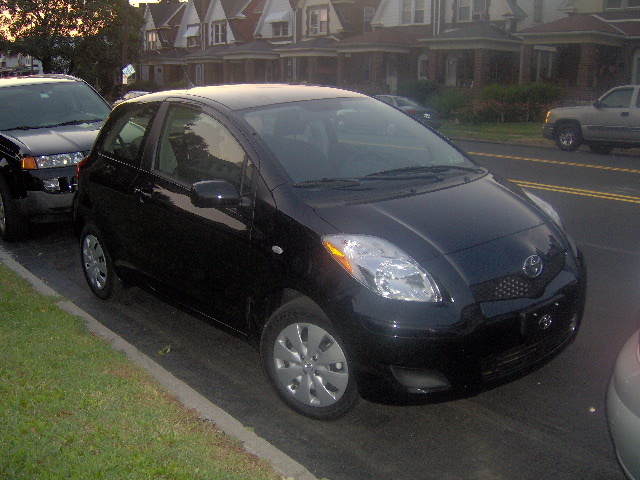
Toyota explains that the Yaris name was derived from the Greek goddess, Charis, a “symbol of beauty and elegance,” combined with the German word “ya” (yes). The 2011 Yaris subcompact may, on first glance, appear to be a good buy for a commuter car, offering excellent fuel economy and safety features. However, the short list of standard features and the pricetag that accompanies available option packages may have some consumers deciding “nein.”
2011 has brought only minimal changes to the Yaris, including brake override technology as a standard safety feature (even though the Yaris was not part of Toyota's unintended acceleration recall), adding extensions to the sun visors in hatchbacks, and changing some color choices (“Super White” has been introduced for the hatchback). The subcompact again comes in three trims: a three-door hatchback (or liftback, as Toyota calls it), a five-door hatchback, and a more traditionally styled sedan. A single engine is available for all three trims: a 1.5-liter DOHC 16-valve VVT-i four-cylinder making 106 hp at 6,000 rpm and 103 lb-ft of torque at 4,200 rpm. A five-speed manual transmission (achieving 29 mpg city/36 highway) comes standard in all three trims, but a four-speed automatic is available as an option (making comparable estimates of 29 mpg city/35 highway).
Most reviewers seem to prefer the four-speed for a peppier ride, and some note that the engine, while quiet enough for easy, around-town driving, increases its racket when asked to deliver more. Road and wind noise also become noticeable when using the Yaris for more than a simple commute. While average driving conditions produce responsive steering and handling, the car’s relatively light weight demands driver attention in high winds, when the car can drift. However, for those city drivers looking to squeeze into any parking space, the Yaris's tight turning radius (32.6 feet in the sedan and 30.8 feet for the liftback) will be a crowd pleaser.
Outside, the sedan is styled for a more traditional look. However, Toyota describes the liftback as having a “strong, modern mono-form shape” designed by Toyota’s European design studio ED2 and the Toyota Motor Corporation (TMC) design division. All trims provide standard multi-reflector halogen headlamps and ride on 14-inch steel wheels. The five-door hatchback also includes a standard rear window wiper in the manual version, while the other hatchbacks (three-door manual and automatic and five-door automatic) only offer this as part of an option package. Other optional features include power outside mirrors, integrated foglamps, and 15-inch steel or alloy wheels.
The interior of the 2011 Yaris is not quite Spartan, although it is one of the few vehicles requiring consumers to pay extra for a stereo system. Air conditioning, a tilt steering wheel, and fabric-trimmed, four-way adjustable front seats are among the few standard features in all Yaris trims, while the liftbacks now feature sun visor extensions and the sedan offers driver’s seat height adjustment. An AM/FM CD player with MP3/WMA playback capability, auxiliary audio jack, and satellite radio capability, as well as cruise control, power windows and locks, and remote keyless entry are available only through option packages.
Cargo room is not as spacious in the Yaris as in some competitors: The liftback's rear seat folds to expand cargo space from 9.3 cubic feet to 25.7 cubic feet. The sedan (with no standard folding rear seat) offers 12.9 cubic feet of room in the trunk, although some have noted that the sedan’s trunk opening is too narrow for large items, and the hinges impinge on actual storage space. A 60/40-split rear seatback can be added as part of an options package in either the sedan or liftback.
The front seats of the Yaris are generally described as comfortable (although taller drivers may not agree), but the rear seats fit the subcompact stereotype, with little comfort in the back beyond a short jaunt. Although the interior is plastic, most agree that it doesn’t look cheaply made. What may be distracting, however, is the centered placement of the instrument panel, which causes drivers to look slightly off to the right to check speed, for example.
Although the Yaris is in the entry-level subcompact class, Toyota has still included all of the standard features of its Star Safety System, including vehicle stability control, traction control, antilock brakes, electronic brakeforce distribution, and brake assist. New to the 2011 is a standard brake override system that reduces engine power when the brake and accelerator pedals are applied simultaneously under certain conditions. Other standard safety features include a tire pressure monitoring system and standard driver and passenger advanced dual-stage front airbags, which inflate to varying degrees depending on the seriousness of the crash. The front passenger seat is equipped with a sensor that detects the weight present in the seat to determine whether to inflate the airbag, and if so, to what degree. Also standard are front-seat-mounted side airbags and first- and second-row roll-sensing side curtain airbags.
The 2010 Yaris sedan and five-door liftback were rated four (out of five) stars by the NHTSA for front and side crash tests. The three-door liftback, while earning five stars for front and side crashes for driver safety, received only three stars for rear passenger safety in both front and side collisions. The IIHS rated the 2010 Yaris Good (its top rank) in both front- and side-crash tests, but only gave it an Acceptable rating for rollovers and a Marginal for rear-impact collisions. Given that the only change in safety features for 2011 has been the brake override system, the Yaris should continue to yield similar results in safety assessments.
One of the drawbacks of the 2011 Yaris is that most features are available through various packages, which can quickly increase its reasonable base price and may have buyers looking at competitors such as the Ford Fiesta and Honda Fit. A Convenience Package is available for the sedan and liftback, adding the stereo, XM compatibility, upgraded wheels (15 inches), and the split-folding rear seats (as well as sliding and reclining function in the liftback). The liftback also adds a rear wiper to the package. The Power Package includes the features in the Convenience Package plus power locks, windows, and side mirrors, remote keyless entry, and an engine immobilizer (which won’t allow the engine to start unless the code in the key’s transponder matches the code in the ignition’s transponder). The Sport Package includes the features of the Convenience Package, adding a rear spoiler, front foglamps, amber-colored tachometer, sport seats covered in sport fabric, leather-wrapped steering wheel and shiftknob, and “S” badging. The Power and Sport Packages also provide the opportunity to add individual options, such as 15-inch alloy wheels and cruise control, while the Power Package has the option of including integrated foglights.
The 2011 Toyota Yaris should continue to offer a basic subcompact with a good base price, fuel economy, safety features, and a ride that is comfortable enough for around-town cruising. The price, however, may not remain in the entry subcompact consumer’s range once option packages are added, and buyers may find themselves test-driving competitors that have a higher base price but offer more standard features.

User reviews for 2011 Toyota Yaris
Write a review2011 Toyota Yaris Pricing
Trims & specs
Air Conditioning
Single front air conditioning zones
Airbags
Dual front airbags · Front side airbags · Front side curtain airbags
Audio System
Antenna Type: mast · IPod auxiliary audio input · Single disc in-Dash CD · MP3 player: CD MP3 Playback · AM/FM radio · XM satellite radio · Total Number of Speakers: 4
Brakes
ABS: 4-wheel · Front brake diameter: 10.0 · Front brakes: ventilated disc · Rear brake diameter: 7.9 · Rear brakes: drum
Comfort Features
Armrests: front center · Door sill trim: aluminum · Floor Mat Material: carpet · Floor Mats: front and rear · Shift knob trim: leather · Steering wheel trim: leather
Convenience Features
Center console: front console with storage · Cupholders: rear · Dimming rearview mirror: auto-dimming · Multi-function remote: trunk release · One-touch windows: 1 · Power outlet(s): 12V front · Power steering: electric · Reading lights: front · Steering wheel: tilt-adjustable · Storage: front seatback · Vanity mirrors: dual
Driver Seat
Manual adjustments: 4
Drivetrain
Axle ratio: 4.24
Engine
Exhaust: performance
Exterior Features
Door handle color: body-color · Front Spoiler: body color · Front bumper color: body-color · Grille color: black · Mirror color: body-color · Rear bumper color: body-color · Rear spoiler color: body-color · Rear trunk/liftgate: liftgate · Rocker panel color: body-color
Headrests
Front headrests: adjustable · Number of front headrests: 2 · Number of rear headrests: 3
Instrumentation
Warnings and reminders: low oil pressure
Lights
Headlights: Halogen
Mirrors
Exterior mirrors: manual
Passenger Seat
Manual Adjustments: 4
Rear Seats
Reclining: bench · Type: bench
Safety
Child seat anchors: LATCH system · Crumple zones: rear
Seatbelts
Emergency locking retractors: front · Front seatbelts: 3-point · Seatbelt force limiters: front · Seatbelt pretensioners: front · Seatbelt warning sensor: driver and passenger · Second row seatbelts: 3-point
Seats
Front seat type: sport · Rear headrests: adjustable · Rear seat folding: one-piece · Rear seat manual adjustments: reclining · Upholstery: cloth
Security
Anti-theft alarm system: with engine immobilizer
Spare Tire
Mount Location: inside · Size: temporary
Spare Wheel
Rim Type: steel
Steering
Steering ratio: 19.7 · Turns lock-to-lock: 3.0
Suspension
Front Arm Type: lower control arms · Front Shock Type: gas shock absorbers · Front Spring Type: coil springs · Front Stabilizer Bar: diameter 23 mm · Front Suspension Classification: independent · Front Suspension Type: MacPherson struts · Rear Shock Type: gas shock absorbers · Rear Spring Type: coil springs · Rear Suspension Classification: semi-independent · Rear Suspension Type: torsion bar
Telematics
Phone wireless data link: Bluetooth
Tires
Type: all season
Tires and Rims
Wheels: steel
Wheels
Wheel covers: full
Windows
Front wipers: intermittent · Liftgate window: fixed · Power windows: front · Rear wiper: with washer
Air Conditioning
Single front air conditioning zones
Airbags
Dual front airbags · Front side airbags · Front side curtain airbags
Audio System
Antenna Type: mast · Auxiliary audio input: jack · Single disc in-Dash CD · MP3 player: CD MP3 Playback · AM/FM radio · Satellite Radio: ready · Total Number of Speakers: 4
Brakes
ABS: 4-wheel · Front brake diameter: 10.0 · Front brakes: ventilated disc · Rear brake diameter: 7.9 · Rear brakes: drum
Comfort Features
Armrests: front center · Door sill trim: aluminum · Floor Mat Material: carpet · Floor Mats: front and rear · Shift knob trim: leather · Steering wheel trim: leather
Convenience Features
Center console: front console with storage · Cupholders: front · Dimming rearview mirror: auto-dimming · Multi-function remote: keyless entry · One-touch windows: 1 · Power outlet(s): 12V front · Power steering: electric · Reading lights: front · Steering wheel: tilt-adjustable · Storage: door pockets · Vanity mirrors: dual
Driver Seat
Manual adjustments: 4
Drivetrain
Axle ratio: 3.72
Engine
Exhaust: performance
Exterior Features
Door handle color: body-color · Front Spoiler: body color · Front bumper color: body-color · Grille color: black · Mirror color: body-color · Rear bumper color: body-color · Rear spoiler color: body-color · Rear trunk/liftgate: liftgate · Rocker panel color: body-color
Headrests
Front headrests: adjustable · Number of front headrests: 2 · Number of rear headrests: 3
Instrumentation
Warnings and reminders: maintenance reminder
Lights
Headlights: Halogen
Mirrors
Exterior mirrors: manual folding
Passenger Seat
Manual Adjustments: 4
Rear Seats
Type: bench
Safety
Child seat anchors: LATCH system · Crumple zones: rear
Seatbelts
Emergency locking retractors: front · Front seatbelts: 3-point · Seatbelt force limiters: front · Seatbelt pretensioners: front · Seatbelt warning sensor: driver and passenger · Second row seatbelts: 3-point
Seats
Front seat type: bucket · Rear headrests: adjustable · Rear seat folding: one-piece · Rear seat manual adjustments: reclining · Upholstery: cloth
Security
Anti-theft alarm system: with engine immobilizer
Spare Tire
Mount Location: inside · Size: temporary
Spare Wheel
Rim Type: steel
Steering
Steering ratio: 19.7 · Turns lock-to-lock: 3.0
Suspension
Front Arm Type: lower control arms · Front Shock Type: gas shock absorbers · Front Spring Type: coil springs · Front Stabilizer Bar: diameter 23 mm · Front Suspension Classification: independent · Front Suspension Type: MacPherson struts · Rear Shock Type: gas shock absorbers · Rear Spring Type: coil springs · Rear Suspension Classification: semi-independent · Rear Suspension Type: torsion bar
Telematics
Phone wireless data link: Bluetooth
Tires
Type: all season
Tires and Rims
Wheels: steel
Wheels
Wheel covers: full
Windows
Front wipers: intermittent · Liftgate window: fixed · Rear wiper: with washer
Air Conditioning
Single front air conditioning zones
Airbags
Dual front airbags · Front side airbags · Rear side curtain airbags
Audio System
Antenna Type: element · Auxiliary audio input: jack · Single disc in-Dash CD · MP3 player: CD MP3 Playback · AM/FM radio · Satellite Radio: ready · Total Number of Speakers: 4
Brakes
ABS: 4-wheel · Front brake diameter: 10.0 · Front brakes: ventilated disc · Rear brake diameter: 7.9 · Rear brakes: drum
Comfort Features
Door sill trim: aluminum · Floor Mat Material: carpet · Floor Mats: front and rear · Shift knob trim: leather · Steering wheel trim: leather
Convenience Features
Center console: front console with storage · Cupholders: rear · Dimming rearview mirror: auto-dimming · Multi-function remote: keyless entry · One-touch windows: 1 · Power outlet(s): 12V front · Power steering: electric · Reading lights: front · Steering wheel: tilt-adjustable · Storage: front seatback · Vanity mirrors: dual
Driver Seat
Manual adjustments: 6
Drivetrain
Axle ratio: 4.24
Engine
Exhaust: performance
Exterior Features
Door handle color: body-color · Front Spoiler: body color · Front bumper color: body-color · Grille color: black · Mirror color: body-color · Rear bumper color: body-color · Rear spoiler color: body-color · Rocker panel color: body-color
Headrests
Front headrests: adjustable · Number of front headrests: 2 · Number of rear headrests: 3
Instrumentation
Warnings and reminders: coolant temperature warning
Lights
Headlights: Halogen
Mirrors
Exterior mirrors: manual
Passenger Seat
Manual Adjustments: 4
Rear Seats
Reclining: bench · Type: bench
Safety
Child seat anchors: LATCH system · Crumple zones: front
Seatbelts
Emergency locking retractors: front · Front seatbelts: 3-point · Seatbelt force limiters: front · Seatbelt pretensioners: front · Seatbelt warning sensor: driver and passenger · Second row seatbelts: 3-point
Seats
Driver seat manual adjustments: height · Front seat type: sport · Rear headrests: adjustable · Rear seat manual adjustments: reclining · Upholstery: sport cloth
Security
Anti-theft alarm system: with engine immobilizer
Spare Tire
Mount Location: inside · Size: temporary
Spare Wheel
Rim Type: steel
Steering
Steering ratio: 19.7 · Turns lock-to-lock: 3.0
Suspension
Front Arm Type: lower control arms · Front Shock Type: gas shock absorbers · Front Spring Type: coil springs · Front Stabilizer Bar: diameter 23 mm · Front Suspension Classification: independent · Front Suspension Type: MacPherson struts · Rear Shock Type: gas shock absorbers · Rear Spring Type: coil springs · Rear Suspension Classification: semi-independent · Rear Suspension Type: torsion bar
Tires
Type: all season
Tires and Rims
Wheels: alloy
Wheels
Wheel covers: full
Windows
Front wipers: intermittent

