Used Toyota Camry for Sale nearLaurel, MS
Shop with transparent pricing.
Only show listings that include dealer fees- Year:
- 2025
- Make:
- Toyota
- Model:
- Camry
- Body type:
- Sedan
- Doors:
- 4 doors
- Drivetrain:
- Front-Wheel Drive
- Engine:
- 2.5L I4 Hybrid
- Exterior color:
- Heavy Metal
- Combined gas mileage:
- 48 MPG
- Fuel type:
- Hybrid
- Interior color:
- Boulder
- Transmission:
- Continuously Variable Transmission
- Mileage:
- 70,520
- Stock #:
- CSU514202
- VIN:
- 4T1DAACK4SU514202


Sponsored by Toyota of Jackson
2025 Toyota Camry
SE FWD
70,520 mi
$27,587
- Year:
- 2021
- Make:
- Toyota
- Model:
- Camry
- Body type:
- Sedan
- Doors:
- 4 doors
- Drivetrain:
- Front-Wheel Drive
- Engine:
- 2.5L I4
- Exterior color:
- Midnight Black Metallic
- Combined gas mileage:
- 33 MPG
- Fuel type:
- Gasoline
- Interior color:
- Black
- Transmission:
- 8-Speed Automatic
- Mileage:
- 61,652
- Stock #:
- C9045
- VIN:
- 4T1G11AK6MU593908

Sponsored Listing
2021 Toyota Camry
SE FWD
61,652 mi
$22,582
- Year:
- 2025
- Make:
- Toyota
- Model:
- Camry
- Body type:
- Sedan
- Doors:
- 4 doors
- Drivetrain:
- Front-Wheel Drive
- Engine:
- 2.5L I4 Hybrid
- Exterior color:
- Celestial Silver Metallic
- Combined gas mileage:
- 52 MPG
- Fuel type:
- Hybrid
- Interior color:
- Black
- Transmission:
- Automatic
- Mileage:
- 52,281
- Stock #:
- SU019356
- VIN:
- 4T1DAACKXSU019356

Sponsored Listing
2025 Toyota Camry
LE FWD
52,281 mi
$27,198
- Year:
- 2018
- Make:
- Toyota
- Model:
- Camry
- Body type:
- Sedan
- Doors:
- 4 doors
- Drivetrain:
- Front-Wheel Drive
- Engine:
- 2.5L I4
- Exterior color:
- Predawn Gray Mica
- Combined gas mileage:
- 33 MPG
- Fuel type:
- Gasoline
- Interior color:
- Ash
- Transmission:
- 8-Speed Automatic
- Mileage:
- 61,870
- Stock #:
- 641782
- VIN:
- 4T1B11HK5JU641782

2018 Toyota Camry
LE
61,870 mi
$20,130
- Year:
- 2024
- Make:
- Toyota
- Model:
- Camry
- Body type:
- Sedan
- Doors:
- 4 doors
- Drivetrain:
- Front-Wheel Drive
- Engine:
- 2.5L I4
- Exterior color:
- Celestial Silver Metallic
- Combined gas mileage:
- 33 MPG
- Fuel type:
- Gasoline
- Interior color:
- Ash
- Transmission:
- 8-Speed Automatic
- Mileage:
- 33,760
- Stock #:
- 17033620B
- VIN:
- 4T1C11AK9RU228340

2024 Toyota Camry
LE FWD
33,760 mi
$25,816
- Year:
- 2026
- Make:
- Toyota
- Model:
- Camry
- Body type:
- Sedan
- Doors:
- 4 doors
- Drivetrain:
- Front-Wheel Drive
- Engine:
- 2.5L I4 Hybrid
- Exterior color:
- Heavy Metal
- Combined gas mileage:
- 51 MPG
- Fuel type:
- Hybrid
- Interior color:
- Boulder
- Transmission:
- Continuously Variable Transmission
- Mileage:
- 17,892
- Stock #:
- 011530A
- VIN:
- 4T1DAACK0TU241213

2026 Toyota Camry
LE FWD
17,892 mi
$29,198
- Year:
- 2022
- Make:
- Toyota
- Model:
- Camry
- Body type:
- Sedan
- Doors:
- 4 doors
- Drivetrain:
- Front-Wheel Drive
- Engine:
- 2.5L I4
- Exterior color:
- Blue
- Combined gas mileage:
- 33 MPG
- Fuel type:
- Gasoline
- Interior color:
- Black
- Transmission:
- Automatic
- Mileage:
- 73,942
- Stock #:
- 14388
- VIN:
- 4T1G11AK7NU713149

2022 Toyota Camry
SE FWD
73,942 mi
$22,335
- Year:
- 2024
- Make:
- Toyota
- Model:
- Camry
- Body type:
- Sedan
- Doors:
- 4 doors
- Drivetrain:
- Front-Wheel Drive
- Engine:
- 2.5L I4
- Exterior color:
- MIDNIGHT BLACK METALLIC
- Combined gas mileage:
- 33 MPG
- Fuel type:
- Gasoline
- Interior color:
- Macadamia
- Transmission:
- 8-Speed Automatic
- Mileage:
- 75,574
- Stock #:
- 11U272
- VIN:
- 4T1C11AK3RU864445

2024 Toyota Camry
LE FWD
75,574 mi
$23,193
- Year:
- 2022
- Make:
- Toyota
- Model:
- Camry
- Body type:
- Sedan
- Doors:
- 4 doors
- Drivetrain:
- Front-Wheel Drive
- Engine:
- 2.5L I4
- Exterior color:
- Gray
- Combined gas mileage:
- 33 MPG
- Fuel type:
- Gasoline
- Interior color:
- Black
- Transmission:
- Automatic
- Mileage:
- 37,790
- Stock #:
- 28591612
- VIN:
- 4T1G11AK2NU691271

2022 Toyota Camry
SE FWD
37,790 mi
$26,497
- Year:
- 2025
- Make:
- Toyota
- Model:
- Camry
- Body type:
- Sedan
- Doors:
- 4 doors
- Drivetrain:
- Front-Wheel Drive
- Engine:
- 2.5L I4 Hybrid
- Combined gas mileage:
- 48 MPG
- Fuel type:
- Hybrid
- Interior color:
- Black
- Transmission:
- Continuously Variable Transmission
- Mileage:
- 5,017
- Stock #:
- SU627950
- VIN:
- 4T1DAACK5SU627950

2025 Toyota Camry
XLE FWD
5,017 mi
$33,416
- Year:
- 2023
- Make:
- Toyota
- Model:
- Camry
- Body type:
- Sedan
- Doors:
- 4 doors
- Drivetrain:
- Front-Wheel Drive
- Engine:
- 2.5L I4
- Exterior color:
- Predawn Gray Mica
- Combined gas mileage:
- 33 MPG
- Fuel type:
- Gasoline
- Interior color:
- Black
- Transmission:
- 8-Speed Automatic
- Mileage:
- 42,759
- Stock #:
- PU765143
- VIN:
- 4T1G11AK9PU765143

-$868
2023 Toyota Camry
SE FWD
42,759 mi
$25,793
$24,925
- Year:
- 2025
- Make:
- Toyota
- Model:
- Camry
- Body type:
- Sedan
- Doors:
- 4 doors
- Drivetrain:
- Front-Wheel Drive
- Engine:
- 2.5L I4 Hybrid
- Exterior color:
- Ice
- Combined gas mileage:
- 48 MPG
- Fuel type:
- Hybrid
- Interior color:
- Black
- Transmission:
- Continuously Variable Transmission
- Mileage:
- 32,152
- Stock #:
- P10280
- VIN:
- 4T1DAACK7SU134299

2025 Toyota Camry
SE FWD
32,152 mi
$28,423
- Year:
- 2026
- Make:
- Toyota
- Model:
- Camry
- Body type:
- Sedan
- Doors:
- 4 doors
- Drivetrain:
- Front-Wheel Drive
- Engine:
- 2.5L I4 Hybrid
- Exterior color:
- Midnight Black Metallic
- Combined gas mileage:
- 46 MPG
- Fuel type:
- Hybrid
- Interior color:
- Boulder
- Transmission:
- Continuously Variable Transmission
- Mileage:
- 947
- Stock #:
- M01443A
- VIN:
- 4T1DAACK1TU774719

2026 Toyota Camry
SE FWD
947 mi
$33,175
Recommended model year:
2025 Toyota Camry
Shop 2025 Toyota Camry »With 9,858 currently listed for sale and an average price of $29,075, 35.6% of 2025 Toyota Camrys for sale on CarGurus are rated as good or great deals.
Favorably reviewed: Owners rated the 2025 Toyota Camry 4.89 / 5 stars and CarGurus experts gave it an 8 / 10.
88.5% of 2025 Camry models on CarGurus are accident free.
- Year:
- 2019
- Make:
- Toyota
- Model:
- Camry
- Body type:
- Sedan
- Doors:
- 4 doors
- Drivetrain:
- Front-Wheel Drive
- Engine:
- 2.5L I4
- Exterior color:
- Predawn Gray Mica
- Combined gas mileage:
- 33 MPG
- Fuel type:
- Gasoline
- Interior color:
- Black
- Transmission:
- 8-Speed Automatic
- Mileage:
- 143,012
- Stock #:
- KU232115
- VIN:
- 4T1B11HK1KU232115

-$452
2019 Toyota Camry
LE FWD
143,012 mi
$13,827
$13,375
- Year:
- 2023
- Make:
- Toyota
- Model:
- Camry
- Body type:
- Sedan
- Doors:
- 4 doors
- Drivetrain:
- Front-Wheel Drive
- Engine:
- 2.5L I4
- Exterior color:
- Midnight Black Metallic
- Combined gas mileage:
- 33 MPG
- Fuel type:
- Gasoline
- Interior color:
- Black
- Transmission:
- 8-Speed Automatic
- Mileage:
- 99,077
- Stock #:
- PU730285
- VIN:
- 4T1G11AK8PU730285

-$829
2023 Toyota Camry
SE FWD
99,077 mi
$21,606
$20,777
- Year:
- 2021
- Make:
- Toyota
- Model:
- Camry
- Body type:
- Sedan
- Doors:
- 4 doors
- Drivetrain:
- Front-Wheel Drive
- Engine:
- 2.5L I4
- Exterior color:
- Super White
- Combined gas mileage:
- 33 MPG
- Fuel type:
- Gasoline
- Interior color:
- Black
- Transmission:
- 8-Speed Automatic
- Mileage:
- 92,546
- Stock #:
- MU435132
- VIN:
- 4T1G11AK4MU435132

2021 Toyota Camry
SE Nightshade FWD
92,546 mi
$19,600
- Year:
- 2021
- Make:
- Toyota
- Model:
- Camry
- Body type:
- Sedan
- Doors:
- 4 doors
- Drivetrain:
- Front-Wheel Drive
- Engine:
- 2.5L I4
- Exterior color:
- Super White
- Combined gas mileage:
- 33 MPG
- Fuel type:
- Gasoline
- Interior color:
- Black
- Transmission:
- 8-Speed Automatic
- Mileage:
- 99,907
- Stock #:
- MU577700
- VIN:
- 4T1G11AK1MU577700

-$751
2021 Toyota Camry
SE FWD
99,907 mi
$18,843
$18,092
- Year:
- 2021
- Make:
- Toyota
- Model:
- Camry
- Body type:
- Sedan
- Doors:
- 4 doors
- Drivetrain:
- Front-Wheel Drive
- Engine:
- 2.5L I4
- Exterior color:
- Super White
- Combined gas mileage:
- 33 MPG
- Fuel type:
- Gasoline
- Interior color:
- Black
- Transmission:
- 8-Speed Automatic
- Mileage:
- 143,968
- Stock #:
- MU559184
- VIN:
- 4T1C11AK9MU559184

-$330
2021 Toyota Camry
LE FWD
143,968 mi
$15,636
$15,306
- Year:
- 2020
- Make:
- Toyota
- Model:
- Camry
- Body type:
- Sedan
- Doors:
- 4 doors
- Drivetrain:
- Front-Wheel Drive
- Engine:
- 2.5L I4
- Exterior color:
- Midnight Black Metallic
- Combined gas mileage:
- 33 MPG
- Fuel type:
- Gasoline
- Interior color:
- Black
- Transmission:
- 8-Speed Automatic
- Mileage:
- 110,053
- Stock #:
- G22485
- VIN:
- 4T1G11AK7LU862707

2020 Toyota Camry
SE FWD
110,053 mi
$17,979
- Year:
- 2024
- Make:
- Toyota
- Model:
- Camry
- Body type:
- Sedan
- Doors:
- 4 doors
- Drivetrain:
- Front-Wheel Drive
- Engine:
- 206 hp 2.5L I4
- Exterior color:
- Celestial Silver Metallic
- Combined gas mileage:
- 32 MPG
- Fuel type:
- Gasoline
- Interior color:
- Black
- Transmission:
- 8-Speed Automatic
- Mileage:
- 63,582
- Stock #:
- RU914306
- VIN:
- 4T1K61AK3RU914306

2024 Toyota Camry
XSE FWD
63,582 mi
$25,754
- Year:
- 2025
- Make:
- Toyota
- Model:
- Camry
- Body type:
- Sedan
- Doors:
- 4 doors
- Drivetrain:
- Front-Wheel Drive
- Engine:
- 2.5L I4 Hybrid
- Exterior color:
- Midnight Black Metallic
- Combined gas mileage:
- 48 MPG
- Fuel type:
- Hybrid
- Interior color:
- Black
- Transmission:
- Continuously Variable Transmission
- Mileage:
- 30,504
- Stock #:
- T369431A
- VIN:
- 4T1DAACK0SU142177

2025 Toyota Camry
XSE FWD
30,504 mi
$36,149
- Year:
- 2025
- Make:
- Toyota
- Model:
- Camry
- Body type:
- Sedan
- Doors:
- 4 doors
- Drivetrain:
- Front-Wheel Drive
- Engine:
- 2.5L I4 Hybrid
- Exterior color:
- Underground
- Combined gas mileage:
- 48 MPG
- Fuel type:
- Hybrid
- Interior color:
- Black
- Transmission:
- Continuously Variable Transmission
- Mileage:
- 43,847
- Stock #:
- SU525845
- VIN:
- 4T1DAACK2SU525845

2025 Toyota Camry
SE FWD
43,847 mi
$27,588
- Year:
- 2023
- Make:
- Toyota
- Model:
- Camry
- Body type:
- Sedan
- Doors:
- 4 doors
- Drivetrain:
- All-Wheel Drive
- Engine:
- 202 hp 2.5L I4
- Exterior color:
- Black
- Combined gas mileage:
- 29 MPG
- Fuel type:
- Gasoline
- Interior color:
- Gray
- Transmission:
- 8-Speed Automatic
- Mileage:
- 106,473
- Stock #:
- EM094179
- VIN:
- 4T1C11BK9PU094179

Sponsored Listing
2023 Toyota Camry
LE AWD
106,473 mi
$21,149
How much does the Toyota Camry cost in today's market?
Used Toyota Camry prices span a wide range depending on model year. Here's what the market looks like right now:
| Model Year | Current Avg. Price | Year-Round Range |
|---|---|---|
| 2025 | $29,042 | $27,632 – $30,767 |
| 2024 | $26,599 | $24,847 – $26,934 |
| 2023 | $24,992 | $23,767 – $25,385 |
| 2022 | $23,404 | $22,383 – $23,943 |
| 2021 | $21,792 | $20,989 – $22,286 |
| 2020 | $20,555 | $19,630 – $20,955 |
| 2019 | $18,886 | $17,941 – $19,284 |
| 2018 | $17,797 | $16,879 – $17,937 |
| 2017 | $15,066 | $14,166 – $15,146 |
| 2016 | $13,933 | $13,435 – $14,206 |
| 2015 | $13,086 | $12,391 – $13,127 |
| 2014 | $11,954 | $11,344 – $11,967 |
The Toyota Camry's current nationwide average price is $23,047, and its lowest point over the past year was $20,690. Recently, prices have come down for the 2023, 2024, and 2025 models, making now a good time to shop recent model years.
Is the Toyota Camry a good car?
Yes — the Toyota Camry is a strong used-car choice if you want a dependable, comfortable sedan with broad everyday appeal. The all-generations owner rating is 4.46/5 across every model year in the data.
Owners consistently praise its reliability, smooth ride, spacious interior, fuel efficiency, and safety features. The Camry also earns repeat praise for easy maintenance and overall value, which helps explain why it remains such a popular family and commuter car.
Expert reviews rate the 2015 and 2025 models among the highest across all years.
The main tradeoffs in recent expert-tested years are styling that can feel uninspired, limited cargo space, and a stereo that leaves room for improvement.
33.2% of listings are priced as good or great deals.
Are Toyota Camry models reliable?
The Toyota Camry has a long-running reputation for reliability, comfort, and fuel efficiency, and owners across the lineup consistently reinforce that view. Expert coverage also points to smooth rides, spacious cabins, and easy ownership as recurring strengths.
- Owners rate the Toyota Camry between 4.4 and 5.0 out of 5 stars across all model years in the data.
For used buyers, that combination points to a model that tends to age well, especially when you verify maintenance history and choose a well-kept example.
What should I look for when buying a used Toyota Camry?
Across all model years, at 73% accident-free, a meaningful share of listings has prior incidents — history verification is especially important.
| Model Year | Accident-Free % |
|---|---|
| 2026 | 90.1% |
| 2025 | 88.6% |
| 2024 | 85.3% |
| 2023 | 78.6% |
| 2022 | 70.6% |
| 2021 | 61.9% |
| 2020 | 56.7% |
| 2019 | 53.1% |
| 2018 | 50.2% |
| 2017 | 48.6% |
| 2016 | 46.9% |
| 2015 | 45.9% |
| 2014 | 45.6% |
Older model years carry meaningfully higher accident rates, so always verify the vehicle history report on pre-2023 models.
Key things to evaluate:
- Safety package: Toyota Safety Sense 3.0
- Infotainment: an 8-inch touchscreen infotainment system with wireless Apple CarPlay and Android Auto
- Fuel efficiency: Fuel economy ranges from 43 mpg to 51 mpg in combined city and highway driving, depending on the trim level and drivetrain configuration.
Which Toyota Camry trim should I buy?
The 2026 Toyota Camry offers these trims:
- LE: The entry trim gives you the core hybrid Camry formula and is the starting point for the lineup.
- SE: This trim adds a sport-tuned suspension and a more athletic feel for shoppers who want a sharper setup.
- Nightshade Edition: This trim adds satin black 19-inch wheels, gloss-black exterior detailing, and a black interior, making it the best-value style-focused pick.
- XLE: This trim adds a more upscale feel and includes the touch-sensing steering wheel mentioned in the safety coverage.
- XSE: This trim adds the sport-tuned suspension and the touch-sensing steering wheel, combining a sportier setup with more equipment.
What Toyota Camry do most buyers choose?
The Toyota Camry years with the most listings are 2025, 2024, and 2026.
Those higher-volume years tend to be the easiest to shop because you get more inventory to compare, which can improve your odds of finding the right color, trim, and price. They also tend to be the most visible choices for used buyers who want newer features and broader availability.
What is the Toyota Camry's resale value?
| Model Year | Current Avg. Price | Year-Over-Year Change |
|---|---|---|
| 2025 | $29,042 | −5.58% |
| 2022 | $23,404 | −2.24% |
| 2021 | $21,792 | −2.16% |
| 2020 | $20,555 | −1.91% |
| 2019 | $18,886 | −1.83% |
| 2023 | $24,992 | −1.55% |
| 2024 | $26,599 | −1.24% |
| 2018 | $17,797 | −0.57% |
| 2016 | $13,933 | +0.63% |
| 2014 | $11,954 | +0.77% |
| 2017 | $15,066 | +1.12% |
| 2015 | $13,086 | +2.11% |
Most model years in the table are moving lower year over year, which is good news if you want to buy used at a softer price point. A few older years are edging upward, showing that some Camry model years continue to command steady demand.
The 2014, 2016, and 2018 model years are holding steady, with prices close to flat year-over-year.
The 2015, 2017, and 2014 model years have held their value best, with prices flat to rising year-over-year.
Is the Toyota Camry safe?
- 2026: 8/10
- 2025: 9/10
- 2022: 9/10
- 2021: 9/10
- 2020: 9/10
- 2019: 10/10
- 2018: 10/10
- 2017: 9/10
- 2016: 7/10
- 2015: 9/10
- 2014: 8/10
Toyota Safety Sense 3.0 is standard on every 2026 Camry and includes adaptive cruise control, forward-collision warning, automatic emergency braking, pedestrian detection, lane-departure warning, lane-keep assist, lane-centering assist, road-sign assist, and high-beam assist.
For the safest used buy, the 2018 and 2019 models both post the highest confirmed score of 10/10.
Should I buy a used Toyota Camry now or wait for the next model?
Buy now if:
- Price trend: The 2025 model is at −5.58% versus a year ago, and the 2024 model is at −1.24%.
- Deal availability: The 2025 model has 36.6% good and great deals, and the 2024 model has 36.6%.
- Sweet-spot year: The 2025 model has the most listings at a current average price of $29,042. The Toyota Camry offers a comfortable, practical, and easy-to-live-with driving experience.
Consider waiting if:
- Powertrain/efficiency: The Camry ditched its 2.5-liter four-cylinder and 3.5-liter V6 engines as part of the 2025-model-year update, leaving a tried-and-true hybrid system as the only powertrain. It combines a 2.5-liter four-cylinder engine with a pair of electric motors to produce 225 horsepower in front-wheel-drive models, while all-wheel drive versions add a third electric motor and bump total output to 232 hp.
- Tech: Toyota equips the more affordable Camry models with an 8-inch touchscreen infotainment system, and our test car’s Multimedia Upgrade Package included a larger 12.3-inch touchscreen. The optional Drive Connect subscription adds cloud-based navigation, destination assistance, and an Intelligent Assistant conversational voice recognition system.
- Safety: Toyota Safety Sense 3.0 is standard on every 2026 Camry and includes adaptive cruise control, forward-collision warning, automatic emergency braking, pedestrian detection, lane-departure warning, lane-keep assist, lane-centering assist, road-sign assist, and high-beam assist.
- Starting price: For the 2026 model year, the Camry comes in LE, SE, Nightshade Edition, XLE, and XSE trim levels. Prices range from $30,595 to $36,995, including the $1,295 destination charge.
If you're buying used today, the 2025 model year offers the best mix of value and availability. If you want the latest tech and features, it may be worth waiting for the next model year's inventory to build up.
These recommendations are based on CarGurus' proprietary market data from September 15, 2026, CarGurus experts' opinions, and generative AI.
*CarGurus meticulously monitors the prices of millions of pre-owned vehicle listings, offering users precise and up-to-date market insights. Historical pricing data excludes any additional dealer fees as of May 3, 2026.
4.5 Overall rating
Customers say
Overall, the Toyota Camry has earned a reputation for its reliability, comfort, and fuel efficiency across all model years. Owners consistently praise its smooth ride, spacious interiors, and impressive safety features, making it a solid choice for families and commuters alike. Many appreciate its stylish design and ease of maintenance, contributing to its lasting popularity. However, some criticisms include the occasional lack of power, underwhelming acceleration in base models, and the absence of modern technological features in older cars. Despite these minor drawbacks, the Camry is often viewed as a dependable and practical option for daily driving, earning high marks for its overall value.
AI generated from the text of customer reviews.
Filter by year
Filter by rating
What people say
Jaime M
Reviewed a 2021 Toyota SE FWD on Apr 3, 2026
I absolutely love my 2021 Toyota Camry. From the moment I got it, I honestly fell in love with it. The car looks sporty and modern, but at the same time it’s very comfortable and smooth to drive. It feels reliable and safe, which gives me a lot of confidence, especially as someone still getting used to driving more often. The fuel efficiency is great, and the interior is clean and well-designed. Everything feels solid and easy to use. It’s definitely a great value for the price. If I had to mention something, I wish it had push-button start, but overall I’m extremely happy with my purchase. I would definitely recommend this car to anyone looking for something reliable, stylish, and comfortable.
Nasir M
Reviewed a 2018 Toyota LE on Oct 6, 2025
Great value. Car runs great and really smooth. No problems
Adam V
Reviewed a 2017 Toyota SE on Oct 27, 2024
A lot of people looking at a certain car for the lowest price end up getting the oldest/first year of a cars generation. Thats because its typically the least expensive year of that particular body style they are looking for. As someone whos sold many cars in the last decade I can assure you, that is typically a big mistake. They often have problems that automakers cant know about until thousands of people have driven them for tens of thousands of miles, or more. I wanted the most reliable car possible. Easy, right? Just buy a Toyota... right? No. Ive seen it with Toyota as well. Many times. So I purposely sought the most recent model year of a generation of cars that are widely considered the most reliable ever made. A 2017 Camry (non-hybrid), if treated well, can be counted on being driven for over 1 million miles without an engine rebuild. They are an engineering marvel of our time. The 2.5l 2AR-FE has to be the most bulletproof example of a gasoline engine to ever sit under a hood. The car itself is well designed and is a flawless performer in normal daily driving. The SE/XSEs in particular have a suspension that can take a quickly-turned corner without skipping a beat. The seats are very comfortable over long drives, but supportive when youre in the curves. It has large windows to avoid blind spots and has airbags in every direction. The crash tests show that its extraordinarily safe if the unthinkable occurs. Its simply a brilliant choice of car. And getting back to my first sentences, the 2017 model had it all nailed down after 6 years of getting closer and closer to perfection. Toyota could have gotten away with not redesigning it for several more years. Easily. However, being the most popular car in the United States is a challenge that requires not letting the customers get bored. So I suppose Ill forgive Toyota for not making the car longer. That said, any one of the years of the seventh generation Camry is a great car to own. But this last year is perfection. Its why I have one. Im proud & grateful to be the owner of a 2017 Camry SE. Ill likely drive it until the car or myself dies. Dont ask me which one will kick the bucket first though, because Im 42 and this engineering marvel of the auto world is only 7. Dont pass up a well treated one.
Mary A
Reviewed a 2022 Toyota SE AWD on Nov 12, 2024
I absolutely love the features of my car. The push start, sunroof, heated seats, heated steering wheel, and Apple CarPlay are all fantastic. For the value, the car is a great choice. Being a Toyota, its built to last and is also very fuel-efficient. Both the exterior and interior are incredibly clean, which adds to its appeal. That said, there are a couple of things I wish were different. I’d love if the car had memory seats, and the display screen could be a bit more modern, especially compared to the ones in the Toyota Highlanders. Another small inconvenience is that, unlike the Highlanders where Apple CarPlay connects wirelessly through Bluetooth, my car requires the phone to be plugged in for CarPlay to work. While this isnt a huge issue, it would be more convenient if it were wireless like in the Highlanders. Overall, it’s a really cute car and an amazing choice for a first car. Im really happy with it!
Toyota Camry Trims
| Trim type | MSRP |
|---|---|
| Nightshade FWD | $33,100 |
| XLE AWD | $36,325 |
| XLE FWD | $34,800 |
| XSE AWD | $37,525 |
| SE AWD | $33,625 |
| XSE FWD | $36,000 |
| LE FWD | $29,600 |
| SE FWD | $32,100 |
*CarGurus meticulously monitors the prices of millions of pre-owned vehicle listings, offering users precise and up-to-date market insights. Historical pricing data excludes any additional dealer fees as of May 3, 2026.
Toyota Camry Price Trends
CarGurus tracks the prices of millions of used car listings every year. See how the average price of Toyota Camry prices has changed over time.
See more price trendsToyota Camry Pricing Analysis
Pricing Analysis by Model Year
Key Insights
- New Model Premium: The 2026 Toyota Camry is priced at $32,941, which is 11.0% above its MSRP, indicating strong demand for the latest model.
- Significant Depreciation for Older Models: The 2017 Camry shows a steep decline, priced at $15,136, reflecting a 34.5% drop from MSRP.
- Best Value Years: The 2024 and 2025 models are priced close to their original MSRPs, with only ~1.4% and 0.5% depreciation, making them attractive options for buyers.
Model Year Pricing
| Model Year | Original MSRP | Avg Price | Price vs MSRP |
|---|---|---|---|
| 2026 Toyota Camry | $29,600 | $32,941 | +11.0% |
| 2025 Toyota Camry | $28,700 | $28,856 | +0.5% |
| 2024 Toyota Camry | $26,420 | $26,780 | +1.4% |
| 2023 Toyota Camry | $26,320 | $24,828 | -5.7% |
| 2022 Toyota Camry | $25,845 | $23,265 | -9.9% |
| 2021 Toyota Camry | $25,045 | $21,907 | -12.5% |
| 2020 Toyota Camry | $24,425 | $20,554 | -16.0% |
| 2019 Toyota Camry | $24,095 | $18,836 | -21.6% |
| 2018 Toyota Camry | $23,645 | $17,899 | -24.5% |
| 2017 Toyota Camry | $23,070 | $15,136 | -34.5% |
| 2016 Toyota Camry | $23,070 | $14,016 | -39.4% |
| 2015 Toyota Camry | $22,970 | $13,159 | -42.5% |
Pricing by Popular US Cities
Market Area: Nationwide
Key Insights
- Highest Prices in Dallas: The average price in Dallas, TX is $23,070, indicating a strong demand in this market.
- Lowest Prices in New York: Conversely, New York, NY offers the lowest average price at $20,152, suggesting a more competitive market with higher inventory.
- Price Stability in Major Cities: Cities like Los Angeles and Chicago show average prices around $21,944 and $21,294, respectively, reflecting stable demand and inventory levels.
City-Level Pricing
| City | Total Listings | Avg Price |
|---|---|---|
| Dallas, TX | 855 | $23,070 |
| Los Angeles, CA | 1,337 | $21,944 |
| Chicago, IL | 758 | $21,294 |
| Philadelphia, PA | 435 | $21,033 |
| Houston, TX | 893 | $21,669 |
| Miami, FL | 636 | $21,879 |
| Washington, DC | 942 | $22,070 |
| Atlanta, GA | 787 | $21,445 |
| Boston, MA | 697 | $19,099 |
| New York, NY | 718 | $20,152 |
Pricing by Trim Packages
Key Insights
- FWD Trims Dominate Listings: The SE FWD trim leads with 7,514 listings, indicating strong consumer preference for this configuration.
- Price Variability Across Trims: The XSE AWD trim, priced at $37,525, is the highest MSRP, reflecting its premium features and AWD capability.
- Fuel Efficiency Appeal: The LE FWD trim offers the best fuel economy at 52 MPG city, making it an attractive option for cost-conscious buyers.
Trim-Level Details
| Trim | Listings | MSRP | Drivetrain | Engine |
|---|---|---|---|---|
| SE FWD | 7,514 | $32,100 | FWD | 2.5L 225 hp I4 Hybrid |
| LE FWD | 5,031 | $29,600 | FWD | 2.5L 225 hp I4 Hybrid |
| XSE FWD | 2,077 | $36,000 | FWD | 2.5L 225 hp I4 Hybrid |
| SE AWD | 634 | $33,625 | AWD | 2.5L 232 hp I4 Hybrid |
| XLE FWD | 516 | $34,800 | FWD | 2.5L 225 hp I4 Hybrid |
| LE AWD | 414 | $31,125 | AWD | 2.5L 232 hp I4 Hybrid |
| XSE AWD | 369 | $37,525 | AWD | 2.5L 232 hp I4 Hybrid |
| XLE AWD | 272 | $36,325 | AWD | 2.5L 232 hp I4 Hybrid |
These recommendations are based on CarGurus' proprietary market data from September 16, 2026, CarGurus experts' opinions, and generative AI.
*CarGurus meticulously monitors the prices of millions of pre-owned vehicle listings, offering users precise and up-to-date market insights. Historical pricing data excludes any additional dealer fees as of May 3, 2026.
CarGurus recommends the 2025 Toyota Camry
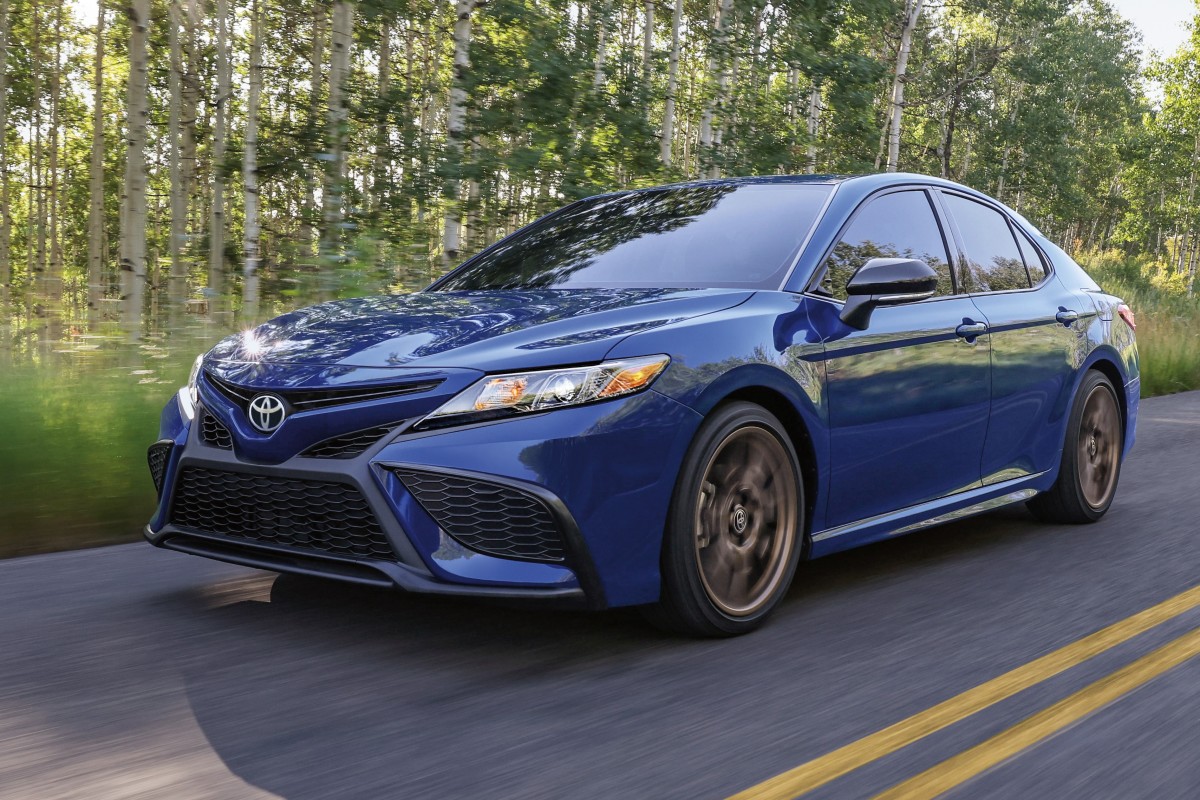
Summary
With 9,858 currently listed for sale and an average price of $29,075, 35.6% of 2025 Toyota Camrys for sale on CarGurus are rated as good or great deals.
Favorably reviewed: Owners rated the 2025 Toyota Camry 4.89 / 5 stars and CarGurus experts gave it an 8 / 10.
88.5% of 2025 Camry models on CarGurus are accident free.
Why it stands out
The 2025 Toyota Camry begins a new chapter as the start of its ninth generation, and it does so with a clear focus on the qualities that have long made the nameplate popular. Toyota gives it a new look, new features, and a new hybrid powertrain, while also leaning into the Camry’s reputation for reliability and safety. The result is a midsize sedan that feels current without straying far from the formula that has made it a perennial favorite among families.
What stands out most is how well the 2025 Toyota Camry balances everyday appeal with efficiency. It is described as fuel-efficient and competitively priced, and all-wheel drive is available on every trim. That combination gives it broad usefulness and a strong value proposition, especially for buyers who want a practical sedan with modern tech and styling. The main drawbacks noted are a noisy engine and a finicky voice assistant, but those issues do not overshadow the Camry’s core strengths.
Owners also praise the 2025 Toyota Camry for its smooth ride, exceptional fuel economy, and spacious interior. Some have pointed to the absence of features like power folding mirrors and parking sensors as areas where it could be better equipped, but the overall impression is of a well-rounded sedan that delivers the basics very well.
Other model years to consider
- Average price: $32,929
- Good/great deal percentage: 36.4%
- User rating: 5 / 5
- Total listings: 8,867
- Average price: $26,614
- Good/great deal percentage: 35.6%
- User rating: 4.67 / 5
- Total listings: 9,796
- Average price: $25,011
- Good/great deal percentage: 32.0%
- User rating: 4.86 / 5
- Total listings: 5,871
These recommendations are based on CarGurus' proprietary market data from September 14, 2026, CarGurus experts' opinions, and generative AI.
*CarGurus meticulously monitors the prices of millions of pre-owned vehicle listings, offering users precise and up-to-date market insights. Historical pricing data excludes any additional dealer fees as of May 3, 2026.
Recent expert test drives

2026 Toyota Camry
- Expert review8/10
- MSRP$29,600-$37,525
- Avg. price$36,138
- User rating5

2025 Toyota Camry
- Expert review8/10
- MSRP$28,700-$36,425
- Avg. price$29,089
- User rating4.8889

2019 Toyota Camry
- Expert review8/10
- MSRP$24,095-$34,850
- Avg. price$19,057
- User rating4.8
Relevant articles
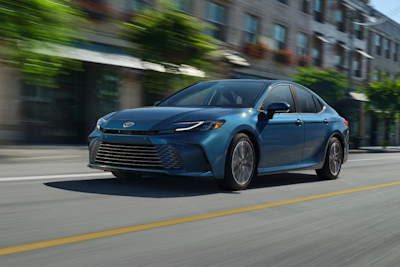
The Best Family Sedans of 2026
Advanced safety features that were once exclusive to luxury cars are now standard on many family sedans. And while sedans might not have the space of an SUV or a minivan, they do have efficiency on their side. Here are our top 10.
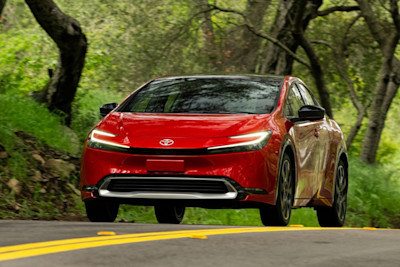
The Best Hybrid Vehicles of 2026
The automotive world is going electric, but for many people, a hybrid vehicle is still the best choice. Hybrids offer lower emissions without the stress of charging and range management, and they aren't much more expensive these days.

The Best Cars for Teens in 2026
There are so many factors to consider when you're choosing a car for your teen driver. Safety is obviously paramount, but you'll also have to think about the size, capability, and cost of the vehicle, and reliability wouldn't hurt, either. Check out our best advice and our 10 picks for teens.

