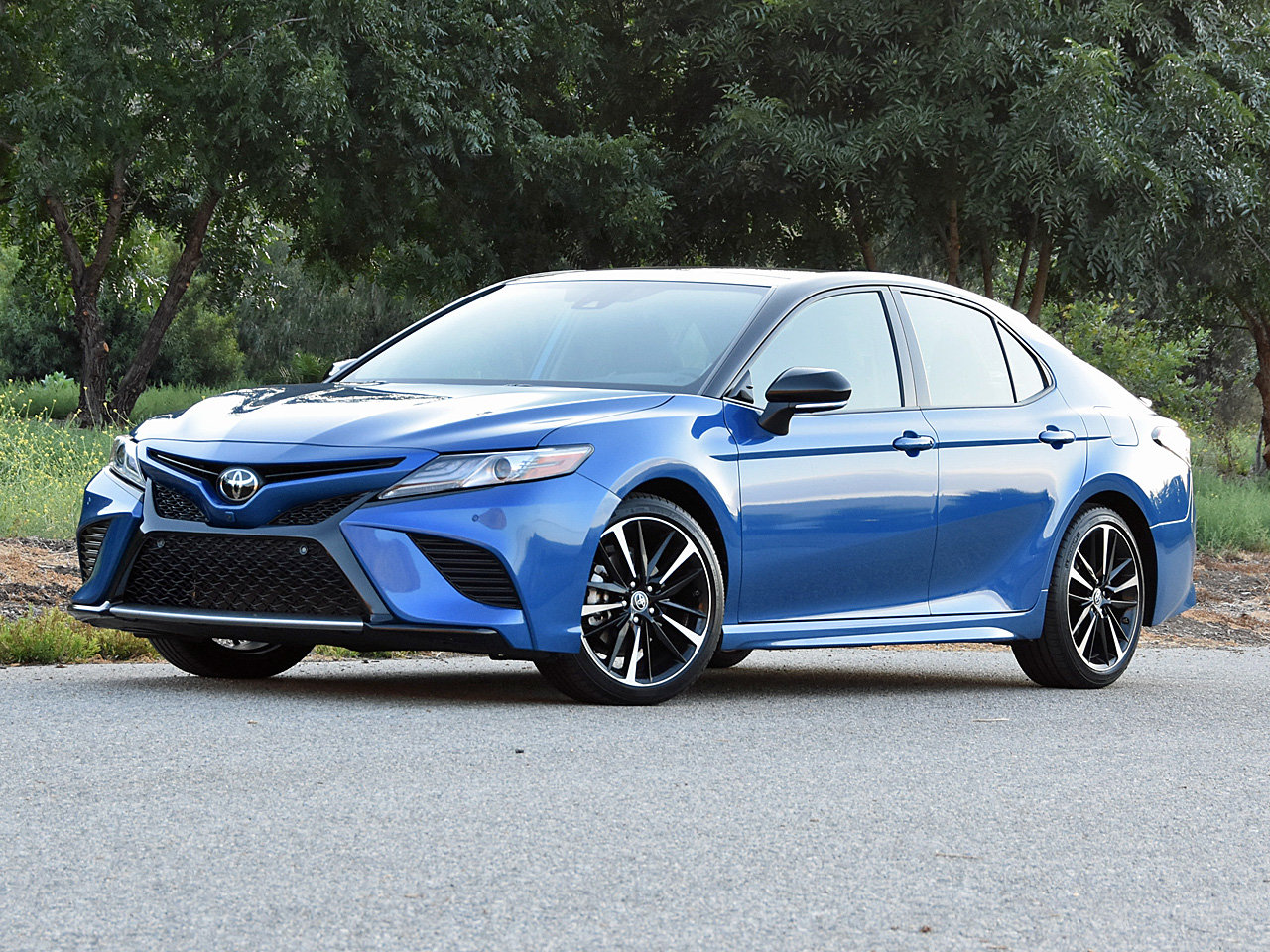
When you're shopping for a used Camry, the number on the odometer won't necessarily tell you whether or not you're making the right choice. A 150,000-mile Camry built around the right engine and backed by a solid maintenance record will almost always outlast a 90,000-mile one from a weaker model year or one that's been running on stretched oil change intervals.
This guide breaks down Toyota Camry engine longevity across its three primary powertrains: the 2.5L four-cylinder gas engine, the Hybrid eCVT, and the 3.5L V6. We'll cover what makes each engine tick, the specific failure points that define their high-mileage years, and what a used Camry's service record needs to show before you hand over the money.
- Toyota Camry Engine Longevity: At a Glance
- The Toyota Camry Average Engine Lifespan
- Engine Reliability Rankings: Which Camry Engine Lasts the Longest?
- Camry Mechanical Failure Points: Which Engine-Related Components Break Down by 100,000 Miles?
- Camry Transmission Health and Engine Stress
- Toyota Camry Engine Longevity vs. the Competition
- Should You Buy a Toyota Camry With Over 100,000 Miles?
- The Bottom Line on Toyota Camry Engine Longevity
Toyota Camry Engine Longevity: At a Glance
| Expected Mileage Range | 200,000–300,000 miles (with proper maintenance) |
| Most Reliable Engine | 2012+ 2.5L Four-Cylinder |
| Highest Failure Risk | 2.4L engine (2007–2009 oil consumption) |
| First Major Failure Window | Oil consumption/seals: 100,000–130,000 miles (2.4L & V6) |
| Transmission Concern | 8-Speed Automatic software lag: 2018 gas models (pre-TSB update) |
| Best Production Year | 2012–2017 (2.5L Gas) or 2012+ (Hybrid eCVT) |

The Toyota Camry Average Engine Lifespan
The average Toyota Camry engine is designed to last between 200,000 and 300,000 miles. The Camry's 2.5L four-cylinder lineup—both the long-running generation used up until 2017 and the updated version that replaced it in 2018—regularly surpasses the 250,000-mile mark without requiring significant internal work.
On the road, most Camrys don't die from a blown engine—they reach what you might call an economic expiration date. Ownership tends to end when an unrelated repair bill, like a failing transmission or worn suspension, exceeds what the car is worth on trade. Diligent maintenance delays that moment significantly, but a Camry that's been used for constant short trips, heavy city stop-and-go, or high-heat climates will typically reach that financial tipping point 30,000 to 50,000 miles sooner than one that's spent its life on the open highway.
Engine Reliability Rankings: Which Camry Engine Lasts the Longest?
The 2.5L four-cylinder (2012+) and the Hybrid eCVT are the two powertrains most likely to reach 300,000 miles with consistent upkeep.
A Camry engine's real lifespan comes down to its fundamental design and how much stress accumulates on its components over time. Some configurations were built around simplicity and long-term endurance, while others make trade-offs for power or efficiency that show up at higher mileage.
Here's an overview of where each Camry ranks regarding mileage life and when you can expect to take it in for servicing:
| Engine Type | Estimated Max Life | First Major Service Window | Primary Longevity Factor |
|---|---|---|---|
| 2.5L Four-Cylinder (2012+) | 300,000+ mi | 100k–130k mi (spark plugs, timing chain inspection) | No turbochargers; mechanically simple |
| 2.5L Hybrid eCVT (2012+) | 300,000 mi | 100k–150k mi (hybrid battery filter, coolant) | eCVT eliminates traditional transmission wear |
| 3.5L V6 (2007–2024) | 250,000 mi | 80k–120k mi (water pump, timing cover seals) | More power, but more to service at higher mileage |
2.5L Four-Cylinder Gas Engine
If there's a single Camry powertrain built for the long haul, this is it. No turbochargers, no cylinder deactivation system, no timing belt—just a timing chain, a proven dual overhead camshaft layout, and one of the most widely serviced engines on the road. Any competent shop can work on it, and parts are affordable and widely available.
- Engineering Advantage: The pre-2018 2.5L engine is built tough, using durable iron internal components that hold up well against wear at high mileage. The newer version (introduced in 2018) added a smart fuel delivery system that actively prevents the harmful internal carbon buildup that can shorten the lifespan of many other modern vehicles.
- The Trade-off: While the 2.5L engine itself is highly reliable, early 2012–2014 models experienced a known torque converter shudder. Toyota addressed this via a software update and an extended warranty program. By 2015–2017, the issue was fully ironed out, making those the cleanest years in the lineup.
- Buyer's Tip: The 2015–2017 model years are the sweet spot for this 2.5L generation. Look for documented oil changes no longer than every 5,000 miles to keep the engine's internal piston rings from sticking, and listen for a brief rattle on a cold startup. If the noise disappears after a second, it's a harmless engine quirk that won't affect longevity. If the rattling continues, it points to internal wear or a history of poor maintenance—and you should pass on that particular Camry.
2.5L Hybrid / eCVT
The Camry Hybrid's eCVT eliminates the clutch packs, torque converter, and traditional gear sets that are the most common wear points in a conventional automatic. This removes what are typically the first components to need attention on a high-mileage car.
- Engineering Advantage: The electric motor handles most of the low-speed and stop-and-go demand, which means the gas engine operates under significantly less load in daily driving. Toyota's highly efficient hybrid engine design also reduces internal stress compared to a standard gas engine running the same cycles.
- The Trade-off: The hybrid battery pack introduces a variable that gas-only buyers don't face. Toyota covers the battery for 10 years or 150,000 miles in most states. Real-world data from high-mileage Camry Hybrid taxis and fleet vehicles suggests most batteries outlast the warranty, but it's a cost to factor in when evaluating a higher-mileage unit past that threshold.
- Buyer's Tip: Check for any active fault codes related to the hybrid system before purchasing. If the battery cooling filter hasn't been serviced on schedule, it can lead to accelerated battery degradation—especially in hot climates like the Southeast or Southwest.
3.5L V6
The 3.5L V6 is a capable, naturally aspirated engine that has proven 250,000-mile durability. It's not fragile—but it does have specific high-mileage service requirements that the four-cylinder doesn't share, and those requirements come with significant labor costs.
- Engineering Advantage: No turbochargers means lower thermal stress on seals and oil, which is a significant advantage over turbocharged competitors. Overall, the V6's track record confirms it can reach 250,000+ miles in the Camry with proper service.
- The Trade-off: The V6's water pump and timing cover seals are the two components most likely to define its high-mileage years. The timing cover uses a liquid silicone gasket that degrades with heat cycles over time, and the water pump—mounted deep in the engine—requires significant labor to access.
- Buyer's Tip: Never buy a V6 Camry over 100,000 miles without asking for water pump and timing cover service history. If the seller can't document either, factor the replacement cost into your offer and watch the temperature gauge carefully on the test drive.
Camry Mechanical Failure Points: Which Engine-Related Components Break Down by 100,000 Miles?
Even the most reliable Camrys eventually need more than fluid changes and filters. Once a Camry crosses 100,000 miles, the engine block is usually in good shape—but the smaller components around it reach the end of their design life.
| Engine-Related Component | Affected Engine(s) | Failure Point | Why It Matters for Engine Longevity |
|---|---|---|---|
| Oil Consumption / Piston Rings | 2.4L (2007–2009) | Worn rings allow oil to burn into the combustion chamber | Running low on oil starves internal bearings of lubrication and accelerates wear rapidly |
| Water Pump | 3.5L V6 | Internal bearing and seal failure | Coolant stops circulating; a single sustained overheat can permanently warp the cylinder heads |
| Valve Cover Gaskets / Timing Cover | 3.5L V6; high-mileage 2.5L Gas | Rubber hardens and RTV sealant degrades with heat cycles | Oil leaks onto exhaust components and can mask low-oil conditions that quietly damage internal surfaces |
| 8-Speed Transmission (Software) | 2018 Gas Camry | TCM calibration causes harsh shifts | Repeated hard shifts put abnormal stress on drivetrain mounts and powertrain components over time |
Camry Transmission Health and Engine Stress
The engine and transmission function as a single powertrain system—when one is struggling, the other absorbs the consequences. For the Camry, this is most relevant on 2018 gas models, where the newly introduced 8-speed automatic arrived with a software calibration problem that produced real drivability issues right off the lot.
Two things to watch on higher-mileage Camrys:
- The 2018 Camry Shift Problem: The harsh shifts and rolling-stop hesitation documented in early 2018 gas Camrys (addressed by Toyota via TSB #T-SB-0330-17) forced the engine to operate outside its ideal RPM range during normal acceleration. When those mismatched power delivery events repeat over time, they put unnecessary stress on drivetrain mounts and internal components. If a 2018 Camry hasn't had the PCM software update applied, confirm it before buying—it's a free dealer fix that makes a meaningful difference.
- Transmission Fluid on Used Camrys: Toyota's maintenance schedule doesn't always call for fluid changes, but on a used Camry with an unclear service history, treating it as a wear item is the right call. Degraded fluid increases internal friction, forcing the engine to work harder and generating wear that won't appear in a routine inspection until it's already underway.
Related Reading: Want a broader look at the Camry's overall dependability beyond just the engine? Check out our complete Toyota Camry Reliability Guide next.
Toyota Camry Engine Longevity vs. the Competition
The Camry is the best-selling midsize sedan in the US, but it's probably not the only option you're evaluating. Here's how its engine longevity stacks up against its two closest competitors—the Honda Accord and the Nissan Altima:
| The Sedan | Estimated Engine Lifespan | Most Durable Engine | The Longevity Trade-Off |
|---|---|---|---|
| Toyota Camry | 200,000–300,000 mi | 2.5L Four-Cylinder / Hybrid eCVT | The gas engine is a proven long-haul unit with a massive service network and no turbocharger complexity |
| Honda Accord | 200,000–250,000 mi | 2.0T or Hybrid | 1.5T engines in the 10th generation (2017–2019) had documented oil dilution issues in cold climates |
| Nissan Altima | 150,000–200,000 mi | 2.5L 4-Cylinder | The engine itself is solid, but the CVT transmission has a documented history of early failure that artificially shortens the car's usable lifespan |
The Camry's 2.5L four-cylinder is one of the few naturally aspirated, no-cylinder-deactivation midsize sedan engines with a track record stretching well past 250,000 miles. In a segment that has largely shifted to smaller turbocharged four-cylinders, that engineering simplicity is a genuine differentiator for buyers focused on longevity.
The Honda Accord's 1.5T is a capable engine, but 2017–2019 models experienced a specific oil dilution problem in colder climates where fuel mixed into the crankcase oil during short winter trips. It was addressed in later production, but it's a vetting step Camry buyers simply don't need to worry about.
The Nissan Altima's engine is reasonably durable on its own, but the CVT transmission—which has been the subject of owner complaints across several model years—consistently limits the Altima's real-world usable lifespan in a way that the Camry's conventional automatic doesn't.

Should You Buy a Toyota Camry With Over 100,000 Miles?
Yes—but the specific powertrain, the service history, and the model year matter significantly more than the odometer reading alone. Here's how to weigh the risk by configuration:
- 2.5L Four-Cylinder (2015–2017) — The Strongest Option: With documented oil changes and no signs of seal leaks, a Camry in this range at 100,000–150,000 miles likely has a substantial amount of life remaining. These are the most refined and trouble-free years in this generation.
- Camry Hybrid (2012+) — Solid, with One Check: A strong choice at high mileage, as long as there are no active hybrid battery fault codes and the battery cooling filter has been serviced on schedule. Toyota's hybrid track record makes these dependable used buys.
- 3.5L V6 — Viable, with Verification: Worth buying if water pump and timing cover service history is documented, or if you're prepared to address both immediately and reflect that cost in your offer. Without documentation, the risk needs to be priced in.
- 2.4L Engine (2007–2009) — Approach with Caution: The oil consumption history on these engines makes them a higher-risk purchase. Without a complete and verifiable service record—including confirmation that the piston ring issue was addressed—it's a difficult buy to justify.
You can verify any active recalls using the VIN for any Camry you're considering at NHTSA.gov.
Why the Right Year Beats a Low Mileage
A high-mileage Camry from a strong production year is almost always a better investment than a low-mileage example from a weaker one. Toyota Camry engine longevity isn't simply about how many miles are already on the clock—it's about how many are left, based on which engine is under the hood and what the service record actually shows.
Ready to start shopping? Browse used Toyota Camry listings on CarGurus and use the Deal Rating and Instant Market Value tools to find a Camry with a clean service history and plenty of life left—so you can buy with confidence, not guesswork.