Used 2016 Ferrari 488 for SaleNationwide
Shop with transparent pricing.
Only show listings that include dealer fees- Year:
- 2017
- Make:
- Ferrari
- Model:
- 488
- Body type:
- Convertible
- Doors:
- 2 doors
- Drivetrain:
- Rear-Wheel Drive
- Engine:
- 660 hp 3.9L V8
- Exterior color:
- Rosso Corsa
- Combined gas mileage:
- 18 MPG
- Fuel type:
- Gasoline
- Interior color:
- Brown (Beige Tradizione)
- Transmission:
- Automatic
- Mileage:
- 10,493
- Stock #:
- P2998
- VIN:
- ZFF80AMA7H0225136

2017 Ferrari 488
Spider RWD
10,493 mi
$359,965
- Year:
- 2016
- Make:
- Ferrari
- Model:
- 488
- Body type:
- Convertible
- Doors:
- 2 doors
- Drivetrain:
- Rear-Wheel Drive
- Engine:
- 660 hp 3.9L V8
- Exterior color:
- Gray
- Fuel type:
- Gasoline
- Interior color:
- Brown
- Transmission:
- 7-Speed Dual Clutch
- Mileage:
- 20,778
- Stock #:
- 219196
- VIN:
- ZFF80AMA8G0219196

2016 Ferrari 488
Spider RWD
20,778 mi
$340,894
- Year:
- 2017
- Make:
- Ferrari
- Model:
- 488
- Body type:
- Coupe
- Doors:
- 2 doors
- Drivetrain:
- Rear-Wheel Drive
- Engine:
- 660 hp 3.9L V8
- Exterior color:
- White
- Combined gas mileage:
- 18 MPG
- Fuel type:
- Gasoline
- Interior color:
- Black
- Transmission:
- Automatic
- Mileage:
- 12,290
- Stock #:
- 220381
- VIN:
- ZFF79ALA2H0220381

2017 Ferrari 488
GTB Coupe RWD
12,290 mi
$330,695
- Year:
- 2017
- Make:
- Ferrari
- Model:
- 488
- Body type:
- Convertible
- Doors:
- 2 doors
- Drivetrain:
- Rear-Wheel Drive
- Engine:
- 660 hp 3.9L V8
- Exterior color:
- Black
- Combined gas mileage:
- 18 MPG
- Fuel type:
- Gasoline
- Interior color:
- Black
- Transmission:
- Automatic
- Mileage:
- 11,645
- Stock #:
- BP1114
- VIN:
- ZFF80AMA6H0221823

2017 Ferrari 488
Spider RWD
11,645 mi
$392,092
- Year:
- 2017
- Make:
- Ferrari
- Model:
- 488
- Body type:
- Convertible
- Doors:
- 2 doors
- Drivetrain:
- Rear-Wheel Drive
- Engine:
- 660 hp 3.9L V8
- Exterior color:
- Nero DS 1250
- Fuel type:
- Gasoline
- Interior color:
- Nero
- Transmission:
- 7-Speed Automatic
- Mileage:
- 9,725
- Stock #:
- SC6421
- VIN:
- ZFF80AMA1H0223141

2017 Ferrari 488
Spider RWD
9,725 mi
$399,610
- Year:
- 2017
- Make:
- Ferrari
- Model:
- 488
- Body type:
- Convertible
- Doors:
- 2 doors
- Drivetrain:
- Rear-Wheel Drive
- Engine:
- 660 hp 3.9L V8
- Combined gas mileage:
- 18 MPG
- Fuel type:
- Gasoline
- Transmission:
- Automatic
- Mileage:
- 14,342
- Stock #:
- 228128
- VIN:
- ZFF80AMA1H0228128

2017 Ferrari 488
Spider RWD
14,342 mi
$401,993
- Year:
- 2017
- Make:
- Ferrari
- Model:
- 488
- Body type:
- Coupe
- Doors:
- 2 doors
- Drivetrain:
- Rear-Wheel Drive
- Engine:
- 660 hp 3.9L V8
- Combined gas mileage:
- 18 MPG
- Fuel type:
- Gasoline
- Transmission:
- Automatic
- Mileage:
- 13,500
- Stock #:
- KH0226198
- VIN:
- ZFF79ALA8H0226198

2017 Ferrari 488
GTB Coupe RWD
13,500 mi
$319,900
- Year:
- 2017
- Make:
- Ferrari
- Model:
- 488
- Body type:
- Convertible
- Doors:
- 2 doors
- Drivetrain:
- Rear-Wheel Drive
- Engine:
- 660 hp 3.9L V8
- Exterior color:
- Canna Di Fucile
- Fuel type:
- Gasoline
- Interior color:
- Brown (Beige Tradizone)
- Transmission:
- 7-Speed Automatic
- Mileage:
- 17,605
- Stock #:
- N23501
- VIN:
- ZFF80AMA5H0223501

-$18,960
2017 Ferrari 488
Spider RWD
17,605 mi
$379,035
$360,075
- Year:
- 2016
- Make:
- Ferrari
- Model:
- 488
- Body type:
- Coupe
- Doors:
- 2 doors
- Drivetrain:
- Rear-Wheel Drive
- Engine:
- 660 hp 3.9L V8
- Exterior color:
- Red
- Fuel type:
- Gasoline
- Interior color:
- Black
- Transmission:
- 7-Speed Automatic
- Mileage:
- 16,920
- Stock #:
- G0213174
- VIN:
- ZFF79ALA8G0213174

-$20,000
2016 Ferrari 488
GTB Coupe RWD
16,920 mi
$293,076
$273,076
- Year:
- 2016
- Make:
- Ferrari
- Model:
- 488
- Body type:
- Coupe
- Doors:
- 2 doors
- Drivetrain:
- Rear-Wheel Drive
- Engine:
- 660 hp 3.9L V8
- Exterior color:
- Bianco Avus
- Fuel type:
- Gasoline
- Interior color:
- Cioccolato
- Transmission:
- 7-Speed Automatic
- Mileage:
- 12,200
- Stock #:
- P16850
- VIN:
- ZFF79ALA4G0216850

2016 Ferrari 488
GTB Coupe RWD
12,200 mi
$301,212
- Year:
- 2017
- Make:
- Ferrari
- Model:
- 488
- Body type:
- Coupe
- Doors:
- 2 doors
- Drivetrain:
- Rear-Wheel Drive
- Engine:
- 660 hp 3.9L V8
- Exterior color:
- Rosso Corsa
- Fuel type:
- Gasoline
- Interior color:
- Brown (Beige Tradizone)
- Transmission:
- 7-Speed Automatic
- Mileage:
- 4,743
- Stock #:
- 219892
- VIN:
- ZFF79ALA0H0219892

2017 Ferrari 488
GTB Coupe RWD
4,743 mi
$379,985
- Year:
- 2016
- Make:
- Ferrari
- Model:
- 488
- Body type:
- Coupe
- Doors:
- 2 doors
- Drivetrain:
- Rear-Wheel Drive
- Engine:
- 660 hp 3.9L V8
- Exterior color:
- Bianco Avus
- Combined gas mileage:
- 18 MPG
- Fuel type:
- Gasoline
- Interior color:
- Extra Range
- Transmission:
- Automatic
- Mileage:
- 4,573
- Stock #:
- P217556
- VIN:
- ZFF79ALA9G0217556

2016 Ferrari 488
GTB Coupe RWD
4,573 mi
$312,933
- Year:
- 2017
- Make:
- Ferrari
- Model:
- 488
- Body type:
- Convertible
- Doors:
- 2 doors
- Drivetrain:
- Rear-Wheel Drive
- Engine:
- 660 hp 3.9L V8
- Exterior color:
- Bianco Avus
- Fuel type:
- Gasoline
- Interior color:
- Rosso Ferrari
- Transmission:
- 7-Speed Automatic
- Mileage:
- 15,103
- Stock #:
- H0225631
- VIN:
- ZFF80AMA6H0225631

2017 Ferrari 488
Spider RWD
15,103 mi
$361,236
About 2016 Ferrari 488
- Year:
- 2017
- Make:
- Ferrari
- Model:
- 488
- Body type:
- Convertible
- Doors:
- 2 doors
- Drivetrain:
- Rear-Wheel Drive
- Engine:
- 660 hp 3.9L V8
- Exterior color:
- White
- Fuel type:
- Gasoline
- Transmission:
- 7-Speed Automatic
- Mileage:
- 2,262
- Stock #:
- K10252
- VIN:
- ZFF80AMAXH0228192

-$10,000
2017 Ferrari 488
Spider RWD
2,262 mi
$410,478
$400,478
- Year:
- 2017
- Make:
- Ferrari
- Model:
- 488
- Body type:
- Convertible
- Doors:
- 2 doors
- Drivetrain:
- Rear-Wheel Drive
- Engine:
- 660 hp 3.9L V8
- Exterior color:
- Nero DS 1250
- Fuel type:
- Gasoline
- Interior color:
- Rosso Ferrari
- Transmission:
- 7-Speed Automatic
- Mileage:
- 19,468
- Stock #:
- P0227373
- VIN:
- ZFF80AMA9H0227373

2017 Ferrari 488
Spider RWD
19,468 mi
$320,125
- Year:
- 2017
- Make:
- Ferrari
- Model:
- 488
- Body type:
- Coupe
- Doors:
- 2 doors
- Drivetrain:
- Rear-Wheel Drive
- Engine:
- 660 hp 3.9L V8
- Exterior color:
- Bianco Avus
- Fuel type:
- Gasoline
- Interior color:
- Nero
- Transmission:
- 7-Speed Automatic
- Mileage:
- 56,960
- Stock #:
- 225318
- VIN:
- ZFF79ALA9H0225318

2017 Ferrari 488
GTB Coupe RWD
56,960 mi
$239,990
- Year:
- 2017
- Make:
- Ferrari
- Model:
- 488
- Body type:
- Convertible
- Doors:
- 2 doors
- Drivetrain:
- Rear-Wheel Drive
- Engine:
- 660 hp 3.9L V8
- Exterior color:
- Bianco Avus
- Combined gas mileage:
- 18 MPG
- Fuel type:
- Gasoline
- Interior color:
- Nero
- Transmission:
- 7-Speed Dual Clutch
- Mileage:
- 16,181
- Stock #:
- P2343
- VIN:
- ZFF80AMA6H0224916

2017 Ferrari 488
Spider RWD
16,181 mi
$354,998
- Year:
- 2017
- Make:
- Ferrari
- Model:
- 488
- Body type:
- Convertible
- Doors:
- 2 doors
- Drivetrain:
- Rear-Wheel Drive
- Engine:
- 660 hp 3.9L V8
- Exterior color:
- Bianco Avus
- Fuel type:
- Gasoline
- Interior color:
- Blue
- Transmission:
- 7-Speed Automatic
- Mileage:
- 12,431
- Stock #:
- 262059P
- VIN:
- ZFF80AMA0H0224961

2017 Ferrari 488
Spider RWD
12,431 mi
$402,000
- Year:
- 2017
- Make:
- Ferrari
- Model:
- 488
- Body type:
- Coupe
- Doors:
- 2 doors
- Drivetrain:
- Rear-Wheel Drive
- Engine:
- 660 hp 3.9L V8
- Combined gas mileage:
- 18 MPG
- Fuel type:
- Gasoline
- Transmission:
- Automatic
- Mileage:
- 12,876
- Stock #:
- PE4369
- VIN:
- ZFF79ALA5H0220648

2017 Ferrari 488
GTB Coupe RWD
12,876 mi
$314,999
- Year:
- 2017
- Make:
- Ferrari
- Model:
- 488
- Body type:
- Convertible
- Doors:
- 2 doors
- Drivetrain:
- Rear-Wheel Drive
- Engine:
- 660 hp 3.9L V8
- Exterior color:
- Bianco Avus
- Fuel type:
- Gasoline
- Interior color:
- Rosso Ferrari
- Transmission:
- 7-Speed Automatic
- Mileage:
- 13,786
- Stock #:
- P0228613
- VIN:
- ZFF80AMA8H0228613

2017 Ferrari 488
Spider RWD
13,786 mi
$350,125
- Year:
- 2017
- Make:
- Ferrari
- Model:
- 488
- Body type:
- Coupe
- Doors:
- 2 doors
- Drivetrain:
- Rear-Wheel Drive
- Engine:
- 660 hp 3.9L V8
- Exterior color:
- Grigio Silverstone Metallic
- Fuel type:
- Gasoline
- Interior color:
- Bordeaux
- Transmission:
- 7-Speed Automatic
- Mileage:
- 9,364
- Stock #:
- 2395
- VIN:
- ZFF79ALA1H0223076

2017 Ferrari 488
GTB Coupe RWD
9,364 mi
$350,595
- Year:
- 2017
- Make:
- Ferrari
- Model:
- 488
- Body type:
- Coupe
- Doors:
- 2 doors
- Drivetrain:
- Rear-Wheel Drive
- Engine:
- 660 hp 3.9L V8
- Combined gas mileage:
- 18 MPG
- Fuel type:
- Gasoline
- Interior color:
- Gray
- Mileage:
- 19,868
- Stock #:
- EX222652
- VIN:
- ZFF79ALA6H0222652

2017 Ferrari 488
GTB Coupe RWD
19,868 mi
$308,998
- Year:
- 2016
- Make:
- Ferrari
- Model:
- 488
- Body type:
- Convertible
- Doors:
- 2 doors
- Drivetrain:
- Rear-Wheel Drive
- Engine:
- 660 hp 3.9L V8
- Exterior color:
- Nero DS 1250
- Fuel type:
- Gasoline
- Interior color:
- Nero
- Transmission:
- 7-Speed Automatic
- Mileage:
- 19,501
- Stock #:
- G-216972
- VIN:
- ZFF80AMA0G0216972

2016 Ferrari 488
Spider RWD
19,501 mi
$345,710
Overview
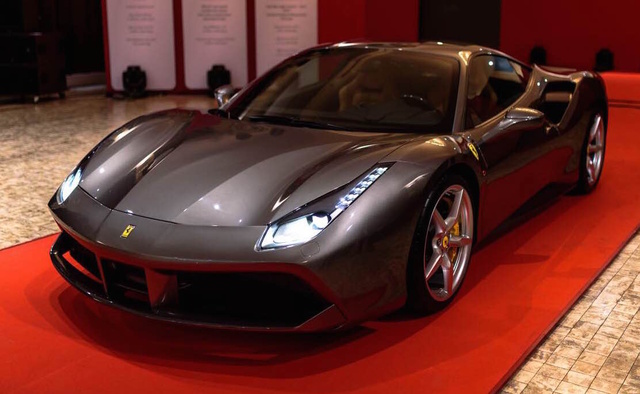
The (horse) power-hungry elite have gotten their way, again. Ferrari has been turbocharged.
The new 2016 Ferrari 488 has two turbos in its all new F154 engine and two trims to chose from--the 488 GTB coupe that replaces the iconic 2010 458 Italia and the 488 Spider that replaces the 2012 458 Spider.
Some old-school Ferrari enthusiasts will howl at the turbocharged revolution, primarily because the new power plant won’t produce the same kind of howl that the outgoing non-turbo, flat-plane, crank-shaft V8 made famous. But the company was determined to deliver more power in this latest version of their iconic mid-rear-engine supercar, and didn’t want to drop efficiency through the floor--or couldn’t, due to Corporate Average Fuel Economy (CAFE) regulations. Either way, the answer was turbos.
The new turbocharged engine is a 3.9-liter V8 that produces 661 horsepower and 561 lb-ft of torque, which is available across the full rev range. All of those numbers are significantly different than those assigned to the 458, which had a 4.5-liter V8 that made 562 horsepower and--here’s the real kicker--398 lb-ft of torque. All that new power will be channeled to the rear wheels of the 488 through a seven-speed dual-clutch transmission.
An increase in torque is always a benefit of turbocharging, while a common negative with the turbos is lag. Ferrari has done its best to answer that problem with titanium-aluminum vanes and other turbo technology, reducing throttle response time to a scant 0.8 seconds. The addition of the turbos has also dropped the redline down from 9,000 RPM to 8,000 and quieted the legendary soundtrack. But Ferrari worked to recreate the engine growl through exhaust headers with longer, equal-length piping and a flat-plane crankshaft. Though it may not duplicate the old howl, the new engine noise can still boil blood.
The increase in power does not mean a decrease in handling, thanks to some other innovations. The mechanics and electronic system are now fully integrated through the SSC2 Side Slip Angle Control System, which Ferrari says creates 12% faster acceleration out of corners and 9% faster response times than the previous 458 models. Essentially, you can push this supercar beyond its limit in a corner and it will just gracefully slide until you reign it in. The 488 is also 23% more rigid that its predecessor thanks to a new spaceframe chassis that uses 11 aluminum alloys and other noble metals such as magnesium.
A new generation of magnetorheological dampers on the 488 improves handling and ride quality over rough patches of road. The springs are still ultra firm, but the SSC2 system can automatically put a little more cushion in the shocks.
The 488 Spider is 110 pounds heavier than the 488 GTB, but Ferrari says both can go from 0-to-60 mph in three seconds flat and from 0-to-124 mph in 8.3 seconds. Top speed for the coupe is 205 mph, while the drop-top comes in at 203.
A look at the rear of both trims reveals other differences. The Spider has a piece of sheet metal covering the engine (as opposed to the sloping rear glass on the GTB), and there are a half dozen heat extractors in the rear of the Spider, along with two flying buttresses behind its seats. The electric glass rear wind stop on the Spider has three settings to help you stay comfortable and get the most out of the engine soundtrack. The retractable hard top folds backward in two overlapping sections in just 14 seconds and rests flush on the engine.
The two trims look identical from the front and side, which is to say they are both sexy, sleek and stunning. The wide-open front air intake and air ducts in the hood are part of the aerodynamic improvements and add a touch of aggressive sophistication to the design, which does take most of its cues from the outgoing 458. The rear is slightly wider to accommodate the new engine and there are also new air inlets incorporated into the rear fenders just behind the door.
Inside, the 488 looks and feels exactly like you’d want a supercar to feel - space-age, high-end and leathery. There’s a new knob to control the infotainment features, which is a welcome addition, as well as a pair of screens--one displays car data such as boost and turbo efficiency gauges and the other gives you all the infotainment particulars.
*CarGurus meticulously monitors the prices of millions of pre-owned vehicle listings, offering users precise and up-to-date market insights. Historical pricing data excludes any additional dealer fees as of May 3, 2026.
2016 Ferrari 488 Trims
| Trim type | MSRP |
|---|---|
| Spider RWD | $272,700 |
| GTB Coupe RWD | $245,400 |
*CarGurus meticulously monitors the prices of millions of pre-owned vehicle listings, offering users precise and up-to-date market insights. Historical pricing data excludes any additional dealer fees as of May 3, 2026.
2016 Ferrari 488 Price Trends
CarGurus tracks the prices of millions of used car listings every year. See how the average price of 2016 Ferrari 488 prices has changed over time.
See more price trends2016 Ferrari 488 Pricing Analysis
Pricing by Popular US Cities
Market Area: Nationwide
Key Insights
- Highest Price in Miami: The market in Miami, FL ($367,983) reflects the highest average price, likely due to demand for luxury vehicles in a high-income area.
- Lowest Price in Dallas: Dallas, TX ($269,900) offers the lowest average price among the cities analyzed, indicating a more competitive market or higher inventory levels.
- Chicago's Stable Mid-Range: With an average price of $308,328, Chicago presents a balanced market, suggesting steady demand without extreme pricing fluctuations.
City-Level Pricing
| City | Total Listings | Avg Price |
|---|---|---|
| Miami, FL | 58 | $367,983 |
| Chicago, IL | 54 | $308,328 |
| Dallas, TX | 57 | $269,900 |
Pricing Analysis by Model Year
Key Insights
- Significant Premium for Newer Models: The 2020 Ferrari 488 commands a striking +338.5% over its original MSRP, indicating strong demand and limited availability for the latest model.
- Steep Depreciation for Older Models: The 2019 model shows a depreciation of -78.6%, while the 2018 model is down -84.5%, reflecting the rapid decline in value typical for luxury sports cars.
- 2017 Model Offers Best Value: The 2017 Ferrari 488 is priced at $358,952, which is a more moderate depreciation of -29.5%, making it a potentially attractive option for buyers seeking value.
Model Year Pricing
| Model Year | Original MSRP | Avg Price | Price vs MSRP |
|---|---|---|---|
| 2020 Ferrari 488 | $345,300 | $1,514,756 | +338.5% |
| 2019 Ferrari 488 | $262,647 | $562,062 | -78.6% |
| 2018 Ferrari 488 | $252,800 | $392,429 | -84.5% |
| 2017 Ferrari 488 | $252,800 | $358,952 | -29.5% |
These recommendations are based on CarGurus' proprietary market data from September 16, 2026, CarGurus experts' opinions, and generative AI.
*CarGurus meticulously monitors the prices of millions of pre-owned vehicle listings, offering users precise and up-to-date market insights. Historical pricing data excludes any additional dealer fees as of May 3, 2026.
FAQs
How many 2016 Ferrari 488 vehicles have no reported accidents or damage?
What is the fuel economy of the 2016 Ferrari 488?
What fuel types are available?
*CarGurus meticulously monitors the prices of millions of pre-owned vehicle listings, offering users precise and up-to-date market insights. Historical pricing data excludes any additional dealer fees as of May 3, 2026.

