Toyota Prius Plug-In Hybrid vs Toyota RAV4 Plug-in Hybrid
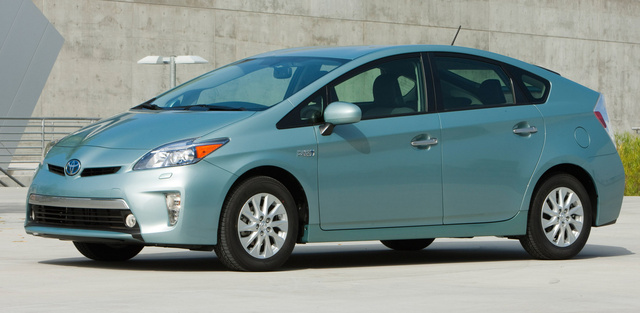
Overview | |
Years produced2012-2015 | Years produced2025-Present |
MSRP$33,775 | MSRP |
Listings3697 | Listings1109 |
Ratings & Reviews | |
User Reviews | User Reviews |
Expert reviews7.8 out of 10 | Expert reviews7.0 out of 10 |
Pros
Cons
| Pros
Cons
|
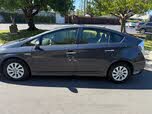
Reviews SummaryThe Prius Plug-In Hybrid is, as the name states, a plug-in hybrid version of the seminal Toyota Prius, further boosting efficiency with up to 44 miles of all-electric driving range. This model was known as the Toyota Prius Prime up to the 2025 model year, and for 2026 a new Nightshade Edition joins the lineup. While other mainstream brands like Hyundai and Kia offer plug-in hybrids, the Prius stands out with svelte styling. Verdict: A stylish alternative to other plug-in hybrids and an efficient commuter car, the Prius Plug-In Hybrid is let down by a chintzy interior. | |
Reviews SummaryThe more powerful RAV4 PHEV is even stronger for 2026, and Toyota has introduced a new GR Sport trim to showcase its sportier side. The expanded lineup has four distinct trims, and the electric range has increased by at least 20% over the 2025 RAV4, so Toyota has furthered its lead over plug-in hybrid newcomers such as the Hyundai Tucson and Kia Sportage—and even the Lexus NX 450h+. Verdict: This is the best version of the RAV4, though we can’t recommend the slightly sportier GR Sport until we know exactly how much it will cost. With improved tech and a greater focus on electrification, as well as available DC charging (despite the charge ports changing sides between trims), the RAV4 PHEV leans forward. | |
No video found | No video found |
Popular Features & Specs | |
Seating Capacity5 | Seating Capacity |
EV Battery Capacity13.6 kWh | EV Battery Capacity |
Battery Charge Time (120V)11 hours | Battery Charge Time (120V) |
Battery Charge Time (240V)4 hours | Battery Charge Time (240V) |
Engine | |
Engine Name2.0L 220 hp I4 Hybrid | Engine Name |
Battery Charge Time (120V)11 hours | Battery Charge Time (120V) |
Battery Charge Time (240V)4 hours | Battery Charge Time (240V) |
DrivetrainFWD | Drivetrain |
Fuel Economy | |
EV Battery Capacity13.6 kWh | EV Battery Capacity |
Interior | |
Seating Capacity5 | Seating Capacity |
Key Features | |
Navigation SystemStandard | Navigation System |
Safety | |
Front Crash Overall4 | Front Crash Overall |
Side Crash Overall5 | Side Crash Overall |
Dimensions & Capacity | |
Cargo Space20.3 cu ft | Cargo Space |
Curb Weight3461 lbs | Curb Weight |
Height55.9 in | Height |
Length181.1 in | Length |
Width70.2 in | Width |
Wheelbase108.3 in | Wheelbase |
Maximum Payload860 lbs | Maximum Payload |
Number of doors4 | Number of doors |
Overview | ||
Years produced | 2012-2015 | 2025-Present |
MSRP | $33,775 | |
Listings | ||
Ratings & Reviews | ||
User reviews | ||
Expert reviews | 7.8 out of 10Read full review | 7.0 out of 10Read full review |
Pros & cons | Pros
Cons
| Pros
Cons
|
Summary | The Prius Plug-In Hybrid is, as the name states, a plug-in hybrid version of the seminal Toyota Prius, further boosting efficiency with up to 44 miles of all-electric driving range. This model was known as the Toyota Prius Prime up to the 2025 model year, and for 2026 a new Nightshade Edition joins the lineup. While other mainstream brands like Hyundai and Kia offer plug-in hybrids, the Prius stands out with svelte styling. Verdict: A stylish alternative to other plug-in hybrids and an efficient commuter car, the Prius Plug-In Hybrid is let down by a chintzy interior. | The more powerful RAV4 PHEV is even stronger for 2026, and Toyota has introduced a new GR Sport trim to showcase its sportier side. The expanded lineup has four distinct trims, and the electric range has increased by at least 20% over the 2025 RAV4, so Toyota has furthered its lead over plug-in hybrid newcomers such as the Hyundai Tucson and Kia Sportage—and even the Lexus NX 450h+. Verdict: This is the best version of the RAV4, though we can’t recommend the slightly sportier GR Sport until we know exactly how much it will cost. With improved tech and a greater focus on electrification, as well as available DC charging (despite the charge ports changing sides between trims), the RAV4 PHEV leans forward. |
Video | No video found | No video found |
Popular Features & Specs | ||
Seating Capacity | 5 | |
EV Battery Capacity | 13.6 kWh | |
Battery Charge Time (120V) | 11 hours | |
Battery Charge Time (240V) | 4 hours | |
Engine | ||
Engine Name | 2.0L 220 hp I4 Hybrid | |
Battery Charge Time (120V) | 11 hours | |
Battery Charge Time (240V) | 4 hours | |
Drivetrain | FWD | |
Fuel Economy | ||
EV Battery Capacity | 13.6 kWh | |
Interior | ||
Seating Capacity | 5 | |
Key Features | ||
Navigation System | Standard | |
Safety | ||
Front Crash Overall | 4 | |
Side Crash Overall | 5 | |
Dimensions & Capacity | ||
Cargo Space | 20.3 cu ft | |
Curb Weight | 3461 lbs | |
Height | 55.9 in | |
Length | 181.1 in | |
Width | 70.2 in | |
Wheelbase | 108.3 in | |
Maximum Payload | 860 lbs | |
Number of doors | 4 | |









By: CarGurus + AI
At CarGurus, our team of experienced automotive writers remain at the heart of our content operation, conducting hands-on car tests and writing insightful guides that are backed by years of industry experience. To complement this, we are harnessing AI to make our content offering more diverse and more helpful to shoppers than ever. To achieve this, our AI systems are based exclusively on CarGurus content, ratings and data, so that what we produce is both unique to CarGurus, and uniquely helpful to car shoppers.