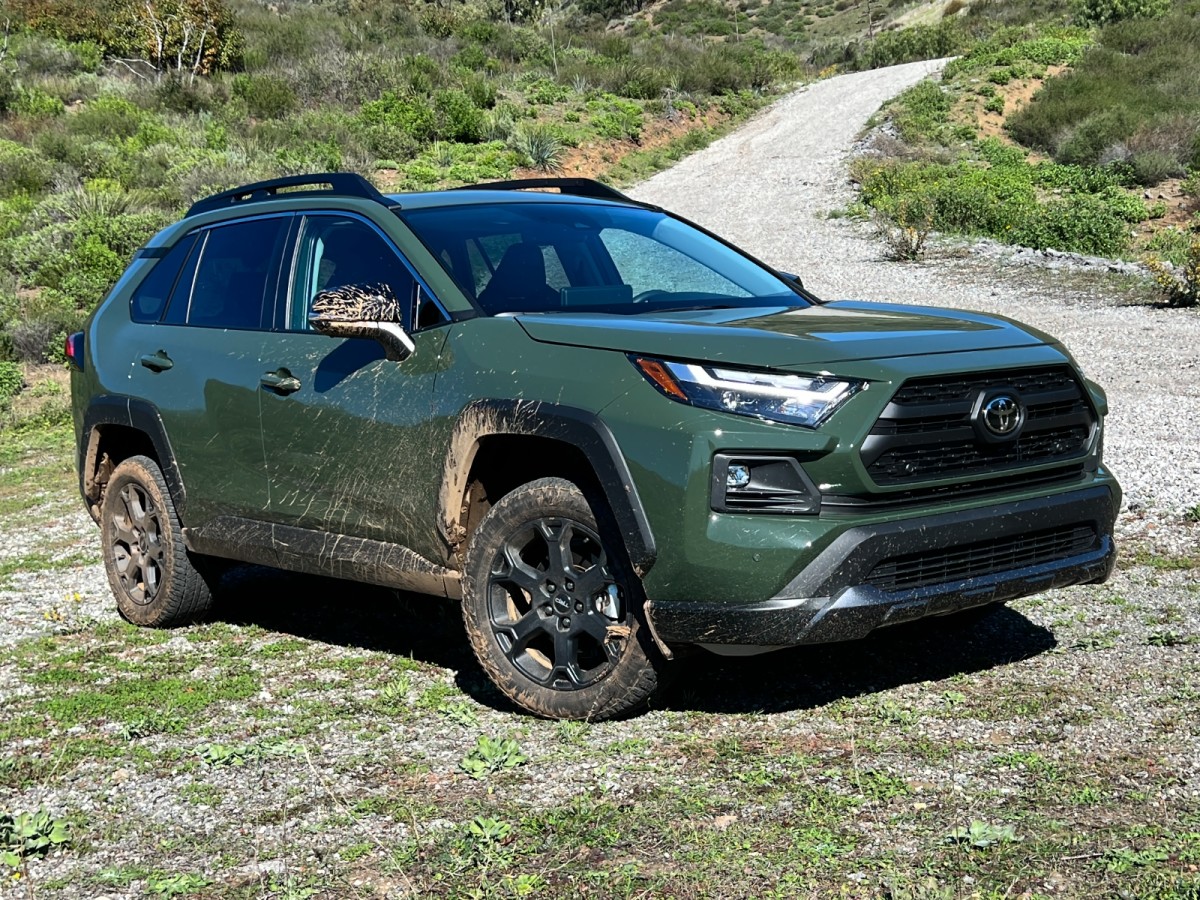
Few compact SUVs have earned the sustained trust of buyers the way the Toyota RAV4 has. It's practical, efficient, and available in more configurations than most people will ever need. But when it comes to Toyota RAV4 reliability, you want to make sure you're choosing the right RAV4 that has a solid history and the fewest documented issues.
Everything from engine type to service history can make or break the RAV4 engine's lifespan. This guide looks at the various models years, common issues, and lesser-known factors that'll play into your decision when buying a used RAV4.
- Toyota RAV4 Engine Reliability: Which Powertrain Holds Up?
- Toyota RAV4 Transmission Reliability
- Drivetrain, Suspension, and Electrical: What Else to Check
- Ongoing Maintenance: What It Takes to Keep a RAV4 Running Well
- RAV4 Reliability by Generation: Which Years Are Strongest?
- Is the Toyota RAV4 Reliable Enough?
RAV4 Reliability at a Glance
| Reliability Status | Above Average — competitive within the segment |
| Most Common Issue | Excessive oil consumption (2.4L engine, 2006–2008) |
| Most Common Major Repair | 8-speed automatic — software lag or harsh shifting (2019) |
| Most Reliable Configuration | 2016–2018 with 2.5L 4-Cylinder |
| Average Annual Repair Cost (RepairPal) | $429 vs. $521 class average |
Toyota RAV4 Engine Reliability
When shopping for a used RAV4, the powertrain you choose will shape your ownership experience more than any other decision. The RAV4 carries an above-average reliability rating within the compact SUV class, but each of its four powertrains has a distinct reliability profile—and a few specific trade-offs worth weighing before you commit.
Quick Comparison: RAV4 Engine Reliability
| Engine | Best Years | Reliability | Key Trade-Off |
|---|---|---|---|
| 2.5L 4-Cylinder (Gas) | 2016–2018 | High | Higher NVH (noise/vibration) |
| 2.5L Hybrid (eCVT) | 2016–Present | High | Higher initial purchase price |
| 3.5L V6 | 2009–2012 | Average | Maintenance-heavy (Water pump/Leaks) |
| RAV4 Prime | 2021–Present | Developing | High-voltage cable concerns |
RAV4 Engine Reliability: A Closer Look
2.5L 4-Cylinder Gas Engine
If longevity is the goal, the 2.5L four-cylinder is where to start. The 2AR-FE and its successor, the Dynamic Force engine, are known for straightforward engineering that holds up well past 200,000 miles—numbers that more complex powertrains in this class rarely replicate.
- Oil Consumption (2006–2008): The earlier 2.4L engine in 3rd-gen models has a well-documented history of excessive oil consumption. Always pull the dipstick when looking at a RAV4 from these years.
- The Sweet Spot: The 2016–2018 model years are where this engine hit its stride. The 2AR-FE was fully sorted, the 6-speed automatic was well-proven, and these are the years with the fewest reported issues across the 4th-gen lineup.
2.5L Hybrid / eCVT (2016 Onward)
The RAV4 Hybrid's eCVT is a fundamentally different kind of drivetrain. There are no clutch packs, no torque converter, and no traditional gear sets to service—which removes the most common transmission failure points from the equation entirely.
- Less wear where it counts: Because the electric motors handle the bulk of low-speed acceleration, the combustion engine runs under less stress in daily driving. Regenerative braking also takes the edge off brake wear, which compounds the long-term savings.
- A proven platform: Toyota's hybrid system has been in continuous production for more than two decades. The hardware in the RAV4 Hybrid is closely related to the systems found in the Camry Hybrid and Highlander Hybrid—both of which have been put to the test for real-world longevity.
3.5L V6
The V6, offered from 2006 to 2012, is a capable engine that delivers a whole lot more power and towing than the four-cylinder. The catch is that it asks more of its owner at higher mileage.
- Water Pump: Failure here is a genuine risk on high-mileage V6 RAV4s, making overheating a serious risk if it goes undetected. Proactive replacement is a standard recommendation for models with over 100,000 miles.
- Oil Leaks: Valve cover gaskets and oil pan seals tend to weep on V6 models past 100,000 miles. Not catastrophic, but worth factoring into the cost of ownership compared to the four-cylinder.
- The Sweet Spot: The 2009–2012 range is the most reliable window for the V6. Toyota had addressed the earliest production concerns by then, and these units had the benefit of a settled manufacturing process.
RAV4 Prime/Hybrid
The RAV4 Prime builds on the Hybrid's architecture with a larger battery and plug-in capability. For most buyers, the RAV4 Prime reliability has been good, but one specific issue applies to earlier models.
- High-Voltage Cable Corrosion: A subset of 2019–2022 Hybrid and Prime models developed corrosion on the rear motor's high-voltage cable connector, a concern Toyota addressed through a warranty extension. Be sure to check that this has been addressed by verifying the VIN at NHTSA.gov for any model in this range before buying.
- 2021 Onwards: Toyota revised the connector design in later production. Used buyers should prioritize 2021+ Prime models where possible. Early data look pretty good, but the long-term picture is still developing here.

Toyota RAV4 Transmission Reliability
The RAV4's transmission history is largely positive, with two of its three units earning strong durability marks. The exception is the 8-speed introduced in 2019, which deserves a closer look before signing.
Quick Comparison: RAV4 Transmissions
| Transmission | Common Years | Engine Pairing | Reliability Verdict |
|---|---|---|---|
| 6-Speed Automatic | 2013–2018 | 2.5L Gas | High — Very durable; check fluid service history |
| 8-Speed Automatic | 2019–Present | 2.5L Gas | Mixed — Shifting/software complaints (2019) |
| eCVT | 2016–Present | Hybrid/Prime | High — Exceptionally simple design |
RAV4 Transmission Reliability: A Closer Look
The 8-Speed Automatic
When Toyota launched the 5th-gen RAV4 in 2019, the new 8-speed automatic arrived with it—along with a set of real-world complaints that emerged quickly in the first model year.
- The Red Flag: A "lurching" or "hesitation" when pulling away from a stop, most noticeable in city driving, was a consistent complaint among 2019 gas RAV4 owners. NHTSA complaint data reflects a significant volume of these reports.
- The Fix: Toyota issued a Technical Service Bulletin (TSB) with a transmission control module software update that clears the problem for most owners. Before buying a 2019 gas RAV4, confirm with the seller or a mechanic that this update has been applied.
- Buyer Tip: A generic "software reset" is often only a short-term solution. The right question to ask is: "Has the transmission control module been updated per Toyota's TSB?" Validate it on the test drive by paying close attention to smoothness from a stop.
The eCVT and 6-Speed Automatic
Both of these units have earned their reputations the straightforward way: consistent performance over high mileage with minimal intervention required.
- The 6-Speed: The standard gearbox on 4th-gen gas RAV4s (2013–2018), this unit is one of the most dependable in the segment. Fluid changes at the recommended interval are essentially all it takes to keep it running cleanly past 200,000 miles.
- The eCVT: With no clutch packs, no torque converter, and no valve body to service, the Hybrid's eCVT eliminates the failure points that make conventional automatics a maintenance concern. It's about as close to a "fit and forget" drivetrain as the compact SUV segment offers.

Drivetrain, Suspension, and Electrical: What Else to Check
Beyond the powertrain, a handful of systems across different RAV4 generations are worth a targeted check before you buy.
All-Wheel Drive (AWD) Systems
Across most of its history, the RAV4's AWD system has been a reliable, low-maintenance component. The exception applies specifically to 2019–2022 Hybrid and Prime models, where the high-voltage cable corrosion issue described above can affect rear motor function. Confirm that any applicable Toyota service campaign has been completed before purchasing one of these configurations.
Steering and Suspension
3rd and early 4th-gen RAV4s have a known tendency to develop a clunk or bind in the intermediate steering shaft, typically felt at low speeds or when the wheel is near full lock.
- Steering Shaft Clunk: This is a common finding on high-mileage 2006–2015 models. Lubrication or replacement of the intermediate shaft is a relatively low-cost repair, but worth confirming during a pre-purchase inspection.
- Rear Suspension Arms (2009–2012): Certain 3rd-gen V6 models were covered by a rear suspension arm bracket recall. Don't forget to verify completion on any affected unit before going through your purchase.
Electrical and Infotainment
Software-related issues on the RAV4 tend to be inconvenient rather than mechanically serious, but a few are worth knowing about.
- DCM Software Glitch (2019–2021): A data communication module fault affected some early 5th-gen models, causing a slow 12V battery drain. Toyota issued a software correction—confirm it has been applied to any 2019–2021 model you're considering.
- Check Engine Lights: On higher-mileage RAV4s, oxygen sensor and mass airflow sensor codes are the most frequent triggers. Addressing them promptly keeps fuel management running correctly and avoids downstream issues.
- Infotainment Slowdowns: The touchscreen systems on older 4th-gen models can lag or freeze over time. It's a nuisance, not a safety issue—and typically handled with a system reset or software update.
Ongoing Maintenance: What It Takes to Keep a RAV4 Running Well
A RAV4 with a clean service record is a fundamentally different purchase than one without—even if the mileage looks similar on paper. The known trouble spots are manageable, but deferred maintenance can turn minor issues into expensive ones.
| Service | Why It Matters | Recommended Interval |
|---|---|---|
| Oil changes | Clean oil is essential to the 2.5L's timing system and piston ring integrity. Stretching change intervals is the most common driver of premature engine wear on RAV4s. | Every 5,000–10,000 miles, full synthetic |
| Spark plugs | Worn plugs lead to misfires that can damage the catalytic converter—a costly downstream failure on any four-cylinder. | Every 60,000–120,000 miles |
| Transmission fluid | Fluid degradation is tied to the shift quality issues reported on 2019 8-speed models. On any used RAV4 with an unclear service history, a fluid change is inexpensive protection. | Inspect/service at 60,000 miles |
| Hybrid battery filter | A blocked filter restricts airflow to the hybrid battery pack, putting thermal strain on the cells and shortening battery life over time. | Clean every 20,000 miles |
| Coolant flush | Old coolant accelerates corrosion inside the V6's water pump housing and the Hybrid's thermal management circuits. | Per manufacturer's schedule, or when buying used |
| Intermediate steering shaft | 3rd and early 4th-gen RAV4s are known for a clunk or bind on full lock. Inspecting and lubricating the shaft is a low-cost preventive step. | Inspect on high-mileage units; lubricate as needed |
Toyota RAV4 Repair Costs
According to RepairPal, the RAV4 averages $429 in annual repair costs—well below the compact SUV class average of $521. Parts availability is strong at both Toyota dealers and independent shops, and the RAV4's widespread ownership means most mechanics have hands-on experience with its common service needs. The 2.5L four-cylinder is the most workshop-friendly of the powertrains; Hybrid and Prime models may call for a specialist for high-voltage component work.

RAV4 Reliability by Generation: Which Years Are Strongest?
Each generation of the RAV4 brought meaningful changes to the powertrain and technology lineup. Here's a practical overview of where each stands for used buyers:
Quick Comparison: RAV4 Generations
| Generation | Best Years | Strengths | Watch Out For |
|---|---|---|---|
| 3rd Gen (2006–2012) | 2009–2012 | V6 power available; proven chassis; strong resale value | 2006–2008 oil consumption (2.4L engine) |
| 4th Gen (2013–2018) | 2016–2018 | Best overall value; 2.5L engine fully matured; 6-speed automatic refined | Early 2013–2015 CVT reliability on some trims |
| 5th Gen (2019–Present) | 2021+ (Gas) or 2016+ (Hybrid) | Standard safety tech; updated interior; Hybrid efficiency gains | 2019 8-speed software; Hybrid cable corrosion (2019–2022) |
Related Reading: Reliability can vary significantly by year. For guidance on which specific model years to prioritize or skip, see our Toyota RAV4 Buying Guide on CarGurus.
Is the Toyota RAV4 Reliable Enough?
For used compact SUV shoppers, the RAV4 is one of the stronger bets on the market—provided the powertrain and model year are right. Toyota RAV4 reliability issues are real but well-documented, which means they're also avoidable with the right research. Toyota's nationwide dealer network and strong parts availability also make keeping a RAV4 on the road easier and less expensive than most of its competitors.
Keep in mind, a RAV4 with 100,000+ miles and a complete service record is always a far safer buy than one with 60,000 miles and no paperwork. Service history tells you more about what a RAV4 has left in it than the odometer ever will.
Ready to start shopping? Browse used Toyota RAV4 listings on CarGurus to compare vehicle history reports and Instant Market Values side by side—so you can find a well-maintained SUV at a fair price.