What is a Good Price for a Used Toyota Camry in Los Angeles?
Los Angeles presents a favorable market for Camry buyers. Our data shows used Camrys in LA average $16,417—a 10% discount versus the national average of $18,272. For a vehicle this popular, that's a meaningful advantage.
Price by Model Year in Los Angeles
The Camry spans nine generations, but the used market concentrates on the eighth-generation (2018–2024), seventh-generation (2012–2017), and sixth-generation (2007–2011). The ninth-generation hybrid-only model (2024+) is just entering the used market.
| Model Year |
LA Avg. Price |
National Avg. Price |
LA Avg. Mileage |
| 2025 |
$28,564 |
$28,906 |
16,111 miles |
| 2024 |
$26,605 |
$25,797 |
29,415 miles |
| 2023 |
$23,791 |
$24,105 |
45,615 miles |
| 2022 |
$22,477 |
$22,528 |
57,857 miles |
| 2021 |
$18,652 |
$21,283 |
56,752 miles |
| 2020 |
$18,930 |
$19,179 |
91,403 miles |
| 2019 |
$18,315 |
$17,786 |
94,735 miles |
| 2018 |
$14,242 |
$16,678 |
116,434 miles |
| 2017 |
$12,831 |
$13,752 |
111,266 miles |
| 2015 |
$10,726 |
$11,987 |
128,137 miles |
| 2014 |
$12,217 |
$11,228 |
90,654 miles |
| 2012 |
$8,555 |
$9,184 |
144,174 miles |
Ninth Generation Hybrid-Only (2024–2025): $26,605–$28,564
The newest Camry is hybrid-only, combining a 2.5-liter four-cylinder with an electric motor for 225 hp (FWD) or 232 hp (AWD). EPA ratings hit 51 mpg combined for the most efficient configurations. Early used examples are just entering the market with relatively low mileage. The 2025 model shows a slight LA discount (1%), while 2024 models are priced slightly above national average—demand remains strong for these fuel-efficient sedans.
Eighth Generation (2018–2023): $14,242–$23,791
This generation represents the sweet spot for most buyers. The 2018 redesign brought sportier styling, improved driving dynamics, and a more upscale interior. The 2021 model year shows the strongest LA discount at 12% below national pricing ($18,652 vs. $21,283)—exceptional value for a Camry with under 60,000 miles. The 2018 model year also shows strong LA value at 15% below national ($14,242 vs. $16,678), though with higher average mileage.
Seventh Generation (2012–2017): $8,555–$12,831
Budget-friendly entry into reliable Camry ownership. The 2014 mid-cycle refresh brought significant updates including redesigned exterior and improved interior materials. These years offer excellent value, with the 2017 model at $12,831 (7% LA discount) representing the final and most refined year of this generation.
Sixth Generation (2007–2011): $6,295–$9,070
The least reliable Camry generation—approach with caution. While prices are attractive ($6,000–$9,000), the 2007–2009 years in particular suffered from excessive oil consumption issues. LA inventory is limited in these years, and we'd recommend the more reliable seventh-generation models at similar prices.

Understanding the LA Price Advantage
The 10% discount over nationwide pricing reflects favorable local conditions.
High volume market: LA's population and commuter culture create strong demand for reliable sedans like the Camry. High volume means competitive pricing and good selection.
Climate preservation: Southern California's dry weather is kind to Toyota's robust engineering. No salt, no snow, minimal rust concerns—these cars age gracefully here.
Comparable condition: LA Camry inventory shows similar mileage to national averages (87,247 vs. 85,634), and comparable accident-free rates (68% vs. 65%). You're getting the price advantage without condition compromises.
Good and Great Deals in Los Angeles
CarGurus data reveals that 59% of LA Camry listings qualify as Good or Great Deals—notably better than the national average of 52%.
| Deal Rating |
LA Percentage |
National Percentage |
| Great Deals |
22% |
17% |
| Good Deals |
37% |
35% |
LA's 22% Great Deal rate significantly exceeds the national 17%—strong evidence that LA is a favorable market for Camry buyers. The 2018 and 2021 model years show particularly strong LA discounts.
What is the Most Reliable Used Toyota Camry in Los Angeles?
The Toyota Camry's reputation for reliability is well-earned—but not every generation is equal. Understanding which years to target (and which to avoid) helps ensure you get the dependable ownership experience the Camry is known for.
Most Reliable by Generation
Eighth Generation (2018–2024)
The most refined and reliable Camry generation to date. Built on Toyota's TNGA platform, these Camrys offer improved driving dynamics, better fuel economy, and excellent build quality. The powertrain options are all proven:
| Powertrain |
Output |
Fuel Economy |
Notes |
| 2.5L Four-Cylinder |
203-206 hp |
28-34 mpg |
Base engine, excellent reliability, adequate power |
| 3.5L V6 |
301 hp |
22-32 mpg |
Strong performance, smooth delivery, proven durability |
| 2.5L Hybrid |
208 hp |
46-52 mpg |
Best efficiency, Toyota's proven hybrid system |
Complaint data for 2018–2024 models is minimal, with no recurring serious issues. These Camrys regularly appear at or near the top of reliability surveys.
Seventh Generation (2012–2017)
The second-most reliable modern Camry generation. The 2014 refresh improved interior quality and refined the driving experience. These years won the J.D. Power Vehicle Dependability Study for midsize cars in 2017. Issues reported are generally minor (infotainment glitches, occasional brake noise), not fundamental mechanical problems. At $8,500–$13,000 in LA, these represent excellent value.
Ninth Generation (2024–Present)
Too new for long-term reliability assessment, but the hybrid-only powertrain uses many components proven in the eighth generation. Early indicators are positive, and Toyota's track record suggests strong dependability. The main unknown is the new-generation-specific components.
Sixth Generation (2006–2011): The Exception
This is the Camry generation to approach carefully. The 2007, 2008, and 2009 model years in particular suffered from excessive oil consumption issues, especially in V6 models. While Toyota addressed some concerns over the production run (2010–2011 are somewhat better), this generation doesn't match the reliability of what came before or after.
The Camry Reliability Advantage
What makes Camrys reliable?
Proven powertrains: Toyota doesn't chase bleeding-edge technology. The engines and transmissions in Camrys are thoroughly developed before introduction and refined over years of production.
Conservative engineering: Toyota builds in generous safety margins. Components are designed to last well beyond warranty periods.
High-volume production: As America's best-selling sedan, the Camry benefits from massive production scale. Any issues are identified and addressed quickly, and parts availability is excellent.
Affordable maintenance: Routine service costs are reasonable, and independent shops easily service these cars. This encourages owners to maintain them properly, extending lifespan.
What to Check When Buying
Service records: Even reliable cars need maintenance. Look for documented oil changes and scheduled service.
Oil consumption (2007–2011): If considering a sixth-generation model, check oil levels carefully. Ask about oil consumption history. Consider avoiding these years entirely.
Hybrid battery (if applicable): Toyota hybrid batteries are generally robust, but check for any warning lights or reduced fuel economy that might indicate battery degradation.
Transmission behavior: Test the eight-speed automatic (2018+) or six-speed (earlier years) for smooth shifts. These transmissions are reliable but should shift cleanly.
Best and Worst Toyota Camry Years in Los Angeles
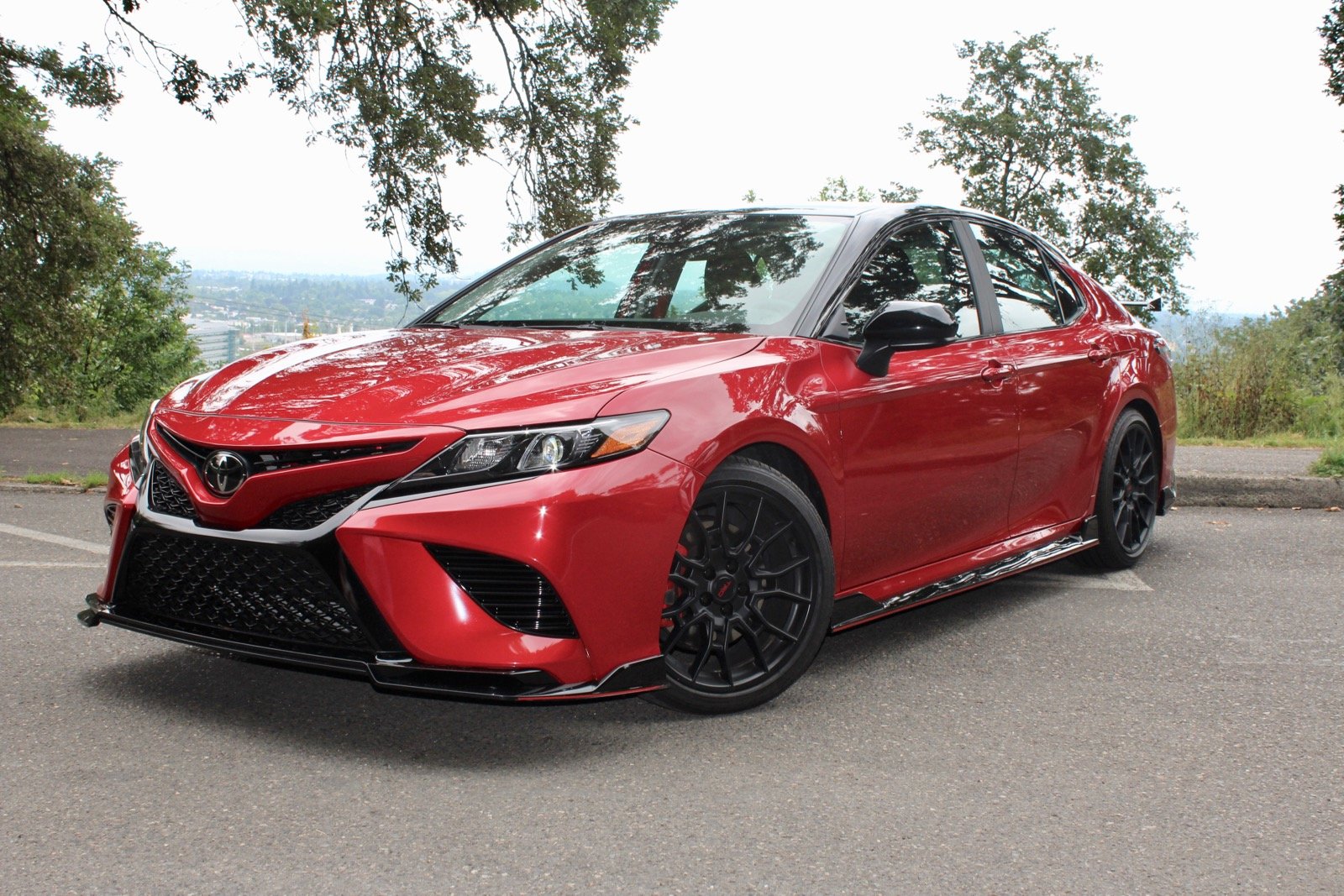
CarGurus data reveals clear patterns about which model years offer the best value and reliability in the LA market.
Best Toyota Camry Years for Los Angeles
| Category |
Best Years |
LA Avg. Price |
Why They're Best |
| Best Overall |
2021–2023 |
$18,652–$23,791 |
Refined eighth-gen, Apple CarPlay/Android Auto standard, excellent reliability |
| Best Value |
2018 |
$14,242 |
15% LA discount, first year of current-gen design, proven reliable |
| Best Budget Option |
2014–2017 |
$10,726–$12,831 |
Post-refresh seventh-gen, excellent reliability, sub-$13k pricing |
| Best for Efficiency |
2025 Hybrid |
$28,564 |
51 mpg combined, newest design, hybrid-only generation |
Best Overall: 2021–2023
These model years offer the sweet spot of modern features, proven reliability, and meaningful depreciation. The 2020 model year brought Apple CarPlay and Android Auto to all trims, and these years benefit from three years of eighth-generation refinement. The 2021 shows an exceptional 12% LA discount ($18,652 vs. $21,283 nationally), with lower-than-average mileage (56,752 miles).
Best Value: 2018
The first year of the eighth-generation redesign at 15% below national pricing ($14,242 vs. $16,678). The 2018 introduced the TNGA platform, sportier styling, and improved driving dynamics that define the current Camry. Higher mileage (116,434 average) is the trade-off, but these Camrys are built to handle it.
Best Budget Option: 2014–2017
The post-refresh seventh generation offers excellent reliability at accessible prices. The 2014 refresh brought significant improvements, and these years won top reliability awards. At $10,700–$12,800 in LA, you get proven dependability for daily commuting without breaking the bank.
Best for Efficiency: 2025 Hybrid
The ninth-generation hybrid-only Camry achieves 51 mpg combined in its most efficient configuration. For LA commuters covering 15,000+ miles annually, the fuel savings are substantial. The slight LA discount on 2025 models (1%) will likely grow as more inventory enters the market.
Worst Toyota Camry Years for Los Angeles
| Years |
LA Avg. Price |
Concerns |
| 2007–2009 |
$6,295–$6,887 |
Excessive oil consumption, highest complaint rates of any Camry generation |
| 2010–2011 |
$8,458–$9,070 |
Improved from 2007–2009 but still less reliable than seventh-gen models at similar prices |
Avoid: 2007–2009
The 2008 model year is cited as the worst Camry year for reliability, with 2007 and 2009 close behind. Excessive oil consumption—particularly in V6 models—is the primary concern. While prices are attractive ($6,300–$6,900 in LA), the potential for expensive engine repairs makes these poor values. For similar money, you can find more reliable 2012–2013 seventh-generation models.
Approach Carefully: 2010–2011
Toyota improved the sixth generation in its final years, including a new 2.5-liter engine for 2011. These are better than 2007–2009, but still don't match the reliability of the seventh generation that followed. At $8,400–$9,100 in LA, you're in range of early seventh-generation models that offer better long-term dependability.
Generation Summary Based on LA Market Data
Ninth Generation (2024–Present): The newest and most efficient Camry, now hybrid-only. Limited used inventory but strong early indicators. Best for buyers prioritizing fuel economy.
Eighth Generation (2018–2024): The value sweet spot for most buyers. Proven reliability, modern features, and meaningful LA discounts (especially 2018 and 2021). This is where most buyers should focus.
Seventh Generation (2012–2017): Excellent budget option with proven reliability. The 2014+ years benefited from a significant refresh. Strong value under $13,000.
Sixth Generation (2006–2011): The exception to Camry reliability. Avoid 2007–2009 entirely; 2010–2011 are acceptable only if exceptionally maintained. Better options exist at similar prices.
Fifth Generation and Earlier (Pre-2006): These are now 20+ years old. Reliable if well-maintained, but age-related wear is inevitable. Only recommended for buyers seeking extremely affordable transportation who are comfortable with older vehicles.
Toyota Camry Pros and Cons
Los Angeles rewards the Camry's strengths. Long commutes benefit from fuel efficiency and comfort; stop-and-go traffic demands reliability; and the practical value proposition makes sense for budget-conscious buyers in an expensive city. Based on our analysis of the LA market and real-world ownership patterns, here's what you need to know.
Pros
Exceptional Reliability (Most Generations)
The Camry's reputation is earned. Seventh and eighth-generation models regularly top reliability surveys, and Toyota's conservative engineering means these cars last. It's common to see Camrys with 200,000+ miles still running strong. The 68% accident-free rate in LA inventory suggests well-cared-for examples.
Strong LA Market Conditions
The data supports buying in LA: 10% lower average prices than national, 22% Great Deal rate versus 17% nationally, and comparable condition metrics. LA is simply a good market for Camry buyers.
Excellent Fuel Economy
For LA commuters, fuel costs matter. The eighth-generation hybrid achieves 46–52 mpg combined; even non-hybrid four-cylinders manage 28–34 mpg highway. The ninth-generation hybrid-only model pushes efficiency further. At California gas prices, this translates to real savings.
Low Ownership Costs
Beyond fuel economy, Camrys are affordable to maintain. Parts are plentiful and reasonably priced, any shop can service them, and they don't require premium fuel. Insurance costs are typically moderate for the class.
Comfortable and Practical
The Camry seats five adults comfortably with a generous trunk. The eighth-generation interior is genuinely nice, with quality materials and intuitive controls. For daily commuting and family duty, it handles everything competently.
Strong Resale Value
Toyota's reliability reputation supports resale values. Well-maintained Camrys hold value better than most competitors, which partially offsets the slightly higher purchase price compared to some alternatives.
Cons
Not Exciting to Drive
The Camry prioritizes comfort over sportiness. While the eighth generation improved driving dynamics, it's still not a driver's car. The steering is light, the suspension prioritizes comfort, and the CVT (hybrid) or eight-speed auto (gas) are tuned for smoothness, not engagement. If you want driving excitement, look elsewhere.
Sixth Generation Reliability Issues
The 2006–2011 Camry doesn't match Toyota's reputation. The 2007–2009 years in particular have well-documented oil consumption problems. This matters because those affordable prices can be tempting—but the seventh generation at similar prices is a better choice.
Conservative Styling (Pre-2018)
Seventh-generation and earlier Camrys are anonymous-looking. If you want a car that stands out, these aren't it. The eighth generation brought more distinctive styling, but earlier models blend into traffic.
Nondescript Interior (Older Models)
Seventh-generation and earlier interiors are functional but uninspired. Materials are durable but not premium. The eighth generation improved significantly, but budget buyers looking at older models should set expectations accordingly.
Higher Mileage on Best-Value Years
The strongest LA discounts (2018, 2021) come with higher average mileage. The 2018's 116,434-mile average is significant, even for a reliable Toyota. Factor in the mileage when evaluating deals.
Hybrid Trunk Space
Camry Hybrid models sacrifice some trunk space for the battery pack. If maximum cargo capacity matters, the gas-only versions offer more room.
Who Should Buy a Camry in Los Angeles?
Ideal buyers based on data patterns: Commuters who prioritize reliability and low running costs, families needing practical transportation, buyers seeking proven dependability over excitement, high-mileage drivers who benefit from fuel efficiency, and anyone wanting a sensible, affordable-to-own sedan.
Consider alternatives if: You want engaging driving dynamics (consider Honda Accord or Mazda6), you're drawn to sixth-generation pricing (the reliability concerns aren't worth the savings), you want distinctive styling (earlier Camrys are forgettable), or you need maximum interior space (consider Toyota Avalon or midsize SUV).
Final Verdict for LA Buyers
The LA Camry market offers clear advantages: 10% lower average prices, 22% Great Deal rate (versus 17% nationally), and comparable condition to national inventory. The 2018 and 2021 model years show the strongest LA discounts at 15% and 12% respectively.
For most buyers, the eighth generation (2018–2024) represents the best balance of features, reliability, and value. The 2021–2023 models offer modern connectivity and refined driving experience; the 2018 offers the same fundamental package at significant savings.
Budget buyers should target the seventh generation (2014–2017)—proven reliable at under $13,000. Just avoid the sixth generation (2006–2011), where the Camry's reliability reputation doesn't hold.
The Camry won't excite you, but it won't let you down either. For LA commuters who want dependable, affordable transportation, that's exactly the point.
Related Topics