The Ford F-150 Lightning was the first full-size electric truck from an established automaker when it was introduced for the 2022 model year. Although the Rivian R1T outsold the F-150 Lightning in its first model year, Ford's electric truck quickly became the market leader. Primary competitors include the Chevrolet Silverado EV, the GMC Sierra EV, the Rivian R1T, the GMC Hummer EV, and the Tesla Cybertruck.
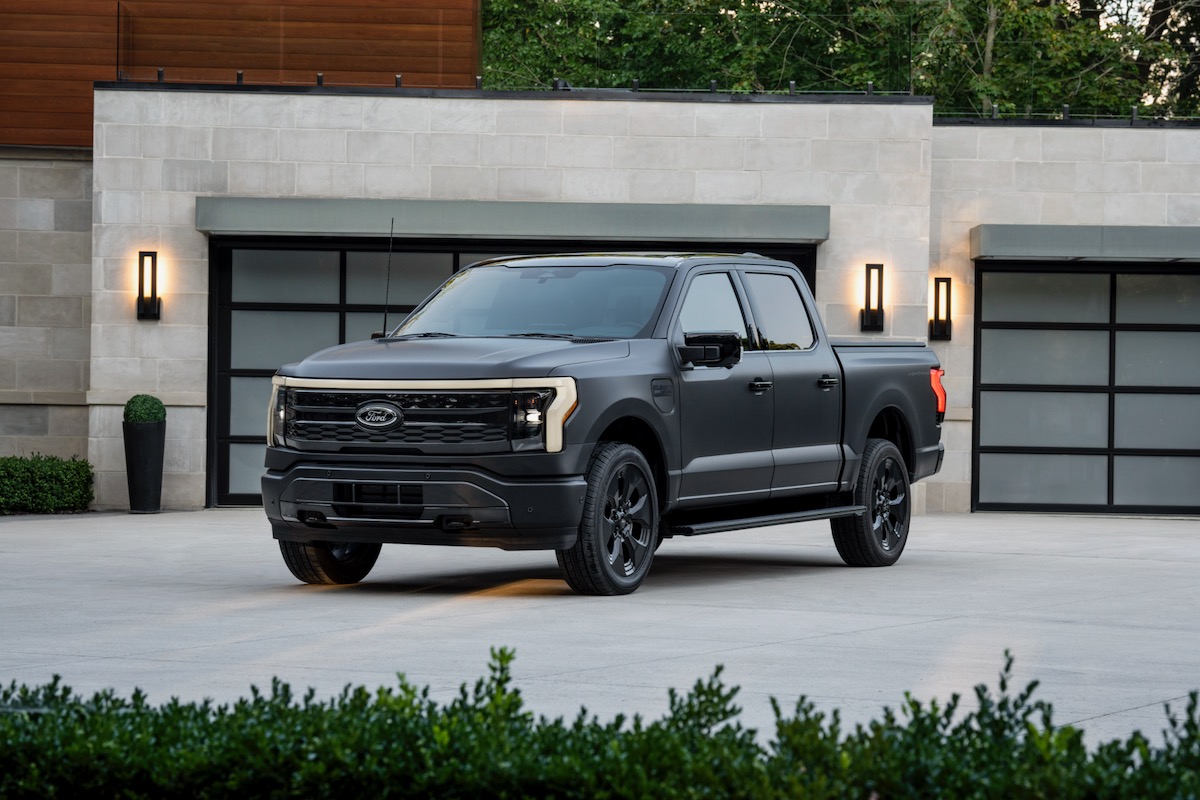
Apart from a bespoke design for the grille and the headlights, the Lightning looks all but identical to gas F-150 models, which appeal to traditional truck folk. Battery range is a disadvantage, though, with a lower figure than most competitors.
The Ford F-150 Lightning remains a great truck for those who tailgate or camp and want to hook up a crockpot or powered cooler but don’t need to go long distances. It’s also great for those who might need to connect power tools in a field or on a job site when they’re not near a power outlet. However, it’s not ideal for those who regularly travel long distances or need to tow.
In December 2025 Ford announced that production of the F-150 Lightning had ended because it wasn't profitable, but confirmed that it would introduce a new F-150 Lightning EREV model. Expected on sale in late 2026 or early 2027, it will be a range extender EV powered by electric motors but with a gas engine that functions as a generator.
Ford F-150 Lightning Buying Guide: Cost, Reliability, and the Best Years to Buy
- Frequently Asked Questions
- Pros and Cons
- Ford F-150 Lightning Generations
- Ford F-150 Lightning First Generation (2022-2025)
Frequently Asked Questions
Which Ford F-150 Lightning years are the best?
There are few model years to choose from, but true to the old adage of avoiding the earliest, we’d go for 2024 and 2025 examples. The National Highway Traffic Safety Administration (NHTSA) consumer complaints and recalls drop significantly in those two years, and Consumer Reports predicted reliability improves. Owner satisfaction for those two years is higher than the previous two, and Ford added a heat pump in 2024, which improves range and cabin heating in cold weather.
Which Ford F-150 Lightning years are the worst?
The first two years of the Ford F-150 Lightning are plagued with consumer complaints and recalls, according to the NHTSA. Plus, Consumer Reports gives 2022 and 2023 lower-than-average reliability verdicts, and CarComplaints.com calls 2023 the worst year to buy due to electrical problems with no cabin heating the most common complaint. Additionally, 2023 is often considered worse than 2022 because bugs hadn’t been worked out from the launch year, and there have been cases of missing equipment due to supply chain issues. For example, some 2023 models are missing equipment such as the Onboard Scales and the Smart Hitch.
Is a used Ford F-150 Lightning a good deal?
A used Ford F-150 Lightning is a good deal, because it is typically cheaper than other electric trucks. Prices for 2022 models can be as much as 50% lower than the original MSRP. The discounts are less with each newer model year, but even for 2024 cars, prices are $20,000 to $30,000 lower than the original. For the best value, we’d recommend a top-tier Platinum model, which has the steepest discounts, but for those on a budget, we spotted several used 2024 Pro and XLT models for $40,000 or less.
Pros and Cons
Pros:
- Impressive electric powertrain
- Standard all-wheel drive
- Comfortable
Cons:
- Extended-range models are pricey
- Towing and cold temperatures reduce range
- Poor efficiency at highway speeds
Ford F-150 Lightning Generations
Ford F-150 Lightning First Generation (2022–2025)
The Ford F-150 Lightning was the first mainstream full-size electric pickup truck. With its traditional design and the F-Series nameplate, the goal was to appeal to established truck buyers rather than just early adopters.
While it looks almost identical to gas-powered models and shares the same central cab section and most interior parts, the F-150 Lightning has bespoke front and rear ends, with futuristic light-bar headlights and taillights and smoother wheel arch fairings. Underneath, it has a modified structure to accommodate a large battery pack and two electric motors, and it weighs about a third more than an equivalent gas version.
While it shares many parts with the gas-powered F-150, the Lightning added some useful features that only an electric version could offer. As well as a large front trunk (frunk), it featured bi-directional charging with enough energy to power a home during an outage and a Pro Power Onboard feature with up to 9.6 kW of exportable power through 11 outlets.
At launch, the F-150 Lightning offered two battery pack and range options—a standard 98 kWh battery with a 230-mile range, and an extended 131 kWh battery with a 320-mile range. Pro and XLT trims came with the Standard Range, while the Extended Range was optional on XLT and Lariat and standard on the Platinum. Power output for the base standard-range models was 452 horsepower and 775 pound-feet of torque, while the extended-range models delivered 580 hp and 775 lb-ft of torque. Regardless of trim or battery pack, the F-150 Lightning had standard four-wheel drive (4WD).
In Pro trim, the F-150 Lightning was essentially a work truck. Standard equipment included manually adjustable front seats, two 12-volt outlets in the cabin, a 2.4-kilowatt Pro Power Onboard package, a 12-inch infotainment screen, Apple CarPlay and Android Auto, Wi-Fi for up to 10 devices, navigation, and wireless over-the-air updates. At the XLT trim level, Ford added a power-adjustable driver’s seat, cloth upholstery, an available surround-view camera system, among other options. Lariat trim added features such as a power tailgate, heated and ventilated front seats, leather upholstery, a 15.5-inch infotainment screen, a 9.6-kilowatt Pro Power Onboard system, and a nine-speaker Bang & Olufsen audio system.
The top-tier Platinum trim essentially took every option and made it standard, and was more like a luxury vehicle than a pickup truck. It included the ability to use a phone as a key, Ford’s Blue Cruise hands-free highway driving system, high-quality leather seats, massaging front seats, a 19-speaker Bang & Olufsen audio system, and Max Recline front seats.
In 2024, Flash trim added a 123-kWh battery pack and increased the range to 300 miles. This was also the year that Ford introduced a vapor-injection heat pump as standard, to stabilize the range in cold weather. At this time, Ford entered an agreement with Tesla to provide access to North American Charging Standard (Tesla Supercharger) infrastructure and began supplying owners with a CCS-to-NACS adapter.
The F-150 Lightning came with a lot of standard safety features out of the gate, including automatic emergency braking with pedestrian detection, blind-spot monitors, lane-keep assist, post-collision braking, and high-beam assist. The 360-degree camera became standard on the XLT trim in 2024, and features such as Blue Cruise, Intersection Assist, and Evasive Steer Assist became standard on the then-new Flash trim.
The National Highway Traffic Safety Administration gave the Ford F-150 Lightning an overall safety rating of five out of five stars for every model year it tested. At the time of writing, the Insurance Institute for Highway Safety had only done incomplete testing of the 2025 model year and gave the F-150 a Poor rating in the front moderate overlap test, citing significant rear passenger injuries.
There are some reliability concerns, and it’s worth doing a VIN check to ensure any recall issues have been corrected. For example, 2025 models were recalled for a rollaway risk, and the 2022 to 2024 model years were recalled for internal short circuits that could lead to fires.
At the time of writing, Ford was still listing new prices for 2025 model year cars, ranging from just over $57,000 to just over $88,000 including destination, although production officially ceased in late 2025.
Used prices on CarGurus range from about $25,000 to $95,000. For shoppers looking for a vehicle in the 2024 to 2025 sweet spot, there were several Flash and Lariat trims available priced around $51,000 with low miles. There are still options for buyers who want to pay less than $40,000, but they're limited to XLT and Pro trims, while top-end Platinum trim models go for around $65,000.