They say hindsight is 20/20. In this case, that hindsight takes us back to 2010 — a year full of automotive bargains that most of us were too cash-strapped to act on. Whether they've disappeared entirely or simply skyrocketed in value over the past decade and a half, these are the cars we should have snapped up when we had the chance. You didn't need a crystal ball to see their potential. You just needed money — something the Great Recession had a way of making scarce.
This list spans the full spectrum of the automotive world: cars, trucks, and SUVs across virtually every segment, so there's something here to make every enthusiast wince with regret. As we reckon with past missed opportunities, let's resolve not to repeat the same mistakes in 2026 — and avoid writing this very same article again in 2036.
The Cars We Wish We'd Bought 10 Years Ago
- 2009–2014 Acura TL SH-AWD
- 2008–2013 BMW M3
- 2011–2014 Cadillac CTS-V Wagon
- 2010–2013 Chevrolet Corvette Grand Sport
- 2006–2014 Honda Ridgeline
- 2009–2015 Jaguar XFR
- 2010–2013 Mazda Mazdaspeed3
- 2009–2014 Nissan Cube
- 2008–2009 Pontiac G8 GXP
- 2006–2012 Porsche Cayman S
FAQs What Makes CarGurus Best Cars Guides Different Shopping Tools Related Topics
2009–2014 Acura TL SH-AWD
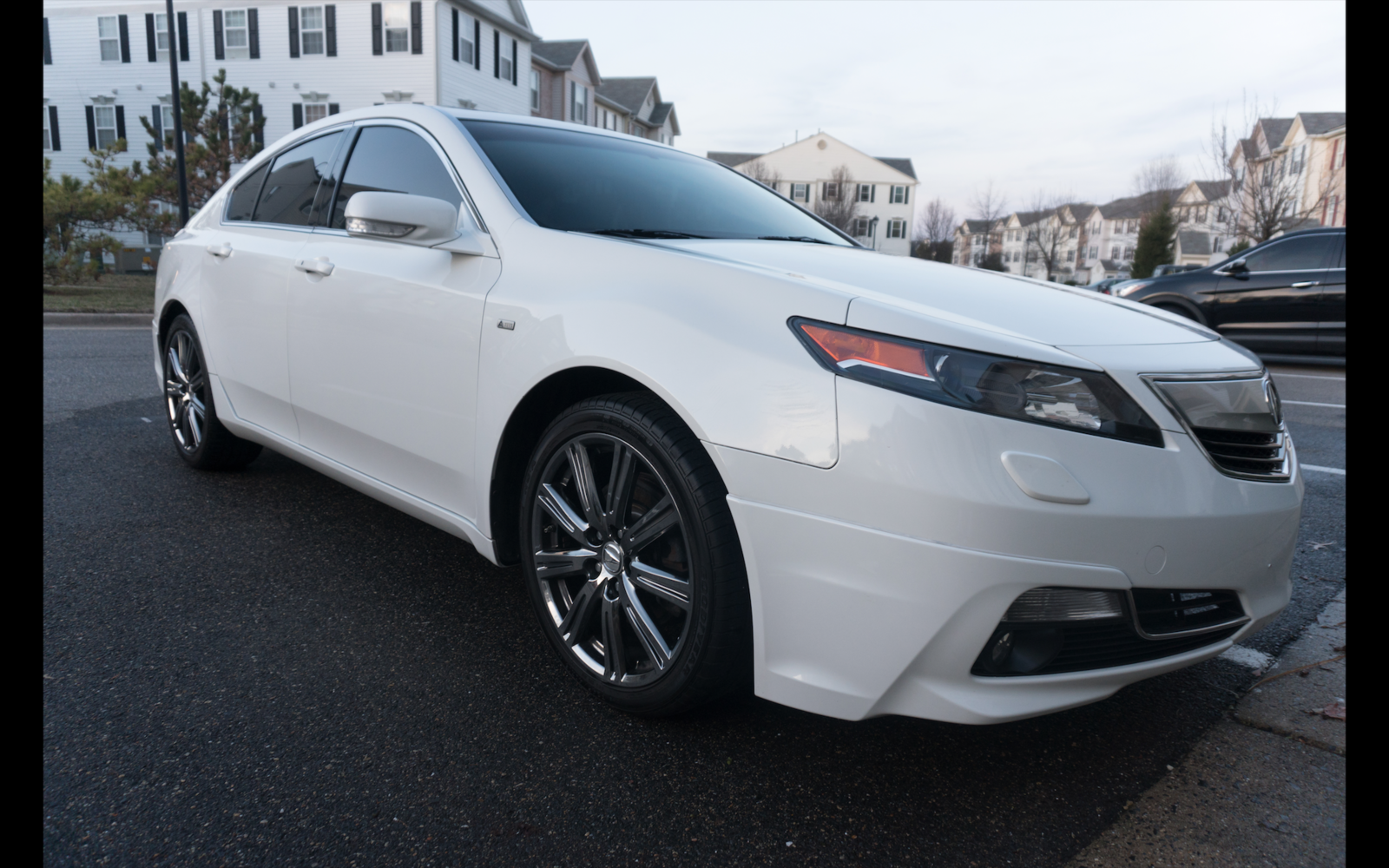
Best for: Daily commuters looking for fun
Priced from: $10,000
Around 2010–2011, Acura was in a rough patch. The brand shed a staggering 19 percent of its market share in 2011 and posted its worst sales year on record. Even so, it continued turning out genuinely compelling vehicles that were built to last a lifetime.
The Acura TL was one of them. It was eventually replaced by the TLX in 2015 — a solid car in its own right, and admittedly much easier on the eyes than the TL's polarizing "Power Plenum" grille. But the TLX came exclusively with an automatic: a nine-speed in the first generation, and a 10-speed in the current one. The TL, by contrast, offered a six-speed manual — and you could actually spec it with the best regular-production Acura ever made: the TL SH-AWD. At a time when manual transmissions were increasingly reserved for base trims, finding one mated to an all-wheel-drive system was practically unheard of. The SH-AWD also brought 305 horsepower to the table, a 19-horsepower bump over the outgoing TL Type-S.
Best estimates put total production of the manual SH-AWD at around 3,500 units, though Acura doesn't publish sales breakdowns — so the real number could be even lower.
Read our Overview of the Acura TL
Search for an Acura TL on CarGurus
2008–2013 BMW M3

Best for: Prognosticators who can predict the sunrise
Priced from: $25,000
Some things in life are simply inevitable: the sun rises in the east, the IRS will always find you, and the BMW M3 will always eventually become too expensive for most people to afford. It's happened with every single generation of BMW's iconic performance sedan.
There was a time when an E30 M3 could be had for $25K. Long gone. There was a time when an E36 M3 sedan was priced below a Civic. Ancient history. These E90/E92/E93 M3 sedans, coupes, and convertibles are sitting right at the bottom of the depreciation curve — and the window to act may not stay open much longer. Once enthusiasts collectively wake up to how extraordinary these cars are, prices will move. And they are extraordinary: this was the only M3 ever powered by a V8, a brilliant unit producing 414 horsepower. It was also the first BMW to offer a dual-clutch gearbox as the automatic option, in the form of Getrag's superb seven-speed M-DCT. Even the heavier E93 Convertible could reach 60 mph in 5.1 seconds. Motor Trend once declared the E90/E92/E93 M3 "the greatest all-around car in the world."
When that was written, the M3 carried a $57,000 sticker. Today, you can find one for less than half that. Track down a low-mileage example with a documented service history and you may find it outpaces your 401(k) over the next decade — all while delivering one of the finest driving experiences of the modern era.
Read our Overview of the BMW M3
Search for a BMW M3 on CarGurus
2011–2014 Cadillac CTS-V Wagon

Best for: Automotive journalists
Priced from: $44,152
Every automotive journalist knows the type: the car that the press absolutely adores and the buying public completely ignores. In the 1990s, it was the Nissan Sentra SE-R — universally praised in print, universally passed over at dealerships. The phenomenon is well-documented and tragically common.
From 2011 to 2014, Cadillac built the CTS-V Wagon, and it might as well have been stamped "Auto Writer Spec" right on the order sheet. Everything about it was perfect: 556 horsepower, rear-wheel drive, a six-speed manual transmission, bold and aggressive styling, a practical midsize wagon body, and — crucially — it was available in brown (officially called "Mocha Steel Metallic"). The automotive press was unanimous in its praise. Buyers were unanimous in their indifference.
Over its five model years, only 514 of these wagons were built with the manual gearbox. Delete the sunroof and the numbers get even more dramatic: just 180 manual examples without one, plus 206 automatics. The rarest configuration of all — Stealth Blue, manual, no sunroof — exists in a total of two units. Today, a low-mileage example of that car could run you around $70,000. Thanks to its extreme scarcity, the CTS-V Wagon has barely depreciated over the years. Don't say you weren't warned.
Read our Overview of the Cadillac CTS-V Wagon
Search for a Cadillac CTS-V Wagon on CarGurus
2010–2013 Chevrolet Corvette Grand Sport
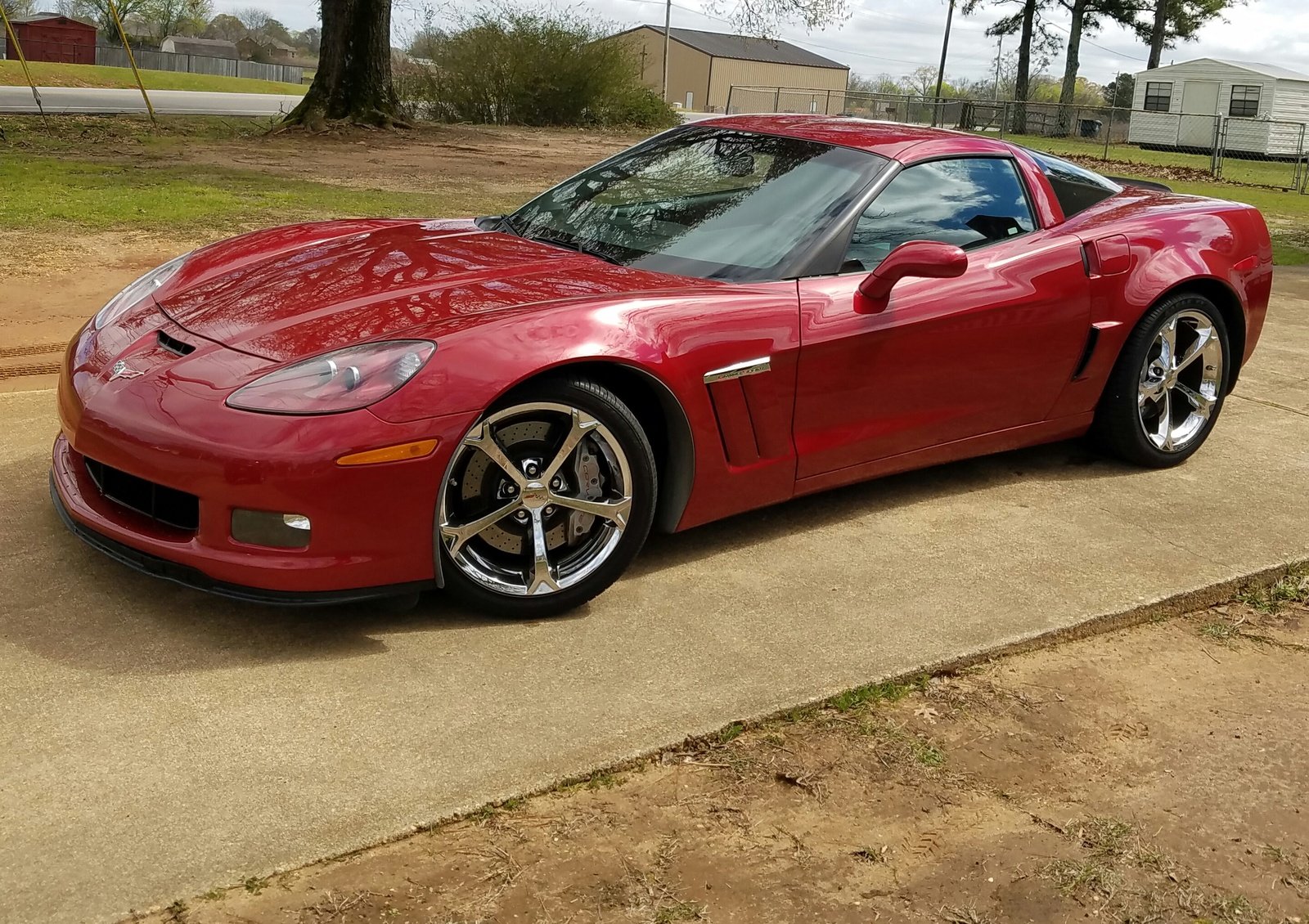
Best for: White New Balance/jort customers
Priced from: $51,000
The C6 Corvette has hit rock bottom on the depreciation scale, and from here, there's only one direction for values to go. If you missed your shot at buying one new in 2010, the window is still open — and remarkably, you can find one today for roughly the same $57,000 MSRP it carried back then.
For the lucky buyers who got one new, the Grand Sport was a serious package — provided you chose the manual transmission (and really, why wouldn't you?). You received a hand-assembled LS3 engine with a dry-sump oiling system and launch control. The Grand Sport package also added wider fenders, staggered-width tires, Z06-sourced brakes with cross-drilled rotors and six-piston front calipers, lightweight forged aluminum wheels, a fully revised suspension, and a transmission cooler.
Expect to pay roughly twice what a standard C6 coupe commands for a low-mileage Grand Sport in excellent shape — but the premium is justified. These cars will hold their value better in the long run. If a C6 Grand Sport has been on your wish list, the time to act is now.
Read our Overview of the Chevrolet Corvette
Search for a Chevrolet Corvette on CarGurus
2006–2014 Honda Ridgeline
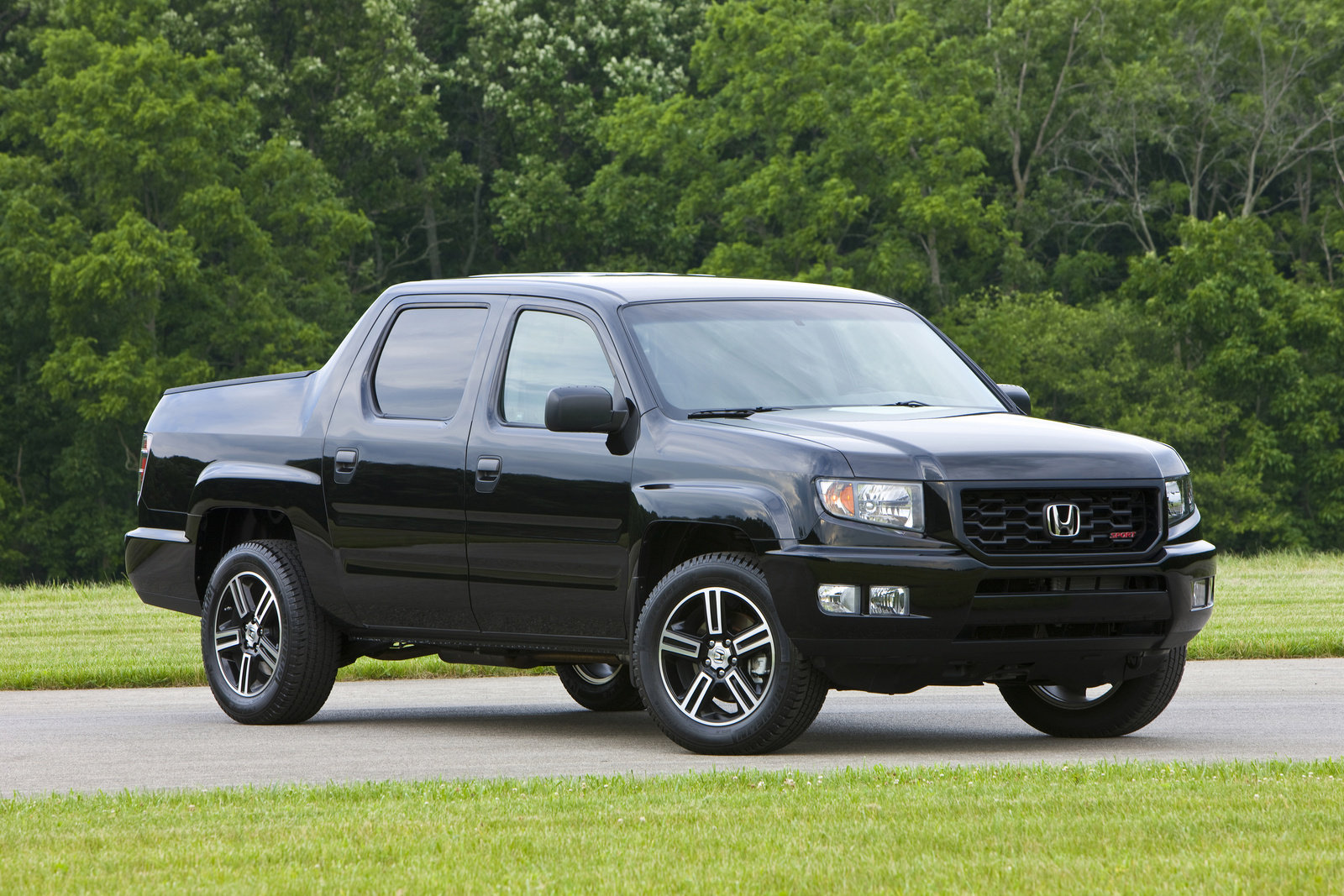
Best for: People who don't mind being universally hated
Priced from: $9,000
The Honda Ridgeline has always been an easy target. It shares its platform with the Pilot. It has no low-range transfer case. It's considerably smaller than your average Truck Nutz-sporting, coal-rolling Ram 3500 dually. Critics have never let it forget any of that. But here's the thing — it does exactly what it's designed to do, and it does it exceptionally well. For anyone living in the suburbs with a two-car garage, it fits the life perfectly.
Talk to anyone who's actually owned a Ridgeline and you'll hear the same story: it handles everything a Honda-owning homeowner throws at it on the weekend without complaint. Nobody's hauling a horse trailer with it — but hauling recycling to the dump and loading up on Turf Builder at Lowe's? It's ideal. The interior is more comfortable than any other midsize pickup, particularly in the rear seat, and no competitor has ever matched the clever in-bed trunk for practical ingenuity.
These trucks routinely roll past 200,000 miles while still towing trailers through rough terrain. They're substantially better than their spec sheets suggest, and the used market has finally brought prices down to genuinely reasonable territory.
Read our Overview of the Honda Ridgeline
Search for a Honda Ridgeline on CarGurus
2009–2015 Jaguar XFR
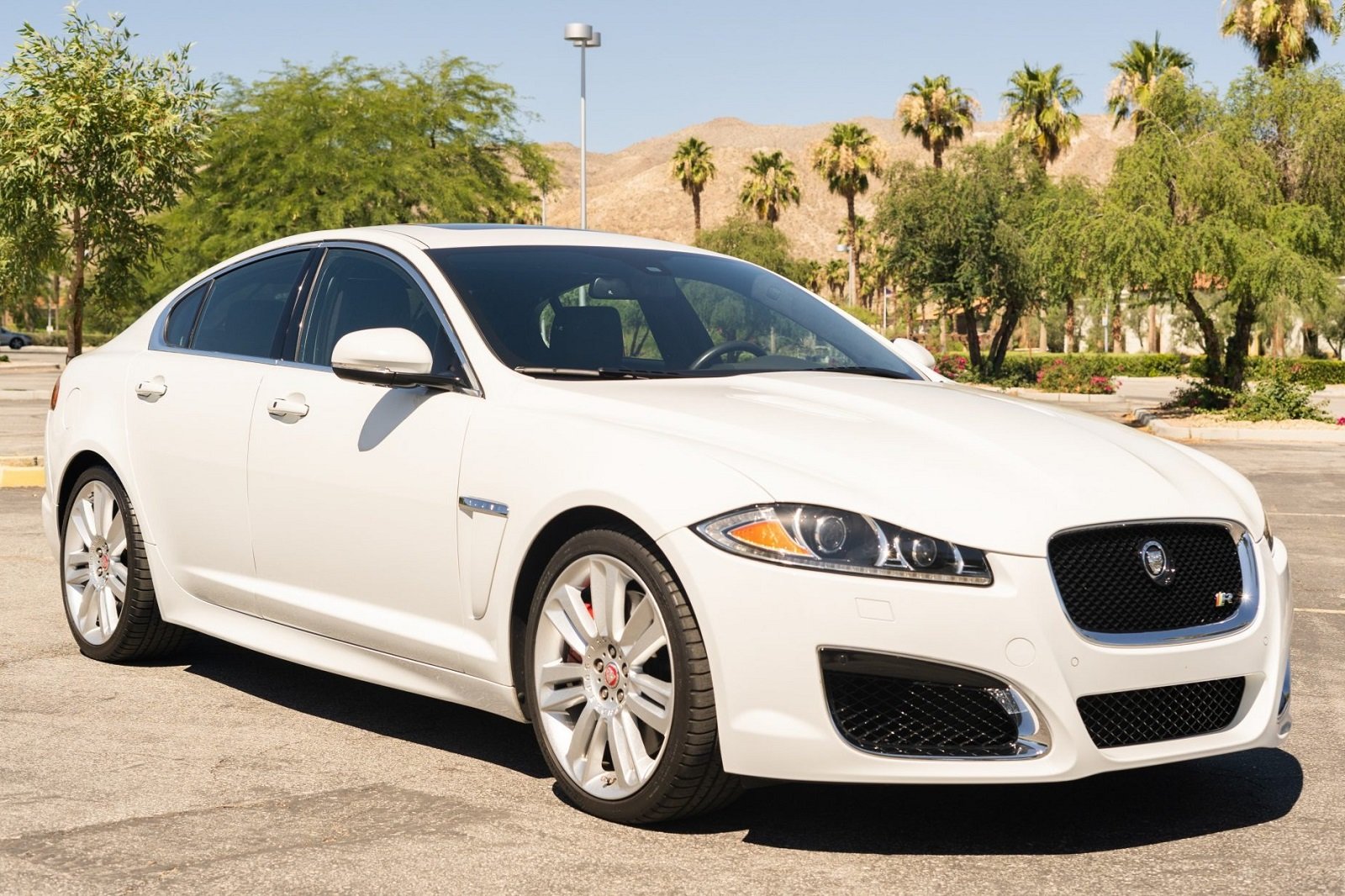
Best for: Shoppers who don't mind purchasing an extended warranty
Priced from: $40,000
A used Jaguar — the automotive equivalent of gas station sushi. Could be sublime, could be a disaster. But if you're going to take the plunge on a pre-owned Jag, the smart move is to either go all the way back to a Series I E-Type or pick one from an era when Jaguar actually knew how to build a reliable car. That's precisely the case with the XFR, which hails from the period when Jaguar operated under Ford's Premier Automotive Group umbrella and quality control actually meant something.
There's nothing exotic about the underlying architecture — the XFR rides on the same DEW98 platform shared with the Ford Thunderbird, Lincoln LS, and Jaguar S-Type. What makes it special is what lives under the hood: a 503-horsepower supercharged 5.0-liter AJ-V8 Gen III engine that transforms what looks like a stately executive sedan into something genuinely ferocious. The only visual hint of its intentions from the outside were those massive (for the time) 20-inch wheels. Eleven pounds of boost turned this composed, dignified cruiser into what Car and Driver called "sensational" — praising the seamless automatic transmission, the surprising comfort despite stiffer springs and low-profile tires.
Massive depreciation has cut the XFR's original $80,000 asking price to less than half. Today, you're choosing between this and something like a Ford Edge. Choose wisely — and budget for an extended warranty either way.
Read our Test Drive Review of the Jaguar XFR
Search for a Jaguar XFR on CarGurus
2010–2013 Mazda Mazdaspeed3
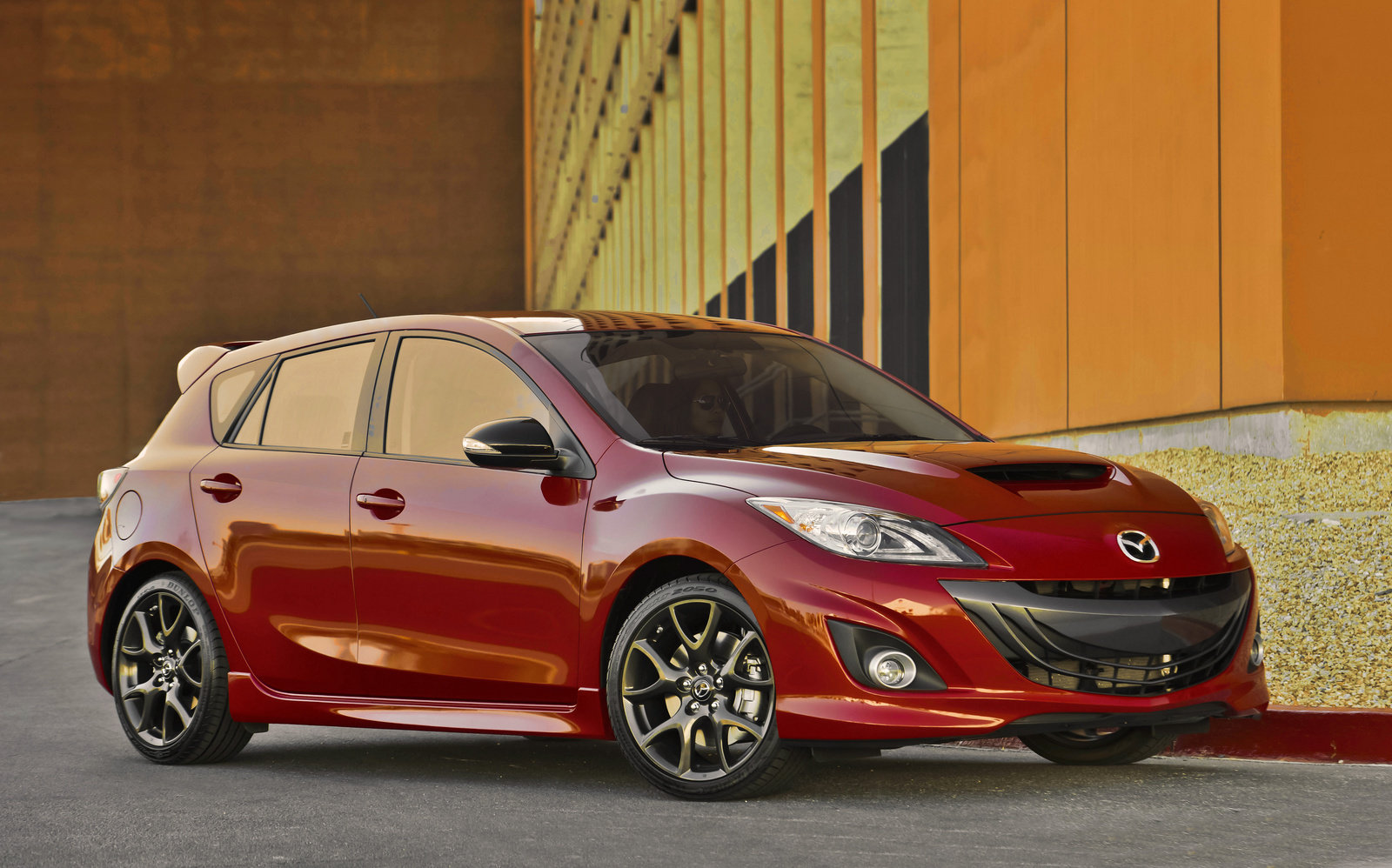
Best for: Hot hatch fans who missed their chance with the Mk1 GTI
Priced from: $9,000
Most of the cars on this list carry price tags that put them out of reach for a lot of buyers, even after years of depreciation. The Mazdaspeed3 is the glorious exception — a genuine performance car that almost anyone can afford today.
The Mazdaspeed3 was Mazda's turbocharged take on its popular 3 five-door hatchback, and it delivered the kind of thrills that had no business being available at its price point. Under the hood sat a turbocharged 2.3-liter inline-four making a hilariously entertaining 263 horsepower and 280 lb-ft of torque.
Mazda first launched the Mazdaspeed3 in 2007, but the second-generation model that arrived in 2010 brought meaningful improvements: revised ECU mapping for a more usable power delivery, wider gear ratios from second through fifth in the six-speed manual, a standard Torsen limited-slip differential, beefier stabilizer bars, and wider rubber. The functional hood scoop feeds cold air directly to an intercooler mounted just beneath it. For under $10,000, you're looking at a car that hits 60 mph in 5.2 seconds and covers the quarter mile in 13.9 seconds at 102 mph. The value here is almost absurd.
Read our Overview of the Mazda Mazdaspeed3
Search for a Mazda Mazdaspeed3 on CarGurus
2009–2014 Nissan Cube

Best for: Art majors, drummers, and plant enthusiasts
Priced from: $5,000
Yes, the Cube. It's quirky, unconventional, and was never really designed with the American market in mind — and that's exactly what makes it so appealing, in the same way the Pike Factory Nissan Pao, S-Cargo, Figaro, and Be-1 have their devoted followings. If Japanese automotive culture speaks to you at all, these asymmetrical little wagons have a charm that's hard to explain and impossible to ignore.
Nissan produced three generations of the Cube, but only the final one made it to U.S. shores. The second-generation model, built between 2002 and 2008, was arguably the most characterful of the bunch — with a more expressive face than the third-gen car that finally arrived here in 2009.
The timing of that U.S. launch couldn't have been worse: May 2009, just as the economy was cratering. Sales were predictably grim. While Kia was moving the Soul in huge numbers on the back of a clever, memorable marketing campaign, Nissan barely promoted the Cube, and it quietly faded away — never cracking 23,000 units even in its best year. The fan community, however, remains passionate and tightly knit, keeping the Cube's spirit very much alive.
Read our Overview of the Nissan Cube
Search for a Nissan Cube on CarGurus
2008–2009 Pontiac G8 GXP
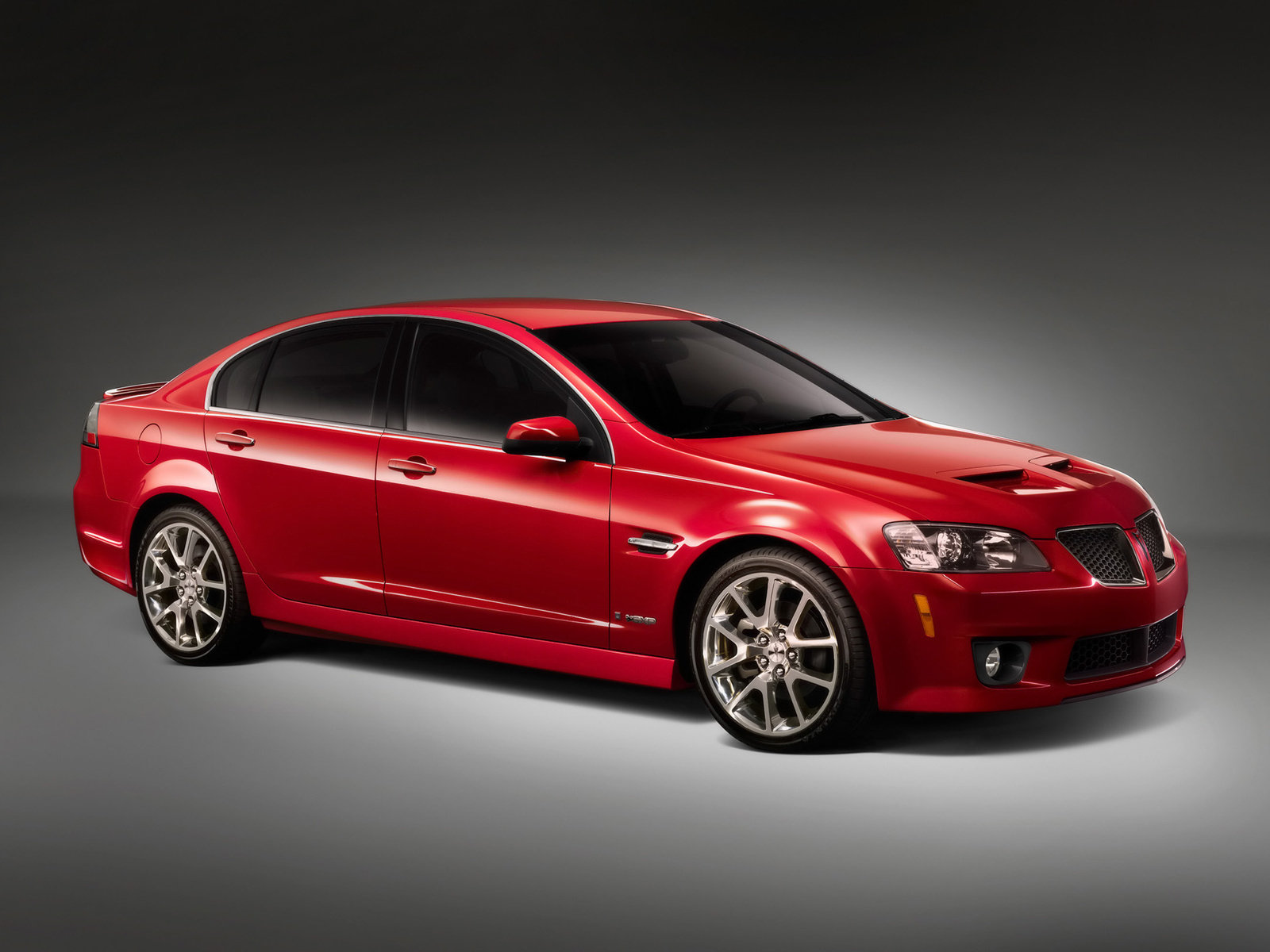
Best for: Mad Max
Priced from: $32,000
The Pontiac G8 GXP is doubly collectible: not only is the car itself gone, but the entire Pontiac brand ceased to exist along with it, which makes owning one feel like holding a piece of automotive history. And yes, we're bending the rules slightly here — the G8 technically stopped production in 2009 — but given how many of these sat on dealer lots well into 2011, we're comfortable making the exception.
The G8 GXP was a car enthusiasts claimed they desperately wanted. A rebadged Holden VE Commodore from Australia — the only country on earth as obsessed with rear-wheel-drive V8 sedans as the United States — it had the credentials to back up the hype. The GT was already impressive with its 361-horsepower 6.0-liter V8, but the GXP went further: 415 horsepower from a Corvette-sourced LS3, paired with a Tremec six-speed manual transmission.
The GXP was a legitimate tire-shredder. It could reach 60 mph in 4.2 seconds and run a 13-second quarter mile straight off the showroom floor. In two model years, Pontiac sold just 1,829 G8 GXPs before closing up shop for good.
Read our Overview of the Pontiac G8
Search for a Pontiac G8 on CarGurus
2006–2012 Porsche Cayman S
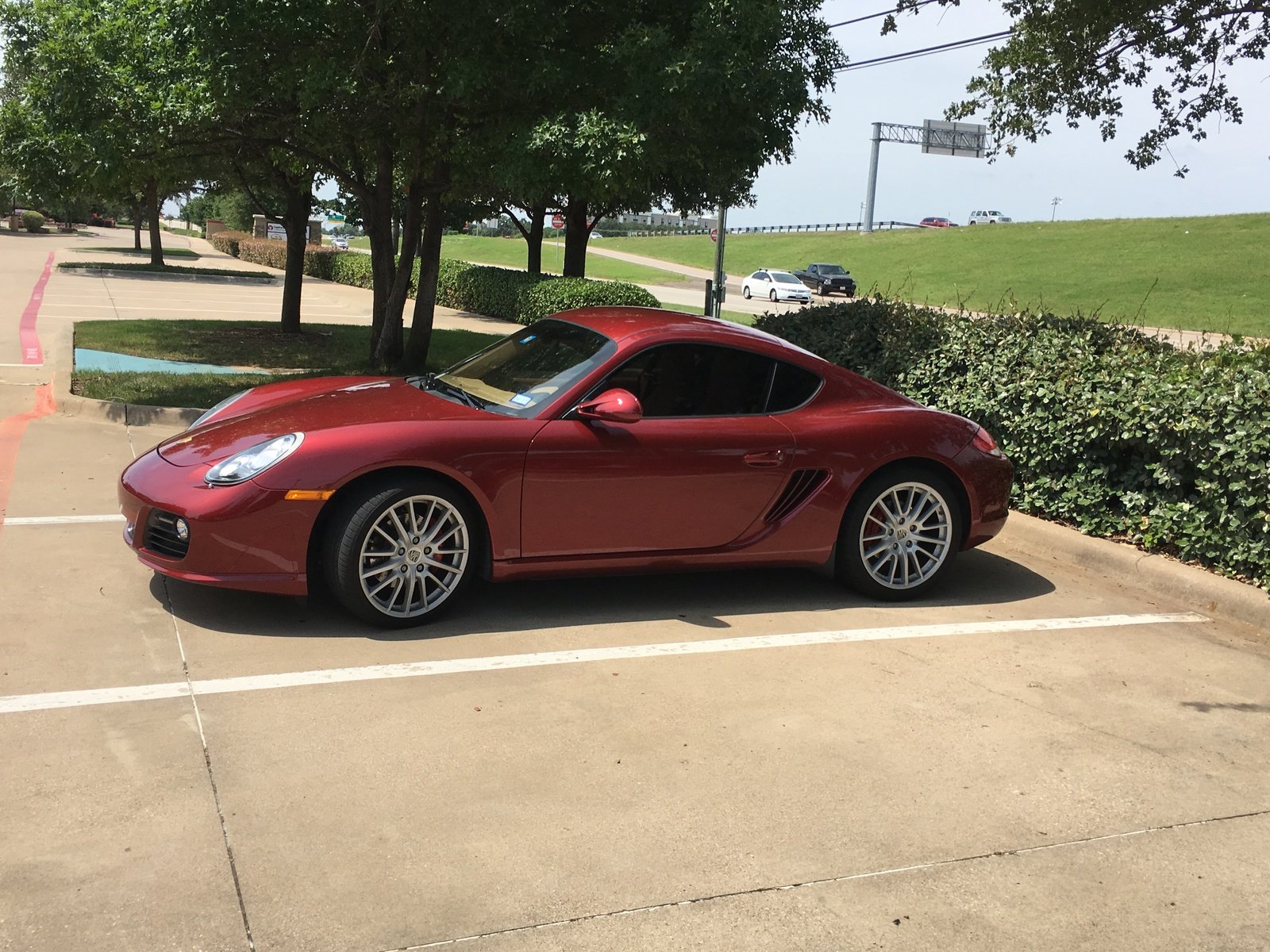
Best for: 911 enthusiasts who don't have a fully funded a 401(k)
Priced from: $29,000
The Cayman S is a better car than the 911. We said it. It's more engaging to drive, more practical in daily use, and you don't need a tech billionaire's bank account to own one. Anyone with reasonable credit can get into one of these machines for roughly what they'd spend on a well-equipped Camry. Take the kids to school. Bring the dog along. Bolt on a set of winter tires and point it toward the mountains for a ski weekend. The Cayman S handles all of it without a moment's hesitation — and without you losing any sleep over its future resale value.
The 2006–2012 Cayman S delivered 276 horsepower and gave buyers the choice of a six-speed manual or a five-speed Tiptronic automatic. The genuinely delightful seven-speed PDK transmission wouldn't arrive until the next generation, which is a shame — but it doesn't diminish how rewarding these cars are to drive. They stay truer to the spirit of the original air-cooled 911 than the actual 911 does today. And critically, this generation retains hydraulic steering, which provides a level of tactile feedback and road feel that the electric setups introduced later simply can't replicate. Pure, honest, and genuinely thrilling. Don't let this one slip away.
Read our Overview of the Porsche Cayman
Search for a Porsche Cayman on CarGurus
The Cars We Wish We'd Bought 10 Years Ago FAQs
What kind of used cars are considered future classics worth buying today?
Future classics tend to be vehicles that were underappreciated or undersold when new, leaving them undervalued on the used market before enthusiasts collectively recognize their worth. Cars like the E90/E92/E93 BMW M3, the Pontiac G8 GXP, and the Cadillac CTS-V Wagon all fit this profile — limited production numbers, exceptional performance, and prices that haven't yet caught up to their significance. The window to buy these cars affordably can close quickly once the broader market wakes up to them.
Which of these underrated used cars offers the best value for under $10,000?
The Mazda Mazdaspeed3 stands out as one of the most accessible performance bargains on the used market, with examples available for under $10,000. It delivers 263 horsepower and 280 lb-ft of torque from a turbocharged 2.3-liter four-cylinder, hitting 60 mph in 5.2 seconds — performance figures that have no business being available at this price point. The second-generation model from 2010–2013 brought meaningful upgrades over the original, including a standard Torsen limited-slip differential and revised ECU mapping for better power delivery.
Is the Pontiac G8 GXP a good used car to buy as a collectible?
The G8 GXP is doubly collectible because both the car and the entire Pontiac brand are gone, making surviving examples a genuine piece of automotive history. Only 1,829 GXPs were ever sold across its two model years, and it came equipped with a Corvette-sourced 415-horsepower LS3 engine paired with a Tremec six-speed manual — capable of reaching 60 mph in 4.2 seconds. That combination of scarcity, performance pedigree, and brand extinction makes it a strong candidate for long-term appreciation.
What should I know before buying a used Jaguar XFR?
The XFR is one of the more reliable used Jaguars you can buy because it was built during the era when Ford's Premier Automotive Group oversaw the brand and quality control was meaningfully improved. Under the hood is a supercharged 5.0-liter V8 making 503 horsepower, which turns what looks like a stately luxury sedan into something genuinely ferocious — all for well under half its original $80,000 asking price today. That said, budgeting for an extended warranty is still a wise move regardless of which used Jaguar you choose.
What Makes CarGurus Best Cars Guides Different?
Most car-shopping websites publish lists of the best cars across a variety of categories, with recommendations generally driven by editorial expertise. Here's what makes ours different: In addition to the insights and verdicts of our team of car-testing experts, our best cars guides take into account other factors that we know matter to buyers-real owner experiences and current market value.
Our expert reviewers are among this country's most trusted automotive journalists, also writing for publications including US News and World Report, Edmunds, Digital Trends, J.D. Power, and Car & Driver. They put each car through real-world testing and create detailed reviews of performance in a range of categories, from practicality and driving manners to cost-effectiveness and safety.
We also analyze hundreds of thousands of used car listings on CarGurus.com to track which models consistently offer the highest percentage of best deals relative to how many are listed for sale. Then we factor in reviews from owners-people who actually live with these cars every day. Our proprietary Best Cars algorithm then creates a final Overall CarGurus rating combining expert scores, user reviews, and the percentage of listings that have earned the Good or Great Deal rating. This multi-pronged approach reveals not just which cars excel on paper, but which ones deliver satisfaction and value when you're ready to buy.
The CarGurus market data used in this guide was last updated in March 2026. Values were accurate at time of publication and should be used as a guide only.