The BMW M2 hit the scene in 2016 as a successor to the limited run of 1 M Coupe models that the German automaker launched in 2011. Spiritually, the new M2 went back to BMW’s roots as a rear-wheel-drive, M-badged car that prioritized fun handling over outright performance. But that doesn’t mean the M2 wasn’t a proper sports coupe, as evidenced by its 3.0-liter turbocharged inline-six engine that produced 365 horsepower.
The 2016 BMW M2 competed with the likes of the Audi S3 and RS3 and the Mercedes-AMG CLA Series. Buyers may also have considered the Cadillac ATS-V sedan, but that was a bit pricier and had two additional doors. In any case, the M2 reinvigorated BMW’s old mantra of delivering the Ultimate Driving Machine with a refreshing combination of performance, attainability, and style.
A second-generation M2 debuted for the 2023 model year and again represented the entry point into BMW’s range of M high-performance models. Bigger and more powerful than the first generation, the latest version stands out as a true driver’s car for buyers who value performance and don’t need the practicality of a four-door sedan.
BMW M2 Buying Guide: Cost, Reliability, and the Best Years to Buy
- Frequently Asked Questions
- Pros and Cons
- BMW M2 Generations
- BMW M2 Second Generation (2023-Present)
- BMW M2 First Generation (2016-2022)
Frequently Asked Questions
Which BMW M2 years are the best?
The BMW M2 has very few known reliability issues, with CarComplaints.com citing 2023 as the worst year overall, even though it only has one complaint. J.D. Power consistently rates the BMW 2 Series line as one of the most reliable coupes available in the United States, although the M2 has more power, more equipment, and different options than the rest of its 2 Series Coupe siblings.
Considering its status as a high-performance machine, buyers shopping for used BMW M2 models should consider having any vehicle they are considering checked over by a qualified mechanic. A long list of proper scheduled maintenance is also valuable.
Which BMW M2 years are the worst?
Early BMW M2 models used older iDrive infotainment technology that is now outdated and less intuitive than modern systems. On the reliability front, though, there aren’t any specific model years to avoid.
Is a used BMW M2 a good deal?
Considering its solid reliability, desirability, and excellent residual values, a used BMW M2 could be considered a good deal. There is a premium to pay, but it’s a premium product.
According to CarGurus used car pricing data, used BMW M2 prices vary from a little less than $40,000 for early first-generation models all the way up to the $70,000 range for low-mileage, nearly new examples. For that, buyers could choose an American muscle car such as the Ford Mustang Shelby GT350 or a Chevrolet Corvette from 2014-2019. Other competitors, such as the Audi TT RS and the Mercedes-AMG CLA45, don’t offer a traditional rear-wheel-drive platform but do provide plenty of performance.
Pros and Cons
Pros:
- Powerful engine
- Manual transmission available
- Fun to drive
Cons:
- Stiff ride in normal driving
- Bit of effort to enter/exit
- Styling is not for everyone
BMW M2 Generations
BMW M2 Second Generation (2023–Present)
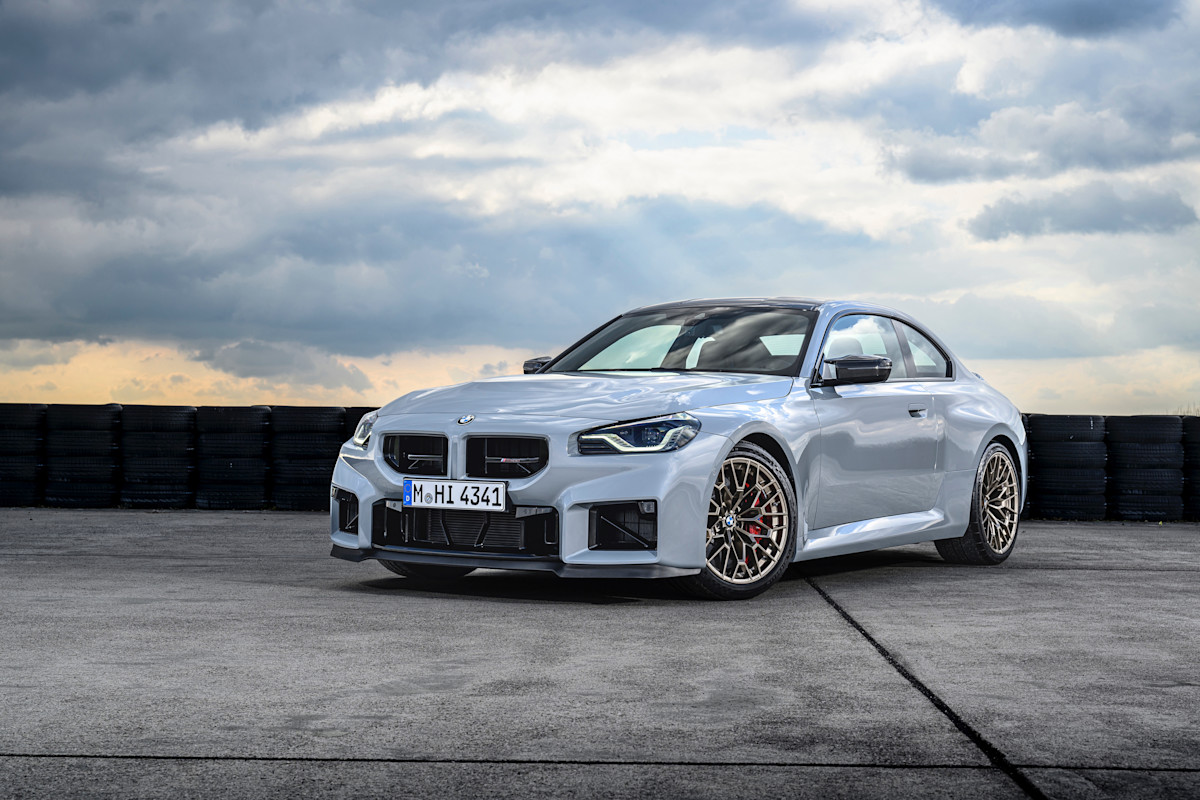
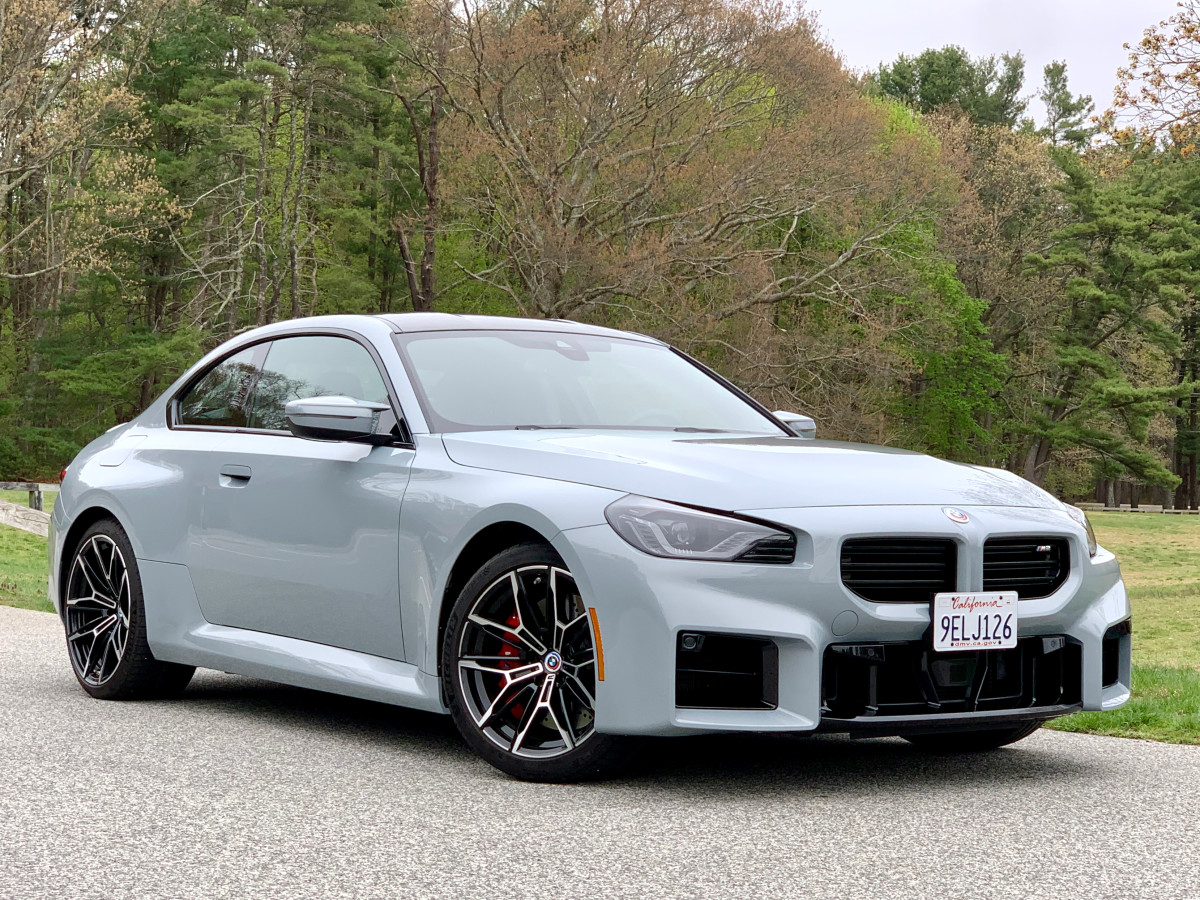
The second and current generation of the BMW M2 debuted for the 2023 model year. It’s 4.1 inches longer and 1.3 inches wider than the first generation and has more power, but it’s still compact and combines true driving appeal with daily-driver practicality. The 14-cubic-foot trunk is large for a coupe, the rear seat is fine for two adults, and the two front occupants have plenty of room. However, it isn’t the easiest vehicle to enter or exit due to its aggressively bolstered M Sport front seats—and the optional M Carbon bucket seats are even more restrictive. Those, along with a stiff ride, are the necessary drawbacks of a thrilling sports coupe.
When it was introduced, the 2023 M2’s twin-turbo 3.0-liter inline-six engine produced 453 horsepower and 406 pound-feet of torque, all routed to the rear wheels through either a six-speed manual transmission with a high-tech rev matching system, or an eight-speed automatic with steering-wheel-mounted paddle shifters. A computer-controlled Active M limited-slip differential was standard and, regardless of transmission, 0-60 was dispatched in less than four seconds. While fuel economy isn’t as important as outright horsepower in this type of vehicle, the EPA estimates of 16 mpg in the city, 24 mpg on the highway, and 19 mpg combined (drop one highway mpg for the automatic transmission) aren’t much to write home about.
The second-generation M2 has more visual flair than the first, with a bespoke, muscular look. A wider stance is accentuated by bulging wheel arches, while the front fascia’s blocky air openings include BMW’s kidney-shaped grilles, a lower intake and two large squared-off intakes. Under the skin, a stiff chassis with near 50:50 weight distribution means the M2 is designed to excel at the race track or on the road.
BMW’s Adaptive M Suspension is standard, featuring electronically controlled dampers that adjust on the move with split-second precision. Powerful brakes and a stability control system with 10 settings prove that BMW intended the M2 to be driven hard.
Inside, there’s the manufacturer’s “Curved Display” layout, with a digital gauge cluster and a large touchscreen infotainment screen running BMW’s iDrive 8 operating system. Wireless Apple CarPlay and Android Auto are supported, while a Harman Kardon audio system is a nice standard feature.
Dynamic cruise control, forward-collision warning with brake assist, lane-departure warning, and park-assist with sensors at the front and rear came standard with the 2023 M2, while active cruise control with stop and go was optional. Though the M2 wasn’t tested separately from the rest of the 2 Series lineup, the Insurance Institute for Highway Safety (IIHS) gave the entire line its highest rating in all of its crash tests.
BMW offered just one trim level but several optional packages for the 2023 M2. An M Driver’s Package included one day at a high-performance driving school and increased the car’s speed limit from 155 mph to 177 mph. A Lighting Package added adaptive headlights and high-beam assist, while a Shadowline Package added dark exterior accents. A Carbon Package added a carbon fiber roof that provided a slight performance advantage, along with carbon interior trim, the extra-tight carbon bucket seats, black wheels, and the M Driver’s Package.
The 2024 M2 didn’t get any meaningful updates, but BMW increased the turbocharged engine’s power from 453 to 473 horsepower for 2025. The infotainment system was also updated from iDrive 8.0 to iDrive 8.5 that year, although not all owners appreciated the move from physical climate controls to virtual touchscreen buttons.
The BMW M2 CS was launched for 2026, adding 50 hp and 36 lb-ft, bringing the totals to 523 hp and 479 lb-ft. The CS, which stands for Competition Sport, also weighs about 100 pounds less than the regular M2 thanks to the use of carbon fiber for the roof, the trunk lid (which features a large ducktail spoiler), the side mirror caps, and the rear diffuser. The CS comes solely with an automatic transmission.
At the time of writing, the 2026 BMW M2 started at $70,350 (including a mandatory destination charge). Some paint colors can add up to $3,000 to the price, while the Carbon Package tacks on a hefty $9,900.
Buyers looking to save some money by purchasing a low-mileage used second-generation BMW M2 will find that prices start near $65,000 according to CarGurus used car pricing data.
BMW M2 First Generation (2016–2022)
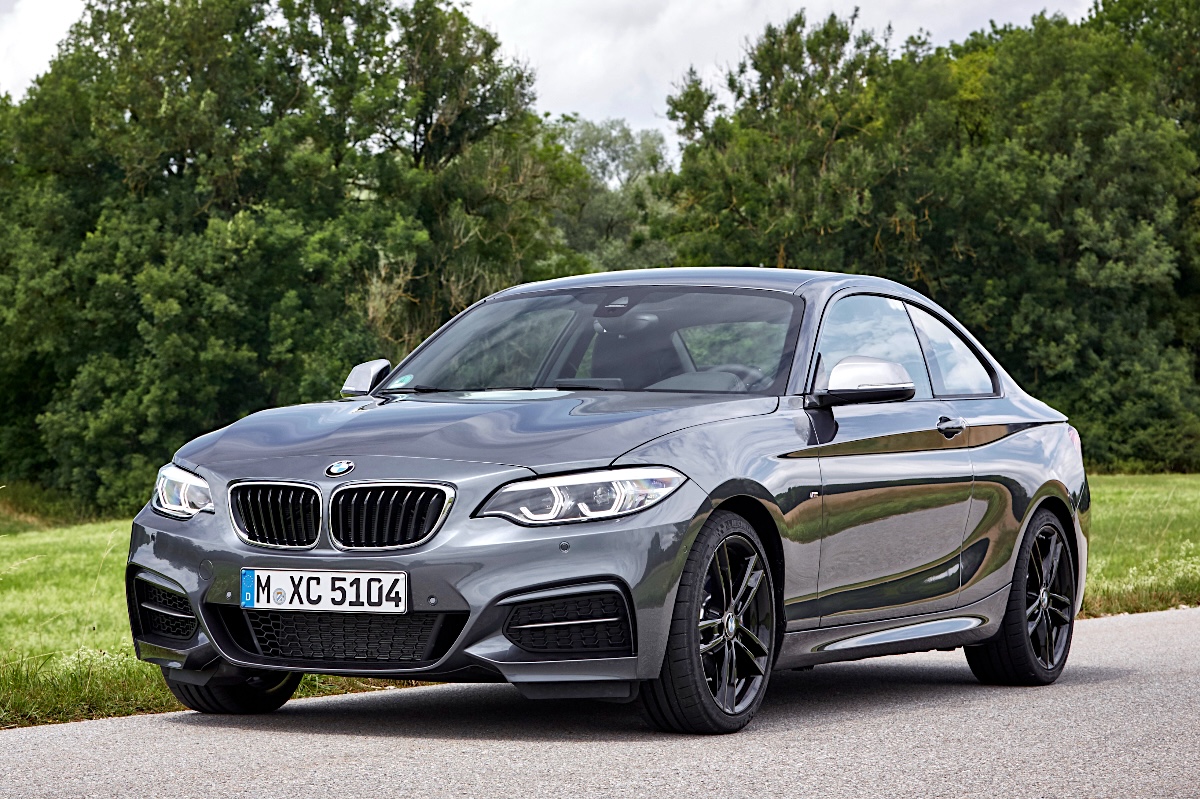
Seeing the success that it had with the limited-edition 1 M Coupe, BMW followed that well-loved machine with the M2 coupe in 2016. Although based on the platform of the regular 2 Series model, the M2 has all the upgrades fans would associate with a BMW M model. Power comes from a turbocharged 3.0-liter inline-six engine tuned to deliver 365 hp and 369 lb-ft of torque, making the 2016 BMW M2 properly quick. And with its standard six-speed manual transmission or optional seven-speed automatic dual-clutch transmission (DCT) and rear-wheel-drive chassis, it became a favorite for enthusiasts looking for some daily-driving fun.
As is typical of an M-badged BMW, the M2 had more than just a punched-up engine. BMW fitted the 2016 M2 with big brakes and 19-inch wheels wearing sticky Michelin Pilot Super Sport tires, while the exterior bodywork package added a few extra inches of width, a rear-lip spoiler, and quad exhaust tips. The 2016 BMW M2’s upgraded front seats and carbon fiber trim extended the sporty look into the cabin. An 8.8-inch infotainment screen required inputs from a console-mounted rotary knob.
The 2016 BMW M2 with a manual transmission was rated by the EPA to deliver 18 mpg in the city, 26 mpg on the highway, and 21 mpg combined. The DCT delivered 20 mpg city, 27 mpg highway, and 23 mpg combined. Likely more important to buyers was the M2’s 0-60 time of 4.3 seconds with the manual or 4.1 seconds with the DCT. With its fancy M rear differential and selectable Comfort, Sport, and Sport+ modes, the 2016 M2 was also designed to deliver excellent handling and roadholding.
BMW equipped the 2016 M2 with its Driving Assistant safety suite, which included forward-collision warning, pedestrian warning with a city braking function, and lane-departure warning. The 2016 BMW 2 Series was awarded the highest Top Safety Pick+ designation from the IIHS. BMW added Apple CarPlay (but not Android Auto) connectivity as an option in 2017, and an M Driver Package included a one-day trip to a performance driving school. For 2018, an updated iDrive infotainment system could be operated with a touchscreen display.
The BMW M2 Competition model hit the market for the 2019 model year, bringing with it a new turbocharged engine bumped to 405 hp and 406 lb-ft. To go with the newfound power, BMW stiffened the M2’s chassis for 2019, retuned its suspension and electronic driver aids, upsized its brakes and refreshed its exterior bodywork. M Sport seats with more side bolstering were also newly optional.
For 2020, BMW built a limited-edition M2 CS model with 444 hp, M Adaptive suspension, and optional carbon ceramic brakes and Michelin Pilot Sport Cup 2 tires. Carbon fiber exterior components reduced the CS model’s weight and increased performance. There weren’t any major changes for the first-generation M2 in its last couple of model years.
According to CarGurus used pricing data, it’s possible to find first-generation BMW M2 models for less than $40,000. Later first-generation models can cost up to $60,000, and M2 CS models are quite rare and therefore much pricier.