2023 Subaru Outback Reviews, Pricing & Specs
Write a reviewPros
Great safety ratings
Excellent value for money
Impressive off-roading capability (for a crossover)
Cons
Underwhelming base engine
Potentially polarizing design
Frustrating voice recognition system
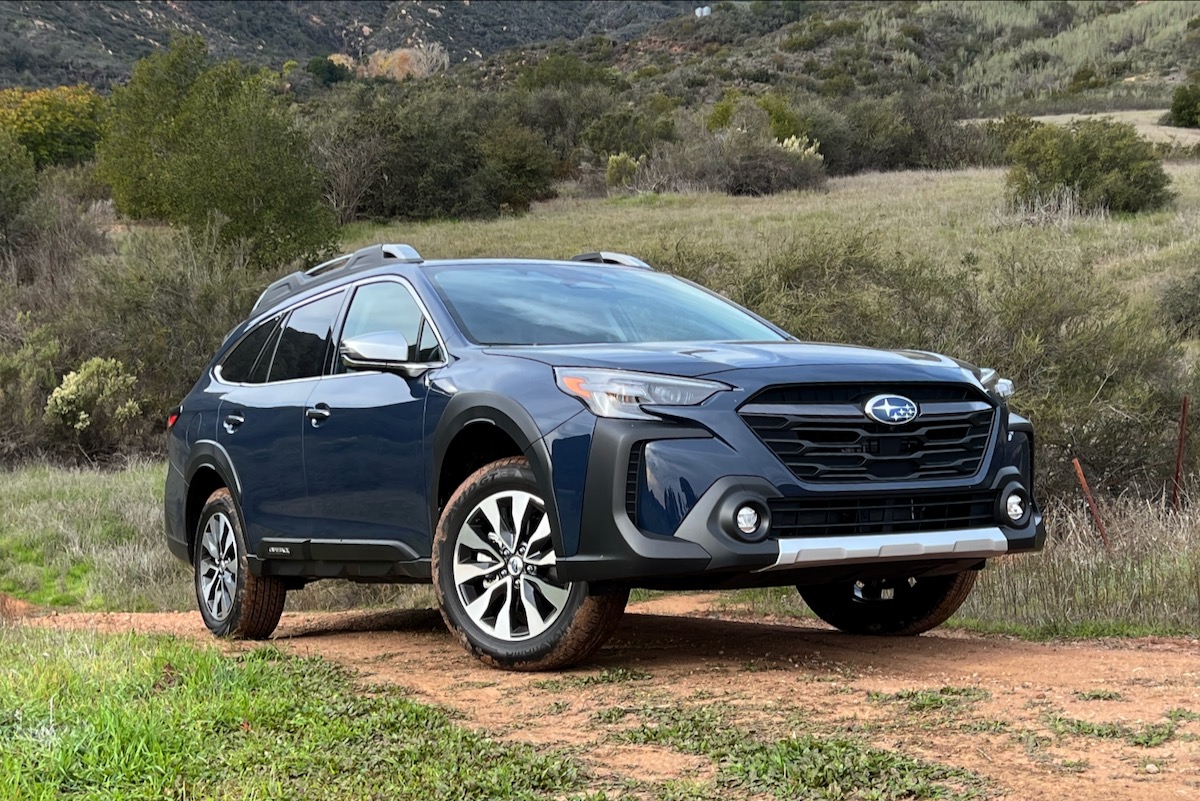
With its standard all-wheel drive, impressive safety systems and ratings, and excellent utility, the 2023 Subaru Outback offers great value.
People love crossover SUVs because they drive like cars but provide the utility of an SUV, and the Subaru Outback was one of the first modern crossovers when it went on sale almost 30 years ago.
Now, the 2023 Subaru Outback gets several updates. The improvements include fresh styling, new infotainment and safety technologies, and a more accessible price point for the popular Onyx Edition, which features blacked-out exterior trim and water-resistant upholstery.
These changes to the 2023 Outback build on the momentum established by the rugged Subaru Outback Wilderness, which debuted last year.

For 2023, Subaru gives the Outback a facelift. It has a new front end including redesigned LED headlights, a restyled grille, and a revised bumper with dark gray vertical cladding that makes it appear as though the Outback has large air intakes at each corner. Add a jutting simulated skid plate, fog lights nestled into oversized housings, and asymmetrical wheel arch trim that recalls the Wilderness model, and the 2023 Outback takes on a more aggressive appearance.
Only you can decide if these changes make the Outback more appealing. Our position is that if you select a dark paint color, you can hide the excesses of the design. Alternatively, get the Onyx Edition, which has black wheels and trim that better complements the more audacious cladding.
The Onyx Edition is one of six trim designations for the Outback and, for 2023, is now available with the base powertrain in addition to the turbocharged powertrain. This change makes the Onyx Edition more accessible. The new $33,495 starting price for the non-turbo powertrain is a $5,100 savings compared to the turbocharged Onyx Edition XT.
Outbacks equipped with the standard 2.5-liter four-cylinder engine come in Base, Premium, Onyx Edition, Limited, and Touring trim. Prices range from $28,395 to $39,845, plus a destination charge of $1,225.
Step up to the Outback XT if you want satisfying acceleration. The turbocharged XT is available in Wilderness, Onyx Edition, Limited, and Touring trim levels, with prices ranging from $38,445 to $42,295, plus the destination charge. All Outback models get standard all-wheel drive (AWD).
Our test vehicle had the standard powertrain and Touring trim, rendered in Cosmic Blue paint with Java Brown premium Nappa leather upholstery. Touring trim includes everything as standard equipment, aside from the numerous dealer-installed accessories available through the Subaru catalog. Without any of the add-ons, the test vehicle’s manufacturer’s suggested retail price (MSRP) came to $41,070 including destination charges.
If we question Subaru’s approach to the 2023 Outback’s revised styling, there is no denying the appeal of the Touring’s interior. The Java Brown leather, dashboard and door panels, and floor mat piping contrast beautifully with the otherwise black interior. Subaru also puts light gray contrast stitching on the dashboard, matching the Outback’s headliner. The result is upscale, complimentary, and cohesive.
In addition, while Subaru uses hard plastic to trim portions of the interior, it doesn’t look or feel inexpensive. For example, look at the flat and textured door sills, which form perfect steps for using the roof rack. The only complaint we can make about the Outback Touring’s cabin pertains to how the large infotainment screen and the gloss black trim on the center console easily collect dust and smudges.

Subaru uses horizontally opposed engines, otherwise known as boxer types. This design is relatively flat, which is why they’re often referred to as a flat-four or a flat-six. The design helps to reduce a vehicle’s center of gravity for better handling and produces a characteristic grumble and vibration that Subaru fans love.
The Outback sounds and feels like a Subie, but our 3,781-pound test vehicle was begging for more power. The standard engine makes 182 horsepower at 5,800 rpm and 176 lb-ft of torque at 4,400 rpm, and while the continuously variable automatic transmission (CVT) makes good use of it at lower speeds, passing and climbing power is in short supply. Subaru claims a towing capacity of 3,500 pounds, but we’d think twice about tackling that much trailer weight.
Not only that, but the engine isn’t as fuel efficient as we expected. The EPA says our test vehicle should have returned 28 mpg in combined driving, but we got 25.6 mpg both on our evaluation route and over the course of more than 600 miles, many of them spent cruising Southern California freeways. Undoubtedly, this disappointing result was due, in part, to our regular coaxing of something resembling acceleration from this drivetrain.
If you want a crossover SUV that feels responsive to your right foot, can easily pass slower vehicles, and effortlessly climb mountain passes, you’ll want a member of the Outback XT family. They all have a turbocharged 2.4-liter flat-four cranking out 260 hp at 5,600 rpm and 277 lb-ft of torque between 2,000 rpm and 4,800 rpm.
The XT models weigh more and aren’t as fuel efficient. Most are rated at 25 mpg combined, but the Wilderness trim (which gets the turbo engine as standard equipment) carries an EPA rating of 23 mpg combined due to its higher-riding stance and all-terrain tires.
The upgrade to forced induction also costs anywhere from $2,450 (Touring) to $5,100 (Onyx Edition) more than an equivalent naturally aspirated Outback. Though the extra performance isn’t cheap, it will likely result in greater overall satisfaction with your purchase.
Both engines pair to a CVT that Subaru programs to sound and feel like it has eight forward gears like a traditional automatic transmission. Paddle shifters on the steering wheel underscore this for a driver who bothers to use them.
In addition, every 2023 Outback includes an Active Torque Split AWD system as standard equipment. It primarily powers the front wheels under normal driving conditions but continually varies power distribution between the front and rear axles as driving conditions require.
To maximize the Outback’s capabilities on more challenging terrain, an X-Mode traction system optimizes the drivetrain to limit wheel slip. Hill descent control is also standard, controlling the Outback’s speed on steeper hills. Standard Outbacks supply a generous 8.7 inches of ground clearance, while the raised Outback Wilderness supplies 9.5 inches of clearance and a more capable X-Mode system.
We took the Outback off-roading, where it handled mud, ruts, and lumpy trails with greater ease than many crossover SUVs can. We also know from past experience that the drivetrain components and ground clearance make quick work of snow storms. These capabilities are among the Outback’s most appealing traits.
In cities, the Outback’s excellent visibility, tidy size, and high stance pay dividends when parking and navigating tight spaces. Put the crossover into a parallel space or slant parking next to a tall curb, and you need not worry much about hitting a bumper or a door on the concrete.
Unfortunately, when equipped with its standard 182-hp 2.5-liter engine, the Outback delivers the sense of urgency of a sloth. The CVT does its best with the limited power, and at lower city speeds does a pretty good job of making the Outback feel responsive in many daily-driving situations.
However, if you’re traveling on multi-lane freeways and you’re trying to take advantage of holes in traffic to pass slower vehicles, a heavy foot is necessary. Even then, the Outback responds with more noise than forward momentum, adding a sense of defeat to the proceedings.
In addition, if you live at elevation or travel to the mountains frequently for adventure, you’re going to want the turbo. If the Outback feels underpowered at sea level, we can only imagine how dreadfully lethargic it is at elevation.
If the standard engine leaves something to be desired, the Outback’s suspension tuning is spot-on. At lower speeds, the ride is firm to provide proper communication to the driver, while at higher speeds the Outback simply soaks everything up. In all situations, whether blazing over speed humps and bumps, encountering mid-corner pavement problems, or traveling the bouncy carpool lanes on the 405 freeway in west Los Angeles, the ride quality is excellent.
The Outback handles reasonably well, too, and it can hustle down a mountain road with greater confidence than the higher-riding Wilderness on its smaller all-terrain tires. But a sports wagon the Outback is not, despite its decent steering and capable brakes with a new electronic brake booster that improves pedal feel.
After a week and more than 600 miles of driving, only the Outback’s powertrain and fuel economy proved disappointing, which is why we think many people will prefer the Outback XT.

From its purposeful roof rack and flat door sill trim to its dashboard storage shelf and a long list of practical accessories, the Subaru Outback is about utility, first and foremost. But that doesn’t mean it isn’t comfortable, too.
For example, our Touring test vehicle had a 12-way power-adjustable driver’s seat with a manually-adjustable thigh support bolster and an eight-way power-adjustable front passenger’s seat. Both had heating and ventilation, and Subaru heats the Touring’s steering wheel while wrapping all of the seats in soft, buttery, premium Nappa leather. The rear outboard seats are also heated. So, if you live where it’s often cold, the Outback Touring will be warm, comfy, and cozy.
We had lots of places to be and people to see over the holidays, giving us plenty of seat time in the 2023 Outback Touring. Travels included a traffic-choked trip across Southern California from Ventura County to San Diego County, and during more than four hours of driving, the Outback kept two adults and two teens happy. Nobody complained about discomfort or a lack of legroom, the ability to charge devices, or places to stash things. The only consistent irritant, aside from the engine’s lack of power, was wind noise on the highway, likely due in part to the robust roof rack design.
Another great thing about the Subaru Outback is how easy it is to get into and out of this vehicle. It sits high off of the ground, and with the Touring model’s height-adjustable front seats and the tall, supportive rear seat cushion, everyone slides into and out of this crossover rather than dropping in and lifting out as with a typical sedan or climbing up and down like with some SUVs.
Our travels included day trips, so we didn’t need all of the Outback’s cargo space, which measures 32.6 cubic feet behind the back seat and 75.6 cubic feet with the back seat folded down. You can easily slide full-size suitcases into the cargo area on their sides as long as you first remove the cargo cover. Keep the cover in place, and you can set it to two different heights to help hide bulkier items.
We’ve already mentioned the flat, textured plastic door sills and how useful they are as steps to reach the Outback’s roof rack. The rack itself is robust, ready for tying down items and to accept accessory racks and carriers.
If there is any room for improvement, the Outback could use more practical storage space. The shelf embedded into the dashboard helps, but by relocating or redesigning the transmission shifter, Subaru could add another tray or cubby on the center console.

Every 2023 Subaru Outback except for the Base trim gets a Starlink 11.6-inch touchscreen infotainment system mounted in portrait orientation on the dashboard. Physical controls include a volume knob, a tuning knob, dual-zone automatic climate control temperature buttons, and buttons for the front and rear window defrosters. Subaru embeds everything else into the touchscreen, including the seat heating and ventilation buttons.
The base Outback’s 7-inch touchscreen infotainment system includes Bluetooth connectivity, wired Apple CarPlay, wired Android Auto, and SiriusXM satellite radio. Starting with Premium trim and the 11.6-inch touchscreen system, the Apple and Android platforms offer wireless connectivity. Subaru also provides access to its subscription-based Starlink connected services including a 4G LTE Wi-Fi hotspot. Depending on the trim level, you can also get a navigation system and a Harman Kardon premium audio system. A wireless charging pad is a dealer-installed accessory.
Subaru says it has improved the Starlink system’s usability for 2023, and it did seem less confusing than in the past. Still, we’re not fans of the graphics or the broad use of colorful icons. Generally, the infotainment system works well, and the new wireless smartphone connectivity is truly a gift. In part, that’s because it reduces clutter. But also, because the native voice recognition system is awful, you’re going to need to run Apple CarPlay or Android Auto at all times.
Evaluating the voice-recognition system using the same testing prompts we apply in other vehicles, our Outback’s technology could find only a nearby Starbucks. It was unable to give us directions to the closest Chipotle, the nearest hospital, a favorite local restaurant by name and street, or the White House. It couldn’t even change the satellite radio station to a specific channel, and we gave up in frustration before trying a temperature adjustment. Since Subaru embeds the climate system into the screen, it might have worked, but we wouldn’t count on it.
Additional technologies include a camera-based digital rearview mirror that shows an unobstructed view of what’s behind the Outback, which is helpful when the cargo area is packed full. Also, our test vehicle had a 180-degree front-view camera, which is useful off-road and when parking. A surround-view camera would be great, too, but you can’t get one on the Outback.

Subaru is a brand dedicated to safety. This year, it adds new EyeSight cameras and an electronic brake booster design in a bid to refine how the safety features operate and to support new pedestrian, cyclist, and automatic steering functions. The result, according to the Insurance Institute for Highway Safety (IIHS), is an exceptionally safe midsize crossover SUV, one that earns top marks across the board—including in the new, more stringent side-impact crash test.
In the Base model, EyeSight includes adaptive cruise control, forward-collision warning, automatic emergency braking, lane-departure warning, lane-keeping assist, and lane-centering assist. To get a blind-spot monitoring system with rear cross-traffic alert, you need to pay extra to add an option package to the Outback Premium or upgrade yourself to the Outback Onyx Edition.
With those features present, EyeSight further adds a new Automatic Emergency Steering system, which can tell when there is an obstacle ahead and either the driver or EyeSight will not be able to stop the Outback before impact. It then assesses if there is room within the lane of travel to steer and avoid the obstacle. If it can, and the driver still fails to take action, the system will take control and attempt to avoid the collision. Note that this is not the same as an evasive steering assist system. Those typically add stability when a driver takes action to avoid something while this can steer within a lane of travel.
In addition to that driver assist technology, the 2023 Outback Limited and Touring offer a third Wide-Angle Mono Camera that Subaru says can provide better pedestrian and cyclist detection, such as when navigating crowded intersections. Though our travels took us into the heart of Los Angeles on more than one occasion, we did not get a chance to experience this new camera’s capabilities.
However, the Outback did treat us to a forward collision warning and automatic emergency braking event. While driving through L.A.’s Koreatown after dark, we checked the right mirror to see if it was clear to change lanes. Simultaneously, a motorist ahead stopped in the lane to make an illegal left turn across double yellow lines. Just as our eyes returned to the road ahead, the tech took action to prevent a collision.
As for the adaptive cruise control and semi-autonomous lane-centering assist systems, we were less impressed. EyeSight is undoubtedly accurate and effective, but when using these features together, the steering takes on a distinctly artificial feel in a driver’s hands, introducing a numb dead spot on-center while adding too much off-center resistance when they want to override what the tech is doing. As a result, drivers are constantly aware of the tech’s operation and it becomes a source of irritation. If the goal is to encourage people to use the technology, it should operate more naturally and transparently.
Lastly, the Outback’s rear automatic braking system is incompatible with some driveways. The test car arrived with this feature turned off. Switching it back on produced jarring stops as we reversed onto a residential street, so we kept it off, which meant it wouldn’t work in other situations where it would be useful. It would be nice if Subaru could pair this system with the navigation’s GPS to allow owners to program it to shut off at specific geographic coordinates or addresses.

Considering what people are paying now for both compact and midsize SUVs, the 2023 Subaru Outback offers great value. With its standard AWD and off-roading capability, safety technologies and crash-test ratings, roomy and comfortable cabin, and excellent utility, it remains the Swiss Army Knife of affordable automobiles.
But the turbo is definitely the way to go, especially if any travel plans involve mountain driving. And you’ll want to use the new wireless smartphone connectivity functions in order to avoid a descent into madness.

User reviews for 2023 Subaru Outback
Write a review2023 Subaru Outback Pricing
Trims & specs
Air Conditioning
Automatic climate control front air conditioning · Single front air conditioning zones
Airbags
Dual seat cushion front airbags · Driver knee airbags · Passenger airbag deactivation: occupant sensing deactivation · Front side airbags · Front side curtain airbags
Audio System
Antenna Type: mast · Voice recognition audio system · Auxiliary audio input: jack · Aha internet radio · Stitcher internet radio · HD radio · Satellite Radio: SiriusXM · Total Number of Speakers: 4
Brakes
ABS: 4-wheel · Braking assist: hill start assist · Electronic parking brake: auto off · Front brake diameter: 12.4 · Front brakes: ventilated disc · Rear brake diameter: 11.8 · Rear brakes: ventilated disc
Comfort Features
Armrests: rear center with cupholders · Cargo area floor mat: rubber/vinyl · Center console trim: leatherette · Dash Trim: Leatherette · Dash trim: simulated carbon fiber · Door trim: simulated carbon fiber · Floor Mat Material: carpet · Floor Material: carpet · Floor Mats: front · Shift knob trim: simulated leather · Steering wheel trim: urethane
Convenience Features
Adaptive stop and go cruise control: semi-automatic · Assist handle: rear · Autonomous lane guidance: lane centering · Cargo area power outlet: 12V · Center console: front console with armrest and storage · Cruise control: adaptive · Cupholders: rear · Multi-function remote: keyless entry with panic alarm · One-touch windows: 2 · Power outlet(s): 12V front · Power steering: speed-proportional · Power windows: lockout button · Reading lights: rear · Steering wheel: tilt and telescopic · Steering wheel mounted controls: cruise controls · Storage: door pockets · Vanity mirrors: dual illuminating
Driver Seat
Manual adjustments: 6
Drivetrain
4WD Type: full time · Axle ratio: 3.90
Engine
Alternator: 150 amps · Battery: maintenance-free
Exterior Features
Bumper detail: front underguard · Door handle color: body-color · Exhaust tip color: metallic · Fender lip moldings: black · Front bumper color: body-color · Grille color: black with chrome accents · Headlamp bezel color: black · Mirror color: black · Rear bumper color: black · Rear spoiler: roofline spoiler · Rear spoiler color: body-color · Rear trunk/liftgate: liftgate · Rocker panel color: black · Window trim: chrome
Headrests
Front headrests: adjustable · Number of front headrests: 2 · Number of rear headrests: 3
In Car Entertainment
Connected in-car apps: Google POIs · Infotainment: Apply CarPlay ready · Infotainment screen size: 7 in. (dual)
Instrumentation
Fuel economy display: MPG · Instrument cluster screen size: 4.2 in. · Warnings and reminders: lamp failure
Lights
Daytime running lights: LED · Exterior entry lights: security approach lamps · Front fog lights: LED · Headlights: LED
Mirrors
Exterior mirrors: manual folding · Inside rearview mirror: manual day/night
Passenger Seat
Manual Adjustments: 4
Rear Seats
Type: 60-40 split bench
Roof
Roof rack color: black · Roof rails: black
Safety
Automatic emergency braking: front · Camera system: rearview · Camera system washer: rear · Child seat anchors: LATCH system · Crumple zones: front · Impact absorbing seats: dual front · Impact sensor: fuel cut-off · Pre-Collision Warning System: audible warning · Rearview monitor: in dash
Seatbelts
Emergency locking retractors: front · Front seatbelts: 3-point · Seatbelt force limiters: front · Seatbelt pretensioners: front · Seatbelt warning sensor: driver and passenger · Second row seatbelts: 3-point
Seats
Driver seat manual adjustments: height · Front seat type: bucket · Passenger seat manual adjustments: reclining · Rear headrests: adjustable · Rear seat folding: one-touch fold flat · Rear seat manual adjustments: reclining · Upholstery: cloth
Security
Power door locks: anti-lockout
Spare Tire
Mount Location: inside · Size: temporary
Spare Wheel
Rim Type: steel
Steering
Steering ratio: 13.5 · Turns lock-to-lock: 2.7
Suspension
Front Arm Type: lower control arms · Front Shock Type: gas shock absorbers · Front Spring Type: coil springs · Front Suspension Classification: independent · Front Suspension Type: MacPherson struts · Rear Shock Type: gas shock absorbers · Rear Spring Type: coil springs · Rear Suspension Classification: independent · Rear Suspension Type: double wishbone · Stabilizer bar(s): front
Telematics
Electronic messaging assistance: with read function · Phone: voice activated · Phone wireless data link: Bluetooth · Satellite communications: Turn-by-Turn Navigation · Smart device app compatibility: MySubaru · Wifi: hotspot compatible
Tires
Type: all season
Tires and Rims
Wheel type: aluminum alloy
Windows
Front wipers: variable intermittent · Laminated glass: acoustic · Liftgate window: fixed · Power windows: with safety reverse · Rear wiper: auto-on in reverse
Air Conditioning
Automatic climate control front air conditioning · Dual front air conditioning zones
Airbags
Dual seat cushion front airbags · Driver knee airbags · Passenger airbag deactivation: occupant sensing deactivation · Front side airbags · Rear side curtain airbags
Audio System
Antenna Type: mast · Voice recognition audio system · USB auxiliary audio input · Aha internet radio · Pandora internet radio · HD radio · Satellite Radio: SiriusXM · Total Number of Speakers: 6
Brakes
ABS: 4-wheel · Braking assist: hill start assist · Electronic parking brake: auto off · Front brake diameter: 12.4 · Front brakes: ventilated disc · Rear brake diameter: 11.8 · Rear brakes: ventilated disc
Comfort Features
Armrests: rear center with cupholders · Cargo area floor mat: rubber/vinyl · Center console trim: leatherette · Dash Trim: Leatherette · Dash trim: simulated carbon fiber · Door trim: simulated carbon fiber · Floor Mat Material: carpet · Floor Material: carpet · Floor Mats: front · Shift knob trim: leather · Steering wheel trim: leather
Convenience Features
Adaptive stop and go cruise control: semi-automatic · Assist handle: rear · Autonomous lane guidance: lane centering · Cargo area power outlet: 12V · Cargo cover: retractable · Center console: front console with armrest and storage · Cruise control: adaptive · Cupholders: rear · Multi-function remote: keyless entry with panic alarm · One-touch windows: 2 · Power outlet(s): 12V front · Power steering: electric · Power windows: lockout button · Reading lights: front · Rear power outlet: 12V · Steering wheel: tilt and telescopic · Steering wheel mounted controls: paddle shifter · Storage: front seatback · Vanity mirrors: dual illuminating
Driver Seat
Adjustable lumbar support: power · Power adjustments: 10
Drivetrain
4WD Type: full time · Axle ratio: 3.90
Engine
Alternator: 150 amps · Battery: maintenance-free
Exterior Features
Bumper detail: front underguard · Door handle color: body-color · Exhaust tip color: metallic · Fender lip moldings: black · Front bumper color: body-color · Grille color: black with chrome accents · Headlamp bezel color: black · Mirror color: black · Rear bumper color: black · Rear spoiler: roofline spoiler · Rear spoiler color: body-color · Rear trunk/liftgate: liftgate · Rocker panel color: black · Window trim: chrome
Headrests
Front headrests: adjustable · Number of front headrests: 2 · Number of rear headrests: 3
In Car Entertainment
Connected in-car apps: SiriusXM Travel Link · Infotainment: STARLINK · Infotainment screen size: 11.6 in. · Smartphone integration: wireless Android Auto
Instrumentation
Fuel economy display: range · Instrument cluster screen size: 4.2 in. · Warnings and reminders: coolant temperature warning
Lights
Daytime running lights: LED · Exterior entry lights: security approach lamps · Front fog lights: LED · Headlights: automatic high beam dimmer
Mirrors
Exterior mirrors: integrated turn signals · Inside rearview mirror: manual day/night
Passenger Seat
Manual Adjustments: 4
Rear Seats
Type: 60-40 split bench
Roof
Roof rack color: black · Roof rails: black
Safety
Automatic emergency braking: front · Camera system: rearview · Camera system washer: rear · Child seat anchors: LATCH system · Crumple zones: front · Impact absorbing seats: dual front · Impact sensor: fuel cut-off · Pre-Collision Warning System: audible warning · Rearview monitor: in dash
Seatbelts
Emergency locking retractors: front and rear · Front seatbelts: 3-point · Seatbelt force limiters: front · Seatbelt pretensioners: front · Seatbelt warning sensor: driver and passenger · Second row seatbelts: 3-point
Seats
Driver seat power adjustments: height · Front seat type: bucket · Passenger seat manual adjustments: reclining · Rear headrests: adjustable · Rear seat folding: split · Rear seat manual adjustments: reclining · Upholstery: cloth
Security
Power door locks: anti-lockout
Spare Tire
Mount Location: inside · Size: temporary
Spare Wheel
Rim Type: steel
Steering
Steering ratio: 13.5 · Turns lock-to-lock: 2.7
Suspension
Front Arm Type: lower control arms · Front Shock Type: gas shock absorbers · Front Spring Type: coil springs · Front Suspension Classification: independent · Front Suspension Type: MacPherson struts · Rear Shock Type: gas shock absorbers · Rear Spring Type: coil springs · Rear Suspension Classification: independent · Rear Suspension Type: double wishbone · Stabilizer bar(s): front
Telematics
Driver assistance app: roadside assistance · Electronic messaging assistance: with read function · Phone: voice activated · Phone wireless data link: Bluetooth · Satellite communications: Turn-by-Turn Navigation · Smart device app compatibility: MySubaru · Smart device app function: engine start · Wifi: hotspot compatible
Tires
Type: all season
Tires and Rims
Wheel type: aluminum alloy
Windows
Front wipers: variable intermittent · Laminated glass: acoustic · Liftgate window: fixed · Power windows: with safety reverse · Rear wiper: intermittent
Air Conditioning
Automatic climate control front air conditioning · Dual front air conditioning zones
Airbags
Dual seat cushion front airbags · Driver knee airbags · Passenger airbag deactivation: occupant sensing deactivation · Front side airbags · Rear side curtain airbags
Audio System
Antenna Type: diversity · Voice recognition audio system · Auxiliary audio input: jack · Aha internet radio · Pandora internet radio · HD radio · Satellite Radio: SiriusXM · Total Number of Speakers: 6
Brakes
ABS: 4-wheel · Braking assist: hill start assist · Electronic parking brake: auto off · Front brake diameter: 12.4 · Front brakes: ventilated disc · Rear brake diameter: 11.8 · Rear brakes: ventilated disc
Comfort Features
Armrests: rear center with cupholders · Cargo area floor mat: rubber/vinyl · Center console trim: leatherette · Dash Trim: Leatherette · Door trim: leatherette · Floor Mat Material: carpet · Floor Material: carpet · Floor Mats: front · Shift knob trim: leather · Steering wheel trim: leather
Convenience Features
Adaptive stop and go cruise control: semi-automatic · Assist handle: front · Autonomous lane guidance: lane centering · Cargo area power outlet: 12V · Cargo cover: retractable · Center console: front console with armrest and storage · Cruise control: adaptive · Cupholders: front · Dimming rearview mirror: auto-dimming · Multi-function remote: trunk release · One-touch windows: 4 · Power outlet(s): 12V front · Power steering: speed-proportional · Power windows: lockout button · Reading lights: rear · Rear power outlet: 12V · Steering wheel: tilt and telescopic · Steering wheel mounted controls: paddle shifter · Storage: door pockets · Universal garage door opener: Homelink · Vanity mirrors: dual illuminating
Driver Seat
Adjustable lumbar support: power · Power adjustments: 10
Drivetrain
4WD Type: full time · Axle ratio: 3.90
Engine
Alternator: 150 amps · Battery: maintenance-free
Exterior Features
Bumper detail: front underguard · Door handle color: body-color · Exhaust tip color: metallic · Fender lip moldings: black · Front bumper color: body-color · Grille color: black · Headlamp bezel color: black · Mirror color: black · Rear bumper color: black · Rear spoiler: roofline spoiler · Rear spoiler color: black · Rear trunk/liftgate: liftgate · Rocker panel color: black · Window trim: chrome
Headrests
Front headrests: adjustable · Number of front headrests: 2 · Number of rear headrests: 3
In Car Entertainment
Connected in-car apps: Google search · Infotainment: STARLINK · Infotainment screen size: 11.6 in. · Smartphone integration: wireless Apple CarPlay
Instrumentation
Fuel economy display: MPG · Instrument cluster screen size: 4.2 in. · Warnings and reminders: low washer fluid
Lights
Daytime running lights: LED · Exterior entry lights: security approach lamps · Front fog lights: LED · Headlights: wiper activated
Mirrors
Exterior mirrors: power
Passenger Seat
Manual Adjustments: 4
Rear Seats
Type: 60-40 split bench
Roof
Roof rack color: black · Roof rails: black
Safety
Automatic emergency braking: front · Camera system: rearview · Camera system washer: rear · Child seat anchors: LATCH system · Cross Traffic Alert: rear · Crumple zones: front · Impact absorbing seats: dual front · Impact sensor: fuel cut-off · Pre-Collision Warning System: audible warning · Rearview monitor: in dash
Seatbelts
Emergency locking retractors: front · Front seatbelts: 3-point · Seatbelt force limiters: front · Seatbelt pretensioners: front · Seatbelt warning sensor: driver and passenger · Second row seatbelts: 3-point
Seats
Driver seat power adjustments: reclining · Front seat type: bucket · Passenger seat manual adjustments: reclining · Rear headrests: adjustable · Rear seat folding: split · Rear seat manual adjustments: reclining · Upholstery: contrast stitching
Security
Power door locks: anti-lockout
Spare Tire
Mount Location: inside · Size: temporary
Spare Wheel
Rim Type: steel
Steering
Steering ratio: 13.5 · Turns lock-to-lock: 2.7
Suspension
Front Arm Type: lower control arms · Front Shock Type: gas shock absorbers · Front Spring Type: coil springs · Front Suspension Classification: independent · Front Suspension Type: MacPherson struts · Rear Shock Type: gas shock absorbers · Rear Spring Type: coil springs · Rear Suspension Classification: independent · Rear Suspension Type: double wishbone · Stabilizer bar(s): rear
Telematics
Driver assistance app: roadside assistance · Electronic messaging assistance: with voice recognition · Phone: voice activated · Phone wireless data link: Bluetooth · Satellite communications: Turn-by-Turn Navigation · Smart device app compatibility: MySubaru · Smart device app function: maintenance status · Wifi: hotspot compatible
Tires
Type: all season
Tires and Rims
Wheel type: aluminum alloy
Windows
Front wipers: variable intermittent · Laminated glass: acoustic · Liftgate window: fixed · Power windows: with safety reverse · Rear wiper: with washer
Air Conditioning
Automatic climate control front air conditioning · Dual front air conditioning zones
Airbags
Dual seat cushion front airbags · Driver knee airbags · Passenger airbag deactivation: occupant sensing deactivation · Front side airbags · Rear side curtain airbags
Audio System
Antenna Type: diversity · Voice recognition audio system · USB auxiliary audio input · Aha internet radio · Pandora internet radio · Premium Brand: Harman-Kardon · AM/FM radio · Satellite Radio: SiriusXM · 1 subwoofer · Total Number of Speakers: 11 · 576 watts
Brakes
ABS: 4-wheel · Braking assist: hill start assist · Electronic parking brake: auto off · Front brake diameter: 12.4 · Front brakes: ventilated disc · Rear brake diameter: 11.8 · Rear brakes: ventilated disc
Comfort Features
Armrests: rear center with cupholders · Cargo area floor mat: rubber/vinyl · Center console trim: leatherette · Dash Trim: Leatherette · Door trim: leatherette · Floor Mat Material: carpet · Floor Material: carpet · Floor Mats: front · Shift knob trim: leather · Steering wheel trim: leather
Convenience Features
Adaptive stop and go cruise control: semi-automatic · Assist handle: rear · Autonomous lane guidance: lane centering · Cargo area power outlet: 12V · Cargo cover: retractable · Center console: with lighting · Cruise control: adaptive · Cupholders: front · Dimming rearview mirror: auto-dimming · Memorized settings: driver seat · Multi-function remote: keyless entry with panic alarm · One-touch windows: 4 · Power outlet(s): 12V front · Power steering: electric · Power windows: lockout button · Reading lights: rear · Rear power outlet: 12V · Steering wheel: tilt and telescopic · Steering wheel mounted controls: paddle shifter · Storage: door pockets · Universal garage door opener: Homelink · Vanity mirrors: dual illuminating
Driver Seat
Adjustable lumbar support: power · Power adjustments: 12
Drivetrain
4WD Type: full time · Axle ratio: 3.90
Engine
Alternator: 150 amps · Battery: maintenance-free
Exterior Features
Bumper detail: front underguard · Door handle color: body-color · Exhaust tip color: metallic · Fender lip moldings: black · Front bumper color: body-color · Grille color: black with chrome accents · Headlamp bezel color: black · Mirror color: black · Rear bumper color: black · Rear spoiler: roofline spoiler · Rear spoiler color: body-color · Rear trunk/liftgate: liftgate · Rocker panel color: black · Window trim: chrome
Headrests
Front headrests: adjustable · Number of front headrests: 2 · Number of rear headrests: 3
In Car Entertainment
Connected in-car apps: Yelp · Infotainment: STARLINK · Infotainment screen size: 11.6 in. · Smartphone integration: wireless Android Auto
Instrumentation
Fuel economy display: MPG · Instrument cluster screen size: 4.2 in. · Warnings and reminders: maintenance reminder
Lights
Daytime running lights: LED · Exterior entry lights: security approach lamps · Front fog lights: LED · Headlights: automatic high beam dimmer
Mirrors
Exterior mirrors: power
Passenger Seat
Power adjustments: 8
Rear Seats
Type: 60-40 split bench
Roof
Roof rack color: black · Roof rails: black
Safety
Automatic emergency braking: front · Camera system: rearview · Camera system washer: rear · Child seat anchors: LATCH system · Cross Traffic Alert: rear · Crumple zones: front · Impact absorbing seats: dual front · Impact sensor: fuel cut-off · Parking sensors: rear · Pre-Collision Warning System: visual warning · Rearview monitor: in dash
Seatbelts
Emergency locking retractors: front and rear · Front seatbelts: 3-point · Seatbelt force limiters: front · Seatbelt pretensioners: front · Seatbelt warning sensor: driver and passenger · Second row seatbelts: 3-point
Seats
Driver seat power adjustments: reclining · Front seat type: bucket · Passenger seat power adjustments: reclining · Rear headrests: adjustable · Rear seat folding: one-touch fold flat · Rear seat manual adjustments: reclining · Upholstery: leather-trimmed
Security
Power door locks: anti-lockout
Spare Tire
Mount Location: inside · Size: temporary
Spare Wheel
Rim Type: steel
Steering
Steering ratio: 13.5 · Turns lock-to-lock: 2.7
Suspension
Front Arm Type: lower control arms · Front Shock Type: gas shock absorbers · Front Spring Type: coil springs · Front Suspension Classification: independent · Front Suspension Type: MacPherson struts · Rear Shock Type: gas shock absorbers · Rear Spring Type: coil springs · Rear Suspension Classification: independent · Rear Suspension Type: double wishbone · Stabilizer bar(s): rear
Telematics
Driver assistance app: roadside assistance · Electronic messaging assistance: with read function · Phone: voice activated · Phone wireless data link: Bluetooth · Satellite communications: Turn-by-Turn Navigation · Smart device app compatibility: MySubaru · Smart device app function: maintenance scheduling · Wifi: hotspot compatible
Tires
Type: all season
Tires and Rims
Wheel type: aluminum alloy
Windows
Front wipers: variable intermittent · Laminated glass: acoustic · Liftgate window: fixed · Power windows: with safety reverse · Rear wiper: intermittent
Air Conditioning
Automatic climate control front air conditioning · Dual front air conditioning zones
Airbags
Dual front airbags · Driver knee airbags · Passenger airbag deactivation: occupant sensing deactivation · Front side airbags · Front side curtain airbags
Audio System
Antenna Type: mast · Voice recognition audio system · Bluetooth auxiliary audio input · Aha internet radio · Pandora internet radio · AM/FM radio · Satellite Radio: SiriusXM · Total Number of Speakers: 6
Brakes
ABS: 4-wheel · Braking assist: hill start assist · Electronic parking brake: auto off · Front brake diameter: 12.4 · Front brakes: ventilated disc · Rear brake diameter: 11.8 · Rear brakes: ventilated disc
Comfort Features
Armrests: rear center with cupholders · Cargo area floor mat: rubber/vinyl · Center console trim: leatherette · Dash Trim: Leatherette · Dash trim: simulated carbon fiber · Door trim: leatherette · Floor Mat Material: carpet · Floor Material: carpet · Floor Mats: front · Foot pedal trim: alloy · Shift knob trim: leather · Steering wheel trim: leather
Convenience Features
Adaptive stop and go cruise control: semi-automatic · Assist handle: rear · Autonomous lane guidance: lane centering · Camera System: Front · Cargo area power outlet: 12V · Cargo cover: retractable · Center console: with lighting · Cruise control: adaptive · Cupholders: rear · Dimming rearview mirror: auto-dimming · Memorized settings: liftgate · Multi-function remote: proximity entry system · One-touch windows: 4 · Power outlet(s): USB-C rear · Power steering: speed-proportional · Power windows: lockout button · Reading lights: front · Rear power outlet: 12V · Steering wheel: tilt and telescopic · Steering wheel mounted controls: phone · Storage: cargo tie-down anchors and hooks · Universal garage door opener: Homelink · Vanity mirrors: dual illuminating
Driver Seat
Adjustable lumbar support: power · Power adjustments: 10
Drivetrain
4WD Type: full time · Axle ratio: 4.44
Engine
Alternator: 190 amps · Battery: maintenance-free
Exterior Features
Bumper detail: front underguard · Door handle color: body-color · Exhaust: dual exhaust tips · Exhaust tip color: metallic · Fender lip moldings: black · Front bumper color: body-color · Grille color: black with chrome accents · Headlamp bezel color: black · Mirror color: black · Rear bumper color: black · Rear spoiler: roofline spoiler · Rear spoiler color: body-color · Rear trunk/liftgate: power operated · Rocker panel color: black · Skid plate(s): front · Window trim: black
Headrests
Front headrests: adjustable · Number of front headrests: 2 · Number of rear headrests: 3
In Car Entertainment
Connected in-car apps: Google search · Infotainment: STARLINK · Infotainment screen size: 11.6 in. · Smartphone integration: wireless Apple CarPlay
Instrumentation
Fuel economy display: MPG · Instrument cluster screen size: 4.2 in. · Warnings and reminders: coolant temperature warning
Lights
Daytime running lights: LED · Exterior entry lights: security approach lamps · Front fog lights: LED · Headlights: auto delay off
Mirrors
Exterior mirrors: manual folding
Passenger Seat
Power adjustments: 8
Rear Seats
Type: 60-40 split bench · Upholstery: vinyl
Roof
Roof rails: black
Safety
Automatic emergency braking: front · Camera system: rearview · Camera system washer: rear · Child seat anchors: LATCH system · Cross Traffic Alert: rear · Crumple zones: front · Impact absorbing seats: dual front · Impact sensor: fuel cut-off · Pre-Collision Warning System: audible warning · Rearview monitor: in dash
Seatbelts
Emergency locking retractors: front · Front seatbelts: 3-point · Seatbelt force limiters: front · Seatbelt pretensioners: front · Seatbelt warning sensor: driver and passenger · Second row seatbelts: 3-point
Seats
Driver seat power adjustments: height · Front seat type: bucket · Passenger seat power adjustments: height · Rear headrests: adjustable · Rear seat folding: one-touch fold flat · Rear seat manual adjustments: reclining · Upholstery: vinyl
Security
Power door locks: anti-lockout
Spare Tire
Mount Location: inside · Size: full-size
Spare Wheel
Rim type: aluminum alloy
Steering
Steering ratio: 13.5 · Turns lock-to-lock: 2.7
Suspension
Front Arm Type: lower control arms · Front Shock Type: gas shock absorbers · Front Spring Type: coil springs · Front Suspension Classification: independent · Front Suspension Type: MacPherson struts · Rear Shock Type: gas shock absorbers · Rear Spring Type: coil springs · Rear Suspension Classification: independent · Rear Suspension Type: double wishbone · Stabilizer bar(s): front
Telematics
Driver assistance app: roadside assistance · Electronic messaging assistance: with voice recognition · Phone: voice activated · Phone wireless data link: Bluetooth · Satellite communications: Turn-by-Turn Navigation · Smart device app compatibility: MySubaru · Smart device app function: maintenance status · Wifi: hotspot compatible
Tires
Type: all season
Tires and Rims
Wheel type: aluminum alloy
Windows
Front wipers: variable intermittent · Laminated glass: acoustic · Liftgate window: fixed · Power windows: with safety reverse · Rear wiper: with washer
Air Conditioning
Automatic climate control front air conditioning · Dual front air conditioning zones
Airbags
Dual front airbags · Driver knee airbags · Passenger airbag deactivation: occupant sensing deactivation · Front side airbags · Front side curtain airbags
Audio System
Antenna Type: mast · Voice recognition audio system · Bluetooth auxiliary audio input · Aha internet radio · Pandora internet radio · AM/FM radio · Satellite Radio: SiriusXM · Total Number of Speakers: 6
Brakes
ABS: 4-wheel · Braking assist: hill start assist · Electronic parking brake: auto off · Front brake diameter: 12.4 · Front brakes: ventilated disc · Rear brake diameter: 11.8 · Rear brakes: ventilated disc
Comfort Features
Armrests: rear center with cupholders · Cargo area floor mat: rubber/vinyl · Center console trim: leatherette · Dash Trim: Leatherette · Door trim: leatherette · Floor Mat Material: carpet · Floor Material: carpet · Floor Mats: front · Shift knob trim: leather · Steering wheel trim: leather
Convenience Features
Adaptive stop and go cruise control: semi-automatic · Assist handle: rear · Autonomous lane guidance: lane centering · Camera System: Front · Cargo area power outlet: 12V · Cargo cover: retractable · Center console: front console with armrest and storage · Cruise control: adaptive · Cupholders: front · Dimming rearview mirror: auto-dimming · Memorized settings: liftgate · Multi-function remote: trunk release · One-touch windows: 4 · Power outlet(s): 12V front · Power steering: electric · Power windows: lockout button · Reading lights: rear · Rear power outlet: 12V · Steering wheel: tilt and telescopic · Steering wheel mounted controls: cruise controls · Storage: door pockets · Universal garage door opener: Homelink · Vanity mirrors: dual illuminating
Driver Seat
Adjustable lumbar support: power · Power adjustments: 10
Drivetrain
4WD Type: full time · Axle ratio: 4.11
Engine
Alternator: 190 amps · Battery: maintenance-free
Exterior Features
Bumper detail: front underguard · Door handle color: body-color · Exhaust: dual exhaust tips · Exhaust tip color: metallic · Fender lip moldings: black · Front bumper color: body-color · Grille color: black · Headlamp bezel color: black · Mirror color: black · Rear bumper color: black · Rear spoiler: roofline spoiler · Rear spoiler color: black · Rear trunk/liftgate: power operated · Rocker panel color: black · Window trim: chrome
Headrests
Front headrests: adjustable · Number of front headrests: 2 · Number of rear headrests: 3
In Car Entertainment
Connected in-car apps: Google search · Infotainment: STARLINK · Infotainment screen size: 11.6 in. · Smartphone integration: wireless Apple CarPlay
Instrumentation
Fuel economy display: range · Instrument cluster screen size: 4.2 in. · Warnings and reminders: lamp failure
Lights
Daytime running lights: LED · Exterior entry lights: security approach lamps · Front fog lights: LED · Headlights: LED
Mirrors
Exterior mirrors: heated
Passenger Seat
Power adjustments: 8
Rear Seats
Type: 60-40 split bench
Roof
Moonroof: sliding sunshade · Roof rack color: black · Roof rails: silver
Safety
Automatic emergency braking: front · Camera system: rearview · Camera system washer: rear · Child seat anchors: LATCH system · Cross Traffic Alert: rear · Crumple zones: rear · Impact absorbing seats: dual front · Impact sensor: fuel cut-off · Pre-Collision Warning System: visual warning · Rearview monitor: in dash
Seatbelts
Emergency locking retractors: front · Front seatbelts: 3-point · Seatbelt force limiters: front · Seatbelt pretensioners: front · Seatbelt warning sensor: driver and passenger · Second row seatbelts: 3-point
Seats
Driver seat power adjustments: height · Front seat type: bucket · Passenger seat power adjustments: height · Rear headrests: adjustable · Rear seat folding: one-touch fold flat · Rear seat manual adjustments: reclining · Upholstery: vinyl
Security
Power door locks: anti-lockout
Spare Tire
Mount Location: inside · Size: temporary
Spare Wheel
Rim Type: steel
Steering
Steering ratio: 13.5 · Turns lock-to-lock: 2.7
Suspension
Front Arm Type: lower control arms · Front Shock Type: gas shock absorbers · Front Spring Type: coil springs · Front Suspension Classification: independent · Front Suspension Type: MacPherson struts · Rear Shock Type: gas shock absorbers · Rear Spring Type: coil springs · Rear Suspension Classification: independent · Rear Suspension Type: double wishbone · Stabilizer bar(s): front
Telematics
Driver assistance app: roadside assistance · Electronic messaging assistance: with voice recognition · Navigation app: TomTom · Navigation system: memory card navigation system · Phone: voice activated · Phone wireless data link: Bluetooth · Satellite communications: Turn-by-Turn Navigation · Smart device app compatibility: MySubaru · Smart device app function: horn/light operation · Wifi: hotspot compatible
Tires
Type: all season
Tires and Rims
Wheel type: aluminum alloy
Windows
Front wipers: variable intermittent · Laminated glass: acoustic · Liftgate window: fixed · Power windows: with safety reverse · Rear wiper: auto-on in reverse
Air Conditioning
Automatic climate control front air conditioning · Dual front air conditioning zones
Airbags
Dual seat cushion front airbags · Driver knee airbags · Passenger airbag deactivation: occupant sensing deactivation · Front side airbags · Rear side curtain airbags
Audio System
Antenna Type: diversity · Voice recognition audio system · Bluetooth auxiliary audio input · Aha internet radio · Pandora internet radio · Premium Brand: Harman-Kardon · HD radio · Satellite Radio: SiriusXM · 1 subwoofer · Total Number of Speakers: 11 · 576 watts
Brakes
ABS: 4-wheel · Braking assist: hill start assist · Electronic parking brake: auto off · Front brake diameter: 12.4 · Front brakes: ventilated disc · Rear brake diameter: 11.8 · Rear brakes: ventilated disc
Comfort Features
Armrests: rear center with cupholders · Cargo area floor mat: rubber/vinyl · Center console trim: leatherette · Dash Trim: Leatherette · Door trim: leatherette · Floor Mat Material: carpet · Floor Material: carpet · Floor Mats: front · Shift knob trim: leather · Steering wheel trim: leather
Convenience Features
Adaptive stop and go cruise control: semi-automatic · Assist handle: rear · Autonomous lane guidance: lane centering · Cargo area power outlet: 12V · Cargo cover: retractable · Center console: front console with armrest and storage · Cruise control: adaptive · Cupholders: front · Dimming rearview mirror: auto-dimming · Memorized settings: liftgate · Multi-function remote: proximity entry system · One-touch windows: 4 · Power outlet(s): USB front · Power steering: speed-proportional · Power windows: lockout button · Reading lights: rear · Rear power outlet: 12V · Steering wheel: tilt and telescopic · Steering wheel mounted controls: audio · Storage: front seatback · Universal garage door opener: Homelink · Vanity mirrors: dual illuminating
Driver Seat
Adjustable lumbar support: power · Power adjustments: 12
Drivetrain
4WD Type: full time · Axle ratio: 4.11
Engine
Alternator: 190 amps · Battery: maintenance-free
Exterior Features
Bumper detail: front underguard · Door handle color: body-color · Exhaust: dual exhaust tips · Exhaust tip color: metallic · Fender lip moldings: black · Front bumper color: body-color · Grille color: black with chrome accents · Headlamp bezel color: black · Mirror color: black · Rear bumper color: black · Rear spoiler: roofline spoiler · Rear spoiler color: body-color · Rear trunk/liftgate: power operated · Rocker panel color: black · Window trim: chrome
Headrests
Front headrests: adjustable · Number of front headrests: 2 · Number of rear headrests: 3
In Car Entertainment
Connected in-car apps: Yelp · Infotainment: STARLINK · Infotainment screen size: 11.6 in. · Smartphone integration: wireless Android Auto
Instrumentation
Fuel economy display: range · Instrument cluster screen size: 4.2 in. · Warnings and reminders: coolant temperature warning
Lights
Daytime running lights: LED · Exterior entry lights: security approach lamps · Front fog lights: LED · Headlights: wiper activated
Mirrors
Exterior mirrors: integrated turn signals
Passenger Seat
Power adjustments: 8
Rear Seats
Type: 60-40 split bench
Roof
Moonroof: tilt/slide · Roof rack color: black · Roof rails: black
Safety
Automatic emergency braking: rear · Camera system: rearview · Camera system washer: rear · Child seat anchors: LATCH system · Cross Traffic Alert: rear · Crumple zones: front · Impact absorbing seats: dual front · Impact sensor: fuel cut-off · Parking sensors: rear · Pre-Collision Warning System: audible warning · Rearview monitor: in dash
Seatbelts
Emergency locking retractors: front · Front seatbelts: 3-point · Seatbelt force limiters: front · Seatbelt pretensioners: front · Seatbelt warning sensor: driver and passenger · Second row seatbelts: 3-point
Seats
Driver seat power adjustments: height · Front seat type: bucket · Passenger seat power adjustments: height · Rear headrests: adjustable · Rear seat folding: split · Rear seat manual adjustments: reclining · Upholstery: contrast stitching
Security
Power door locks: anti-lockout
Spare Tire
Mount Location: inside · Size: temporary
Spare Wheel
Rim Type: steel
Steering
Steering ratio: 13.5 · Turns lock-to-lock: 2.7
Suspension
Front Arm Type: lower control arms · Front Shock Type: gas shock absorbers · Front Spring Type: coil springs · Front Suspension Classification: independent · Front Suspension Type: MacPherson struts · Rear Shock Type: gas shock absorbers · Rear Spring Type: coil springs · Rear Suspension Classification: independent · Rear Suspension Type: double wishbone · Stabilizer bar(s): rear
Telematics
Driver assistance app: roadside assistance · Electronic messaging assistance: with voice recognition · Navigation app: TomTom · Navigation system: with voice recognition · Phone: voice activated · Phone wireless data link: Bluetooth · Satellite communications: Turn-by-Turn Navigation · Smart device app compatibility: MySubaru · Smart device app function: maintenance status · Wifi: hotspot compatible
Tires
Type: all season
Tires and Rims
Wheel type: aluminum alloy
Windows
Front wipers: variable intermittent · Laminated glass: acoustic · Liftgate window: fixed · Power windows: with safety reverse · Rear wiper: with washer
Air Conditioning
Automatic climate control front air conditioning · Dual front air conditioning zones
Airbags
Dual seat cushion front airbags · Driver knee airbags · Passenger airbag deactivation: occupant sensing deactivation · Front side airbags · Rear side curtain airbags
Audio System
Antenna Type: mast · Voice recognition audio system · Bluetooth auxiliary audio input · Aha internet radio · Pandora internet radio · Premium Brand: Harman-Kardon · Touch screen display radio · Remote CD changer location: in center console · Satellite Radio: SiriusXM · 1 subwoofer · Total Number of Speakers: 11 · 576 watts
Brakes
ABS: 4-wheel · Braking assist: hill start assist · Electronic parking brake: auto off · Front brake diameter: 12.4 · Front brakes: ventilated disc · Rear brake diameter: 11.8 · Rear brakes: ventilated disc
Comfort Features
Armrests: rear center with cupholders · Cargo area floor mat: rubber/vinyl · Center console trim: leatherette · Dash Trim: Leatherette · Door trim: metallic · Floor Mat Material: carpet · Floor Material: carpet · Floor Mats: front · Shift knob trim: leather · Steering wheel trim: leather
Convenience Features
Adaptive stop and go cruise control: semi-automatic · Assist handle: rear · Autonomous lane guidance: lane centering · Camera System: Front · Cargo area power outlet: 12V · Cargo cover: retractable · Center console: front console with armrest and storage · Cruise control: adaptive · Cupholders: rear · Dimming rearview mirror: auto-dimming · Memorized settings: liftgate · Multi-function remote: proximity entry system · One-touch windows: 4 · Power outlet(s): 12V front · Power steering: speed-proportional · Power windows: lockout button · Reading lights: rear · Rear power outlet: 12V · Steering wheel: tilt and telescopic · Steering wheel mounted controls: paddle shifter · Storage: sunglasses holder · Universal garage door opener: Homelink · Vanity mirrors: dual illuminating
Driver Seat
Adjustable lumbar support: power · Power adjustments: 12
Drivetrain
4WD Type: full time · Axle ratio: 3.90
Engine
Alternator: 150 amps · Battery: maintenance-free
Exterior Features
Bumper detail: front underguard · Door handle color: body-color with chrome accents · Exhaust tip color: metallic · Fender lip moldings: black · Front bumper color: body-color · Grille color: black with chrome accents · Headlamp bezel color: black · Mirror color: chrome · Rear bumper color: black · Rear spoiler: roofline spoiler · Rear spoiler color: body-color · Rear trunk/liftgate: sensor-activated · Rocker panel color: black · Window trim: chrome
Headrests
Front headrests: adjustable · Number of front headrests: 2 · Number of rear headrests: 3
In Car Entertainment
Connected in-car apps: Google search · Infotainment: STARLINK · Infotainment screen size: 11.6 in. · Smartphone integration: wireless Android Auto
Instrumentation
Fuel economy display: MPG · Instrument cluster screen size: 4.2 in. · Warnings and reminders: lamp failure
Lights
Daytime running lights: LED · Exterior entry lights: security approach lamps · Front fog lights: LED · Headlights: wiper activated
Mirrors
Exterior mirrors: integrated turn signals
Passenger Seat
Power adjustments: 8
Rear Seats
Type: 60-40 split bench
Roof
Moonroof: anti-trapping feature · Roof rack color: black · Roof rails: silver
Safety
Automatic emergency braking: front · Camera system: rearview · Camera system washer: rear · Child seat anchors: LATCH system · Cross Traffic Alert: rear · Crumple zones: rear · Impact absorbing seats: dual front · Impact sensor: fuel cut-off · Parking sensors: rear · Pre-Collision Warning System: visual warning · Rearview monitor: in dash
Seatbelts
Emergency locking retractors: front and rear · Front seatbelts: 3-point · Seatbelt force limiters: front · Seatbelt pretensioners: front · Seatbelt warning sensor: driver and passenger · Second row seatbelts: 3-point
Seats
Driver seat power adjustments: height · Front seat type: bucket · Passenger seat power adjustments: height · Rear headrests: adjustable · Rear seat folding: split · Rear seat manual adjustments: reclining · Upholstery: contrast stitching
Security
Power door locks: anti-lockout
Spare Tire
Mount Location: inside · Size: temporary
Spare Wheel
Rim Type: steel
Steering
Steering ratio: 13.5 · Turns lock-to-lock: 2.7
Suspension
Front Arm Type: lower control arms · Front Shock Type: gas shock absorbers · Front Spring Type: coil springs · Front Suspension Classification: independent · Front Suspension Type: MacPherson struts · Rear Shock Type: gas shock absorbers · Rear Spring Type: coil springs · Rear Suspension Classification: independent · Rear Suspension Type: double wishbone · Stabilizer bar(s): rear
Telematics
Driver assistance app: roadside assistance · Electronic messaging assistance: with read function · Navigation app: TomTom · Navigation system: with voice recognition · Phone: voice activated · Phone wireless data link: Bluetooth · Satellite communications: Turn-by-Turn Navigation · Smart device app compatibility: MySubaru · Smart device app function: maintenance status · Wifi: hotspot compatible
Tires
Type: all season
Tires and Rims
Wheel type: aluminum alloy
Windows
Front wipers: variable intermittent · Laminated glass: acoustic · Liftgate window: fixed · Power windows: with safety reverse · Rear wiper: with washer
Air Conditioning
Automatic climate control front air conditioning · Dual front air conditioning zones
Airbags
Dual seat cushion front airbags · Driver knee airbags · Passenger airbag deactivation: occupant sensing deactivation · Front side airbags · Rear side curtain airbags
Audio System
Antenna Type: diversity · Voice recognition audio system · USB auxiliary audio input · Aha internet radio · Pandora internet radio · Premium Brand: Harman-Kardon · AM/FM radio · Remote CD changer location: in center console · Satellite Radio: SiriusXM · 1 subwoofer · Total Number of Speakers: 11 · 576 watts
Brakes
ABS: 4-wheel · Braking assist: hill start assist · Electronic parking brake: auto off · Front brake diameter: 12.4 · Front brakes: ventilated disc · Rear brake diameter: 11.8 · Rear brakes: ventilated disc
Comfort Features
Armrests: rear center with cupholders · Cargo area floor mat: rubber/vinyl · Center console trim: leatherette · Dash Trim: Leatherette · Door trim: leatherette · Floor Mat Material: carpet · Floor Material: carpet · Floor Mats: front · Shift knob trim: leather · Steering wheel trim: leather
Convenience Features
Adaptive stop and go cruise control: semi-automatic · Assist handle: front · Autonomous lane guidance: lane centering · Camera System: Front · Cargo area power outlet: 12V · Cargo cover: retractable · Center console: with lighting · Cruise control: adaptive · Cupholders: rear · Dimming rearview mirror: auto-dimming · Memorized settings: side mirrors · Multi-function remote: proximity entry system · One-touch windows: 4 · Power outlet(s): 12V front · Power steering: speed-proportional · Power windows: lockout button · Reading lights: rear · Rear power outlet: 12V · Steering wheel: tilt and telescopic · Steering wheel mounted controls: paddle shifter · Storage: grocery bag holder · Universal garage door opener: Homelink · Vanity mirrors: dual illuminating
Driver Seat
Adjustable lumbar support: power · Power adjustments: 12
Drivetrain
4WD Type: full time · Axle ratio: 4.11
Engine
Alternator: 190 amps · Battery: maintenance-free
Exterior Features
Bumper detail: front underguard · Door handle color: body-color with chrome accents · Exhaust: dual exhaust tips · Exhaust tip color: metallic · Fender lip moldings: black · Front bumper color: body-color · Grille color: black with chrome accents · Headlamp bezel color: black · Mirror color: chrome · Rear bumper color: black · Rear spoiler: roofline spoiler · Rear spoiler color: body-color · Rear trunk/liftgate: power operated · Rocker panel color: black · Window trim: chrome
Headrests
Front headrests: adjustable · Number of front headrests: 2 · Number of rear headrests: 3
In Car Entertainment
Connected in-car apps: Yelp · Infotainment: STARLINK · Infotainment screen size: 11.6 in. · Smartphone integration: wireless Android Auto
Instrumentation
Fuel economy display: range · Instrument cluster screen size: 4.2 in. · Warnings and reminders: maintenance reminder
Lights
Daytime running lights: LED · Exterior entry lights: security approach lamps · Front fog lights: LED · Headlights: wiper activated
Mirrors
Exterior mirrors: integrated turn signals
Passenger Seat
Power adjustments: 8
Rear Seats
Type: 60-40 split bench
Roof
Moonroof: one-touch open/close · Roof rack color: black · Roof rails: silver
Safety
Automatic emergency braking: front · Camera system: rearview · Camera system washer: rear · Child seat anchors: LATCH system · Cross Traffic Alert: rear · Crumple zones: front · Impact absorbing seats: dual front · Impact sensor: fuel cut-off · Parking sensors: rear · Pre-Collision Warning System: visual warning · Rearview monitor: in dash
Seatbelts
Emergency locking retractors: front and rear · Front seatbelts: 3-point · Seatbelt force limiters: front · Seatbelt pretensioners: front · Seatbelt warning sensor: driver and passenger · Second row seatbelts: 3-point
Seats
Driver seat power adjustments: reclining · Front seat type: bucket · Passenger seat power adjustments: reclining · Rear headrests: adjustable · Rear seat folding: one-touch fold flat · Rear seat manual adjustments: reclining · Upholstery: contrast stitching
Security
Power door locks: anti-lockout
Spare Tire
Mount Location: inside · Size: temporary
Spare Wheel
Rim Type: steel
Steering
Steering ratio: 13.5 · Turns lock-to-lock: 2.7
Suspension
Front Arm Type: lower control arms · Front Shock Type: gas shock absorbers · Front Spring Type: coil springs · Front Suspension Classification: independent · Front Suspension Type: MacPherson struts · Rear Shock Type: gas shock absorbers · Rear Spring Type: coil springs · Rear Suspension Classification: independent · Rear Suspension Type: double wishbone · Stabilizer bar(s): rear
Telematics
Driver assistance app: roadside assistance · Electronic messaging assistance: with read function · Navigation app: TomTom · Navigation system: with voice recognition · Phone: voice activated · Phone wireless data link: Bluetooth · Satellite communications: Turn-by-Turn Navigation · Smart device app compatibility: MySubaru · Smart device app function: maintenance status · Wifi: hotspot compatible
Tires
Type: all season
Tires and Rims
Wheel type: aluminum alloy
Windows
Front wipers: variable intermittent · Laminated glass: acoustic · Liftgate window: fixed · Power windows: with safety reverse · Rear wiper: with washer

