2025 Ford Explorer vs 2025 Toyota Sequoia
Overview | |
MSRP$40,050 | MSRP$62,425 |
Listings3160 | Listings481 |
Ratings & Reviews | |
User Reviews | User Reviews |
Expert reviews8.0 out of 10 | Expert reviews5.5 out of 10 |
Pros
Cons
| Pros
Cons
|
2025 Ford Explorer Reviews SummaryThanks to numerous changes for 2025, the Ford Explorer is a more appealing alternative to the seemingly countless choices in the midsize three-row SUV segment. Highlights include sophisticated new infotainment and safety technologies, improved interior quality, bolder styling, and a simplified lineup offering Active, ST-Line, Platinum, and ST trim levels. Also, as the prices of rivals have risen, the 2025 Ford Explorer seems properly priced in comparison. Verdict: Ford’s updates to the Explorer for the 2025 model year have a positive effect on the SUV’s desirability. It looks tougher, it feels nicer inside, and the family-friendly SUV leaps forward technologically. Turbocharged power and a rear-drive platform add driving enjoyment. All that’s missing is a more comfortable third-row seat, an electrified powertrain option, and an off-road trim level. | |
2025 Toyota Sequoia Reviews SummaryThe 2025 Sequoia is Toyota’s full-size SUV, based on the same platform as the Tundra pickup truck and using the same i-Force Max hybrid powertrain. It seats up to eight people, holds up to 86.9 cubic feet of cargo, carries up to 1,730 pounds of payload, and tows up to 9,520 pounds of trailer. The new Sequoia 1794 Edition slots into the lineup as a Texas-themed luxury model, and it certainly is nice. But it cannot mask this SUV’s fundamental flaws. Verdict: People buy full-size SUVs to carry lots of people, haul lots of cargo, and tow lots of weight. However, due to its packaging requirements, the Sequoia is a rock star only if you’re attaching a trailer to it, and even then, it’s not class-leading in capability. | |
No video found | |
Popular Features & Specs | |
Engine2.3L 300 hp I4 | Engine3.4L 437 hp V6 Hybrid |
DrivetrainRWD | Drivetrain4X2 |
Seating Capacity7 | Seating Capacity8 |
Horsepower300 hp @ 5500 rpm | Horsepower437 hp @ 5200 rpm |
EV Battery Capacity | EV Battery Capacity1.9 kWh |
Fuel Economy (City)20 MPG/MPGe | Fuel Economy (City)21 MPG/MPGe |
Fuel Economy (Highway)29 MPG/MPGe | Fuel Economy (Highway)24 MPG/MPGe |
Engine | |
Engine Name2.3L 300 hp I4 | Engine Name3.4L 437 hp V6 Hybrid |
Torque310 lb-ft @ 3500 rpm | Torque583 lb-ft @ 2400 rpm |
Horsepower300 hp @ 5500 rpm | Horsepower437 hp @ 5200 rpm |
DrivetrainRWD | Drivetrain4X2 |
Fuel Economy | |
EV Battery Capacity | EV Battery Capacity1.9 kWh |
Fuel Economy (City)20 MPG/MPGe | Fuel Economy (City)21 MPG/MPGe |
Fuel Economy (Highway)29 MPG/MPGe | Fuel Economy (Highway)24 MPG/MPGe |
Interior | |
Seating Capacity7 | Seating Capacity8 |
Key Features | |
Navigation SystemStandard | Navigation System |
Sunroof/Moonroof | Sunroof/MoonroofStandard |
Safety | |
Front Crash Overall5 | Front Crash Overall |
Side Crash Overall5 | Side Crash Overall |
Dimensions & Capacity | |
Cargo Space16.3 cu ft | Cargo Space22.3 cu ft |
Curb Weight4303 lbs | Curb Weight5620 lbs |
Height69.6 in | Height74.5 in |
Length198.7 in | Length208.1 in |
Width89.3 in | Width79.8 in |
Wheelbase119.1 in | Wheelbase122.0 in |
Maximum Payload1467 lbs | Maximum Payload1730 lbs |
Number of doors4 | Number of doors4 |
Maximum Towing Capacity5000 lbs | Maximum Towing Capacity9520 lbs |
Standard Towing Capacity5000 lbs | Standard Towing Capacity9520 lbs |
Overview | ||
MSRP | $40,050 | $62,425 |
Listings | ||
Ratings & Reviews | ||
User reviews | ||
Expert reviews | 8.0 out of 10Read full review | 5.5 out of 10Read full review |
Pros & cons | Pros
Cons
| Pros
Cons
|
Summary | Thanks to numerous changes for 2025, the Ford Explorer is a more appealing alternative to the seemingly countless choices in the midsize three-row SUV segment. Highlights include sophisticated new infotainment and safety technologies, improved interior quality, bolder styling, and a simplified lineup offering Active, ST-Line, Platinum, and ST trim levels. Also, as the prices of rivals have risen, the 2025 Ford Explorer seems properly priced in comparison. Verdict: Ford’s updates to the Explorer for the 2025 model year have a positive effect on the SUV’s desirability. It looks tougher, it feels nicer inside, and the family-friendly SUV leaps forward technologically. Turbocharged power and a rear-drive platform add driving enjoyment. All that’s missing is a more comfortable third-row seat, an electrified powertrain option, and an off-road trim level. | The 2025 Sequoia is Toyota’s full-size SUV, based on the same platform as the Tundra pickup truck and using the same i-Force Max hybrid powertrain. It seats up to eight people, holds up to 86.9 cubic feet of cargo, carries up to 1,730 pounds of payload, and tows up to 9,520 pounds of trailer. The new Sequoia 1794 Edition slots into the lineup as a Texas-themed luxury model, and it certainly is nice. But it cannot mask this SUV’s fundamental flaws. Verdict: People buy full-size SUVs to carry lots of people, haul lots of cargo, and tow lots of weight. However, due to its packaging requirements, the Sequoia is a rock star only if you’re attaching a trailer to it, and even then, it’s not class-leading in capability. |
Video | No video found | |
Popular Features & Specs | ||
Engine | 2.3L 300 hp I4 | 3.4L 437 hp V6 Hybrid |
Drivetrain | RWD | 4X2 |
Seating Capacity | 7 | 8 |
Horsepower | 300 hp @ 5500 rpm | 437 hp @ 5200 rpm |
EV Battery Capacity | 1.9 kWh | |
Fuel Economy (City) | 20 MPG/MPGe | 21 MPG/MPGe |
Fuel Economy (Highway) | 29 MPG/MPGe | 24 MPG/MPGe |
Engine | ||
Engine Name | 2.3L 300 hp I4 | 3.4L 437 hp V6 Hybrid |
Torque | 310 lb-ft @ 3500 rpm | 583 lb-ft @ 2400 rpm |
Horsepower | 300 hp @ 5500 rpm | 437 hp @ 5200 rpm |
Drivetrain | RWD | 4X2 |
Fuel Economy | ||
EV Battery Capacity | 1.9 kWh | |
Fuel Economy (City) | 20 MPG/MPGe | 21 MPG/MPGe |
Fuel Economy (Highway) | 29 MPG/MPGe | 24 MPG/MPGe |
Interior | ||
Seating Capacity | 7 | 8 |
Key Features | ||
Navigation System | Standard | |
Sunroof/Moonroof | Standard | |
Safety | ||
Front Crash Overall | 5 | |
Side Crash Overall | 5 | |
Dimensions & Capacity | ||
Cargo Space | 16.3 cu ft | 22.3 cu ft |
Curb Weight | 4303 lbs | 5620 lbs |
Height | 69.6 in | 74.5 in |
Length | 198.7 in | 208.1 in |
Width | 89.3 in | 79.8 in |
Wheelbase | 119.1 in | 122.0 in |
Maximum Payload | 1467 lbs | 1730 lbs |
Number of doors | 4 | 4 |
Maximum Towing Capacity | 5000 lbs | 9520 lbs |
Standard Towing Capacity | 5000 lbs | 9520 lbs |
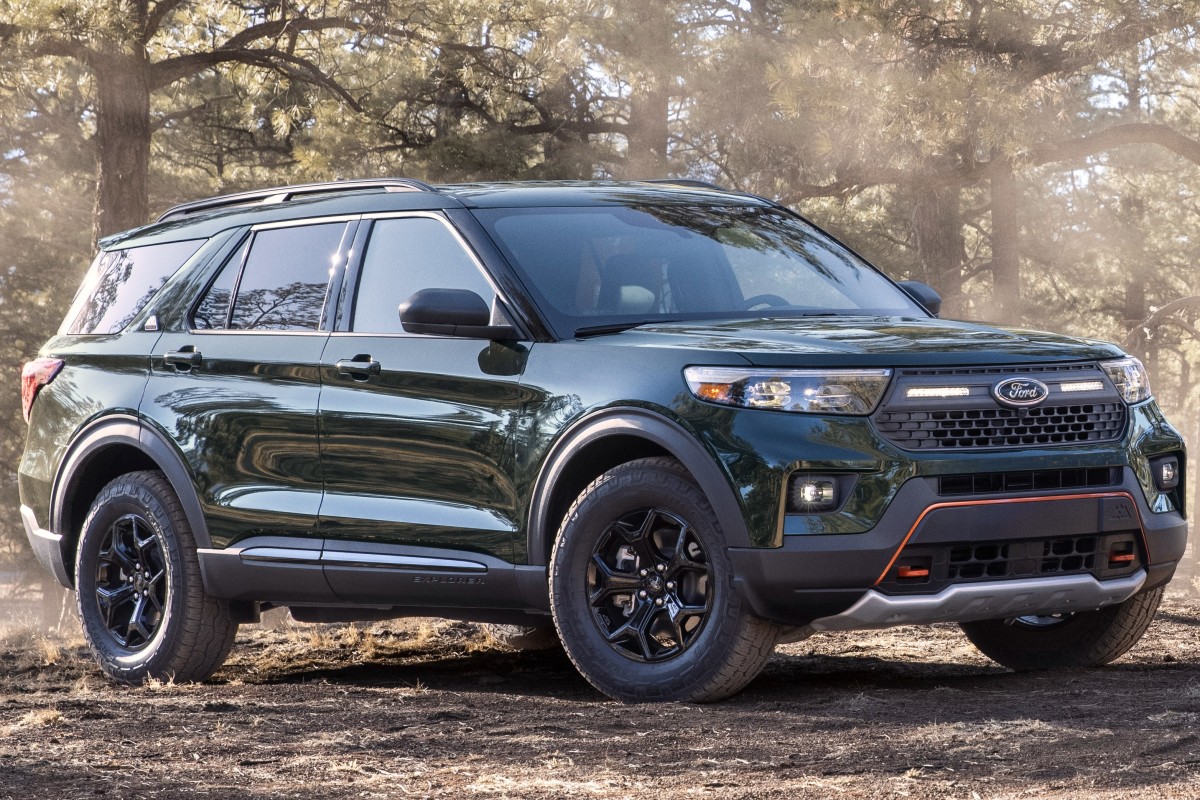
The 2025 Ford Explorer continued to build on its previous redesign, which had shifted the midsize SUV from a front-wheel-drive to a rear-wheel-drive platform. This change had already given the Explorer a more balanced and sleek appearance, and the 2025 refresh further enhanced its aesthetic appeal. The front end was restyled to appear wider and more ruggedly handsome, while new LED taillights and a strip of trim connecting them added a modern touch. Inside, the Explorer saw significant improvements in materials and design, making it more competitive in its segment. Ford streamlined the trim levels from eight to four, offering a range of options from the base Active trim to the performance-tuned ST.
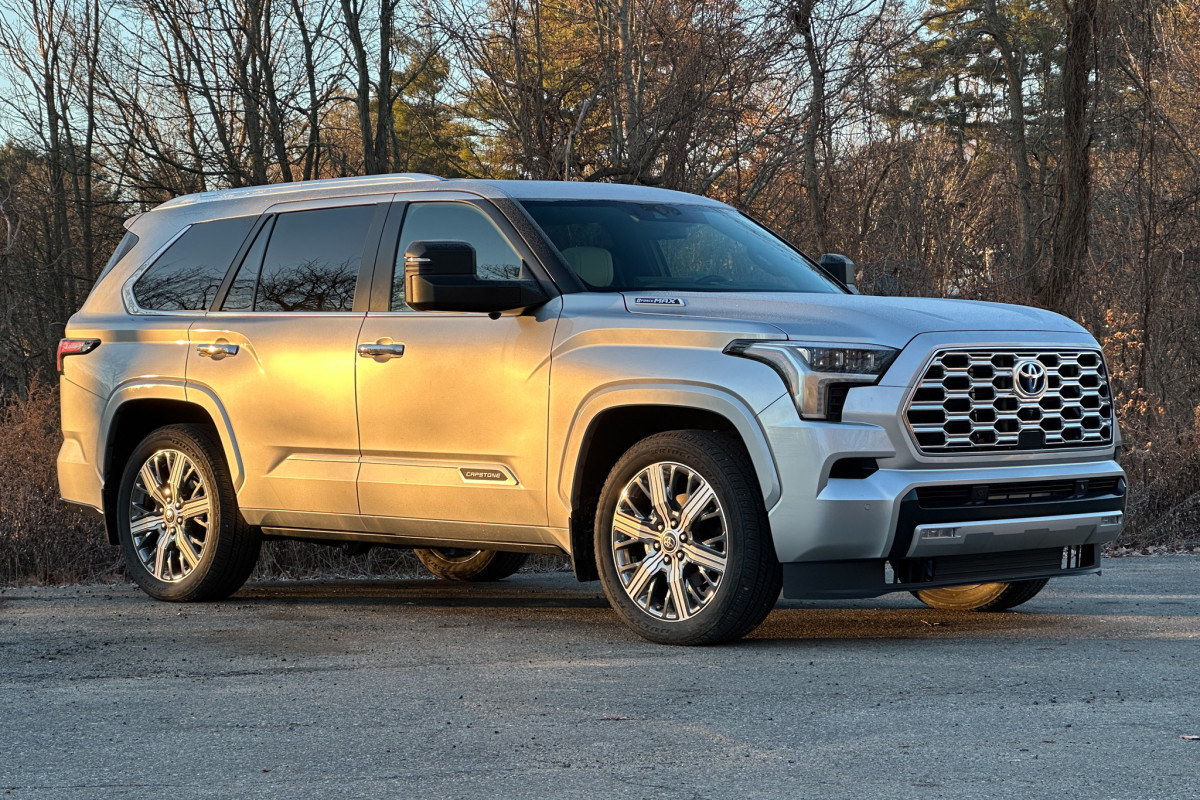
In contrast, the 2025 Toyota Sequoia introduced the 1794 Edition, named after the year the ranch was established where the assembly plant now stands. This edition built on the Sequoia Platinum with unique features like machined-finish 20-inch wheels and Saddle Tan leather upholstery. Despite its rarity on the road, the Sequoia 1794 Edition turned heads with its Lunar Rock paint and TRD off-road wheels. Inside, the combination of Saddle Tan leather and walnut wood trim created a luxurious atmosphere, though the use of typical Toyota-grade plastic detracted from the overall impression. The Sequoia's interior was spacious but not without its compromises, particularly in the third row and cargo space.
The 2025 Ford Explorer offered two EcoBoost engine options. Most trims, except the ST, came with a turbocharged 2.3-liter four-cylinder engine producing 300 horsepower and 310 pound-feet of torque. The Explorer ST and optionally the Platinum trim featured a twin-turbocharged 3.0-liter V6 engine delivering 400 horsepower and 415 pound-feet of torque. All Explorers were equipped with a 10-speed automatic transmission and rear-wheel drive, with an optional four-wheel-drive system. The ST-Line test vehicle, with its turbocharged four-cylinder engine, averaged 23.8 mpg during testing. The Explorer's driving modes, including Eco, Normal, and Sport, allowed for a tailored driving experience, with the Sport mode enhancing responsiveness and steering feel.
The 2025 Toyota Sequoia came standard with an i-Force Max hybrid powertrain, combining a twin-turbocharged 3.4-liter V6 engine with an electric motor and a 1.87-kilowatt-hour battery pack. This setup produced 437 horsepower and 583 pound-feet of torque. The 1794 Edition featured a part-time four-wheel-drive system with multiple settings and driving modes. Despite its muscular performance, the Sequoia's fuel economy was disappointing, averaging only 16.2 mpg in testing. The Sequoia's towing and payload capacities were impressive, but its driving dynamics were compromised by the battery pack's placement and the use of a solid rear axle. The TRD Off-Road Package added off-road capabilities, but the Sequoia's ground clearance and air dam limited its effectiveness.
The 2025 Ford Explorer offered seating for six in its standard configuration, with an optional second-row bench seat increasing capacity to seven. The ST-Line test vehicle featured comfortable front seats with heating and power adjustments, as well as a Premium Package that added amenities like ambient lighting and a power-folding third-row seat. The second-row captain's chairs were equally comfortable, but accessing the third row was challenging for adults. Cargo space was competitive, with 16.3 cubic feet behind the third row, 46 cubic feet behind the second row, and a maximum of 85.8 cubic feet.
The 2025 Toyota Sequoia accommodated up to eight passengers, though seven or six would be more comfortable. The 1794 Edition's front seats offered 10-way power adjustment, heating, ventilation, and massage. The second-row captain's chairs were comfortable but lacked sliding functionality. The third row's high floor and low roof made it awkward for adults, and cargo space was limited to 11.5 cubic feet with all seats in use. Folding the third row increased cargo space to 49 cubic feet, with a maximum of 86.9 cubic feet when both the second and third rows were folded.
The 2025 Ford Explorer featured a 12.3-inch digital instrumentation panel and a new 13.2-inch touchscreen infotainment system called Ford Digital Experience. This system included Google Built-in, Amazon Alexa Built-in, wireless Apple CarPlay, and Android Auto. The Explorer also offered B&O sound systems by Bang & Olufsen, with the ST-Line featuring a 10-speaker setup. The Ford Digital Experience was user-friendly, with Google Maps integration and app downloads through Google Play.
The 2025 Toyota Sequoia 1794 Edition came with a 12.3-inch digital instrumentation panel and a 14-inch touchscreen infotainment system. The Toyota Audio Multimedia system offered various connected services plans, with features like cloud-based navigation and remote engine starting. Wireless Apple CarPlay and Android Auto were standard, along with a 14-speaker JBL premium sound system. The system's natural voice recognition, Intelligent Assistant, was capable but had limitations. The Sequoia also included a surround-view camera system and a digital rearview mirror.
The 2025 Ford Explorer was equipped with Ford CoPilot 360+, which included adaptive cruise control with lane-centering assist and other driver assistance features. The ST-Line and higher trims featured Ford CoPilot 360 2.0, adding a surround-view camera system and BlueCruise, Ford's hands-free highway driving system. The Explorer had not been fully rated by the NHTSA or IIHS at the time of publication, but it earned five-star side-impact and four-star rollover resistance ratings.
The 2025 Toyota Sequoia came with Toyota Safety Sense 2.5, offering adaptive cruise control, forward collision warning, automatic emergency braking, and more. Blind-spot monitoring and rear cross-traffic alert were also standard. The Sequoia's lane assist features were sometimes intrusive, and neither the IIHS nor the NHTSA had released crash-test ratings for the Sequoia at the time of publication.
CarGurus highlights
According to CarGurus experts, the overall rating for the 2025 Ford Explorer is 8.0 out of 10, while the 2025 Toyota Sequoia scores 5.5 out of 10. Based on these ratings, the Ford Explorer is the recommended choice, offering a better balance of design, performance, and technology for consumers seeking a midsize SUV.
Choose the 2025 Ford Explorer if:
- You prioritize a sleek design with improved interior materials and competitive cargo space.
- You want a choice of powerful engines with good fuel economy for a midsize SUV.
- You value user-friendly technology with Google integration and a premium sound system.


Choose the 2025 Toyota Sequoia if:
- You need a full-size SUV with impressive towing and payload capacities.
- You appreciate a luxurious interior with unique design elements like Saddle Tan leather and walnut wood trim.
- You require a robust hybrid powertrain with substantial horsepower and torque.


CarGurus highlights
According to CarGurus experts, the overall rating for the 2025 Ford Explorer is 8.0 out of 10, while the 2025 Toyota Sequoia scores 5.5 out of 10. Based on these ratings, the Ford Explorer is the recommended choice, offering a better balance of design, performance, and technology for consumers seeking a midsize SUV.
Choose the 2025 Ford Explorer if:
Shop Now- You prioritize a sleek design with improved interior materials and competitive cargo space.
- You want a choice of powerful engines with good fuel economy for a midsize SUV.
- You value user-friendly technology with Google integration and a premium sound system.
Choose the 2025 Toyota Sequoia if:
Shop Now- You need a full-size SUV with impressive towing and payload capacities.
- You appreciate a luxurious interior with unique design elements like Saddle Tan leather and walnut wood trim.
- You require a robust hybrid powertrain with substantial horsepower and torque.

By: CarGurus + AI
At CarGurus, our team of experienced automotive writers remain at the heart of our content operation, conducting hands-on car tests and writing insightful guides that are backed by years of industry experience. To complement this, we are harnessing AI to make our content offering more diverse and more helpful to shoppers than ever. To achieve this, our AI systems are based exclusively on CarGurus content, ratings and data, so that what we produce is both unique to CarGurus, and uniquely helpful to car shoppers.

