2021 Mercedes-Benz GLS vs 2021 Toyota 4Runner
Overview | |
MSRP$76,000 | MSRP$36,765 |
Listings149 | Listings198 |
Ratings & Reviews | |
User Reviews | User Reviews |
Expert reviews8.3 out of 10 | Expert reviews6.2 out of 10 |
Pros
Cons
| Pros
Cons
|
2021 Mercedes-Benz GLS Reviews SummaryThe “S” in the 2021 Mercedes-Benz GLS-Class name is meant to connect the SUV to the S-Class flagship sedan. In this sense, the GLS is the S-Class of SUVs, and it delivers on that positioning. The 2021 GLS-Class has three rows of spacious seating, and puts comfort above all else. The GLS can hold groceries, weekend bags, antique desks purchased from a roadside consignment shop—all things that would require a lot of negotiating in the S-Class sedan. The GLS-Class is one member of a growing fraternity of full-size, three-row, luxury SUVs. Their ranks include the Cadillac Escalade, Lincoln Navigator, Infiniti QX80, and the more recent BMW X7. The GLS sets itself apart with a higher standard of luxury, and impressive performance… if you’re willing to shell out the cash. | |
2021 Toyota 4Runner Reviews SummaryDespite its design age, poor fuel economy, rough ride, iffy handling, and marginal safety ratings, the current-generation Toyota 4Runner remains a popular choice in a midsize SUV. Why? Its reputation for reliability and resale value, coupled with its undeniable utility, rugged image, and go-anywhere and do-anything capability, are the selling points. And if that's why you want a 2021 Toyota 4Runner, it won't disappoint you as long as you accept its shortcomings. | |
No video found | No video found |
Popular Features & Specs | |
Engine3.0L 362 hp I6 | Engine4.0L 270 hp V6 |
Drive TrainAWD | Drive Train4X2 |
Seating Capacity7 | Seating Capacity7 |
Horsepower362 hp @ 5500 rpm | Horsepower270 hp @ 5600 rpm |
MPG City20 | MPG City16 |
MPG Highway24 | MPG Highway19 |
Engine | |
Engine Name3.0L 362 hp I6 | Engine Name4.0L 270 hp V6 |
Torque369 lb-ft @ 1600 rpm | Torque278 lb-ft @ 4400 rpm |
Horsepower362 hp @ 5500 rpm | Horsepower270 hp @ 5600 rpm |
DrivetrainAWD | Drivetrain4X2 |
Fuel Economy | |
MPG City20 | MPG City16 |
MPG Highway24 | MPG Highway19 |
Interior | |
Seating Capacity7 | Seating Capacity7 |
Key Features | |
Navigation SystemStandard | Navigation System |
Sunroof/MoonroofStandard | Sunroof/Moonroof |
Safety | |
Front Crash Overall | Front Crash Overall4 |
Side Crash Overall | Side Crash Overall5 |
Dimensions & Capacity | |
Cargo Space17.4 cu ft | Cargo Space47.2 cu ft |
Curb Weight5467 lbs | Curb Weight4400 lbs |
Height72.4 in | Height71.5 in |
Length205.0 in | Length190.2 in |
Width84.9 in | Width75.8 in |
Wheelbase123.4 in | Wheelbase109.8 in |
Maximum Payload1808 lbs | Maximum Payload1700 lbs |
Number of doors4 | Number of doors4 |
Maximum Towing Capacity7700 lbs | Maximum Towing Capacity5000 lbs |
Standard Towing Capacity | Standard Towing Capacity5000 lbs |
Overview | ||
MSRP | $76,000 | $36,765 |
Listings | ||
Ratings & Reviews | ||
User reviews | ||
Expert reviews | 8.3 out of 10Read full review | 6.2 out of 10Read full review |
Pros & cons | Pros
Cons
| Pros
Cons
|
Summary | The “S” in the 2021 Mercedes-Benz GLS-Class name is meant to connect the SUV to the S-Class flagship sedan. In this sense, the GLS is the S-Class of SUVs, and it delivers on that positioning. The 2021 GLS-Class has three rows of spacious seating, and puts comfort above all else. The GLS can hold groceries, weekend bags, antique desks purchased from a roadside consignment shop—all things that would require a lot of negotiating in the S-Class sedan. The GLS-Class is one member of a growing fraternity of full-size, three-row, luxury SUVs. Their ranks include the Cadillac Escalade, Lincoln Navigator, Infiniti QX80, and the more recent BMW X7. The GLS sets itself apart with a higher standard of luxury, and impressive performance… if you’re willing to shell out the cash. | Despite its design age, poor fuel economy, rough ride, iffy handling, and marginal safety ratings, the current-generation Toyota 4Runner remains a popular choice in a midsize SUV. Why? Its reputation for reliability and resale value, coupled with its undeniable utility, rugged image, and go-anywhere and do-anything capability, are the selling points. And if that's why you want a 2021 Toyota 4Runner, it won't disappoint you as long as you accept its shortcomings. |
Video | No video found | No video found |
Popular Features & Specs | ||
Engine | 3.0L 362 hp I6 | 4.0L 270 hp V6 |
Drive Train | AWD | 4X2 |
Seating Capacity | 7 | 7 |
Horsepower | 362 hp @ 5500 rpm | 270 hp @ 5600 rpm |
MPG City | 20 | 16 |
MPG Highway | 24 | 19 |
Engine | ||
Engine Name | 3.0L 362 hp I6 | 4.0L 270 hp V6 |
Torque | 369 lb-ft @ 1600 rpm | 278 lb-ft @ 4400 rpm |
Horsepower | 362 hp @ 5500 rpm | 270 hp @ 5600 rpm |
Drivetrain | AWD | 4X2 |
Fuel Economy | ||
MPG City | 20 | 16 |
MPG Highway | 24 | 19 |
Interior | ||
Seating Capacity | 7 | 7 |
Key Features | ||
Navigation System | Standard | |
Sunroof/Moonroof | Standard | |
Safety | ||
Front Crash Overall | 4 | |
Side Crash Overall | 5 | |
Dimensions & Capacity | ||
Cargo Space | 17.4 cu ft | 47.2 cu ft |
Curb Weight | 5467 lbs | 4400 lbs |
Height | 72.4 in | 71.5 in |
Length | 205.0 in | 190.2 in |
Width | 84.9 in | 75.8 in |
Wheelbase | 123.4 in | 109.8 in |
Maximum Payload | 1808 lbs | 1700 lbs |
Number of doors | 4 | 4 |
Maximum Towing Capacity | 7700 lbs | 5000 lbs |
Standard Towing Capacity | 5000 lbs | |
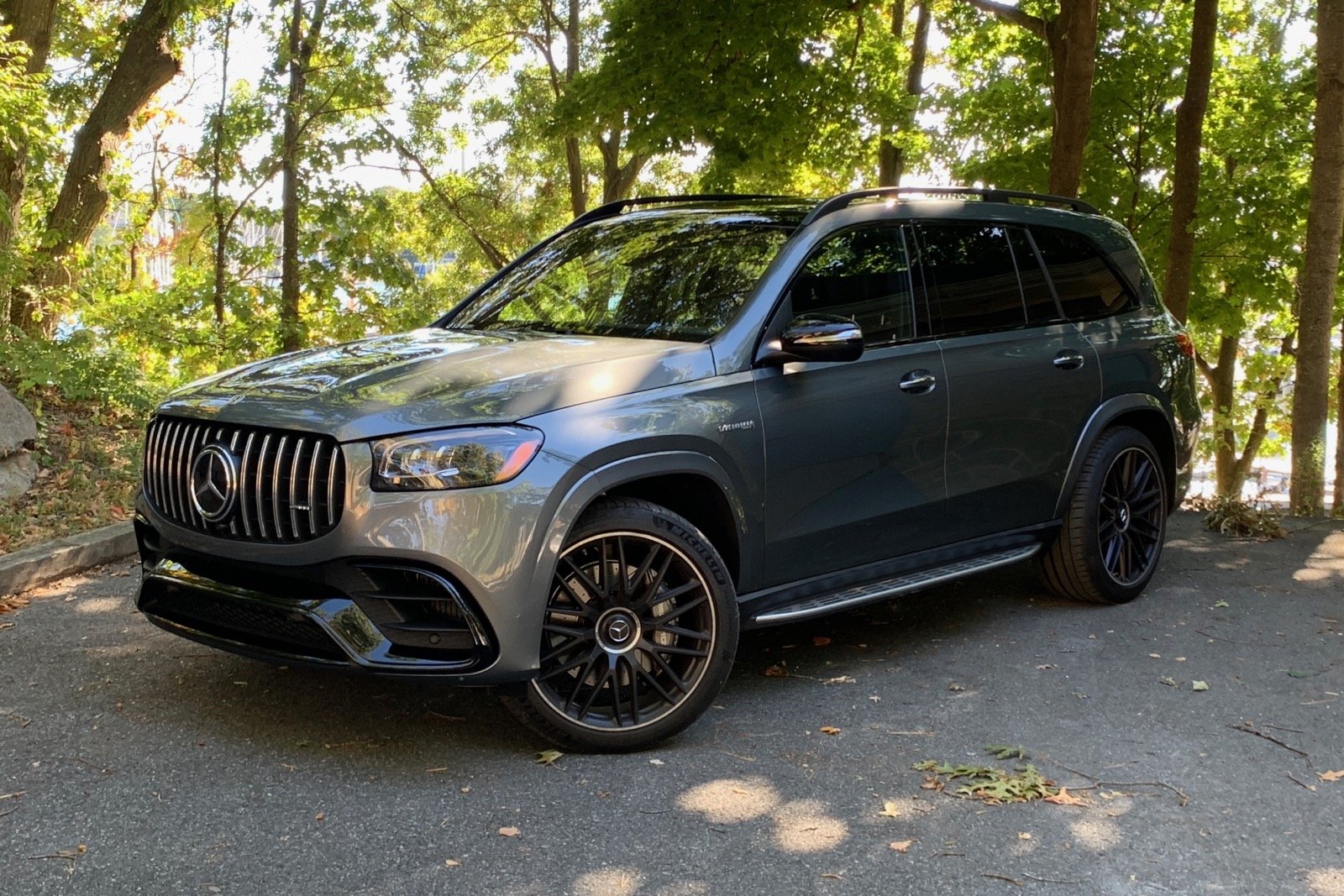
The third generation of the Mercedes-Benz GLS-Class, introduced in 2020, continued into 2021. Initially launched as the GL-Class in 2006, it was meant to replace the G-Class, but the latter's popularity kept it around. The GLS, with its three rows and luxurious interior, became a family-friendly alternative to the Navigator and Escalade. The name change from "GL" to "GLS" occurred midway through its second generation. The 2021 GLS featured softened angles and lines, making it appear less bulky than its predecessors. Inside, it boasted a futuristic cabin with a massive digital screen spanning nearly two-thirds of the dash, emphasizing its tech-reliant controls.
The GLS was available in three trims: GLS 450, GLS 580, and the high-performance AMG GLS 63. Standard features on the GLS 450 included remote keyless entry, remote start, nine USB ports, dual-zone automatic climate control, heated front seats, and a power liftgate. The GLS 580 added a V8 engine, heated-and-cooled front seats, massaging front seats, and more. The AMG GLS 63, our test model, stood out with aggressive bodywork, quad-outlet exhaust, and a chrome, slotted grille. Inside, it featured a performance-inspired flat-bottomed sport steering wheel with a leather strip on an Alcantara wheel.
Toyota last redesigned the 4Runner 12 years ago. Despite updates over the years, a used 4Runner was nearly identical to a new one, minus some modern infotainment and safety tech. The 4Runner's design, though not conventionally attractive, aged well with its two-box body, flared fenders, and trapezoidal wheel arches. It was like a reliable tool, not needing frequent redesigns. Toyota offered the 4Runner in SR5, TRD Off-Road, Limited, and TRD Pro trims, with special editions like the Trail Special Edition, Venture Special Edition, and Nightshade Special Edition.
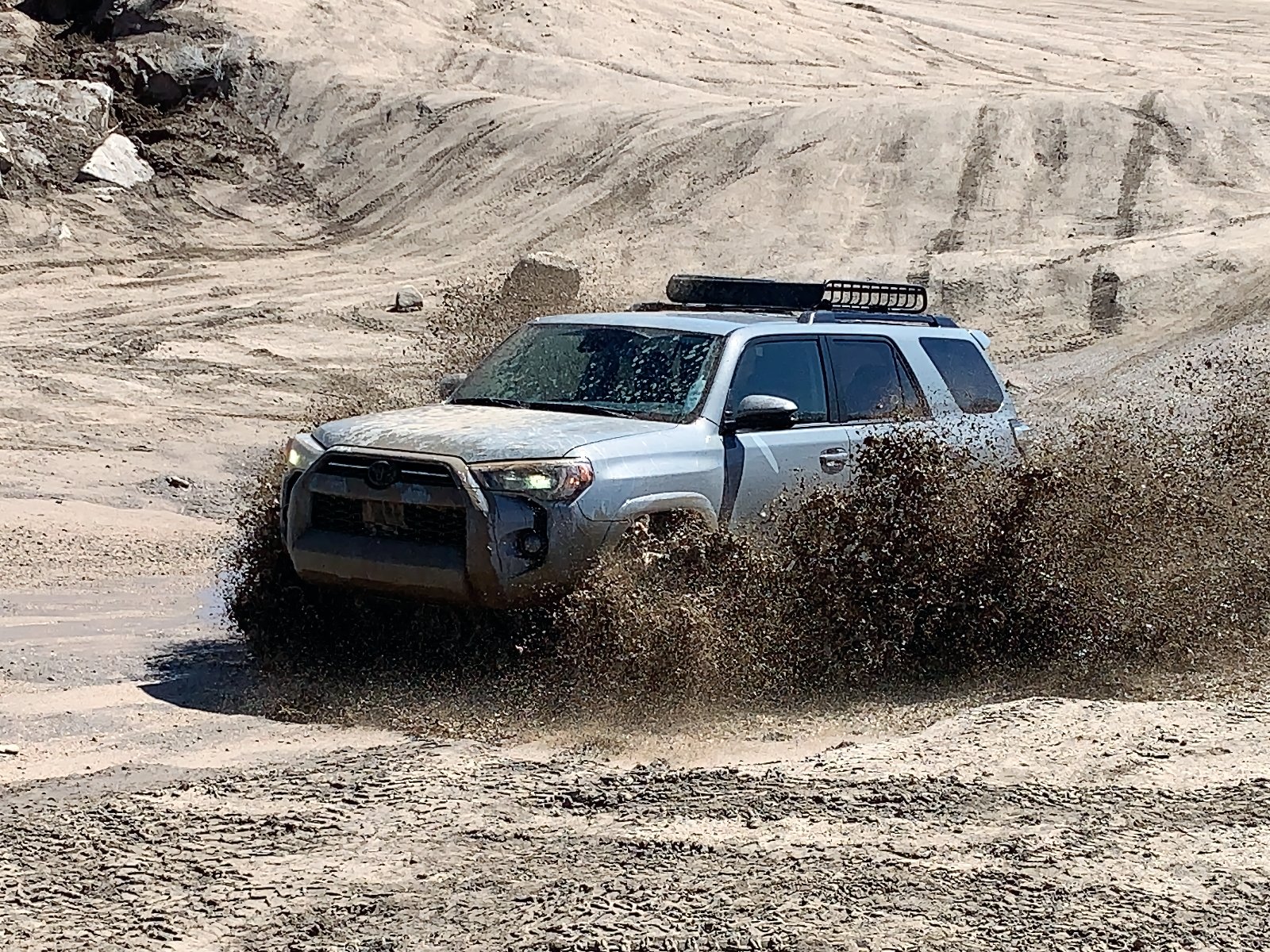
Our test vehicle, the Trail Special Edition, was priced at $38,565 MSRP for the RWD model, with 4WD adding $1,875. It included a premium audio upgrade, a cargo cover, and a TRD front skid plate, totaling $43,729 with destination charges. Toyota planned to build only 4,000 units of this edition, available in white, black, Cement (gray), and Army Green. It featured dark gray TRD Off-Road wheels and a Yakima RoadWarrior rooftop cargo basket. Inside, it had black cloth upholstery with tan stitching, all-weather floor mats, a sliding rear cargo tray, and a custom-made 40-quart cooler.


The entry-level GLS 450 was powered by a twin-turbocharged 3.0-liter inline-six engine, producing 362 horsepower and 369 pound-feet of torque. The GLS 580 featured a twin-turbocharged 4.0-liter V8 with 483 hp and 516 lb-ft. Both models used a nine-speed automatic transmission and Mercedes' 4MATIC all-wheel drive system. The AMG GLS 63, with a hand-crafted 4.0-liter twin-turbo V8, delivered 603 hp and 627 lb-ft of torque, paired with a nine-speed AMG twin-clutch automatic transmission. All engines included Mercedes’ EQ Boost 48-volt mild-hybrid system, adding 21 hp and 184 lb-ft of torque when needed.
The AMG GLS 63 could accelerate from zero to 60 mph in just 4.1 seconds, with a top speed of 174 mph. Despite its 5,400+ pound weight, it offered tangible acceleration. The GLS 63 featured an adaptive, adjustable air suspension system, adjusting ground clearance between 7.9 and 8.5 inches. It also had double-wishbone front suspension and multi-link rear suspension, providing precise cornering. The GLS had multiple drive-mode settings, including Individual, Comfort, Sport, and Sport+, controlled by a dial and buttons on the sport steering wheel. The GLS 63's E-Active Body Control ensured a smooth ride, even on rough roads.
Hungry Valley State Vehicular Recreational Area, located north of Los Angeles, was a testing ground for the 2021 Toyota 4Runner Trail Special Edition. Following winter storms, the 4Runner's A-Trac off-road traction control system proved beneficial. The Frame Twister, a set of gnarly moguls, initially stopped the 4Runner, but A-Trac braked the spinning wheels, allowing the vehicle to move forward. The 4Runner tackled mud, hills, and ruts with ease. Upgrading to the TRD Off-Road or TRD Pro added a locking rear differential, Multi-Terrain Select, and Crawl Control for deeper backcountry adventures.
The 4Runner's 4.0-liter V6 engine produced 270 horsepower at 5,600 rpm and 278 pound-feet of torque at 4,400 rpm. A five-speed automatic transmission powered the rear wheels, with part-time 4WD available. The Trail Special Edition did not offer automatic 4WD. The maximum tow rating was 5,000 pounds. On-pavement, the 4Runner felt slow, heavy, and clunky, with challenging steering and braking. Its truck-like driving characteristics were part of its charm, but not ideal for daily use. The EPA rated it at 17 mpg combined, with our test averaging 16.8 mpg, giving it a range of about 385 miles.
The GLS-Class offered three rows of spacious seating, with ample headroom and legroom for first- and second-row occupants. Standard seven-passenger seating could be reduced to six with optional second-row captains’ chairs. The front-row seats had door-mounted controls, while the rear seats provided plenty of space. The third row, though less spacious, was suitable for full-size adults. The GLS had more cargo space behind the third row than the BMW X7, with 17.4 cubic feet, expanding to 42.7 with the third row folded. The power-folding third row and second-row seats provided a total of 87.4 cubic feet of cargo space.
The driver and front passenger enjoyed numerous storage compartments, including spacious in-door bins, a combination cup-holder/wireless-charging pad, and a center console with butterfly doors. The center console was large enough for small items but not a purse.
The 2021 Toyota 4Runner sat high off the ground, posing a challenge for shorter individuals without running boards. Once inside, the 4Runner offered comfortable front and rear seats with proper support. The back seat had generous legroom, good visibility, air conditioning vents, and USB charging ports. The sunroof, power windows, and lowerable rear tailgate glass provided an open-air feeling similar to a Jeep Wrangler. Our test vehicle lacked a third-row seat, instead featuring a sliding cargo deck holding 440 pounds. The back bumper served as a convenient seat for various activities.
Cargo space measured up to 47.2 cubic feet behind the back seat and 89.7 cubic feet with the rear seat folded down. Combined with the Trail Special Edition's roof rack, it offered ample room for adventures. Interior storage was decent, with various compartments for small items.
The GLS came standard with the MBUX infotainment system, featuring a central trackpad and a massive touch screen. The system included Apple CarPlay and Android Auto, requiring a USB-C cable. The MBUX voice-control system responded to "Mercedes" or "Hey Mercedes," understanding complex commands. The digital dash extended to the fully-digital instrument panel, both controlled by touch-sensitive pads on the steering wheel. The right pad controlled the infotainment screen, while the left pad controlled the instrument panel. The system had a learning curve but made the GLS's technology manageable.
The 4Runner Trail Special Edition had limited technology. It included a windshield wiper de-icer system and a 120-volt AC power outlet in the cargo area. The standard 8-inch touchscreen infotainment system featured Bluetooth, Apple CarPlay, Android Auto, Amazon Alexa compatibility, SiriusXM satellite radio, and five USB ports. It also came with a year of free Safety Connect subscription services and a three-month/2-GB trial of WiFi Connect. The premium audio upgrade added dynamic navigation, dynamic point-of-interest search, dynamic voice recognition, and a one-year subscription to Destination Assist concierge services.
The infotainment system's voice recognition technology was effective, and the navigation map included main trails at Hungry Valley. Physical shortcut buttons and volume and tuning knobs made the system easy to use, even with gloves. The 8-inch screen was small but functional.
The GLS came standard with numerous driver-assistance features, including Active Brake Assist, forward-collision avoidance, rain-sensing wipers, blind-spot monitoring, and automatic high beams. Other standard features included automatic parking assist, a surround-view camera system, a driver-drowsiness monitor, and crosswind assist. Available safety tech included lane-keep assist, lane-change assist, adaptive cruise control, and a following-distance indicator. The GLS also offered stop-and-go cruise control and a full array of airbags, traction control, self-tensioning seatbelts, and a tire-pressure monitoring system.
Toyota Safety Sense P (TSS-P) was standard on the 4Runner, including adaptive cruise control, forward-collision warning, automatic forward emergency braking, lane departure warning, and automatic high-beam headlights. However, it lacked a blind-spot warning system with rear cross-traffic warning. The 4Runner had a three-star rollover resistance rating from the NHTSA and a "Good" roof crush strength rating from the IIHS. However, the IIHS rated its driver protection in a small overlap frontal-impact collision as Marginal, and the NHTSA gave its front passenger protection a three-star rating in a frontal-impact crash.
CarGurus highlights
According to CarGurus experts, the overall rating for the 2021 Mercedes-Benz GLS is 8.3 out of 10, while the 2021 Toyota 4Runner scores 6.2 out of 10. Based on these ratings, the 2021 Mercedes-Benz GLS is the clear winner, offering superior technology, performance, and luxury. If you seek a high-end, versatile SUV, the GLS is the better choice.
Choose the 2021 Mercedes-Benz GLS if:
- You prioritize advanced technology and luxurious features.
- You need a spacious, comfortable interior with ample cargo space.
- You want a powerful, high-performance SUV with impressive acceleration.


Choose the 2021 Toyota 4Runner if:
- You need a rugged, off-road-capable SUV for adventurous trips.
- You prefer a simple, durable vehicle with a proven track record.
- You value practical features like a sliding cargo deck and ample storage space.


CarGurus highlights
According to CarGurus experts, the overall rating for the 2021 Mercedes-Benz GLS is 8.3 out of 10, while the 2021 Toyota 4Runner scores 6.2 out of 10. Based on these ratings, the 2021 Mercedes-Benz GLS is the clear winner, offering superior technology, performance, and luxury. If you seek a high-end, versatile SUV, the GLS is the better choice.
Choose the 2021 Mercedes-Benz GLS if:
Shop Now- You prioritize advanced technology and luxurious features.
- You need a spacious, comfortable interior with ample cargo space.
- You want a powerful, high-performance SUV with impressive acceleration.
Choose the 2021 Toyota 4Runner if:
Shop Now- You need a rugged, off-road-capable SUV for adventurous trips.
- You prefer a simple, durable vehicle with a proven track record.
- You value practical features like a sliding cargo deck and ample storage space.

By: CarGurus + AI
At CarGurus, our team of experienced automotive writers remain at the heart of our content operation, conducting hands-on car tests and writing insightful guides that are backed by years of industry experience. To complement this, we are harnessing AI to make our content offering more diverse and more helpful to shoppers than ever. To achieve this, our AI systems are based exclusively on CarGurus content, ratings and data, so that what we produce is both unique to CarGurus, and uniquely helpful to car shoppers.

