2020 Kia Forte vs 2020 Hyundai Elantra

Overview | |
MSRP$17,890 | MSRP$19,300 |
Listings578 | Listings992 |
Ratings & Reviews | |
User Reviews | User Reviews |
Expert reviews9.0 out of 10 | Expert reviews8.3 out of 10 |
Pros
Cons
| Pros
Cons
|
2020 Kia Forte Reviews SummaryHyundai owns nearly 40% of Kia, and when both companies decided to get serious about building world-class cars, they went to Germany to find design and engineering talent. Today, a decade later, that German influence is blatantly obvious in the 2020 Kia Forte GT, an affordable turbocharged sport sedan that is terrific fun to drive. Driving enthusiasts who love small, fun, cheap cars need to give this one a chance. | |
2020 Hyundai Elantra Reviews SummaryHyundai isn’t pulling any punches when it comes to the compact car segment, where value is of utmost importance. And though a completely redesigned 2021 Elantra is coming soon, the automaker bestows several value-enhancing improvements upon the outgoing 2020 Hyundai Elantra compact sedan. They include free scheduled maintenance, improved fuel economy ratings, and new standard safety features. | |
No video found | |
Popular Features & Specs | |
Engine2.0L 147 hp I4 | Engine2.0L 147 hp I4 |
Drive TrainFWD | Drive TrainFWD |
Seating Capacity5 | Seating Capacity5 |
Horsepower147 hp @ 6200 rpm | Horsepower147 hp @ 6200 rpm |
MPG City27 | MPG City31 |
MPG Highway37 | MPG Highway41 |
Engine | |
Engine Name2.0L 147 hp I4 | Engine Name2.0L 147 hp I4 |
Torque132 lb-ft @ 4500 rpm | Torque132 lb-ft @ 4500 rpm |
Horsepower147 hp @ 6200 rpm | Horsepower147 hp @ 6200 rpm |
DrivetrainFWD | DrivetrainFWD |
Fuel Economy | |
MPG City27 | MPG City31 |
MPG Highway37 | MPG Highway41 |
Interior | |
Seating Capacity5 | Seating Capacity5 |
Safety | |
Front Crash Overall4 | Front Crash Overall4 |
Side Crash Overall5 | Side Crash Overall4 |
Dimensions & Capacity | |
Cargo Space15.3 cu ft | Cargo Space14.4 cu ft |
Curb Weight2903 lbs | Curb Weight2844 lbs |
Height56.5 in | Height56.5 in |
Length182.7 in | Length181.9 in |
Width70.9 in | Width70.9 in |
Wheelbase106.3 in | Wheelbase106.3 in |
Maximum Payload889 lbs | Maximum Payload1080 lbs |
Number of doors4 | Number of doors4 |
Overview | ||
MSRP | $17,890 | $19,300 |
Listings | ||
Ratings & Reviews | ||
User reviews | ||
Expert reviews | 9.0 out of 10Read full review | 8.3 out of 10Read full review |
Pros & cons | Pros
Cons
| Pros
Cons
|
Summary | Hyundai owns nearly 40% of Kia, and when both companies decided to get serious about building world-class cars, they went to Germany to find design and engineering talent. Today, a decade later, that German influence is blatantly obvious in the 2020 Kia Forte GT, an affordable turbocharged sport sedan that is terrific fun to drive. Driving enthusiasts who love small, fun, cheap cars need to give this one a chance. | Hyundai isn’t pulling any punches when it comes to the compact car segment, where value is of utmost importance. And though a completely redesigned 2021 Elantra is coming soon, the automaker bestows several value-enhancing improvements upon the outgoing 2020 Hyundai Elantra compact sedan. They include free scheduled maintenance, improved fuel economy ratings, and new standard safety features. |
Video | No video found | |
Popular Features & Specs | ||
Engine | 2.0L 147 hp I4 | 2.0L 147 hp I4 |
Drive Train | FWD | FWD |
Seating Capacity | 5 | 5 |
Horsepower | 147 hp @ 6200 rpm | 147 hp @ 6200 rpm |
MPG City | 27 | 31 |
MPG Highway | 37 | 41 |
Engine | ||
Engine Name | 2.0L 147 hp I4 | 2.0L 147 hp I4 |
Torque | 132 lb-ft @ 4500 rpm | 132 lb-ft @ 4500 rpm |
Horsepower | 147 hp @ 6200 rpm | 147 hp @ 6200 rpm |
Drivetrain | FWD | FWD |
Fuel Economy | ||
MPG City | 27 | 31 |
MPG Highway | 37 | 41 |
Interior | ||
Seating Capacity | 5 | 5 |
Safety | ||
Front Crash Overall | 4 | 4 |
Side Crash Overall | 5 | 4 |
Dimensions & Capacity | ||
Cargo Space | 15.3 cu ft | 14.4 cu ft |
Curb Weight | 2903 lbs | 2844 lbs |
Height | 56.5 in | 56.5 in |
Length | 182.7 in | 181.9 in |
Width | 70.9 in | 70.9 in |
Wheelbase | 106.3 in | 106.3 in |
Maximum Payload | 889 lbs | 1080 lbs |
Number of doors | 4 | 4 |
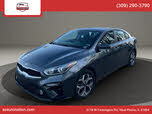
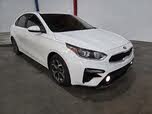
The 2020 Kia Forte GT marked an enhancement to the lineup with features like a turbocharged engine, a seven-speed dual-clutch transmission (DCT), a sport-tuned suspension, and bigger brakes, along with machine-finish 18-inch wheels. The car had subtle styling tweaks, making it a "sleeper" with potent performance hidden behind a refined exterior. It showcased discreet yet sporty features such as revised bumpers, a black lip spoiler, and dual exhaust outlets, signaling its performance capabilities without being too flashy.
Inside, the Kia Forte offered an impressive and modern interior with complementary surface tones and soft-touch materials strategically placed. Red seat piping, flat-bottom steering wheels with paddle shifters, and gloss-black trim with metallic accents completed its stylish interior. One notable feature was the transmission shifter, which felt solid and high-quality every time it was used, enhancing the driving experience.
The Forte GT had a starting price of $22,490, with the option for a more robust package including Michelin Pilot Sport tires and the GT2 Package, bringing the fully equipped test vehicle to a cost of $26,085. For budget-minded buyers, other trims were available, starting from the base price of $17,890 for a manual transmission model.
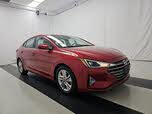
For 2020, the Hyundai Elantra, redesigned last in 2017 and restyled boldly in 2019, carried over visually unchanged. Its angular lines and geometric-influenced design aimed to signal a new era of Hyundai's design language. Available in six trims—SE, SEL, Value Edition, Eco, Limited, and Sport—the Elantra ranged from $19,300 to $24,150.
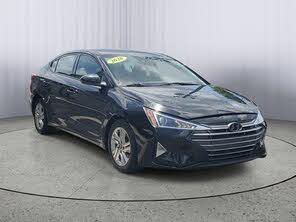
In terms of aesthetic appeal, our Limited test model in black paint highlighted its angular headlight, fog light, and wheel designs while contrasting sharply with chrome detailing. Even if the look wasn’t universally appealing, it was undeniably stylish.
Inside, Hyundai upgraded the Elantra's cabin with silver trim on various components, from the steering wheel to the air vents. However, sufficient hard plastic reminded one that it was still a cost-conscious compact car.


The powerhouse behind the Kia Forte GT was a turbocharged 1.6-liter 4-cylinder engine, common across other Kia models like the Optima and Seltos. This engine delivered 201 horsepower at 6,000 rpm and 195 pound-feet of torque between 1,500 rpm and 4,500 rpm. Paired with the 7-speed DCT, the power was transmitted smoothly to the front wheels. Notably, the DCT performed exceptionally well in the Forte GT, showing none of the hesitation typical of such transmissions.
The Forte GT also offered a 6-speed manual option which, while costing more, included several attractive features from the GT2 package. Alongside its sporty tweaks, the car featured Normal, Sport, and Smart driving modes, further enhancing the driving experience. Its sport-tuned suspension and active exhaust added to the performance credentials.
In real-world driving, the Forte GT showed a firm yet connected ride quality. The sport exhaust and firm brake response added to the sprightly driving experience. Despite its front-heavy weight bias, it handled curves and corners with aplomb, showcasing refined suspension tuning and maintaining poise even on uneven surfaces.
The standard powertrain for the Hyundai Elantra was a 147-hp, 2.0-liter four-cylinder engine mated to a new continuously variable transmission (CVT). Remapping this combination for 2020 aimed to enhance efficiency and responsiveness. The Elantra Eco variant, meanwhile, offered a 1.4-liter turbocharged four-cylinder with a 7-speed DCT, delivering improved torque and efficiency over the base engine. The eco model excelled in city driving with an automatic start/stop system, providing 36 mpg combined.
For enthusiasts, the Elantra Sport's turbocharged 1.6-liter engine offered 201 horsepower and 195 lb-ft of torque, along with an independent rear suspension for enhanced handling. With the Sport model’s manual gearbox gone, the DCT was standard, which might disappoint some purists.
Driving impressions for the Limited trim with its standard drivetrain were less thrilling—efficient and unobtrusive, but ultimately more appliance-like for daily commuting. Despite its improved CVT, the real-world fuel economy didn’t quite live up to expectations compared to its predecessor.
The Forte GT's interior combined sportiness with practicality, featuring sport seats with cloth and Sofino leatherette inserts, and full Sofino leatherette for those opting for the GT2 Package. The 10-way power-adjustable driver’s seat, combined with heated and ventilated seats, provided impressive comfort. Notably, the front passenger’s seat also had a manual height adjuster, an often-overlooked feature.
Though the rear seats offered good support and backrest angle, they lacked the soft upper door panel trim found in the front. The Forte’s trunk boasted a generous 15.3 cubic feet of cargo space. The Smart Trunk technology added convenience, though sometimes inadvertently opening when not needed. Interior storage solutions, including a wireless smartphone charging pad and ample door and console storage, further enhanced functionality.
The Elantra's premiership for offering roomy accommodations for four adults, squeezing in a fifth for short trips if necessary, underscored its utility in the compact market. Our Limited trim test car added features like a power driver’s seat, leather upholstery, and a sliding center console armrest. The front passenger's seat-height adjuster was a nice inclusion across all trims.
Standard dual-zone automatic climate control, complete with a Clean Air ionizer and automatic defogging system, ensured cabin comfort under various conditions. Storage, though typical for a compact car, was plentiful, with the trunk providing 14.4 cubic feet—slightly less capacious than the Forte, but sufficient for most needs.
The 2020 Forte featured an 8-inch touchscreen infotainment system as standard across all trims, enhanced by shortcut buttons and stereo knobs for ease of use. Standard tech included Bluetooth, Apple CarPlay, Android Auto, and a reversing camera. While embedded navigation wasn’t available, smartphone solutions mitigated this omission.
The GT2 Package added an 8-speaker Harman Kardon system, yet the performance was somewhat hampered by the cabin noise, failing to fully deliver an outstanding audio experience.
The Elantra’s base SE trim came with a basic 5-inch infotainment screen, upgraded to a 7-inch display at the SEL trim level, which added Apple CarPlay, Android Auto, and SiriusXM. The Value Edition further enhanced connectivity with Blue Link services.
On Limited and Sport trims, features like wireless charging and a premium Infinity sound system boosted tech offerings. The Ultimate Package for Limited increased the screen size to 8 inches, adding navigation and additional Blue Link services. The placement of the touchscreen, surrounded by shortcut buttons and knobs, made it user-friendly.
The 2020 Kia Forte earned a Top Safety Pick designation from the IIHS, equipped with numerous advanced driving assistance systems (ADAS), particularly in the GT2 Package. These included forward-collision warning, automatic emergency braking, lane-keeping assist, and adaptive cruise control—although it didn't bring the car to a full stop.
The Kia Forte also featured 911 Connect and programmable alerts for speed, curfew, and geographical boundaries through UVO eServices, adding layers of safety particularly useful for parental monitoring.
Hyundai’s Smart Sense was standard across all Elantra trims, encompassing forward-collision warning, automatic emergency braking, lane departure warning, lane-keeping assist, and driver attention monitoring. Additional features like blind-spot warning and rear cross-traffic alert came with the SEL trim and above.
The Limited trim, with the Ultimate Package, included adaptive cruise control, pedestrian detection, and Safe Exit Assist. The Elantra earned a Top Safety Pick from the IIHS with full LED headlights but received an overall four-star rating from the NHTSA.
CarGurus highlights
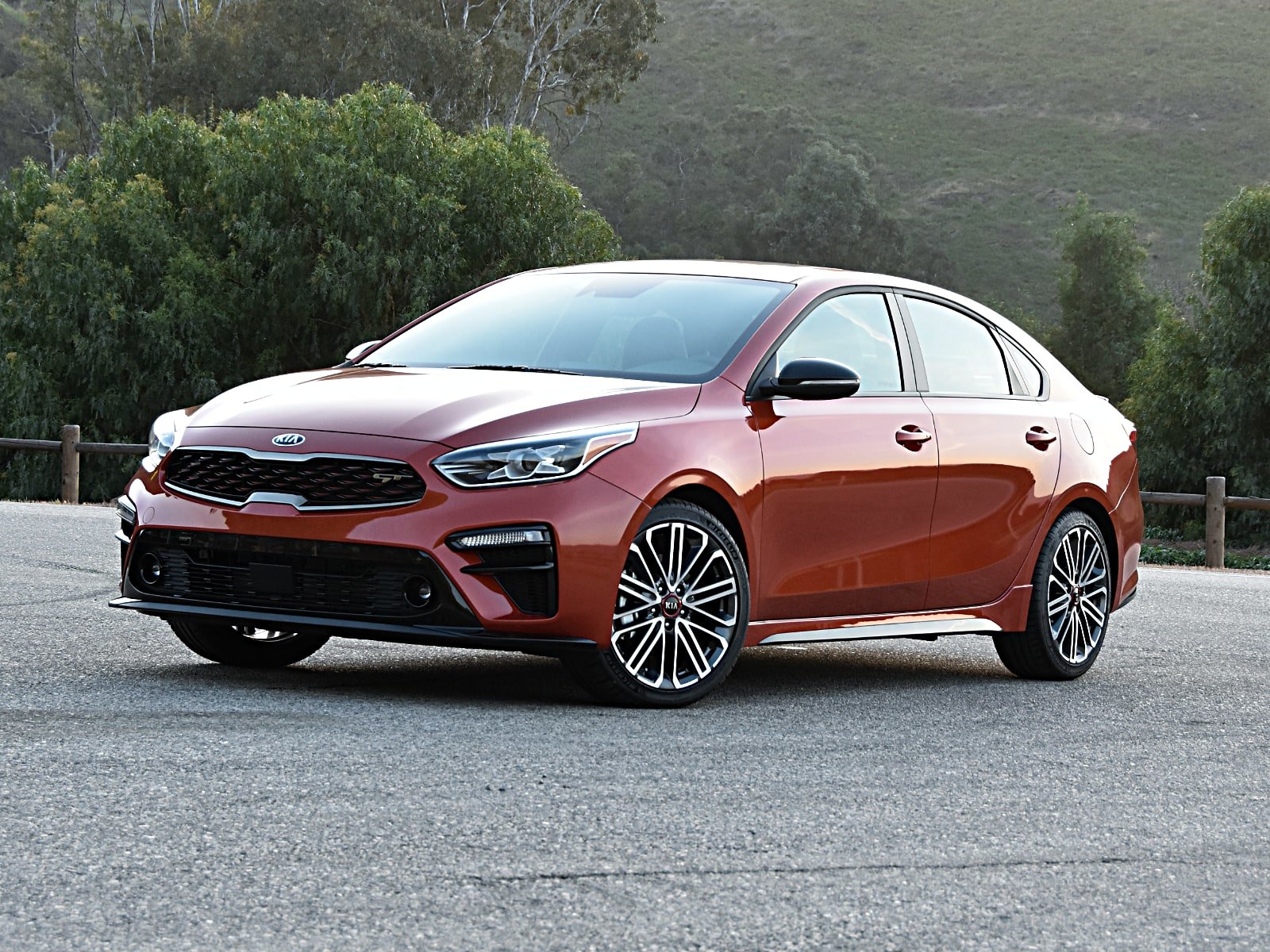
According to CarGurus experts, the overall rating for the 2020 Kia Forte was 9.0 out of 10, while the 2020 Hyundai Elantra scored 8.3 out of 10. Based on these ratings, the Kia Forte emerged as the better-rounded vehicle for those seeking a balance of performance, technology, and safety in a compact sedan. The Kia Forte’s superior cabin features, engaging driving experience, and robust GT trim made it a standout choice in this comparison.
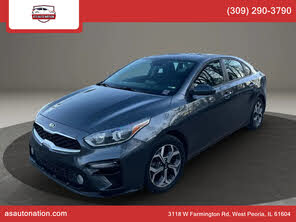
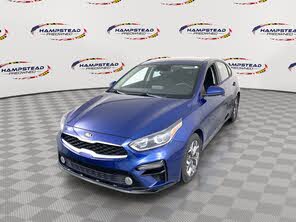
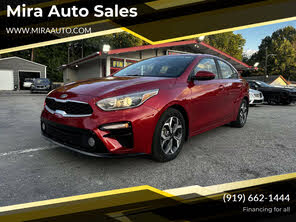
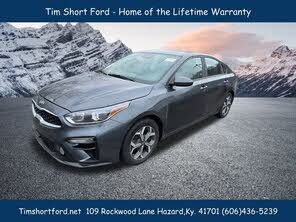
Choose the 2020 Kia Forte if:
- You appreciate a blend of sporty performance and refined looks.
- A spacious trunk and advanced convenience features like Smart Trunk technology are priorities.
- You seek comprehensive ADAS and safety features in an affordable package.



Choose the 2020 Hyundai Elantra if:
- You value a broad range of trim options and price points to suit different needs.
- Fuel efficiency and advanced infotainment options like Blue Link Connected Car services are top of your list.
- Front passenger comfort is crucial, with seat-height adjustability standard across all trims.





CarGurus highlights
According to CarGurus experts, the overall rating for the 2020 Kia Forte was 9.0 out of 10, while the 2020 Hyundai Elantra scored 8.3 out of 10. Based on these ratings, the Kia Forte emerged as the better-rounded vehicle for those seeking a balance of performance, technology, and safety in a compact sedan. The Kia Forte’s superior cabin features, engaging driving experience, and robust GT trim made it a standout choice in this comparison.
Choose the 2020 Kia Forte if:
Shop Now- You appreciate a blend of sporty performance and refined looks.
- A spacious trunk and advanced convenience features like Smart Trunk technology are priorities.
- You seek comprehensive ADAS and safety features in an affordable package.







Choose the 2020 Hyundai Elantra if:
Shop Now- You value a broad range of trim options and price points to suit different needs.
- Fuel efficiency and advanced infotainment options like Blue Link Connected Car services are top of your list.
- Front passenger comfort is crucial, with seat-height adjustability standard across all trims.






By: CarGurus + AI
At CarGurus, our team of experienced automotive writers remain at the heart of our content operation, conducting hands-on car tests and writing insightful guides that are backed by years of industry experience. To complement this, we are harnessing AI to make our content offering more diverse and more helpful to shoppers than ever. To achieve this, our AI systems are based exclusively on CarGurus content, ratings and data, so that what we produce is both unique to CarGurus, and uniquely helpful to car shoppers.