Lexus ES Eighth Generation (2026–Present)
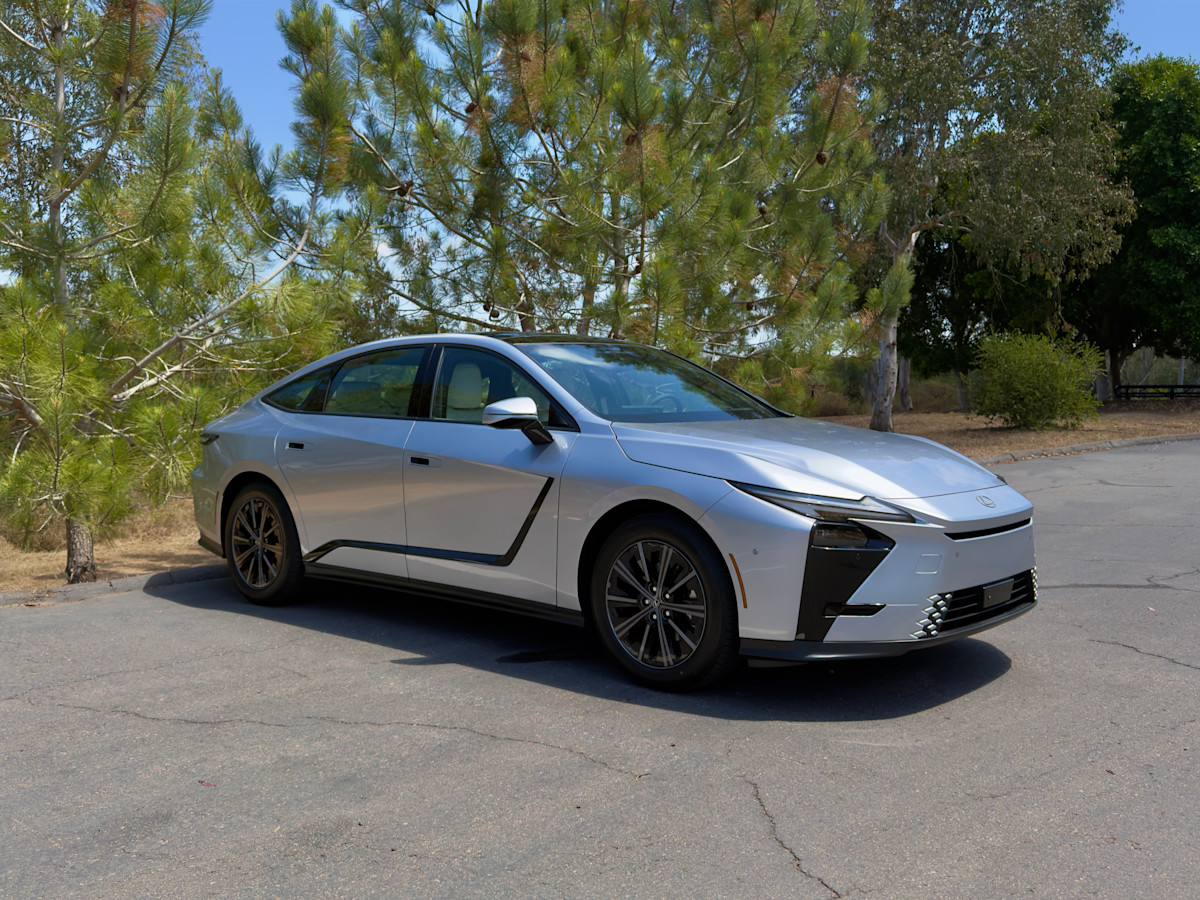
Introduced for the 2026, the eighth-generation Lexus ES is the most significant redesign in the model's history. Lexus drew heavily from its LF-ZC concept car for styling inspiration, but despite the coupe-like rear end and a sportier look, the ES stays true to its mission as a comfortable luxury car. For the first time, it is now strictly a gas-electric hybrid or a battery-electric sedan. It has become the brand’s largest sedan, too, since the LS was discontinued from the 2026 model year onwards. In fact, the ES has grown substantially and is more than six inches longer than its predecessor. The wheelbase has grown by more than three inches, while width and height have also increased. All of this results in noticeably improved rear-seat space, and easier ingress and egress.
At launch, the lineup consisted of the ES 350h, ES 350e, and ES 500e. The ES 350h uses Toyota's sixth-generation hybrid system, pairing a 2.5-liter naturally aspirated four-cylinder engine with two electric motors, a small lithium-ion battery, and a continuously variable transmission (CVT). Total output is 244 horsepower (hp) versus 215 hp in the previous ES 300h. Front-wheel drive (FWD) is standard, with optional all-wheel drive (AWD) adding an extra (third) electric motor for the rear wheels.
The pure-electric ES 350e uses a single electric motor with 220 hp for FWD models, while the ES 500e has an additional electric motor at the rear for AWD and a total of 338 hp. A 75-kWh battery is standard for both models. Estimated EPA range varies between 272 miles for the ES 500e with 21-inch wheels and 307 miles for the ES 350e with 19-inch wheels. A NACS port allows a charge rate of up to 150 kW, which is roughly half of what some luxury EVs offer.
The hybrid ES was available for 2026 in Premium and Premium+ trims, while the electric ES offered Premium and Luxury trims. Standard equipment for the ES 350h includes heated and ventilated eight-way power front seats, NuLuxe (artificial leather) upholstery, dual-zone automatic climate control, a 12.3-inch digital instrument cluster, a 14-inch touchscreen infotainment system, wireless Apple CarPlay and Android Auto, wireless phone charging, and ambient lighting.
Premium+ models add a Mark Levinson audio system, a surround-view camera, Lexus's Advanced Park functionality (an automatic parking system), additional convenience features, and upgraded interior materials. Luxury trims add semi-aniline leather upholstery, bamboo trim, enhanced ambient lighting, and more rear-seat amenities. All ES models have Lexus Safety System+ 4.0, which includes features such as adaptive cruise control, lane-keep assist, automatic emergency braking, and Lane Tracing Assist.
At the time of writing, the 2026 Lexus ES was only just starting to reach showrooms, so no used pricing data was available. New prices range from $51,095 for the ES 350h Premium to $60,195 for the ES 500e Luxury AWD.
Lexus ES Seventh Generation (2019–2025)
Based on the same platform as the Toyota Avalon and Camry from this era, the seventh-generation Lexus ES featured increased structural rigidity, a wider stance, and an overall increase in length of almost three inches. The wheelbase grew by two inches, resulting in additional rear-seat legroom, and Lexus also moved the seating position lower and further back. The redesign coincided with a broader effort to inject more personality into the lineup, as evidenced by a large "spindle" grille, sharp body creases, and a coupe-like roofline.
The ES 350 had a 3.5-liter naturally aspirated V6 engine producing 302 hp and 267 lb-ft of torque. Power was sent to the front wheels through an eight-speed automatic transmission. The ES 300h hybrid paired a 2.5-liter four-cylinder engine with an electric motor and a CVT for a combined 215 hp. For 2021, Lexus expanded the lineup with the ES 250, powered by a 2.5-liter naturally aspirated four-cylinder (shared with the Toyota Camry), producing 203 hp and 184 lb-ft. Unlike any previous ES, the ES 250 offered AWD that could send up to 50% of torque to the rear wheels.
The initial trim lineup consisted of Standard, Luxury, Ultra Luxury, F Sport, and Hybrid variants. The base ES came equipped with synthetic leather upholstery, heated power front seats, LED headlights, a power moonroof and standard safety features including adaptive cruise control, a lane-departure warning with steering assist, lane-keep assist, automatic emergency braking with pedestrian detection, traffic-sign recognition, and high-beam assist.
Luxury and Ultra Luxury models added upgraded features, while F Sport gave a sportier look and feel with blacked-out trim, a different texture for the grille, sport seats, adaptive dampers, and a sport-tuned suspension. Available options included a Mark Levinson stereo, a head-up display, a panoramic glass roof, surround-view cameras, a power rear sunshade, triple-beam LED headlights, a digital key, and a wide range of driver-assistance features.
The Insurance Institute for Highway Safety (IIHS) awarded the ES a Top Safety Pick+ for scoring the top "good" rating in all crash tests and high marks for front crash prevention. The National Highway Traffic Safety Administration (NHTSA) rated the ES at five stars, but with four stars for the frontal crash test.
Early models are fitted with the company's older infotainment system, which used a touchpad paired with an 8-inch or optional 12.3-inch display. While the system offered substantial functionality, we found it complex and awkward to use. Lexus responded with a major refresh for 2022 that significantly improved the interior experience. The screen moved closer to the driver, touch functionality became standard, the software was revised, and connectivity features were expanded. Wireless Apple CarPlay and Android Auto became available, while improved voice controls and cloud-based navigation enhanced usability. Lexus Safety System+ 2.5 also arrived with expanded collision-detection capabilities, improved lane-centering performance, cyclist detection, and enhanced adaptive cruise control functionality.
The refresh also brought subtle exterior styling changes including revised headlights and new wheel designs, along with additional trim options. For 2023, Lexus introduced the F Sport Design, which dropped the adaptive dampers and sportier suspension tune. There were no major changes for 2024 or 2025.
Average used prices on CarGurus ranged from $27,000 to $47,000 at the time of writing.
Lexus ES Sixth Generation (2013–2018)
While the Lexus ES continued to be based on a front-wheel drive Toyota platform, the sixth-generation model gained a look and feel more similar to the brand’s rear-wheel-drive models. Lexus’ "spindle" grille debuted, while the body was longer and lower. Rear passengers benefited the most, gaining nearly four additional inches of legroom, making the ES one of the roomiest vehicles in its segment. Cargo capacity also improved to 15 cubic feet, and the interior featured higher-quality materials, improved ergonomics, and a more contemporary design.
The ES 350 had the 3.5-liter V6 producing 268 hp and 248 lb-ft of torque. Power was routed through a six-speed automatic transmission driving the front wheels and the 2013 ES 300h was the first ES available as a hybrid. It paired a 2.5-liter inline-four with Toyota's Hybrid Synergy Drive system and a CVT for a combined 200 hp and estimated fuel economy of 40 mpg city and 39 mpg highway.
Standard equipment for the ES 350 included 17-inch alloy wheels, dual-zone automatic climate control, power-adjustable front seats, NuLuxe artificial leather upholstery, keyless entry and push-button start, a power moonroof, and a rear-view camera. The Premium, Luxury, and Ultra Luxury trims added more features, including leather upholstery, heated and ventilated front seats, upgraded wood trim, navigation, a Mark Levinson stereo, a panoramic glass roof, a power rear sunshade, and adaptive cruise control. Lexus also offered blind-spot monitors, rear cross-traffic alert, parking sensors, and a lane-departure warning system at a time when many competitors still reserved such features for their flagship models. The ES 300h largely mirrored the equipment available on the ES 350.
For 2014, Lexus made minor equipment revisions and expanded available options, while 2015 brought additional technology enhancements and package adjustments. The most significant update occurred for the 2016 model year, when Lexus redesigned the front fascia with a larger spindle grille, revised headlights, new taillights, and updated wheel designs. Suspension tuning was revised to improve ride quality and steering responses, while additional sound insulation made the cabin quieter.
Inside, Lexus upgraded materials and expanded smartphone connectivity. The Lexus Safety System+ package also became available, bundling adaptive cruise control, automatic emergency braking, a lane-departure warning, and high-beam assist. The IIHS rated the ES a Top Safety Pick or a Top Safety Pick+, depending on the model year, and it scored a five-star overall rating from the NHTSA. For 2017 and 2018, Lexus added more standard safety features and updated the infotainment software, which was controlled by a mouse-like controller on the console.
Average prices on CarGurus ranged from about $14,000 to $23,000 at the time of writing.

Lexus ES Fifth Generation (2007–2012)
The fifth-generation ES was a case of business as usual, updating the basic formula of the first four generations but adding the latest tech and a sleek new look inside and out. It debuted as the ES 350, featuring a new 3.5-liter V6 producing 272 hp and 254 lb-ft of torque (later slightly revised to 268 hp and 248 lb-ft in 2010 when Lexus switched to regular gasoline tuning). A six-speed automatic transmission replaced the five-speed. Performance was strong for the segment at the time, but the ES remained tuned primarily for smoothness rather than aggressive acceleration. Fuel economy was rated around 19 mpg city and 27 to 28 mpg highway, depending on the model year.
The base model featured dual-zone automatic climate control, a power moonroof, keyless entry with push-button start, and a premium audio system. Higher trims and packages added leather upholstery, heated and ventilated front seats, memory seating, a power rear sunshade, rain-sensing wipers, high-beam assist, and navigation with a rear-view camera. Lexus also offered advanced comfort-focused packages such as the Ultra Luxury Package, which added ventilated seating and additional sound insulation.
The IIHS gave the ES its top “good” score in moderate overlap front and side-impact testing. However, the ES was never tested under the later “small overlap” crash protocol during its production run, meaning its score doesn't reflect modern offset-crash standards that were introduced after this generation ended. NHTSA rated the ES between four and five stars overall.
For 2010, the model received a facelift that included revised front and rear styling, updated headlights and taillights, and subtle aerodynamic tweaks. Lexus also made mechanical adjustments aimed at improving fuel efficiency and reducing emissions, including tuning changes to allow the V6 to run on regular gas. Interior materials were slightly improved, and additional convenience features were made standard or more widely available across trims. There were no major changes for 2011 or 2012.
The National Highway Traffic Safety Administration (NHTSA) awarded the ES 350 strong overall scores, including four out of five stars in frontal crash testing and four stars in rollover resistance. Side-impact results were more mixed depending on test configuration, but overall protection was considered above average for the class at the time.
Prices on CarGurus ranged from about $8,000 to $12,000 at the time of writing.
Lexus ES Fourth Generation (2002–2006)
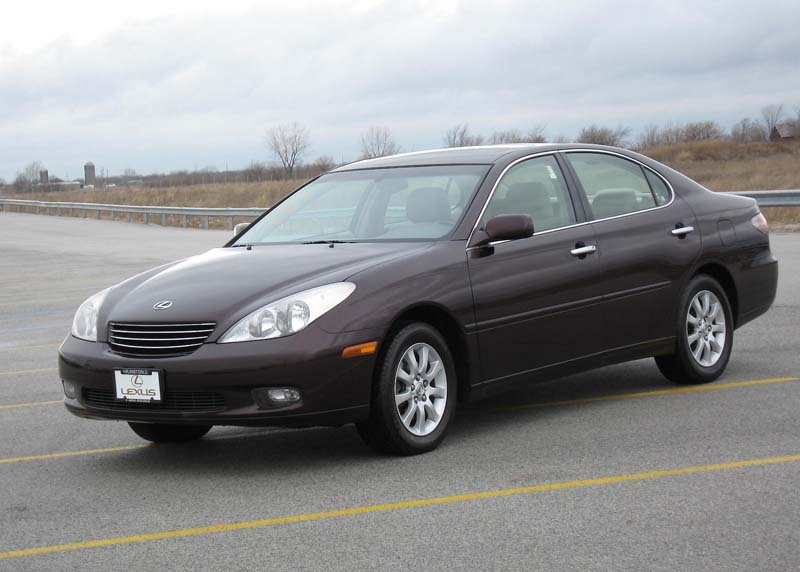
The fourth-generation ES continued in the same vein as its predecessors, sharing its basic structure with the Toyota Camry of the time but adding a luxury sheen. At launch, the ES 300 was powered by a 3.0-liter V6 with 210 hp and 220 lb-ft of torque. This engine was paired with a four-speed automatic transmission. In 2004, Lexus introduced a revised version of the engine with improved emissions performance, though output remained largely unchanged.
The ES 300 came standard with dual-zone automatic climate control, power front seats, keyless entry, a power moonroof, cruise control, and a CD player. Higher trims and packages added leather upholstery, heated front memory seats, a power rear sunshade, and a navigation system that used early-generation Lexus DVD-based mapping. A Mark Levinson premium audio system was also available.
For 2004, Lexus made a number of refinements to the ES lineup, including minor exterior styling updates, improved interior materials, and expanded availability of safety and convenience features. The most significant update came for the 2005 model year, when Lexus replaced the ES 300 with the ES 330. Total output from the new 3.3-liter V6 rose to 225 hp and 240 lb-ft. Lexus also made subtle suspension revisions to improve the ride quality and handling, although the ES remained tuned for comfort rather than sportiness.
Safety performance for the fourth-generation ES was strong for the time. The NHTSA awarded the ES four or five stars depending on the model year. The IIHS rated the ES “good” in moderate overlap frontal offset testing, which was the primary evaluation standard during this period.
At the time of writing, average prices on CarGurus were about $7,000.

Lexus ES Third Generation (1997–2001)
The 1997 ES was essentially an updated version of the second generation, but it had entirely new (although very similar) bodywork and more luxury features. A revised 3.0-liter V6 made 200 hp and 214 lb-ft and paired with a four-speed automatic. Fuel economy was rated around 19 mpg city and 27 mpg highway, depending on model year and equipment.
Power seats, dual-zone automatic climate control, keyless entry, a power moonroof, cruise control, and a CD player were standard. Upper trims included leather, heated front seats, wood trim, and a Nakamichi audio system. A navigation system was introduced late in the generation.
Over the course of its production, the third-generation ES received a mid-cycle refresh for the 2000 model year. This update included subtle exterior styling revisions, such as a redesigned grille, updated headlights and taillights, and minor aerodynamic improvements. Interior enhancements included improved materials and updated seat designs. Lexus also made small mechanical adjustments aimed at improving ride comfort and reducing vibration.
CarGurus pricing data suggests that used values vary widely depending on condition and mileage. The average was about $5,000 at the time of writing.
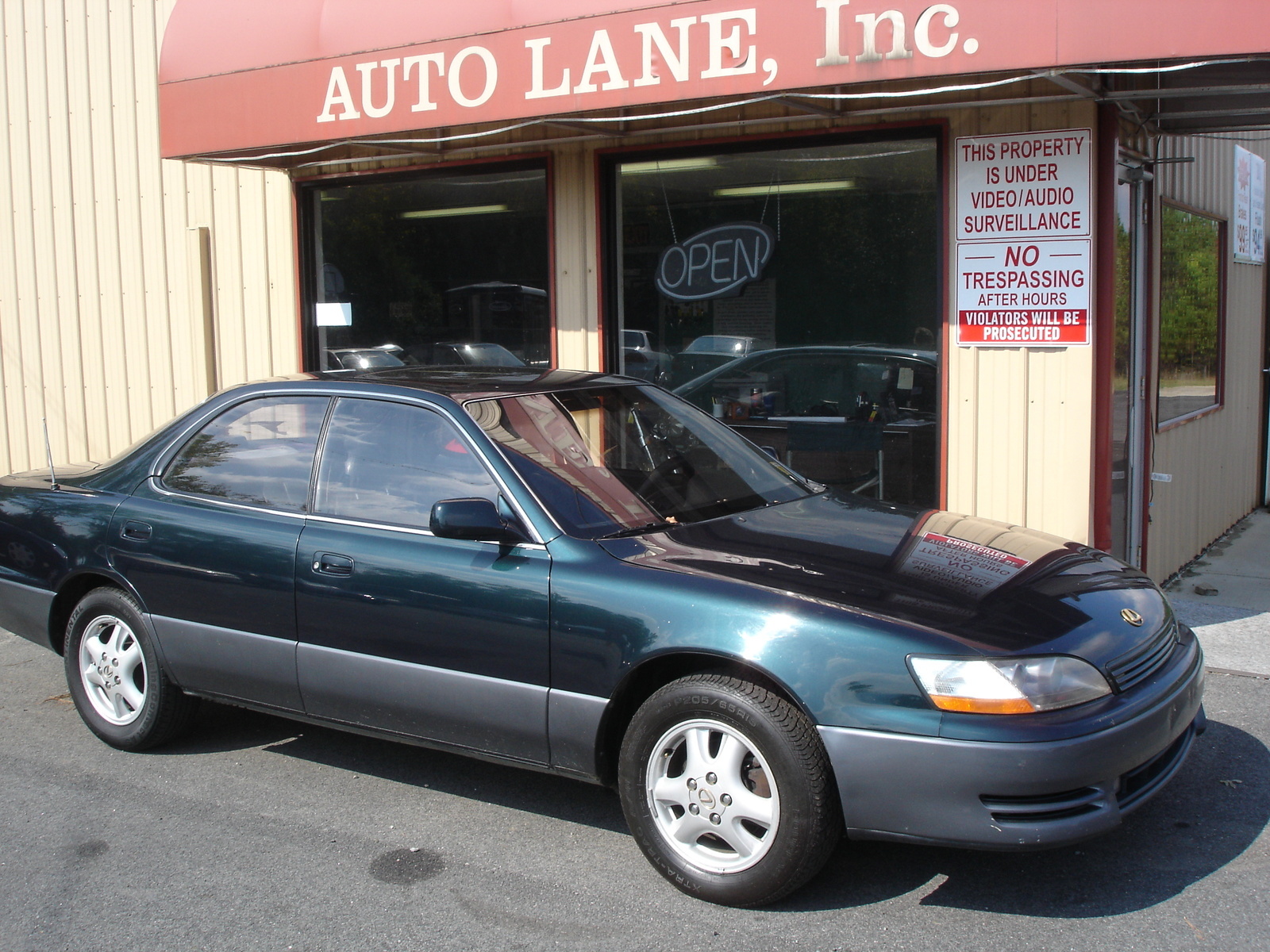
Lexus ES Second Generation (1992–1996)
The second-generation ES had a more rounded look than the 1980s style of the first, making it look more like a smaller Lexus LS than a glitzier Toyota Camry.
While the ES still shared much with the Camry, it had more of a luxury feel and the debut of the ES 300 nameplate signified a switch to a new 3.0-liter V6 with 185 hp and 190 lb-ft. The ES 300 delivered its power in a relaxed, linear fashion, and could reach 0–60 mph in roughly nine seconds, which was competitive for luxury sedans of the time.
Standard equipment included power windows, power door locks, cruise control, air conditioning, power seats, and a cassette player. Higher trims added leather, heated front seats, a power moonroof, upgraded wood interior trim, and a Nakamichi stereo.
For 1994, Lexus introduced minor styling revisions and equipment adjustments, along with improvements to interior materials and feature availability. There were no major changes for 1995 or 1996.
There were no listings on CarGurus at the time of writing, but the ES isn’t really a car for collectors so buyers should expect a four-figure price tag.
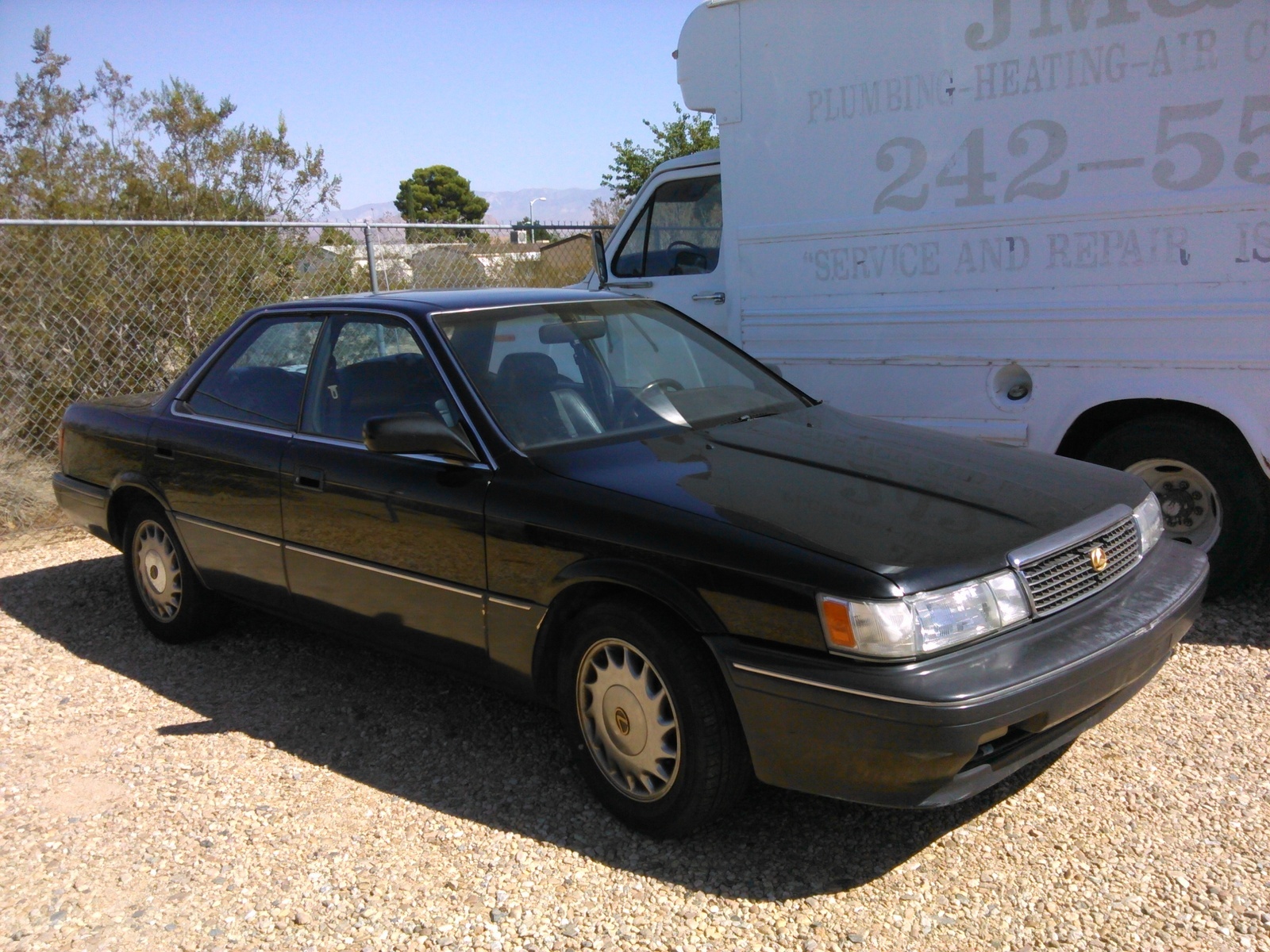
Lexus ES First Generation (1990–1991)
The first-generation Lexus ES debuted for the 1990 model year as part of the original launch of the Lexus brand in the United States. While the LS 400 served as the Lexus flagship, the ES 250 functioned as the brand’s entry-level sedan for buyers who wanted Toyota reliability with a more premium experience. The ES 250 was closely tied to the Toyota Camry platform of its time and shared its basic body structure with the Japanese-market Toyota Vista. This connection made the ES 250 feel more like an upgraded mainstream sedan, but it still introduced many of the core values that would define the ES line for decades: comfort, quietness, and durability.
Power came from a 2.5-liter V6 with 156 hp and 160 lb-ft, paired with a four-speed automatic transmission driving the front wheels. Performance was modest even by early 1990s standards, but the ES 250 was never intended to be a performance vehicle. Instead, it focused on smooth, predictable power delivery and low vibration, characteristics that helped distinguish it from more utilitarian sedans. Refinement was a key priority, and Lexus worked to ensure the ES 250 delivered a quieter and more isolated driving experience than most competitors in the entry-luxury segment.
The ES 250 was offered in one trim and included power windows, power door locks, cruise control, air conditioning, and power front seats. Buyers could add leather, a power moonroof, wood trim, an upgraded stereo, and keyless entry. The interior design emphasized a calm, understated aesthetic, with a focus on fit and finish that helped establish the company’s reputation for craftsmanship. Because this generation lasted only two model years, there were no significant mid-cycle updates or redesigns.
The first ES is in short supply on the used market. No CarGurus pricing data was available at the time of writing, but it isn’t a collectible car so shoppers shouldn’t expect to pay a premium price if they can find one.
Related Topics