What is a Good Price for a Used Ford F-150 in Pittsburgh?
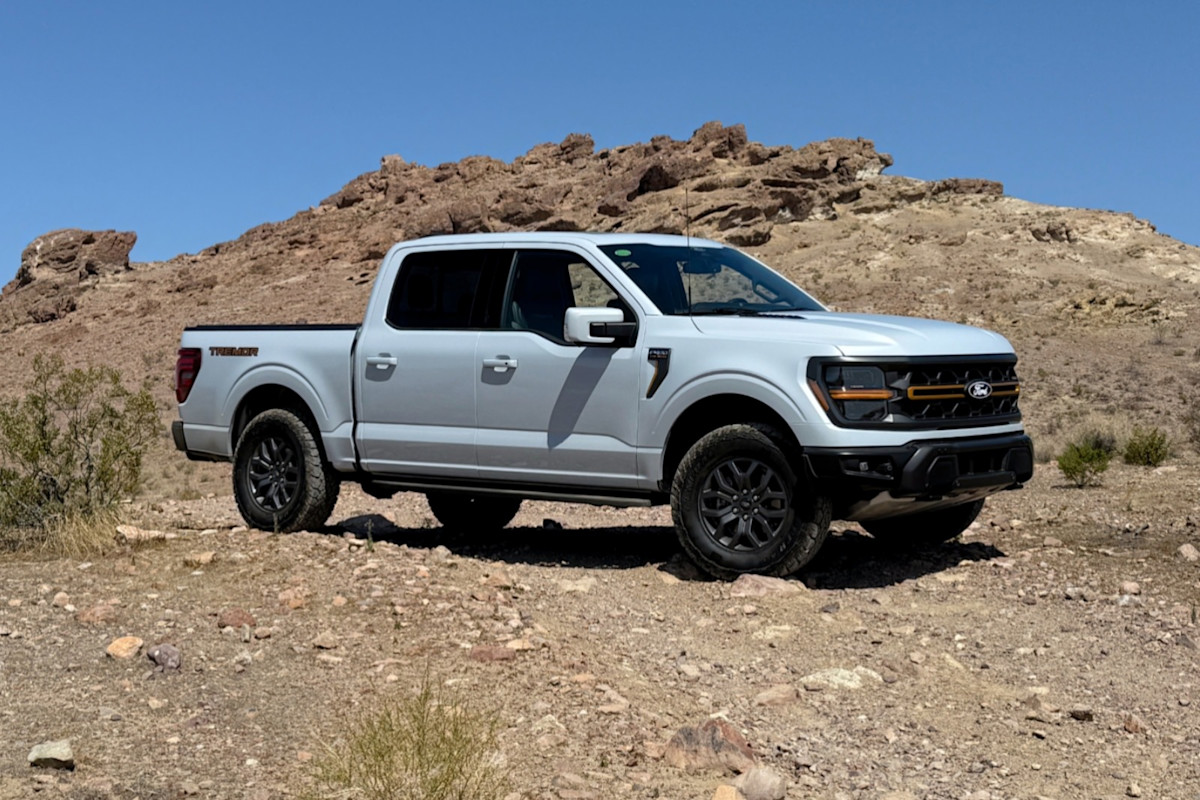
Used F-150s in Pittsburgh average $36,526 — a 5.6% premium over the national average of $34,588. That's a modest markup, but Pittsburgh buyers get something meaningful in return: trucks with significantly lower mileage and higher accident-free rates than the national market.
Price by Model Year in Pittsburgh
The F-150 spans several generations on the used market, but inventory concentrates on the 14th generation (2021–present) with its hybrid and expanded tech, and the 13th generation (2015–2020) which introduced aluminum construction and the broadest powertrain lineup in the truck's history. The 12th generation (2009–2014) offers budget-friendly entry with the first EcoBoost option.
| Model Year |
Pittsburgh Avg. Price |
National Avg. Price |
Pittsburgh Avg. Mileage |
Inventory Share |
| 2025 |
$61,479 |
$55,780 |
12,873 miles |
204% |
| 2024 |
$53,951 |
$49,149 |
28,990 miles |
44% |
| 2023 |
$44,987 |
$44,197 |
30,624 miles |
45% |
| 2022 |
$39,531 |
$39,414 |
62,297 miles |
41% |
| 2021 |
$36,756 |
$34,059 |
69,860 miles |
245% |
| 2020 |
$31,090 |
$29,566 |
78,145 miles |
254% |
| 2019 |
$29,307 |
$26,839 |
91,501 miles |
265% |
| 2018 |
$24,161 |
$24,324 |
95,411 miles |
237% |
| 2017 |
$23,012 |
$22,060 |
110,925 miles |
194% |
| 2016 |
$20,411 |
$19,372 |
113,117 miles |
127% |
| 2015 |
$19,697 |
$18,089 |
131,684 miles |
118% |
| 2014 |
$15,283 |
$15,354 |
126,276 miles |
102% |
14th Generation (2021–2025): $36,756–$61,479
The current-generation F-150 commands the highest prices but offers the most capability. The 2023 model year hits closest to national pricing at just 1.8% above average ($44,987 vs. $44,197), with strong local mileage at 30,624 miles. The 2022 is nearly price-neutral at $39,531. For buyers who want the latest tech — Sync 4, Pro Trailer Backup Assist, and available hybrid powertrain — these are the years to target.
13th Generation (2015–2020): $19,697–$31,090
The sweet spot for most Pittsburgh buyers. The 2018 model year is the standout value — priced at $24,161, actually 0.7% below the national average, with Pittsburgh mileage of 95,411 versus the national 113,995. That's an 18,584-mile advantage. The 2018–2019 models also benefit from improved rust protection, which matters enormously in Pittsburgh's salt-heavy winters. The aluminum body introduced in 2015 resists corrosion far better than the steel panels of earlier generations.
12th Generation (2009–2014): $15,283
The 2014 represents the best budget entry point, priced at $15,283 — essentially matching the national average and known for good reliability across the board. These pre-aluminum trucks require more rust vigilance in Pittsburgh, but the 2014's steel body was well-sealed and these trucks hold up if maintained. Earlier 12th-gen years are available but less common in local inventory.
Understanding the Pittsburgh Price Premium
The 5.6% premium over national pricing reflects genuine market dynamics. Pittsburgh's F-150 inventory averages 68,844 miles versus 85,469 nationally — you're paying more but getting trucks with significantly less wear. In a market where potholed roads and steep grades take a toll, lower mileage translates directly to longer remaining service life.
Pittsburgh winters are hard on trucks. Road salt, freeze-thaw cycles, and wet conditions accelerate rust on older steel-bodied F-150s. The 13th-generation aluminum body (2015+) largely eliminates this concern, making those models especially desirable locally — and that demand supports higher pricing.
Local inventory is strong at 511 trucks, with particularly deep selection in the 2019–2021 model years, each with over 1,200 listings. This volume gives buyers leverage to negotiate and to walk away from any deal that doesn't feel right.
Good and Great Deals in Pittsburgh
36% of Pittsburgh F-150 listings qualify as Good or Great Deals — matching the national average exactly. While Pittsburgh doesn't offer outsized deal advantages, the combination of lower mileage and higher accident-free rates means the trucks behind those deal ratings tend to be in better condition than comparable national listings.
| Deal Rating |
Pittsburgh Percentage |
National Percentage |
| Great Deals |
9% |
10% |
| Good Deals |
27% |
26% |
The 2018 model year stands out as the strongest local value — it's the only year where Pittsburgh pricing dips below the national average, at $24,161 versus $24,324. The 2022 and 2023 model years also trade close to national pricing while delivering the lower-mileage advantage that defines this market.
What is the Most Reliable Used Ford F-150 in Pittsburgh?
The F-150's reliability varies meaningfully by generation and engine choice. Ford's truck has always been built tough, but certain model years and powertrains have well-documented issues that buyers should understand — especially in Pittsburgh, where winter conditions and hilly terrain put mechanical components under extra stress.
Most Reliable by Era
13th Generation (2015–2020) — The Reliability Sweet Spot:
The aluminum-bodied 13th generation is the most reliable modern F-150 era for Pittsburgh buyers. The 2018 and 2019 model years stand out with improved rust protection and fewer reported issues than earlier years in this generation. Pittsburgh listings for 2018 models average 95,411 miles — well below the national average of 113,995 — suggesting these trucks are holding up well locally. Avoid the 2016, which suffered from electrical problems affecting the infotainment system, safety sensors, and power steering, and use caution with the 2017's 3.5L EcoBoost, which was prone to coolant leaks and overheating.
14th Generation (2021–Present) — Capable but Not Trouble-Free:
The current generation offers the most features but has documented issues including transmission slipping and engine stalling. The 2021–2023 models were subject to a rear axle bolt recall, and some 2024 models had loose windshield recalls. Pittsburgh's 14th-gen inventory averages 69,860 miles for 2021 models, well under the national 86,712. These are capable trucks, but a thorough pre-purchase inspection is essential.
12th Generation (2009–2014) — Mixed but Ends Strong:
The 2014 model year is recognized for good reliability across the board, making it the clear pick from this era. The 2011 and 2012 models with the EcoBoost V6 are also noted for good reliability. Steer clear of the 2013, which had well-documented six-speed automatic transmission issues including slipping, unexpected downshifts, and rough shifting. Pittsburgh's 2014 inventory averages 126,276 miles at $15,283 — solid value for a proven year.
11th Generation (2004–2008) — Approach with Caution:
The 2005 and 2006 model years are known for serious Triton V8 engine problems, including blown or stuck spark plugs, misfires, and exhaust system failures. In Pittsburgh's climate, these older steel-bodied trucks will also show significant rust. Only consider these with a thorough mechanical and body inspection.
Key Improvements by Model Year — 13th Generation
Key Improvements by Model Year — 13th Generation (2015–2020)
| Model Year |
Key Improvements |
| 2015 |
First aluminum body construction; lighter weight, improved fuel economy, better corrosion resistance |
| 2017 |
Raptor returns (without SVT designation); 10-speed automatic transmission introduced |
| 2018 |
Standard rear-view camera; advanced driver assistance features; improved body panel rust protection; better overall reliability |
| 2019 |
Continued reliability improvements; Apple CarPlay and Android Auto availability across trims |
F-150-Specific Reliability Considerations
Transmission durability:
The six-speed automatic in 12th-gen models (particularly 2013) and the 10-speed automatic in 14th-gen models both have documented issues. In Pittsburgh, where steep grades in neighborhoods like Mount Washington and Polish Hill put extra strain on transmissions, these issues can be amplified. Test any used F-150 on a hill climb before buying.
EcoBoost engine health:
The 3.5L EcoBoost twin-turbo V6 is the F-150's most popular engine, but the 2017 version is prone to coolant leaks and overheating. Later EcoBoost models (2018+) resolved most of these issues. Check for coolant residue around the turbo piping and monitor the temperature gauge during a test drive.
Rust and corrosion:
Pittsburgh's PennDOT uses aggressive road salt treatment. Pre-2015 steel-bodied F-150s are vulnerable to frame and body rust. The 2015+ aluminum body panels are essentially rust-proof, but the steel frame underneath still needs inspection. Look under the truck for flaking, bubbling, or structural rust — especially on the frame rails and cab corners of pre-aluminum models.
Electrical systems (2016 specifically):
The 2016 F-150 has widespread electrical complaints affecting the power steering, rearview camera, and safety sensors. These aren't just inconveniences — a sudden loss of power steering assist on a steep Pittsburgh street is a safety concern. Avoid the 2016 model year.
What to Check When Buying
- Undercarriage and frame inspection: Non-negotiable in Pittsburgh. Look for rust on frame rails, cross members, and cab mounts. Pre-2015 models need especially close scrutiny. Consider an independent rust inspection at a local shop familiar with western PA road conditions.
- Transmission behavior on grades: Test drive on a steep hill — Pittsburgh has plenty. Check for slipping, harsh shifts, or hesitation under load. The 10-speed auto in 2021+ models should shift smoothly and predictably.
- EcoBoost turbo system: Look for oil residue around turbo connections, listen for unusual whining or whistling at idle, and check for white exhaust smoke that could indicate a coolant leak into the combustion chamber.
- Service records: Especially important for trucks used in Pittsburgh winters. Regular oil changes and transmission fluid services extend the life of any F-150 — but neglected maintenance accelerates wear in harsh conditions.
- Recall completion: Verify that all open recalls have been addressed, particularly the 2021–2023 rear axle bolt recall and any 2024 windshield recalls. Ford dealers can run a VIN check at no cost.
Best and Worst Ford F-150 Years in Pittsburgh
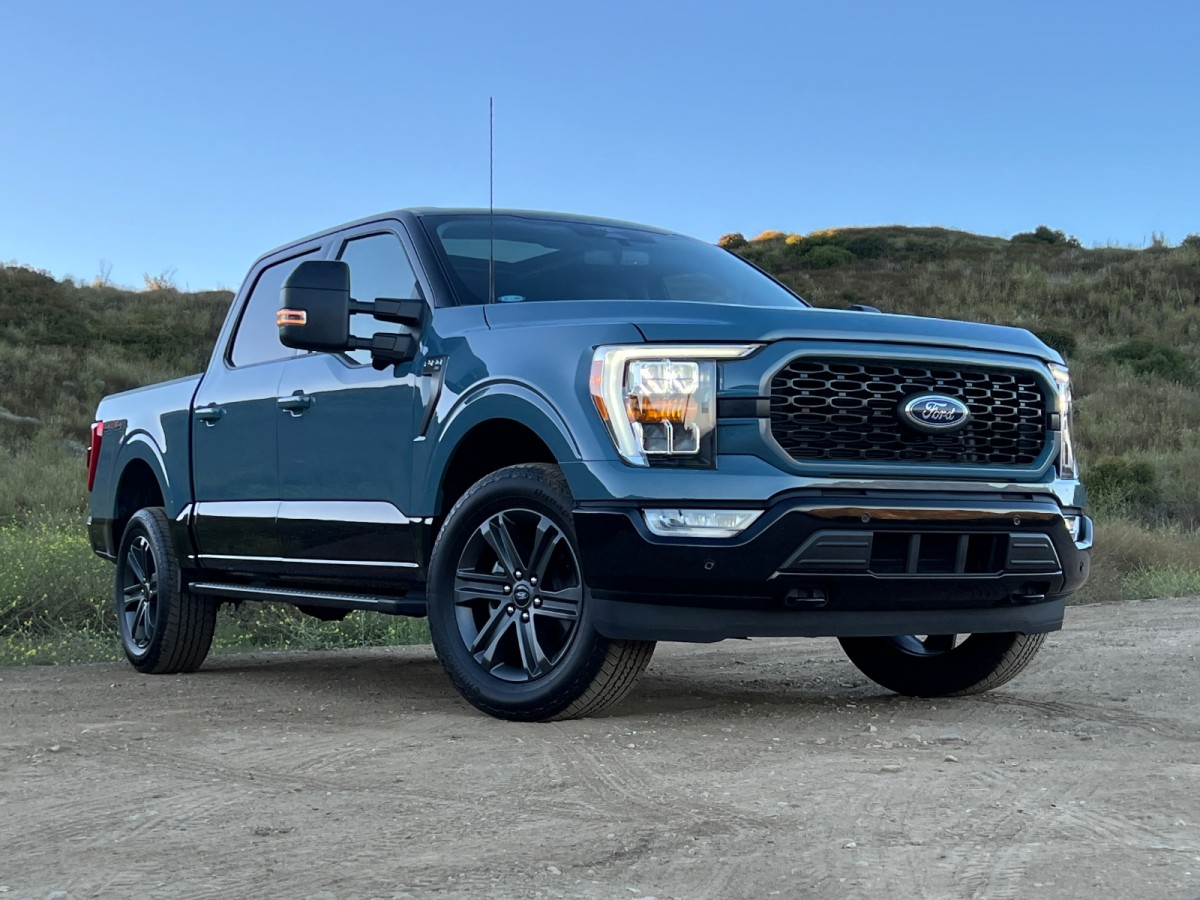
Choosing the right model year matters more with the F-150 than with most trucks — the range of engines, transmissions, and body construction across generations means some years are significantly better buys than others. For more information on the F-150 by generation and model year, check out our Ford F-150 Buying Guide.
Best F-150 Years for Pittsburgh
| Category |
Best Years |
Local Avg. Price |
Why They're Best |
| Best Overall |
2022–2023 |
$39,531–$44,987 |
Near-national pricing, low local mileage, latest tech and hybrid option |
| Best Value |
2018 |
$24,161 |
Only year priced below national average, improved rust protection, proven reliable |
| Best for Modern Features |
2021 |
$36,756 |
First year of 14th-gen redesign, Sync 4, hybrid available, strong local inventory |
| Best Budget Option |
2014 |
$15,283 |
Good reliability across the board, matches national pricing, best of 12th-gen |
Best Overall: 2022–2023
These model years deliver the best combination of modern capability and competitive local pricing. The 2022 trades at just 0.3% above national average ($39,531 vs. $39,414) with Pittsburgh mileage of 62,297 — well under the national 69,801. The 2023 at $44,987 offers even lower mileage at 30,624 miles. Both include Ford's Sync 4 infotainment, available hybrid powertrain, and the full suite of driver assistance features.
Best Value: 2018
The 2018 F-150 is the only model year where Pittsburgh pricing dips below the national average — $24,161 versus $24,324, a 0.7% discount. This year brought improved rust protection on body panels and a standard rear-view camera, plus better overall reliability than the 2015–2017 models. Pittsburgh mileage averages 95,411 versus 113,995 nationally — an 18,584-mile advantage that compounds the value.
Best for Modern Features: 2021
The first year of the 14th-generation redesign introduced the available PowerBoost hybrid, Ford's Sync 4 interface, and features like Pro Trailer Backup Assist. At $36,756 in Pittsburgh with 69,860 average miles, it's a strong entry point into the current generation. Local inventory is deep at 245% of the market share, giving buyers plenty of negotiating leverage. Note the rear axle bolt recall — verify it's been completed.
Best Budget Option: 2014
The final year of the 12th generation is widely recognized as the most reliable of its era. At $15,283 in Pittsburgh — matching the national $15,354 — it's the most affordable reliable F-150 worth buying. The EcoBoost V6 option is well-proven by this year. The steel body does require rust inspection in Pittsburgh, but a clean 2014 represents excellent value for buyers under $16,000.
Worst F-150 Years for Pittsburgh
| Years |
Local Avg. Price |
Avg. Mileage |
Concerns |
| 2004–2006 |
N/A (limited inventory) |
N/A |
Triton V8 engine problems: blown/stuck spark plugs, misfires, exhaust and fuel system failures |
| 2016 |
$20,411 |
113,117 miles |
Widespread electrical issues: infotainment failures, safety sensor malfunctions, sudden power steering loss |
| 2013 |
N/A (limited inventory) |
N/A |
Six-speed automatic transmission slipping, rough shifting, unexpected downshifts under load |
Avoid: 2004–2006
These 11th-generation F-150s are the most problematic in the nameplate's history. The Triton V8 engines suffered from blown and stuck spark plugs, misfires, and exhaust system failures. The 2004 and 2005 model years are particularly bad for spark plug and coil pack failures, while the 2006 adds fuel and brake system problems. In Pittsburgh, these trucks are now 20+ years old with steel bodies that have endured two decades of road salt — the combination of mechanical risk and corrosion makes them poor values at any price.
Avoid: 2016
At $20,411 in Pittsburgh with 113,117 average miles, the 2016 looks like a reasonable deal — but it's not. Electrical gremlins plague this model year, causing infotainment blackouts, safety sensor failures, and sudden loss of electrically assisted power steering. That last issue is especially dangerous on Pittsburgh's steep residential streets. The 2017 (if avoiding the 3.5L EcoBoost) or the 2018 are significantly better choices for slightly more money.
Approach Carefully: 2013
The 2013 F-150's six-speed automatic transmission is prone to slipping, rough shifting, and unexpected downshifts that cause power loss under load. Pittsburgh's hilly terrain amplifies transmission stress. If you find a 2013 at an attractive price, get a thorough transmission inspection — but the 2014, with its across-the-board reliability improvements, is the smarter buy.
Ford F-150 Pros and Cons
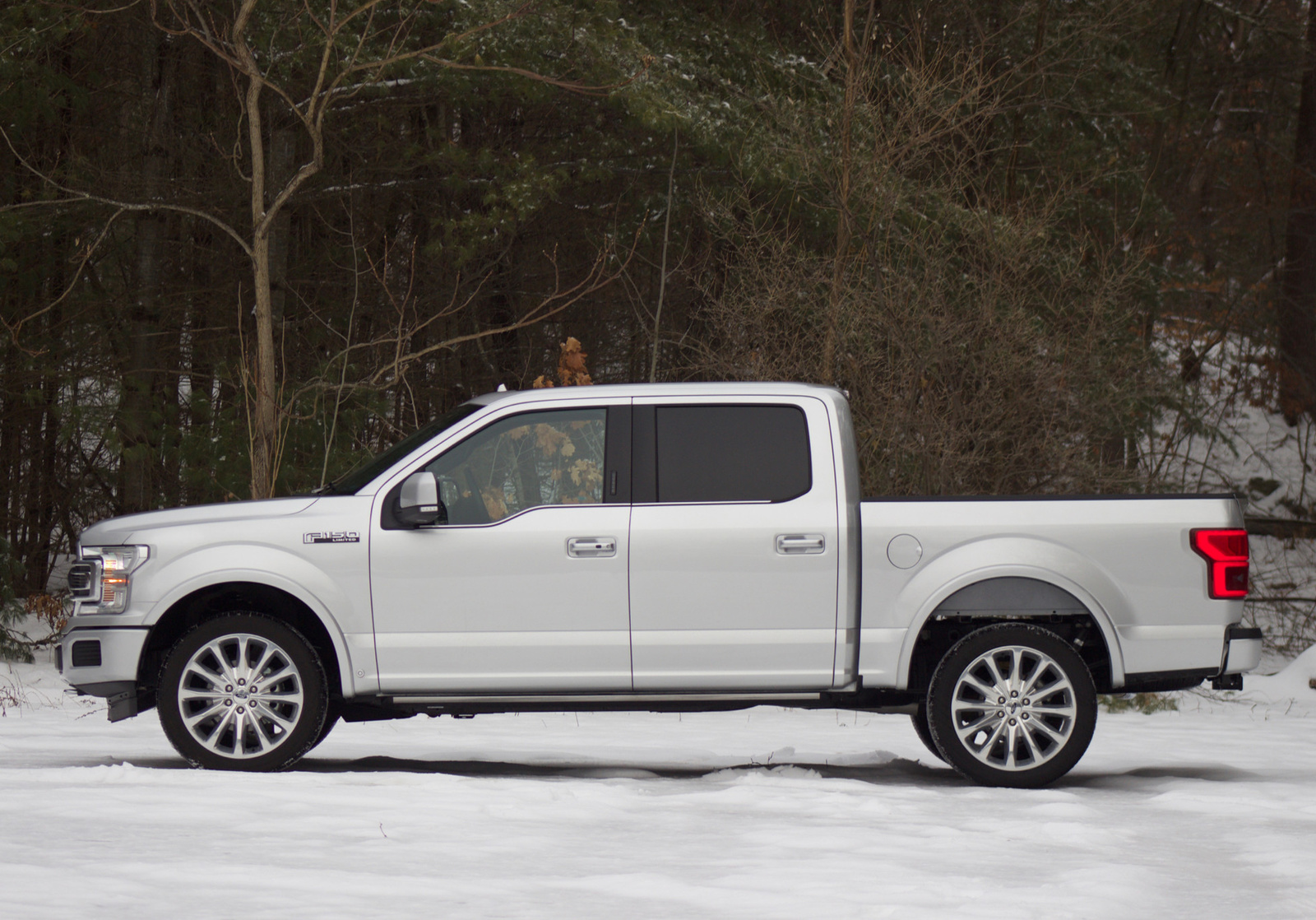
Pittsburgh rewards the F-150's core strengths. The city's variable terrain, harsh winters, and blue-collar work culture demand a truck that's capable, durable, and practical — and the F-150 delivers on all three. But every truck has tradeoffs, and understanding them in the local context helps you make a smarter purchase.
Pros
Aluminum Body Resists Pittsburgh's Biggest Enemy: Rust
Road salt is a fact of life in western Pennsylvania, and it destroys steel truck bodies over time. The 13th-generation (2015+) F-150's aluminum body panels are essentially immune to surface corrosion. For Pittsburgh buyers, this alone is a compelling reason to target 2015 or newer models — and it's a major advantage over competitors still using steel construction.
Exceptional Local Inventory and Selection
With 511 trucks in Pittsburgh inventory and deep stock across the most desirable model years — the 2019–2021 years each carry over 1,200 listings — buyers have real choice. Multiple cab configurations, bed lengths, trim levels, and powertrains are represented. This volume means you can afford to be selective and walk away from any deal that doesn't meet your standards.
Lower Mileage Than National Market
Pittsburgh F-150 listings average 68,844 miles versus 85,469 nationally — a 19.5% advantage. Lower mileage means more remaining service life, less wear on drivetrain components, and generally better resale value down the road. This is a genuine differentiator for the local market.
Strong Accident-Free Rates
86% of Pittsburgh F-150 listings have accident-free histories, outpacing the 83% national rate by 3 percentage points. Combined with lower mileage, this paints a picture of a local market where trucks are generally well-maintained.
Massive Powertrain Variety
The F-150 offers more engine choices than any competitor — from the fuel-efficient 2.7L EcoBoost to the powerful 3.5L EcoBoost, the naturally aspirated Coyote V8, the Power Stroke diesel, and the PowerBoost hybrid. Pittsburgh buyers who tow boats to Pymatuning or haul materials for home projects can match the powertrain to their specific needs.
Tons of Available Configurations
Regular cab, extended cab, crew cab. Short bed, standard bed. XL work truck through King Ranch luxury. The F-150 can be configured as a basic jobsite tool or a leather-trimmed daily driver. Few competitors offer this range within a single model line.
Cons
Pittsburgh Premium Pricing
At $36,526 versus the national average of $34,588, Pittsburgh F-150 buyers pay a 5.6% premium. That's roughly $1,938 more than the national average, and it's consistent across most model years. The lower-mileage inventory helps justify the premium, but budget-conscious buyers should factor this in.
Certain Model Years Have Serious Issues
Not every F-150 is a good buy. The 2004–2006 Triton V8 engine problems, the 2016's electrical failures, and the 2013's transmission issues represent real money risks. Unlike some competitors with fewer known problem years, the F-150 requires model-year awareness when shopping.
Pre-2015 Models Vulnerable to Pittsburgh Winters
The steel-bodied 12th generation and older F-150s face accelerated corrosion in Pittsburgh's salt-heavy climate. Frame rust can compromise structural integrity and lead to expensive repairs or early retirement. Buyers considering pre-2015 models need a thorough undercarriage inspection and should budget for rust mitigation.
14th-Generation Growing Pains
The current generation (2021+) has documented transmission, engine stalling, and four-wheel drive engagement issues, plus multiple recalls. While the 2022–2023 models are improving, early adopters have dealt with more trips to the dealer than the F-150's reputation would suggest.
Fuel Economy Lags Smaller Trucks
Even the most efficient EcoBoost F-150 can't match the fuel economy of midsize trucks like the Ford Ranger or Toyota Tacoma. For Pittsburgh commuters who don't need full-size capability, the running costs add up — especially at current gas prices.
Who Should Buy an F-150 in Pittsburgh?
Ideal buyers based on data patterns:
- Homeowners who need towing and hauling capability for projects, boats, or trailers in western PA's hilly terrain
- Buyers with $24,000–$45,000 who want a 2018–2023 model with lower-than-average mileage and clean history
- Tradespeople and contractors who need a configurable work truck with strong local dealer and parts support
- Families who want a crew cab daily driver with modern safety features and room for five
- Budget buyers under $16,000 willing to target the reliable 2014 model year with careful rust inspection
Consider alternatives if:
- You primarily commute in the city and rarely need truck capability — a midsize truck or SUV will save on fuel and parking
- You're set on spending under $15,000 — the available F-150 inventory at that price point carries higher mileage and rust risk in Pittsburgh's climate
- You want a diesel truck for heavy towing — the F-250/F-350 Super Duty line or Ram 2500 may better serve your needs
- You prioritize fuel economy above all — the F-150 hybrid helps but still can't match smaller trucks for pure efficiency
Final Verdict for Pittsburgh Buyers
The Ford F-150 is the right truck for Pittsburgh — and the local market rewards patient buyers with lower-mileage, cleaner-history inventory than you'll find nationally. The 2018 model year at $24,161 is the standout value play: priced below the national average, built with improved rust protection, and averaging 18,584 fewer miles than the national market. For buyers who want the latest tech, the 2022–2023 models trade near national pricing with significantly lower mileage. Just steer clear of the 2004–2006 and 2016 model years, get a rust inspection on any pre-2015 model, and you'll find a truck that handles everything Pittsburgh can throw at it — from Squirrel Hill's steep grades to snowy I-79 commutes.