2027 BMW 7 Series Reviews, Pricing & Specs


Pros & cons
What we like
Great handling
Comfortable
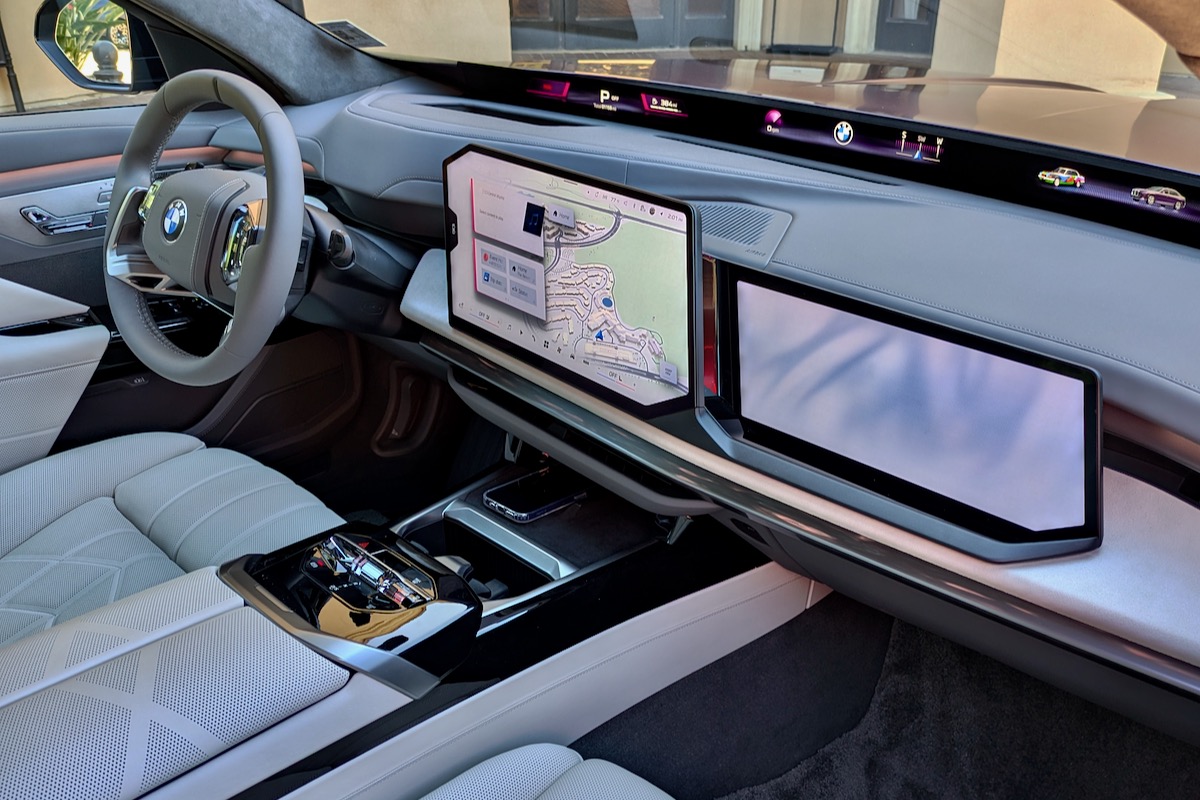
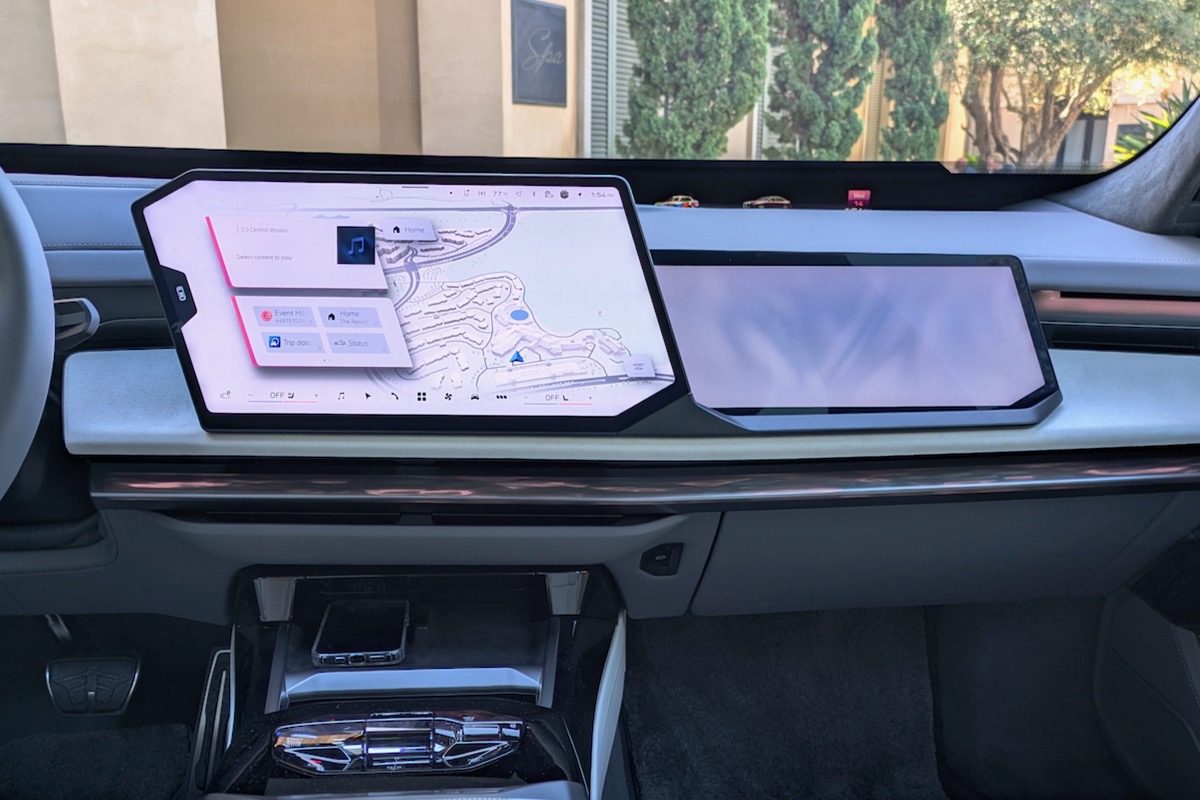
Panoramic display works well
What to consider
Potentially polarizing design
Feature overload
Only one powertrain for now
The CarGurus verdict
BMW’s flagship sedan receives a major refresh for 2027.
The 7 Series is BMW’s answer to the Mercedes-Benz S-Class, offering lavish amounts of space and luxurious features, while maintaining BMW's trademark sharp handling. The current-generation 7 Series was introduced for the 2023 model year and gets a substantial update for 2027. The exterior styling has been massaged and the interior rearranged to accommodate BMW’s new Panoramic Vision dashboard display. The all-electric i7 is updated as well, but we’ll cover that in a separate review.
Verdict: The updated 7 Series continues to impress with a lavish interior and impressive handling for the segment, but its complexity and still-polarizing design make it hard to love.
out of 10 expert review
Look & feel
A mid-cycle refresh can often be nothing more than a new grille and some different wheel designs. The 2027 BMW 7 Series received a more thorough aesthetic overhaul, fixing a lot of issues with the outgoing car’s styling, in our opinion. However, it still probably won’t appeal to everyone.
The front fascia has been cleaned up, with less black trim around the grille and fussy lines replaced with confident, sharp edges. The grille remains comically oversized, but it’s better defined, as are the driving lights perched at the tops of the front fenders. Grille illumination is optional, along with crystal elements for the headlights. The deep groove in the hood blends with the grille and makes the front end appear lower, even though the 7 Series is still quite tall for a sedan.
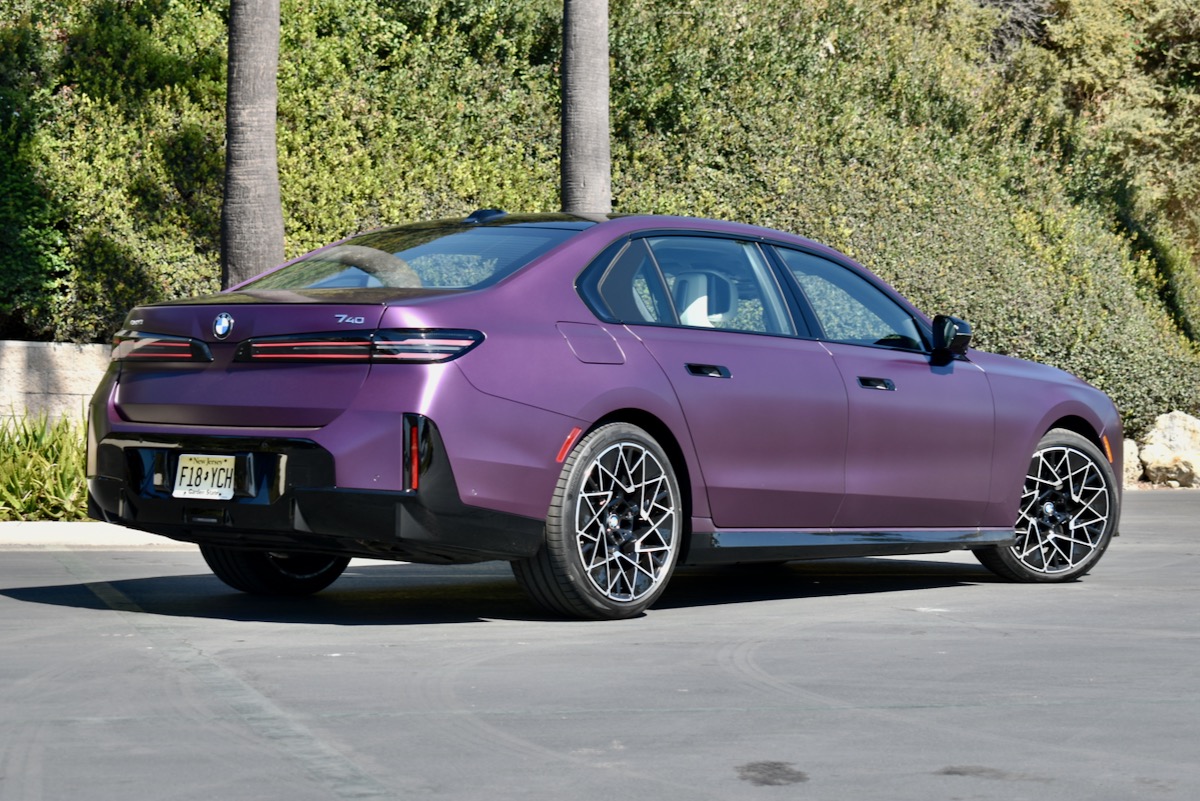
Because of that height and the 7 Series’ considerable length, the wheels still look too small even though this car comes standard with 20-inch alloys. The optional M Sport Package gives these wheels what BMW calls an aerodynamic design and adds sportier exterior styling elements. The M Sport Package Professional includes 21-inch wheels (bigger wheels can also be added separately) and M-specific interior elements.
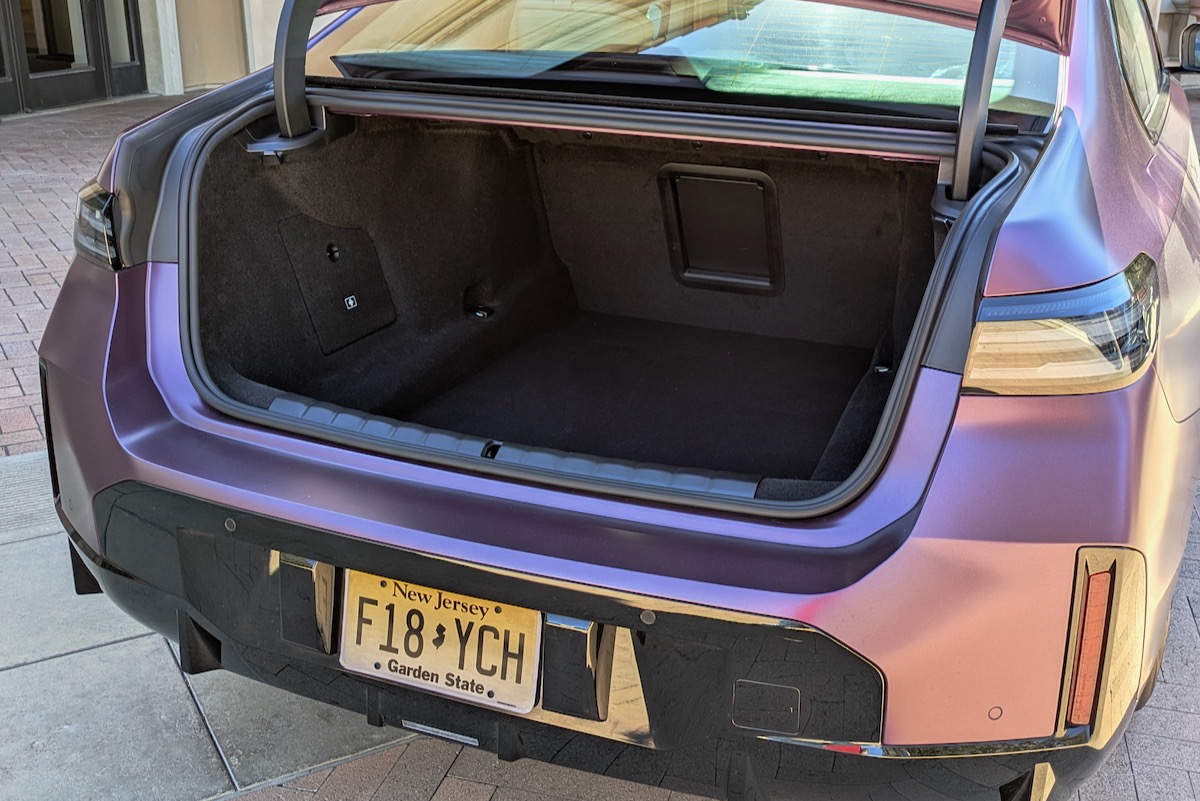
Styling changes were also made at the back, including some vertical trim pieces at the corners and larger taillights. But the 7 Series still looks very ungainly from this angle, again because the body is so tall. And while BMW offers two-tone and matte-finish (“frozen” in BMW-speak) paint options, they cost $12,000 and $5,000, respectively.
Inside, the 7 Series offers the high-end materials expected of a big, traditional luxury sedan. Open-pore wood trim is standard, but buyers can also specify carbon fiber and Alcantara for a sportier appearance. The start/stop button, shifter, and volume toggle can be rendered in crystal, along with the seat controls. Veganza artificial leather upholstery is standard, but the real thing is available.
Performance
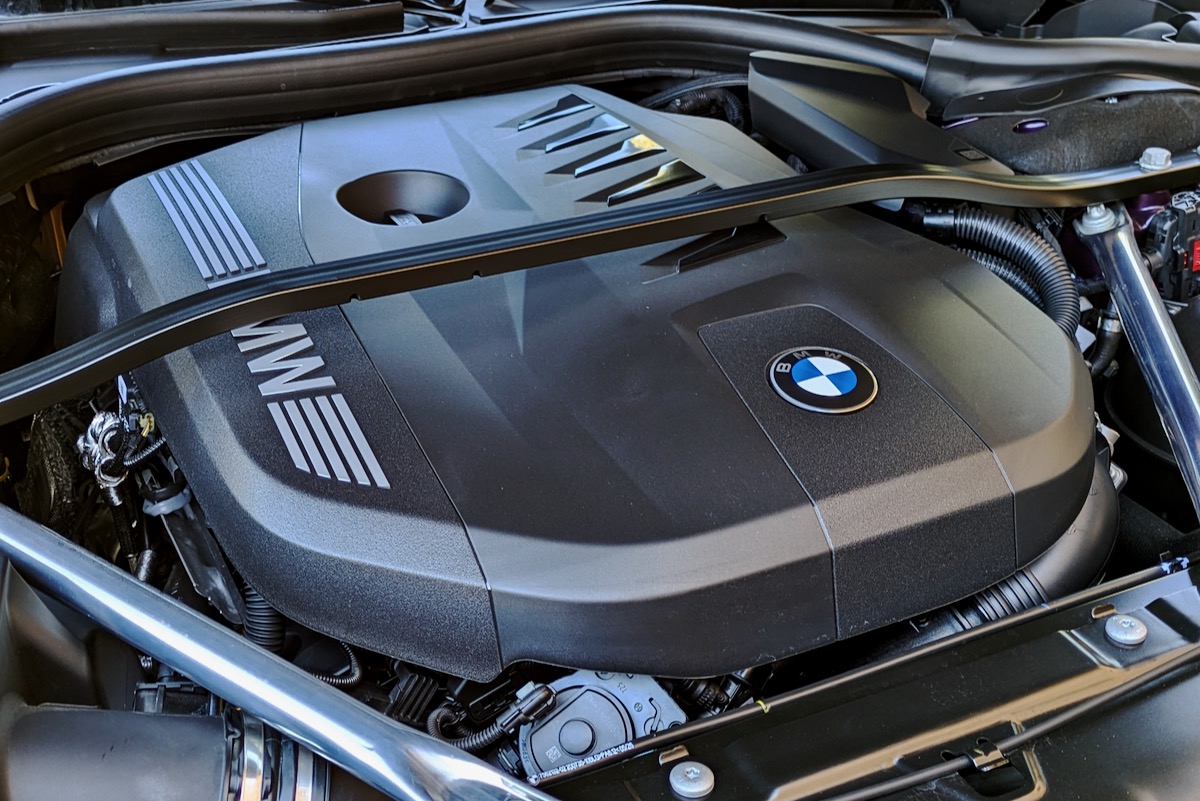
The 2027 BMW 7 Series launches in rear-wheel drive (RWD) 740 and all-wheel drive (AWD) 740 xDrive specs. Both are powered by a turbocharged 3.0-liter inline-six producing 394 horsepower and 398 pound-feet of torque, connected to an eight-speed automatic transmission and mild-hybrid system to boost fuel economy. The engine has 11 hp more than the 2026 model thanks to a new turbo, while torque remains the same.
BMW’s estimate of 0–60 mph in less than five seconds should make the 2027 model a bit quicker than its predecessor, which reached 60 mph in five seconds flat. The updated 740 and 740 xDrive will need those few tenths of extra speed, because the refreshed six-cylinder 2027 Mercedes-Benz S 500 4Matic can reach 60 mph in a manufacturer-estimated 4.3 seconds. Should drivers find themselves on a German autobahn, the 7 Series’ 155-mph top speed beats the S-Class’ 130 mph.
An active anti-roll system that replaces passive anti-roll bars with electric motors that work to counter body motions is available on some models, but our 740 xDrive test car didn’t have it. Nonetheless, it was more engaging to drive than the average big sedan. The well-cushioned ride that’s obligatory in this segment was still there, but that didn’t stop the 740 xDrive from changing directions with gusto. Most luxury flagships are sensory deprivation tanks on wheels; this one lets in just enough sensation to keep a driver engaged.
For now, the only things missing are more powertrain options for those who don’t want to go electric. Buyers can still get a V8 S-Class for 2027, but it’s unclear if that option will return to the 7 Series for this model year or for 2028. BMW was vague about when the M760 xDrive, powered by a twin-turbo 4.4-liter V8, will actually arrive. It will have over 500 hp when it does.
The automaker did confirm that the 750e xDrive plug-in hybrid will join the lineup late in the 2026 calendar year. This model is powered by a turbocharged inline-six and an electric motor producing a combined 483 hp and 516 lb-ft of torque. BMW says it will do 0–60 mph in 4.6 seconds and match the other models’ top speed in hybrid mode (top speed is 87 mph in electric mode) but did not offer an electric-range estimate.
Form & function
As a full-size sedan, the 7 Series offers about as much interior space as buyers can get without switching to an SUV. However, as is traditional with big luxury sedans, rear-seat passengers are the priority. We had a difficult time finding a comfortable driving position, having to choose between having our legs stretched out more than we’d like or having the steering wheel shoved into our laps. Speaking of steering wheels, there are five options to choose from, most with flattened edges to avoid obstructing the new door-to-door screen at the base of the windshield. They look a bit strange but are satisfying to use. The new screen-infused dashboard didn’t interfere with sightlines, either. Heated, ventilated, and massaging front seats with lumbar support are also standard.
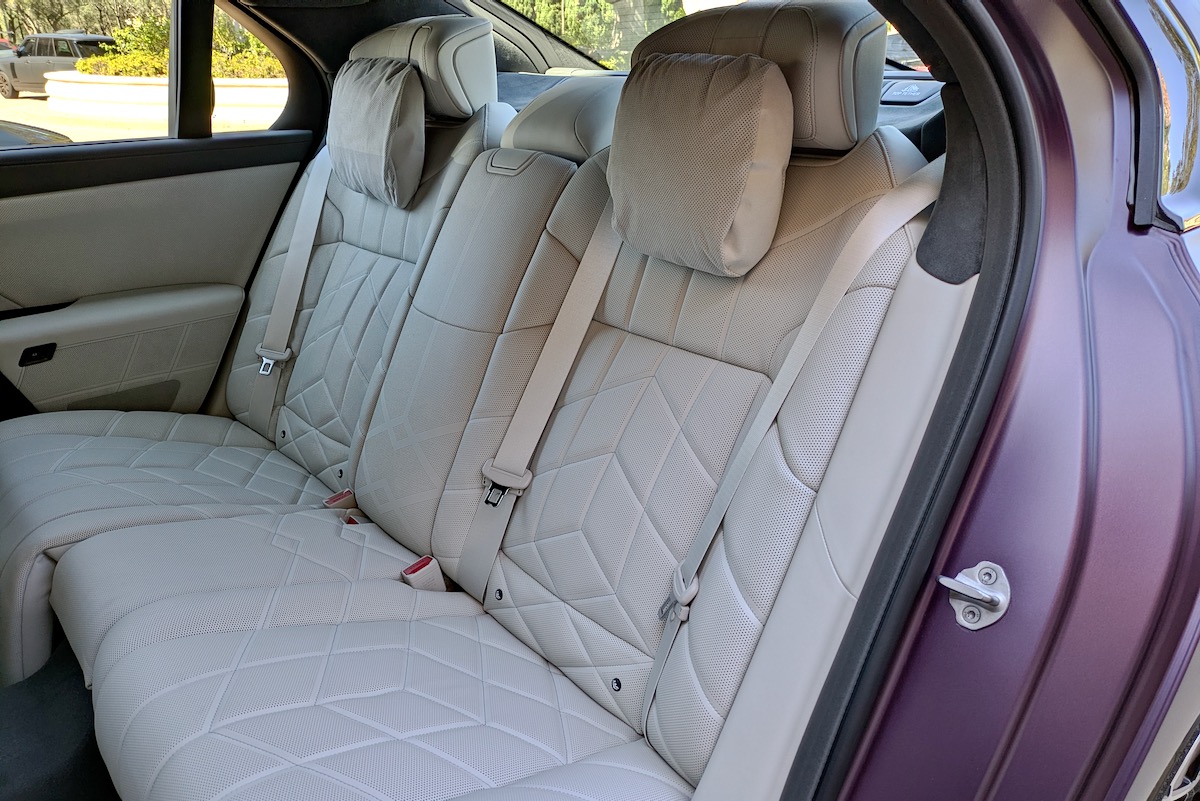
The rear seats are what this car is really all about. Legroom is abundant, even with the front seats moved all the way back. An optional Executive Lounge specification includes a leg rest for the right-rear seat (the front passenger’s seat must be folded to make room for it), which also allows that seat to be reclined. A heated rear-center armrest with a smartphone charging tray is also available. Adding to the luxurious ambience are optional automatic doors with a soft-close mechanism.
The 7 Series has 19.1 cubic feet of total cargo capacity, about five cubic feet more than a Mercedes S-Class.
Technology
The update for 2027 that drivers will likely notice the most is the new infotainment interface. As mentioned above, a panoramic display runs across the full width of the dashboard, replacing a conventional instrument cluster. This keeps information closer to the driver’s line of sight and also breaks it up into easier-to-comprehend bits.
The upper screen is just a display, though. There is still a conventional 17.9-inch touchscreen for controls and a 14.6-inch touchscreen for the front passenger. Everything runs BMW’s latest Operating System X, which maintains wireless Apple CarPlay and Android Auto but overhauls graphics and menu layouts for a more modern look. It also incorporates an AI-augmented voice recognition system.
The main touchscreen is nice to use, with snappy responses and stylish graphics. However, with so many features incorporated into this car, complexity is unavoidable. We found ourselves relying on the voice recognition system simply because it was quicker most of the time. The AI elements weren’t that big a deal, in our experience, but because the software is based on Amazon Alexa+, drivers can also control an Alexa home device from the car.
Perhaps one of the most extravagant tech features available in any new car, the Theater Screen returns for 2027. A $4,750 option, it’s a 31.3-inch monitor that hangs above the rear seats, which can connect to streaming services just like a television. It’s the reason why rear-seat passengers get small touchscreens instead of conventional door window switches. The screen doesn’t interfere with the 7 Series’ glass roof panels, but front-seat occupants will have to move their seats forward to clear it. The screen boasts 8K resolution, but its ultra-wide shape isn’t the ideal format. For 2027, it gets an integrated Zoom app for video calls, while the driver gets a digital rearview mirror so they can actually see what’s behind them with the screen in place.
An 18-speaker Bowers & Wilkins audio system is standard, while a 36-speaker version with 4D audio is optional. Dolby Atmos integration is new for 2027, including on the dedicated speaker for the Theater Screen.
Safety
The 7 Series comes standard with expected driver-assistance features such as forward-collision warning, automatic emergency braking, lane-keep assist, blind-spot monitors, and adaptive cruise control. What’s new for 2027 is Symbiotic Drive, software that aims to blend the operation of these aids with a driver’s own inputs. The goal is to keep these features operating in the background most of the time, and that’s exactly what we experienced. Unnecessary warnings and interventions from the driver aids were minimal.
The one exception was the driver-attention monitor, which demands that the driver look straight ahead at all times within a narrow field of view. And this high level of discipline is mandatory when using the available hands-free Highway Assistant system (part of the $2,500 Driving Assistance Professional Package). This worked well and can even be cued to make lane changes by glancing at a mirror. But in a BMW iX5 equipped with the same hardware, we found the driver monitor lost track of us in harsh, late-afternoon sunlight.
Also standard is the Parking Assistance Package, which includes a surround-view camera system (with curb, 3D, and carwash views), parking sensors, a semi-automated parking system, and Maneuver Assistant, which can remember the path the car takes into a tight driveway and parking space and retrace it to back out.
Crash-test ratings for the 2027 BMW 7 Series from the Insurance Institute for Highway Safety and National Highway Traffic Safety Administration were not available at the time of writing.
Cost-effectiveness
EPA fuel-economy ratings for the 2027 BMW 7 Series are 26 mpg combined (24 mpg city, 30 mpg highway) whether buyers choose RWD or AWD. The 7 Series plug-in hybrid was EPA-rated at 34 miles of electric range for 2026, so we expect the 2027 model to meet or exceed that.
Pricing starts at $101,350 for the RWD 740 and $104,350 for the AWD 740 xDrive (both prices include a mandatory $1,550 destination charge). Pricing for the 750e xDrive plug-in hybrid and M760 xDrive was not available at the time of writing. Our generously optioned test car, which had extra-cost paint, the M Sport Package Professional, Executive Lounge seating, the Theater Screen, and more, would cost approximately $135,000 at a dealership.
The 7 Series starts about $12,000 lower than a Mercedes S-Class but includes AWD as standard. Like the 7 Series, the S-Class has been heavily updated, but not redesigned, for 2027. The difference between the two flagship sedans is really one of character. Those who want traditional luxury should go for the Mercedes. Those who want a hint of sportiness should go with the BMW. Shoppers could also have a base Porsche Panamera for the price of a 7 Series with a few options, but that’s with a much lower level of equipment. The higher trim levels of the Panamera offer more driving excitement, as does the Bentley Flying Spur, but they’re a lot more expensive.
While the 7 Series makes a lot of sense in terms of price and character, its design and tech-forward approach are an acquired taste. BMW may be right that it’s advancing the state of the art for big luxury sedans, but perhaps things didn’t need to be advanced this far.
What owners say
Trims & specs
Base MSRP $102,800 | Seating 5 |
Engine N/A | Cargo Capacity 19.1 cu ft |
Combined MPG N/A | Drivetrain N/A |
Base MSRP $99,800 | Seating 5 |
Engine N/A | Cargo Capacity 19.1 cu ft |
Combined MPG N/A | Drivetrain N/A |


